
Buzz Cuts for Women – 14 Bold Styles to Try in 2026
You have been thinking about it for months — maybe longer. Every time a woman with a buzz cut walks past, sharp and completely unbothered, something in you leans forward. Then the questions rush in: what if my head shape is strange underneath all this hair? Which guard do I even ask the barber for? And what will people at work say on Monday morning?
Here is the honest truth: buzz cuts for women are among the most freeing, low-maintenance, and quietly powerful hairstyles you can wear — when you choose the right version for your head shape, hair texture, and real life. This guide walks you through 14 distinct styles, a plain-English guard-length chart, realistic grow-out timelines, scalp care basics, and the workplace question nobody wants to ask out loud, so you can decide fully informed.
Table of Contents
- 14 Buzz Cut Styles for Women
- 1. Classic Uniform Buzz
- 2. The Induction Cut
- 3. Soft Velvet Buzz (#3 Guard)
- 4. Curly Buzz
- 5. Bleached Platinum Buzz
- 6. Golden Blonde Buzz
- 7. Buzz With Shaved Design
- 8. Buzz to Pixie Transition
- 9. High and Tight
- 10. Neon Color Buzz
- 11. Buzz With Long Sideburns
- 12. Asymmetrical Buzz
- 13. Salt-and-Pepper Buzz
- 14. The Barely-There Shave
- How to Choose the Right Buzz Cut (Guard Chart + Face Shape)
- Growing Out a Buzz Cut Without the Awkward Phase
- FAQs
- Will a buzz cut suit my face shape?
- What guard length should I start with?
- How often do I need to re-buzz it?
- Can I buzz my own head at home?
- Will my hair grow back the same after a buzz cut?
- How do I protect my scalp after buzzing it?
- How long does it take to grow a buzz cut into a pixie?
- Is a buzz cut appropriate for work?
14 Buzz Cut Styles for Women
Fourteen ways to wear almost nothing. These buzz cuts for women range from the soft #3 guard that barely counts as a risk, to the full razor shave for the truly committed. Find the one that matches your nerve level.
1. Classic Uniform Buzz
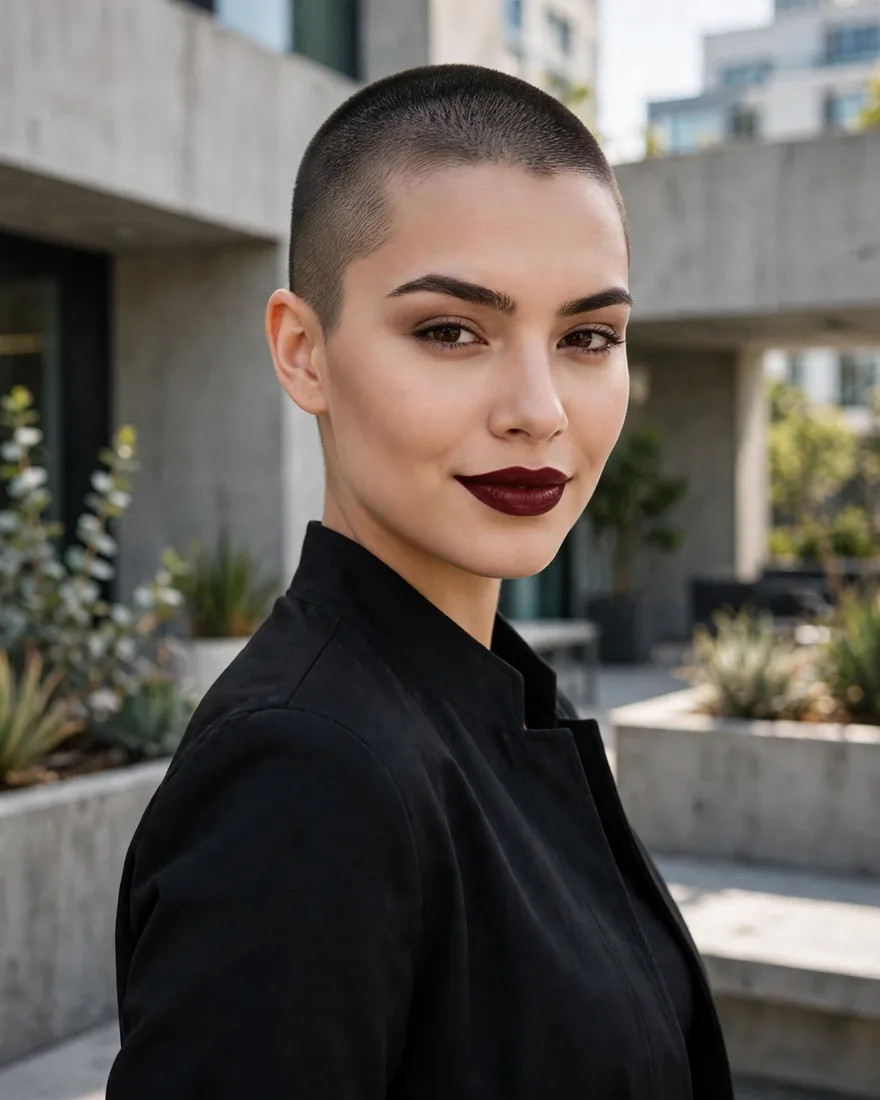
The one-guard icon: clippers over the entire head with a single guard — usually a #2 — leaving even, velvety stubble that reads confident from every angle. No fading, no blending, no apologies: the purest buzz cut, and the version most women picture when they first consider shaving it all off.
Benefits:
- Zero styling time — wash, towel-dry, and walk out the door
- Shows off bone structure, earrings, and bold makeup like nothing else
- The cheapest buzz to maintain — one guard, one pass, done
Pro Tip: Ask for a #2, not a #1, on your first visit — you can always go shorter, but you cannot put hair back.
How To Style: Wash, work a pea-sized drop of fragrance-free moisturizer into the scalp, and go. In summer, swap the moisturizer for scalp SPF 30+.
Best For: Oval and heart face shapes; medium to thick hair; minimalists who want the boldest of the very short hairstyles without daily effort.
2. The Induction Cut
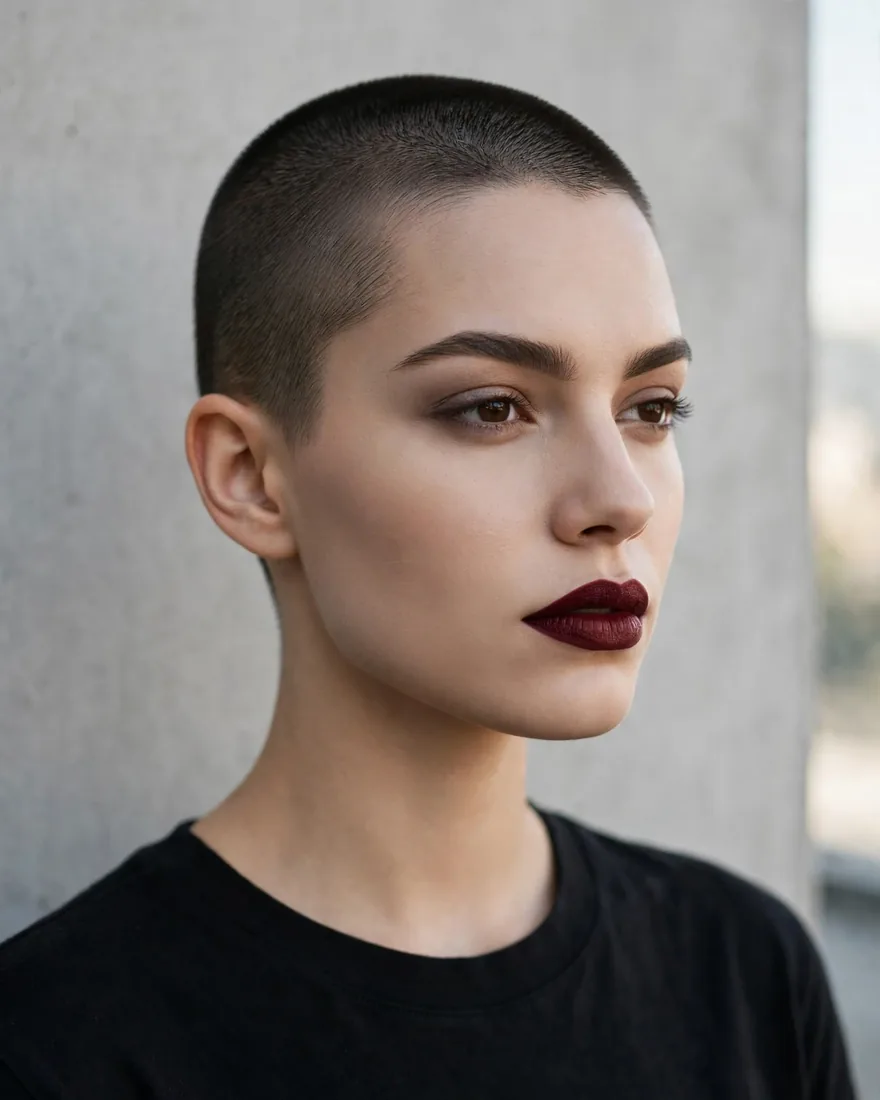
The boldest buzz on this list. Clippers with no guard at all, taken down to bare skin or a whisper of shadow — the military induction look, reclaimed as high fashion. It is not a haircut so much as a statement: there is nowhere to hide, and that is exactly the point.
Benefits:
- The ultimate low-maintenance cut — there is simply nothing to manage
- Reveals your bone structure and head shape completely
- Gives you a perfectly clean canvas if you plan to bleach or dye later
Pro Tip: A freshly induction-cut scalp burns in under 20 minutes of midday sun — keep a mineral SPF stick in your bag for the first month.
How To Style: Moisturize morning and night for two weeks; a soft beanie at night reduces pillow friction.
Best For: Confident wearers who want the full reset; oval face shapes; anyone who has always wondered what is under there and is done wondering.
3. Soft Velvet Buzz (#3 Guard)
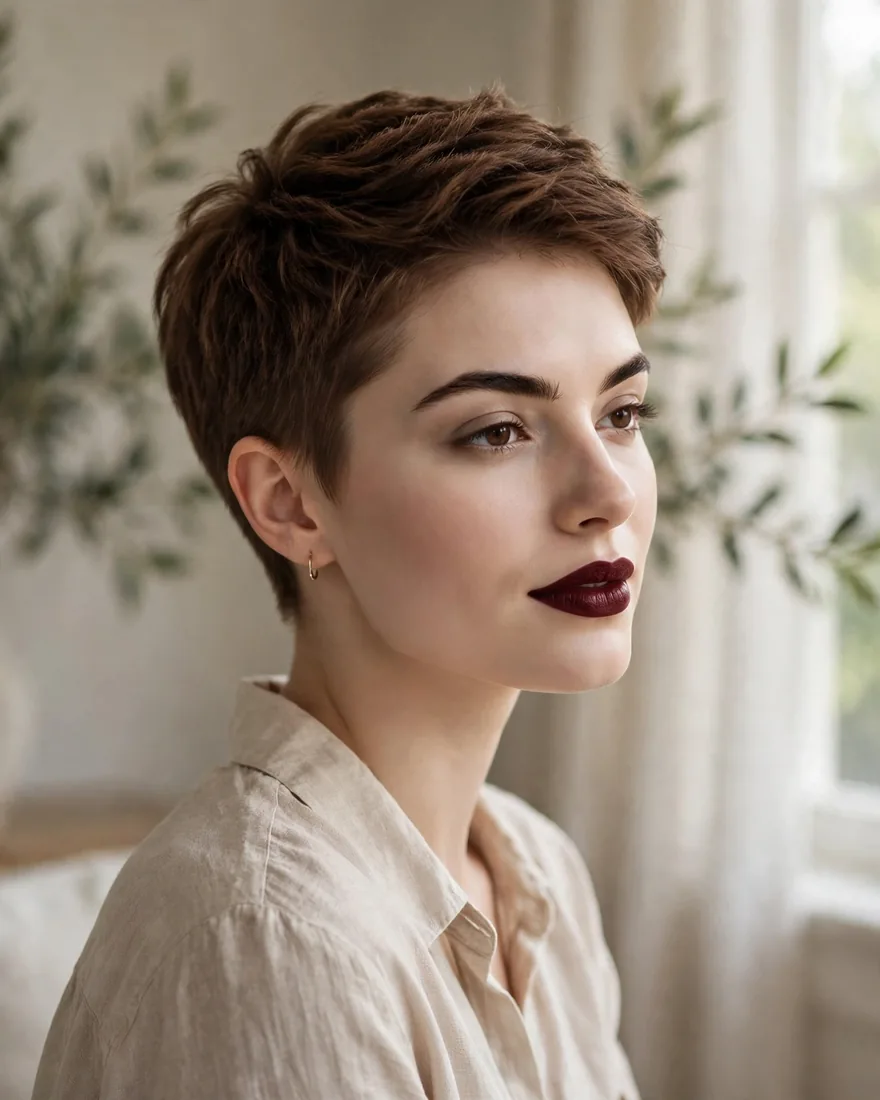
The beginner-friendly buzz. A #3 guard leaves about a centimeter of soft, velvety hair — enough to feel like actual hair under your hand, short enough to unmistakably read as a buzz. It is the training-wheels version, and there is no shame in that — many women try the #3 and never feel the need to go shorter.
Benefits:
- The gentlest first step into buzzed hair — scalp barely shows through
- Forgiving grow-out — it transitions to a short crop gracefully
- Reads polished rather than punk, which helps in conservative settings
Pro Tip: The #3 is the best “test drive” guard: wear it two weeks, and if you keep wishing it shorter, book the #2.
How To Style: A tiny amount of matte paste worked through dry hair adds piece-y texture. Otherwise, wash and go — the length does the work for you.
Best For: First-timers; fine hair that would show too much scalp at shorter guards; round faces, where the extra length softens the silhouette. A natural next step from other short cropped hairstyles.
4. Curly Buzz
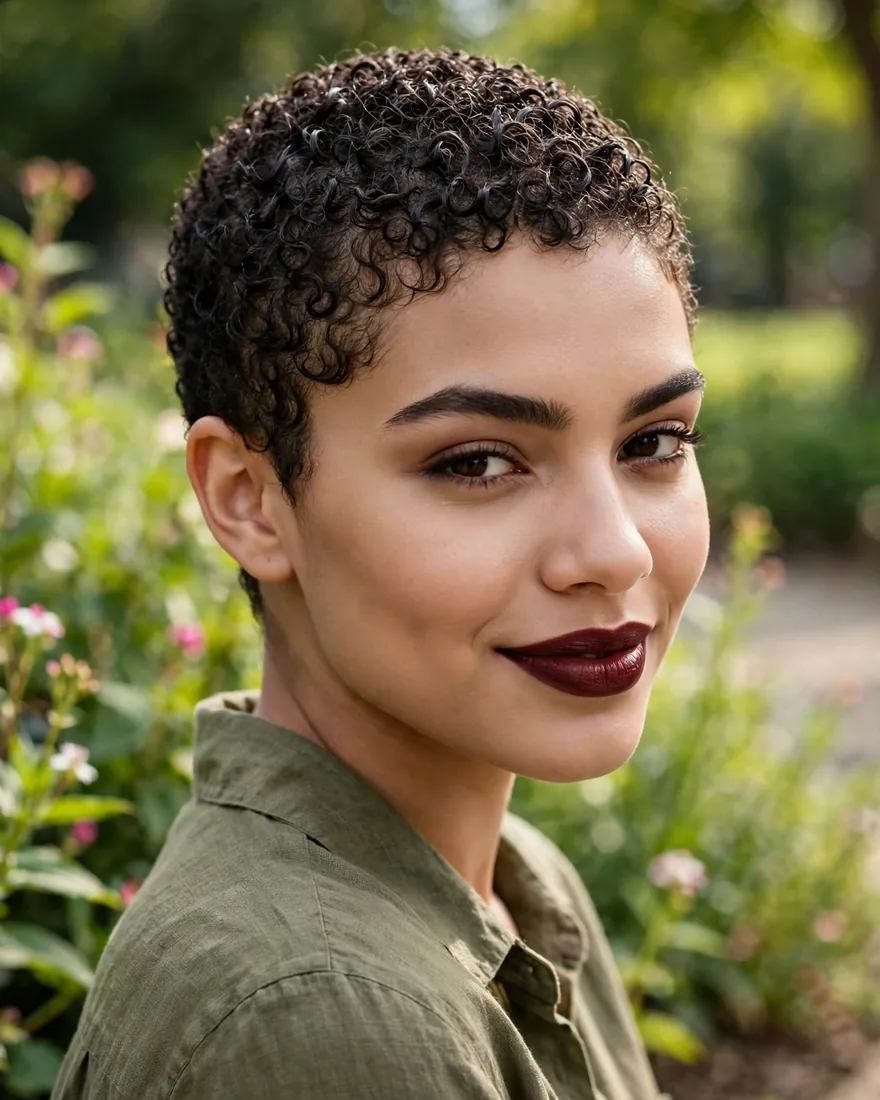
Buzzed, but make it curl. Cut longer — #3 to #4 — so your natural curl pattern survives as tight, springy coils. Proof that a buzz cut does not mean giving up texture.
Benefits:
- Showcases your curl pattern instead of hiding it under length
- Genuinely wash-and-go — curls style themselves at this length
- Ends the constant battle with shrinkage, tangles, and wash-day marathons
Pro Tip: Have it cut dry or only slightly damp — never soaking wet. Wet curls stretch far longer than they will sit, and a barber cutting wet can easily take off twice what you agreed to.
How To Style: Scrunch curl cream into damp hair and air-dry; refresh day-two coils with a water mist.
Best For: 2C to 4C curl patterns; round faces, where the coil volume adds flattering height. If you later want more length up top, the short curly hairstyles family and the curly pixie cut are the natural next stops.
5. Bleached Platinum Buzz
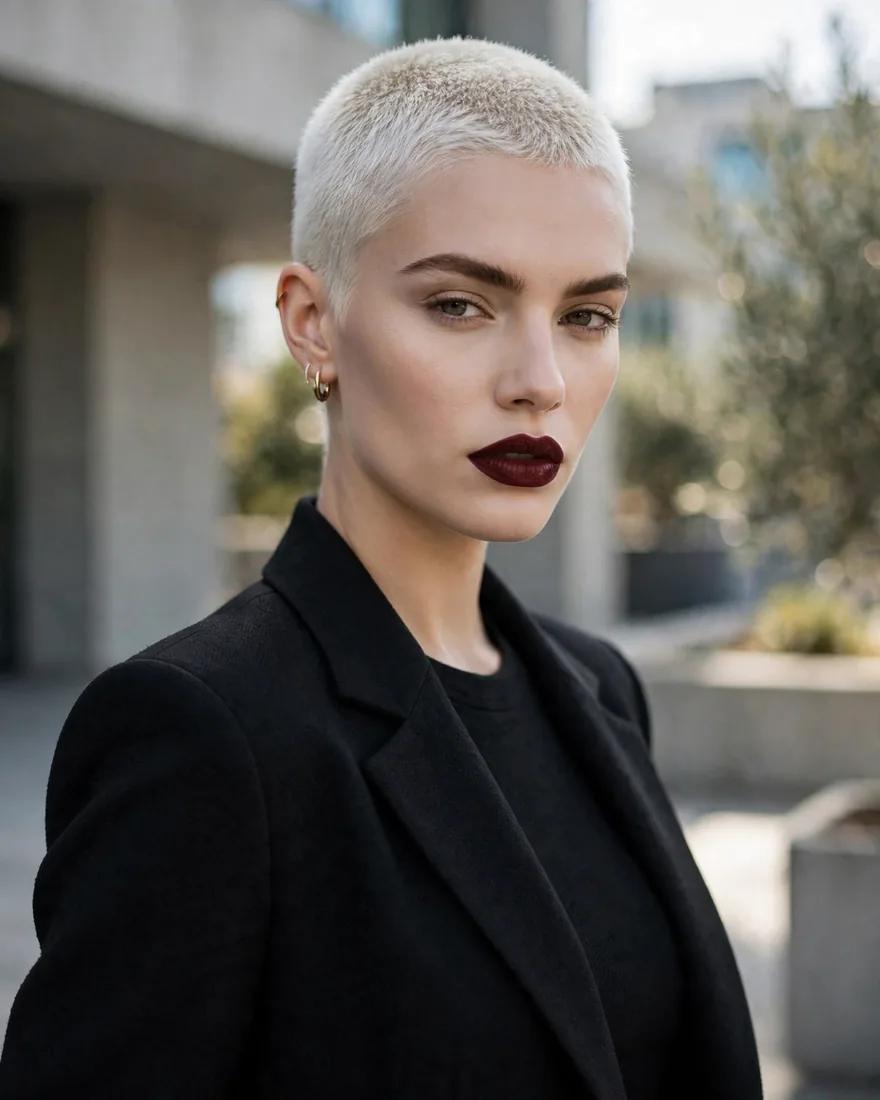
The statement: buzzed short and bleached to pale platinum — the combination that turns a sidewalk into a runway. Short hair takes bleach faster and more evenly than long hair, which is why the platinum buzz has become the unofficial uniform of women making a fresh start.
Benefits:
- Maximum visual impact for minimum hair
- Bleach swells the hair shaft slightly, so fine hair looks thicker
- The regrowth phase creates a striking two-tone root look many women keep on purpose
Pro Tip: Buzz first, bleach second — always. On buzzed hair bleach processes fast, so apply quickly, watch closely, and rinse the moment it lifts.
How To Style: Weekly purple shampoo keeps the tone icy; follow every wash with deep conditioner.
Best For: Cool and neutral skin tones; fine hair that wants the illusion of density; anyone who treats their hair as an accessory, not a security blanket.
6. Golden Blonde Buzz
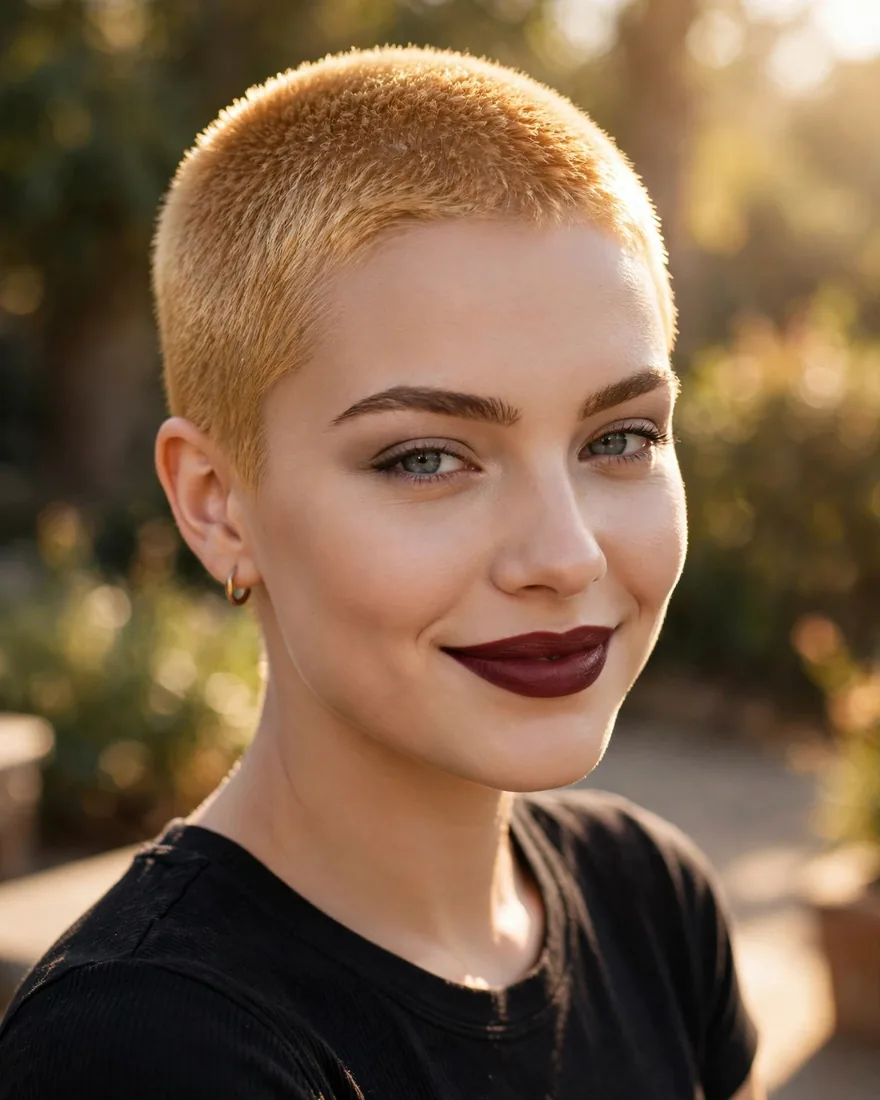
Platinum’s softer, warmer sister. A golden blonde lift over a #2 or #3 buzz glows against the skin instead of contrasting with it, giving you the brightness of a bleached buzz without the ice-queen edge. It is the version that gets compliments from strangers in grocery stores.
Benefits:
- Warmer and more wearable than platinum on most skin tones
- Less damaging than lifting all the way to white-blonde
- Regrowth blends softly instead of drawing a hard root line
Pro Tip: Ask for a golden or honey toner, not ash — ash can read gray-green on very short hair, while gold stays sunny.
How To Style: Color-safe shampoo plus a weekly glossing treatment keeps the gold rich and shiny.
Best For: Warm and olive skin tones; medium-density hair; anyone who wants brightness without the high-contrast drama. For longer golden inspiration, browse the honey blonde hair ideas.
7. Buzz With Shaved Design
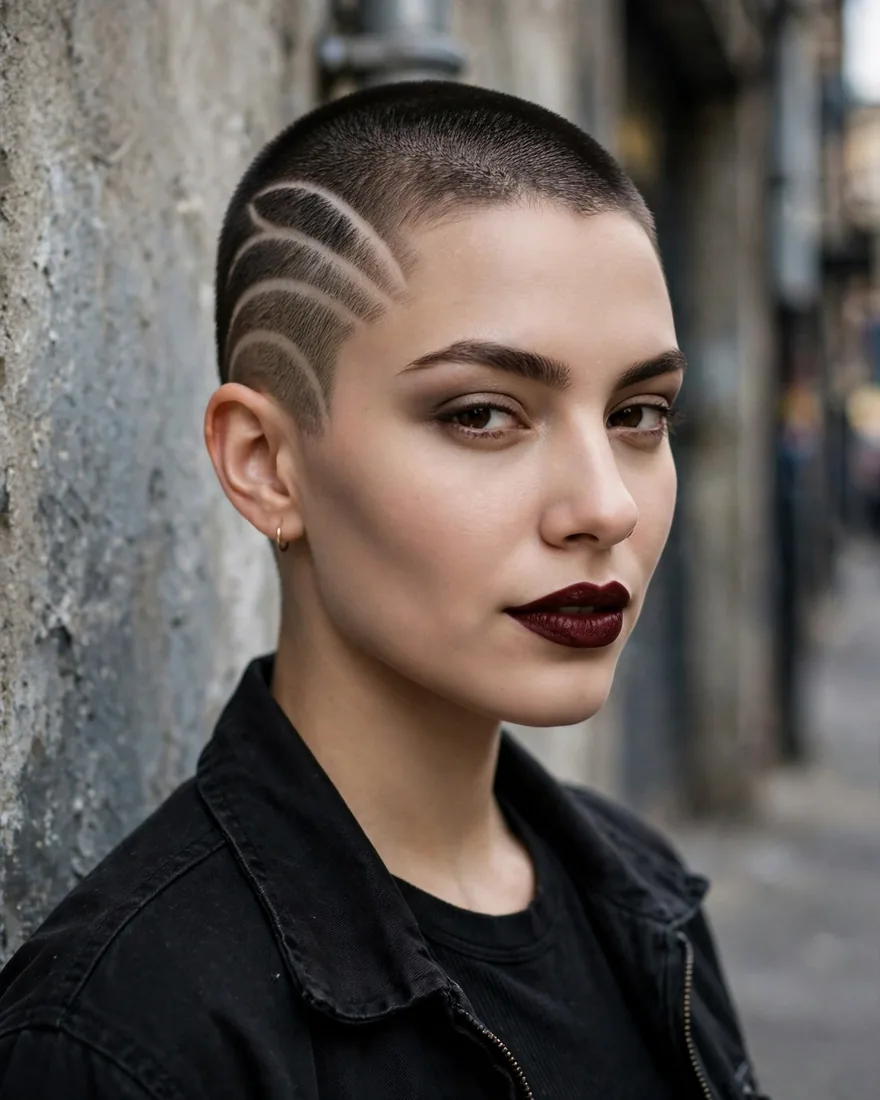
A uniform buzz with a shaved line, lightning bolt, or geometric pattern carved in — usually at the side or nape. Trimmers etch the design into a #1 or #2 base, turning your head into a canvas that changes every few weeks.
Benefits:
- Fully custom — no two designs are alike
- Designs blur out in about two weeks, so you can constantly reinvent it
- An instant conversation starter and personal signature
Pro Tip: Find a barber who does designs specifically, not just fades — and bring a reference photo.
How To Style: Weekly touch-ups with a detail trimmer keep edges crisp; moisturize as usual.
Best For: Creative types; thick, dark hair where etched designs show up best; anyone who gets bored easily and likes a haircut with a refresh cycle.
8. Buzz to Pixie Transition
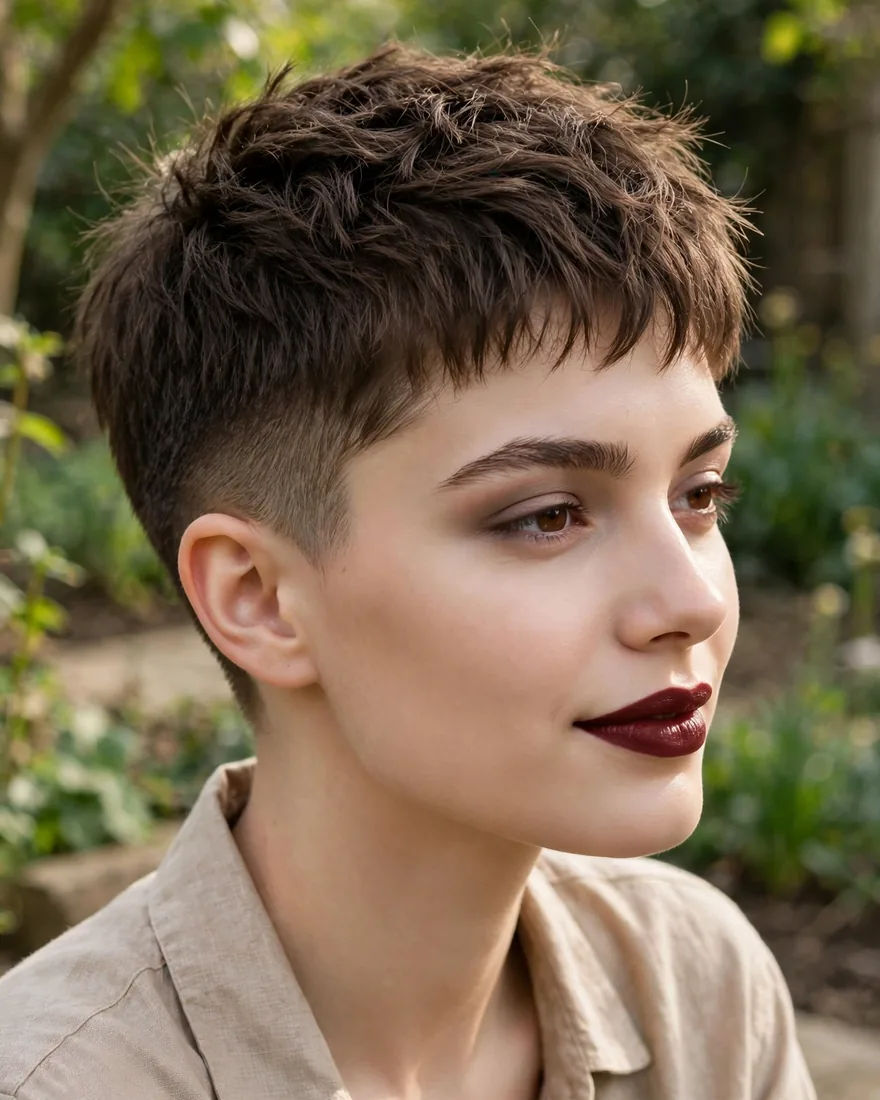
Not a cut you book — a phase you manage. This is the buzz grown to finger length and deliberately shaped with mini-trims into a pixie-in-progress. It is how you skip the dreaded mullet stage entirely.
Benefits:
- Skips the awkward mullet-ish middle that makes most women quit growing out
- Looks intentional at every stage, never like you “gave up”
- The perfect bridge if your end goal is a pixie or short crop
Pro Tip: Trim only the back and sides; let the top grow untouched. A cleanup every 4 to 6 weeks shapes the grow-out into a pixie instead of a mushroom.
How To Style: Texture paste pushed forward turns grow-out into style; headbands and clips cover months two and three.
Best For: Anyone growing out any buzz on this list; commitment-phobes who want an exit strategy. Study the pixie cut gallery now so you know exactly what you are growing toward.
9. High and Tight
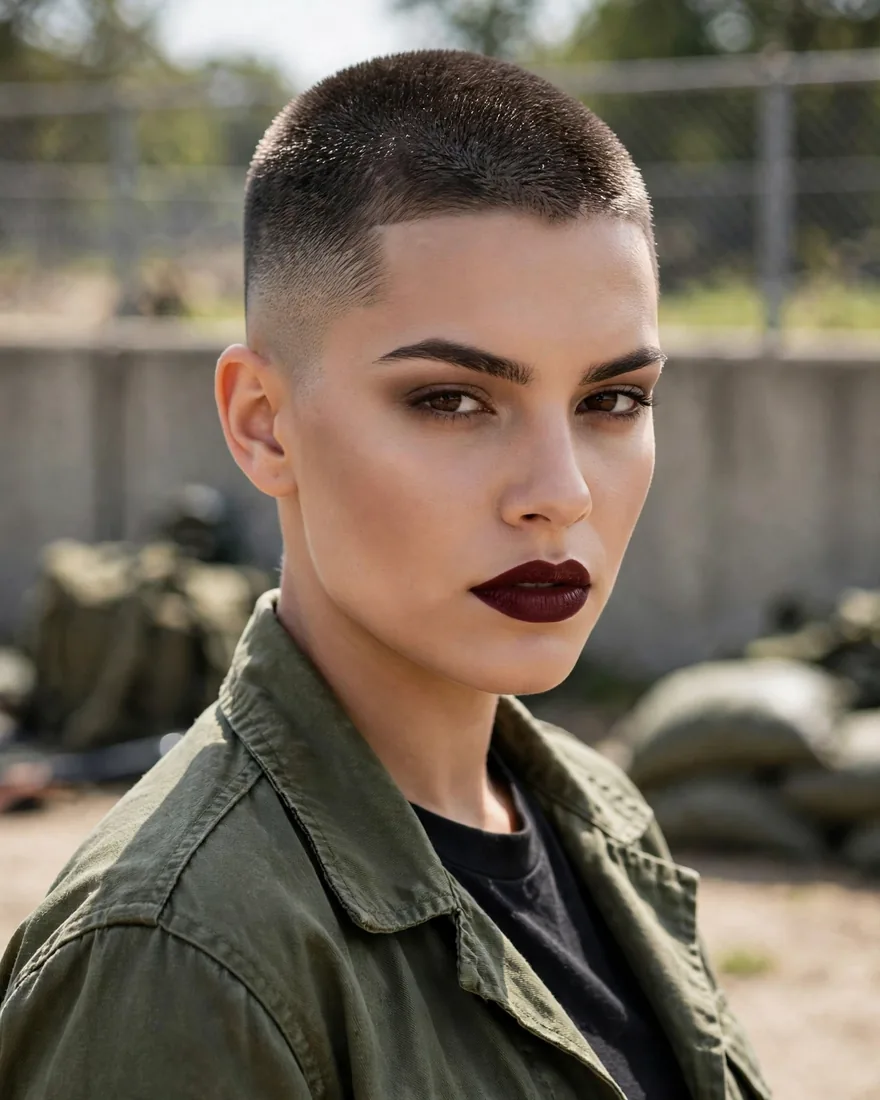
Borrowed from the military, softened for 2026: sides faded tight with a #1, top left a touch longer at #2 or #3. The buzz cut with architecture.
Benefits:
- Adds flattering height on top — excellent for round faces
- The fade gives a sharp, clean silhouette that reads polished
- Still genuinely wash-and-go despite looking more “done”
Pro Tip: The fade needs refreshing every 2 to 3 weeks or the contrast melts away — learn a quick at-home neckline cleanup between visits.
How To Style: Almost nothing — the shape is built into the cut. If the top is long enough, a touch of matte clay adds definition.
Best For: Round faces that want height; thick, coarse hair that holds a fade crisply; fans of sharp, structured short hair looks.
10. Neon Color Buzz

Electric pink, lime green, cobalt blue — vivid dye on short buzzed hair is pure pigment with nowhere to hide. With so little hair, the color hits harder than it ever could on long lengths — and when it fades, you simply switch to the next shade.
Benefits:
- Neon shades look more intense on short hair — maximum payoff per tube of dye
- Fades faster at this length, which is a feature: you can rotate colors monthly
- The ultimate low-commitment color experiment
Pro Tip: Lift to a pale, even yellow first or the neon goes muddy. Strand-test too: some neons visibly stain the scalp at buzz length.
How To Style: Cold water, color-safe shampoo, wash as infrequently as you can stand; a weekly color-depositing conditioner keeps it electric.
Best For: The adventurous; pre-lightened or naturally light hair; anyone who has ever wanted pink hair but feared the damage — at this length, you just buzz it off and start over. See the pink hairstyles collection for shade ideas.
11. Buzz With Long Sideburns
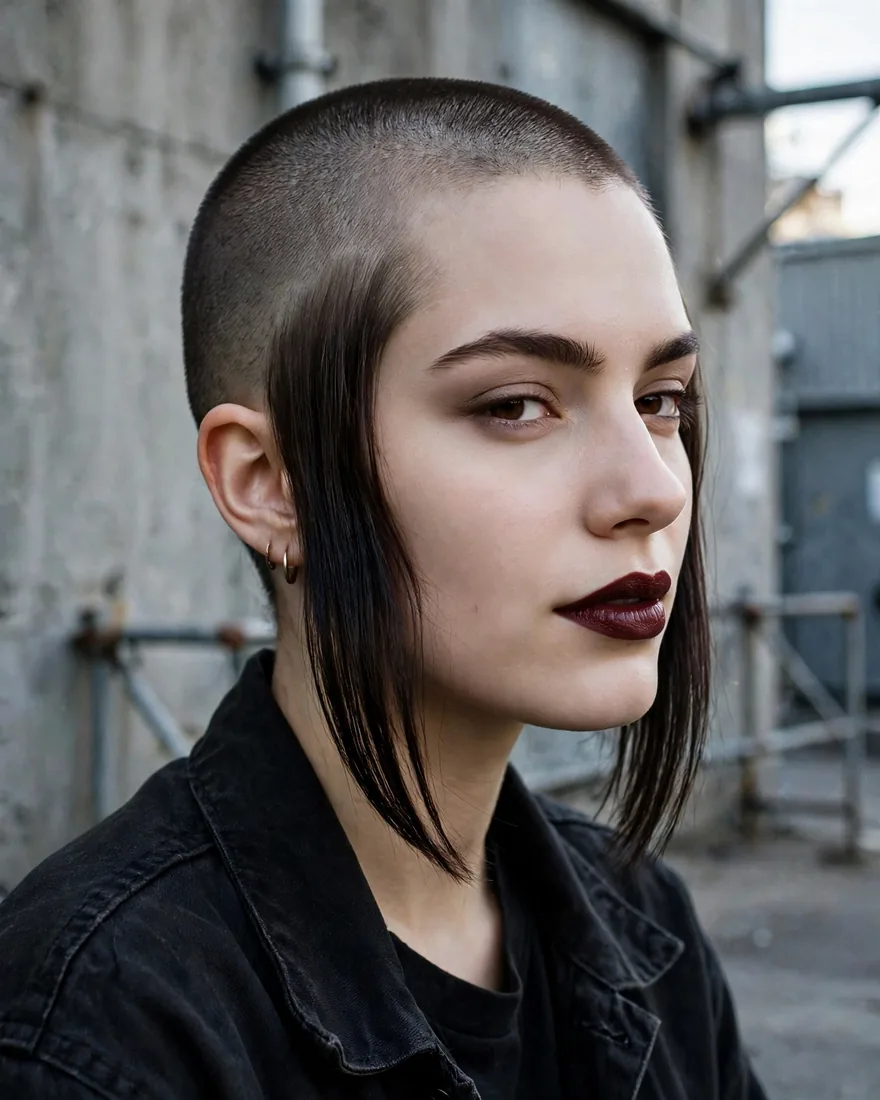
The whole head buzzed to a #2, but the sideburns left long and shaped into soft points. A small detail with an outsized effect: a frame for the face where a buzz otherwise offers none.
Benefits:
- Adds a feminine frame that softens the starkness of a full buzz
- Draws the eye to the jawline and cheekbones
- Works as a stepping stone if a full uniform buzz feels too bare
Pro Tip: Shape sideburns into a gentle point, not a blunt block — points elongate the face. A detail trimmer beats full-size clippers here.
How To Style: Define sideburn edges every week or two with a trimmer; a touch of pomade keeps them sleek.
Best For: Square and round faces that benefit from vertical lines; anyone who wants their buzz to feel a little less severe.
12. Asymmetrical Buzz
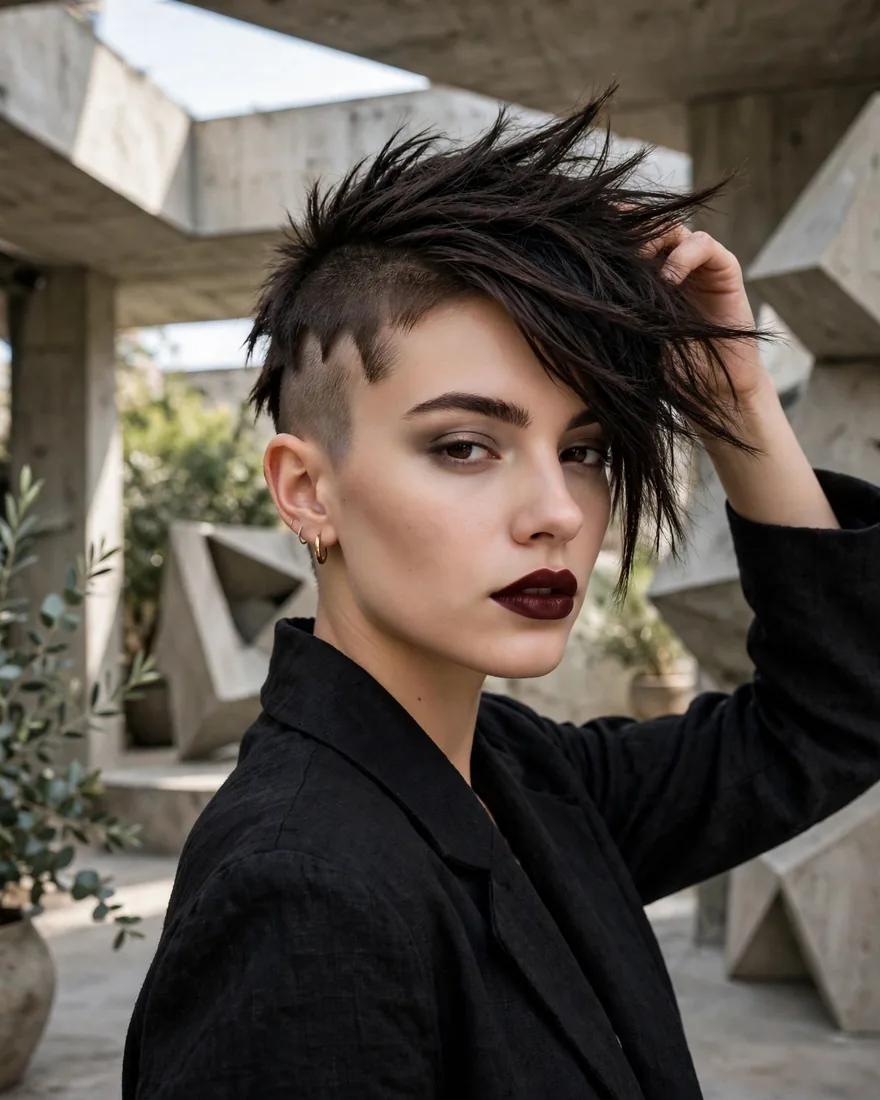
One side down to a #1, the other at #3 or #4 — or a deep side part with deliberately mismatched lengths. The most fashion-editorial buzz cut for women on this list.
Benefits:
- Edgy and artistic without requiring a full head shave
- The longer side still offers styling options — sweep, tuck, texture
- Creates the illusion of volume and movement most buzzes lack
Pro Tip: Asymmetry needs reshaping every 3 weeks or it blurs into “uneven haircut” — the blend line is everything, so this one is salon-maintenance, not DIY.
How To Style: Push the longer side across with texture cream, or slick it flat — the point is the two sides look deliberately different.
Best For: Oval and long faces; thick hair that shows the length contrast clearly; anyone whose style leans architectural and bold.
13. Salt-and-Pepper Buzz
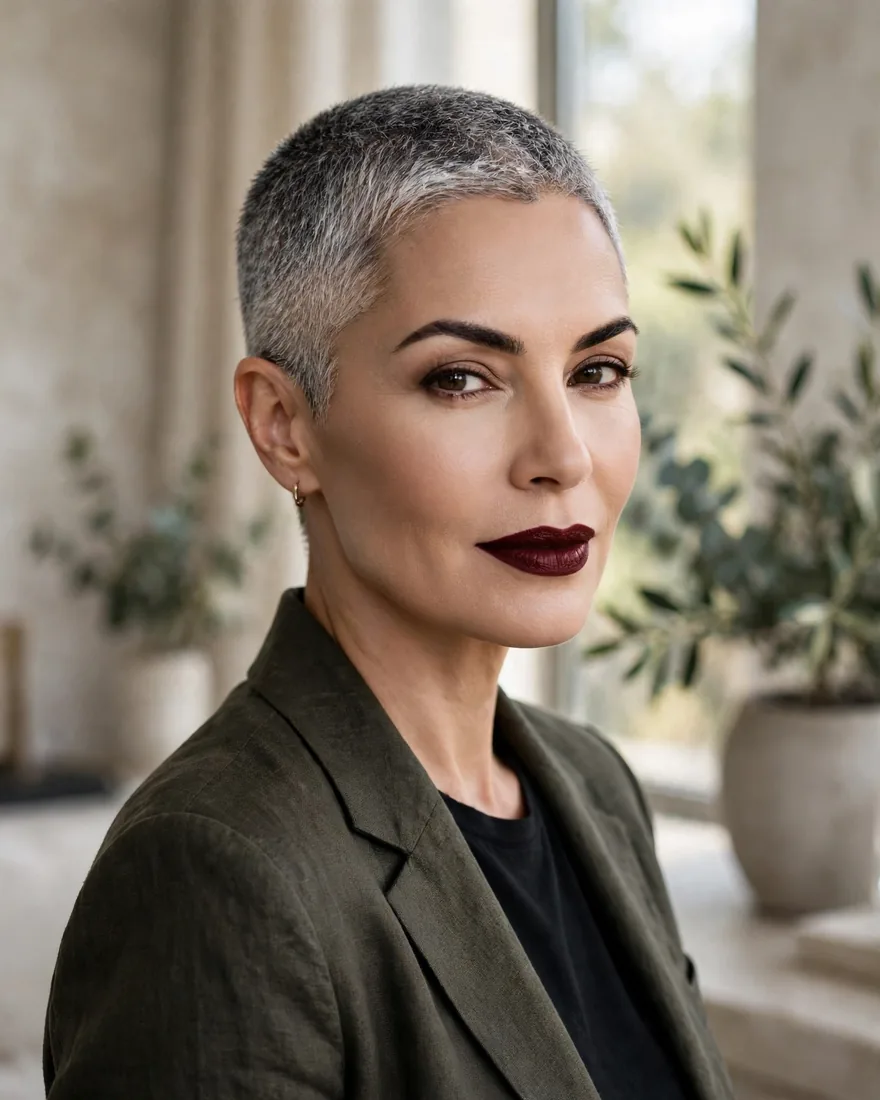
Letting the gray shine. A #3 buzz on salt-and-pepper hair turns what salons charge hundreds to imitate into your own natural crown. Silver hair catches light in a way no dye fully replicates, and at buzz length, every strand of gray reads as intentional, luminous texture.
Benefits:
- Zero color maintenance — your natural shade is the statement
- Silver and white strands catch light beautifully at short lengths
- Reads sophisticated and confident rather than “letting yourself go”
Pro Tip: A silver-enhancing shampoo once a week keeps gray bright instead of yellowing — sun oxidizes gray hair fast.
How To Style: Wash, moisturize the scalp, done. If your gray is wiry, a drop of smoothing oil keeps the texture soft rather than straw-like.
Best For: Women embracing natural gray at any age; all face shapes; anyone tired of the dye-growout-dye cycle who wants out permanently.
14. The Barely-There Shave
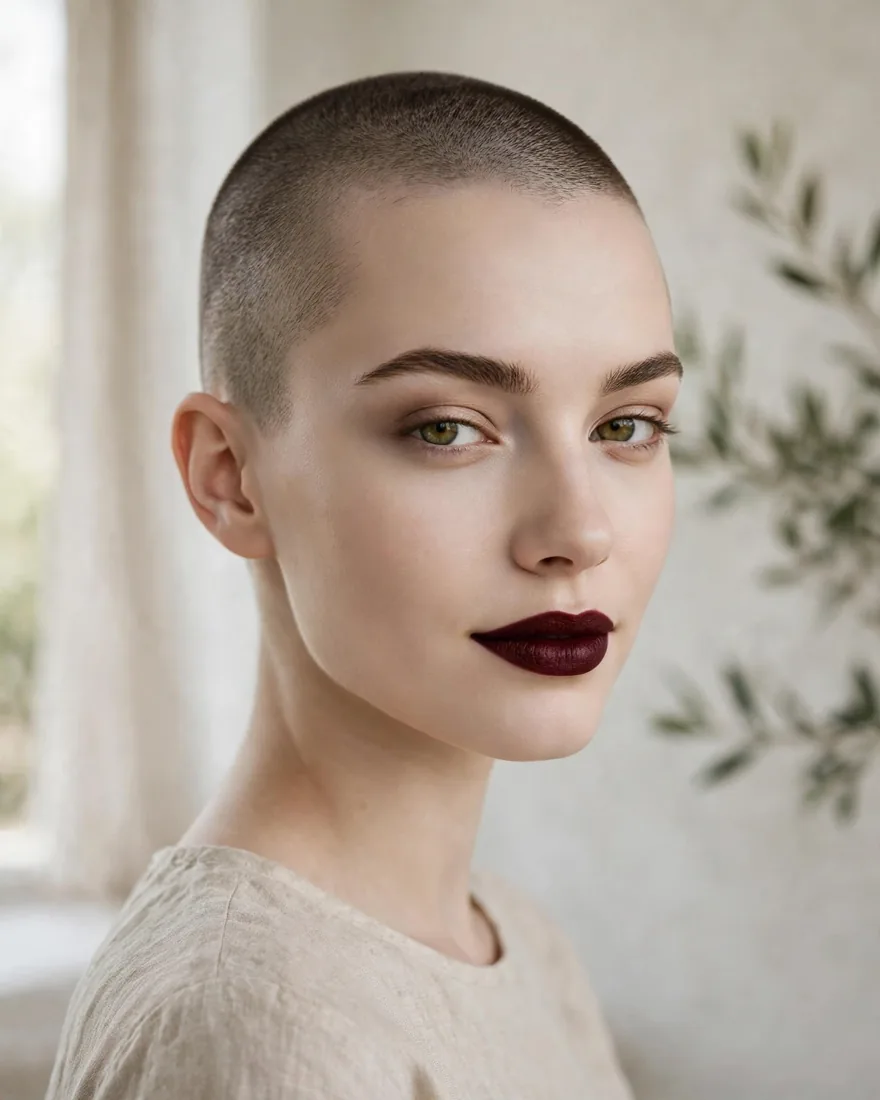
Past the #0 — a razor or foil shaver takes the head completely smooth. No shadow, no stubble, just skin: the rarest buzz on this list, and the one wearers describe as the most liberating haircut of their lives.
Benefits:
- The ultimate fresh start — damaged, over-processed past included
- Unmatched boldness — nothing else on this list comes close
- Stubble returns within days, so the “bald” phase is mercifully short if you dislike it
Pro Tip: Visible stubble returns fast, so staying smooth means shaving every 2 to 3 days — invest in a quality foil shaver rather than dragging a razor over your scalp daily.
How To Style: Treat your scalp like your face: cleanser, moisturizer, SPF 30+ every morning; a silk pillowcase reduces irritation.
Best For: The truly committed; women confident about their head shape; anyone who wants to know, once and for all, what complete freedom feels like.
How the 14 buzz cuts compare at a glance:
| Style | Guard Length | Commitment Level |
|---|---|---|
| Classic Uniform Buzz | #2 (~6 mm) | Medium |
| The Induction Cut | #0 (no guard) | High |
| Soft Velvet Buzz | #3 (~10 mm) | Low |
| Curly Buzz | #3–#4 (~10–13 mm) | Medium |
| Bleached Platinum Buzz | #1–#2 + bleach | High |
| Golden Blonde Buzz | #2–#3 + color | Medium |
| Buzz With Shaved Design | #1–#2 + design | High |
| Buzz to Pixie Transition | Grown #3–#4 | Medium |
| High and Tight | #1 sides, #2–#3 top | Medium |
| Neon Color Buzz | #2–#3 + vivid color | Very High |
| Buzz With Long Sideburns | #2 + long sideburns | Medium |
| Asymmetrical Buzz | Mixed (#1–#4) | High |
| Salt-and-Pepper Buzz | #3 (~10 mm) | Low |
| The Barely-There Shave | Razor / foil shaver | High |
How to Choose the Right Buzz Cut (Guard Chart + Face Shape)
Choosing among buzz cuts for women comes down to three questions: how much scalp will you show, what does your head look like under there, and how much upkeep will you tolerate? Start with the guard chart — it is the vocabulary your barber speaks.
| Guard | Length | What It Looks Like |
|---|---|---|
| #0 (no guard) | ~0.8 mm | Bare skin — the induction look |
| #1 | 3 mm (1/8″) | Visible stubble shadow; scalp shows through clearly |
| #1.5 | 4.8 mm (3/16″) | Short stubble; scalp still visible |
| #2 | 6 mm (1/4″) | The classic uniform buzz — soft, even, velvety |
| #3 | 10 mm (3/8″) | Soft velvet; scalp barely visible |
| #4 | 13 mm (1/2″) | Touchable length; your natural texture starts to show |
Head shape matters more than face shape. A buzz cut reveals your skull, not just your face — most guides skip this. Oval heads suit everything. Round faces benefit from height on top, so the high and tight is your friend. Long faces should keep the length even all over and avoid adding height. If you have a flatter spot at the back of your head, a slightly longer guard (#3) disguises it better than a #1.
Hair texture changes the plan. Fine hair shows more scalp at any guard — choose #3 or #4 if show-through bothers you. Thick, coarse hair can go shorter and still look full. Curly and coily hair needs more length to display its pattern, so start at #3 minimum. And know this: cowlicks and growth whorls you never noticed under long hair will announce themselves. They are not flaws — just information.
Scalp care basics. Your scalp has lived under hair for years; it is about to meet the world. Moisturize daily for the first two weeks with fragrance-free lotion. Use SPF 30+ every day you go outside — scalp sunburn is uniquely miserable. Exfoliate gently once a week to prevent ingrown hairs, and drink water; hydrated skin handles exposure better.
Growing Out a Buzz Cut Without the Awkward Phase
Hair grows roughly 1.25 cm (half an inch) per month, so the math of growing out a buzz cut is refreshingly predictable. From a #2 buzz to a proper pixie takes about 5 to 6 months; from a #0 or razor shave, plan on 7 to 8. The first month looks intentional and sharp. Months two through four are the danger zone — where most women either shave it off again or push through to glory.
The awkward middle has a specific shape: the back and sides grow outward while the top grows upward, leaning mullet. The fix is shaping trims, not patience alone. Every 4 to 6 weeks, have a stylist clean up just the nape, sideburns, and around the ears while leaving the top alone. This single habit is the difference between growing out a buzz and growing one out badly. Texture products become your best friends here — a little paste turns fluffy grow-out into deliberate texture.
Clipper maintenance vs. salon cost, honestly. Keeping a buzz cut sharp means re-cutting every 2 to 4 weeks (#0 needs weekly attention; a #3 stretches to a month). A decent home clipper set costs about the same as two barber visits and pays for itself by month three: one guard, steady pressure, go against the growth. That said, get the first cut done professionally — watching a barber map your head shape once teaches you more than any tutorial. Fades, designs, and asymmetry are worth paying for; a uniform #2 is genuinely DIY-able.
About workplace reactions. A buzz cut is more accepted than ever, but acceptance is not evenly distributed. Creative, tech, and service industries barely blink; conservative corporate, legal, and client-facing finance roles may still raise eyebrows. If your workplace has a written appearance policy, read it before you cut. When in doubt, the soft velvet #3 reads “fashion choice” where a #0 reads “statement” — and that distinction matters in some offices.
FAQs
Will a buzz cut suit my face shape?
Probably — but with buzz cuts for women, head shape matters more than face shape. Oval heads suit every version. Round faces look best with height on top, like the high and tight. Long faces should keep the length even rather than adding height. A buzz reveals rather than flatters, and that reveal suits far more women than fear suggests.
What guard length should I start with?
Start with a #3 or #4 if you are nervous. It reads unmistakably as a buzz while leaving enough length to feel like hair, and you can always go shorter in the same appointment. Jumping straight to a #1 or #0 first time is how regrets happen — the scalp show-through surprises almost everyone.
How often do I need to re-buzz it?
It depends on the guard. A #0 or razor shave needs attention every 1 to 2 weeks. A #1 or #2 lasts about 2 to 3 weeks. A #3 or #4 stretches to 4 weeks before looking grown out. Fades and shaved designs need the most upkeep — plan a touch-up every 2 weeks to keep lines crisp.
Can I buzz my own head at home?
Yes — a single-guard buzz is one of the most DIY-friendly haircuts that exists. You need decent clippers, a hand mirror for the back, and the discipline to go slowly against the growth. Get your first buzz done professionally, though: watching a barber work teaches you your head shape and growth patterns, which makes every home cut after it better.
Will my hair grow back the same after a buzz cut?
Yes. Shaving does not change your hair’s texture, thickness, or growth rate — that is determined by your follicles, not the ends. Hair may feel coarser as it grows in because short ends are blunt rather than tapered, but it softens as it gains length. No buzz cut has ever permanently altered anyone’s hair.
How do I protect my scalp after buzzing it?
Three things: moisturize, sunscreen, and patience. Use fragrance-free moisturizer daily for the first two weeks. Apply SPF 30+ every day you go outside — a burnt scalp is uniquely painful. Exfoliate gently once a week to prevent ingrown hairs, and wear a hat in peak sun until the shadow grows in.
How long does it take to grow a buzz cut into a pixie?
From a #2 buzz, expect 5 to 6 months to reach a proper pixie; from a #0 or razor shave, 7 to 8 months. Hair grows about half an inch per month. The key to skipping the awkward phase: shaping trims every 4 to 6 weeks — clean up the nape and sides only, and let the top grow untouched.
Is a buzz cut appropriate for work?
It depends on your industry. Creative, tech, and healthcare workplaces generally accept it without comment. Conservative corporate, legal, and some client-facing roles may still react — check any written appearance policy first. A softer #3 buzz reads as a fashion choice in more settings than a #0 shave, so choose your boldness level with your workplace in mind.
Fourteen versions of almost-nothing, and every one of these buzz cuts for women is a choice — not a lack of one. Whether you start soft with a velvet #3 or go all the way to the razor, the women who love their buzz cuts share one trait: they stopped asking permission from their hair. Pick your guard, protect your scalp, and enjoy the strange, specific freedom of a buzz cut that asks nothing of you in the morning.