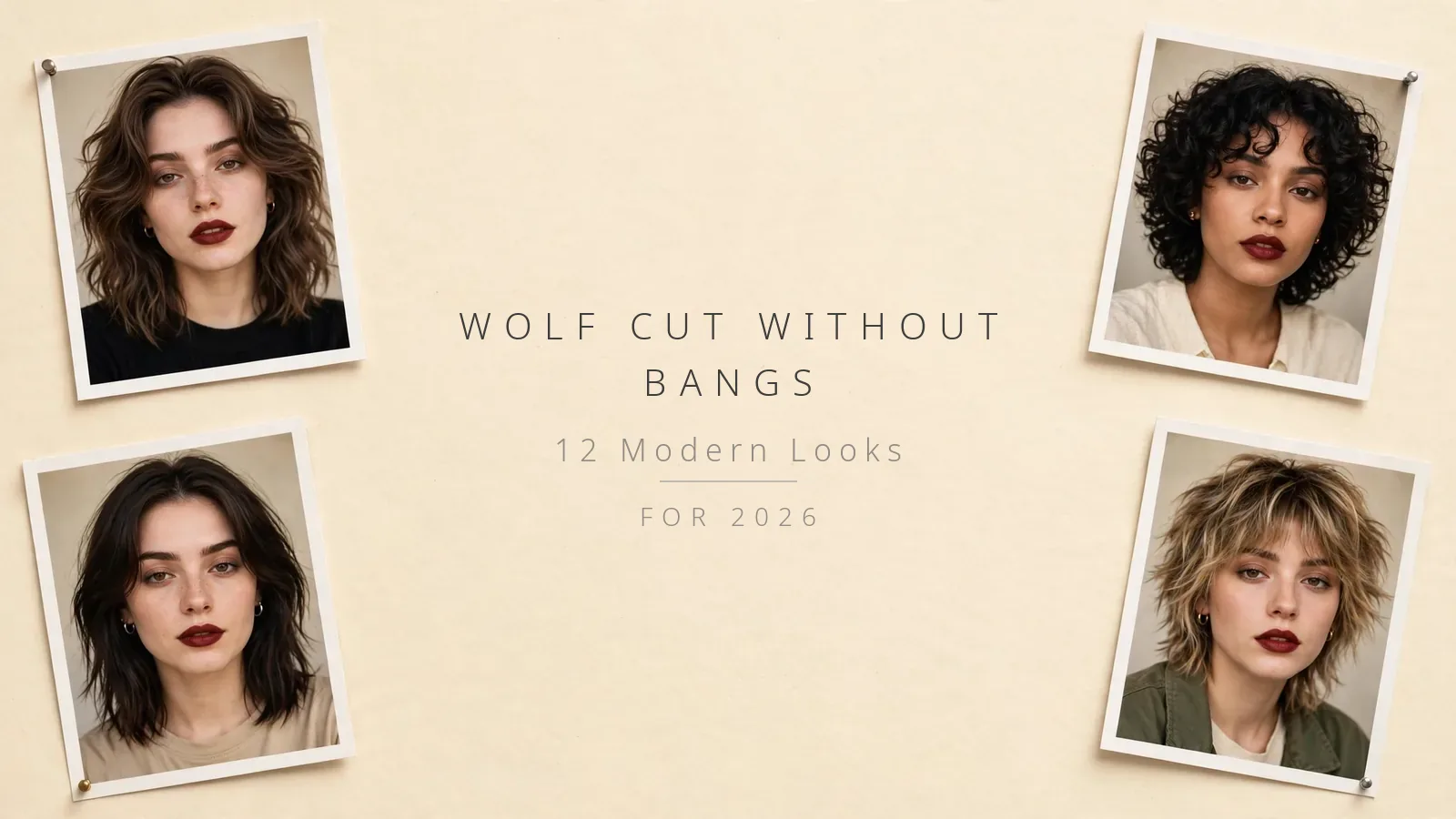
Wolf Cut Without Bangs – 12 Modern Looks for 2026
You love the wolf cut — the wild crown volume, the shaggy layers, the undone energy — but the idea of bangs makes you tired. Forehead breakouts from fringe sitting on your skin all day, a trim every three weeks just to keep them out of your eyes, and that awkward growing-out phase where your bangs are somehow both too long and too short at the same time. If that sounds familiar, a wolf cut without bangs is exactly what you have been looking for: all of the movement and shape, none of the fringe maintenance.
The secret is that removing bangs does not remove the haircut. In a wolf cut without bangs, the face-framing layers take over the job the fringe used to do — they open up your forehead, shape your cheekbones, and keep the silhouette soft while the shorter crown layers keep the volume alive on top. Below are 12 versions that prove you never needed bangs in the first place, plus an honest guide to picking the right one for your hair type and the mistakes that flatten the cut by noon.
Table of Contents
- 12 Wolf Cut Without Bangs Ideas
- 1. Classic Open-Face Wolf Cut Without Bangs
- 2. Medium Effortless Wolf Cut Without Bangs
- 3. Shaggy Layers Wolf Cut Without Bangs
- 4. Curly Wolf Cut Without Bangs
- 5. Wavy Wolf Cut Without Bangs
- 6. Subtle Polished Wolf Cut Without Bangs
- 7. High-Volume Wolf Cut Without Bangs for Fine Hair
- 8. Disconnected Edgy Wolf Cut Without Bangs
- 9. Beachy Texture Wolf Cut Without Bangs
- 10. Tapered Wolf Cut Without Bangs for Thick Hair
- 11. Deep Side-Part Wolf Cut Without Bangs
- 12. Retro 70s Flip Wolf Cut Without Bangs
- How to Choose the Right Wolf Cut Without Bangs for Your Hair Type
- Common Mistakes to Avoid (Why the Volume Dies by Noon)
- FAQs
- Which wolf cut without bangs is truly wash-and-go?
- Will a wolf cut without bangs work on fine, straight hair?
- How often do I need trims to keep the shape?
- Can I get a wolf cut without bangs if my hair is very curly?
- What exactly do I ask for at the salon?
- How do I grow it out without it turning into a mullet?
- Why does my volume die by noon, and how do I fix it?
- Is a wolf cut without bangs better than one with bangs?
12 Wolf Cut Without Bangs Ideas
1. Classic Open-Face Wolf Cut Without Bangs
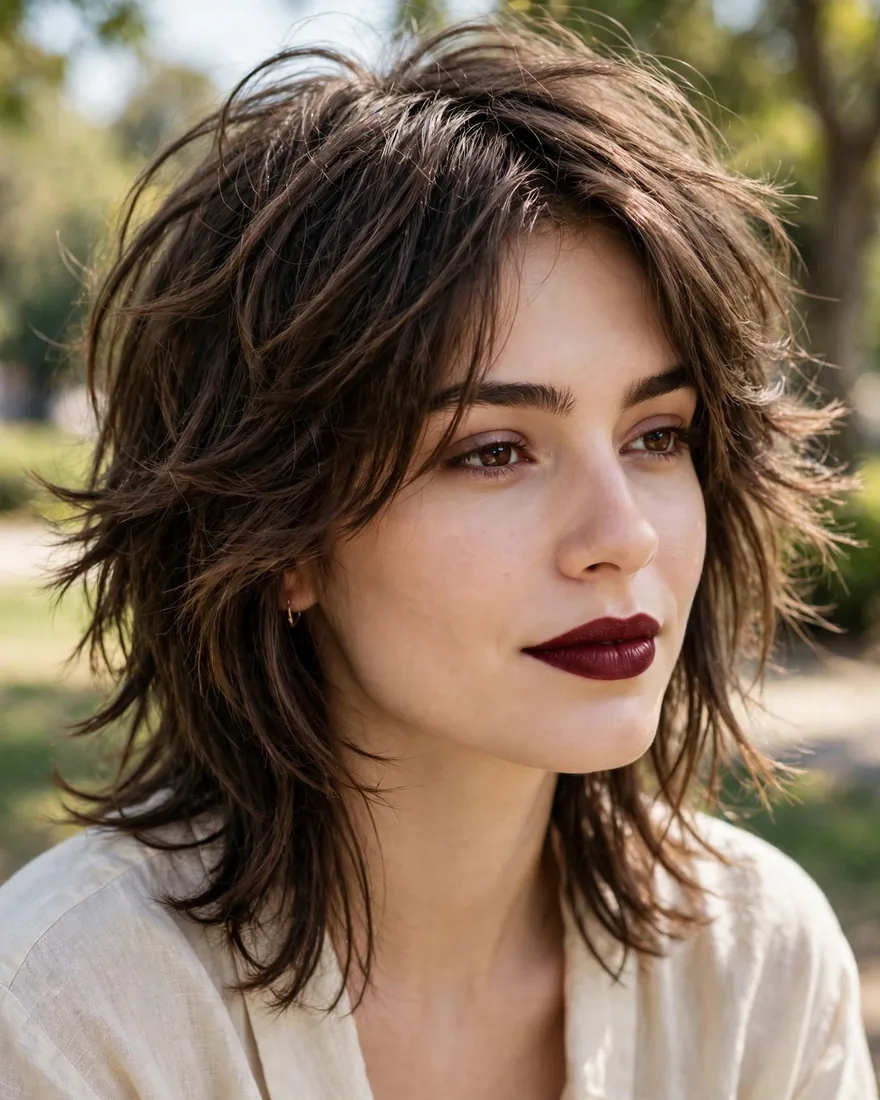
This is the archetype everything else is built on: a full, rounded crown, layers that drop from the cheekbones down past the shoulders, and a completely open forehead. The longest face-framing pieces start right at the cheekbone, so your face gets the framing effect of bangs without a single strand touching your forehead. It reads unmistakably wolf — shaggy, textured, a little wild — while staying clean around the face.
Benefits:
- No fringe sitting on your forehead, so no heat rash or breakouts in summer
- The open face makes this the most low-maintenance version of the cut
- Grows out gracefully — the layers just get longer instead of turning awkward
Pro Tip: Ask your stylist to keep the shortest face-framing layer at or below the cheekbone. Anything shorter creeps toward curtain-bang territory and starts needing the same upkeep you were trying to avoid.
How To Style: Rough-dry upside down with a little texturizing spray at the roots, then let the mid-lengths air-dry. A quick pass of a flat iron bent outward at the very ends adds the signature flick without touching the top.
Best For: Thick, wavy hair that can hold the crown volume on its own. Fine, straight hair will need more help from styling products to keep this from going flat.
2. Medium Effortless Wolf Cut Without Bangs
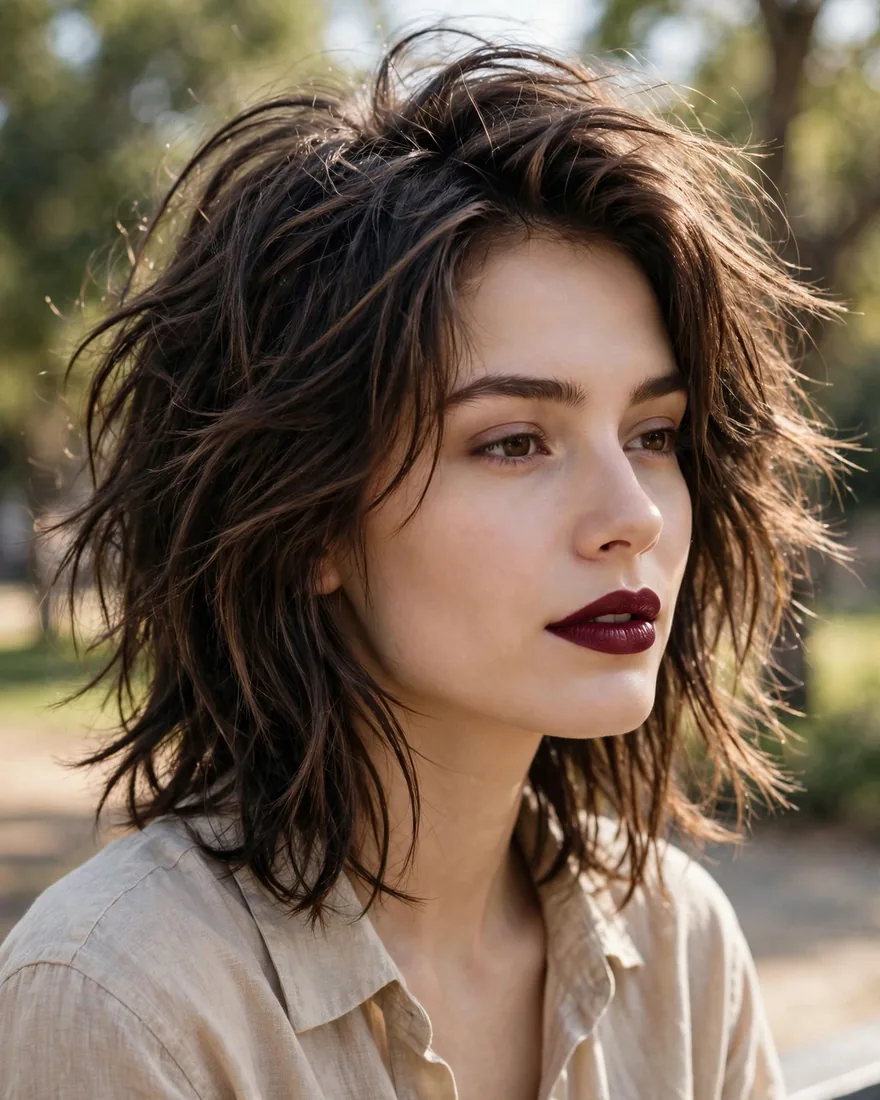
The medium-length take on the wolf cut is the one you see air-dried on the street and wonder how it looks that good with no effort. Sitting between the collarbone and the armpits, it has enough weight to stay controlled and enough layering to move. This is the version most people should start with, because it is the most forgiving if your hair has a mind of its own.
Benefits:
- The sweet spot for daily styling — five minutes or none at all
- Medium length hides uneven layer grow-out better than short versions
- Works tied back: the layers frame the face when the rest is in a claw clip
Pro Tip: Sleep with it in a loose top bun and it wakes up with exactly the right bend. Re-wetting it every morning undoes the natural texture you want to keep.
How To Style: Apply a pea-sized amount of styling cream to damp hair, scrunch, and walk away. If the top lies flat, lift just the roots with a blow-dryer for thirty seconds — the mid-lengths do not need heat.
Best For: Medium-density straight to wavy hair, and anyone trying the wolf cut for the first time without committing to a dramatic length.
3. Shaggy Layers Wolf Cut Without Bangs
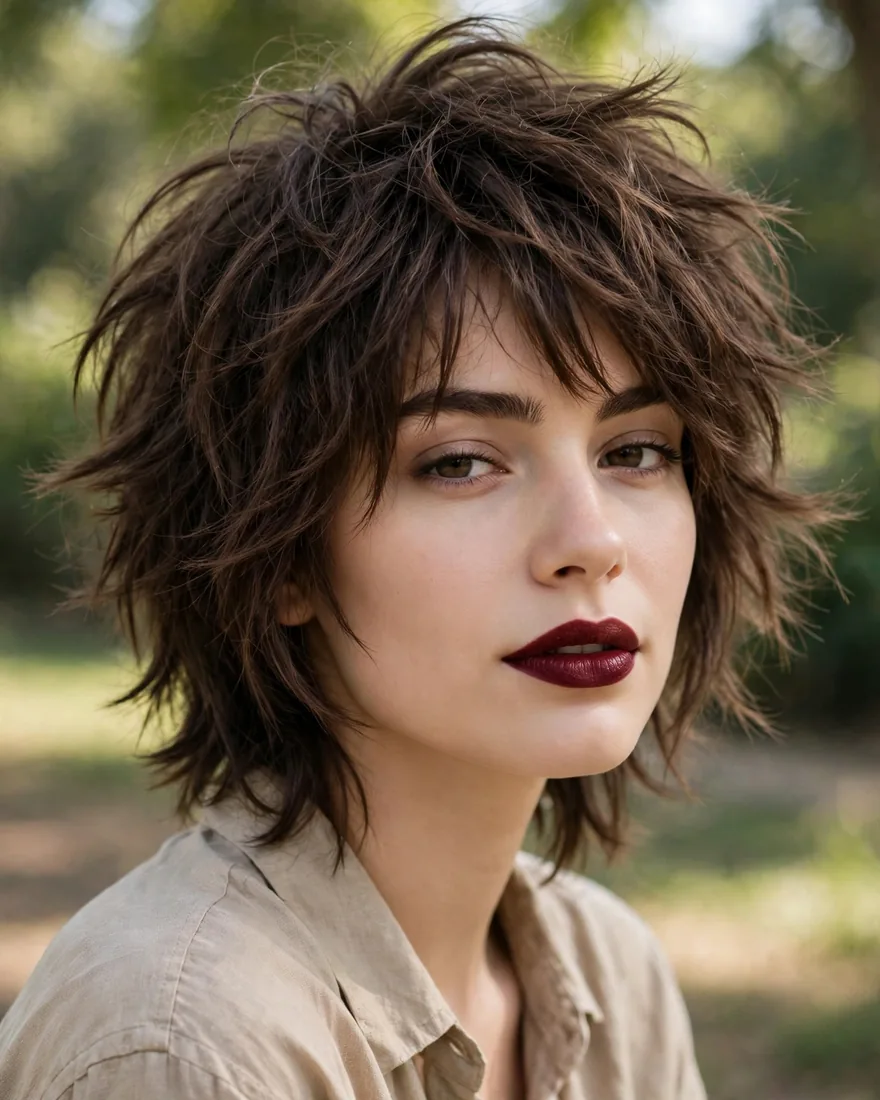
When the wolf cut leans all the way into its shag roots, you get this: shorter, choppier layers stacked from the crown down, tons of texture, and an open forehead that keeps it from looking heavy. The difference from the classic is the attitude — less polished wolf, more rock-and-roll shag. The layers are cut shorter and more aggressively, so the hair moves in pieces instead of falling in a sheet.
Benefits:
- Maximum texture with minimum styling — the cut does the work
- The open forehead balances the busyness of heavy layering
- Thins out thick hair visually without needing thinning shears
Pro Tip: This cut looks best slightly messy, so resist the urge to brush it smooth. A wide-tooth comb or just your fingers keeps the piece-y separation intact.
How To Style: Work a small amount of texture paste through dry mid-lengths and ends, twisting random sections to define the pieces. A diffuser on low heat for two minutes sets the shape if you need it to last through the evening.
Best For: Thick, wavy to curly hair with natural texture to spare. On very fine hair, ask for longer layers so you do not lose density.
4. Curly Wolf Cut Without Bangs

Curly hair and wolf cuts were made for each other, and skipping the bangs is the smartest version of the pairing. Without a fringe, your curls are free to do what they want around your face — the open forehead keeps curls from shrinking up into a wall of fringe, and the layered crown gives each curl room to spring instead of sitting on top of each other. This is the closest thing to a wash-and-go wolf cut that exists. If your curls are on the tighter side, the layered approach of a curly wolf cut keeps the shape round instead of triangular.
Benefits:
- No bangs means no battle with curl shrinkage around the forehead
- The open shape shows off your curl pattern instead of hiding it
- Truly minimal daily styling — refresh with water, not a full restyle
Pro Tip: Have your stylist cut it dry, curl by curl. Wet curly hair lies, and layers cut on wet hair always bounce up shorter than expected — especially around the crown where the wolf cut needs its volume.
How To Style: Scrunch curl cream into soaking-wet hair, then either diffuse or air-dry. On day two, mist with water and scrunch — never brush. A little oil on the ends keeps the frizz halo under control.
Best For: Naturally curly to coily hair (2C and up). The cut works with your texture instead of fighting it, which is why it needs the least styling of any version here.
5. Wavy Wolf Cut Without Bangs
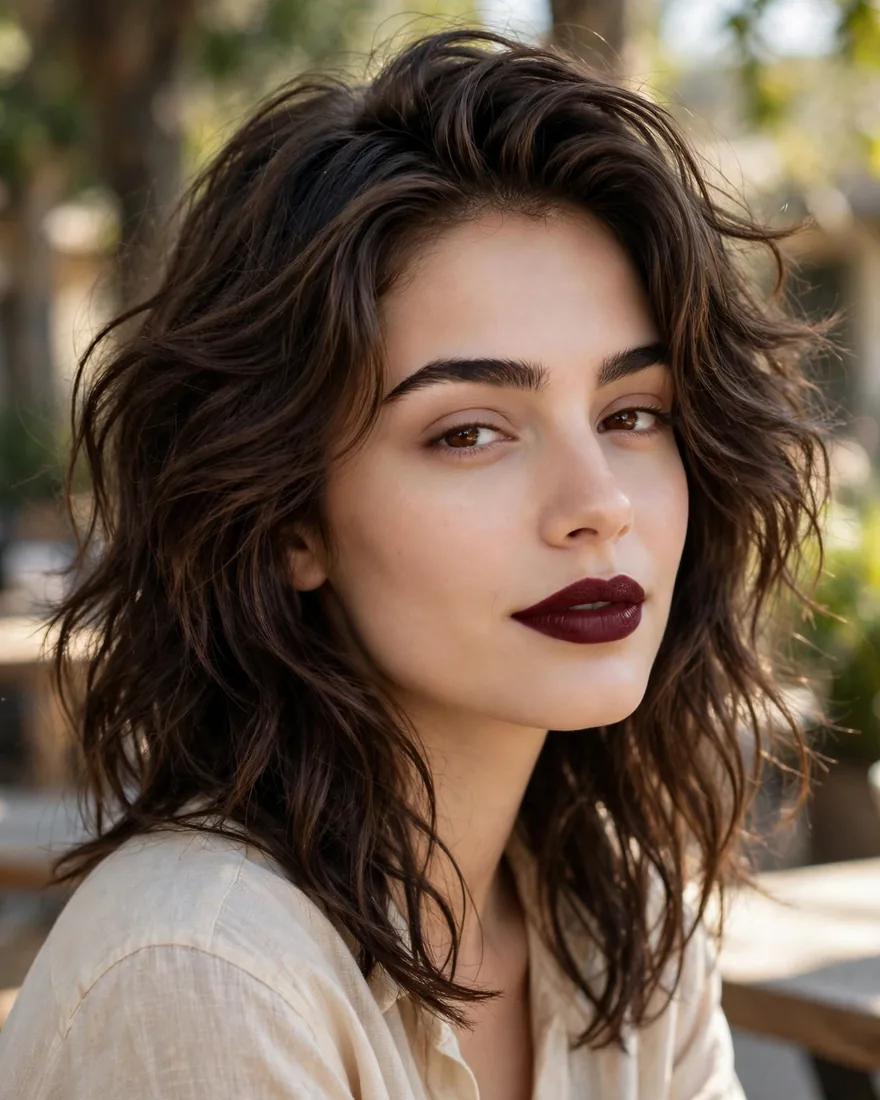
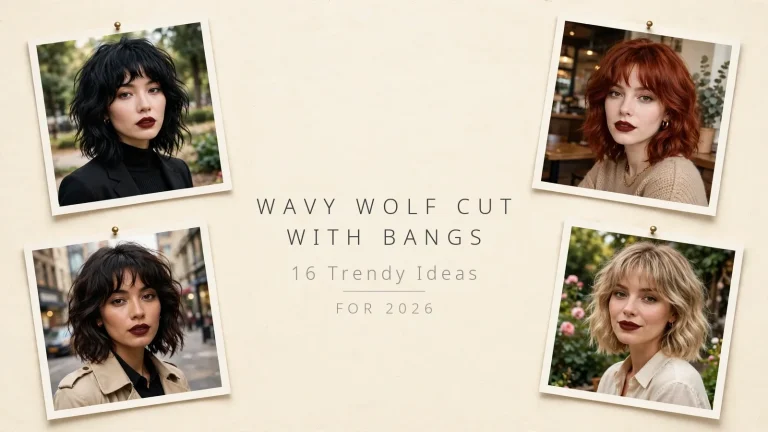
The wavy version is the beach-vacation haircut that somehow also works at the office. Soft S-waves fall through the layers, the open forehead keeps it fresh and modern, and the whole thing looks intentional even when you did nothing to it. It is less dramatic than the curly or shaggy versions, which makes it the safest pick if you need a wolf cut that reads professional from nine to five. Fans of the fringed version should compare notes with the wavy wolf cut with bangs to see what the open forehead changes.
Benefits:
- The most versatile version — dresses up or down without restyling
- Waves disguise layer grow-out, so trims can stretch further apart
- Air-drying actually works here, unlike straighter hair types
Pro Tip: Your natural wave pattern decides where the layers fall, so bring photos of your hair air-dried — not styled — to your appointment. The stylist needs to see the real texture, not the best-case version.
How To Style: Scrunch a golf-ball-sized amount of mousse into damp hair and air-dry or diffuse. If some sections dry too straight, wrap them around a curling wand away from your face for ten seconds each — just the mid-lengths, never the roots.
Best For: Naturally wavy hair (2A to 2C). Straight hair can fake it but will need heat to hold the wave through the day.
6. Subtle Polished Wolf Cut Without Bangs
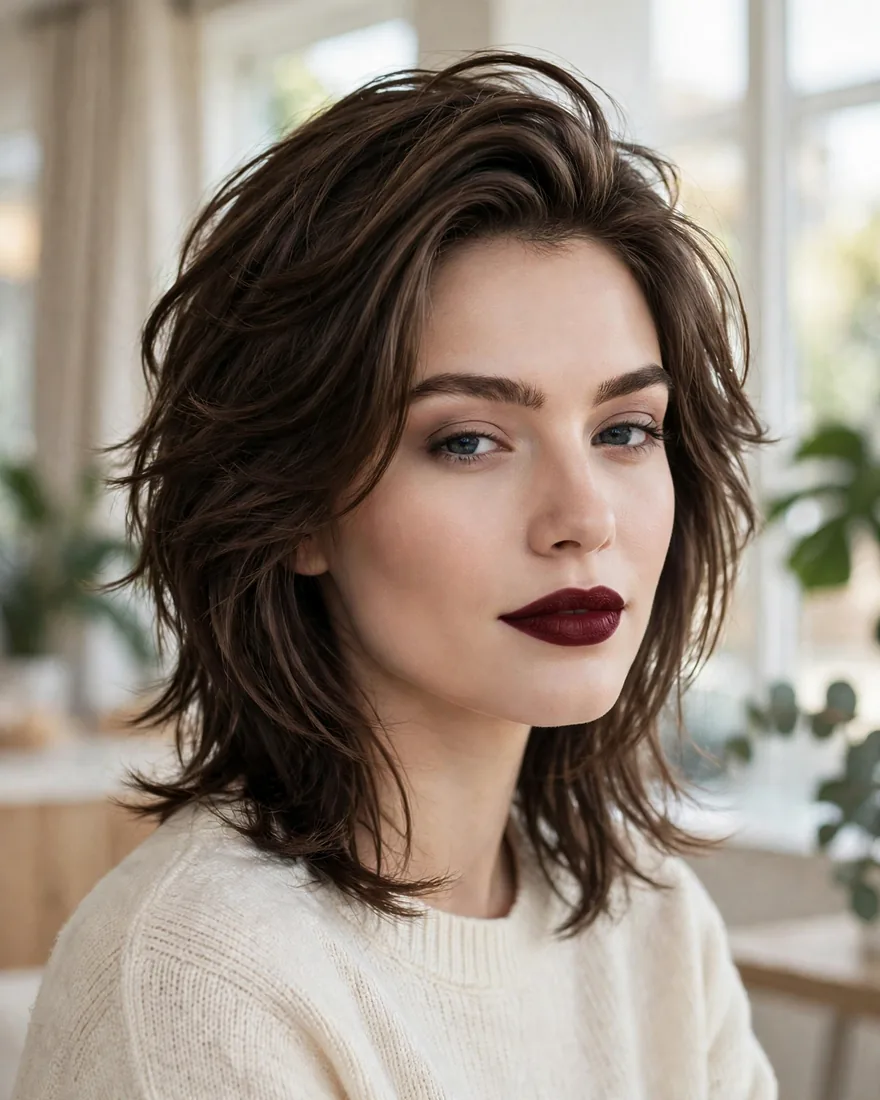
Not every wolf cut has to scream. The subtle version keeps the signature elements — shorter crown, face-framing layers, textured ends — but softens them into something you can wear to a client meeting. The layers are longer and more blended, the crown volume is gentle instead of dramatic, and the open forehead keeps the whole thing looking clean and deliberate rather than undone.
Benefits:
- Wolf cut energy that passes in conservative workplaces
- The blended layers grow out almost invisibly
- Easiest version to style straight without losing the shape
Pro Tip: This is the version to choose if you are not sure you are a wolf-cut person yet. It is the easiest to grow out or reshape into something else if you change your mind in three months.
How To Style: Blow-dry smooth with a round brush, flipping the face-framing layers away from your face. A light serum on the ends keeps it polished. For evenings, scrunch in a little texture cream and it leans wolf again.
Best For: Straight to slightly wavy hair in professional settings, and first-timers who want the shape without the commitment.
7. High-Volume Wolf Cut Without Bangs for Fine Hair
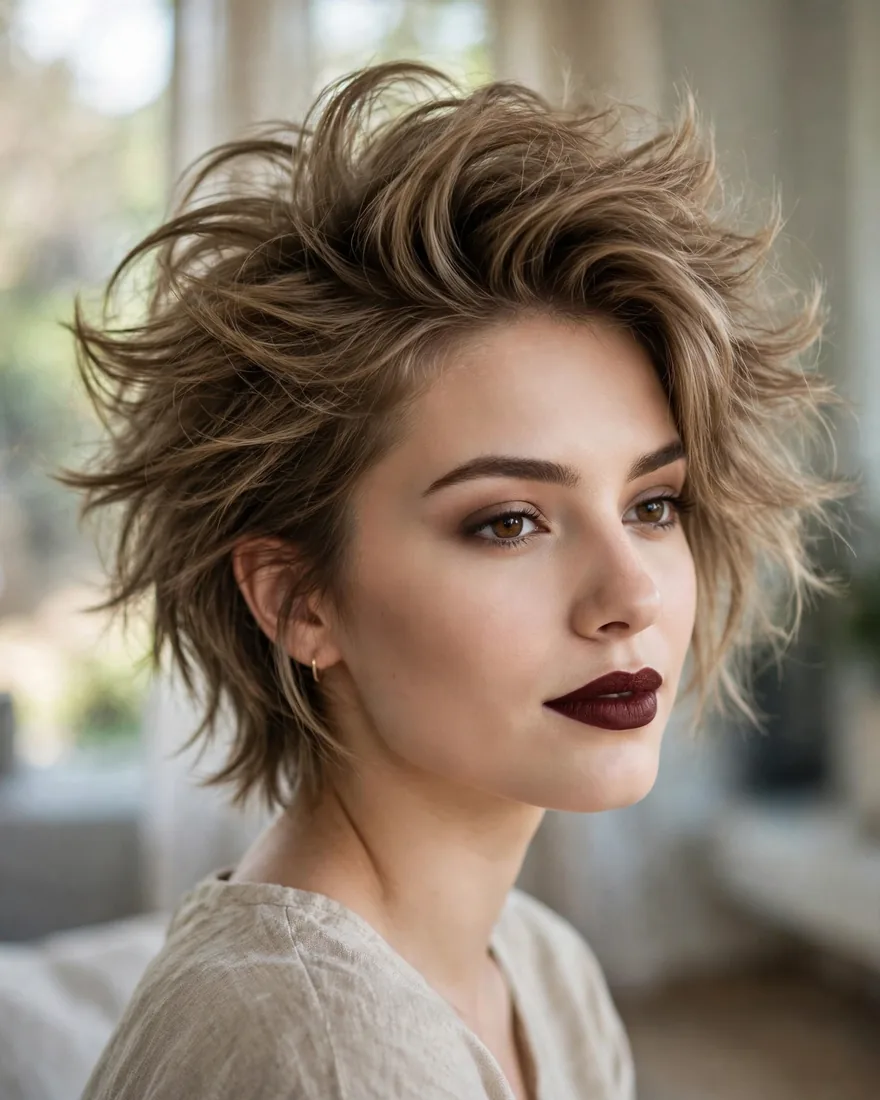
Fine hair gets the wolf cut it deserves here: shorter crown layers stacked to manufacture the volume that fine hair refuses to give naturally, with an open forehead that stops the top from looking weighed down. The trick is that the layers are cut to sit on top of each other, creating lift through architecture rather than texture. Without bangs stealing density from the crown, every strand is working toward height.
Benefits:
- Creates visible volume on hair that usually lies flat
- No bangs means no thin, stringy fringe drawing attention to fine texture
- Shorter crown layers mean less weight pulling everything down
Pro Tip: Dry shampoo is not optional for this one — it is the foundation. Apply it to dry roots before bed so it absorbs oil overnight, and your morning volume starts at twice the height.
How To Style: Blow-dry the crown upside down with a root-lifting spray, then set with a cool shot. Backcomb just the under-layers at the crown (never the top layer) for invisible lift, and finish with a light-hold spray.
Best For: Fine, straight hair that needs architectural help. Thick hair does not need this version — the short crown layers can make thick hair look puffy instead of voluminous.
8. Disconnected Edgy Wolf Cut Without Bangs
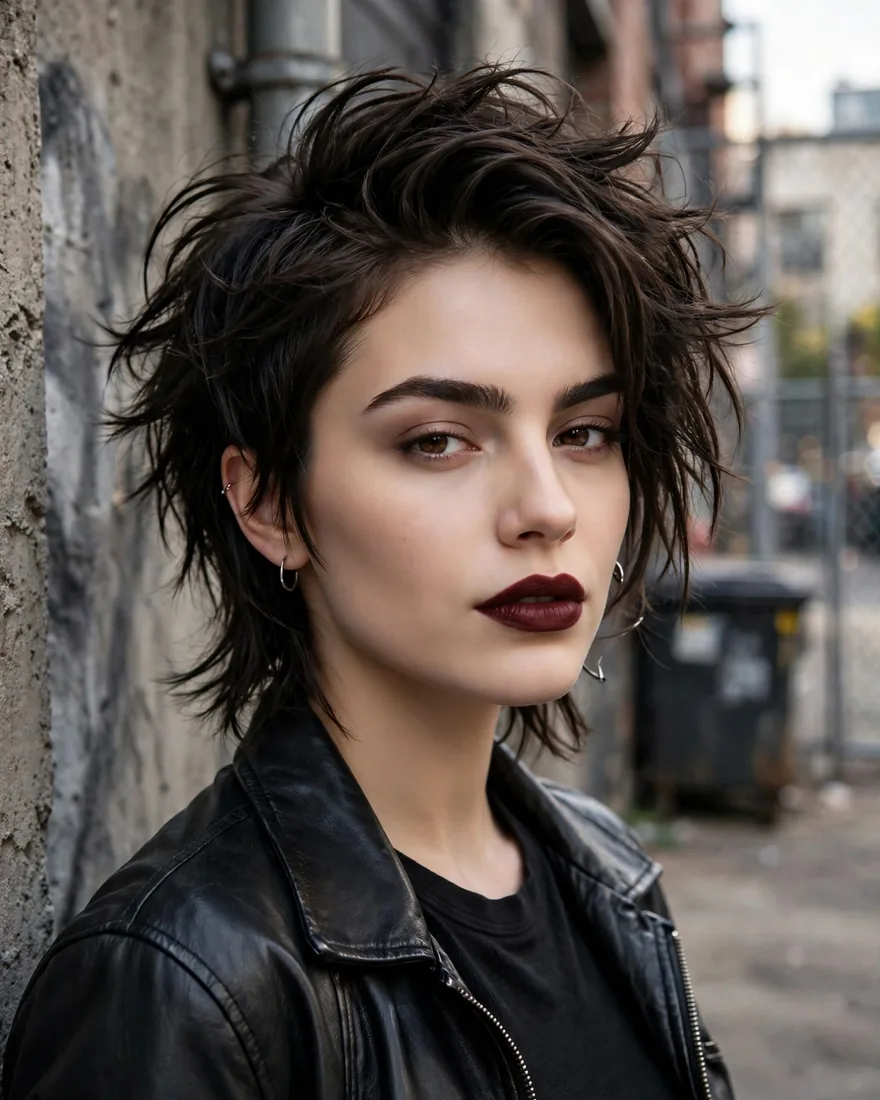
This is the wolf cut with its safety off. Disconnected layers — sections cut deliberately shorter than the hair around them — create sharp, visible separation and a silhouette that looks carved rather than grown. The open forehead is essential here: with this much drama happening through the lengths, a fringe would push it from edgy into chaotic. Instead the clean face keeps the whole look wearable.
Benefits:
- The boldest, most fashion-forward version of the no-bangs wolf cut
- Disconnection creates movement that holds even on straight hair
- Photographs incredibly well — the layers catch light in pieces
Pro Tip: Disconnected cuts reveal every styling choice, good and bad. If you are not going to style it most days, pick a softer version — this one looks unfinished, not effortless, when it is truly undone.
How To Style: Define the disconnected pieces with a small amount of pomade or wax, twisting each section in the direction it was cut. A flat iron on select pieces sharpens the separation. This is a daily-styling cut, not a wash-and-go one.
Best For: Straight to wavy hair with enough density to show the disconnection. Very fine hair can look sparse with this much separation.
9. Beachy Texture Wolf Cut Without Bangs
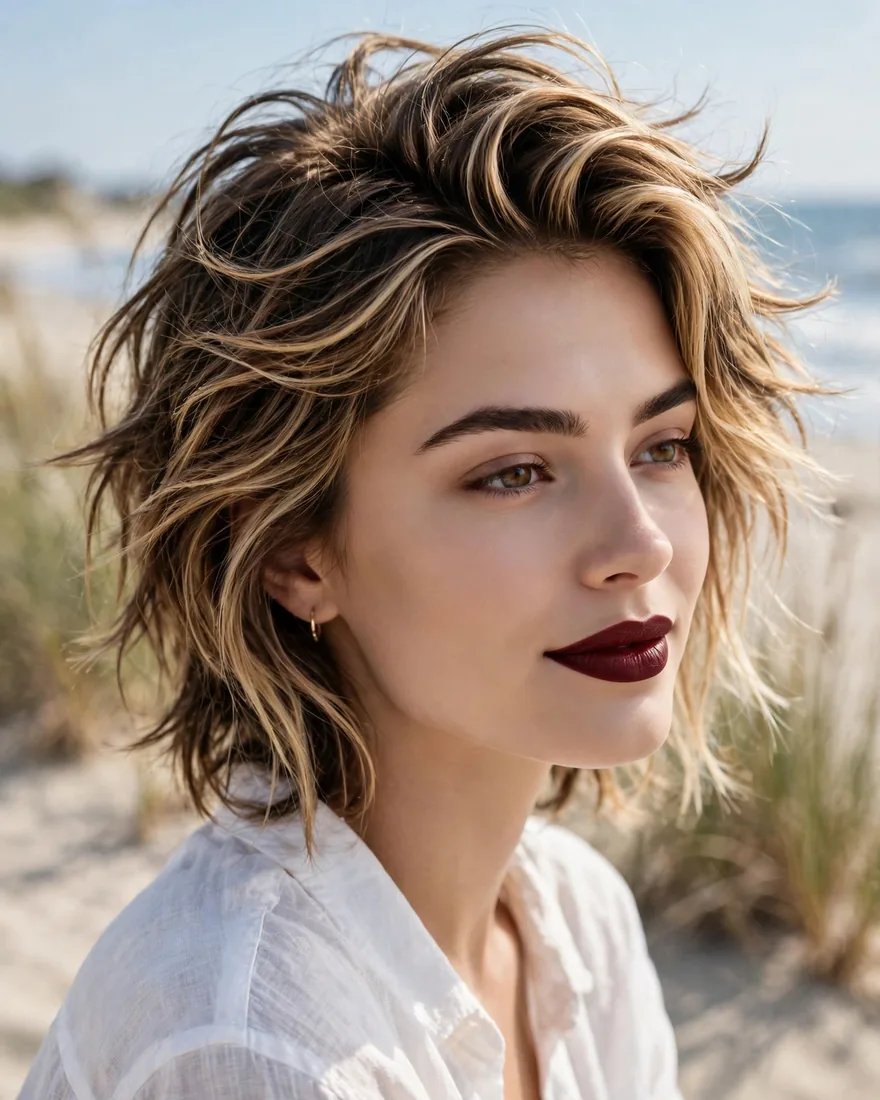
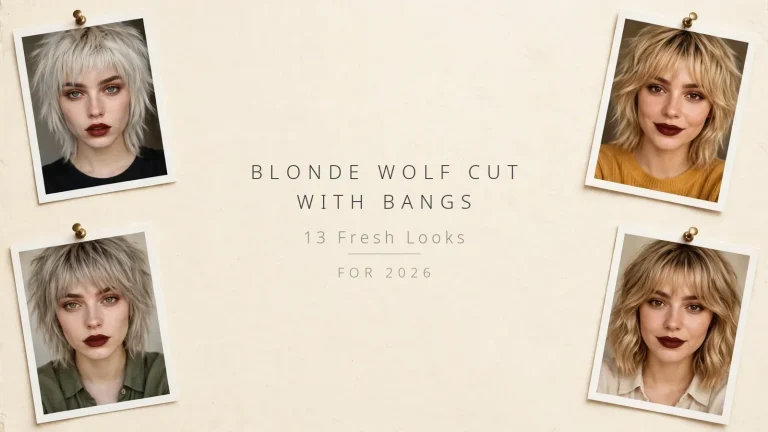
Salt air, sun, and zero effort — the beachy wolf cut without bangs is the vacation version of the trend. The layers are cut to enhance natural separation, the texture is deliberately undone, and the open forehead keeps it from looking like you tried too hard. It pairs beautifully with sun-lightened color, which is why so many blonde wolf cut wearers end up here in summer.
Benefits:
- Designed to look better slightly messy — humidity is a feature, not a bug
- The most forgiving version for uneven natural texture
- Needs the least precision from your stylist
Pro Tip: Salt spray on dry hair gives better texture than salt spray on wet hair. Wet application just makes everything crunchy; dry application creates the piece-y separation you are after.
How To Style: Mist dry hair with salt spray, scrunch, and leave it alone. That is genuinely the whole routine. If the top needs lift, a few minutes with a diffuser on the roots is enough.
Best For: Wavy to curly hair with natural texture. Bone-straight hair can get there but will need the salt spray plus a little heat to hold it.
10. Tapered Wolf Cut Without Bangs for Thick Hair
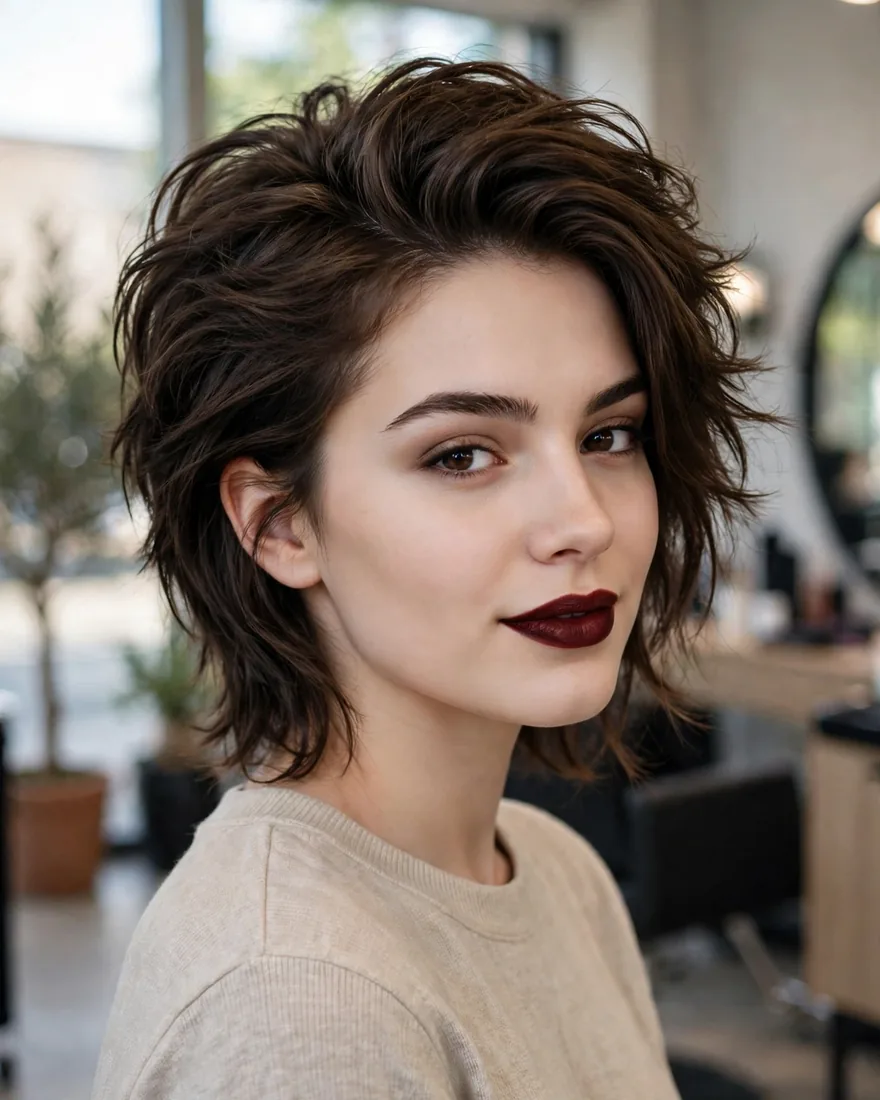
Thick hair plus a wolf cut can equal a triangle if the bulk is not managed — the tapered version is the fix. Internal layering and tapering through the mid-lengths remove weight where thick hair goes wide, while the crown keeps its height and the open forehead keeps the face from disappearing behind hair. The result is a wolf cut that moves instead of sitting like a helmet.
Benefits:
- Removes bulk without thinning shears or wispy ends
- The silhouette stays narrow at the sides where thick hair usually flares
- Dries faster than an unlayered thick cut — less weight, more airflow
Pro Tip: Tell your stylist you want the weight removed through tapering, not thinning. Thinning shears create frizz on thick hair as it grows; tapered layers grow out clean.
How To Style: A smoothing cream on damp hair keeps the tapering sleek through the mid-lengths. Diffuse or air-dry — the cut handles the shape, you just keep the frizz down. A round brush on the face-framing pieces gives them that clean outward flip.
Best For: Thick, dense hair of any texture. This is the version thick-haired readers should ask for by name.
11. Deep Side-Part Wolf Cut Without Bangs
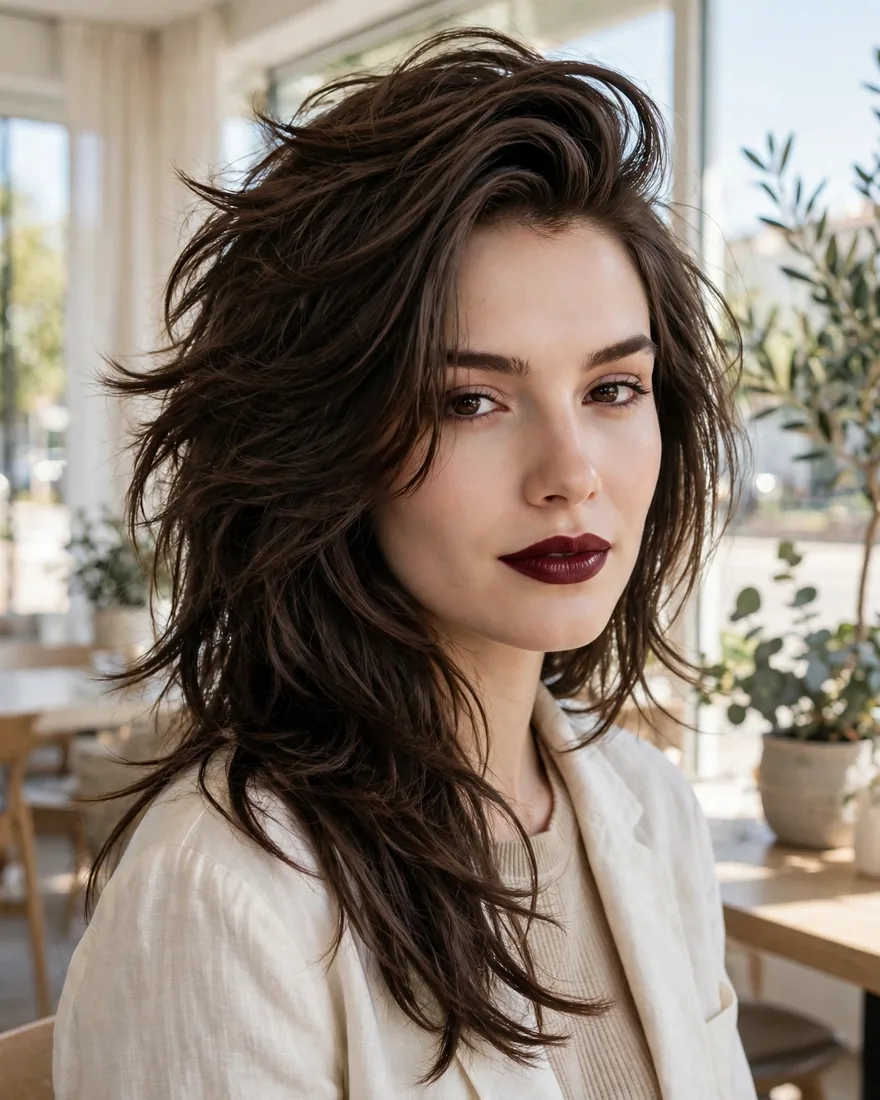
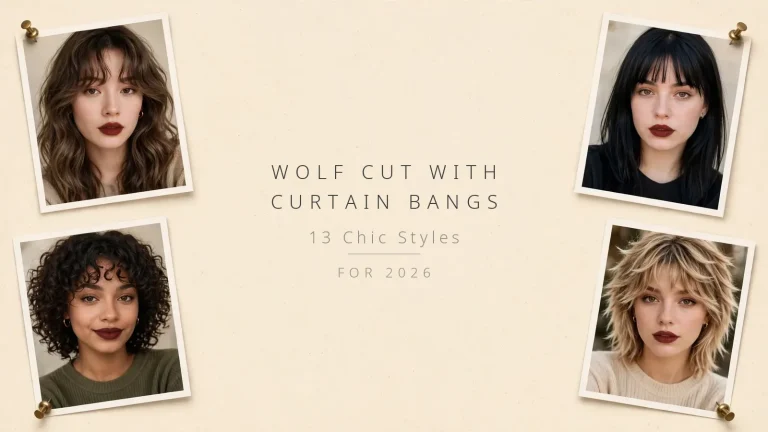
A deep side part does for the no-bangs wolf cut what bangs do for the fringed one: it creates asymmetry, frames one side of the face, and gives the hair a direction to fall. The heavy side sweeps across the forehead in a soft drape while the lighter side stays tucked and clean. It is the most glamorous version here, and the closest in spirit to the wolf cut with curtain bangs — just without the fringe to maintain.
Benefits:
- Instant drama and asymmetry with zero extra cutting
- The swept side acts like a fringe without the trim schedule
- Photographs beautifully — the part creates a natural focal line
Pro Tip: Train the part when your hair is wet. A deep side part set on dry hair migrates back to center by afternoon; set it with a little gel on damp hair and it holds for days.
How To Style: Part deeply on damp hair, apply a smoothing product, and blow-dry the heavy side over and away from the part for volume. Tuck the light side behind your ear. A large-barrel curling iron on the ends of the heavy side adds the red-carpet finish.
Best For: Medium to thick straight or wavy hair that can hold a part. Very curly hair tends to ignore parts, so this works better on looser textures.
12. Retro 70s Flip Wolf Cut Without Bangs
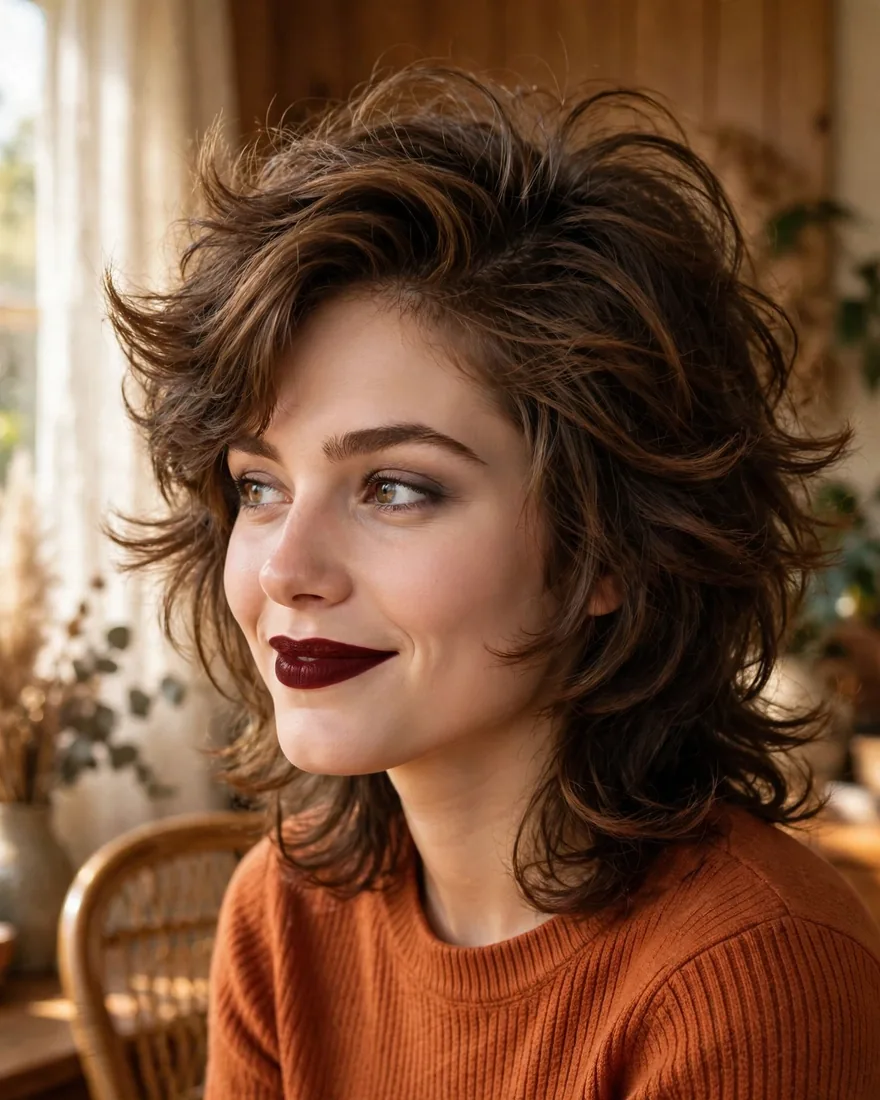
The 70s flip is back, and the no-bangs wolf cut is its perfect vehicle. Layers are cut to flip outward at the ends — cheekbone pieces kick out, mid-lengths bounce, and the open forehead keeps the whole thing from tipping into costume territory. It is playful, bouncy, and unmistakably retro without looking like you are wearing a wig. Shorter takes on the silhouette borrow from the short wolf cut playbook but keep the forehead open.
Benefits:
- The bounciest, most fun version — maximum movement in the ends
- The flip hides split ends between trims
- Looks styled with surprisingly little effort once the cut is right
Pro Tip: The flip lives or dies on the ends, so keep them healthy. A dusting trim every eight weeks preserves the bounce — split ends will not flip, they just frizz.
How To Style: Blow-dry with a round brush, rolling the ends outward as you go. Velcro rollers on the face-framing pieces for ten minutes while you do your makeup give the flip extra staying power. A light-hold spray locks it without stiffness.
Best For: Medium-density straight to wavy hair. The flip needs some length to work, so this suits medium to long versions best.
How the 12 looks compare at a glance:
| Look | Best Hair Type | Styling Effort |
|---|---|---|
| Classic Open-Face | Thick, wavy | Medium |
| Medium Effortless | Medium straight–wavy | Low |
| Shaggy Layers | Thick wavy–curly | Low |
| Curly | Curly–coily (2C+) | Low |
| Wavy | Wavy (2A–2C) | Low–Medium |
| Subtle Polished | Straight–wavy | Medium |
| High-Volume for Fine Hair | Fine, straight | Medium |
| Disconnected Edgy | Straight–wavy, dense | Medium |
| Beachy Texture | Wavy–curly | Low |
| Tapered for Thick Hair | Thick, dense | Low |
| Deep Side-Part | Medium–thick straight/wavy | Medium |
| Retro 70s Flip | Medium straight–wavy | Medium |
How to Choose the Right Wolf Cut Without Bangs for Your Hair Type
Here is the honest truth most trend roundups skip: the wolf cut is not one haircut, and your hair type should pick the version, not the photo you saved. Start with texture, not aesthetics. If your hair is fine and straight, you need architecture — the high-volume version (idea 7) builds lift through short stacked crown layers because fine hair will not create volume on its own. Anything too long or too heavily layered will just lie flat and look stringy by evening.
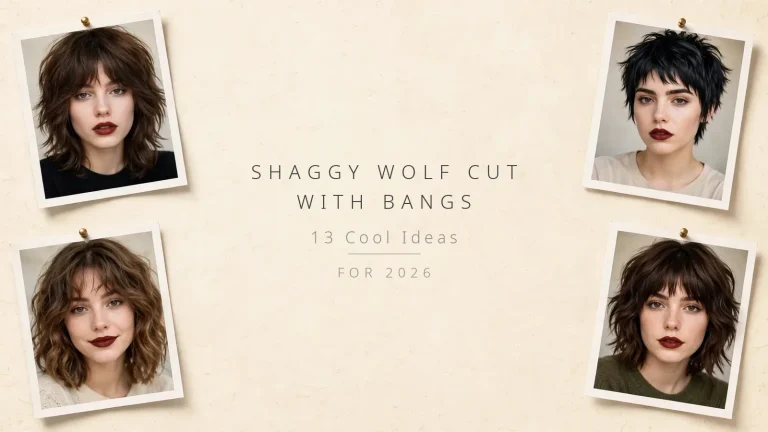
If your hair is thick and wavy, you have the opposite problem: too much of everything. The classic open-face (idea 1) or the tapered version (idea 10) manage bulk through layering that removes weight where it flares. Thick hair can handle — and honestly needs — more aggressive layering than fine hair, because the density keeps the shape from collapsing. And if your hair is curly, stop overthinking it: the curly version (idea 4) is the only one designed around your texture, and it needs the least daily work of any cut on this list. For readers weighing texture-heavy options, the shaggy wolf cut family shows what maximum layering looks like — the no-bangs versions here are its lower-maintenance cousins.
Common Mistakes to Avoid (Why the Volume Dies by Noon)
The number one killer of a wolf cut without bangs is layer placement that fights your hair’s natural fall. If the shortest layers are cut where your hair wants to lie flat, no product on earth will keep them lifted — the cut has to work with gravity, not against it. This is why the consultation matters more than the styling: ask your stylist where your crown naturally lifts and build the shortest layers there, not where a diagram says they should go.
The second mistake is the razor on thick, frizzy hair. Razors create wispy ends that look amazing for two weeks and then frizz into a halo as they grow. On thick or frizz-prone hair, insist on scissor-cut layers — they grow out clean and keep the ends blunt enough to behave. Related to that: blunt scissor ledges, where layers are cut too visibly and create shelves instead of flow. Good layers should melt into each other; if you can see distinct steps, they were cut too bluntly or too far apart.
Finally, watch the grow-out. A wolf cut without bangs grows into a mullet faster than the fringed versions do, because there is no fringe to distract from the length imbalance. The fix is simple: book a shaping trim every eight to ten weeks, even if you are growing it out. You are not losing length — you are keeping the silhouette intentional. Longer layered styles like the long wolf cuts show how regular shaping keeps length looking deliberate instead of neglected.
FAQs
Which wolf cut without bangs is truly wash-and-go?
The curly version (idea 4) is the only genuinely wash-and-go option — scrunch in product and leave it. The medium effortless (idea 2) and beachy (idea 9) versions are close, needing five minutes or less. The disconnected (idea 8), 70s flip (idea 12), and deep side-part (idea 11) all need real heat styling to look right, so do not choose them if you will not style daily.
Will a wolf cut without bangs work on fine, straight hair?
Yes, but only the right version. Fine straight hair needs the high-volume cut (idea 7) with short stacked crown layers to manufacture lift — longer, heavily layered versions will go flat and stringy. Use dry shampoo at the roots and a root-lifting spray, and accept that fine hair will always need more styling help than textured hair to hold this shape.
How often do I need trims to keep the shape?
Every eight to ten weeks for a shaping trim — and this matters more than with fringed versions, because there is no fringe to distract from the silhouette as it grows. You are not losing length; the trim just rebalances the layers. The curly and beachy versions can stretch to twelve weeks since their texture hides grow-out better.
Can I get a wolf cut without bangs if my hair is very curly?
Absolutely — curly hair is arguably the best candidate. Have it cut dry, curl by curl, so the stylist can see the true shrinkage. The open forehead keeps curls from stacking into a wall of fringe, and the layered crown gives each curl room to spring. Avoid razors entirely on curly hair; scissor-cut layers grow out cleanly.
What exactly do I ask for at the salon?
Say: a wolf cut with no bangs — short stacked layers at the crown for volume, face-framing layers starting at the cheekbone or below, textured ends, and an open forehead. Bring photos of the specific version you want, and photos of your own hair air-dried so the stylist sees your real texture. Mention your daily styling limit honestly — it changes which version they should cut.
How do I grow it out without it turning into a mullet?
Keep the shaping trims every eight to ten weeks even while growing it out — this is the whole secret. The stylist takes weight off the back and rebalances the layers without touching your length goal. Skip the trims and the back outgrows the front into a mullet; keep them and the grow-out looks intentional the whole way.
Why does my volume die by noon, and how do I fix it?
Usually one of three things: the shortest layers were cut where your hair naturally lies flat (a consultation problem, not a styling problem), your roots are weighed down by heavy product, or you are over-touching it during the day. Fix the cut first — layers must sit where your crown naturally lifts. Then switch to lightweight products at the roots, dry shampoo before bed, and stop running your fingers through it.
Is a wolf cut without bangs better than one with bangs?
Better is the wrong word — it is lower-maintenance. No fringe trims every three weeks, no forehead breakouts, no awkward grow-out phase, and the cut grows out more gracefully. You trade away the face-framing drama that bangs give, but the open-face layers here do most of that job. If you hate maintenance, no-bangs wins. If you love the framed look and do not mind trims, bangs are worth it.
The right wolf cut without bangs is the one your hair type can actually sustain — not the prettiest photo, but the version that still looks good on day three with minimal effort. Pick by texture first, be honest about your styling limit, and keep the shaping trims on schedule. Do that, and you get all of the wolf cut’s wild energy with none of the fringe drama.