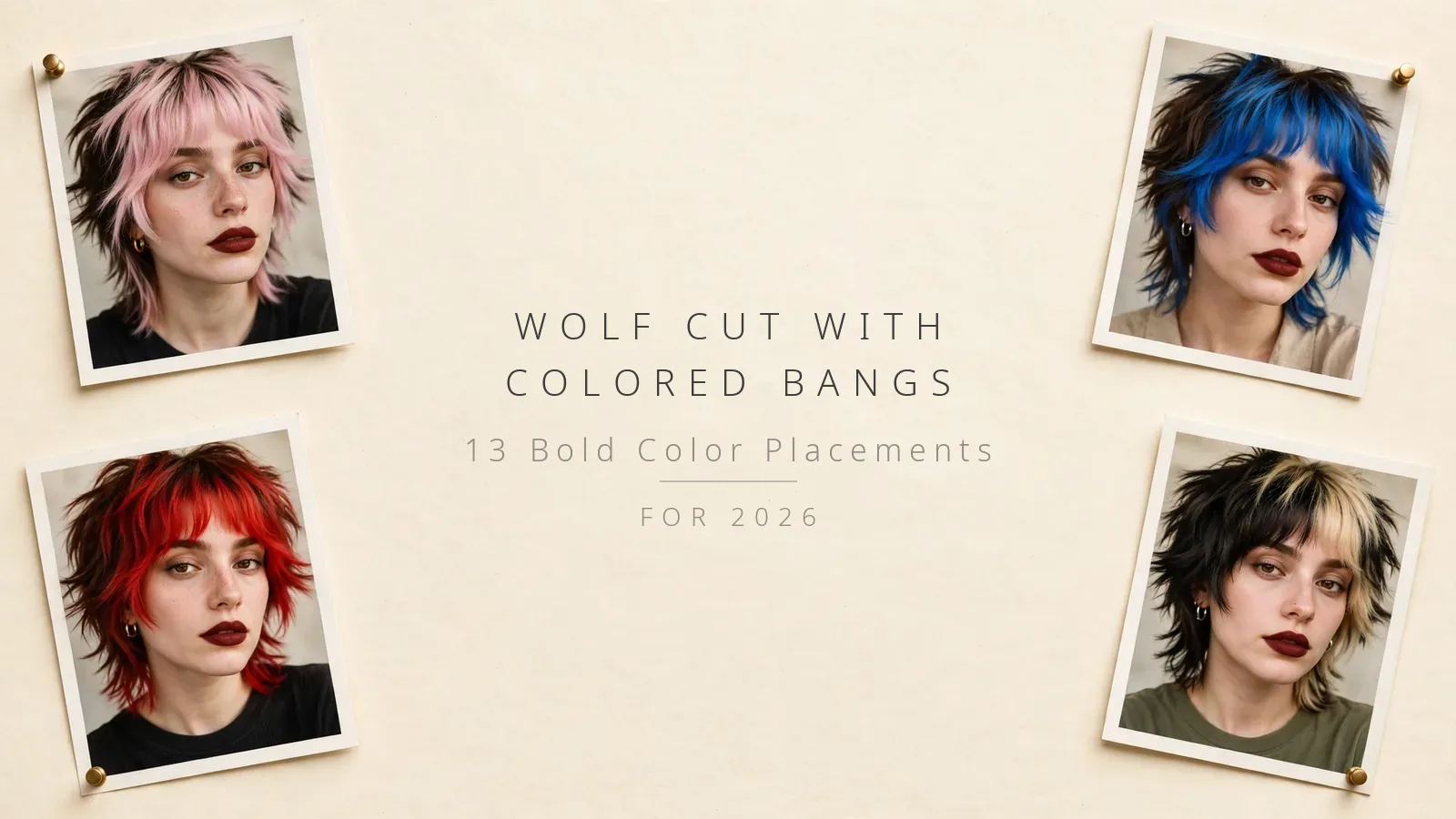
Wolf Cut with Colored Bangs – 13 Bold Ideas
You keep saving the same photos — electric blue fringe, pastel pink, fiery red curtain bangs — then close the tab. The fantasy is the color; the fear is everything around it: full-head bleach, damaged layered ends, the salon bill, visible roots at week five, months of awkward grow-out. It feels like all or nothing, so you do nothing.
A wolf cut with colored bangs breaks that stalemate. You color only the fringe — the smallest, most visible section of the cut — and leave the rest untouched. The impact is full-strength because the bangs frame your face, but the commitment is tiny: less bleach, less money, less grow-out, and one trim removes the whole experiment. Below are 13 genuinely distinct color placements — peekaboo panels, split dye, money pieces, ombre melts, foil-isolated stripes — plus shade matching for your skin undertone, upkeep schedules per color family, and the mistakes that ruin colored bangs.
Table of Contents
- Wolf Cut with Colored Bangs – 13 Bold Color Placements to Try in 2026
- 13 Wolf Cut with Colored Bangs Ideas Worth Trying
- 1. Peekaboo Pastel Pink Bangs
- 2. Split-Dye Two-Tone Bangs
- 3. Fiery Red Curtain Bangs
- 4. Electric Blue Inner Fringe
- 5. Deep Teal Layered Bangs
- 6. Neon Green Front Fringe
- 7. Sunset Ombre Curtain Bangs
- 8. Golden Blonde Money Piece
- 9. Dusty Rose Chunky Bangs
- 10. Rainbow Micro Stripes
- 11. Bleached Blonde Contrast Bangs
- 12. Burgundy Wine Choppy Bangs
- 13. Lavender Tipped Bangs
- How to Choose the Right Color for Your Wolf Cut
- How to Keep Colored Bangs Bright and Grow Them Out
- Common Mistakes to Avoid with Colored Bangs
- FAQs
- Do colored bangs need bleach?
- How long does fashion color last on bangs?
- What is the lowest-maintenance vivid shade?
- Can I add color to an older wolf cut?
- Will bleach damage fine wolf-cut layers?
- How do I fade colored bangs fast for work or school?
- Pastel vs vivid: which needs less upkeep?
- How often should I refresh colored bangs?
- Conclusion
13 Wolf Cut with Colored Bangs Ideas Worth Trying
Every idea below is a placement decision for your wolf cut with colored bangs: where the pigment sits, how it is isolated, and how it grows out.
1. Peekaboo Pastel Pink Bangs
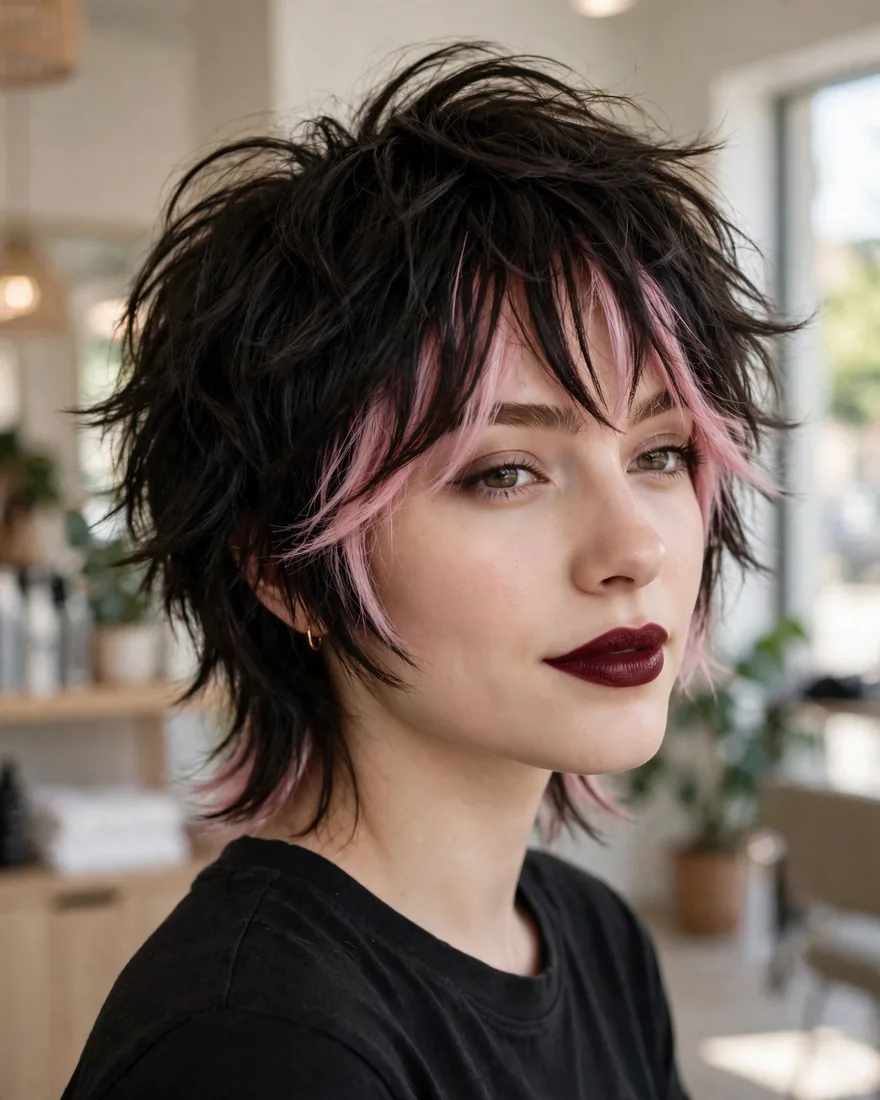
The colorist foils the fringe underlayer and paints it pastel pink, leaving the top layer natural. The pink hides when the fringe sits flat and flashes whenever the bangs part — the lowest-visibility way to wear a wolf cut with colored bangs.
Benefits:
- Hidden for work, revealed for weekends
- Only the underlayer is bleached — minimal damage
- Pastel fades to a soft blush, no harsh regrowth line
Pro Tip: Keep the top layer fully natural — if pink creeps onto the surface, the peekaboo effect is gone.
How To Style: 1. Blow-dry the fringe forward, top layer smooth. 2. Lift the top layer with fingers to control the reveal. 3. Refresh the panel with pink depositing conditioner every two weeks.
Best For: Oval and heart faces; fine to medium-density hair.
2. Split-Dye Two-Tone Bangs
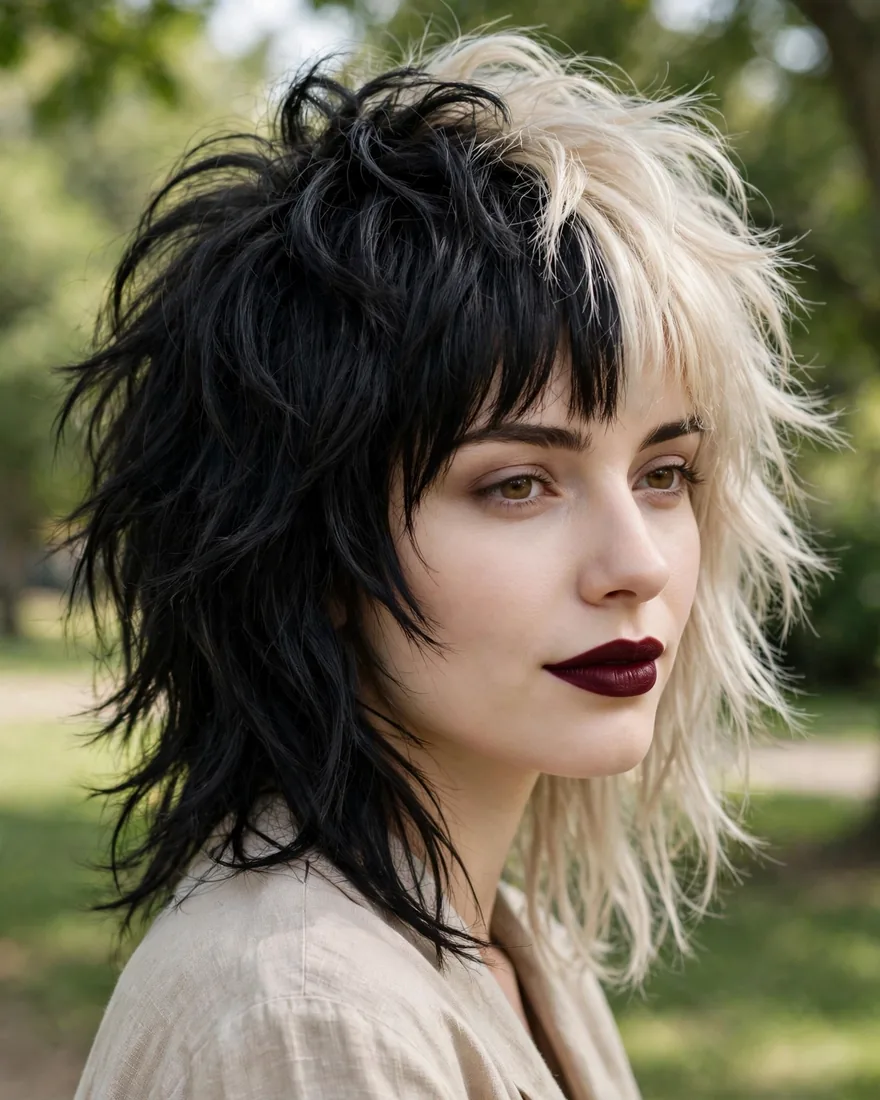
Split-dye is the boldest wolf cut with colored bangs placement here: the fringe is parted down the middle, a different shade per half, the hard line turning the bangs into a graphic statement. On a wolf cut without bangs, the same split-dye lands on the face-framing layers instead.
Benefits:
- Two colors, one appointment, maximum contrast
- Regrowth reads as graphic, not neglected
- Pair complementary or clashing shades
Pro Tip: Match fade behavior — pastels with pastels, vivids with vivids — or one side vanishes first.
How To Style: 1. Blow-dry with a clean center part. 2. Flat-iron in straight sections so colors read separately. 3. Touch up each side on its own schedule.
Best For: Oval and oblong faces; medium to thick density.
3. Fiery Red Curtain Bangs
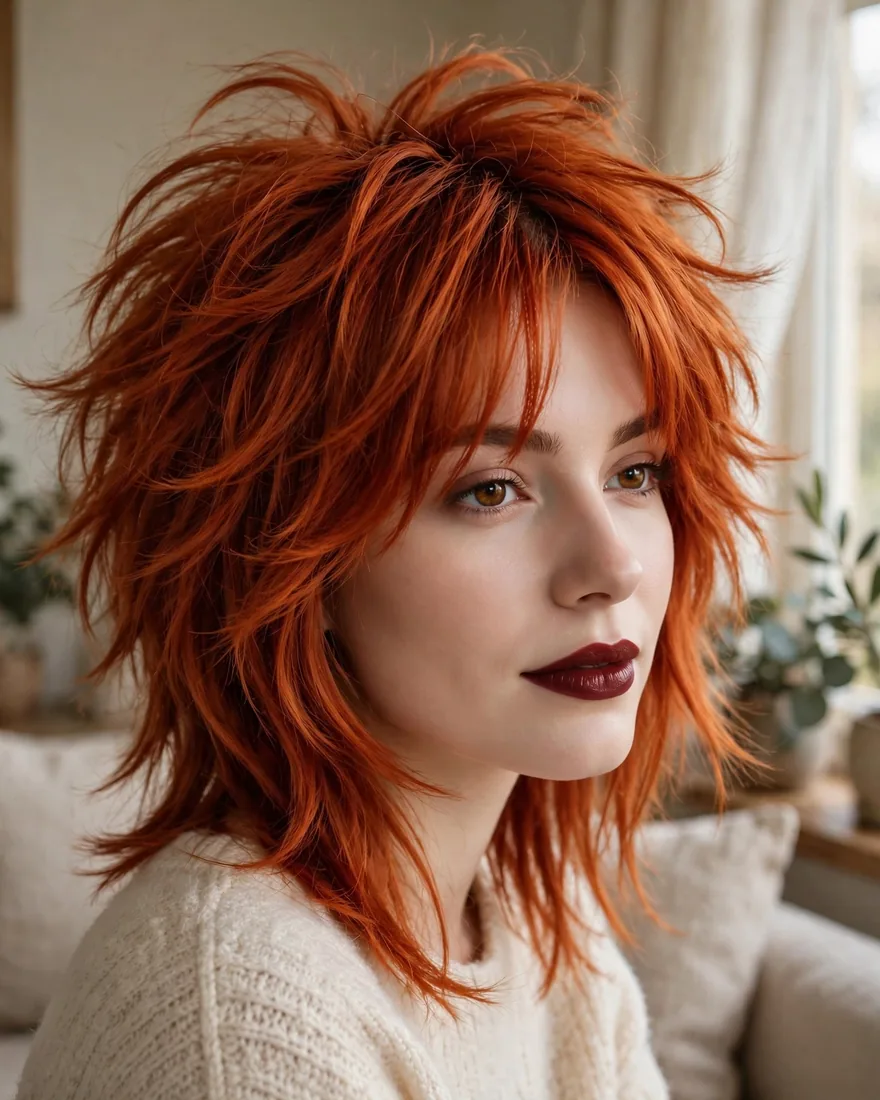
Vivid red is melted through a curtain fringe — deeper at the root, brighter at the ends — for dimension instead of flat color. The center part softens it into two panels, and this wolf cut with colored bangs idea fades the most gracefully: true red through copper to soft rose.
Benefits:
- Fades through copper and rose — still looks deliberate
- Curtain shape grows out with no regrowth band
- Warmth flatters warm and neutral undertones
Pro Tip: Ask for the color melt explicitly — a flat red shows every millimeter of regrowth; a melt hides it for weeks.
How To Style: 1. Part center, sweep each side outward with a round brush. 2. Wash cool with color-safe shampoo only. 3. Refresh with a red depositing mask between visits.
Best For: Round and oval faces; medium to thick density.
4. Electric Blue Inner Fringe
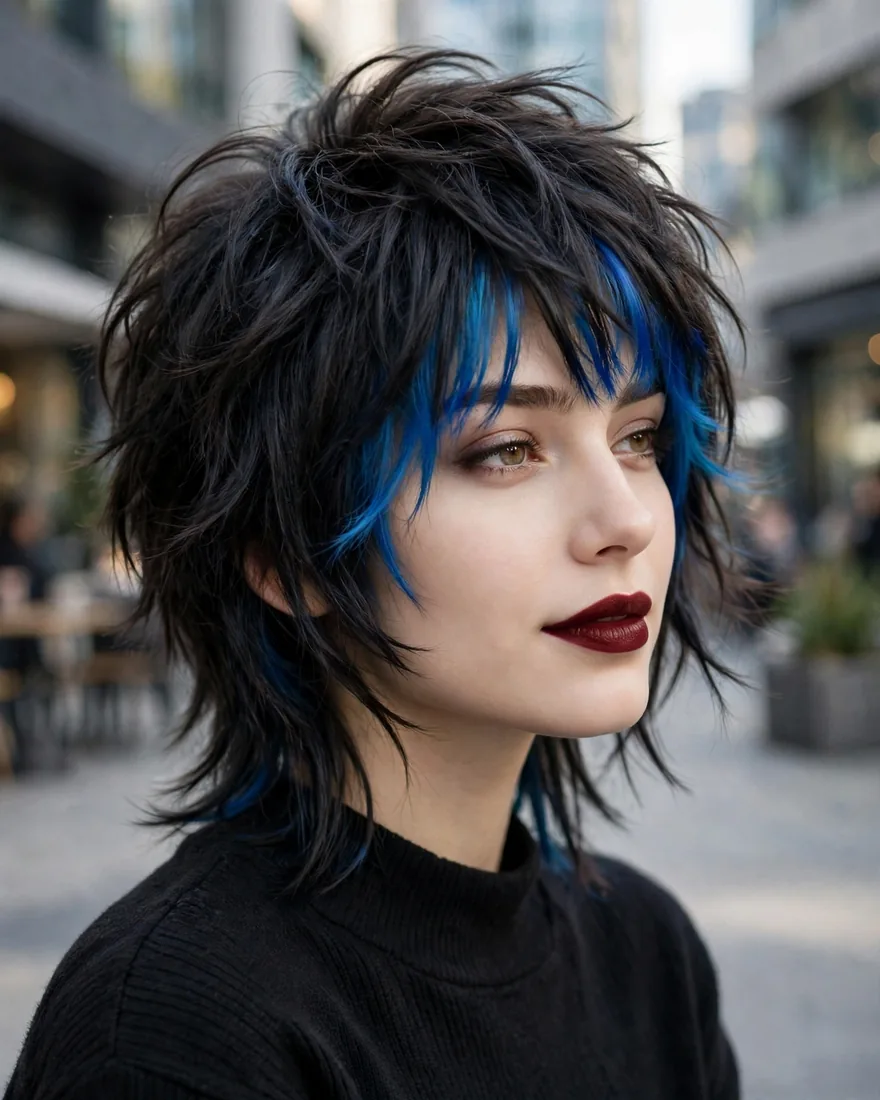
Only the interior layer of the fringe goes electric blue; the surface stays natural. Straight on you see normal bangs — the blue edges appear whenever the fringe separates. But be honest: blue is one of the fastest-fading vivids, so this wolf cut with colored bangs needs a weekly refresh plan.
Benefits:
- Natural surface keeps roots invisible as hair grows
- Vivid impact, smallest possible bleached surface
- One trim removes the whole placement
Pro Tip: Blue fades fastest at porous tips — ask the colorist to pack the densest pigment into the last inch.
How To Style: 1. Style the fringe straight so blue peeks at the ends. 2. Tuck one side back to expose the panel. 3. Use blue depositing conditioner weekly.
Best For: Heart and oval faces; fine to medium density.
5. Deep Teal Layered Bangs
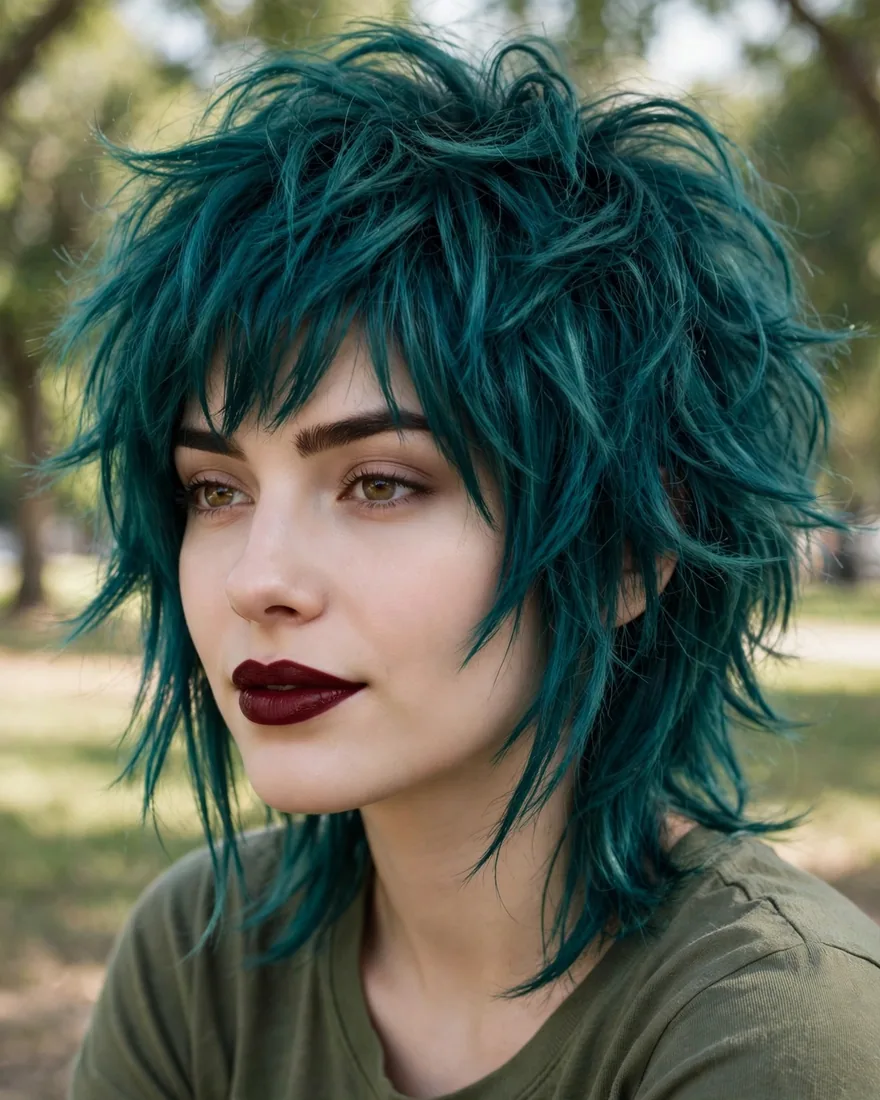
Deep teal is the most forgiving wolf cut with colored bangs for dark bases, worked through the full layered fringe so color maps the texture. saturated enough to read as deliberate, dark enough to fade to soft sea-glass instead of brassy. See how the same fringe reads natural in the shaggy wolf cut with bangs ideas before deciding.
Benefits:
- Deep tones fade soft and wearable — never brassy
- Full-fringe placement gives even, predictable grow-out
- Teal bridges warm and cool bases
Pro Tip: On dark bases teal needs a lift to around level 9 — ask for foil highlights through the bangs, not full bleach, to protect the ends.
How To Style: 1. Piece the fringe with a little wax. 2. Flip ends slightly outward for the shaggy finish. 3. Gloss with teal conditioner monthly.
Best For: Square and oval faces; medium to thick density.
6. Neon Green Front Fringe

Neon green goes on the very front section of the fringe only — one bold panel at the hairline. Highest impact per square inch of bleach here, but neon needs a near-white level 10 base or it turns muddy. If your hair takes that lift, this wolf cut with colored bangs dominates every face-on photo.
Benefits:
- Biggest punch for the smallest bleached area
- Fades lime to soft yellow — still looks intentional
- Trims away cleanly; one small grow-out zone
Pro Tip: If the front section cannot reach level 10 in one session without breakage, choose a deeper green instead.
How To Style: 1. Keep the front section straight and piecey. 2. Refresh with neon semi-permanent every 2–3 weeks. 3. Stretch washes with dry shampoo — every wash dulls neon.
Best For: Oval and long faces; medium to thick density.
7. Sunset Ombre Curtain Bangs

The curtain fringe graduates from your natural root through copper and rose to bright sunset ends — an ombre where grow-out is the design, so there is no regrowth line to fight. For a wolf cut with colored bangs you can forget for two months, this is the placement to beat.
Benefits:
- Grow-out built in — no root touch-ups, ever
- Lowest maintenance on this list
- Warm ends lift the complexion
Pro Tip: Start the lightest point below the eye line — too high and regrowth shows a band within weeks.
How To Style: 1. Part center, flick ends outward to show the gradient. 2. Add loose bends with a large iron for dimension. 3. Gloss the ends monthly.
Best For: All face shapes; medium to thick density.
8. Golden Blonde Money Piece

Two bright golden ribbons run along the front hairline against darker lengths — the classic low-bleach placement with maximum face-brightening. Already light? The blonde wolf cut with bangs gallery shows the full-head version; this wolf cut with colored bangs keeps brightness to the frame.
Benefits:
- Brightens the face with the smallest lightened section
- Minimal bleach — safe even for fine hair
- Grows out like natural highlights, no harsh line
Pro Tip: Keep ribbons narrow — wide money pieces read as dated highlights; thin ribbons look current.
How To Style: 1. Style fringe forward, pull bright pieces slightly forward of the ears. 2. Tone with purple shampoo as brass creeps in. 3. Refresh toner every 6–8 weeks; no re-bleaching for months.
Best For: Round and square faces; all hair densities.
9. Dusty Rose Chunky Bangs

Muted, smoky rose across a full, thick fringe — the grown-up pastel, fading to blush instead of washing out. A chunky fringe holds muted color evenly and hides uneven fading: one of the most forgiving wolf cut with colored bangs placements for warm undertones.
Benefits:
- Fades to blush — never brassy, never grey
- Chunky fringe hides uneven fade between refreshes
- Melts into regrowth, no line
Pro Tip: Formulate the rose slightly deeper than your target — muted tones fade fast on short bangs, and starting deep buys weeks.
How To Style: 1. Wear the fringe full and straight. 2. Top up with rose depositing conditioner biweekly. 3. Let roots grow — the tone melts into them.
Best For: Oval and heart faces; medium density.
10. Rainbow Micro Stripes
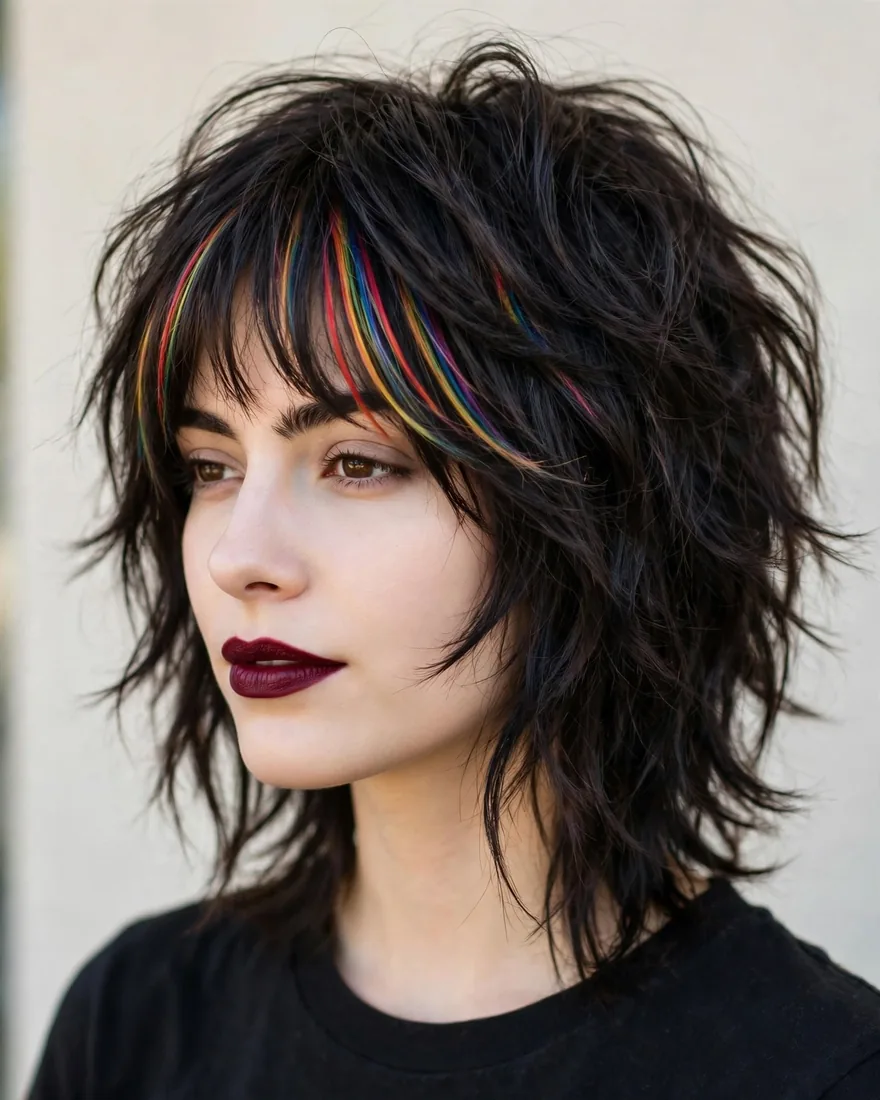
Thin vertical stripes of multiple colors foiled through a short micro fringe in quarter-inch ribbons, mapped before any bleach goes on. When every color fades together, nothing looks patchy — no other wolf cut with colored bangs photographs quite like it.
Benefits:
- All colors fade together — nothing looks half-gone
- Tiny area means the fastest vivid refresh
- Stripes blur regrowth; the eye reads pattern, not roots
Pro Tip: Book extra time and expect a higher price than single-color — and approve the stripe map before bleach goes on.
How To Style: 1. Keep the micro fringe short and straight. 2. Trim every 2–3 weeks to hold the line. 3. Refresh all stripes together.
Best For: Oval faces, petite features; medium density.
11. Bleached Blonde Contrast Bangs
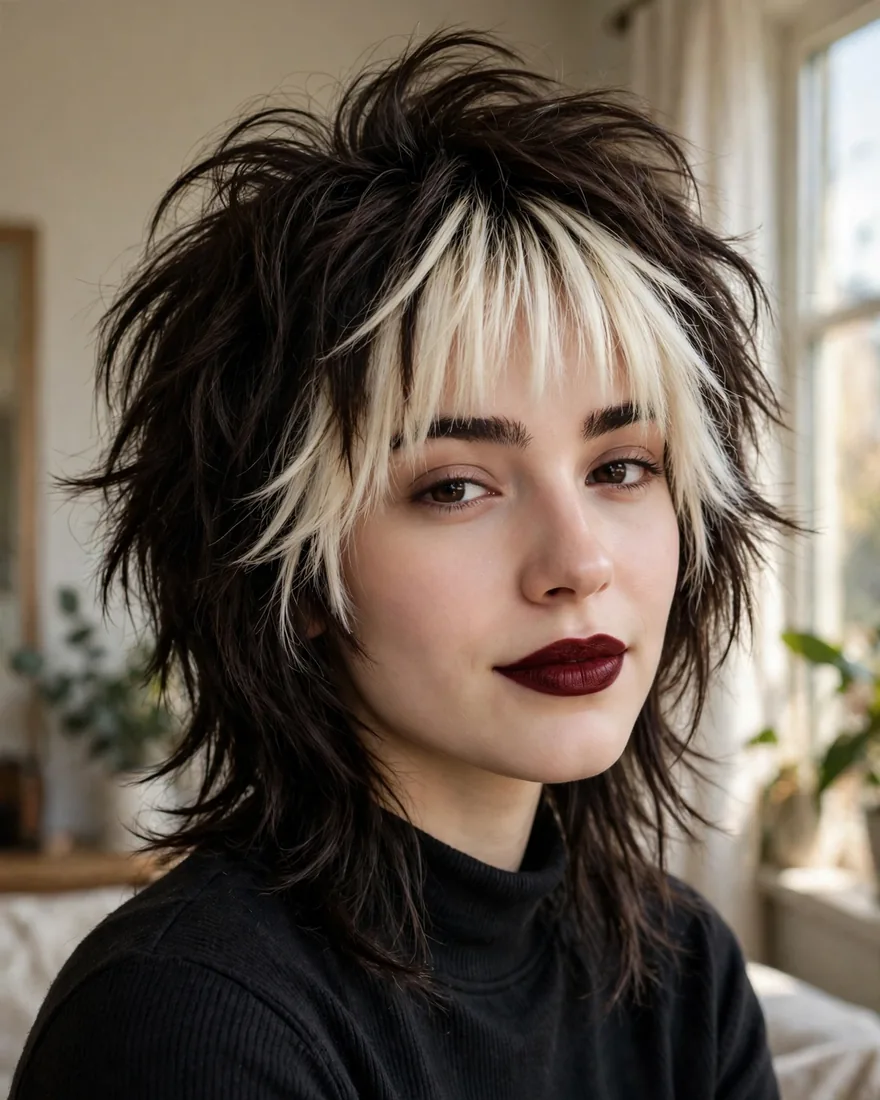
The full fringe lifts to pale blonde while the rest stays dark — stark editorial contrast with zero fashion color to maintain: no pigment to fade, only roots to manage. For a softer grow-out, a softer blonde wolf cut with bangs melts blonde through the lengths; this wolf cut with colored bangs isolates it on the fringe.
Benefits:
- Instant edge, no fashion-color fade to chase
- Grows out as a natural highlight band
- The dark-and-blonde fringe never dates
Pro Tip: The effect dies if the lengths lighten — keep the rest of your hair its natural dark shade.
How To Style: 1. Keep the blonde fringe smooth and slightly piecey. 2. Purple shampoo weekly against brass. 3. Deep-condition the bleached section weekly.
Best For: Heart and oval faces; medium to thick density.
12. Burgundy Wine Choppy Bangs
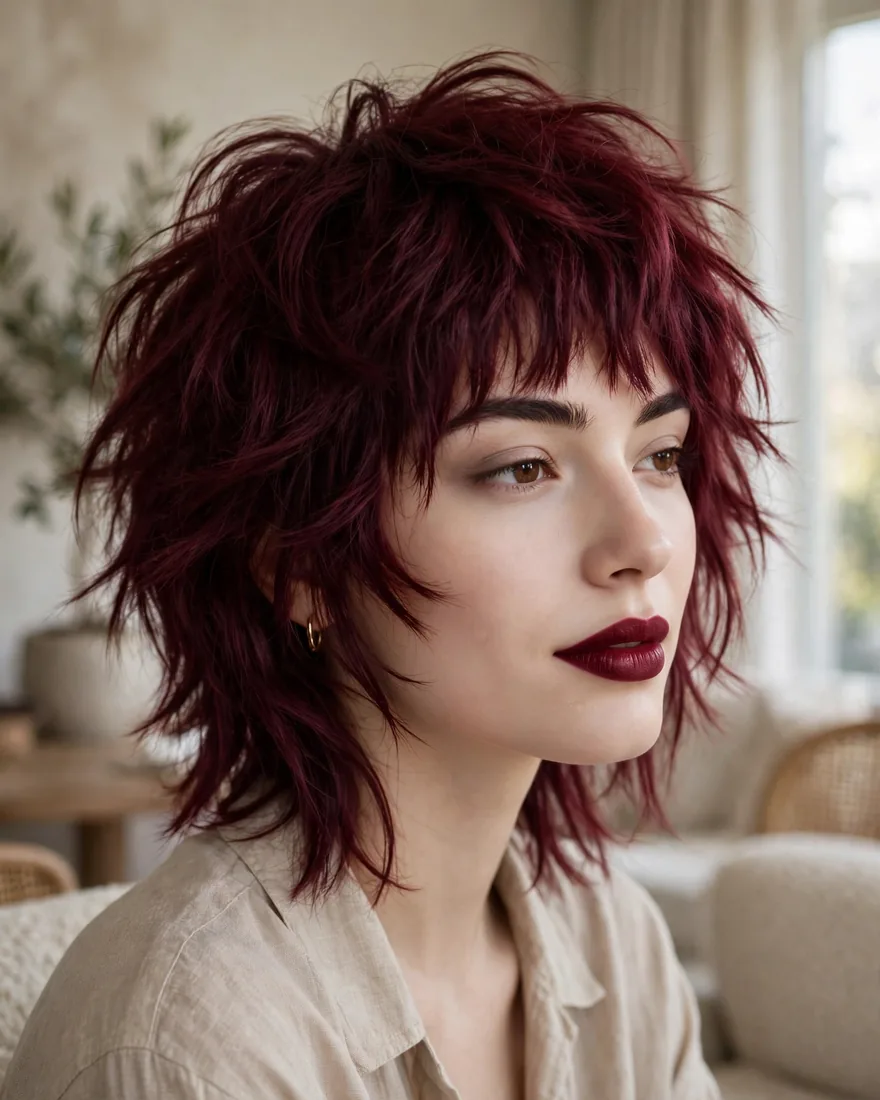
Deep wine red through choppy, textured bangs — rich in daylight, nearly subtle indoors. The office-friendly vivid, often achievable on medium-brown hair with high-lift color and no bleach. For the same texture in natural shades, see the shaggy wolf cut with bangs ideas — this wolf cut with colored bangs is for when only real pigment will do.
Benefits:
- Bold in sunlight, subtle indoors — most versatile vivid here
- Deep tones last 8–10 weeks, the longest wear
- Fades to warm brown, never a neon remnant
Pro Tip: On virgin medium-brown hair, get a strand test first — if it lifts clean, you skip bleach entirely.
How To Style: 1. Piece the fringe with wax — wine looks better undone. 2. Wash cool with color-safe shampoo. 3. Gloss at week six to revive depth.
Best For: Round and square faces; medium to thick density.
13. Lavender Tipped Bangs
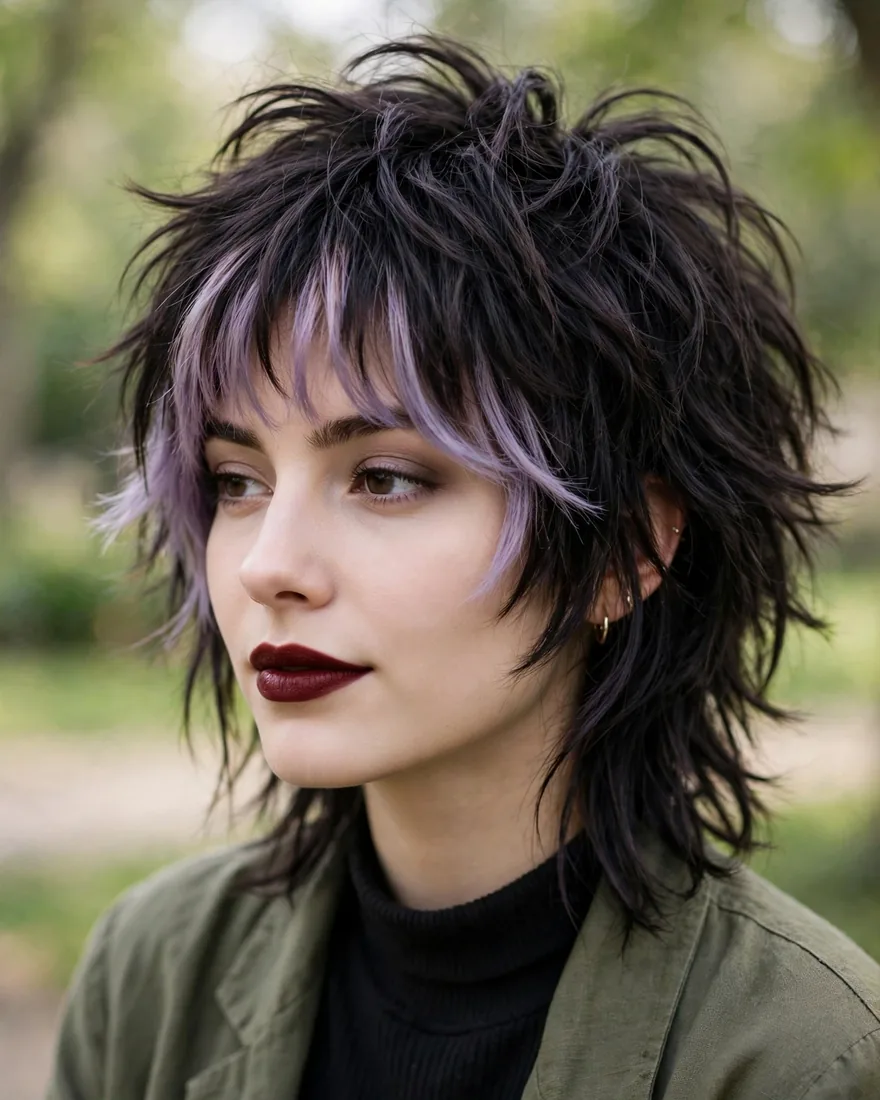
Only the last inch of the fringe goes lavender; everything above stays natural — the smallest commitment here, removable with one trim. The trial run before any bigger wolf cut with colored bangs decision.
Benefits:
- Smallest bleached area — lowest damage risk
- One trim removes it entirely
- Fast fade means never stuck with a disliked shade
Pro Tip: Lavender drops to silver-grey as it fades — refresh with lavender depositing conditioner before it crosses into grey.
How To Style: 1. Wear the fringe normally; color shows at the ends. 2. Flip ends outward to display the tips. 3. Refresh the tips only.
Best For: Oval and heart faces; fine to medium density.
Quick comparison of all thirteen wolf cut with colored bangs placements:
| Idea | Best Face Shape | Best Hair Density | Upkeep Level |
|---|---|---|---|
| Peekaboo Pastel Pink Bangs | Oval, heart | Fine–medium | High — refresh every 2–3 weeks |
| Split-Dye Two-Tone Bangs | Oval, oblong | Medium–thick | Medium–high |
| Fiery Red Curtain Bangs | Round, oval | Medium–thick | Medium — mask refresh monthly |
| Electric Blue Inner Fringe | Heart, oval | Fine–medium | High — blue fades fastest |
| Deep Teal Layered Bangs | Square, oval | Medium–thick | Medium |
| Neon Green Front Fringe | Oval, long | Medium–thick | High — needs level-10 base |
| Sunset Ombre Curtain Bangs | All | Medium–thick | Low–medium — no root work |
| Golden Blonde Money Piece | Round, square | All densities | Low — toner every 6–8 weeks |
| Dusty Rose Chunky Bangs | Oval, heart | Medium | Medium |
| Rainbow Micro Stripes | Oval, petite | Medium | High — trim + refresh often |
| Bleached Blonde Contrast Bangs | Heart, oval | Medium–thick | High — roots + brass control |
| Burgundy Wine Choppy Bangs | Round, square | Medium–thick | Low–medium — lasts 8–10 weeks |
| Lavender Tipped Bangs | Oval, heart | Fine–medium | High fade, low commitment |
How to Choose the Right Color for Your Wolf Cut
Start with your skin undertone — it decides which vivid shades look expensive and which clash. Warm undertones (skin that tans easily, gold jewelry flatters) pair best with fiery red, copper ombre, golden money pieces, and burgundy wine. Cool undertones (skin that burns, silver jewelry flatters) suit electric blue, deep teal, lavender, and icy pastels. Hold the shade against your jawline in daylight: the right one brightens your face, the wrong one makes you look tired.
Next, be honest about your base color and what it costs to lift for a wolf cut with colored bangs. Dark hair needs real bleach work for pastels and neons — level 9 to 10 — the riskiest step for thin layered ends. Medium-brown hair can often take burgundy and deep teal with high-lift color and no bleach. Already-blonde hair is pastel-ready with zero lightening. A strand test at the consultation tells you exactly where you stand.
Then match the placement to your lifestyle. Strict dress code? Peekaboo panels, inner fringe, and money pieces hide under a natural top layer on demand. Want zero maintenance? Sunset ombre has no roots to touch up. Short layers make color blocks read bold and graphic; long layers diffuse the same shade softer. See how color moves on longer texture in the wavy wolf cut with bangs ideas before you book.
How to Keep Colored Bangs Bright and Grow Them Out
Fashion color fades on a schedule, and bangs fade fastest — they are washed, touched, and heat-styled the most. Pastels need refreshing every two to three weeks, vivids every four to six, deep tones every eight to ten. Cool water, color-safe sulfate-free shampoo, and fewer washes stretch every window.
Split the work smartly on your wolf cut with colored bangs: let the salon handle the lightening, and refresh the color yourself at home. Bleach on fine, layered bang hair is the high-risk step — overlapping bleach onto already-lightened ends is how fringe breaks — so it belongs with a professional using foil isolation. Re-depositing semi-permanent color onto a light base is easy DIY with tinted masks and depositing conditioners. You pay for the bleach once, then maintain the shade yourself.
Know how your shade shifts over six to twelve weeks: blue drifts toward teal, then green; red drops through copper to rose; purple fades to lavender, then silver-grey. Plan for the transition on your wolf cut with colored bangs instead of fighting it — trim the color away as it grows, or re-dye the section. Tight curl patterns lift and shrink differently — the curly wolf cut guide covers how bleach behaves on coils.
Common Mistakes to Avoid with Colored Bangs
Most wolf cut with colored bangs regrets come from the same avoidable errors:
- Bleaching the whole head when only the bangs need it. The entire point of a wolf cut with colored bangs is the small placement. Full-head bleach multiplies damage, cost, and grow-out pain for zero extra impact — the fringe is what the eye sees.
- Picking a shade that fights your undertone. Match vivid to undertone first, favorite color second.
- Washing daily with hot water and sulfate shampoo. Bangs get oily fastest and washed most — dry-shampoo the fringe and wash cool and sulfate-free.
- Overlapping bleach on processed ends at refresh. Bleach should touch only regrowth; overlapping is the top cause of fringe breakage.
- Skipping the grow-out plan. Decide before the appointment: trim it off, re-dye, or melt into ombre.
- Choosing neon without a strand test. If your hair cannot lift pale safely, the result is muddy, not vivid. If the upkeep math scares you off, a wolf cut without bangs keeps the shape with zero color maintenance.
FAQs
Do colored bangs need bleach?
Pastels, neons, and true blues on dark hair almost always need lifting to level 9 or 10. Deep tones like burgundy on medium-brown hair can often skip bleach with high-lift color, and already-blonde hair takes most fashion colors directly. A strand test gives you the real answer.
How long does fashion color last on bangs?
Bangs fade fastest because they are washed and touched the most: pastels hold two to three weeks, vivids four to six, deep tones up to eight to ten. Depositing conditioners and cooler, less frequent washes extend every window.
What is the lowest-maintenance vivid shade?
Deep wine, burgundy, and deep teal — they last eight to ten weeks and fade into wearable tones. Ombre placements are even easier since the roots are never colored.
Can I add color to an older wolf cut?
Yes. The caveat is condition: dry or previously bleached ends grab color unevenly, so a trim may come first. The most forgiving wolf cut with colored bangs placements on older cuts are ombre and color melts.
Will bleach damage fine wolf-cut layers?
Any bleach weakens hair, and the thin layered ends of a wolf cut with colored bangs are the most vulnerable. Foil isolation limits bleach to the bang section, and bond-protecting additives help — but never double-process fragile ends in one session or overlap bleach at refreshes.
How do I fade colored bangs fast for work or school?
Clarifying shampoo plus hot water strips semi-permanent color fast; a color remover (not bleach) lifts the rest, then tone with a demi close to your natural shade. Peekaboo and money-piece placements hide under the top layer meanwhile.
Pastel vs vivid: which needs less upkeep?
Vivids last longer per application — four to six weeks versus two to three — but pastels demand the palest base upfront. Deep vivids like burgundy need the least total effort.
How often should I refresh colored bangs?
Pastels every two to three weeks, vivids every four to six, deep tones every eight to ten. Refresh only the faded zone of your wolf cut with colored bangs rather than re-dyeing the whole fringe — it saves product, money, and your ends.
Conclusion
A wolf cut with colored bangs is the rare beauty change that is both bold and reversible: full visual impact from the fringe, tiny commitment everywhere else — less bleach, less money, a grow-out you can plan. Match the shade to your skin undertone and your real maintenance tolerance, not just the saved photo. Unsure? Start with lavender tips or a golden money piece and go bolder next time. Pick one idea, book the consultation with a strand test, and let the color make the cut unmistakably yours.