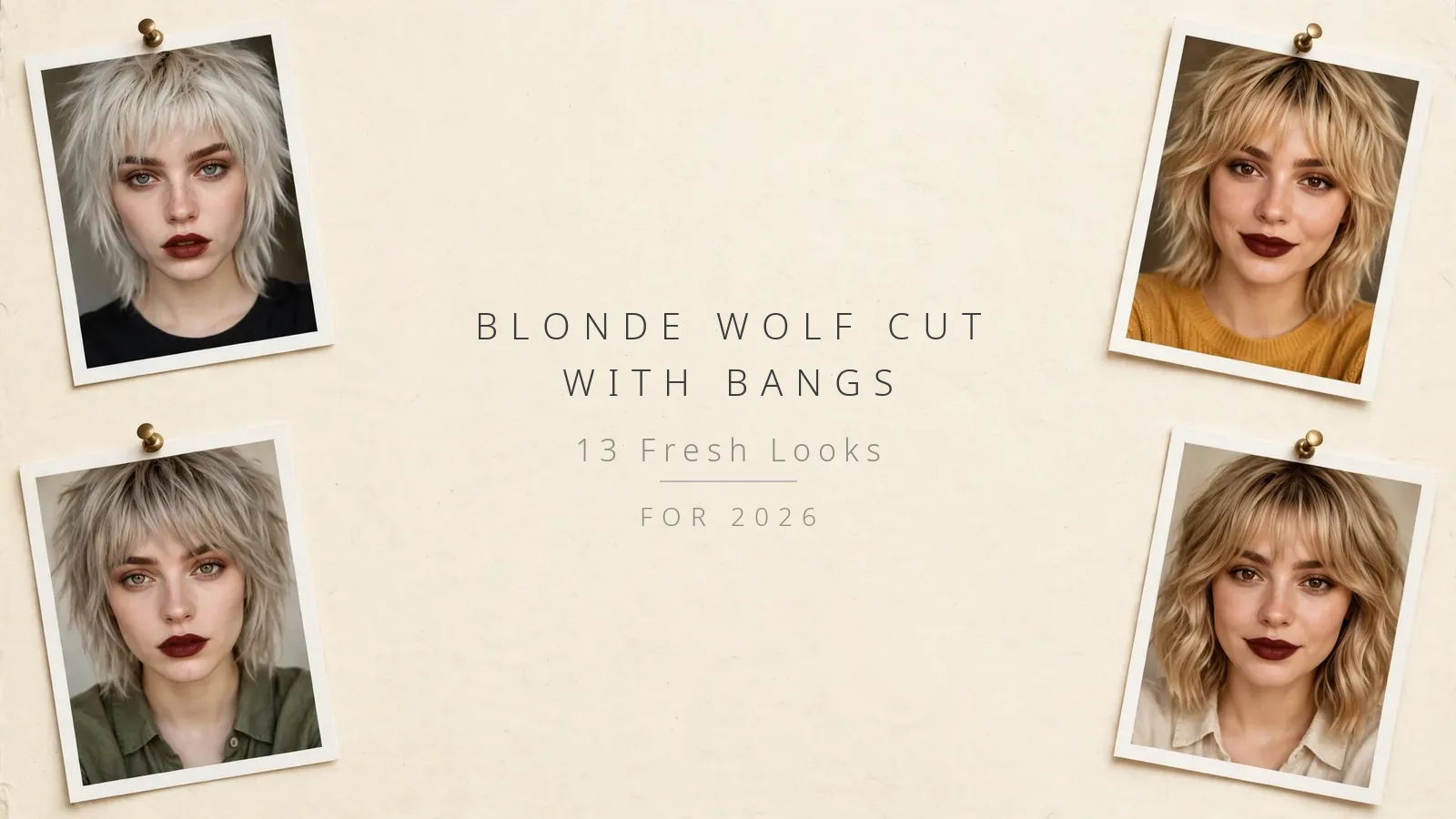
Blonde Wolf Cut with Bangs – 13 Fresh Looks for 2026
You have saved the photo a dozen times: bright blonde, choppy layers, bangs that look expensive. Then you close the tab, because blonde plus a wolf cut sounds like a commitment with three separate ways to go wrong. The bangs turn brassy by week three. The bleach weakens the short crown layers until the ends snap. And the upkeep bill arrives every four weeks like clockwork, whether the color still looks good or not.
A blonde wolf cut with bangs only becomes that expensive mistake when the shade fights your skin undertone or your maintenance budget. Match a cool undertone to ash or platinum, a warm one to honey or gold, pick a low-lift blonde family if you hate salon appointments, and the cut does the heavy lifting on its own. Below are 13 genuinely distinct blonde shades placed on the wolf cut, each with its real upkeep demands, plus a skin-tone matcher and the anti-brassiness routine that keeps bangs bright between visits.
Table of Contents
13 Blonde Wolf Cut Ideas Worth Getting
1. Platinum Choppy Blonde Wolf Cut
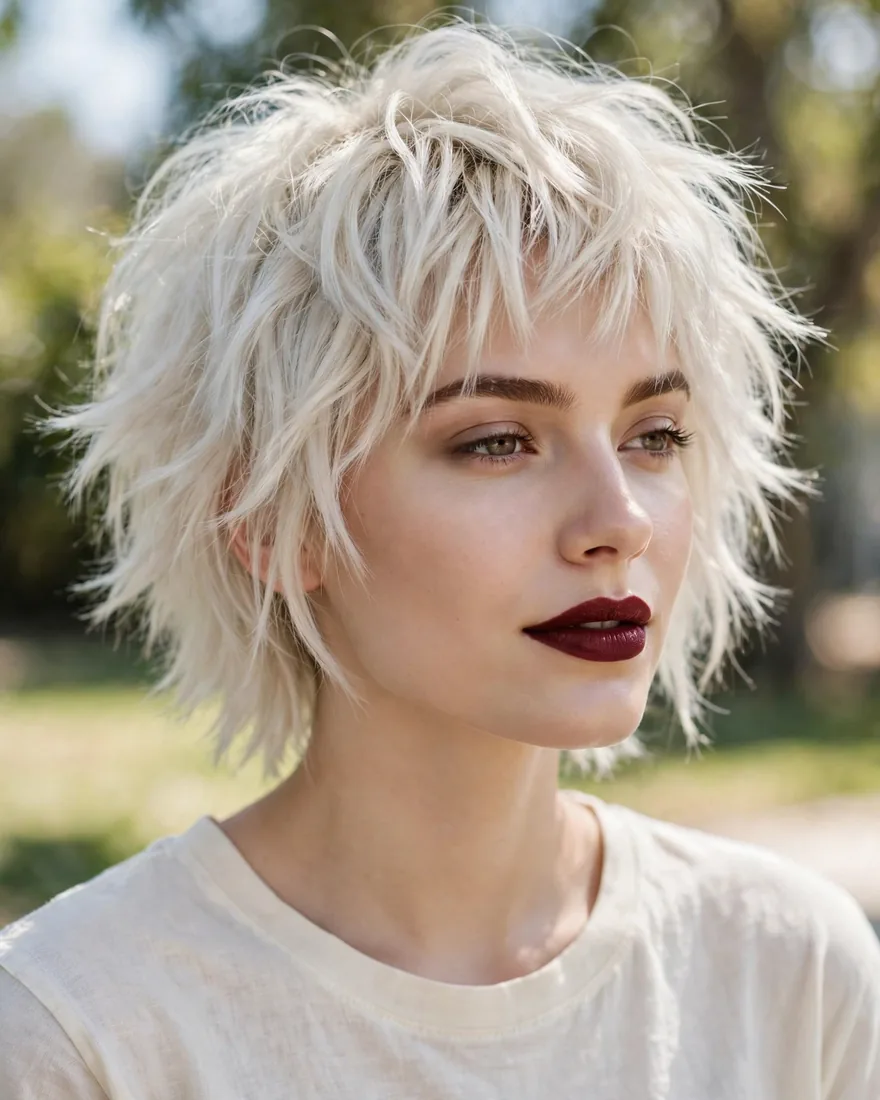
The full-commitment blonde: hair lifted to a near-white platinum, level 10 and beyond, cut into choppy wolf layers with a textured fringe. Platinum removes every trace of warmth, so the cut’s silhouette — the crown volume, the piecey ends — reads razor sharp instead of soft. It is the highest-impact version of the blonde wolf cut with bangs, and it photographs like nothing else.
Benefits: maximum contrast and edge; the pale shade makes every layer separation visible; pairs with bold makeup without competing.
Pro Tip: ask for a violet-based toner at the appointment, not just bleach — the toner is what keeps platinum from reading yellow in daylight.
How To Style: rough-dry with a volumizing mousse at the crown, then piece out the ends with a pea-sized amount of matte paste. Skip heavy oils; they yellow pale blonde over time.
Best For: cool or neutral undertones; medium to thick density that can survive full-head lightening. Avoid if your hair is already fragile or you want fewer than six salon visits a year.
2. Ash Blonde Wispy Wolf Cut for Fine Hair
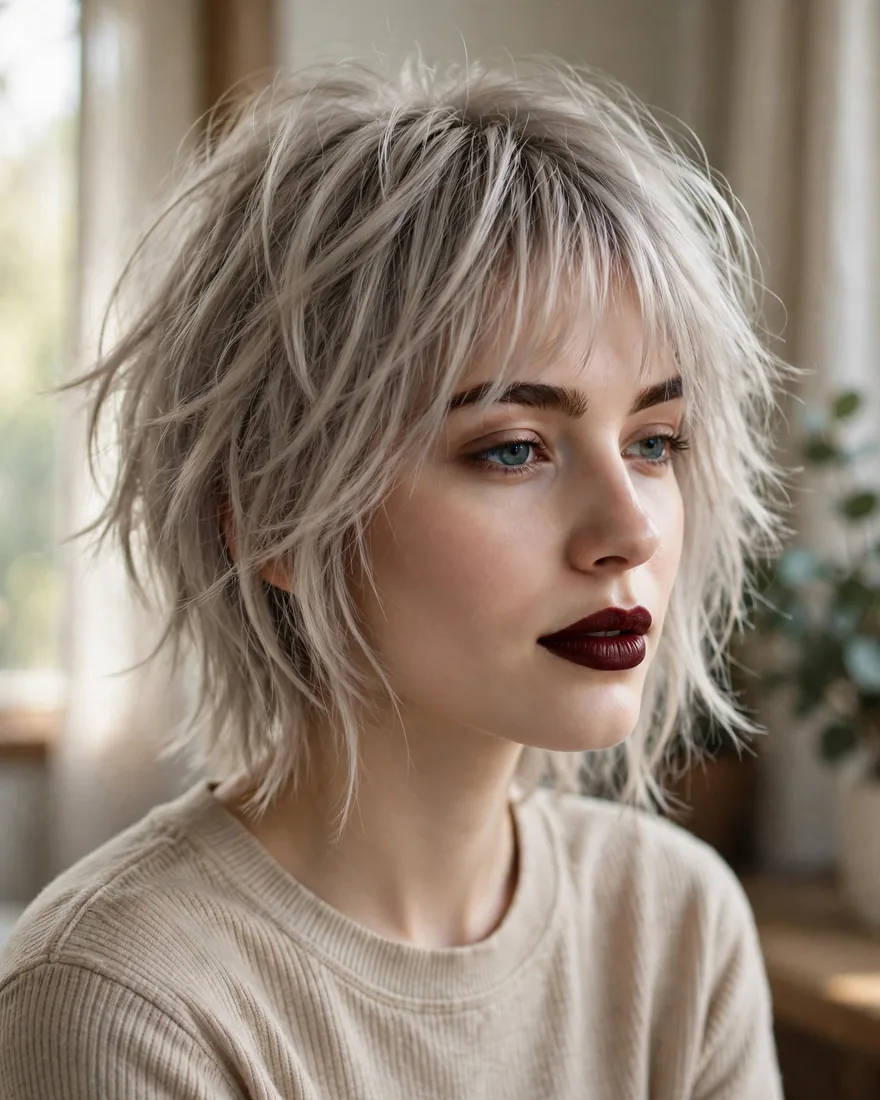
Ash blonde is the quiet cool blonde — muted, smoky, with green-beige undertones that cancel brassiness instead of fighting it. On a wispy blonde wolf cut with bangs, the ashy shade gives fine hair a denser look because the matte finish scatters light instead of revealing scalp through shine. The wispy fringe keeps the whole thing soft rather than severe.
Benefits: naturally resists brassiness; makes fine hair look thicker; grows out more gracefully than platinum.
Pro Tip: tell your colorist you want “ash, not silver” — silver toners can go lavender on porous ends, while true ash stays smoky beige.
How To Style: air-dry with a lightweight wave spray, then shake out the crown. Fine hair needs minimal product; a dry texture spray at the roots is enough.
Best For: cool undertones and fine to medium density. The single best blonde for anyone whose hair breaks easily, because it needs less lift than platinum.
3. Golden Curtain Blonde Wolf Cut
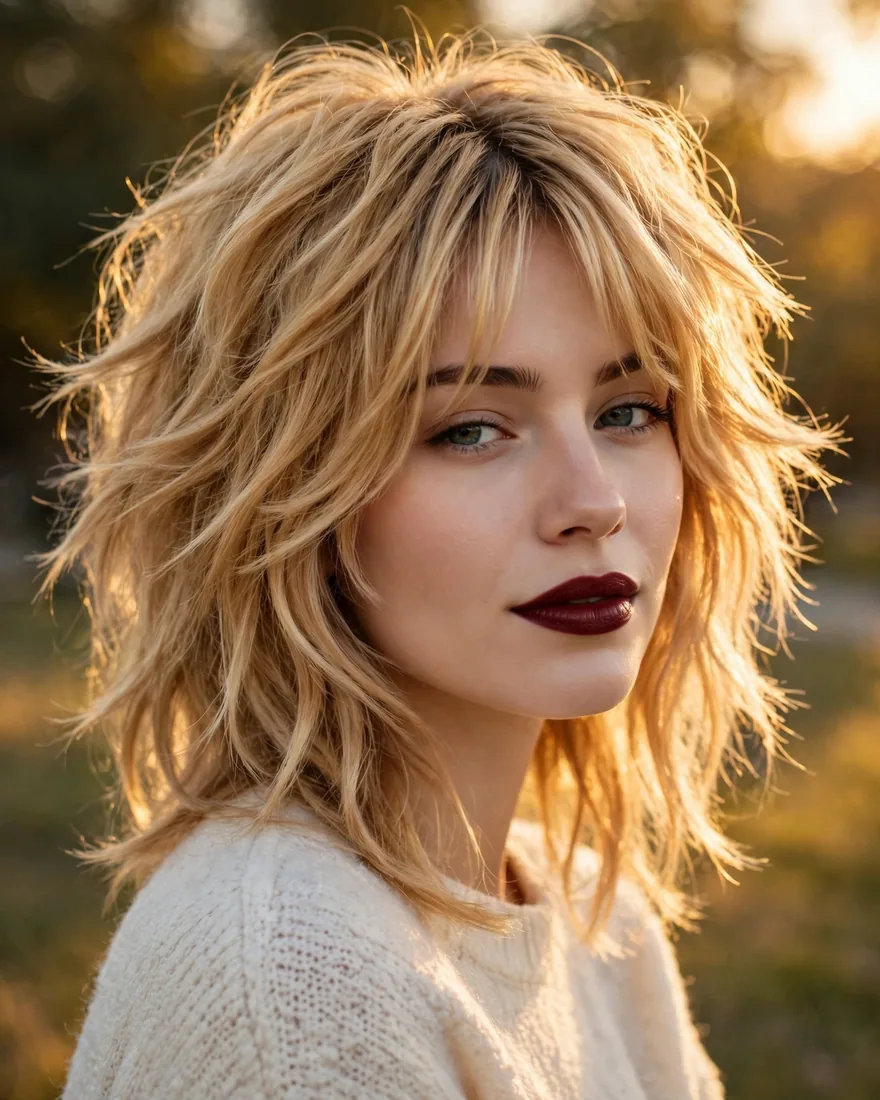
Golden blonde is warmth done on purpose: a sunny, honeyed shade that glows instead of oxidizing. Paired with curtain bangs, it frames the face the way the classic wolf cut with curtain bangs does, but the golden tone adds a lit-from-within quality that cooler blondes cannot fake. This is the friendliest blonde on the list.
Benefits: flatters the widest range of skin tones; hides regrowth better than cool blondes; needs less toning between appointments.
Pro Tip: golden blonde fades to a dull beige if you overuse purple shampoo — use it once every third wash, not every wash.
How To Style: blow-dry the curtain bangs with a round brush, rolling away from the face. A shine serum on the mid-lengths keeps golden tones luminous.
Best For: warm and neutral undertones; all densities. The safest first blonde wolf cut with bangs for anyone nervous about going light.
4. Honey Feathered Blonde Wolf Cut

Honey blonde sits one step deeper than golden — richer, more amber, with dimension built in. On the feathered layers of a blonde wolf cut with bangs, the honey shade catches light differently on every layer, so the cut looks expensive even when the styling is lazy. The feathered fringe blends into the face-framing pieces, which means the bangs never look like a separate harsh block.
Benefits: dimensional color without foils everywhere; suits deeper skin tones that wash out in platinum; forgiving grow-out.
Pro Tip: ask for the honey to be painted slightly deeper at the roots — it extends the time between appointments by weeks.
How To Style: a large-barrel curling iron on just the face-framing pieces, brushed out soft. The rest can air-dry; honey blonde looks good slightly undone.
Best For: warm and olive undertones; medium to thick density. Gorgeous as a long blonde wolf cut with bangs where the layers have room to show the dimension.
5. Champagne Blunt Blonde Wolf Cut
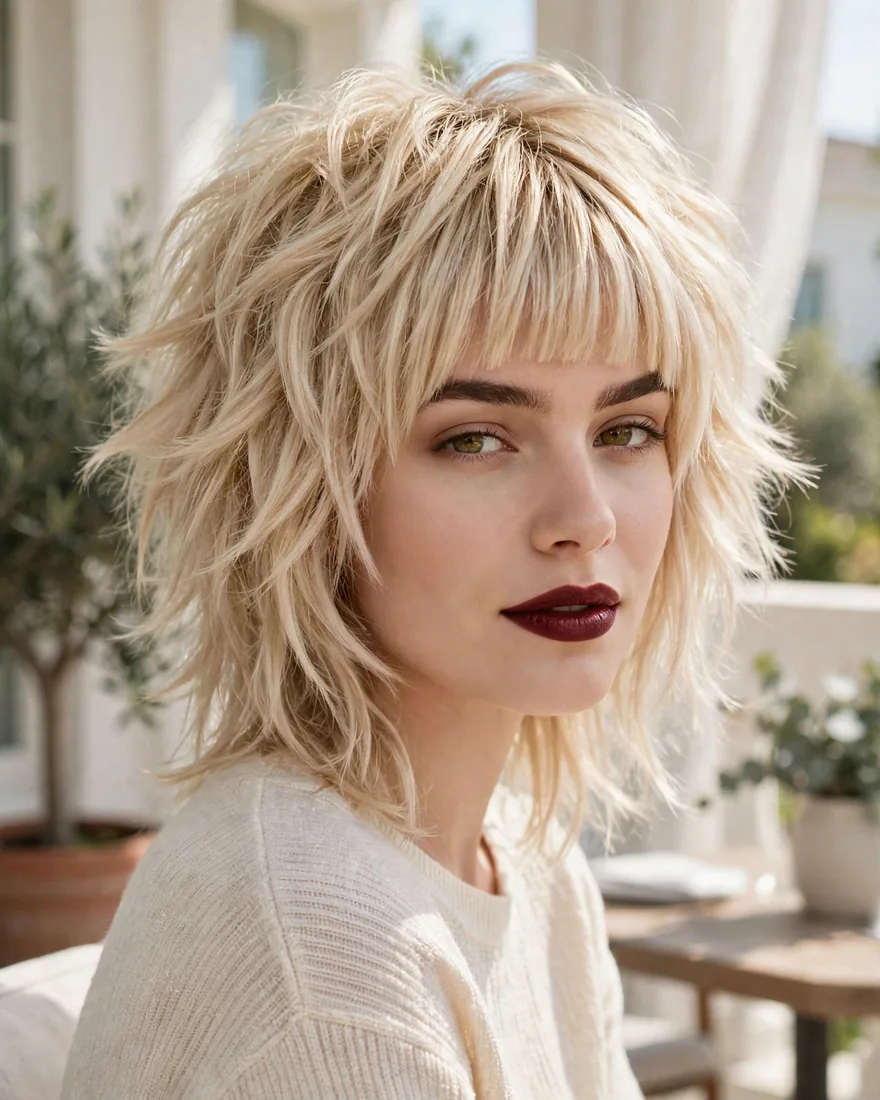
Champagne blonde is the in-between shade people describe as “not quite gold, not quite beige” — a soft neutral-warm blonde with a whisper of pink-beige. Against the shaggy texture of a blonde wolf cut with bangs, a blunt straight-across fringe in champagne creates a striking contrast: precise bangs, undone layers. It reads polished and editorial rather than beachy.
Benefits: suits neutral undertones that cannot decide between warm and cool; the blunt fringe makes thin bangs look fuller; photographs beautifully in natural light.
Pro Tip: in a blonde wolf cut with bangs, champagne fades fastest on the fringe because it gets washed most — ask your colorist to formulate the bangs one shade deeper than the lengths.
How To Style: flat-iron the bangs smooth and straight, then tousle the lengths with texture spray. The contrast between sleek fringe and messy layers is the whole point.
Best For: neutral undertones; fine to medium density where a blunt cut line adds the illusion of thickness.
6. Sandy Textured Blonde Wolf Cut
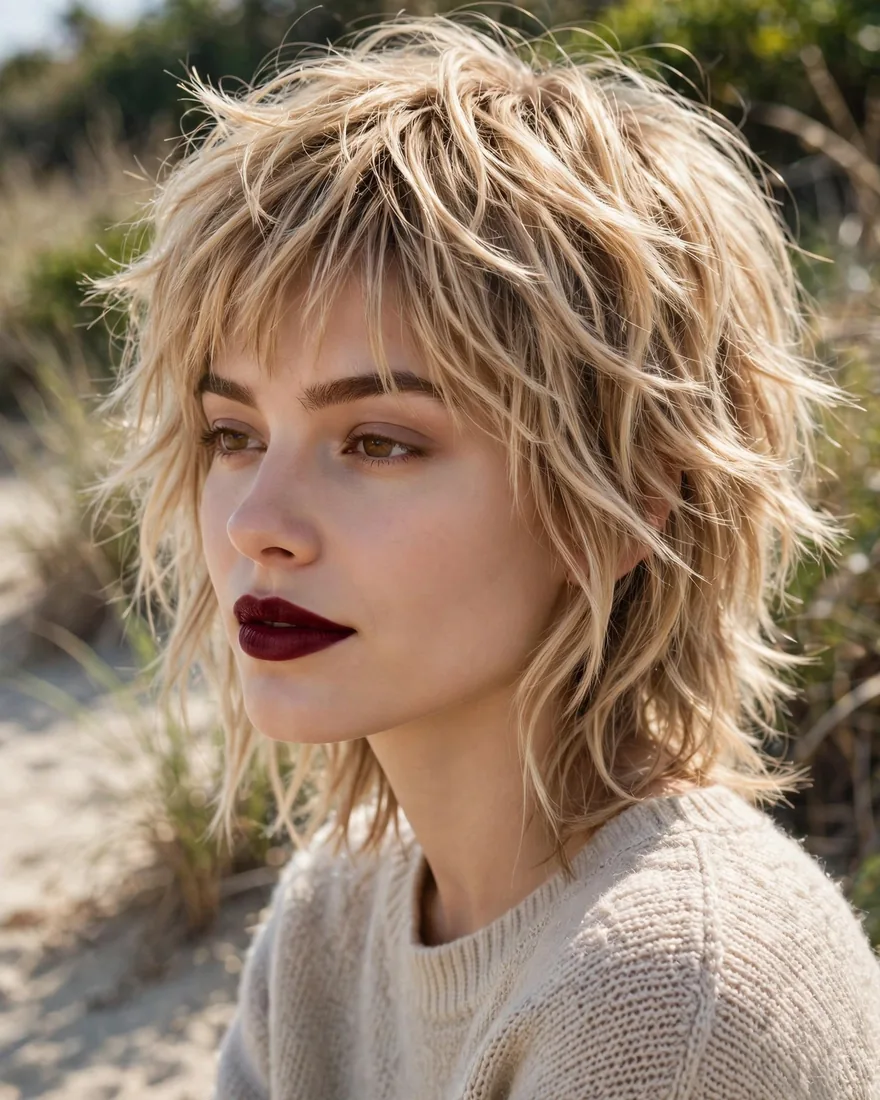
Sandy blonde is the grown-up neutral — a beige-taupe blonde with no strong warm or cool pull, like wet sand. It is the least fussy blonde here because there is almost nothing to maintain: no violet tones to protect, no gold to refresh. On a textured blonde wolf cut with bangs, the sandy shade lets the cut itself be the star, which suits anyone who loved the wavy wolf cut with bangs shape but wants a quieter color.
Benefits: the lowest-maintenance all-over blonde; suits nearly every undertone; never looks “done” in a bad way.
Pro Tip: sandy blonde can read flat in winter light — a clear gloss treatment between color appointments brings back the dimension for very little cost.
How To Style: sea-salt spray on damp hair, scrunch, done. Sandy blonde is at its best when the styling looks effortless.
Best For: neutral undertones especially; any density. Ideal if you want blonde without becoming a slave to the toner schedule.
7. Balayage Tousled Blonde Wolf Cut
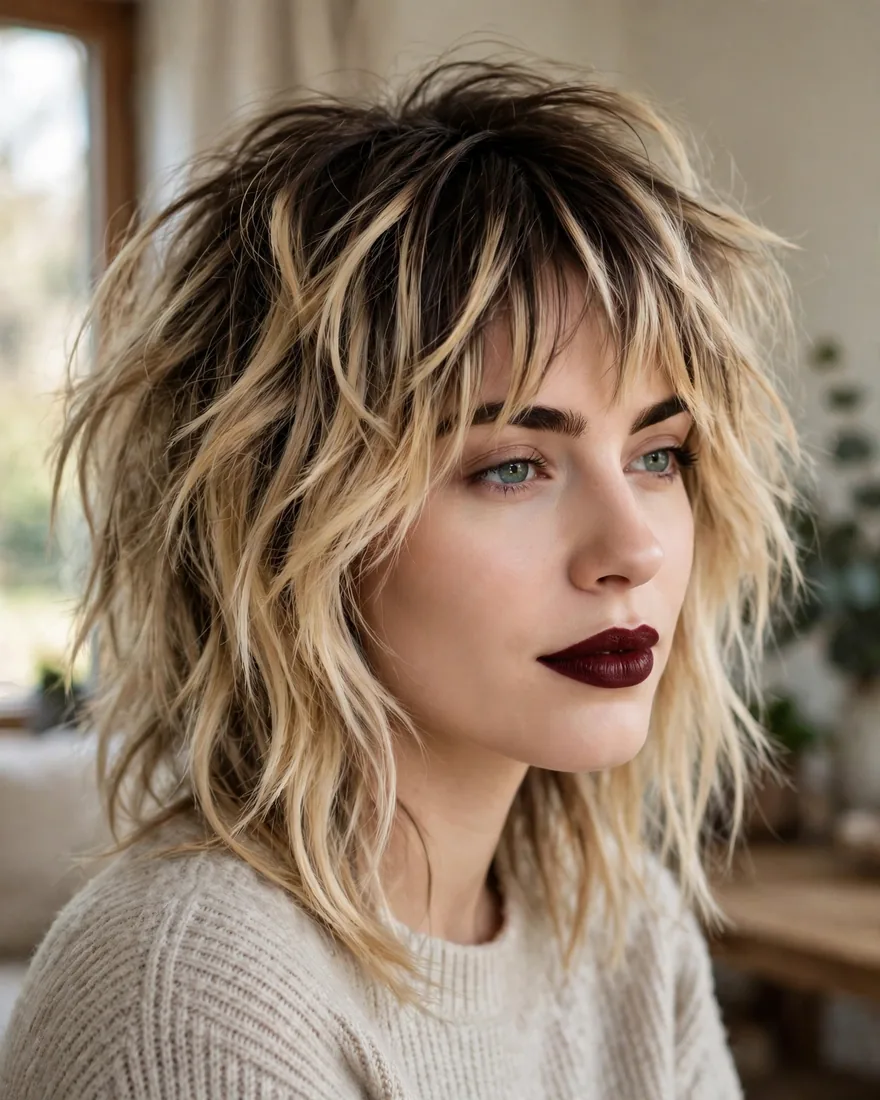
Balayage is a technique, not a shade — hand-painted lightness that starts mid-shaft and melts into brighter ends, leaving your natural root untouched. On a tousled blonde wolf cut with bangs, it is the ultimate low-maintenance blonde: the grow-out is the look. The bangs get a soft money-piece brightness around the face while the crown keeps depth, which also makes the layers look thicker.
Benefits: 8 to 12 weeks between appointments; no harsh regrowth line; works with your natural base color instead of erasing it.
Pro Tip: ask for the balayage to be painted slightly higher around the face-framing layers — it brightens the whole cut without lightening everything.
How To Style: the messier the better. Air-dry with mousse, or diffuse for definition. Balayage looks wrong when it is over-styled.
Best For: anyone with a darker natural base who wants blonde with minimal commitment; all undertones (the shade is customized to you); medium to thick density shows the dimension best.
8. Rooted Angled Blonde Wolf Cut
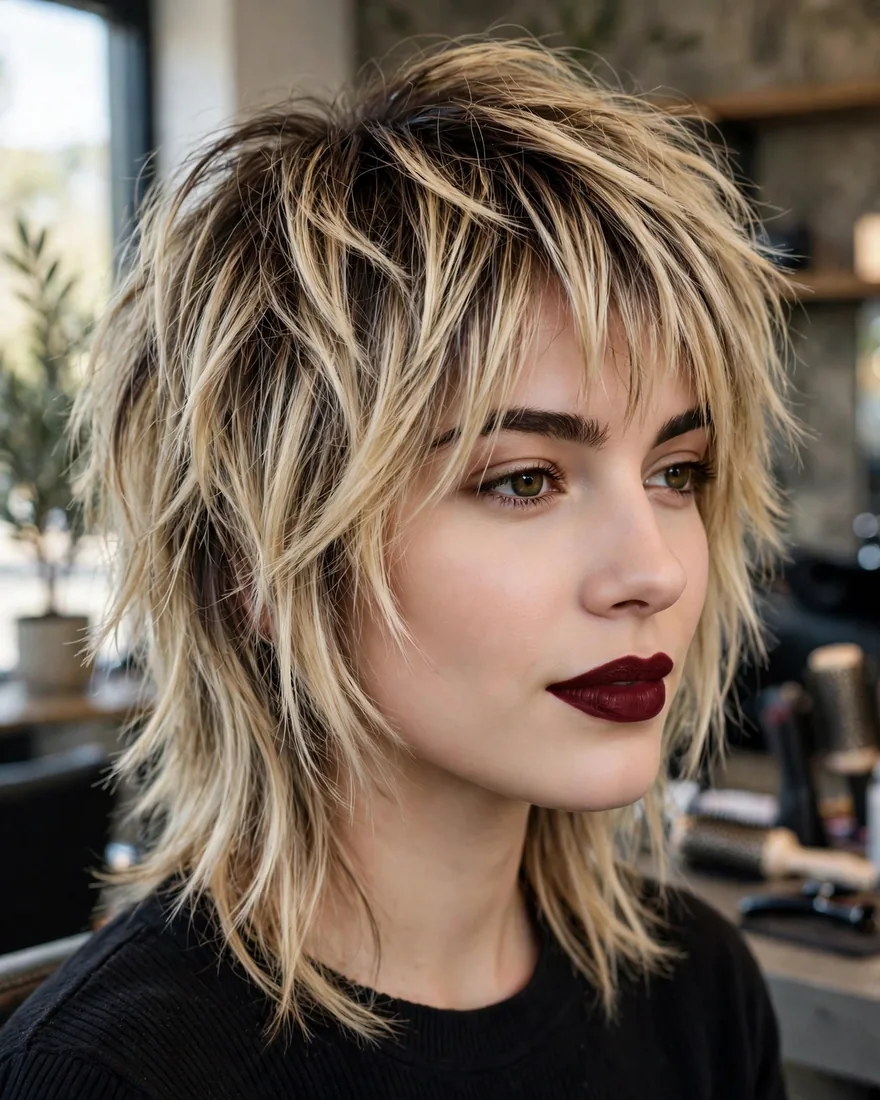
A rooted blonde keeps an inch or two of your natural color at the root, melted into blonde lengths with a smudged transition — no line, no stripe, just a shadow that makes the blonde look intentional for months. The angled cut (shorter at the crown, longer toward the front) gives the wolf cut a sharper geometry, and the rooted color keeps it wearable.
Benefits: the most forgiving grow-out of any blonde wolf cut with bangs here; cheaper upkeep; adds depth at the crown so fine hair looks fuller.
Pro Tip: the root smudge should match your natural color, not go darker — a too-dark root reads as regrowth, not as a technique.
How To Style: blow-dry smooth with a paddle brush for the angled shape to read, then flip the ends out slightly. Rooted blonde looks best polished.
Best For: natural brunettes going blonde gradually; fine to medium density; anyone who stretches appointments past two months.
9. Buttery Curly Blonde Wolf Cut

Buttery blonde is warmth at its creamiest — a soft yellow-gold that looks like it was always there. On curls, it does something special: each curl catches light on its curve, so a buttery blonde wolf cut with bangs looks multi-dimensional with zero extra coloring work. If your texture leans curly, this is the blonde equivalent of the curly wolf cut done in its most flattering shade.
Benefits: enhances curl definition visually; warm tone keeps curls from looking dry or dull; suits a huge range of skin tones.
Pro Tip: curls are naturally drier, and bleach makes that worse — ask for a bond-builder to be mixed into the lightener, and deep-condition weekly without exception.
How To Style: apply curl cream to soaking-wet hair, scrunch, and diffuse on low heat. Never brush dry curls; buttery blonde shows frizz more than darker shades.
Best For: warm and neutral undertones; curly and coily textures (2C and up). The moisture commitment is real — do not choose this blonde if you skip conditioner.
10. Icy Micro Blonde Wolf Cut

Icy blonde goes one step past platinum into silver-white territory, with blue-violet undertones that read almost metallic. Paired with micro bangs — a short cropped fringe — it is the most fashion-forward blonde wolf cut with bangs on this list. The icy shade strips all softness from the cut, so the wolf layers look architectural instead of tousled.
Benefits: unmatched statement impact; the cool tone makes blue and green eyes look electric; micro bangs grow out into a chic longer fringe.
Pro Tip: icy blonde needs a silver-violet toner, and it washes out in about three weeks — book your toner refresh before you leave the salon.
How To Style: sleek is the move. Flat-iron smooth, tuck behind one ear, let the micro bangs sit graphic and straight. Texture fights the icy aesthetic.
Best For: cool undertones only — warm skin turns sallow next to icy blonde. Thick, healthy hair that can take maximum lift. Not for the maintenance-averse.
11. Strawberry Soft Blonde Wolf Cut
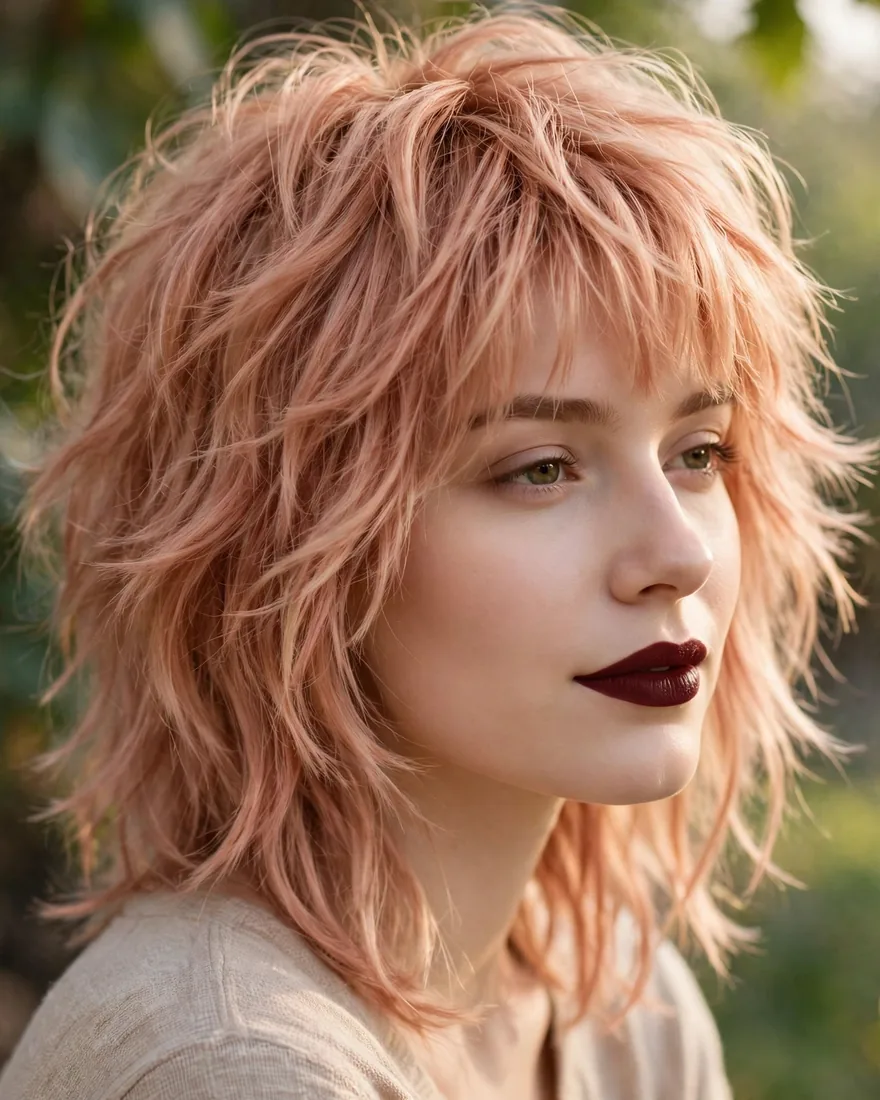
Strawberry blonde lives where blonde meets copper — a pinky-gold shade that flatters skin in a way no other blonde does. On a soft blonde wolf cut with bangs, it reads romantic rather than edgy, and the warm reflect is incredibly forgiving: it hides dull ends, softens strong features, and makes pale skin glow. Fans of playful color who are not ready for full fashion shades often land here after browsing the wolf cut with colored bangs ideas.
Benefits: the most flattering blonde for fair, freckled, or rosy skin; fades gracefully into a pretty golden blonde; hides damage better than cool blondes.
Pro Tip: strawberry fades faster than any blonde here because red molecules are large and slip out — wash in cool water and use color-safe shampoo from day one.
How To Style: soft waves with a curling wand, brushed out. Strawberry blonde loves movement; pin-straight styling wastes its dimension.
Best For: fair to light-medium skin with warm or neutral undertones; fine to medium density. If you blush easily or have pink in your cheeks, this shade was made for you.
12. Dimensional Thick Curtain Blonde Wolf Cut
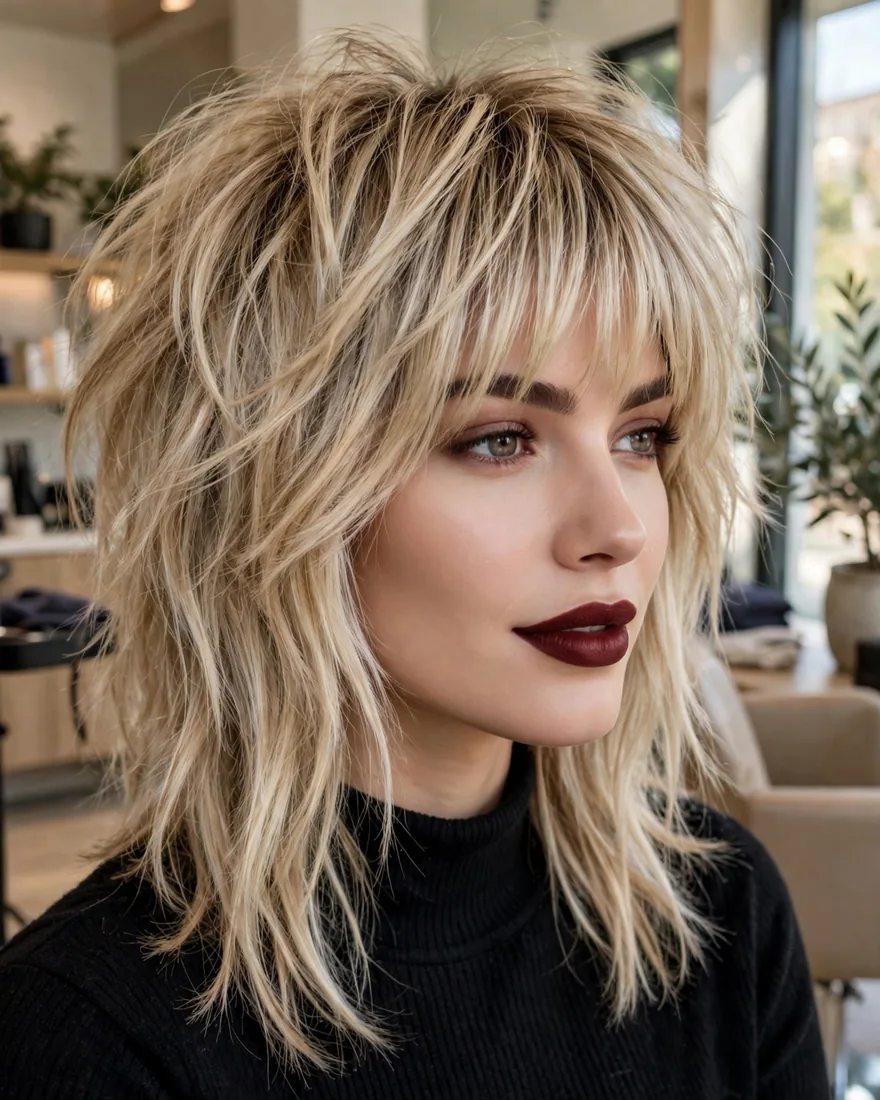
Dimensional blonde is not one shade but several — foiled babylights in two or three blonde tones woven through a darker blonde base, so the color has depth from every angle. On a thick blonde wolf cut with bangs, dimension stops heavy hair from looking like a solid helmet of color. The curtain fringe gets the brightest pieces, which draws light to the face.
Benefits: makes thick hair look lighter and more expensive; the multi-tone grow-out is invisible; customizable to any undertone.
Pro Tip: ask for “lived-in dimensional blonde, not highlights” — traditional highlights grow out with visible lines, while lived-in placement melts.
How To Style: blow out smooth to show the dimension, or add loose waves. Either way, a shine spray is non-negotiable — dimension needs light to read.
Best For: thick, heavy density that needs visual lightness; any undertone (your colorist customizes the tones). The best blonde for very dark natural hair that cannot go platinum safely.
13. Beige Middle-Part Blonde Wolf Cut
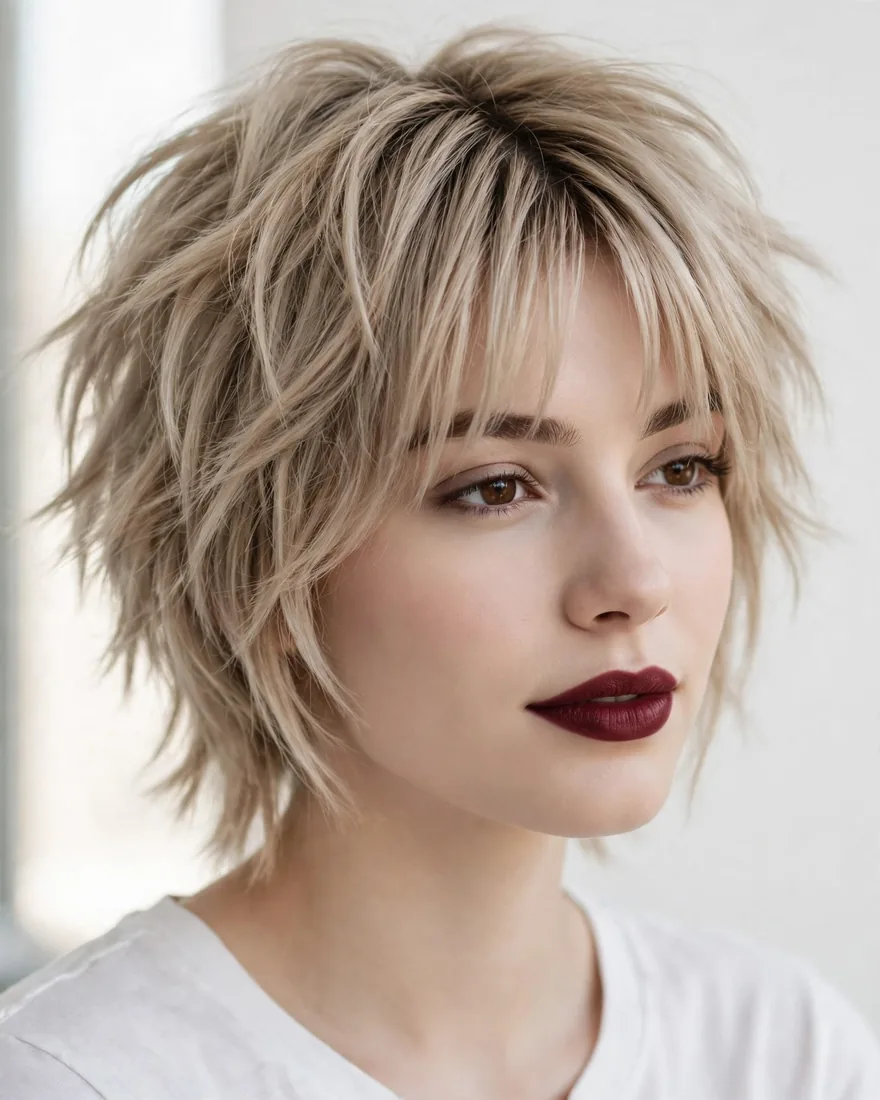
Beige blonde — sometimes called greige — is the cool-neutral that replaced ash for people who found ash too flat. It has a soft mushroom-beige cast that flatters without drama. With a clean middle part and a shaggy wolf cut with bangs texture through the lengths, it is the minimalist’s blonde wolf cut with bangs: interesting up close, effortless from far away.
Benefits: modern and understated; suits cool and neutral undertones; the middle part makes styling nearly foolproof.
Pro Tip: beige turns brassy-yellow if you use hard water — a shower filter is a cheap fix that protects this shade better than any product.
How To Style: center-part, air-dry or rough-dry, tuck the front pieces behind the ears. Beige blonde rewards simplicity.
Best For: cool to neutral undertones; fine to medium density. Perfect if you want blonde that looks intentional but never shouts.
How to Choose the Right Blonde for Your Skin Tone and Upkeep
Start with your undertone, not the photo, when choosing a blonde wolf cut with bangs. Look at the veins on the inside of your wrist in daylight: blue or purple means cool, green means warm, a mix means neutral. Cool undertones glow in ash, platinum, icy, and beige — warm blondes like honey and gold will turn your skin sallow. Warm undertones come alive in golden, honey, buttery, and strawberry — ash and platinum can make warm skin look grey and tired. Neutral undertones get the full menu, though champagne and sandy tend to be the most flattering middle ground.
Then be honest about upkeep, because the wrong answer here is how blonde turns into regret. Platinum and icy blonde need a toner refresh every three to four weeks and purple shampoo in between — budget for six or more salon visits a year. Ash and beige need toning every five to six weeks. Golden, honey, champagne, strawberry, and dimensional blondes stretch to six to eight weeks. Balayage and rooted blondes are the marathon runners at eight to twelve weeks, with sandy blonde close behind. If you know you will skip appointments, do not choose platinum for your blonde wolf cut with bangs no matter how much you love the photo — choose balayage or rooted and love your actual life.
Finally, factor in your starting color before committing to a blonde wolf cut with bangs. Hair that is naturally dark brown or black cannot safely reach platinum in one session, and anyone who promises otherwise is planning your breakage. Dimensional blonde exists precisely for dark bases: it gives the blonde effect through foiled pieces without lifting everything. If your heart is set on platinum from dark hair, plan for two to three sessions spaced weeks apart, and say so at the consultation — a good colorist will respect the honesty. Those drawn to softer, expensive-looking blondes should also browse the old money blonde hairstyles for inspiration on understated tones.
How to Stop Brassiness and Grow Out Blonde Layers
On a blonde wolf cut with bangs, brassiness is not a mystery — it is what happens when the toner fades and your hair’s natural warm pigment shows through. On bangs it happens fastest, because the fringe gets washed, touched, and exposed to sun more than any other section. The defense is a routine, not a single product. Use purple shampoo once a week (twice for platinum and icy), leaving it on for three to five minutes so the violet pigment actually deposits. On other washes, use a sulfate-free color-safe shampoo. Once a month, or whenever the bangs start looking yellow in daylight, book a toner refresh — it is a thirty-minute appointment, not a full color, and it resets the shade completely.
For grow-out, the strategy depends on your blonde family. Rooted and balayage versions of the blonde wolf cut with bangs are designed to grow out — do nothing except trim the ends. All-over blondes need a plan: either commit to the root touch-up cycle or ask your colorist to melt your natural color down an inch at the next visit, converting you to a rooted blonde gradually. Layered ends fade unevenly because the thin tips are more porous than the mids — this is normal, not damage. A clear gloss every six to eight weeks evens out the fade and buys time between real appointments.
At the salon, the sentences that get you the right result are specific. Say your natural level and your target level (“I am a level 5, I want a level 9 honey”), name the toner family (“ash-based, not gold-based”), and ask about the root (“can we smudge the root so it grows out soft?”). Ask whether your hair can take the lift in one session or needs two for a blonde wolf cut with bangs — and believe the answer. The classic wolf cut shape underneath means the colorist should also know you want the brightest pieces around the face-framing layers, since that is where the cut draws the eye. And if you ever want to see the shape without any fringe at all, the wolf cut without bangs shows how the same layers behave bare-faced.
FAQs
Will going blonde damage my wolf cut layers?
Lightening a blonde wolf cut with bangs always causes some damage, but the risk concentrates in the short crown layers because they are the finest and most processed section. The danger is real on fine hair: over-bleached crown layers snap, and then the wolf cut loses the volume that makes it a wolf cut. Minimize it by choosing a blonde within three levels of your natural color, asking for bond-builder in the lightener, and never double-processing in one day. Ash and sandy blondes are the kindest options; platinum and icy are the harshest.
Which blonde shade suits warm skin undertones?
Golden, honey, buttery, and strawberry blonde all flatter warm undertones because they echo the warmth already in your skin. Champagne works too as a neutral-warm bridge. Avoid ash, platinum, and icy blonde — cool shades against warm skin create a grey, washed-out cast that no makeup fully fixes. These four warm shades give you the most flattering blonde wolf cut with bangs options for warm skin. If you are unsure of your undertone, hold gold and silver jewelry against your face in daylight; whichever makes your skin glow tells you your family.
How do I keep blonde bangs from turning brassy?
To keep a blonde wolf cut with bangs bright, use purple shampoo once a week, leaving it on three to five minutes, and book a toner refresh every three to six weeks depending on your shade — platinum and icy need it monthly, golden and honey can go longer. Rinse with cool water, since heat opens the cuticle and lets toner escape faster. Bangs fade first because they are washed and touched most, so some people keep a purple toning mask just for the fringe between appointments.
What is the lowest-maintenance blonde wolf cut?
Balayage on your natural base, hands down — the lowest-maintenance blonde wolf cut with bangs at eight to twelve weeks between appointments with no regrowth line. Rooted blonde is the runner-up, and sandy blonde is the lowest-maintenance all-over option. All three let you skip the toner treadmill that platinum and icy blondes demand. If low maintenance is the priority, choose the technique (balayage, root smudge) before you choose the shade.
Can fine hair handle a blonde wolf cut with bangs?
Yes, with the right shade and a careful colorist. Ash and sandy blondes need the least lift, so they stress fine hair the least. Avoid platinum and icy on very fine hair — the aggressive lightening thins the already-delicate crown layers, and the cut collapses. Whatever shade you choose, ask for bond-builder in the lightener, keep the fringe slightly longer (shorter bangs show breakage first), and trim every six to eight weeks to remove stressed ends before they snap.
How often do blonde wolf cut bangs need trimming?
Every three to four weeks for most blonde wolf cut with bangs fringe types — bangs sit on the forehead, so even a quarter inch of growth changes the look. Micro bangs need attention every two to three weeks. Curtain and wispy bangs are more forgiving and can stretch to five or six weeks. Many salons offer fringe trims free or cheap between full appointments; ask at your color visit.
Is platinum or icy blonde harder to maintain?
Icy is harder. Both need lifting to level 10+, but icy also needs a silver-violet toner that washes out in about three weeks, plus stricter purple-shampoo discipline to stop it yellowing. Platinum’s toner lasts closer to four weeks. Icy also punishes warm undertones more visibly. Choose icy for your blonde wolf cut with bangs only if you genuinely enjoy the maintenance ritual — otherwise platinum gives 90 percent of the impact with slightly less work.
Will blonde grow out badly on layered ends?
On a blonde wolf cut with bangs, layered ends fade unevenly because thin tips are more porous than the mids — expect the ends to go warmer and duller first. This is normal and fixable: a clear gloss every six to eight weeks evens the tone, and regular trims remove the most faded inches. Rooted and balayage blondes sidestep the problem entirely since the grow-out is built into the technique. For all-over blondes, the graceful exit strategy is asking your colorist to melt your natural root down gradually over two appointments.
The right blonde wolf cut with bangs is not the prettiest photo — it is the shade your undertone agrees with and your calendar can actually maintain. Pick the blonde family honestly, learn the two-sentence salon script, and give the toner schedule the same respect you give the haircut. Do that, and the brassiness fear, the damage fear, and the upkeep dread all stay exactly where they belong: in the tab you finally get to close.