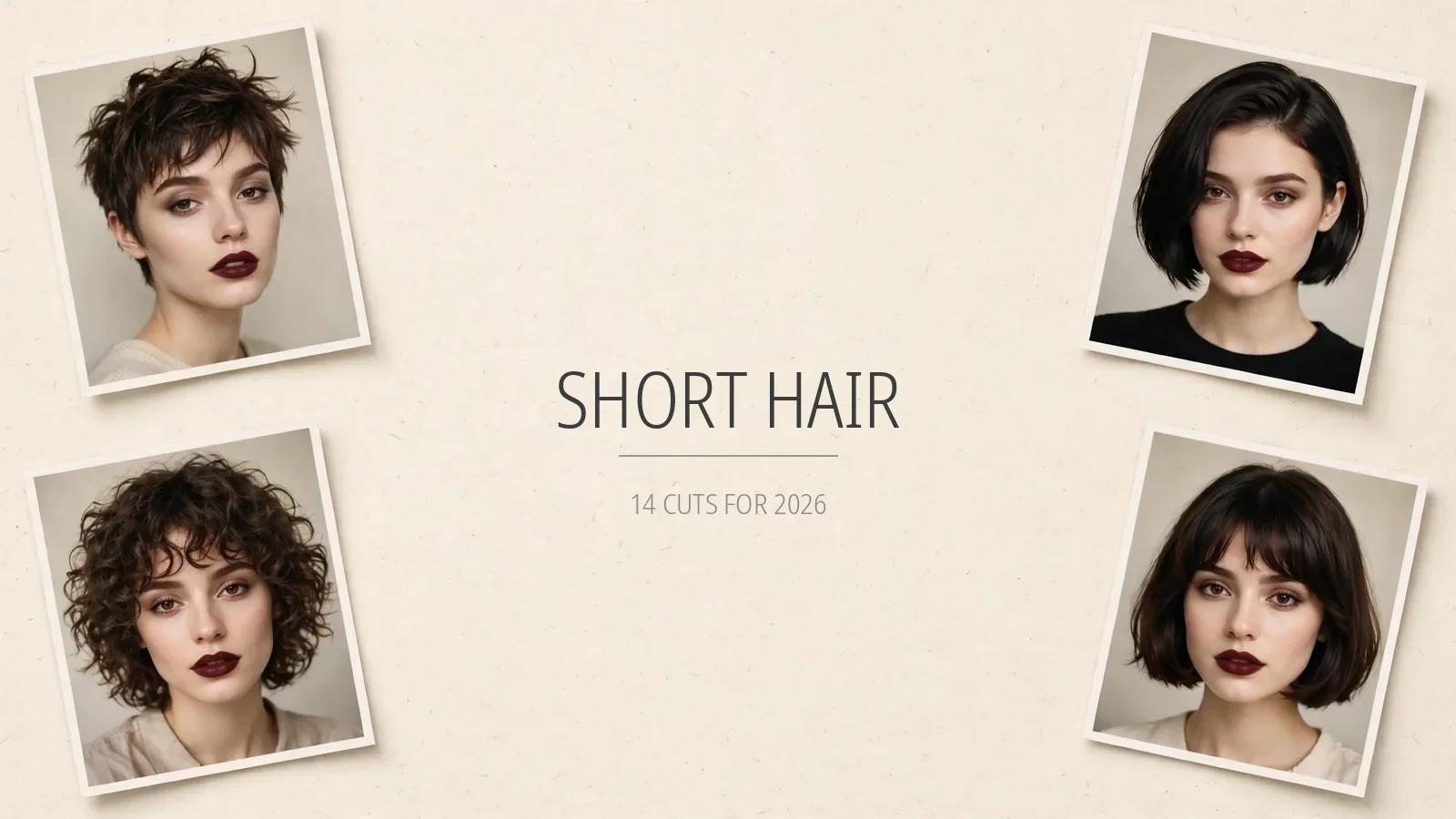
Short Hair – 14 Cuts Worth the Chop
Short hair photographs like freedom — one snip and suddenly mornings look effortless. The reality is messier: a pixie that takes one woman two minutes takes another twenty, a bob that air-dries beautifully on thick hair collapses into a flat helmet on fine hair, and a shag that looks undone-chic on wavy texture reads as genuinely undone on straight hair. The chop is not one commitment. It is fourteen different ones, each with its own daily price tag.
That is exactly what this guide fixes. Below are 14 short hair cuts worth the chop, each rated on honest styling time, mapped to the hair types they actually suit, and paired with a real grow-out path — so you choose the cut that fits your mornings, not someone else’s. A short hair cut picked this way stops being a gamble and starts being the best decision you made all year.
Table of Contents
- Short Haircuts Worth the Chop
- Short Hair Cuts Sorted by Styling-Time Commitment
- Grow-Out Paths From Each Short Cut
- Fine/Thin vs Thick Hair: Which Cuts Work
- FAQs
- How often does short hair need trimming?
- Can I style short hair without heat tools?
- Which short cut needs the least maintenance?
- How long does it take to grow out a pixie cut?
- Will short hair work on fine, thin hair?
- Can you get short hair with curly hair?
- Does short hair make you look older or younger?
- What products do I actually need for short hair?
Short Haircuts Worth the Chop
1. The Tousled Pixie
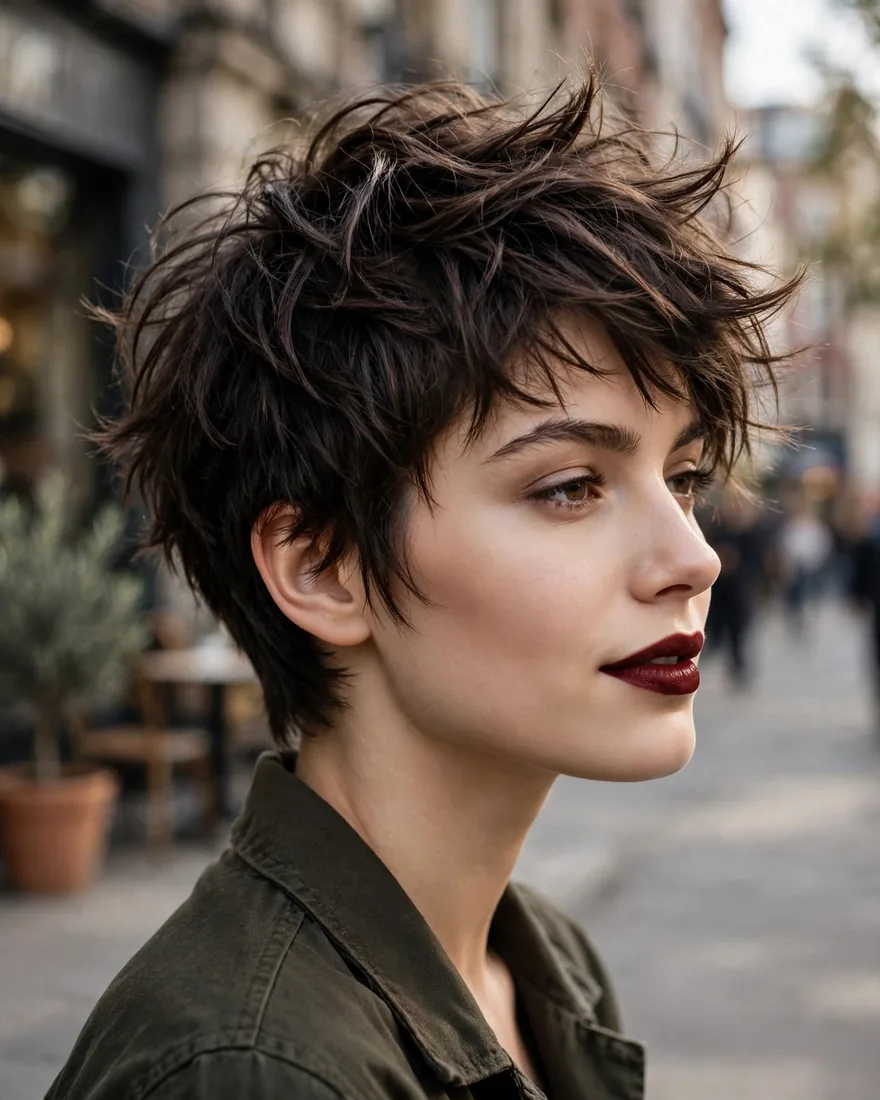
The classic short haircut at its most wearable — cropped through the back and sides with piece-y length on top, worn deliberately messy rather than slicked down. The tousle is doing the real work: it creates texture and lift that make the cut look intentional from every angle, and it hides the regrowth that makes precision pixies high-maintenance.
Benefits:
- Bedhead is the intended finish, so second-day hair looks better than wash day
- Piece-y texture disguises thinning spots and makes fine hair look denser
- Grows out more gracefully than blunt micro-pixies
Pro Tip: Ask for point-cut ends, not thinning shears — shears can leave fine hair looking sparse rather than textured.
How To Style: Work a pea-sized amount of matte clay through dry hair, pinching the ends into points with your fingertips. No brush, no dryer required on most textures.
Best For: Fine to medium straight or wavy hair; oval and heart faces. Daily styling time: 3–5 minutes. For the full spectrum of pixie variants, see our pixie cut guide.
2. Sleek Side-Parted Bob
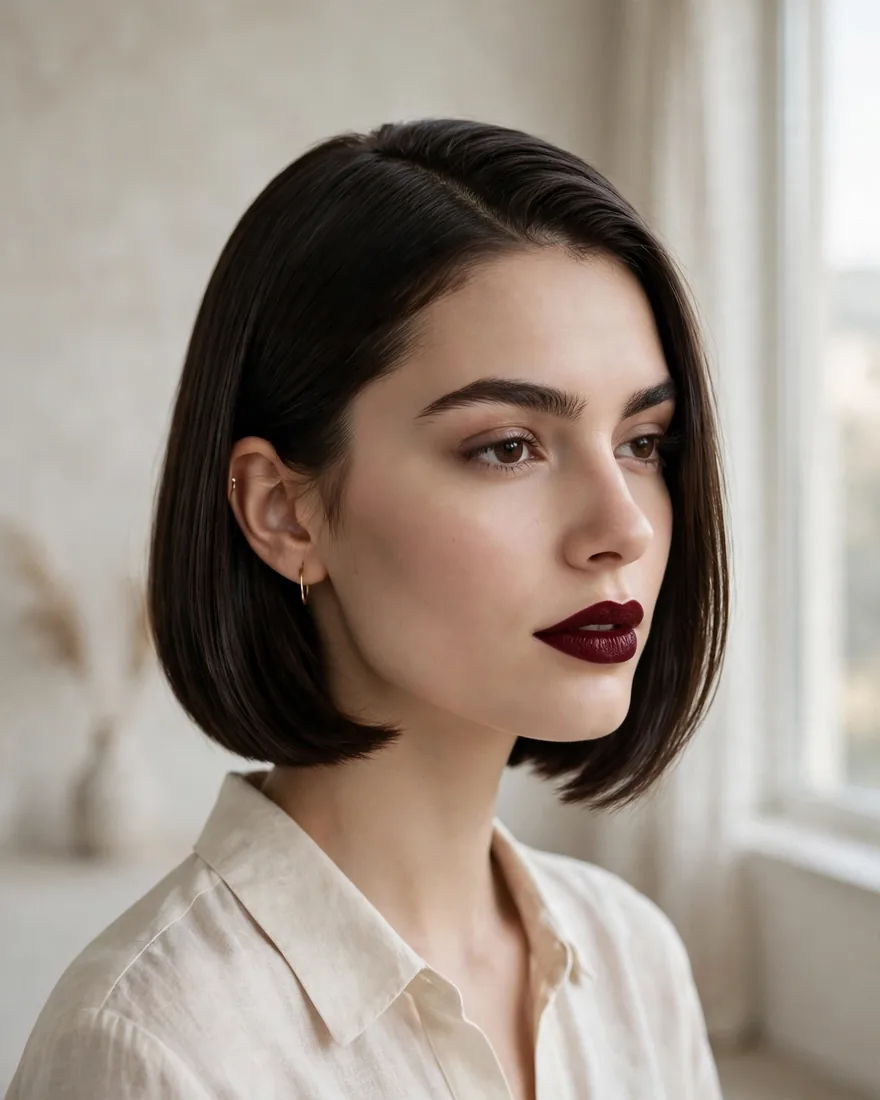
A chin-to-neck bob worn glass-smooth with a deep side part — the most polished short hair on this list. The deep part creates asymmetry and crown volume that stops the cut from reading flat, which is why it photographs so well.
Benefits:
- The deep part visually slims round faces and softens strong jawlines
- Sleek styling shows off shine, making even dull hair look healthy
- Professional enough for any office, striking enough for evenings
Pro Tip: Set the part while hair is damp — a dry-set part shifts by noon and the cut loses its architecture.
How To Style: Blow-dry smooth with a paddle brush, then flat-iron in thin sections. Finish with a shine serum through the mid-lengths, never the roots.
Best For: Straight to slightly wavy hair, fine to thick. Daily styling time: 10–15 minutes with heat.
3. The Curly Shag

Layers cut to let curls do what curls do — the shag’s shattered layers remove bulk while the curl pattern provides the shape, so the cut practically styles itself. On curly hair this is the lowest-effort option that still looks deliberate, because the texture is the style.
Benefits:
- Works with natural curl pattern instead of fighting it daily
- Layers remove the triangle effect that one-length cuts give curly hair
- Genuinely wash-and-go on most curl types
Pro Tip: Get it cut dry, on your natural curl pattern — wet-cut curls spring up shorter than expected and the layers land wrong.
How To Style: Scrunch curl cream into damp hair and diffuse or air-dry. Refresh day two with a water mist and a dab of cream.
Best For: Naturally curly to coily hair, medium to thick density. Daily styling time: 5 minutes. More layered inspiration in our short shaggy hair roundup.
4. Bixie Cut
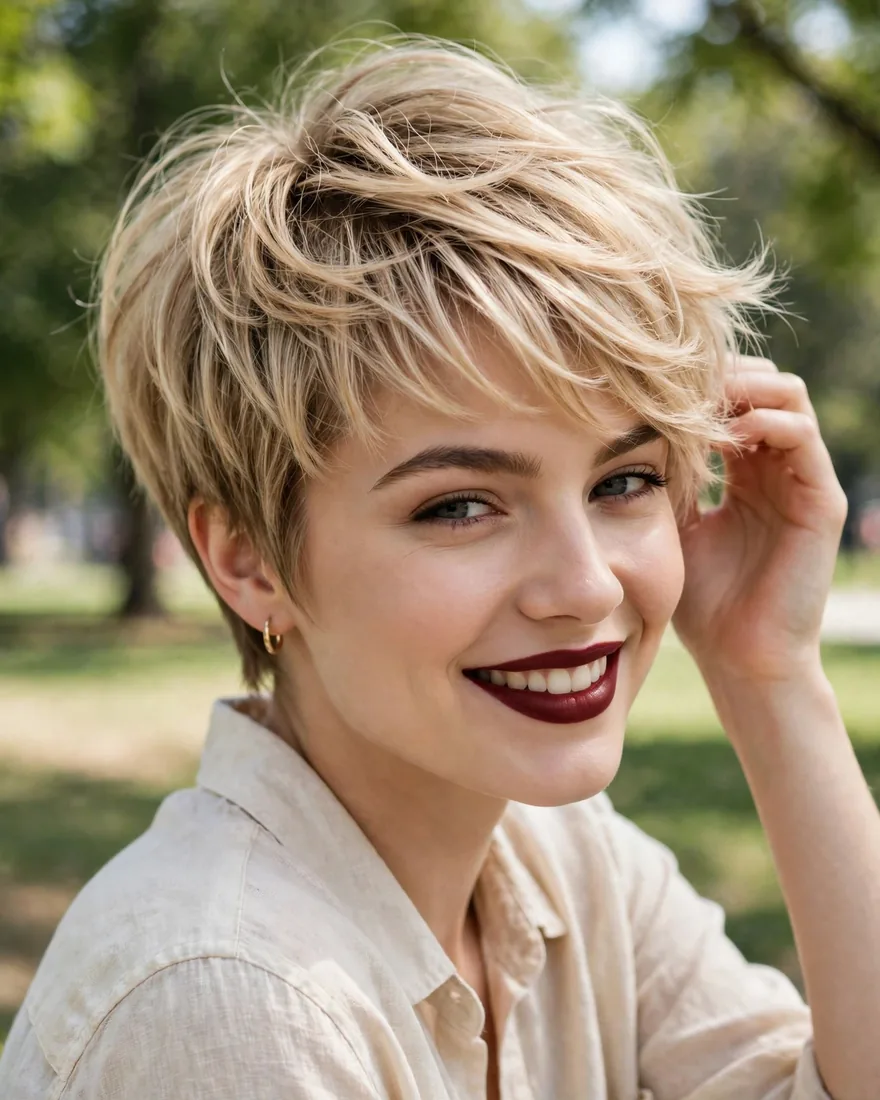
The pixie-bob hybrid — shorter than a bob through the nape, longer than a pixie on top and in front. The bixie is the diplomat of short cuts: edgy enough to feel like a real chop, long enough to tuck behind ears and style a dozen ways. It is also the smartest grow-out bridge if you are coming from a pixie.
Benefits:
- The most styling versatility of any short cut — the front length can be swept, pinned, or textured
- Flatters the widest range of face shapes
- The gentlest grow-out of any pixie-length cut
Pro Tip: The nape must stay tapered or cropped — if the back grows out, you have a shaggy bob, not a bixie.
How To Style: Rough-dry with fingers for texture, then define the front pieces with a flat iron or wax depending on the finish you want.
Best For: All textures, fine to thick. Daily styling time: 5–10 minutes. It pairs beautifully with the face-framing layers in our butterfly cut short hair ideas.
5. Jaw-Length French Bob

The Parisian classic — a jaw-skimming bob with soft, barely-there layers. The French bob’s magic is its imperfection: it is meant to swing, flip, and move, which means it forgives the cowlicks and growth patterns that ruin precision cuts. This is the cut for people who want chic without the salon schedule.
Benefits:
- The swingy movement flatters jawlines and cheekbones naturally
- Forgiving grow-out — it just becomes a longer bob
- Looks expensive with minimal product
Pro Tip: The length should just kiss the jawline — go shorter and it reads mod, go longer and it loses the French character.
How To Style: Air-dry with a little texture cream, or blow out with a round brush for polish. Tuck one side behind the ear for instant French-girl energy.
Best For: Straight to wavy hair, fine to medium. Daily styling time: 5 minutes.
6. The Textured Crop

Short all over with heavy texture on top — the crop that fakes density on fine hair better than any other cut on this list. The choppy layers create the illusion of thickness through shadow and movement — a top stylist pick for thinning hair.
Benefits:
- Creates believable density on fine and thinning hair
- One of the fastest morning routines here — texture does the work
- Edgy and modern without needing an undercut
Pro Tip: This cut needs product to read as intentional — without wax or paste, textured layers look unfinished rather than styled.
How To Style: Work matte paste through dry hair, pushing pieces in different directions. Two minutes, done.
Best For: Fine, thin, or thinning hair; straight to wavy textures. Daily styling time: 2–3 minutes.
7. Micro Bob
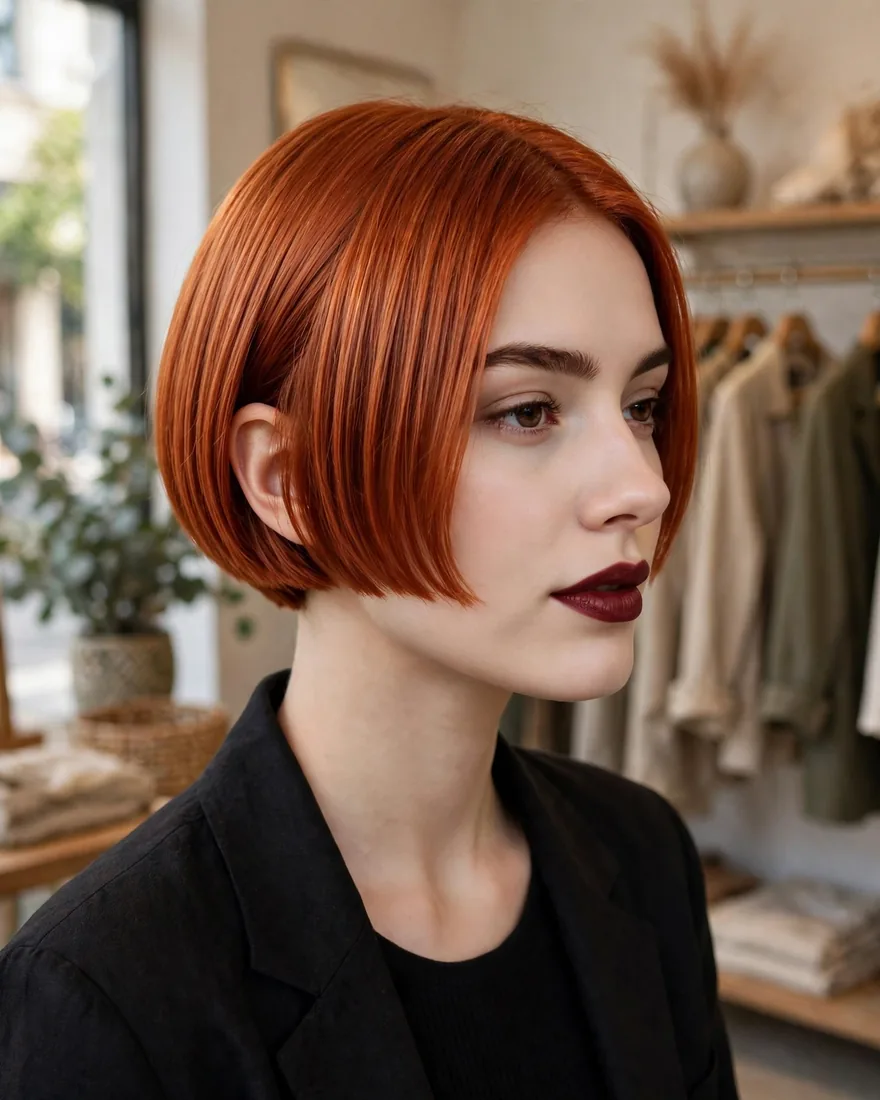
The boldest bob — cropped to lip or cheekbone length with a strong, graphic outline. The micro bob is a statement cut: it puts your bone structure on full display and demands confidence. The payoff is a look nobody forgets.
Benefits:
- Maximum impact — the most fashion-forward cut on this list
- Showcases cheekbones, jawline, and earrings dramatically
- Surprisingly quick to wash and dry given the length
Pro Tip: The outline must be razor-sharp — book trims every 4–5 weeks, because even half an inch of growth softens the graphic line that makes it work.
How To Style: Blow-dry sleek with a paddle brush or add bends with a flat iron. A center part reads editorial; a side part reads softer.
Best For: Straight hair, fine to medium; oval, heart, and square faces. Daily styling time: 8–12 minutes.
8. Blunt Chin-Length Bob
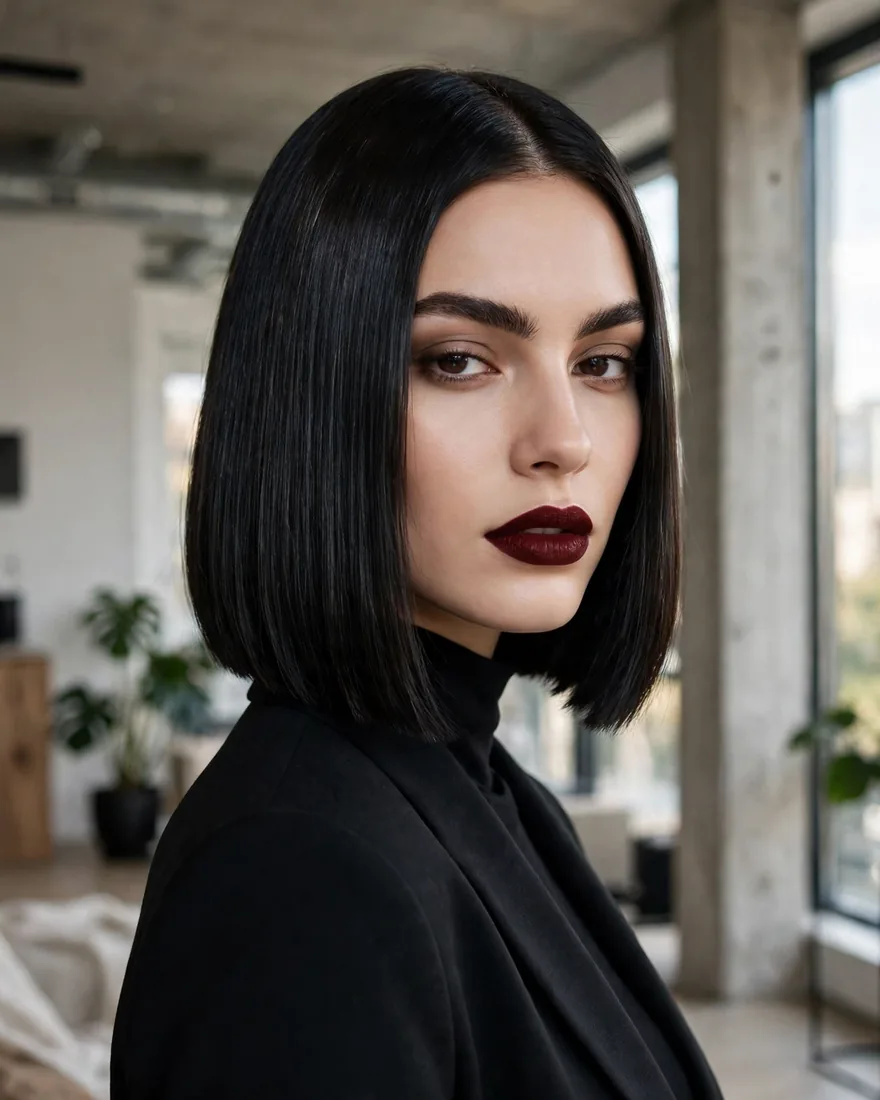
One length, chin-grazing, cut with a razor-straight perimeter — the blunt bob is precision at its most architectural. The blunt ends make hair look dramatically thicker, which is why it is the go-to recommendation for fine hair that needs the illusion of density without layers.
Benefits:
- Blunt ends make fine hair look significantly thicker
- The clean line frames the face with editorial precision
- Minimal layering means minimal styling decisions
Pro Tip: This cut lives or dies by the trim schedule — every 6 weeks, because uneven growth destroys the blunt line.
How To Style: Blow-dry smooth, then flat-iron the ends with a slight inward bevel. Shine spray over the canopy finishes it.
Best For: Straight fine to medium hair. Daily styling time: 10 minutes.
9. Shaggy Bob with Wispy Bangs

A chin-to-neck bob with razored layers and a feather-light fringe — the shag’s rebellious energy in a wearable package. The wispy bangs soften the whole cut, which makes this the friendliest shag for people nervous about the trend. Here, the layers create movement that flat, one-length bobs can never fake.
Benefits:
- Wispy bangs soften foreheads and strong brow lines without commitment
- Razored layers add movement to straight, limp hair
- The messier it gets through the day, the better it looks
Pro Tip: Wispy bangs need point-cutting, not thinning shears — shears leave ends reading damaged rather than feathered.
How To Style: Air-dry with sea salt spray scrunched in, then piece out ends with a touch of wax. Blow-dry the bangs forward with fingers, not a brush.
Best For: Straight to wavy hair, fine to medium. Daily styling time: 5 minutes. For more fringe placement ideas, see our types of bangs guide.
10. The Soft Wolf Cut

The wolf cut’s gentler sibling — shaggy layers and curtain bangs dialed back from full rock-star to everyday wearable. The soft wolf gives that coveted lived-in texture without the extreme mullet silhouette of the viral version, which means it works in offices as well as at concerts.
Benefits:
- Curtain bangs flatter nearly every face shape by softening the hairline
- Layers create volume at the crown where flat hair needs it most
- Grows out into a shaggy bob rather than an awkward in-between
Pro Tip: This cut needs medium to thick hair for the layers to stack properly — on very fine hair, ask for fewer, longer layers.
How To Style: Rough-dry upside down for volume, then define the curtain bangs with a round brush. Texture spray finishes the layers.
Best For: Wavy to straight hair, medium to thick density. Daily styling time: 8–10 minutes. For bolder takes, browse our unique hairstyles for short hair.
11. Side-Swept Bob
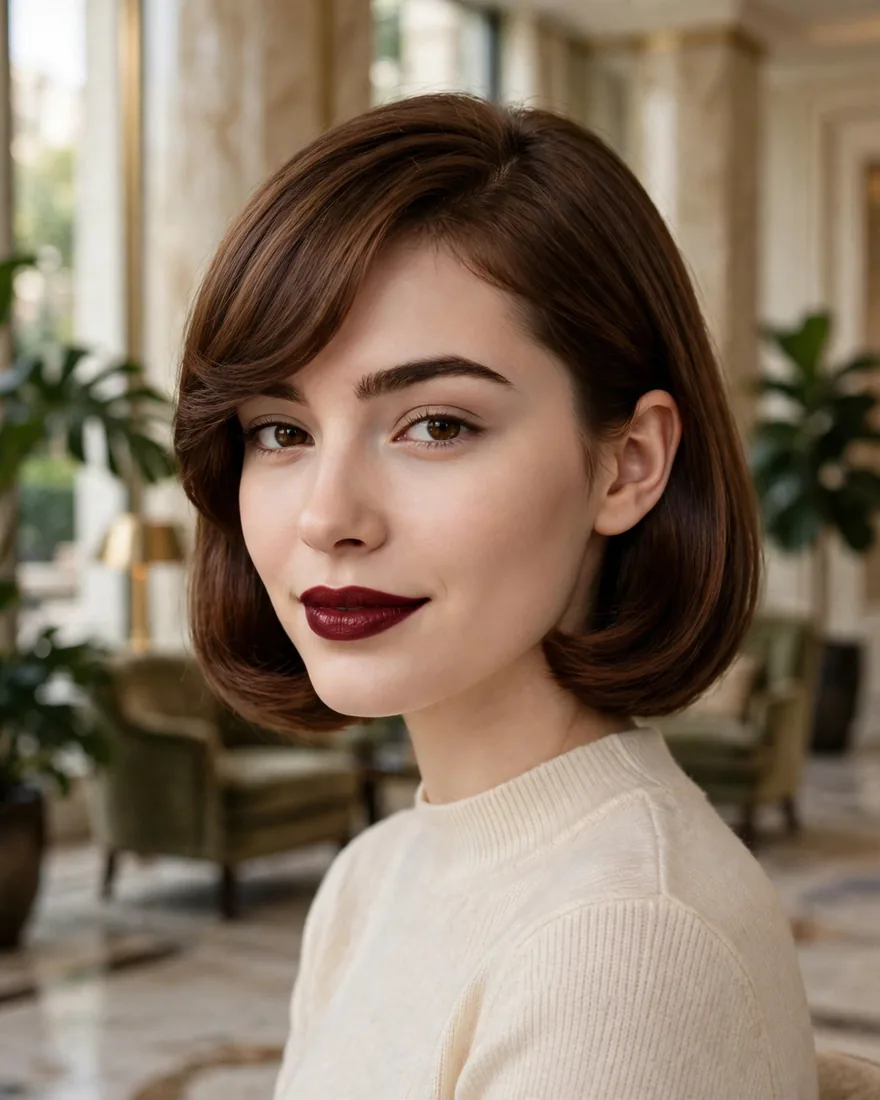
A classic bob with all the styling weight thrown to one side — the deep sweep creates diagonal interest that flatters wider faces and adds instant volume at the crown. This is the stylist’s default recommendation for an unsure client.
Benefits:
- The diagonal line visually slims round and square faces
- Deep side volume fakes fullness at the crown for fine hair
- Easy to restyle — the sweep can flip sides or go center
Pro Tip: Train the part while hair is damp — short hair has a memory, and the first two minutes set the sweep for the whole day.
How To Style: Blow-dry with a round brush, directing everything to one side. A light-hold spray keeps the sweep in place without stiffness.
Best For: All textures, fine to thick. Daily styling time: 8 minutes.
12. The Undone Bob

The anti-perfection bob — air-dried, piece-y, and deliberately imperfect. The undone bob is short hair for real life: it embraces frizz, cowlicks, and second-day texture instead of fighting them, which makes it the most honest low-maintenance cut on this list for wavy and textured hair.
Benefits:
- Genuinely wash-and-go on wavy and textured hair
- Embraces natural texture instead of requiring daily heat
- Second and third-day hair often looks better than wash day
Pro Tip: The cut still needs good bones — invisible layers cut dry keep the shape from going triangular as it air-dries.
How To Style: Scrunch wave cream or curl cream into damp hair and leave it alone. That is the entire routine.
Best For: Wavy, curly, or textured hair; all densities. Daily styling time: 2 minutes.
13. Curly Pixie

A pixie cut engineered for curls — longer layers than a straight-hair pixie, cut dry to respect the spring factor. The curly pixie is stunning because it lets the texture be the entire style: volume, shape, and movement come free with the curl pattern. If your texture leans curly, a dedicated curly pixie cut approach with dry-cutting will serve you best, and our short curly hairstyles guide covers the products that keep curls defined at this length.
Benefits:
- Volume and shape come from the curl pattern — minimal styling needed
- Shorter length means curls spring tighter and more defined
- Wash-and-go factor is genuinely excellent
Pro Tip: Ask for layers at least an inch longer than you think you want — curls shrink, and a too-short curly pixie has nowhere to hide mistakes.
How To Style: Apply curl cream to soaking-wet hair, scrunch, and diffuse or air-dry. Pineapple overnight to preserve the shape.
Best For: Curly to coily hair, all densities. Daily styling time: 5 minutes.
14. Buzz-Inspired Crop
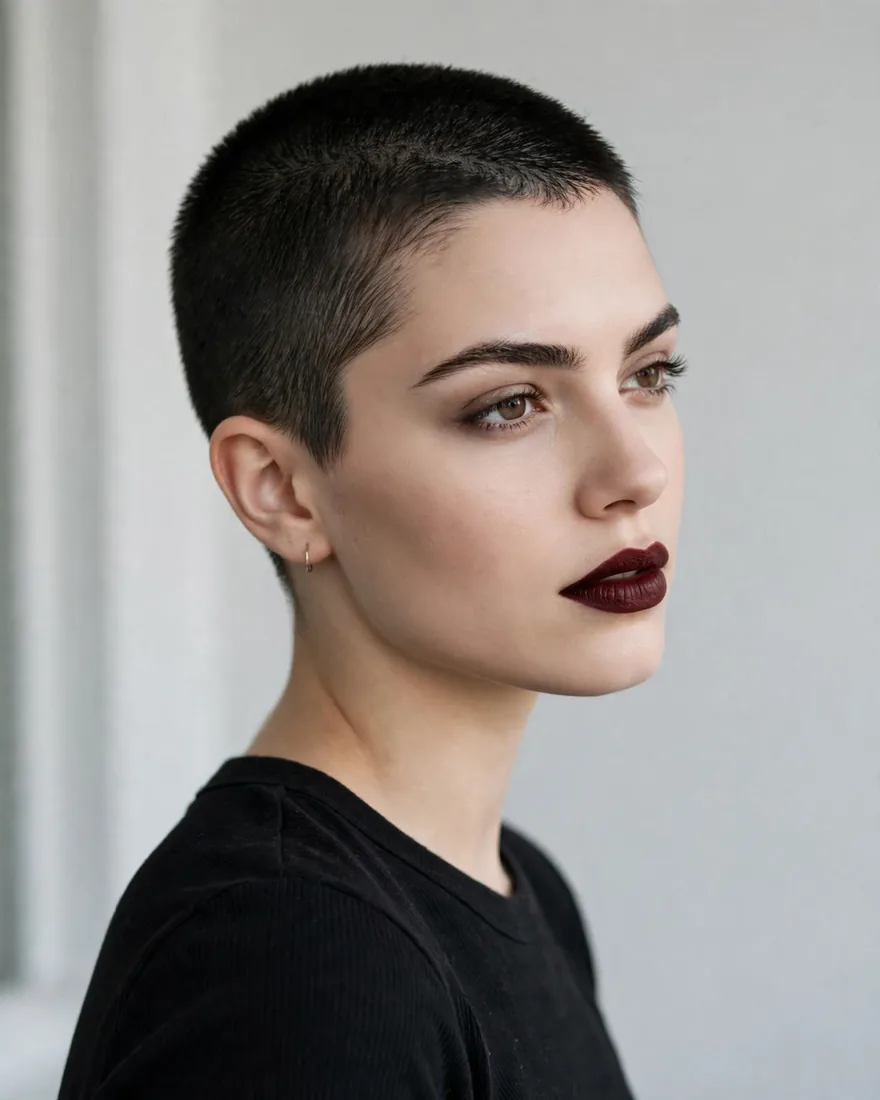
Not a full buzz, but borrowing its DNA — very short through the sides and back with just enough length on top to show texture. The buzz-inspired crop is liberating: near-zero styling and maximum edge. If the full commitment appeals, our buzz cut guide breaks down guard lengths and realities.
Benefits:
- The fastest morning routine of any cut here — under two minutes
- Showcases bone structure, earrings, and makeup dramatically
- Cheapest to maintain — clippers at home handle the upkeep
Pro Tip: Keep a little more length on top than the sides — the contrast is what separates a stylish crop from a growing-out buzz.
How To Style: A dab of wax or nothing at all. Wash, towel-dry, leave.
Best For: All textures and densities; oval, heart, and square faces. Daily styling time: under 2 minutes.
How the 14 short haircuts compare at a glance:
| Cut | Daily Styling Time | Grow-Out Path |
|---|---|---|
| The Tousled Pixie | 3–5 min | Bixie → shaggy bob |
| Sleek Side-Parted Bob | 10–15 min | Longer bob → lob |
| The Curly Shag | 5 min | Longer shag → curly lob |
| Bixie Cut | 5–10 min | Shaggy bob → lob |
| Jaw-Length French Bob | 5 min | Chin bob → lob |
| The Textured Crop | 2–3 min | Textured pixie → bixie |
| Micro Bob | 8–12 min | Chin bob → lob |
| Blunt Chin-Length Bob | 10 min | Softer bob → lob |
| Shaggy Bob with Wispy Bangs | 5 min | Longer shag → lob |
| The Soft Wolf Cut | 8–10 min | Shaggy bob → wolf lob |
| Side-Swept Bob | 8 min | Longer bob → lob |
| The Undone Bob | 2 min | Wavy lob, no awkward stage |
| Curly Pixie | 5 min | Curly bixie → curly shag |
| Buzz-Inspired Crop | Under 2 min | Textured crop → pixie |
Short Hair Cuts Sorted by Styling-Time Commitment
Be honest about your mornings before you choose, because short hair punishes optimism. The under-two-minute club is small: the buzz-inspired crop, the undone bob on wavy hair, and the textured crop need almost nothing — wash, product, leave. These are the cuts for people who hit snooze twice. The five-minute tier is the sweet spot for most: the tousled pixie, French bob, curly shag, curly pixie, bixie, and shaggy bob all land here, needing one product and minimal technique. This is where short hair actually delivers on its low-maintenance promise.
The ten-minute-plus tier is where buyers’ remorse lives. The sleek side-parted bob, blunt chin-length bob, and micro bob all demand heat styling to look right — skip the flat iron and the architecture collapses. The soft wolf cut and side-swept bob sit in the middle at eight to ten minutes: they need a dryer and some direction, but not precision. The rule is simple — the sleeker and more graphic the cut, the more daily minutes it taxes. Pick your tier first, then pick your cut inside it, and your short hair will match your life instead of fighting it.
Grow-Out Paths From Each Short Cut
Every short cut is a temporary state, so know the exit route before you enter. Pixie growers, here is the honest timeline: at three months you are in bixie territory — the top has flopped, the nape is shaggy, and it reads as a style choice rather than neglect. Months four to six bring the awkward phase the internet warns about; the fix is bridge cuts, not patience alone. A good stylist rebalances the proportions every eight to ten weeks and you skip the mullet stage entirely. By month eight to twelve you are at a shaggy bob, and nobody can tell you started from a pixie.
Bob growers have it easier. A chin bob becomes a neck-length bob, then a lob — the grow-out is linear and every stage looks intentional as long as you trim the perimeter every eight weeks. The one trap: letting the back grow faster than the front, which creates an accidental A-line. Ask your stylist to keep the outline even as it lengthens. Crop and buzz growers pass through genuinely cool stages — textured crop to pixie to bixie — each one a legitimate style. The universal rule for growing out short hair: keep getting trims. Growing out does not mean not cutting; it means cutting strategically so every month looks deliberate.
Fine/Thin vs Thick Hair: Which Cuts Work
Texture decides everything, so match the cut to your density honestly. Fine and thin hair needs architecture: the textured crop fakes density better than anything here through choppy shadow and movement, the tousled pixie builds lift at the crown, and the blunt chin-length bob makes ends look dramatically thicker through its solid perimeter. What fine hair must avoid: the soft wolf cut, whose layers need thickness to stack — on fine hair they go stringy — and one-length sleek styles worn without product, which expose every thin spot.
Thick hair needs the opposite engineering: weight removal. The curly shag, soft wolf cut, and shaggy bob all use layers to stop thick hair from ballooning outward, while the bixie and undercut-adjacent crops remove bulk where it misbehaves most — the nape and behind the ears. If a past short cut turned into a triangle on you, blame missing internal layers, not the length. And the cuts that work for everyone: the side-swept bob, French bob, and undone bob are genuinely density-agnostic, which is why stylists recommend them sight unseen. When in doubt, bring photos of your actual texture, not just the cut — the same short haircut is a different haircut on different density.
FAQs
How often does short hair need trimming?
Every four to eight weeks depending on the cut. Graphic styles like the micro bob and blunt bob show regrowth fastest at four to six weeks; textured cuts like the tousled pixie and shaggy bob can stretch to eight. Budget for this before you commit — short hair typically costs more per year in salon visits than long hair, though daily styling is faster.
Can I style short hair without heat tools?
Yes, if you choose the right cut. The undone bob, curly shag, curly pixie, tousled pixie, and textured crop are all designed to air-dry — product plus hands is the whole routine. Sleek bobs, blunt cuts, and micro bobs generally need at least a quick blow-dry or flat iron for their architecture. Pick your cut around your real mornings, not your aspirational ones.
Which short cut needs the least maintenance?
The buzz-inspired crop wins outright — under two minutes daily and clippers handle the upkeep at home. Among cuts with more styling versatility, the undone bob on wavy hair and the textured crop are the lowest-maintenance: wash, one product, done. The highest-maintenance are the sleek and graphic cuts — beautiful, but they tax ten to fifteen minutes every single morning.
How long does it take to grow out a pixie cut?
Roughly eight to twelve months to reach a chin-length bob, since hair grows about half an inch per month. At three months you are in bixie territory; months four to six are the awkward phase that reshaping trims every eight to ten weeks will carry you through. Growing out does not mean not cutting — strategic trims keep every stage deliberate.
Will short hair work on fine, thin hair?
Fine hair is one of the best candidates for short hair, with the right cut. The textured crop, tousled pixie, and blunt chin-length bob all create the illusion of density through texture, lift, or a solid perimeter. Avoid heavily layered cuts like the soft wolf on very fine hair — the layers go stringy without density to support them — and skip one-length sleek styles worn without product, which expose thinness.
Can you get short hair with curly hair?
Absolutely — the curly shag and curly pixie are among the best short cuts precisely because they let the curl pattern do the styling. The key is a stylist who cuts curls dry, since wet-cut curls spring up shorter than expected. Ask for longer layers than you think you want, keep curl cream and a diffuser in your routine, and enjoy one of the few genuinely wash-and-go lengths.
Does short hair make you look older or younger?
It depends on the cut, not the length. Soft, textured short cuts with movement — tousled pixies, shaggy bobs, French bobs — tend to read youthful because they move and soften the face. Severe, scraped-back or ultra-graphic cuts can read older because they expose everything. For a youthful read, choose texture over sleekness and keep softness around the face.
What products do I actually need for short hair?
One styler matched to your finish: matte clay or paste for textured cuts, pomade for sleek styles, curl or wave cream for textured hair, sea salt spray for undone finishes. Add a light-hold spray if your style needs to survive the day and a heat protectant if you use hot tools. That is genuinely enough — one product used correctly beats a shelf of half-used jars.
The right short haircut is not the one in the photo you saved — it is the version of that photo engineered for your texture, your density, and your real mornings. Pick from these fourteen with honest eyes about styling time, know your grow-out path, learn your one product — and the chop will be the best decision you have made all year.