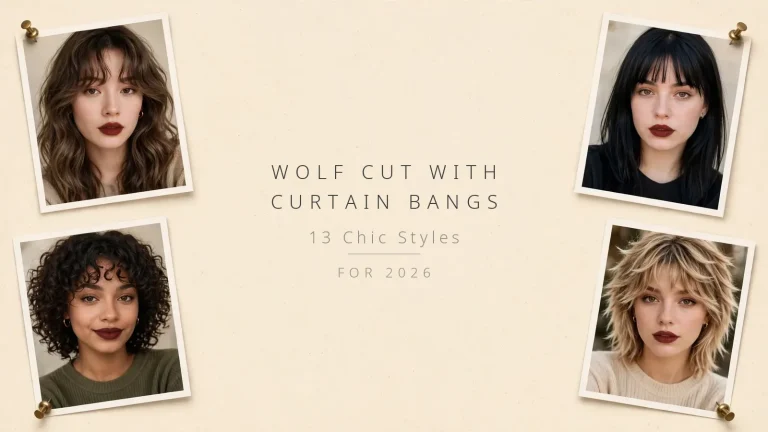
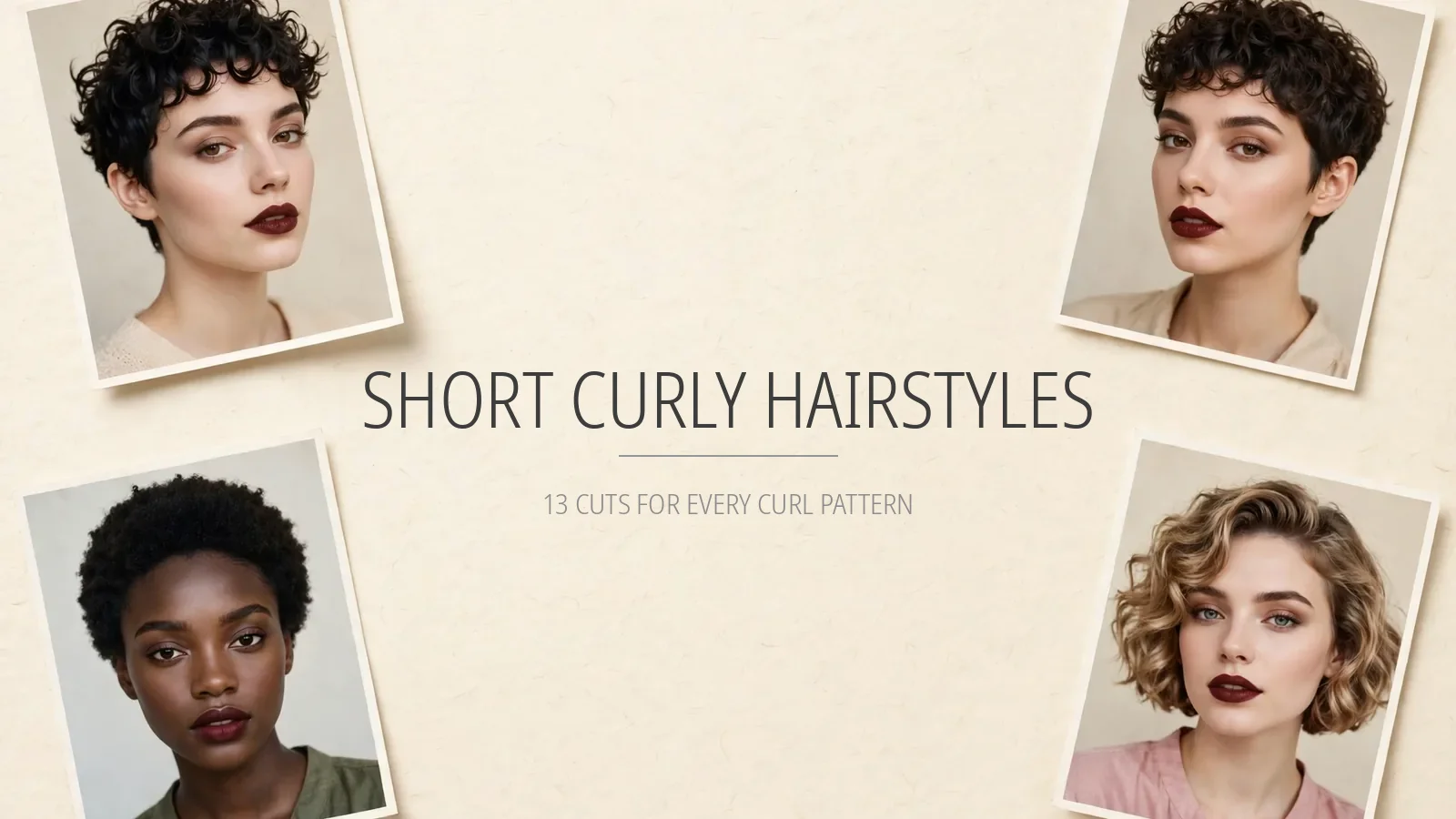
Short Curly Hairstyles – 13 Cuts for Every Curl Pattern
Short curls look bold and photograph beautifully — until the cut fights your curl pattern. Anyone with Type 3 or Type 4 hair who has asked for “just a trim” and walked out with a triangle knows the failure mode: the stylist shapes wet hair without accounting for shrinkage, the ends spring up inches higher than expected, and the cut turns into a wide, frizzy pyramid by day two. That fear keeps plenty of curly-haired people growing out cuts they don’t actually love.
The fix isn’t avoiding the scissors — it’s choosing short curly hairstyles designed around how curls actually behave. The 13 cuts below are matched to curl pattern and upkeep level, so you can pick a silhouette for your real hair instead of your stylist’s guesswork. Every one of these short curly hairstyles works with shrinkage instead of against it, which is the entire secret to short curly hairstyles you’ll still like in month three.
In This Guide
- Short Curly Hairstyles Worth Booking
- How to Choose the Right Short Curly Cut
- How to Style Short Curls by Curl Type
- Keeping Short Curls Between Trims
- FAQs
- Do short curly hairstyles need a special kind of haircut?
- Will a pixie cut work on tight Type 4 coils?
- How often should I trim short curly hair?
- How do I keep short curls from getting frizzy?
- Can I go short if my curls are damaged?
- What products do short curly hairstyles actually need?
- How do I protect short curls at night?
- Is a short curly cut hard to grow out?
Short Curly Hairstyles Worth Booking
1. Curly Pixie Cut
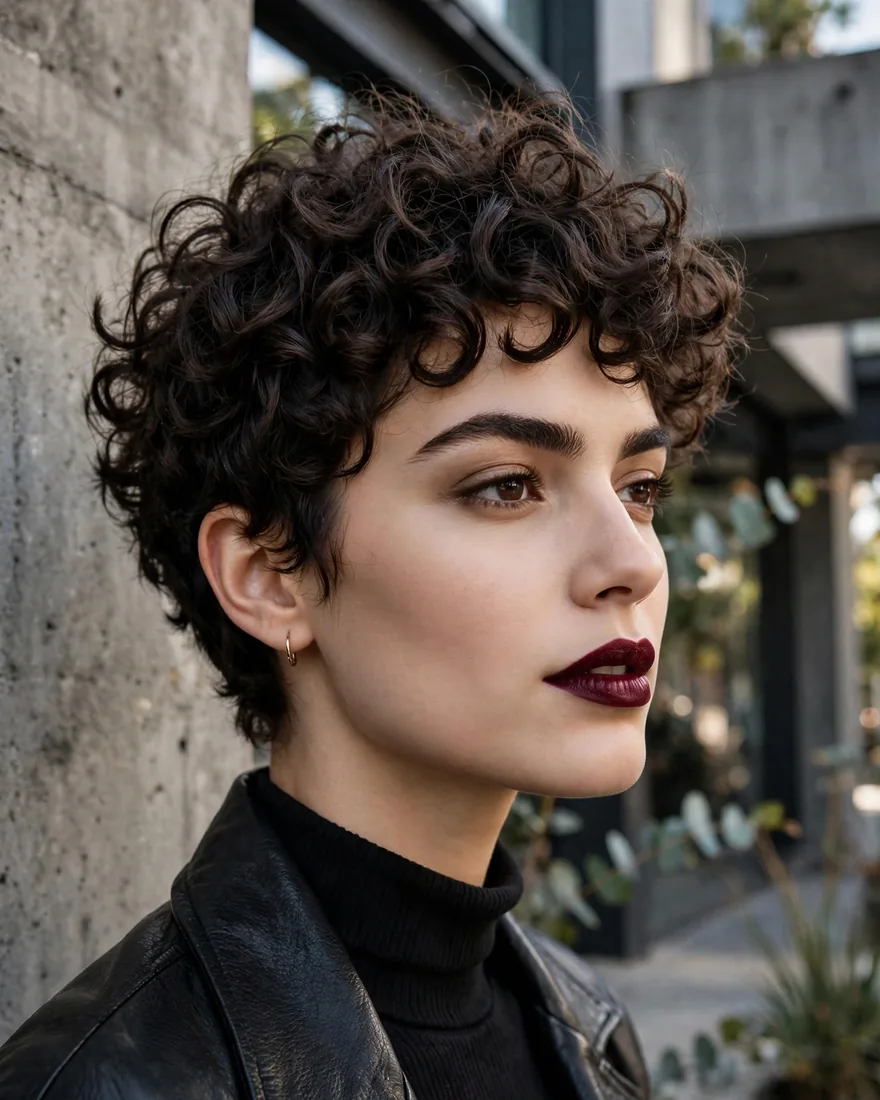
The curly pixie keeps length through the crown and front while the back and sides go close, so curls form a textured cap instead of fighting gravity. It only works when the top is left long enough for your shrinkage — cut it too short and definition turns into a fuzz halo. Ask for dry cutting, or at least a visible margin for spring-back.
- Fastest wash-and-go of any shaped cut
- Draws attention to cheekbones and jawline
- Uses far less product than longer short curly hairstyles
Pro Tip: Define the top curls with your fingers while soaking wet, then don’t touch them until fully dry. If you’re still deciding, browsing real curly pixie cut examples on your exact curl pattern helps more than any description.
How To Style: Leave-in plus light curl cream on damp hair, finger-coil the front and crown, diffuse on low heat or air-dry. A pea-sized amount of pomade smooths tapered edges.
Best For: Type 3A–3C curls; Type 4 hair needs 2–3 inches on top so coils can clump.
2. Tapered Curly Cut
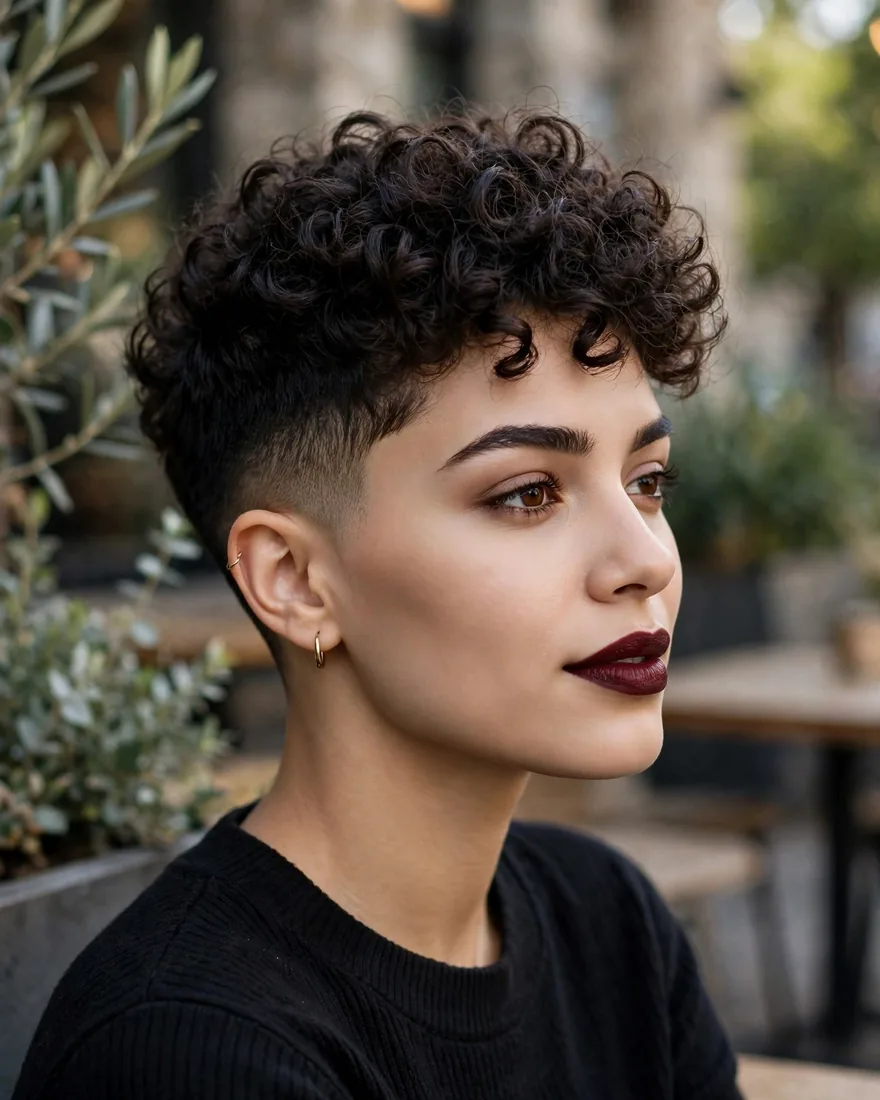
The tapered cut graduates from close-cropped at the nape and temples to full curls on top — a pixie with more drama. It’s among the most forgiving short curly hairstyles because the taper does the shaping for you: even on a lazy day the silhouette reads intentional.
- Built-in shape means fewer bad hair days
- Nape and temples stay tidy between appointments
- Great transition cut when growing out a shorter style
Pro Tip: Keep the taper line soft, not hard — a razor-sharp fade against curls looks harsh as it grows. A “soft taper” buys two extra weeks of wearability.
How To Style: Moisturize the top generously, diffuse to lift roots, smooth tapered sections with light oil.
Best For: Type 3B–4B hair with enough top density to create contrast; fine curls need the top kept longer.
3. Curly Bixie

The bixie — a bob-pixie hybrid — leaves the front and sides long enough to frame the face while the back stays cropped. On curly hair the longer front pieces elongate the face while the back keeps pixie-easy maintenance. The sweet spot among short curly hairstyles for anyone not ready for a full crop.
- More versatile than a pixie — tuck one side, sweep the front
- Front pieces hide the awkward grow-out stage
- Still short enough for a quick wash routine
Pro Tip: Front pieces must be cut to fall where you want them dry, not wet — shrinkage eats half their length on tight patterns. Compare with the straight-hair pixie cut to see how much extra length curls need.
How To Style: Twist front sections around your fingers while damp; diffuse or air-dry the rest with a flexible-hold cream.
Best For: Type 3A–3B curls; Type 4 hair can wear it with the front at least chin-grazing when stretched.
4. Layered Curly Bob

Layers are what separate a curly bob that sits pretty from one that sits wide. Strategic internal layers remove mid-length bulk so the cut falls rounded instead of expanding outward — the default recommendation among short curly hairstyles for thicker hair.
- Controls the dreaded triangle on dense hair
- Layers keep curls from clumping into one heavy mass
- Forgiving as it grows out
Pro Tip: Ask for “long layers” specifically — short choppy layers spring up unevenly and create shelves. It sits in the same family as the wider world of curly hairstyles, where layering discipline decides everything.
How To Style: Apply products in sections to soaking-wet hair, scrunch, and diffuse upside down for root volume.
Best For: Type 3B–3C and 4A hair with medium to high density; fine curls need minimal layering.
5. Chin-Length Curly Bob

This bob is cut to hit the chin when dry — which means it lands near the ears when wet on tight patterns, so shrinkage math matters more here than in any other cut on this list. When it lands right, it’s the most polished of all short curly hairstyles: a clean, face-framing line that reads elegant.
- Most versatile silhouette for work and formal settings
- Face-framing line flatters round and square faces
- Enough length for a tiny puff or half-up style
Pro Tip: Book the trim with hair in its normal state — washed and defined, not stretched. A bob cut on stretched curls bounces up shorter than agreed, with no fix until it grows.
How To Style: Define in small sections, clip roots for lift, finish with light oil. A silk scarf over the crown for 15 minutes sets the shape.
Best For: Type 3A–3C curls with consistent pattern; Type 4 needs more daily root work.
6. Defined Ringlet Bob

The ringlet bob is maximum definition: every curl separated, spiraled, and glossy, cut into a rounded bob that shows off the pattern itself. It peaks on wash day and softens through the week — if your curls form perfect spirals, these short curly hairstyles are your showcase cut.
- Shows off natural curl pattern at its best
- Rounded shape distributes volume evenly
- Photographs beautifully — every spiral reads
Pro Tip: Definition lives on wash-day technique, not the cut. Finger-coil in small sections; refresh with a water-and-leave-in spritz rather than re-wetting everything.
How To Style: Leave-in then strong-hold gel in sections on soaking-wet hair, finger-coil each curl, diffuse on low heat untouched until 100% dry, then scrunch out the crunch with oiled hands.
Best For: Type 3A–3C ringlets that clump naturally; tight coils need significant length to form visible ringlets.
7. Curly Shag

The shag brings texture to short curly hairstyles: heavy layers, piece-y ends, and a fringe blending into face-framing pieces. On curls, the shag’s choppy layers work with the hair’s natural chaos — this is the cut for people who hate “done” hair.
- Lowest-maintenance shaped cut here — mess is the point
- Layers build crown volume where curly cuts often fall flat
- Grows out lived-in instead of awkward
Pro Tip: The fringe is make-or-break — have it cut dry, curl by curl, longer than you think. See how fringe length changes the look among curly shag variations.
How To Style: Scrunch texture cream into damp hair and air-dry — skip the diffuser for maximum separation. Flip your part for instant volume.
Best For: Type 2C–3B hair with natural volume; tight coils get a rounded afro-shag hybrid instead.
8. Curly Wolf Cut

The wolf cut pushes shag layers further: short choppy crown layers melting into longer back pieces, with a wispy fringe. On curly hair those disconnected lengths catch light differently for serious dimension. It’s the boldest of these short curly hairstyles — but needs a stylist who truly understands curly cutting.
- Maximum texture and movement of any cut here
- Crown volume without teasing
- Fringe-and-layer combo frames the face from every angle
Pro Tip: Show your stylist reference photos of both wash-day and day-three hair — the cut behaves differently in each. Check how the shape translates in the curly wolf cut guide before committing.
How To Style: Diffuse the crown upside down, air-dry the back pieces, separate fringe curls with fingers. Dry texture spray adds grit.
Best For: Type 3A–3C curls; works on Type 4 with the back kept longer so the shape reads.
9. Curly Undercut
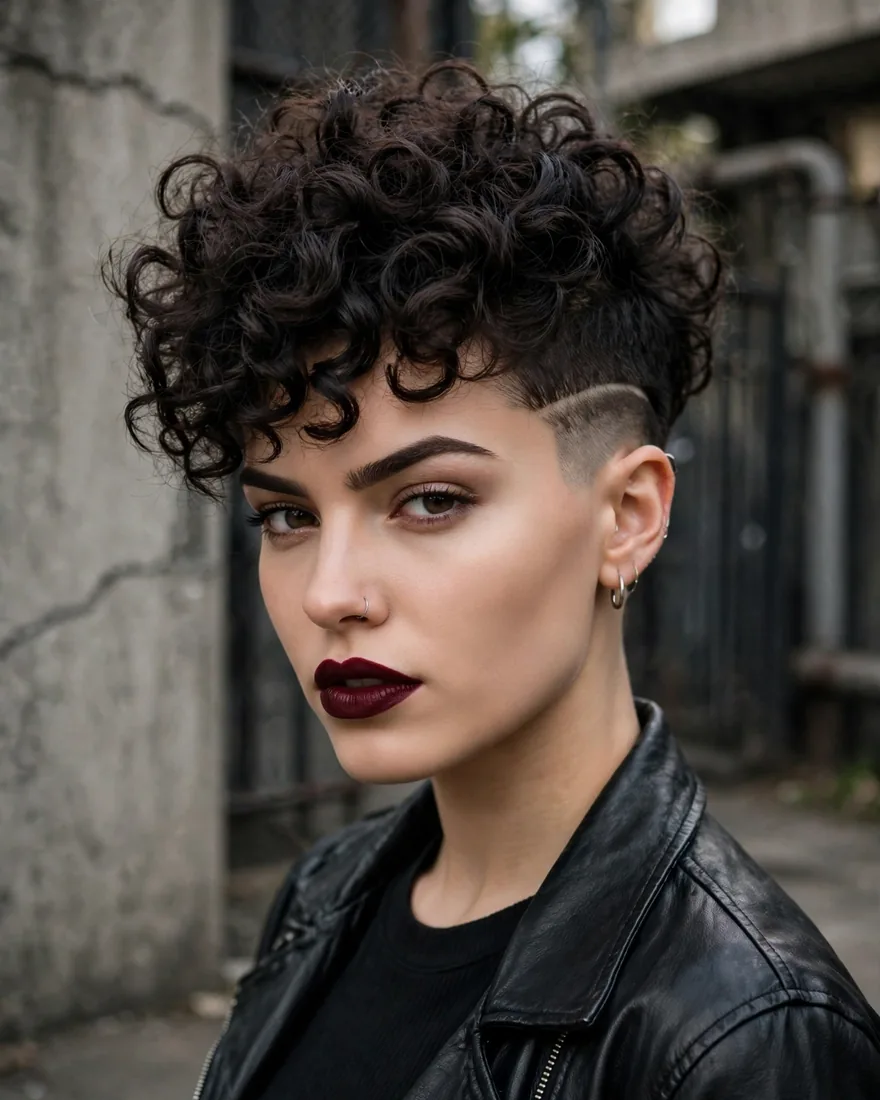
The undercut keeps the top full and curly while the sides and back go short, making the top curls look even bigger by contrast. Wear the top defined and polished or big and free — the undercut keeps the silhouette sharp either way, and it’s genuinely cooling when the sides go close.
- Removes bulk where curly hair gets hot and heavy
- Contrast makes top curls look fuller
- Versatile: slick back for edge, or wear loose and big
Pro Tip: Decide the undercut height before the clippers come out — temple-height is subtle, a high wrap above the ears is a statement. Start lower; you can always go higher next time.
How To Style: Style the top like a curly pixie (cream, define, diffuse); keep the undercut crisp with a weekly line-up or quick at-home clipper pass.
Best For: Type 3B–4C hair with dense tops; fine curls may find the contrast too stark.
10. Curly Frohawk
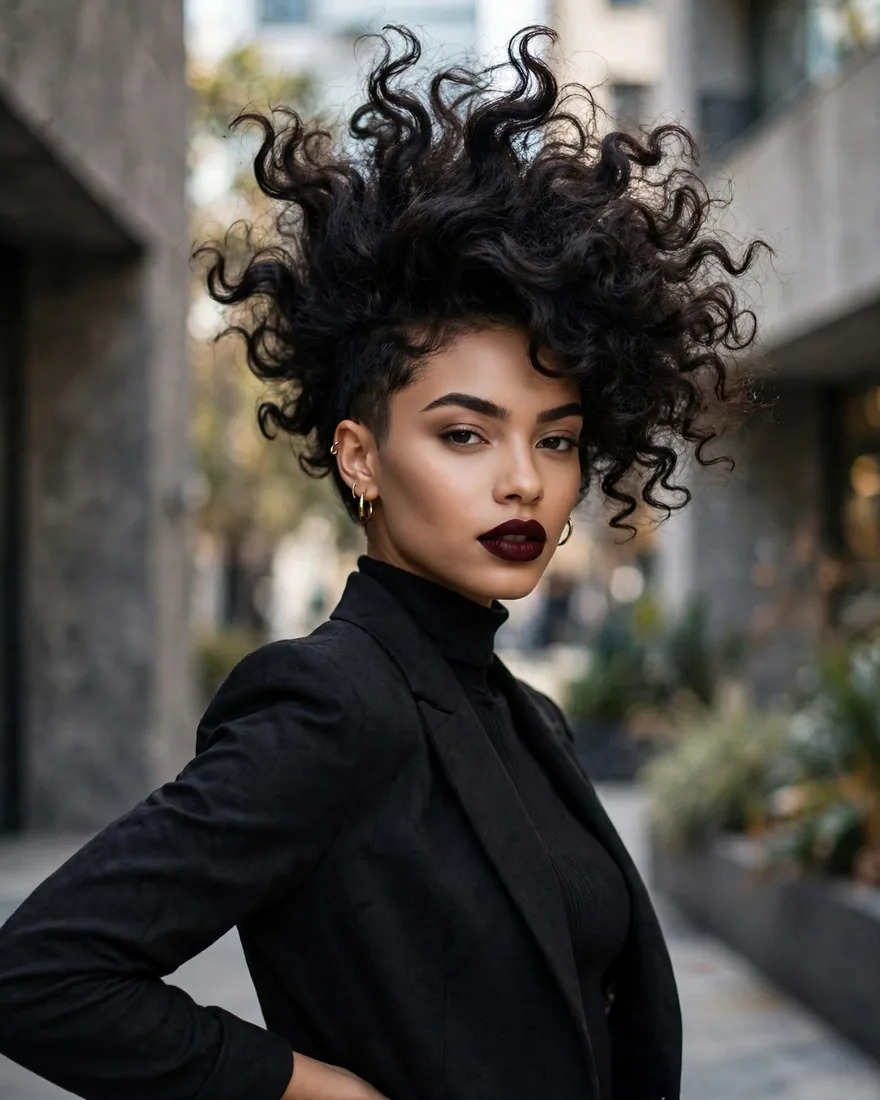
The frohawk borrows the mohawk’s silhouette but keeps it soft: tapered sides with a strip of full curls running front to back along the crown. It’s the most dramatic of all short curly hairstyles and somehow one of the easiest to maintain, because the shape is built into the cut.
- Head-turning shape with simple upkeep
- Center strip styles tall, flat, or swept — three looks, one cut
- Sides stay neat for weeks between barber visits
Pro Tip: Strip width changes the vibe — wide reads as a bold curly cut, narrow as a true mohawk. Start wider; you can take the sides higher next appointment, but you can’t put hair back.
How To Style: Pick or lift the center strip, define with cream, let tapered sides air-dry. Strong-hold gel keeps the strip upright on important days.
Best For: Type 3C–4C coils with enough spring to stand up; looser curls wear it swept aside.
11. Rounded Afro Crop
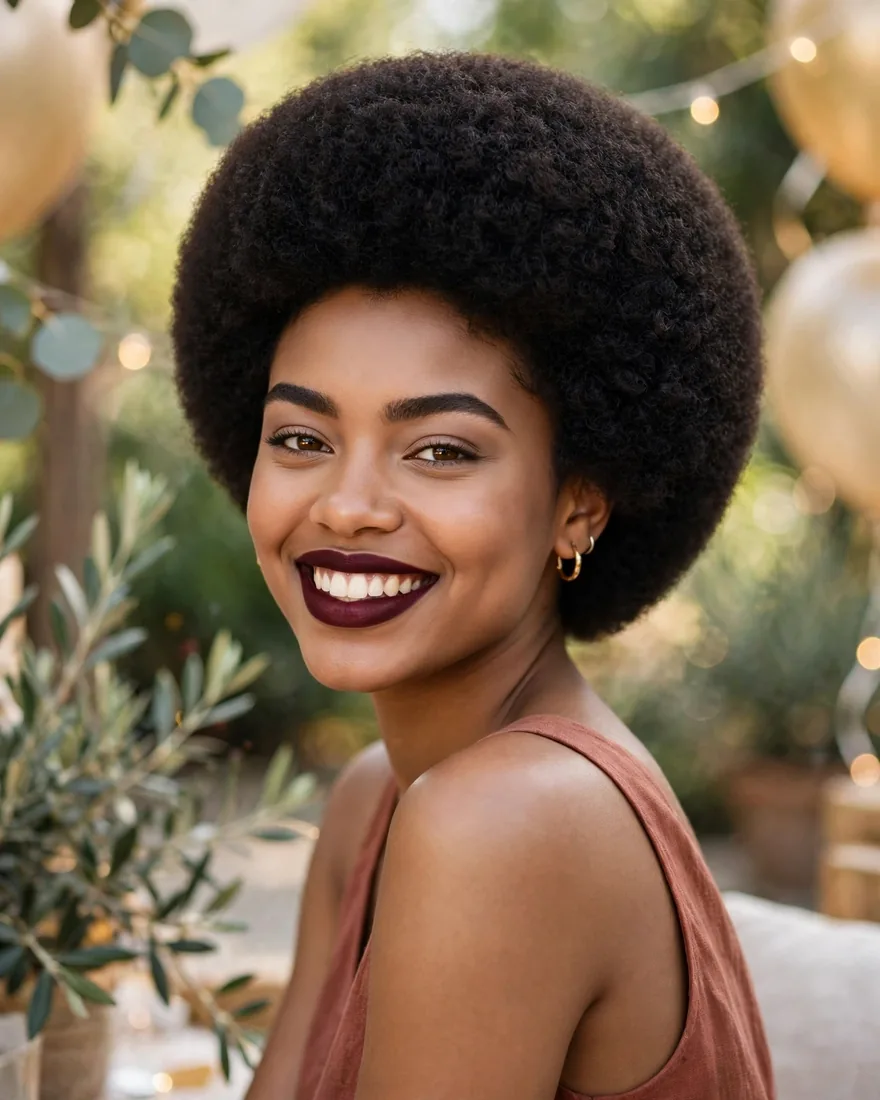
The rounded afro crop shapes tight coils into a neat spherical silhouette — shorter than a full afro, more sculpted than a TWA. Cut to follow the head’s natural curve, it holds for weeks with minimal daily work. Among short curly hairstyles, this is the most architectural: the cut itself is the style.
- Shape lasts weeks with just nightly protection
- Even silhouette flatters oval, heart, and long faces
- No daily heat or heavy styling — pick and go
Pro Tip: Roundness needs even density — flag thin spots so your stylist can adjust the shape. A morning pick at the roots keeps the crown from going flat.
How To Style: Moisturize with cream or butter, pick the roots for shape, smooth the surface with your palms. That’s the whole routine most days.
Best For: Type 4A–4C coils with enough density to hold the rounded shape.
12. Short TWA
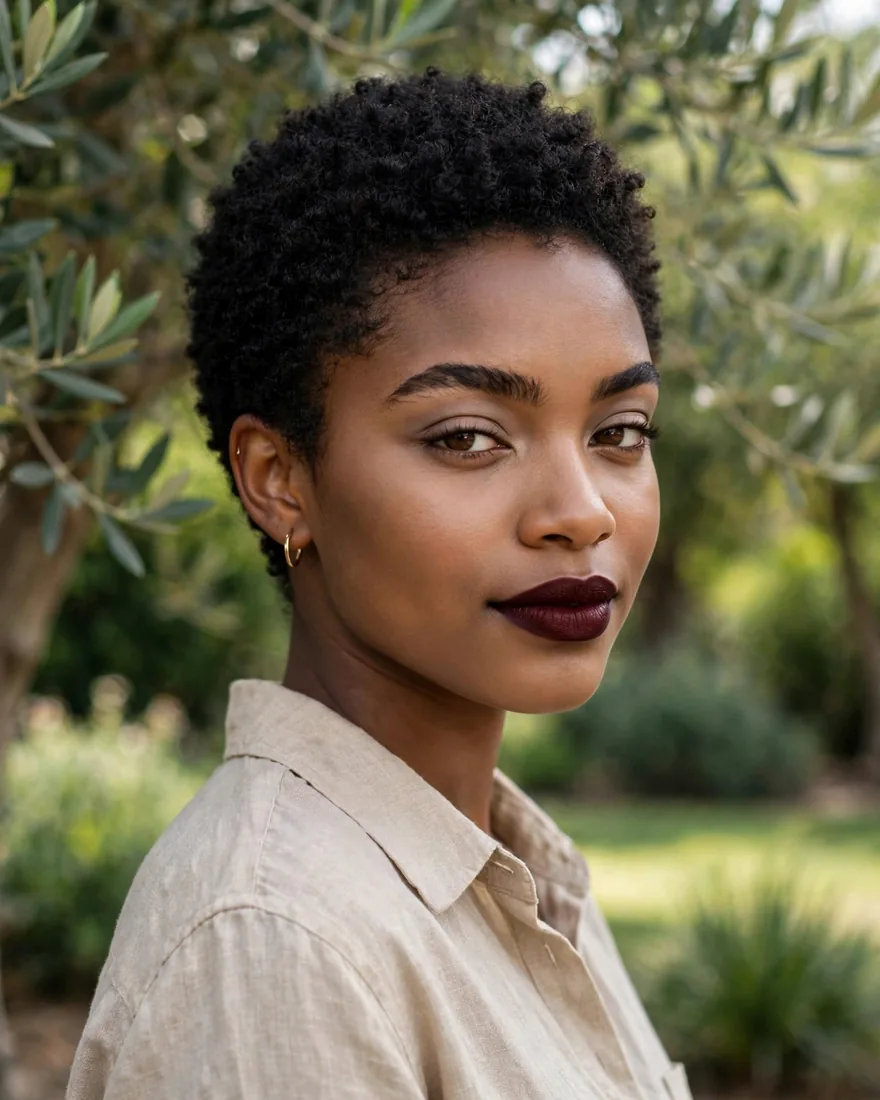
TWA — teeny weeny afro — is the shortest stop on this list and often the first cut after a big chop. It’s wash-and-go in purest form: enough length to show your pattern, short enough that styling takes minutes. A well-shaped TWA with defined coils and clean edges looks intentional, especially with a taper at the nape.
- Fastest routine of any cut here
- Perfect for transitioning or starting fresh after damage
- Shows your true curl pattern with nothing hiding it
Pro Tip: Even at this length, shape matters — follow the head shape with slightly more length on top. It’s the natural endpoint of the shortest buzz cut grow-out path, so check that shape for reference.
How To Style: Leave-in on damp hair, curl-defining cream, then finger-coil or use a soft brush. A sponge brush enhances coil definition at this length.
Best For: All curl types, especially Type 4A–4C — the TWA was made for tight coils.
13. Curly Bob With Bangs

Curly bangs transform a bob: they close the distance to the face, soften the forehead, and add real personality. Cut them dry and longer than your target — they will spring up, and that’s the point. Wispy, separated curls across the forehead beat a heavy solid bang every time on these short curly hairstyles.
- Bangs add face-framing softness nothing else provides
- Draws attention to the eyes
- Grows out gracefully into a shag
Pro Tip: Style the bangs first while at their wettest — they’re the shortest hair on your head and set fastest. If they dry undefined, the whole cut looks unfinished.
How To Style: Finger-coil bangs individually on soaking-wet hair, diffuse them before the rest of the bob. Refresh bangs alone on non-wash days with a damp-hand scrunch.
Best For: Type 3A–3C curls that form separable spirals; Type 4 bangs need extra length so they don’t shrink above the hairline.
How the 13 cuts compare at a glance:
| Cut | Best Curl Pattern | Upkeep Level |
|---|---|---|
| Curly Pixie Cut | Type 3A–3C | Low |
| Tapered Curly Cut | Type 3B–4B | Low–Medium |
| Curly Bixie | Type 3A–3B | Low |
| Layered Curly Bob | Type 3B–4A | Medium |
| Chin-Length Curly Bob | Type 3A–3C | Medium |
| Defined Ringlet Bob | Type 3A–3C | High |
| Curly Shag | Type 2C–3B | Low |
| Curly Wolf Cut | Type 3A–3C | Medium |
| Curly Undercut | Type 3B–4C | Low–Medium |
| Curly Frohawk | Type 3C–4C | Low |
| Rounded Afro Crop | Type 4A–4C | Low |
| Short TWA | All types, best 4A–4C | Lowest |
| Curly Bob With Bangs | Type 3A–3C | Medium–High |
How to Choose the Right Short Curly Cut
Choosing between short curly hairstyles is really a curl-pattern decision, not a style decision — start with your hair and let it eliminate options. Type 3 curls can wear almost anything here, but need enough structure to stop roots falling flat; pixies, bixies, and layered bobs are their sweet spot. Type 4 coils need length to show pattern, so the winners keep real estate on top — tapered cuts, frohawks, rounded afro crops, TWAs — while precision chin-length bobs will fight you daily.
Next, be honest about density and your styling budget in minutes. Fine curls disappear under heavy layering; dense hair needs bulk removed or the cut goes wide. The ringlet bob and curly bob with bangs demand real wash-day effort; the TWA, frohawk, and afro crop ask for almost nothing. For the full pattern-to-cut decision tree across every length, the hairstyles for curly hair guide goes deeper — this post stays on the short end, where the margin for error is smallest and the payoff biggest.
One more filter: grow-out tolerance. Pixies and undercuts pass through a genuinely awkward phase; bobs, shags, and bixies morph gracefully into longer shapes. If you’ll want length again within a year, pick short curly hairstyles whose grow-out path you can live with — the shag-to-bob pipeline is the smoothest in the business.
How to Style Short Curls by Curl Type
Type 3 and Type 4 hair need different product maps, and short curly hairstyles expose the difference fast — there’s no length to hide behind. Type 3 formula: leave-in on soaking-wet hair, light curl cream raked through, medium-hold gel scrunched in last. Let the gel cast form fully, then scrunch it out with oiled hands once dry. Diffusing flipped over gives root lift air-drying can’t match at short lengths.
Type 4 coils need heavier moisture: water first (genuinely wet, not damp), creamy leave-in, then a butter or cream to seal, gel optional for hold-dependent styles like the frohawk’s strip or a defined TWA. The LOC/LCO layering method isn’t fluff at short lengths — it’s what keeps coils from drying out by midday. Finger-coiling gives definition; a soft brush gives volume. Pick one and commit.
Night protection breaks the usual rules here. The classic pineapple fails at pixie and TWA lengths — there’s nothing to gather. Type 3 hair does well with a silk or satin pillowcase alone; Type 4 coils need the full bonnet, where light compression actually helps tapered cuts and afro crops hold shape. Mornings: spritz with water plus a dab of cream rather than re-wetting — short curls reset faster than long ones, which is one of their real advantages. The same quick-refresh logic in our short hair styling coverage applies: less hair, faster mornings.
Keeping Short Curls Between Trims
The awkward stage hits short curly hairstyles differently — instead of flipping out, curly grow-out goes wide first. The triangle returns. The defense is strategic trims, not avoidance: a shape-up every 8–12 weeks where your stylist removes bulk and re-establishes the silhouette without taking length. Tapered cuts and undercuts are easiest to maintain because you can clean the short sections at home with clippers while the curly top grows untouched.
Color on short curls deserves its own warning. Highlights make every spiral pop, but bleach on tight Type 4 patterns is risky — the porosity that makes coils beautiful also absorbs damage fast. Ask for balayage-style placement rather than full bleach, keep lightened sections on the canopy, and deep-condition weekly. The upside of short curly hairstyles: damaged ends grow out in months, not years. Just don’t bleach and big-chop in the same month — one transformation at a time.
Finally, protect the shape you paid for. Sleep in the bonnet, refresh instead of re-washing, and resist “evening things up” yourself — curly hair cut wet at home is how good short curly hairstyles become emergency pixies. A misbehaving section is almost always a moisture or product problem, not a length problem. Fix the routine before reaching for scissors.
FAQs
Do short curly hairstyles need a special kind of haircut?
Yes — the single most important point in this guide. Curly hair should be cut dry, or with shrinkage fully accounted for, because wet curls stretch and spring up unpredictably. A stylist who cuts your curls soaking wet and straight-combed is cutting a different head of hair than the one you’ll wear home. The technique matters more than which of these short curly hairstyles you choose.
Will a pixie cut work on tight Type 4 coils?
It can, but the top needs 2–3 inches so coils can clump and show definition instead of reading as texture alone. A very close all-over pixie on tight coils tends to look like a fade rather than a curly style. The tapered cut and TWA are usually more satisfying for Type 4 hair.
How often should I trim short curly hair?
Every 8–12 weeks — at short lengths the shape is the style, and once the silhouette goes, no product brings it back. Tapered cuts, undercuts, and frohawks need the short sections cleaned up every 3–4 weeks. Bobs and shags are the most forgiving between appointments.
How do I keep short curls from getting frizzy?
Frizz is almost always a moisture problem. Apply products to soaking-wet hair, don’t touch curls while they dry, and sleep on silk or in a bonnet. If wash-day curls look great and day-two curls go fuzzy, you need more hold — a gel cast scrunched out once dry — not more conditioner.
Can I go short if my curls are damaged?
Going short is one of the best fixes for damaged curls — it removes the oldest, weakest ends in one appointment. The TWA and rounded afro crop are classic post-damage resets. Just don’t combine the big chop with a chemical process in the same visit; let hair recover from one change at a time.
What products do short curly hairstyles actually need?
Four: a leave-in conditioner, a curl cream, a gel with real hold, and a light oil for sealing and scrunching out the cast. Type 4 hair may add a heavier butter. Technique — wet application, no touching while drying — beats product count every time.
How do I protect short curls at night?
Forget the pineapple — it fails at pixie and TWA lengths. Type 3 curls do fine with a silk or satin pillowcase. Type 4 coils need the full bonnet, where light compression helps tapered cuts and afro crops hold shape. Mornings: a water spritz plus a dab of cream revives short curls fast.
Is a short curly cut hard to grow out?
Bobs, shags, and bixies grow out gracefully. Pixies and undercuts pass through a genuinely awkward middle phase — plan shape-up trims every couple of months. The upside: curly volume disguises uneven lengths far better than straight hair, so the awkward stage is shorter than you fear.
Short curly hairstyles reward people who choose with their curl pattern instead of against it. Match the cut to your Type 3 or Type 4 reality, find a stylist who cuts curls dry, and give the shape two full wash cycles before judging — short curls need a week to settle into their true form. The right cut won’t just look bold in the chair; it’ll still look right on a rushed Tuesday morning three months later, and that’s the only test that matters.