Curly Hairstyles – 15 Styles for 2026
You bring a screenshot to the salon, the cut looks flawless on the model’s glossy hair, and a week later your curls have staged a small rebellion. The layers sit wrong, the bottom flares out into a triangle, and the beautiful curly hairstyles you saved look nothing like the mirror. The frustration is real — but here’s what most people are never told: it was never your curls failing the cut. It was a cut designed for straight hair with curls added as an afterthought.
The fix is simpler than you think. Curls need cuts that respect how they behave — dry cutting, layering matched to your actual curl pattern, and shaping that quietly prevents the dreaded triangle effect. Below are 15 curly hairstyles built on real cutting rules, not wishful thinking: each one tells you exactly which curl type it suits, how much shrinkage to expect, and how long styling really takes. Find your curl type, pick your commitment level, and finally get a cut that works with your hair.
Table of Contents
- 15 Curly Hairstyles That Work With Your Curls
- How to Choose the Right Curly Cut for Your Curl Type
- Cutting Rules That Make or Break Curly Hair
- Curly Hairstyle FAQs
- What is the best haircut for curly hair?
- Should curly hair be cut wet or dry?
- How do I avoid the triangle effect with curly hair?
- How much does curly hair shrink after a haircut?
- Can I get bangs with curly hair?
- How often should curly hair be trimmed?
- Wash-and-go or defined styling — which is better for curls?
- Can I transition from heat-damaged hair to curly hairstyles?
15 Curly Hairstyles That Work With Your Curls
1. Soft Layered Curls
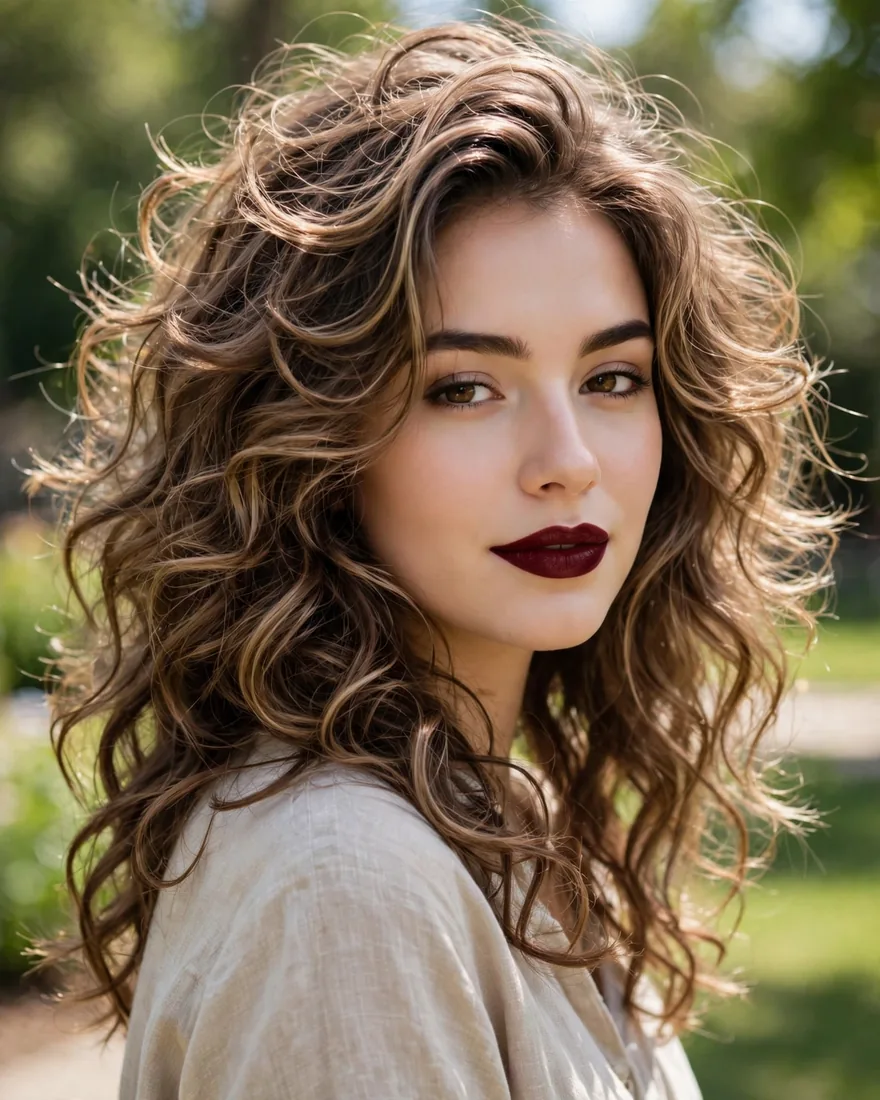
The safest entry point into curly hairstyles: gentle long layers that remove bulk without creating obvious steps. Nothing dramatic — just enough shaping so your curls stack instead of collapsing into one heavy curtain.
Benefits:
- Keeps length while adding movement and shape
- Works on nearly every curl type from 2C to 4A
- Grows out gracefully with no harsh lines
Pro Tip: Ask for layers cut curl-by-curl on dry hair. A stylist who pulls every curl straight before cutting is not curl-trained — dry cutting lets them see exactly where each coil lands.
How To Style: Apply leave-in and curl cream to soaking-wet hair, scrunch with a microfiber towel, then diffuse on low heat or air-dry. Fluff roots gently once fully dry.
Best For: Curl types 2C–4A; anyone nervous about a big change.
2. Curly Bob
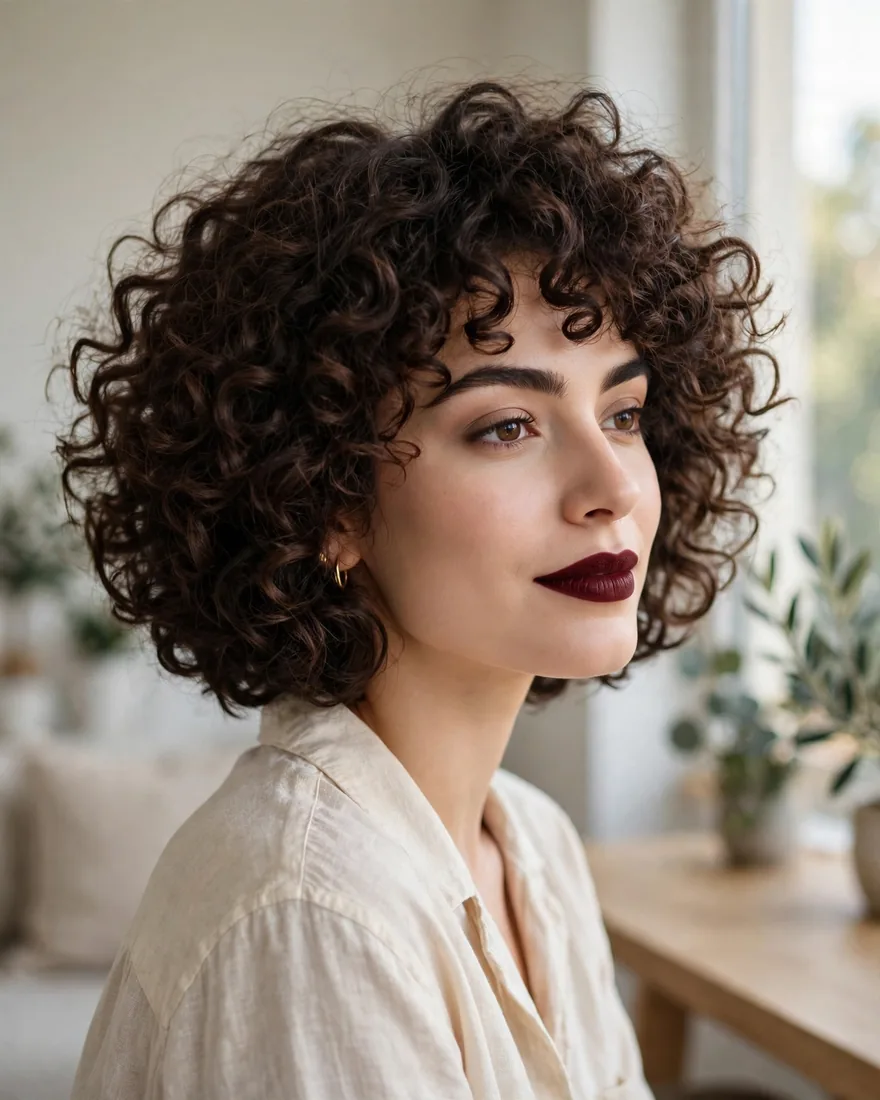
A chin-to-jaw length bob cut to encourage your curls to spring up into a rounded, voluminous shape. When the length is right, this is one of the most striking curly hairstyles — bouncy, bold, and endlessly complimented.
Benefits:
- Maximizes volume and curl definition at shorter length
- Frames the face beautifully on oval, heart, and square shapes
- Low daily effort once the cut is right
Pro Tip: Curly bobs must be cut longer than you think — curls spring up 2–3 inches shorter than they hang wet. Tell your stylist your target dry length, not wet.
How To Style: Define curls with gel on wet hair, scrunch, and diffuse. Pin the crown for extra lift while drying if your roots tend to lie flat.
Best For: Curl types 3A–4A; thick or dense hair that needs weight removal.
3. Curly Lob

The long bob for curls: shoulder-grazing length that keeps the ease of shorter hair with the styling options of long hair. It is one of the most forgiving curly hairstyles because the extra length absorbs shrinkage surprises.
Benefits:
- Versatile — wears loose, half-up, or in a pineapple at night
- Shrinkage is less punishing at this length
- Easy to grow out into long layers
Pro Tip: The lob needs internal layering to avoid the triangle. If the bottom still flares, ask your stylist to remove weight from the corners underneath — that is where the pyramid effect starts.
How To Style: Curl cream plus a light gel, scrunch and diffuse. Refresh second-day curls with a water mist and a dab of cream instead of re-washing.
Best For: Curl types 2B–3C; first-timers going shorter than long hair.
4. Curly Shag

All the texture of the classic shag, re-engineered for curls: choppy face-framing layers, crown volume, and tapered ends that let coils move freely. Among curly hairstyles for thick hair, few manage bulk this gracefully. Pair it with ideas from our long shag guide if you want the same energy at longer length.
Benefits:
- Huge movement and volume for curls that fall flat
- Layers make thick curly hair dramatically easier to manage
- Looks great air-dried with minimal product
Pro Tip: The shag lives or dies on the shortest layer. On 3C–4C hair, keeping the crown layer no shorter than the bridge of the nose prevents an accidental mushroom silhouette.
How To Style: Scrunch in curl mousse on damp hair and air-dry or diffuse. Shake the roots upside down once dry for that lived-in shag texture.
Best For: Curl types 2C–4B; dense hair that needs serious weight removal.
5. Curly Wolf Cut

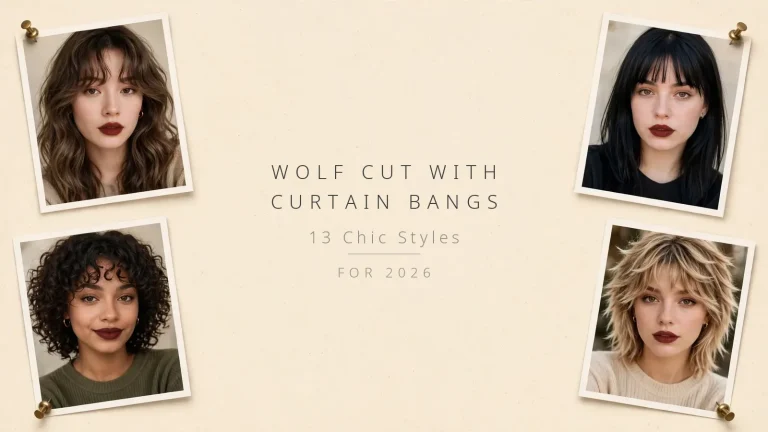
The viral wolf cut works shockingly well on curls because the style was built on texture. Heavy crown layers plus wispy ends give curls the structure they crave. See our wolf cut with curtain bangs guide for the straighter-hair version of this trend.
Benefits:
- Built-in volume at the crown where curls often fall flat
- Wispy ends make thick hair feel dramatically lighter
- One of the edgiest curly hairstyles right now
Pro Tip: On curls, the wolf cut’s micro-bang version needs length — cut bangs at least an inch longer than the target because tight curls will spring them up fast.
How To Style: Define crown curls with cream, scrunch the ends with mousse for piece-y texture, and diffuse upside down for maximum lift.
Best For: Curl types 2C–3C; bold personalities who style daily.
6. Curly Pixie
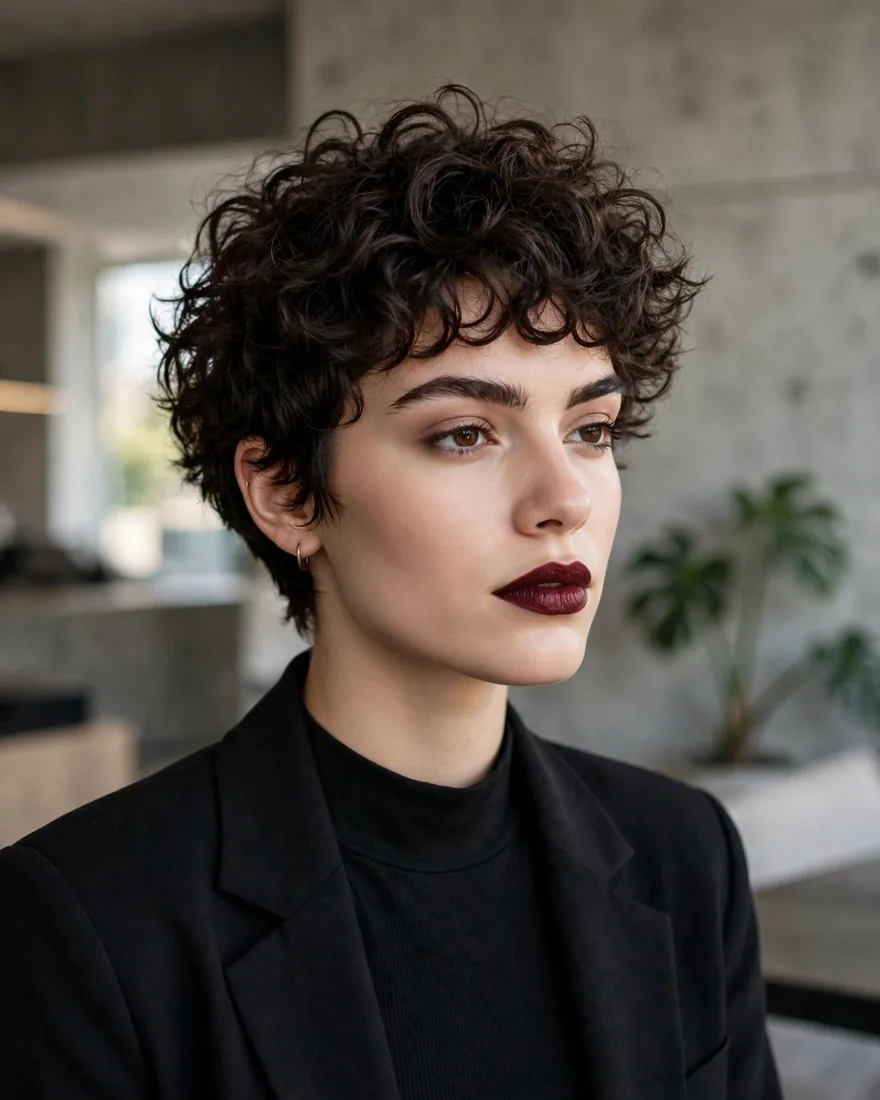
Short, sculpted, and unapologetic — the curly pixie keeps length on top for springy coils and tapers the sides and nape. It is one of the boldest curly hairstyles you can choose. Browse more short options in our curly pixie cut collection if this one tempts you.
Benefits:
- The fastest wash-and-go routine of any curly style
- Shows off bone structure and earrings beautifully
- No triangle effect possible — there is simply not enough length
Pro Tip: The top needs enough length to curl — at least 2–3 inches. Too short and tight curls read as fuzz instead of defined coils; too long and it collapses forward.
How To Style: Rub a pea-sized amount of curl cream between palms, scrunch the top, and go. A pick at the roots adds instant volume.
Best For: Curl types 3A–4C; anyone ready for a dramatic, liberating chop.
7. Tapered Curly Pixie
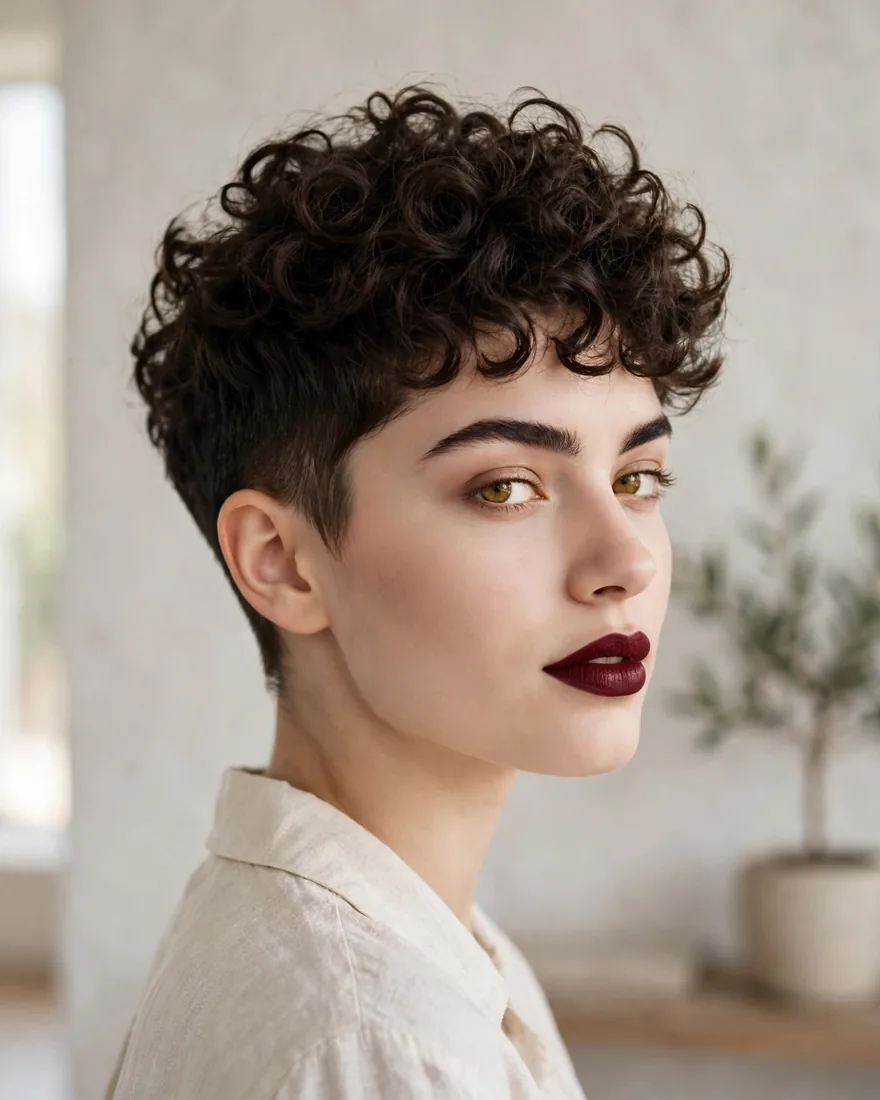
A close-tapered nape and sides with a fuller curly top — the tapered pixie is the polished sibling of the curly pixie. It grows out more gracefully than a uniform pixie and flatters rounder face shapes by adding height. Among short curly hairstyles, the tapered pixie is the most workplace-friendly.
Benefits:
- Clean neckline with the fun of curls on top
- Grows out into a curly pixie, then a bob — a built-in transition plan
- Professional enough for conservative workplaces
Pro Tip: Book taper clean-ups every 4–6 weeks. The nape grows out first and the whole shape depends on that crisp contrast.
How To Style: Same as the curly pixie — cream, scrunch, go. Edge control on the hairline keeps the tapered sections sharp.
Best For: Curl types 3B–4C; short-hair lovers who want shape, not just length removal.
8. Long Romantic Layers
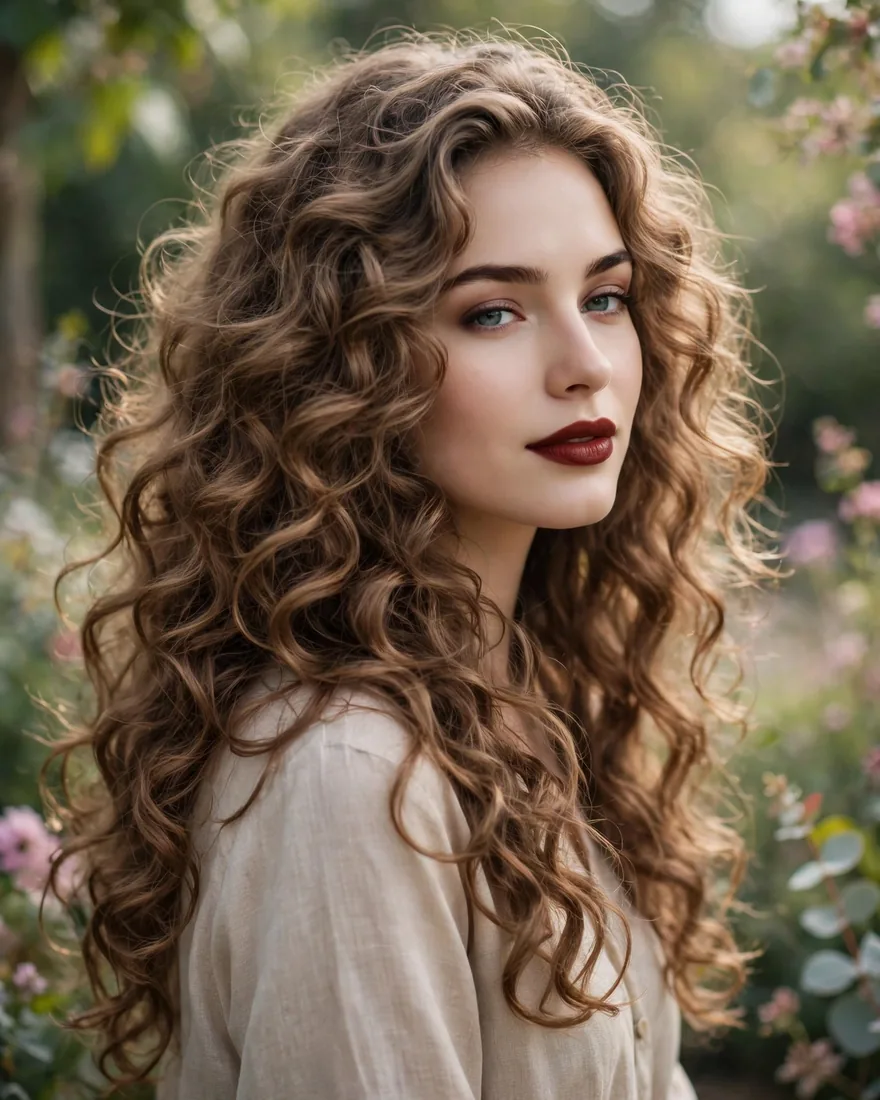
Waist-skimming length with soft cascading layers that let curls fall in defined ribbons instead of one heavy mass. These are among the most requested curly hairstyles for special occasions because the layers photograph beautifully.
Benefits:
- Keeps maximum length with real shape and movement
- Layers distribute weight so long curls do not stretch out at the roots
- Endless styling options: braids, updos, half-up
Pro Tip: Long curls need the shortest layer to start no higher than the collarbone — higher layers on very long curly hair create an unintentional mullet line when the curls shrink.
How To Style: Section into four parts and apply products per section — this is the one length where all-at-once application genuinely fails. Diffuse or air-dry.
Best For: Curl types 2B–3B; anyone committed to the wash-day ritual long hair demands.
9. Shoulder-Length Curls
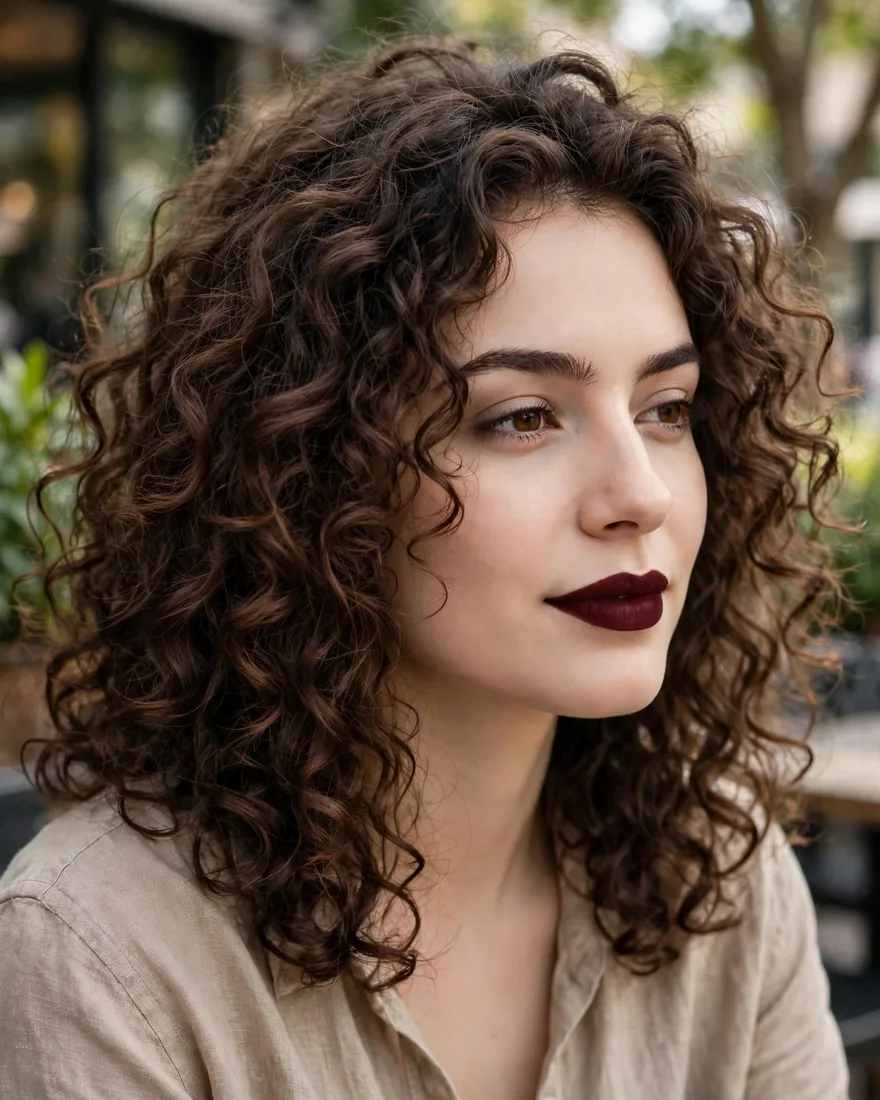
The sweet spot for many curl patterns: long enough to show curl definition, short enough to keep volume at the crown. Shoulder-length curly hairstyles suit the widest range of textures, which is why stylists recommend them as the default starting point.
Benefits:
- Balanced volume from roots to ends
- Fast wash days compared to long curly hair
- Easy to tie back for workouts and work
Pro Tip: Ask for the cut to land on the collarbone when wet. On most curl types that dries to just above the shoulder — the flattering zone.
How To Style: Standard curl routine: leave-in, cream, gel, scrunch, diffuse. Pineapple at night to protect the shape.
Best For: Curl types 2A–4A; the universal “I just want my curls to behave” cut.
10. Curly Curtain Bangs
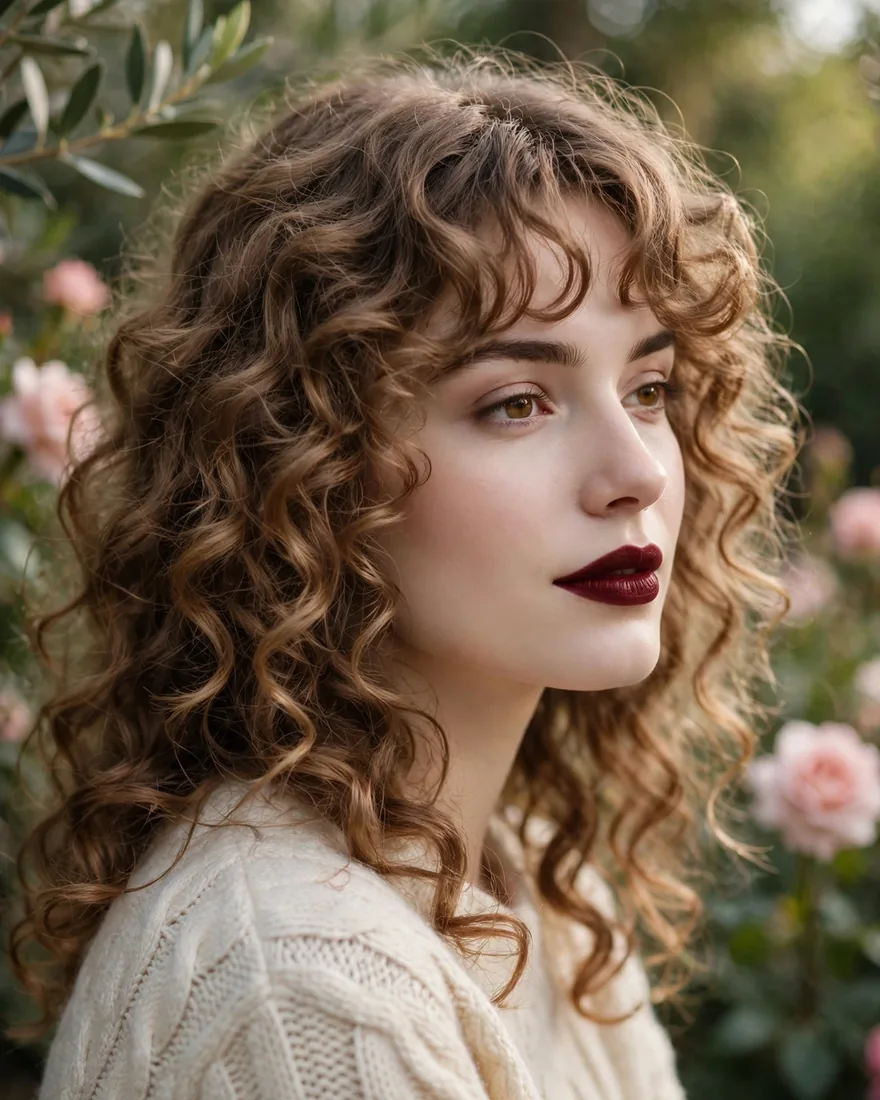
Soft, parted bangs that blend into face-framing layers — the curly version of everyone’s favorite fringe. They open up the face and give shorter curly hairstyles instant personality without a full bang commitment.
Benefits:
- Frames the face and softens the forehead without heaviness
- Grows out invisibly into the surrounding layers
- Works with bobs, lobs, shags, and long layers alike
Pro Tip: Curly bangs must be cut dry, at least an inch past where you want them to sit. Wet-cut curly bangs are the number one cause of bang regret — shrinkage turns “forehead-grazing” into “surprise pixie fringe.”
How To Style: Twist each bang curl into its coil while wet, let dry, then separate gently. A tiny bit of gel on the part keeps them from splitting oddly.
Best For: Curl types 2B–3C; anyone curious about bangs without the risk.
11. Wash-and-Go Short Curls

A rounded short cut — somewhere between a pixie and a bob — engineered for zero styling effort. The shape does all the work, so these are the curly hairstyles for people who refuse to spend twenty minutes on their hair. Explore more lengths in our pixie cut ideas if you want to go shorter.
Benefits:
- True five-minute mornings: wash, product, go
- No heat tools needed, ever
- Perfect for active lifestyles and humid climates
Pro Tip: The wash-and-go cut only works if the shape is perfect — rounded, no corners, graduated at the nape. This is not a cheap-cut candidate; invest in a curl specialist for this one.
How To Style: Leave-in on soaking-wet hair, scrunch, and leave it alone. Touching curls while they dry is the fastest way to create frizz.
Best For: Curl types 3A–4B; low-maintenance curl lovers.
12. Defined Ringlets
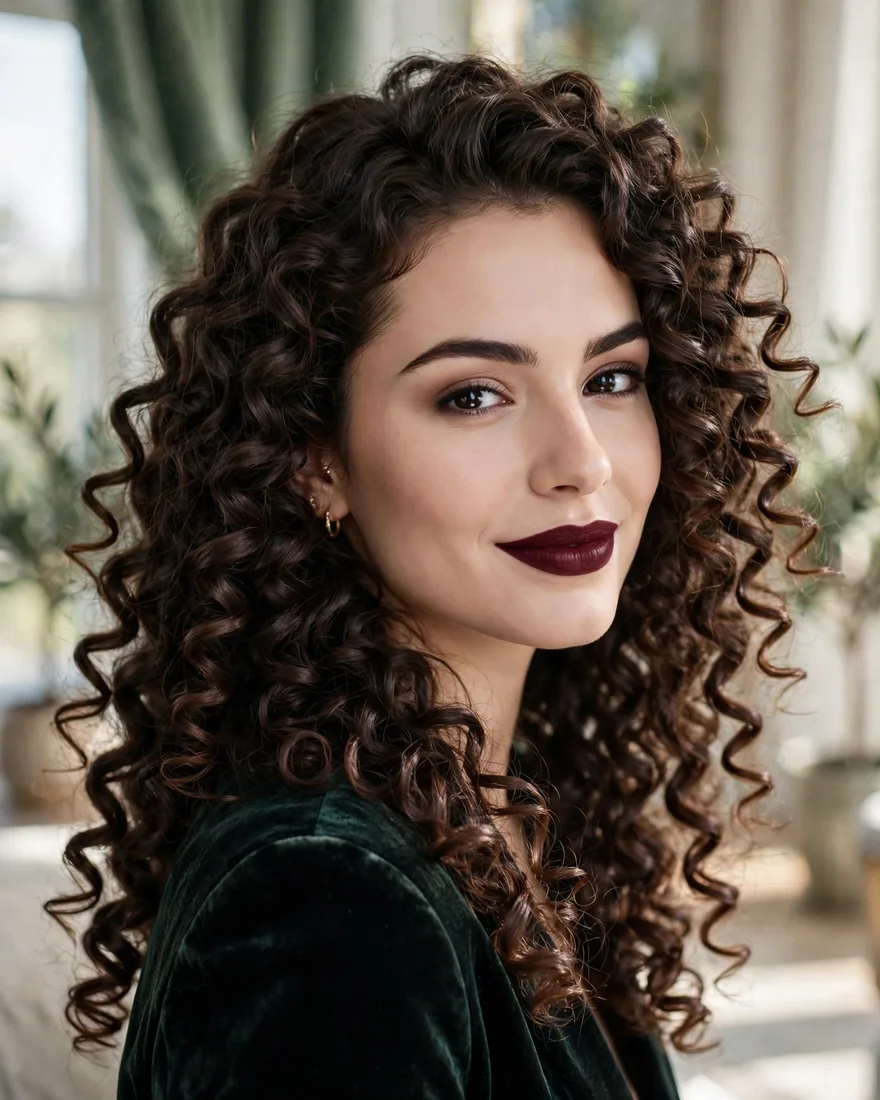
Medium length with precision shaping so every curl falls into a clean, separated ringlet. These polished curly hairstyles are the answer when you want curls that look intentional rather than wild. Get more styling inspiration from our hairstyles for curly hair collection.
Benefits:
- Maximum curl definition and shine
- Photographs beautifully — the special-occasion curly style
- Lasts multiple days with proper nighttime protection
Pro Tip: Definition comes from technique, not products alone. Finger-coiling the front sections and shingling the back gives salon-level ringlets at home — it takes practice but the payoff is enormous.
How To Style: On soaking-wet hair, apply gel in sections, finger-coil or shingle, then diffuse without touching until 100% dry. Break the cast by scrunching with oiled hands.
Best For: Curl types 3A–3C; definition devotees willing to spend 30+ minutes.
13. French Bob for Curls

The chic Parisian bob — jaw-skimming, slightly undone — adapted for curls. It is one of the most fashion-forward curly hairstyles because the contrast between the classic shape and wild texture is so striking. See shorter options in our short hair guide.
Benefits:
- Instantly chic with minimal styling
- Accentuates cheekbones and jawline
- Grows out into a curly bob, then a lob — a graceful evolution
Pro Tip: The French bob needs blunt-ish ends to keep its shape, which fights the triangle effect naturally — but it still requires internal weight removal underneath, or the silhouette goes round instead of chic.
How To Style: Light cream, scrunch, diffuse. The whole point is a little undone-ness, so do not over-define.
Best For: Curl types 2C–3B; style lovers who want a statement cut.
14. Face-Framing Long Layers
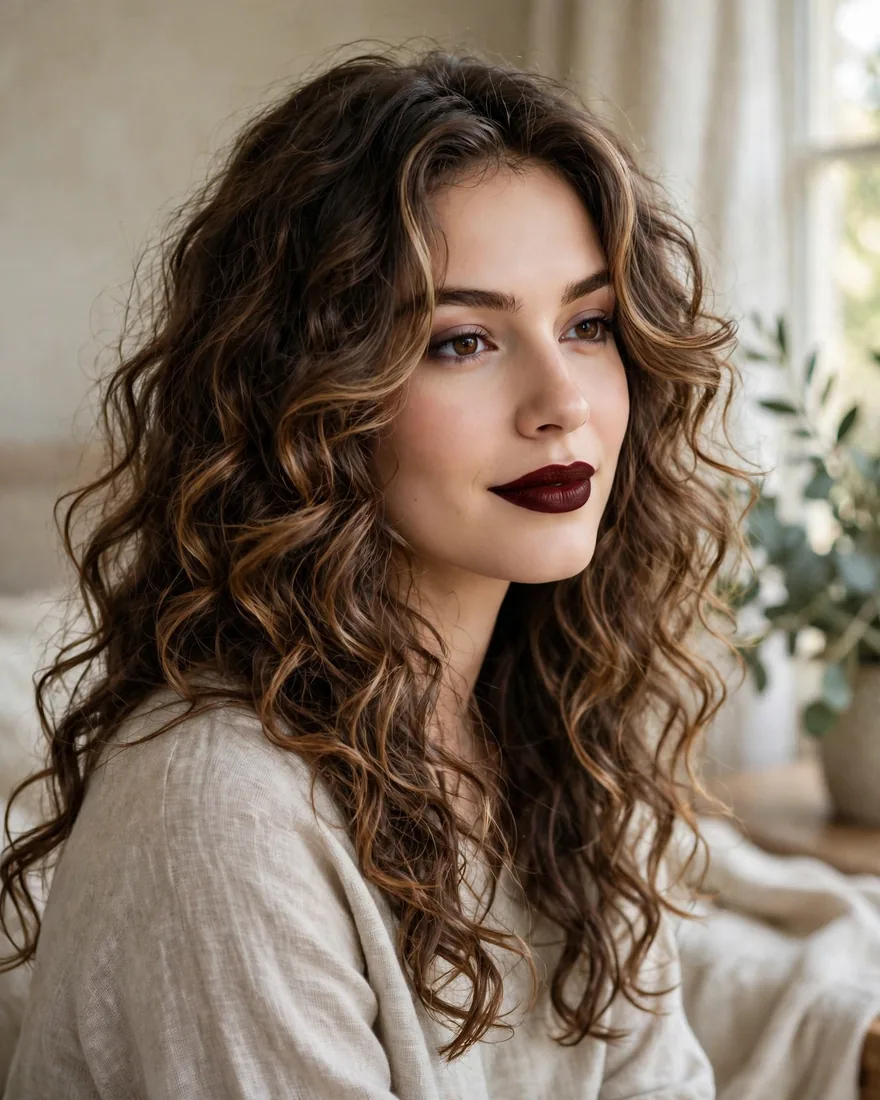
Long hair where the front sections are cut shorter to frame the face, cascading from cheekbone to collarbone. These curly hairstyles give long hair all the face-flattering benefits of a shorter cut with none of the length sacrifice.
Benefits:
- Softens and slims the face without removing length
- Creates the illusion of layers all over
- Grows out seamlessly
Pro Tip: The shortest face-framing piece should start no higher than the chin on dry hair. Higher pieces shrink up and read as accidental bangs.
How To Style: Twist the face-framing curls into defined coils while wet so they land perfectly. Style the rest of the hair as usual.
Best For: Curl types 2A–3B; long-hair devotees wanting change without a chop.
15. Curly Top Knot
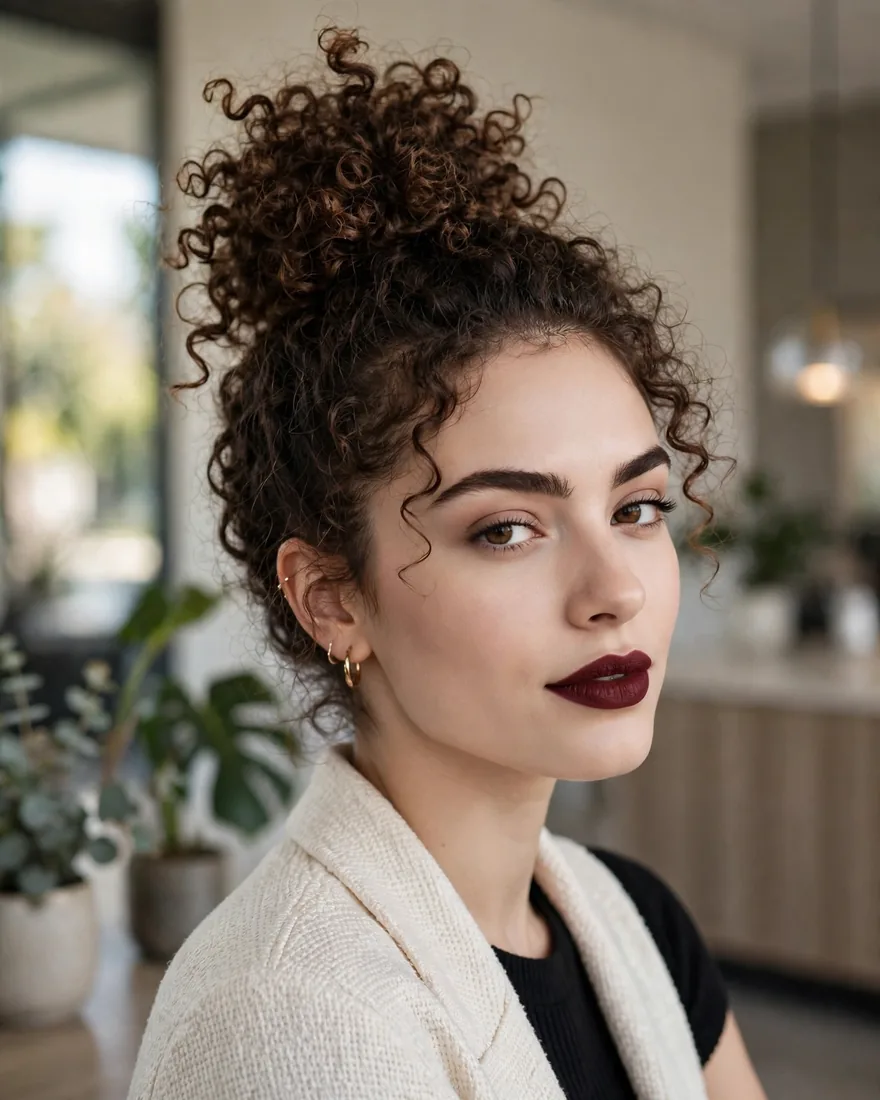
Not a cut but the styling hero every curly girl needs: gathered curls piled high in a voluminous knot. As curly hairstyles go, the top knot is the hardest-working — gym, work, weddings, and third-day hair all in one move.
Benefits:
- Five-minute style that works on day one or day four hair
- Protects ends and keeps curls off the neck in heat
- Looks intentional, not like a last resort
Pro Tip: Place the knot at the crown, not the forehead — forward placement pulls the face and flattens the front curls. Leave two curls out at the temples for softness.
How To Style: Flip hair forward, gather loosely at the crown, twist and pin into a knot. Do not pull tight — the volume is the point.
Best For: All curl types 2A–4C with at least shoulder-length hair.
How the 15 curly hairstyles compare at a glance:
| Style | Best Curl Type | Styling Time |
|---|---|---|
| Soft Layered Curls | 2C–4A | 10–15 min |
| Curly Bob | 3A–4A | 10–15 min |
| Curly Lob | 2B–3C | 10–20 min |
| Curly Shag | 2C–4B | 5–10 min |
| Curly Wolf Cut | 2C–3C | 15–20 min |
| Curly Pixie | 3A–4C | 5 min |
| Tapered Curly Pixie | 3B–4C | 5 min |
| Long Romantic Layers | 2B–3B | 30–45 min |
| Shoulder-Length Curls | 2A–4A | 10–20 min |
| Curly Curtain Bangs | 2B–3C | 5–10 min |
| Wash-and-Go Short Curls | 3A–4B | 5 min |
| Defined Ringlets | 3A–3C | 30–40 min |
| French Bob for Curls | 2C–3B | 5–10 min |
| Face-Framing Long Layers | 2A–3B | 15–25 min |
| Curly Top Knot | 2A–4C | 5 min |
How to Choose the Right Curly Cut for Your Curl Type
Here is the uncomfortable truth most curly hairstyles guides skip: a cut that looks incredible on 3A curls can be a disaster on 4C coils, and vice versa. Your curl type is not trivia — it is the single biggest factor in which cut will work. Looser waves and curls (2A–2C) need cuts that create volume, because their weight pulls curls flat; long layers and shags do this best. Classic curls (3A–3C) have natural spring and suit almost anything, but they punish bad layering the fastest — the wrong layers show immediately. Tight coils (4A–4C) need cuts that manage shrinkage and bulk; tapered shapes, rounded afros, and strategic internal weight removal matter more than the outline. If you are between types, cut for the tighter pattern — it is easier to add volume than to fight puffiness. Looser textures can borrow ideas from our wavy hair looks, where the same layering principles apply at lower intensity.
Shrinkage is the second thing to master. As a rough frame: 2A–2C hair shrinks 1–2 inches, 3A–3C shrinks 2–4 inches, and 4A–4C can shrink 4–8 inches or more. This is why curly hair must be cut with your dry length in mind, and why the lob is so forgiving — even 4 inches of shrinkage leaves wearable length. When comparing curly hairstyles for your texture, always state your target dry length. Finally, if you are transitioning from heat-damaged or straightened hair, be honest about it: damaged sections curl differently than healthy new growth, and a stylist who knows can blend the two textures instead of cutting for curls that are not really there yet. Many transitioners do a big chop to pixie or bob length; others trim gradually every 8–10 weeks while the damage grows out. Both work — the gradual route just takes patience.
Cutting Rules That Make or Break Curly Hair
Rule one: dry cutting beats wet cutting for curls, every time. Wet hair stretches and lies; dry hair tells the truth. A curl-by-curl dry cut lets the stylist see exactly where each coil lands, which is the only way to build a balanced shape on texture. If your salon only cuts curly hair soaking wet and stretched straight, find a curl specialist — this single choice matters more than any of the curly hairstyles names on this list.
Rule two: understand the triangle effect so you can kill it. The triangle happens when the top is too heavy and flat while the ends puff outward — it is a weight-distribution problem, not a curl problem. The fixes: layers that start at or above the cheekbone to build crown volume, internal weight removal through the mid-lengths, and tapered or rounded perimeters instead of blunt horizontal lines. The curly shag and wolf cut are essentially anti-triangle cuts by design. For medium lengths, our medium shag haircuts guide shows the same weight-removal logic applied at a wearable length.
Rule three: match your styling commitment to the cut. Wash-and-go styles (short rounded cuts, pixies) genuinely take five minutes — but only if the cut is precise. Defined styles (ringlets, long romantic layers) take 30–45 minutes and the right technique; buying the cut without the routine leads to disappointment. Curly bangs sit in the middle: 5–10 minutes, but they need refreshing more often and grow out fastest, so budget a bang trim every 3–4 weeks. Be honest with yourself about which person you are on a Tuesday morning, then choose accordingly. The best curly hairstyles are simply the ones your real routine can sustain.
Curly Hairstyle FAQs
What is the best haircut for curly hair?
There is no single best haircut for curly hair — the right cut depends on your curl type. As a starting point, shoulder-length curls with long layers suit the widest range of textures (2A–4A). If you have tight coils (4A–4C), tapered shapes manage shrinkage best; if you have loose waves (2A–2C), shags and wolf cuts create the volume your hair lacks naturally.
Should curly hair be cut wet or dry?
Dry, in almost every case. Wet hair stretches and lies flat, hiding how each curl will actually fall; dry cutting lets the stylist see the true shape and cut each coil where it lives. Most curly hairstyles guides agree on this — the only common exception is a first rough cut to remove extreme length or damage, which is then refined dry.
How do I avoid the triangle effect with curly hair?
The triangle effect is a weight-distribution problem: heavy flat roots with puffy ends. Prevent it with layers that start at or above the cheekbone to build crown volume, internal weight removal through the mid-lengths, and rounded or tapered perimeters instead of blunt horizontal lines. Curly shags and wolf cuts are designed to prevent it.
How much does curly hair shrink after a haircut?
It depends on your curl type. Loose waves (2A–2C) typically shrink 1–2 inches, classic curls (3A–3C) shrink 2–4 inches, and tight coils (4A–4C) can shrink 4–8 inches or more. Always tell your stylist your target dry length, not your wet length, so shrinkage is built into the cut.
Can I get bangs with curly hair?
Yes — curly curtain bangs are one of the most forgiving options because they blend into face-framing layers and grow out invisibly. The key rules: cut them dry, cut them at least an inch longer than your target, and expect a trim every 3–4 weeks since bangs grow out fastest.
How often should curly hair be trimmed?
Every 8–12 weeks for most curl types, which is why curly hairstyles need consistent trims built into the routine. Shorter precision cuts like pixies and tapered styles need attention every 4–6 weeks to hold their shape, while long layered curls can stretch to 12 weeks. Split ends travel faster on curly hair because the bends in each strand are stress points, so do not skip trims.
Wash-and-go or defined styling — which is better for curls?
Neither is better — they serve different goals, and both produce beautiful curly hairstyles. Wash-and-go (5 minutes: leave-in, scrunch, done) is best for short rounded cuts and busy routines. Defined styling (30–45 minutes: sectioning, finger-coiling, diffusing) gives maximum definition and multi-day wear for special occasions. Choose the cut that matches the routine you will actually do on a Tuesday morning.
Can I transition from heat-damaged hair to curly hairstyles?
Yes. You have two paths: a big chop to healthy length (often a pixie or bob), or gradual trims every 8–10 weeks while the damage grows out. Tell your stylist which sections are damaged — they curl differently than healthy new growth, and a good stylist blends the two textures instead of cutting for curls that are not fully there yet.
Great curly hairstyles are never an accident — they are the result of matching the cut to your curl type, respecting shrinkage, and choosing a routine you will actually keep. Pick the style that fits your texture and your mornings, find a stylist who cuts curls dry, and give your hair two or three wash days to settle into its new shape. Your curls were never the problem; they were just waiting for the right cut.