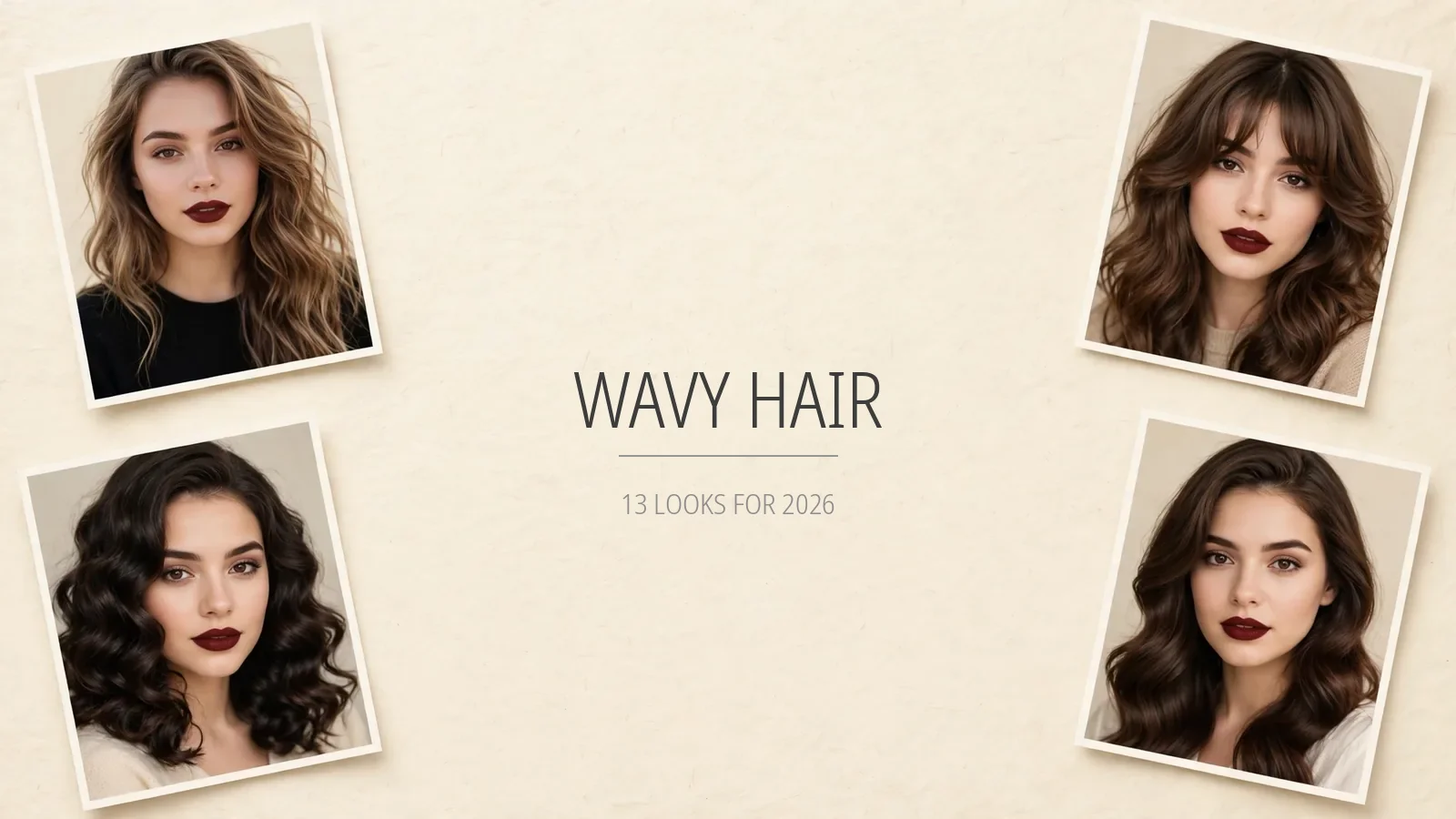
Wavy Hair Hairstyles – 13 Looks That Work With Your Texture
Wavy hair lives in the most misunderstood middle ground in haircare — not straight enough for sleek-hair routines, not curly enough for curl methods. Most advice assumes you are one or the other, leaving wavies with flat roots, frizzy mid-lengths, and waves that look great at 9am and give up by lunch. Straight-hair products weigh waves down; heavy curl creams turn them stringy.
The fix is to stop fighting the texture and start dressing it. A wavy hair routine built around your wave type — 2A, 2B, or 2C — changes everything, as do cuts that let the wave do the work. Below are 13 styles that genuinely suit waves, with honest notes on effort and frizz, plus guides to wave typing, frizz control, and when to enhance versus smooth.
Table of Contents
- Wavy Hairstyles Worth Trying
- 1. Loose Beach Waves With Textured Ends
- 2. Voluminous Curtain Bangs With Soft Layers
- 3. Defined S-Wave Curls With Center Part
- 4. Messy Half-Up Top Knot
- 5. Deep Side Part With Brushed-Out Waves
- 6. Wavy Lob With Soft Layers
- 7. Feathered Layers on Waves
- 8. Italian Bob on Wavy Hair
- 9. Long Mermaid Waves
- 10. Tousled Waves With Wispy Bangs
- 11. Brushed-Out Waves for Volume
- 12. Side-Swept Waves for Events
- 13. Sleek Smooth Blowout on Waves
- Find Your Wave Type (2A vs 2B vs 2C)
- Frizz Management for Wavy Hair
- Enhancing Waves vs Smoothing Them
- FAQs
- How do I know if I have wavy hair or curly hair?
- Why does my wavy hair get frizzy?
- How often should I wash wavy hair?
- Are layers good for wavy hair?
- How do I refresh wavy hair on day two?
- Can I straighten wavy hair without damage?
- What is the best haircut for thin wavy hair?
- How do I keep waves defined in humidity?
Wavy Hairstyles Worth Trying
1. Loose Beach Waves With Textured Ends
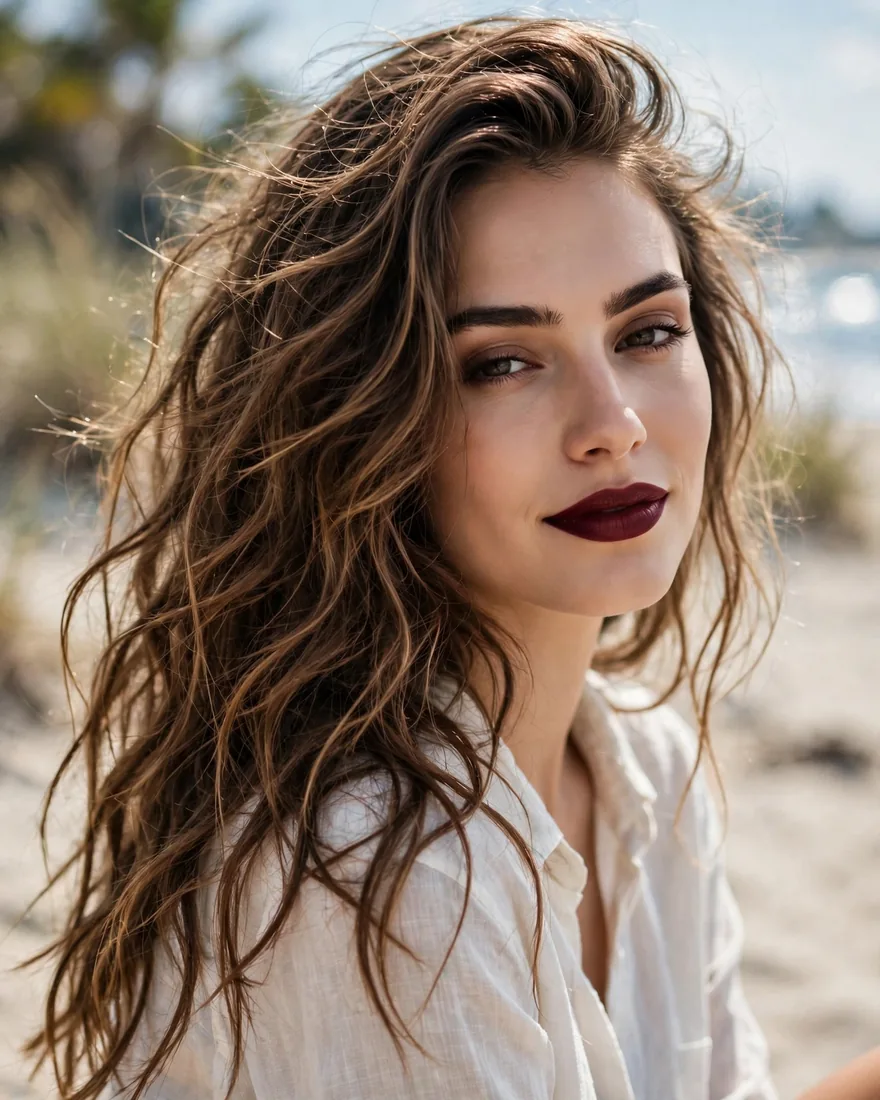
The undone, salt-air look — soft bends through the mid-lengths with piece-y ends rather than polished curls. This is the signature wavy hair style because it asks the least of your texture, enhancing what air-drying gives you — and it looks better on second-day hair.
Benefits:
- Lowest heat requirement here — air-drying plus a few touch-ups does most of the work
- Textured ends camouflage split ends and make grow-out invisible
- Survives wind, humidity, and long days without collapsing
Pro Tip: Leave the last inch of each section out of the iron and pinch the ends with texturizing paste — that is what separates beach waves from bedhead.
How To Style: Mist damp hair with sea salt spray, scrunch, and air-dry. Wrap a few random sections around a 1.25-inch iron alternating directions, leaving ends out, then shake loose.
Best For: 2A to 2B waves; everyday wear and weekends. Fine hair gets fullness; thick hair gets movement without bulk.
2. Voluminous Curtain Bangs With Soft Layers
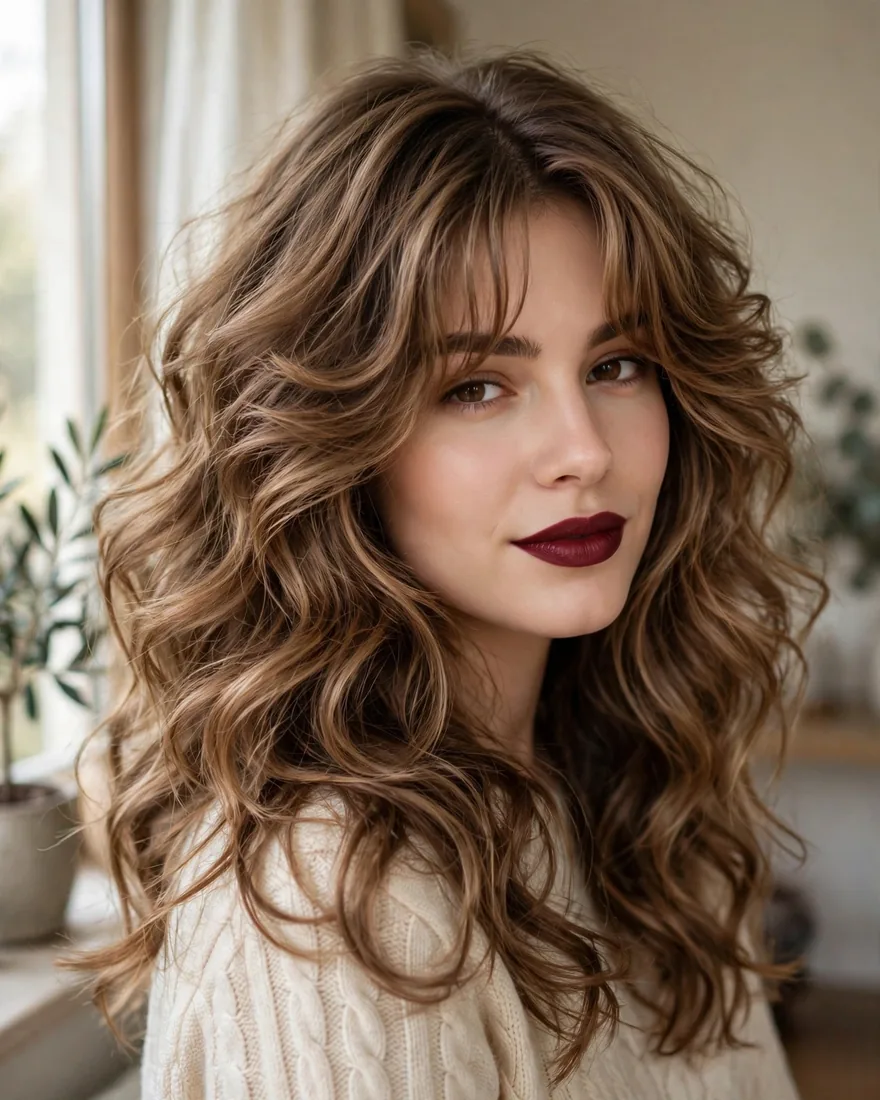
Curtain bangs parted softly down the middle, blended into long layers that lift the crown — the cut that gives wavy hair its shape back. It removes weight where the flat-roots triangle starts, and the curtain fringe frames the face with no hard bang line to maintain.
Benefits:
- Layers remove mid-shaft weight, so waves spring up instead of dragging flat
- Curtain bangs grow out gracefully — no awkward in-between stage
- Face-framing pieces make even simple ponytails look styled
Pro Tip: Ask for the curtain pieces to start at cheekbone length — bangs spring up as they dry, and pieces cut too short sit higher than expected.
How To Style: Blow-dry the fringe forward with a round brush, then split it down the middle while warm. Scrunch mousse through the layers and air-dry.
Best For: 2B to 2C waves; anyone fighting flat roots. Oval, long, and heart faces get the most flattering frame.
3. Defined S-Wave Curls With Center Part
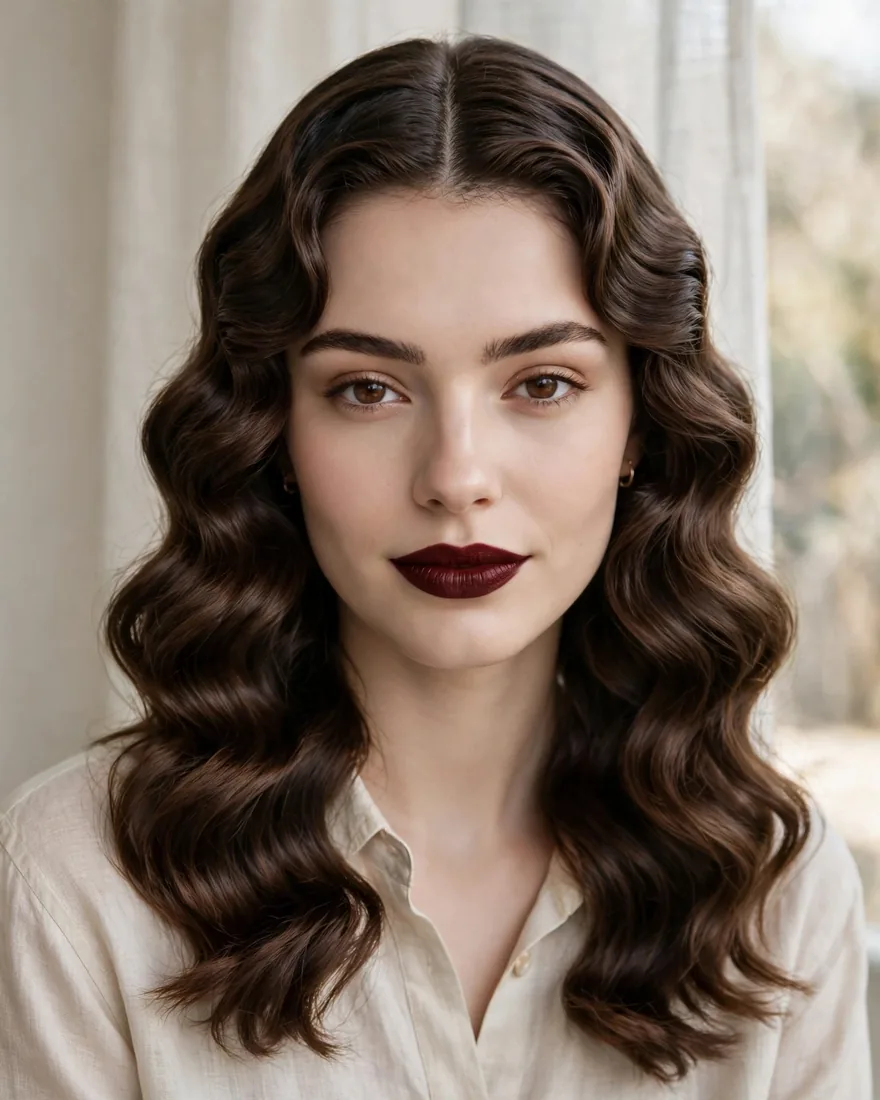
The polished version of natural texture — each wave encouraged into a smooth, continuous S-shape with a clean center part. This is the look that proves wavy hair can be a feature, not a compromise: the S-pattern catches light along every bend, which reads as shine and health. It takes more product discipline, but photographs beautifully. If your pattern leans curlier some days, our guide to curly hairstyles covers the styling crossover.
Benefits:
- Maximum definition without heat — the wave pattern becomes the style
- The center part balances volume symmetrically
- Defined waves hold for two to three days with proper refreshing
Pro Tip: Apply styling cream to soaking-wet hair and pulse each section — scrunch, hold three seconds, release. Doing this on damp rather than wet hair is why most definition attempts fail.
How To Style: Rake curl cream through soaking-wet hair, scrunch with a microfiber towel, then diffuse or air-dry. Break the cast by scrunching dry hair with oiled hands.
Best For: 2B to 2C waves; workdays and photos. Medium to thick density shows the S-pattern best.
4. Messy Half-Up Top Knot

The top half swept into a loose knot while the waves fall free underneath — the five-minute style that looks intentional. The knot gets grip and volume from the wave pattern, and the loose back keeps it soft rather than severe. It also camouflages second-day roots and a fading wave pattern.
Benefits:
- Hides oily roots and flattened crown waves
- Takes five minutes and survives the whole day
- Never needs to look neat to look good
Pro Tip: Place the knot slightly behind the crown, not on top — too far forward shortens the forehead visually and reads rushed instead of relaxed.
How To Style: Gather the top half from temple to temple, twist loosely, and pin into a knot. Pull a few face-framing waves free and mist with texture spray.
Best For: All wave types 2A to 2C; busy mornings and travel days. Medium to long lengths knot most easily.
5. Deep Side Part With Brushed-Out Waves
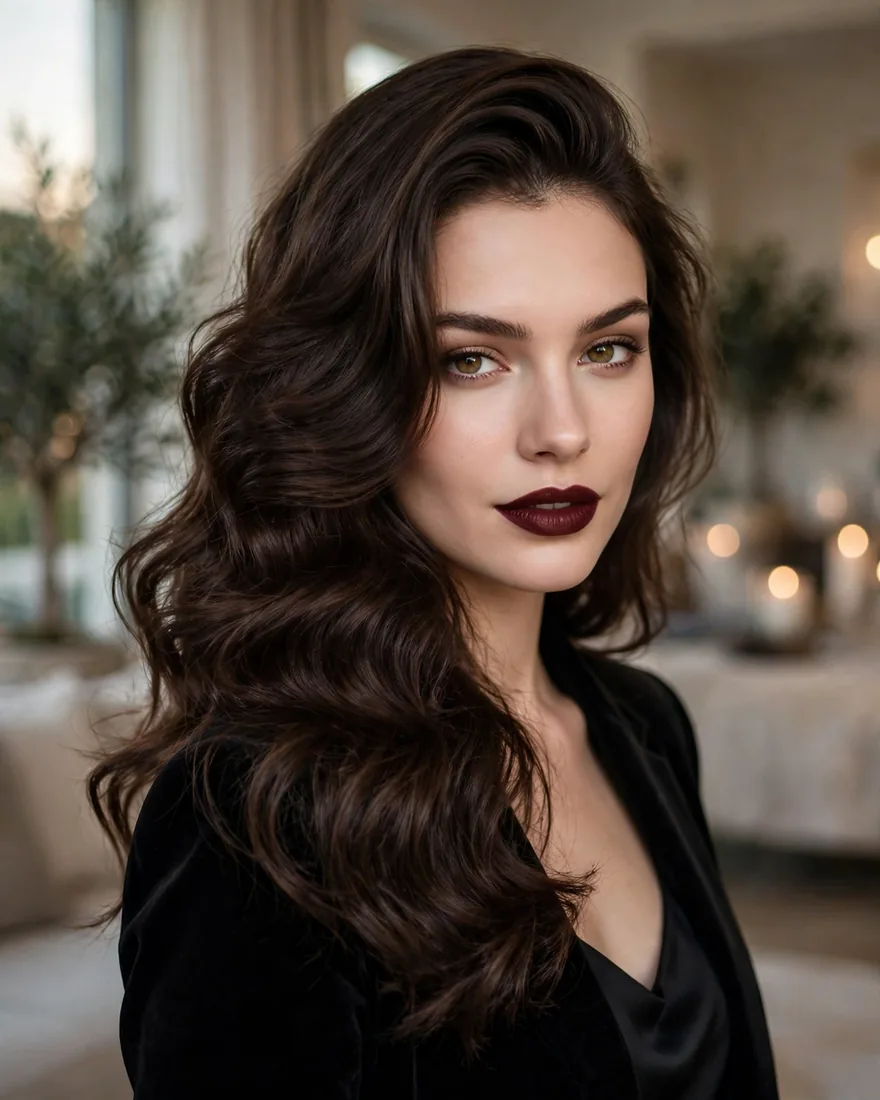
A deep side part paired with waves brushed out into soft, vintage-leaning fullness — old-Hollywood volume without pin-curl effort. Brushing out waves creates a different finish: separated bends merge into one continuous, touchable mass with serious body. The deep part creates asymmetry and crown lift that keeps volume from reading as width. If you ever smooth this look fully, our straight hair guide covers the heat discipline it takes.
Benefits:
- Transforms flat second-day waves into an event-ready style in ten minutes
- The deep part flatters wider foreheads and rounder face shapes
- Brushed-out texture photographs richer than separated curls
Pro Tip: Brush only once the hair is 100% dry and cooled — brushing warm waves pulls the pattern out entirely instead of softening it.
How To Style: Set waves with a large iron, let cool completely, then brush through with a paddle brush until bends merge. Set the deep part on damp hair and finish with flexible-hold spray.
Best For: 2A to 2B waves; weddings and evenings out. Medium to thick hair holds the brushed volume longest.
6. Wavy Lob With Soft Layers
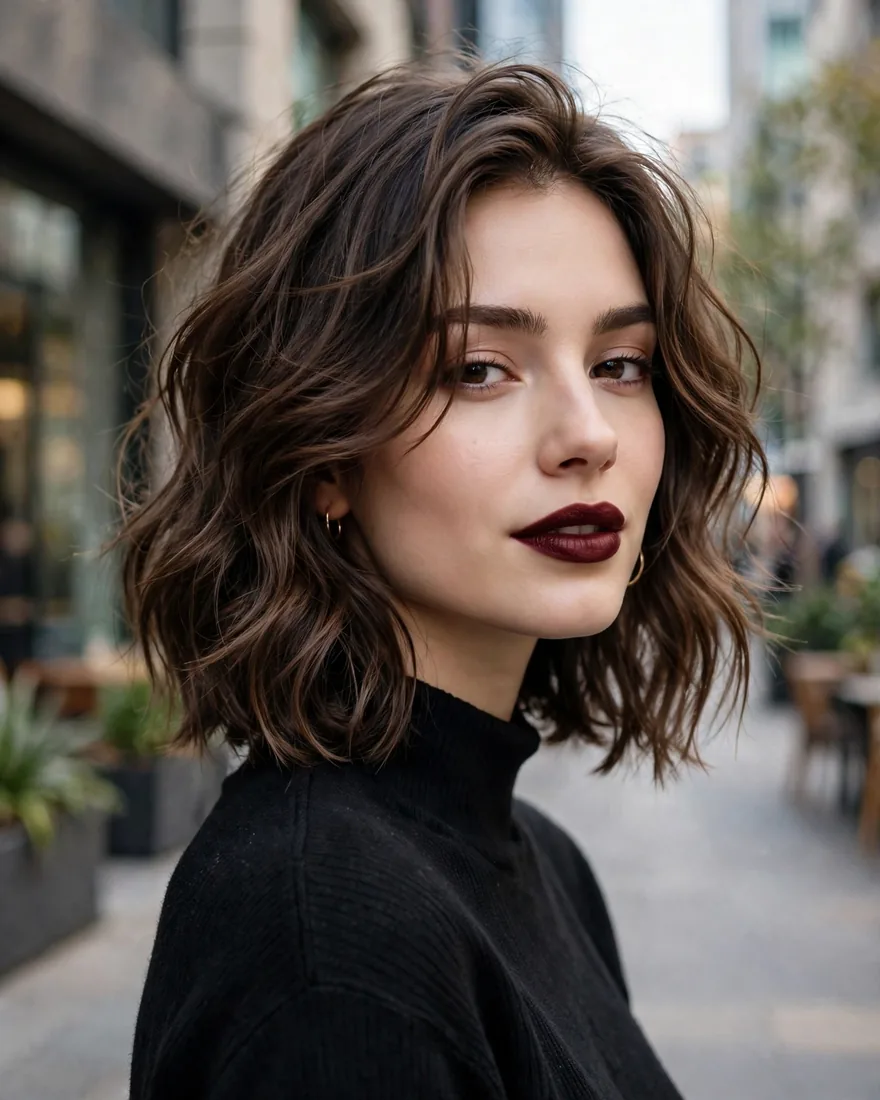
The collarbone-grazing lob cut specifically for texture — long enough to show the wave pattern, short enough that weight never drags it flat. This is the sweet spot for wavy hair: bobs can puff into triangles and long lengths pull waves straight, but the lob sits where waves behave best. Soft, blended layers keep the perimeter full while the interior moves. For the full spectrum of this length, see our long bob ideas.
Benefits:
- The length-to-weight ratio lets waves form fully without being pulled out
- Versatile — wears air-dried, diffused, or heat-styled with equal ease
- Graceful grow-out; trims every 10–12 weeks keep the shape
Pro Tip: Ask for layers starting no higher than the chin — layers cut too short at the crown create a shelf that waves exaggerate into a pyramid.
How To Style: Scrunch mousse into damp hair and diffuse, or air-dry with salt spray for an undone finish. For polish, bend random sections with a flat iron.
Best For: All wave types 2A to 2C; the universal wavy cut. Fine hair looks fuller; thick hair looks controlled.
7. Feathered Layers on Waves
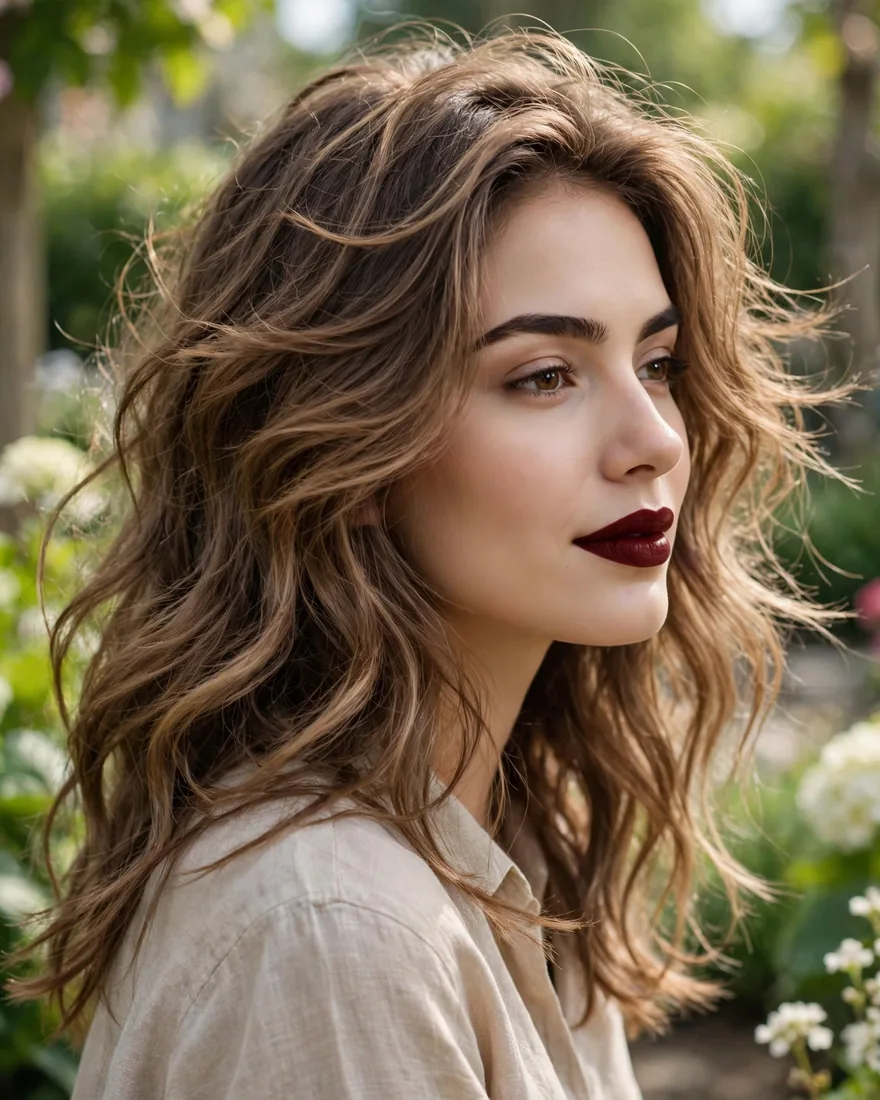
Light, airy layers that let each wave taper softly instead of ending in a blunt line — movement in its purest form. Feathering lets the wave pattern flow uninterrupted from roots to ends, so the texture reads as one continuous cascade rather than stacked sections. The result is the most romantic finish here, though feathered ends need product to avoid frizzing into fuzz.
Benefits:
- Creates the most fluid, uninterrupted wave pattern of any layered cut
- Removes bulk without the see-through look of thinning shears
- Softens strong jawlines and adds movement to straight-leaning 2A hair
Pro Tip: Ask for point-cutting with shears, not a razor — razors can shred the wave’s natural clumping and invite frizz.
How To Style: Work lightweight cream through damp lengths, twist random sections away from the face while drying, then shake out. Serum on the ends keeps feathering defined.
Best For: 2A to 2B waves; medium to long lengths. Best on medium-density hair — very fine hair can look wispy with too much feathering.
8. Italian Bob on Wavy Hair
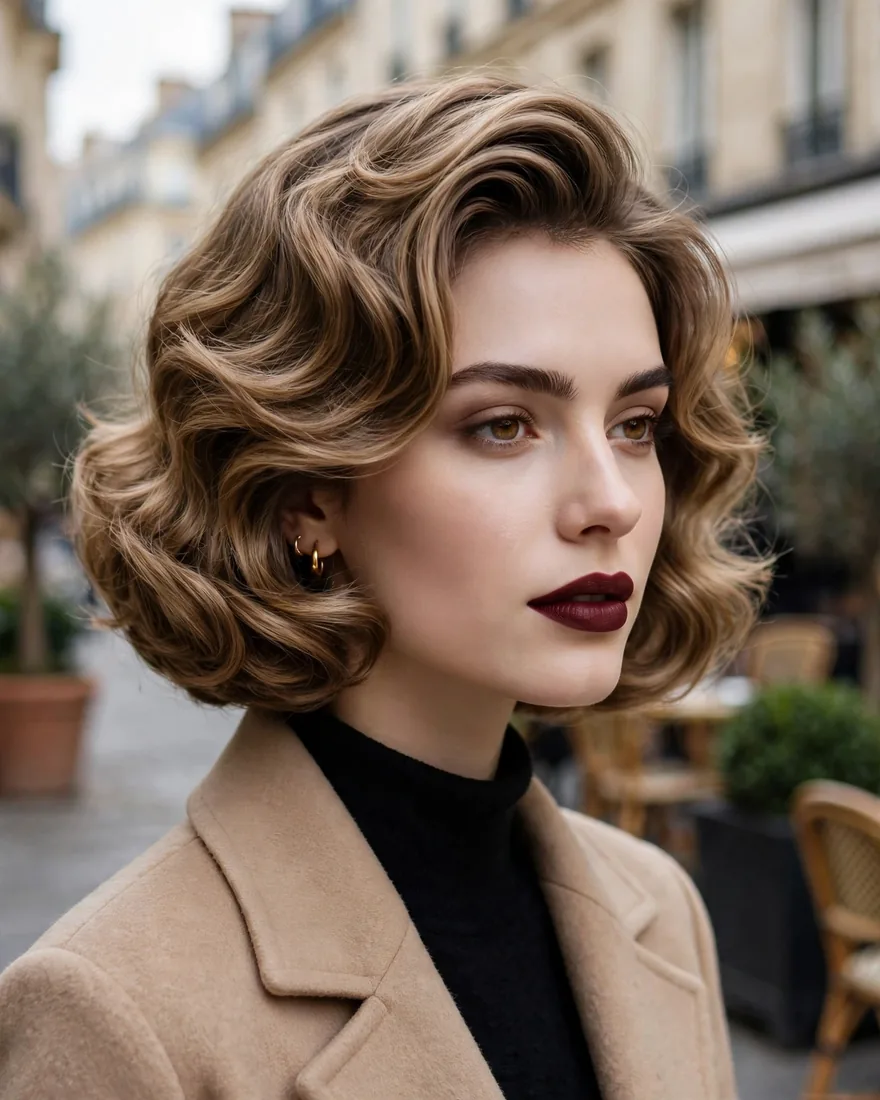
The chunky, chin-to-neck-length bob with minimal layering, worn with natural wave — European insouciance in a haircut. The nearly one-length perimeter gives waves a strong shape to bounce against, so instead of puffing outward, the texture curls under into a controlled, voluminous silhouette. It is a short cut that genuinely likes texture — rare. For more short-length inspiration, browse our short hair styles.
Benefits:
- The strong perimeter contains wave volume instead of letting it expand
- Air-dries into shape better than almost any other short cut on waves
- Reads chic and deliberate with minimal styling effort
Pro Tip: The nape must be cut tight and clean — if the back is left even slightly long, the hair flips outward there and the silhouette collapses within a week.
How To Style: Scrunch mousse into damp hair and diffuse upside down for root lift, or air-dry, tucking one side behind the ear.
Best For: 2B to 2C waves; the texture does the heavy lifting. Oval and heart faces; confident, low-fuss personalities.
9. Long Mermaid Waves
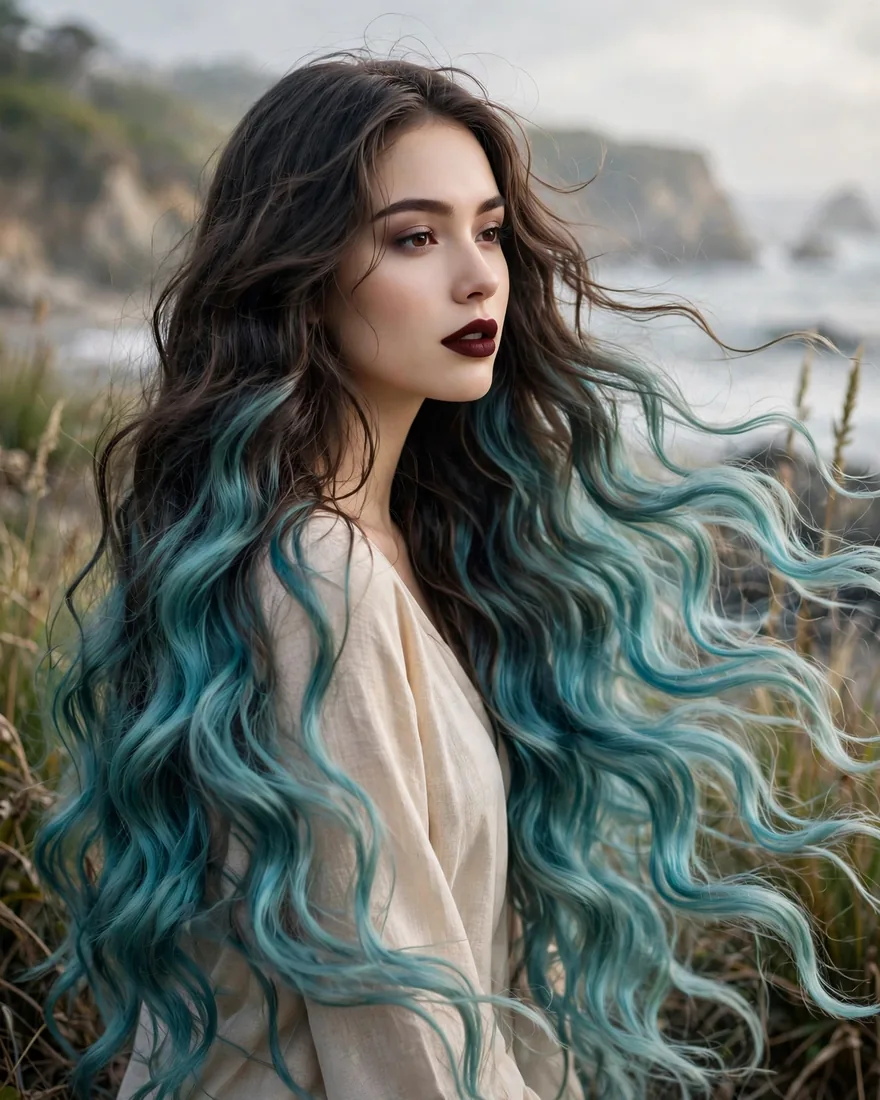
Waist-skimming lengths with loose, uniform waves from mid-shaft down — the fantasy-length look that only works if the waves are healthy enough to carry it. Long wavy hair is honest: weight pulls the top half straighter while ends wave, so deliberate wave placement up top keeps it intentional. This is a high-maintenance length disguised as an effortless one. For length-specific cutting advice, see our long hair guide.
Benefits:
- Maximum visual impact — the most dramatic canvas for wave texture
- Long lengths make braids, buns, and half-up styles look substantially fuller
- The weight calms frizz at the crown on 2C hair
Pro Tip: Sleep in a loose topknot or silk bonnet — overnight tangles and rough detangling kill waves at this length.
How To Style: Curl the top sections with a 1.5-inch iron to match the natural wave below, or braid damp hair overnight for heat-free uniformity.
Best For: 2B to 2C waves with medium to thick density. Fine hair often looks stringy past the chest — be honest about density before committing.
10. Tousled Waves With Wispy Bangs
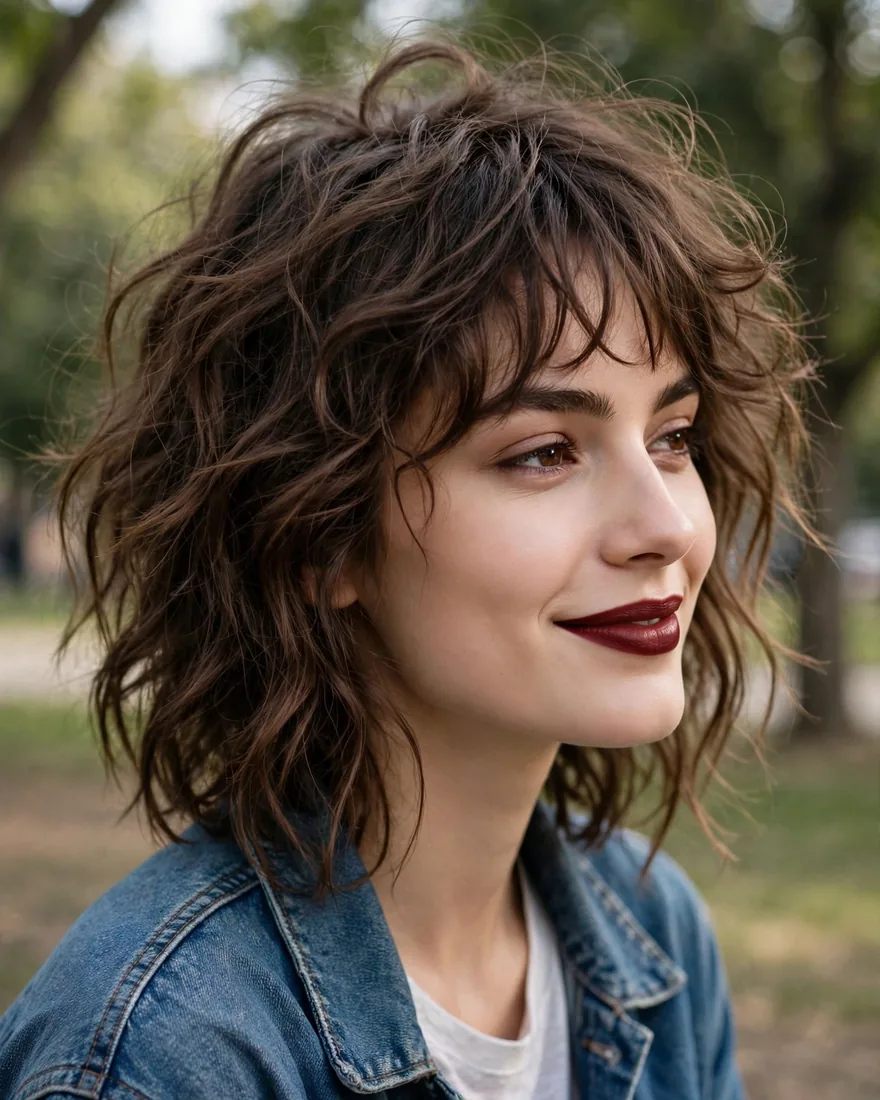
Bedhead-beautiful texture with soft, see-through bangs — the cool-girl uniform for waves. Wispy bangs are the only fringe that suits wavy texture without a fight: cut piece-y and light, they move with the wave and need no daily heat. The tousled lengths keep the whole thing from reading too sweet.
Benefits:
- The most forgiving fringe for wavy texture — no daily straightening required
- Wispy bangs soften high foreheads and long faces
- The tousled finish hides flat roots, frizzy ends, and uneven pattern
Pro Tip: Trim wispy bangs yourself between salon visits — snip vertically into the ends, never straight across, and cut less than you think because bangs spring up as they dry.
How To Style: Air-dry with texture spray scrunched in, then piece out the bangs with a tiny amount of wax. Twist two front sections away from the face.
Best For: 2A to 2B waves; casual-cool everyday style. Long and oval faces; fringe without the commitment of blunt bangs.
11. Brushed-Out Waves for Volume
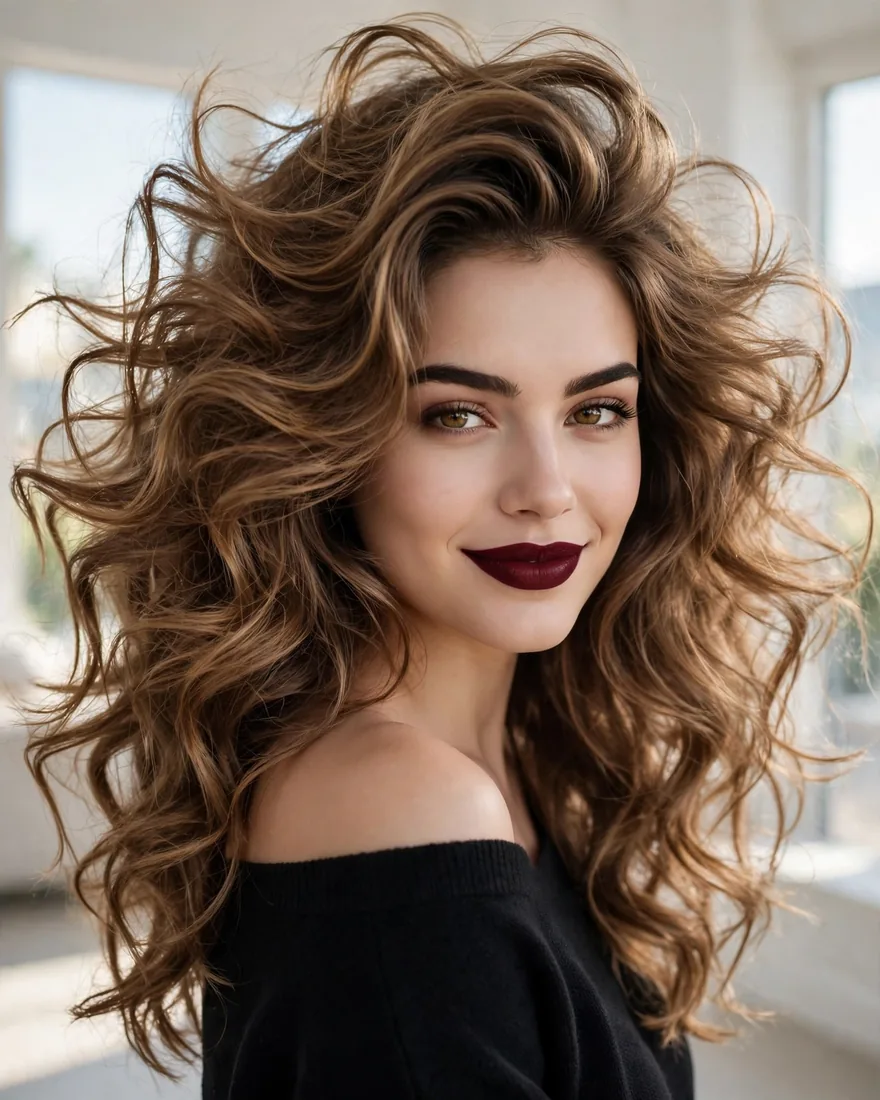
Waves diffused for definition, then brushed through from roots to ends for maximum body — the fine-hair wavy’s secret weapon. Where defined waves look sparse on thin density, brushing breaks clumps apart and multiplies visible volume. The trade-off is real: you lose definition and gain some frizz, so this is a volume-first, polish-second choice.
Benefits:
- The single biggest volume gain for fine wavy hair without teasing
- Softens the pattern for a more universal, blowout-adjacent finish
- Takes ninety seconds with a paddle brush
Pro Tip: Brush in sections from underneath, not over the top — under-brushing lifts the roots while keeping the canopy smooth, which is where the volume comes from.
How To Style: Let waves dry fully with light mousse for grip, then brush through with a paddle brush. Flip upside down, mist roots with texture spray.
Best For: 2A waves and fine density of any wave type. Not ideal for 2C — brushing strong waves usually just creates frizz.
12. Side-Swept Waves for Events
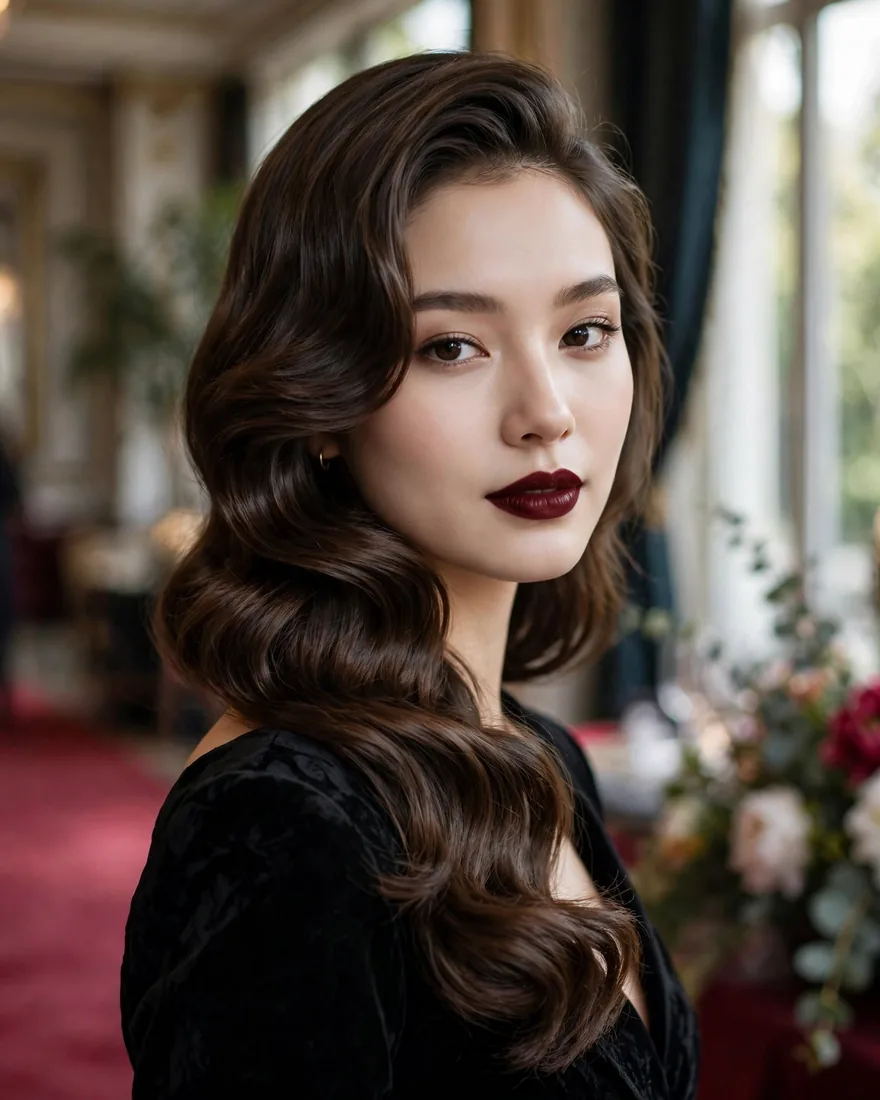
All the hair swept dramatically to one side with polished, glossy waves — the red-carpet answer for wavy texture. The asymmetry creates a diagonal line that slims the face and turns everyday waves into an occasion style with minimal skill. The key is pinning structure underneath so the sweep survives the evening. For full event-styling inspiration, see our bridal hairstyles collection.
Benefits:
- Transforms day-old waves into formal hair in about fifteen minutes
- The diagonal sweep flatters round and square faces especially
- Shows off statement earrings and off-shoulder necklines
Pro Tip: Anchor with two crossed bobby pins at the nape on the heavy side — the sweep’s weight pulls it loose within an hour without them, and crossed pins grip far better than parallel ones.
How To Style: Polish waves with a large iron, sweep everything to one side, and pin the underside at the nape. Smooth with serum and lock with strong-hold spray.
Best For: All wave types 2A to 2C; weddings and date nights. Medium to long lengths sweep most elegantly.
13. Sleek Smooth Blowout on Waves
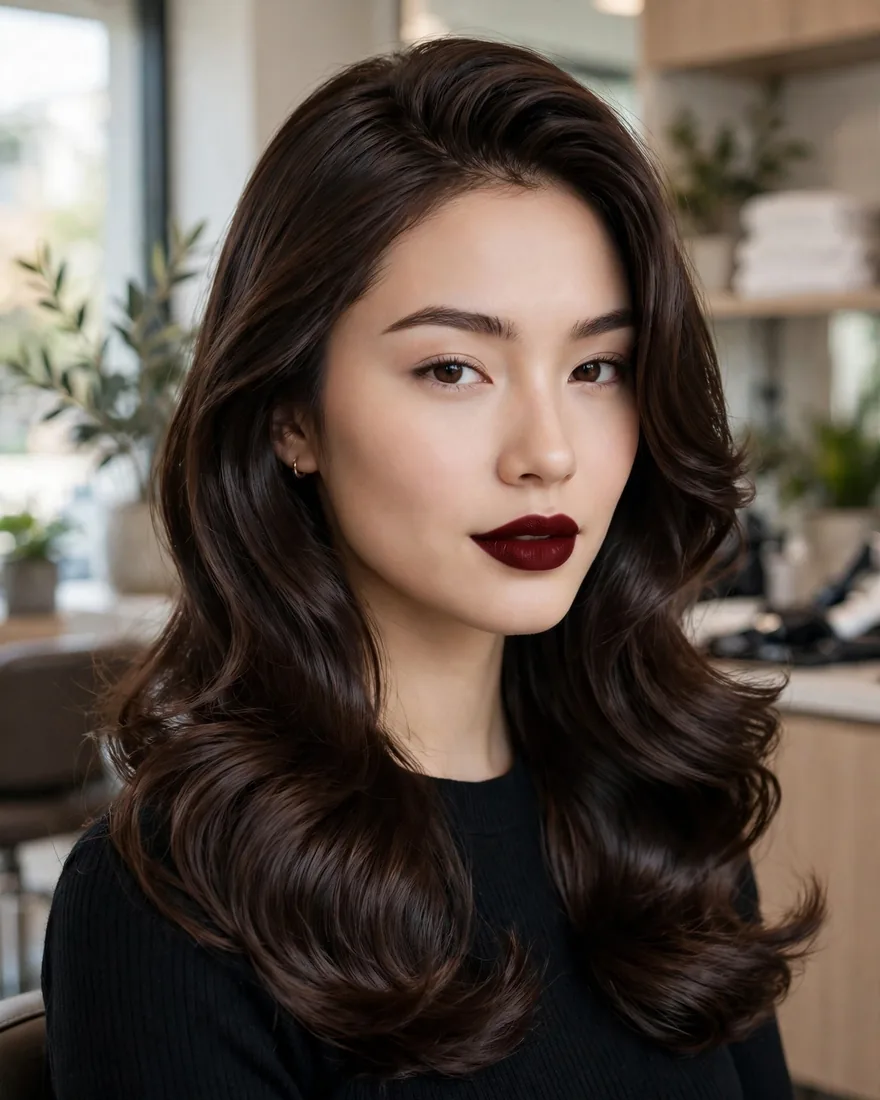
The full transformation — waves blown smooth into a glossy, swingy blowout with a round brush and dryer. This is the smoothing answer for wavies who want polish without daily straightening: natural volume makes blowouts look fuller than on straight hair. It is the highest-effort style here at twenty to thirty minutes, but lasts two to three days.
Benefits:
- Natural body makes blowouts look thicker than on straight hair
- One session lasts multiple days — the best effort-to-longevity ratio of any heat style
- Frizz-free finish with proper tension and heat protectant
Pro Tip: Keep the brush moving and work in thin sections — parking hot air on one spot fries wavy hair, whose raised cuticle is more heat-vulnerable than straight hair’s.
How To Style: Apply heat protectant and smoothing cream to damp hair. Blow-dry in sections with a large round brush, over-directing at roots for lift. Finish with a cool shot and serum.
Best For: 2A to 2B waves; presentations and interviews. 2C hair can blow out smooth but needs more heat and time — weigh that honestly.
How the 13 styles compare at a glance:
| Style | Best Wave Type | Daily Effort |
|---|---|---|
| Loose Beach Waves With Textured Ends | 2A–2B | Very low — air-dry and go |
| Voluminous Curtain Bangs With Soft Layers | 2B–2C | Low — fringe needs a quick blow-dry |
| Defined S-Wave Curls With Center Part | 2B–2C | Medium — wet-styling routine |
| Messy Half-Up Top Knot | 2A–2C | Very low — five minutes |
| Deep Side Part With Brushed-Out Waves | 2A–2B | Medium — iron plus brushing |
| Wavy Lob With Soft Layers | 2A–2C | Low — the cut does the work |
| Feathered Layers on Waves | 2A–2B | Low to medium — ends need product |
| Italian Bob on Wavy Hair | 2B–2C | Very low — air-dries into shape |
| Long Mermaid Waves | 2B–2C | High — length demands upkeep |
| Tousled Waves With Wispy Bangs | 2A–2B | Low — bangs need a pinch of wax |
| Brushed-Out Waves for Volume | 2A | Very low — ninety-second brush |
| Side-Swept Waves for Events | 2A–2C | Medium — fifteen-minute occasion style |
| Sleek Smooth Blowout on Waves | 2A–2B | High — twenty to thirty minutes |
Find Your Wave Type (2A vs 2B vs 2C)
Wave typing is simpler than the internet makes it sound. Wash your hair, let it air-dry with zero product, and look at what happens. 2A is a loose, stretched S — more bend than wave, easily straightened, prone to going flat by afternoon. 2B forms a defined S from mid-shaft down, holds a wave with minimal encouragement, and frizzes at the crown in humidity. 2C has strong, thick S-waves from the roots, borders on curly, and puffs without enough moisture. Most people are a mix, so type by whatever the majority does. If the curlier sections confuse you, our hairstyles for curly hair guide helps draw the line.
Your type decides your cut more than any trend should. 2A needs help creating shape: layers from the chin down and texture sprays, because the wave will not do it alone — avoid one-length cuts past the shoulders, which pull 2A straight. 2B suits nearly every cut here but punishes blunt perimeters with triangle syndrome, so keep some layering. 2C needs weight management: long layers to prevent the pyramid and moisture-first styling, because 2C frizzes the moment it gets dry.
Frizz Management for Wavy Hair
Frizz on waves is almost always a moisture or technique problem. Hair frizzes when the cuticle lifts — from rough towel-drying, brushing dry waves, humidity swelling the shaft, or too little conditioner. Start in the shower: switch to a microfiber towel or cotton t-shirt, never brush waves dry unless going for the brushed-out look, and apply leave-in to soaking-wet hair when the cuticle lies flat. Well-placed layers help mechanically too — they let waves clump instead of separating, which is why our layered haircut guide matters as much as any product.
For refresh days, do not re-wet the whole head. Mist frizzy sections lightly with water plus a drop of leave-in, scrunch upward to re-form clumps, and air-dry. In humidity, a light-hold gel on wash day creates a cast that blocks moisture from entering the shaft; scrunch it out once dry. Accept one honest truth: perfectly frizz-free waves do not exist in humid August. Aim for controlled texture rather than glass.
Enhancing Waves vs Smoothing Them
Enhancing is the lower-effort path: scrunching product into damp hair and air-drying takes ten minutes of active time, and the result improves on day two and three. The cost is unpredictability — humidity and sleep change what waves do, and wash day is non-negotiable for resetting. Enhancing suits people who value low daily effort over total control, and it needs the least heat long-term.
Smoothing buys predictability at a real price. A proper blowout takes twenty to thirty minutes and lasts two to three days — an excellent effort-to-longevity ratio — but daily heat without rest days degrades the wave pattern over months. The warning sign is waves that stop forming on air-dry days: that is heat damage, and it needs a break to recover. The sustainable middle ground: enhance on weekdays, smooth for occasions, with two heat-free wash cycles between smoothing sessions.
FAQs
How do I know if I have wavy hair or curly hair?
The dividing line is the shape: wavy hair forms S-shaped bends, while curly hair forms spirals that circle back on themselves. Loose S-bends you can brush out mean wavy (type 2); effortless defined spirals mean curly (type 3). Many have both — style for the majority and give curlier sections extra moisture.
Why does my wavy hair get frizzy?
Frizz means the cuticle is lifted and strands are separating instead of clumping into waves. The usual culprits are rough terry-cloth towel-drying, brushing waves dry, skipping conditioner, and humidity swelling the shaft. Fix mechanics first — microfiber towel, leave-in on soaking-wet hair, no dry brushing — before buying products.
How often should I wash wavy hair?
Most waves do best washed every two to three days. Daily washing strips the oils that help waves clump, causing frizz; going much longer lets roots go flat under oil weight. Fine 2A hair may need every other day; thicker 2C can stretch to three or four. Refresh between washes with a water-and-leave-in mist and scrunching.
Are layers good for wavy hair?
Yes, if they are long and blended — never short and choppy. Layers remove the interior weight that drags waves flat and prevents the triangle shape. The mistake is cutting them too short at the crown, which creates a shelf that waves exaggerate. Keep layers chin-length or longer, and skip thinning shears, which shred clumps into frizz.
How do I refresh wavy hair on day two?
Do not soak the whole head — mist only flattened sections with water plus a drop of leave-in, then scrunch upward to re-form the clumps. Flip upside down and massage roots for lift. Twist two front sections away from the face while damp. Five minutes, and it often beats wash day.
Can I straighten wavy hair without damage?
Occasionally, yes — with heat protectant, one pass per section, and rest days between sessions. The danger is frequency: daily flat-ironing degrades the wave pattern over months until waves stop forming on air-dry days. Use the lowest effective temperature, never iron damp hair, and allow two heat-free wash cycles between sessions.
What is the best haircut for thin wavy hair?
A collarbone lob with long layers is the safest answer — the length-to-weight ratio lets thin waves form fully, and layers fake density. A blunt-ish perimeter thickens the ends; combine it with interior layers. Avoid very long one-length cuts, which drag thin waves flat.
How do I keep waves defined in humidity?
Humidity frizz happens when moisture enters the shaft and swells it, breaking wave clumps. The defense is a product cast: apply light-hold gel or mousse to damp hair on wash day to seal each clump. Let it dry to a slight crunch, then scrunch out with oiled hands. Some expansion is physics — aim for controlled texture.
Wavy hair stops being frustrating the moment you stop treating it like failed straight hair or failed curly hair. It is its own texture with its own rules: long layers instead of short ones, moisture before hold, scrunching instead of brushing, and cuts chosen for your actual wave type rather than the trend cycle. Pick two or three styles from these thirteen that match your 2A, 2B, or 2C pattern, learn the refresh routine, and the waves will start cooperating — most wavies find that the hair they spent years fighting becomes the hair strangers ask about.