
Long Hair Styles – 13 Looks for Everyday, Work, and Events
Long hair looks effortless in photos, but anyone who has actually grown it out knows the truth behind the picture. The ends dry out long before the roots catch up, the weight flattens the crown by midday, and one wrong haircut can undo a full year of patience. Without the right cut shape and a routine built for length, it stops looking like a choice and starts looking like something that just happened.
The good news is that it does not take much to turn things around. With a cut shape that suits your texture and a handful of styles that actually hold, long hair can look healthier and more put-together than ever. Below are 13 looks that genuinely work on real long hair, from everyday cuts to polished work styles and event-ready updos, plus honest guidance on choosing a cut, surviving the grow-out, and keeping long hair healthy between trims.
Table of Contents
- Long Hair Styles Worth Trying
- 1. Classic Layered Cut With Face-Framing Strands
- 2. Soft Beach Waves With Middle Part
- 3. High Sleek Ponytail With Wrapped Base
- 4. Low Twisted Chignon
- 5. Half-Up Top Knot With Loose Curls
- 6. Butterfly Haircut Layers
- 7. Long Shag With Curtain Bangs
- 8. Bubble Ponytail
- 9. Classic Three-Strand Braid
- 10. Side Braid With Soft Curls
- 11. Low Sleek Bun
- 12. Twisted Half-Up
- 13. Utah Curls Volume
- How to Choose the Right Long Hair Cut
- Keeping Long Hair Healthy Between Trims
- Long Styles That Survive a Full Day
- FAQs
- How often should I trim long hair to keep it healthy?
- What is the best haircut shape for long hair?
- What is the difference between a U-cut and a V-cut?
- How do I stop my long hair from getting greasy so fast?
- Does long hair get heavy on the head?
- How long does it take to grow long hair from shoulder length?
- How do I protect long hair while sleeping?
- Can thin hair look good long?
Long Hair Styles Worth Trying
These 13 looks cover the full range of what long hair can do. Some are cuts, some are styling ideas, and all of them are chosen because they hold up in real life, not just in a salon chair.
1. Classic Layered Cut With Face-Framing Strands
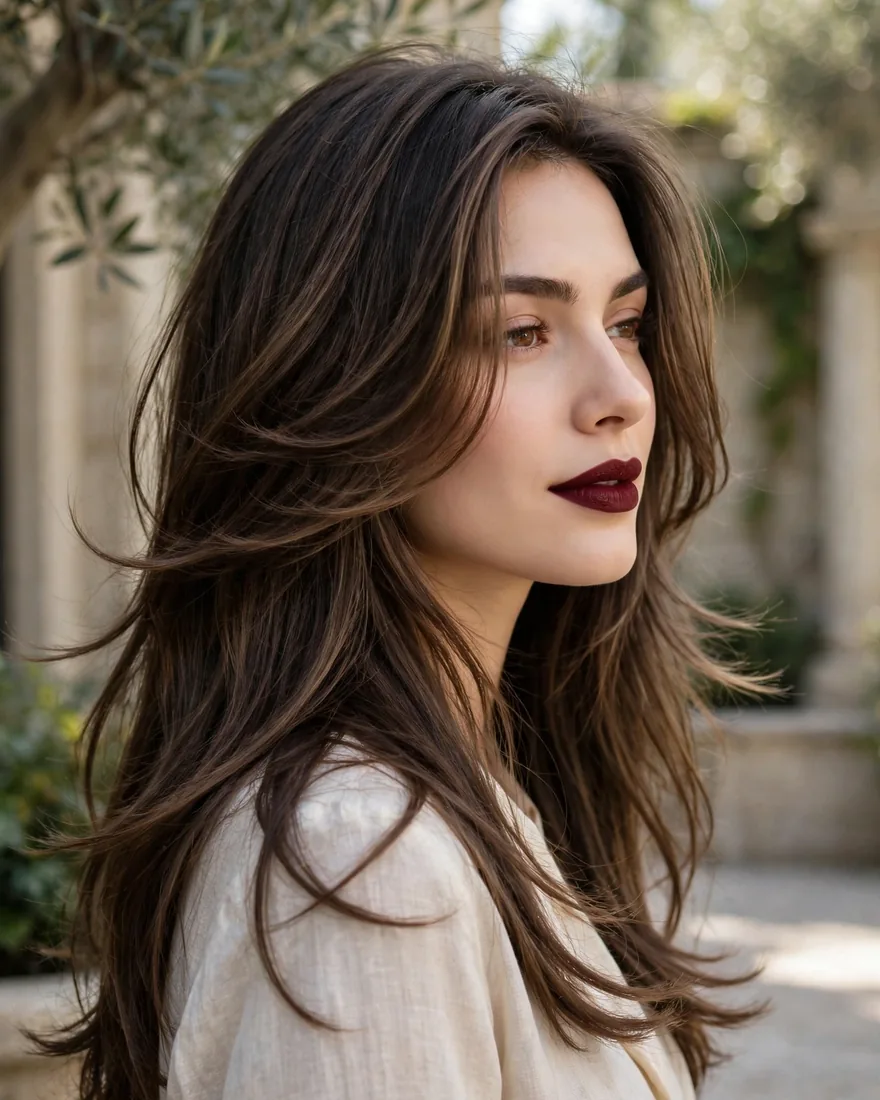
This is the workhorse cut for long hair, and for good reason. Long layers through the mid-lengths and ends take out bulk without giving up any real length, while face-framing strands that start around the chin soften the front and keep all that hair from dragging your features down. It is the most forgiving shape if your hair is thick, heavy, or prone to looking like a curtain.
Benefits:
- Removes weight so all that length moves instead of hanging flat
- Face-framing pieces flatter nearly every face shape
- Layers are also the cut that shows off balayage and dimensional color best
Pro Tip: Ask for the shortest layer to start no higher than chin level. Layers cut too short create that shelf effect that takes months to grow out.
How To Style: Blow-dry with a round brush, rolling the face-framing strands away from your face. For a quicker version, air-dry with a pea-sized amount of smoothing cream and tuck the front pieces behind your ears once dry.
Best For: Thick or heavy hair textures; everyday wear and office looks.
2. Soft Beach Waves With Middle Part
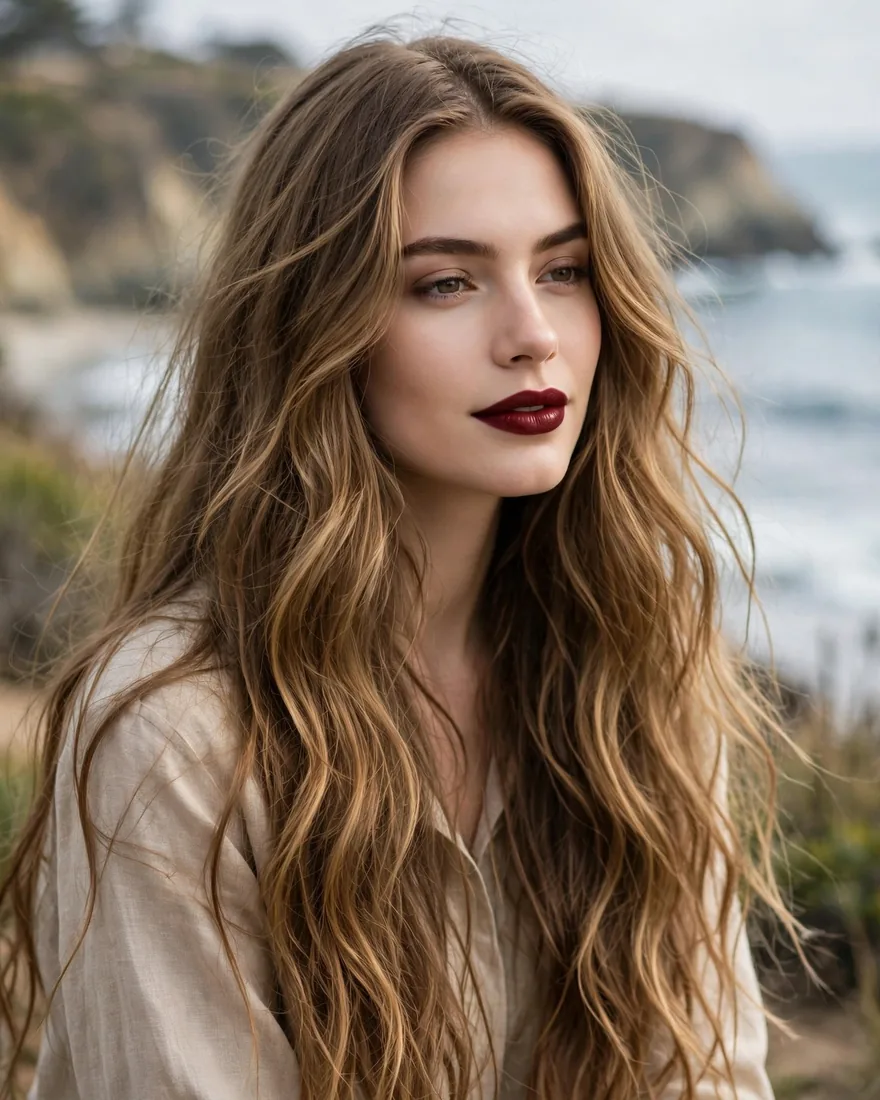
Loose, undone waves paired with a center part are the easiest way to make long hair look styled without looking done. The middle part matters more than people think: it balances the weight so it stops falling forward over your shoulders all day. This look is at its best on second-day hair, when a little natural texture is already there to work with.
Benefits:
- Takes ten minutes with a curling wand or overnight braids
- Center part keeps your hair balanced and off the face
- Grows out gracefully between styling sessions
Pro Tip: Curl away from the face and leave the last inch of the ends straight. Fully curled ends on all that length read dated; straight ends keep it modern.
How To Style: Mist dry hair with a light texture spray, wrap 1.5-inch sections around a wand for 8 to 10 seconds, then shake out with your fingers. A tiny drop of serum on the ends finishes it.
Best For: Wavy to straight textures; casual days, weekends, and holidays.
3. High Sleek Ponytail With Wrapped Base

A high ponytail smoothed flat at the crown, with a thin strand of hair wrapped around the elastic to hide it, is the most polished thing you can do with long hair in under five minutes. It lifts the face, keeps hair off the neck in warm weather, and reads intentional rather than rushed. If you want more ponytail variations for different occasions, browse our ponytail hairstyles roundup.
Benefits:
- Instant face-lifting effect from the high placement
- Wrapped base makes an everyday style look expensive
- Keeps it completely out of the way
Pro Tip: Tilt your head back slightly while smoothing the crown. It pulls the hair tighter against the head and hides bumps you would otherwise chase for ten minutes.
How To Style: Brush hair up high and secure with a strong elastic. Take a half-inch strand from underneath, wrap it around the base, and pin it underneath. Smooth flyaways with a toothbrush misted with hairspray.
Best For: Straight to wavy textures; workdays, workouts, and hot weather.
4. Low Twisted Chignon
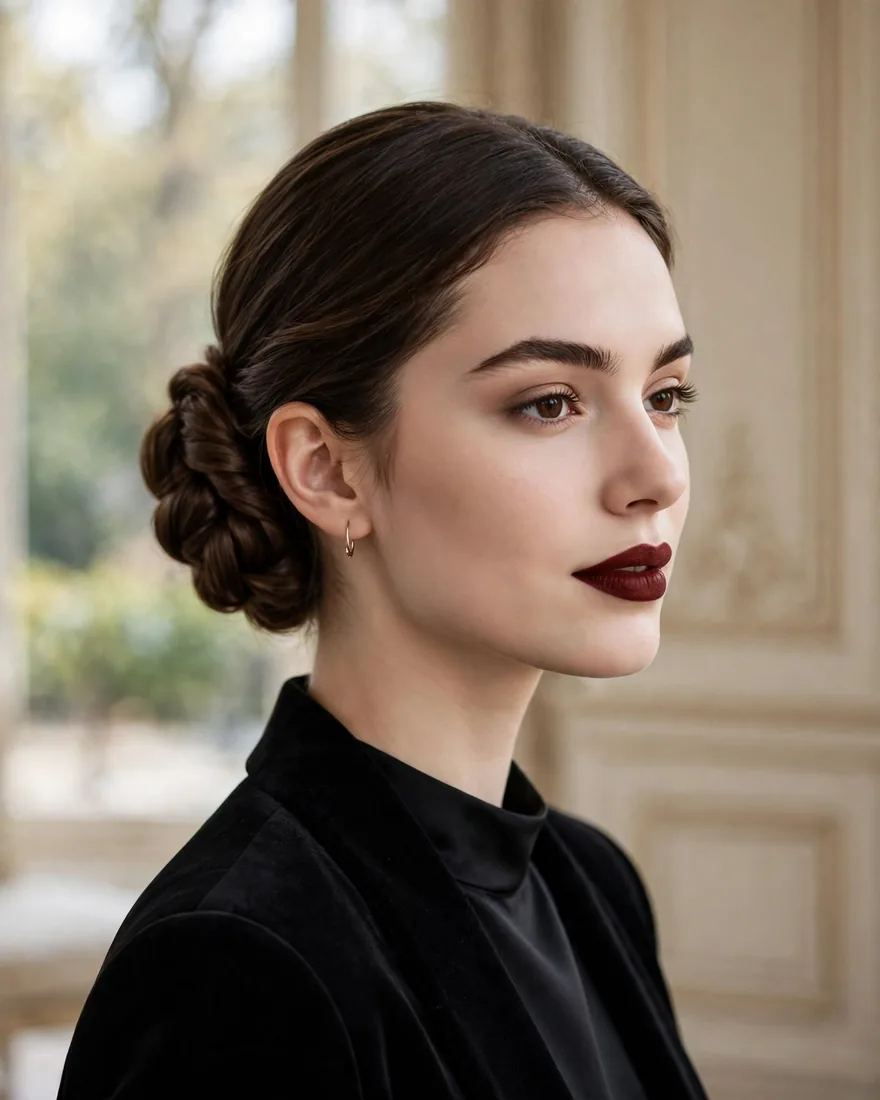
The low twisted chignon is hair twisted on itself and pinned at the nape, and it remains the gold standard for elegant long hair. It is secure without a single tight elastic, which means no tension headache and no stress on the hairline. This is also one of the most requested bridal hairstyles for long hair, because it survives hugs, dancing, and happy tears.
Benefits:
- No tight elastic means no breakage and no headache
- Stays put for 8+ hours with enough pins
- Works on freshly washed or second-day hair
Pro Tip: Twist the hair first, then coil it. Twisting compresses the hair so the chignon sits flatter and needs fewer pins than a plain wrapped bun.
How To Style: Gather hair low, twist the full length, coil it against the nape, and pin in an X pattern with bobby pins. Pull out two soft face-framing pieces and set everything with a flexible-hold spray.
Best For: All textures; weddings, formal events, and job interviews.
5. Half-Up Top Knot With Loose Curls

The half-up top knot gives you the polish of an updo while keeping your length on full display. You pull just the crown section into a small knot and leave the rest in loose curls, which means your face stays clear and your long hair still gets to be the main event. It is also one of the best rescue styles for second-day hair that has gone a bit flat at the roots.
Benefits:
- Keeps hair out of the face while showing off length
- Adds height at the crown, which flatters rounder faces
- Hides flat roots on second or third-day hair
Pro Tip: Tease the crown section lightly before knotting it. Your hair is heavy, and without a little grip at the base the knot slides down by lunchtime.
How To Style: Section off the top third of your hair, twist it into a small bun, and pin. Curl the remaining hair in loose waves, leaving the ends slightly straight for a modern finish.
Best For: Medium to thick textures; brunch, classes, and casual Fridays.
6. Butterfly Haircut Layers

The butterfly cut pairs short, bouncy face-framing layers on top with long layers underneath, so from the front it looks like a shorter cut and from the back it is all long hair. It went viral because the effect is dramatic in photos, but it genuinely suits this much length: the short top layers create movement and volume around the face while the underneath length keeps the drama. It is the boldest cut on this list, so go in with commitment.
Benefits:
- Creates the illusion of volume at the crown without teasing
- Short front layers grow out into face-framing strands gracefully
- Maximum movement and bounce for the longest hair
Pro Tip: This cut lives or dies on styling. The short layers need a round brush or they flip outward awkwardly, so only choose it if you will blow-dry at least the front.
How To Style: Blow-dry the top layers with a round brush, rolling under at the ends. The underneath length can air-dry or be loosely waved. A volumizing mousse at the roots helps the short layers sit right.
Best For: Medium to thick straight or wavy hair; anyone who wants a visible change without losing length.
7. Long Shag With Curtain Bangs
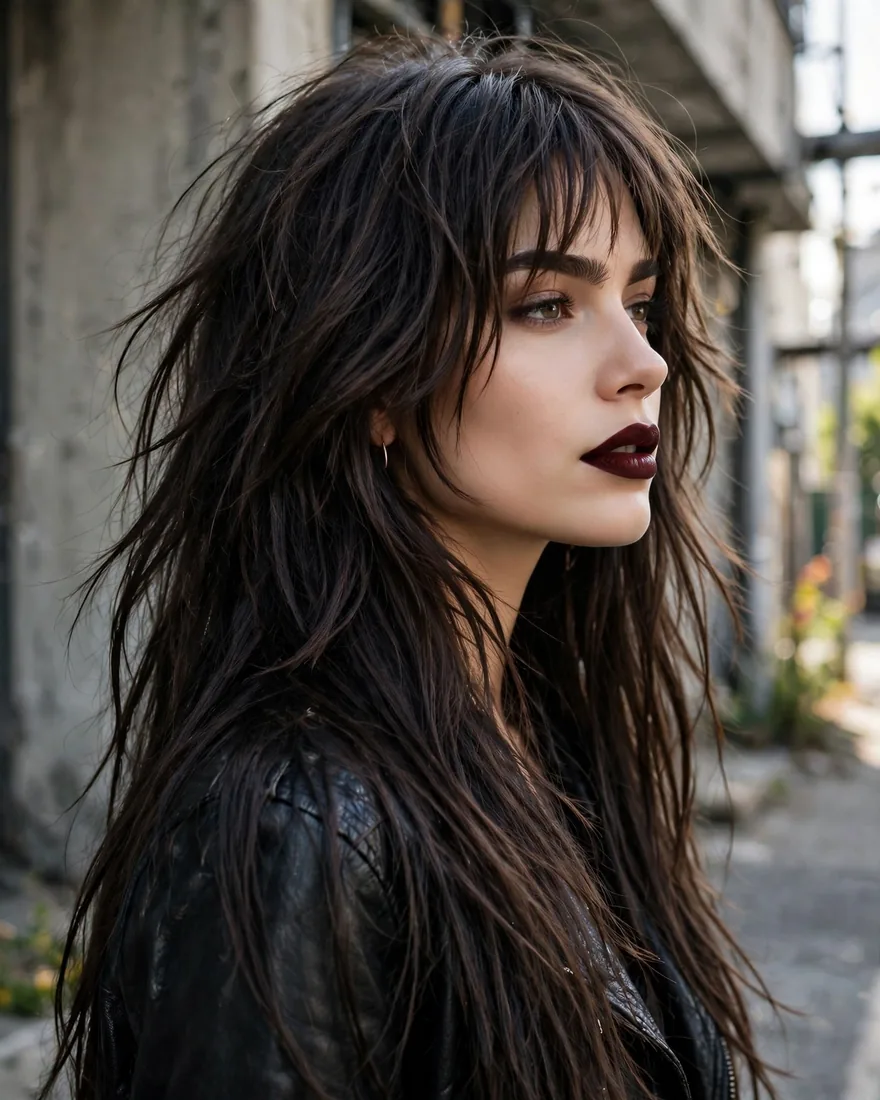
A shag on long length means choppy, textured layers throughout, finished with curtain bangs that part in the middle and sweep to the sides. It is edgier than classic layers but still wearable for everyday life, and the curtain bangs draw attention to the eyes and cheekbones. Fair warning: the bangs need a trim every six to eight weeks or they stop being curtain bangs and start being a grown-out fringe.
Benefits:
- Choppy layers give fine hair the texture it usually lacks
- Curtain bangs soften foreheads and strong jawlines
- Looks deliberately undone, so imperfect styling still works
Pro Tip: Style curtain bangs with a round brush the morning you wash your hair. Once they dry flat against your forehead, they are stubborn about moving.
How To Style: Rough-dry with texture spray scrunched in, then define the curtain bangs with a small round brush. Let the rest fall naturally; the shag is supposed to look lived-in.
Best For: Straight to wavy textures; creative workplaces and anyone bored with one-length hair.
8. Bubble Ponytail
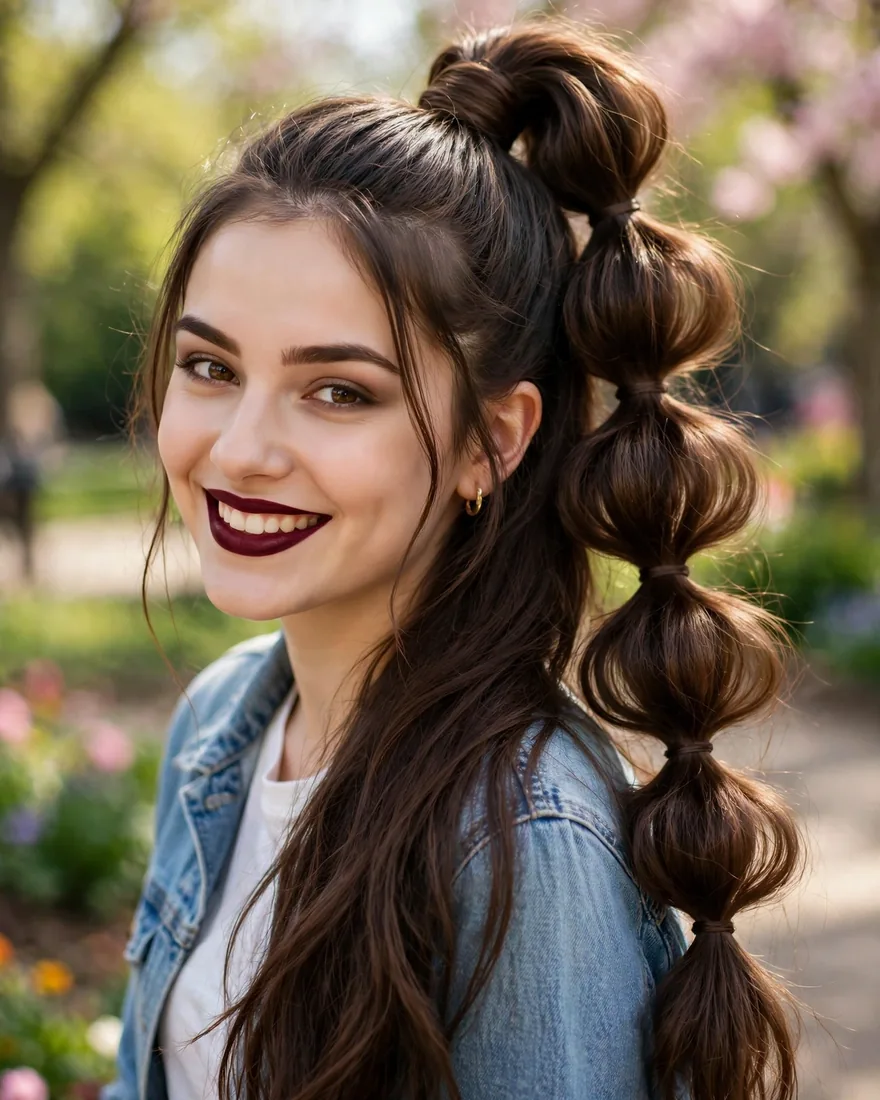
The bubble ponytail is a regular ponytail sectioned with small elastics down its length, each section gently puffed out to form a bubble. It is playful without being childish, it photographs beautifully from behind, and it is one of the few updos that genuinely suits extremely long hair. Because the elastics distribute the weight along the length, it also stays comfortable far longer than a plain high pony.
Benefits:
- Weight is distributed, so it stays comfortable all day
- Holds its shape for 8+ hours without re-doing
- Makes even fine hair look thicker
Pro Tip: Use clear mini elastics and pancake each bubble by pulling the sides outward gently. Pull too hard and the elastic slides; the trick is small tugs, not yanks.
How To Style: Secure a ponytail at your preferred height, then add elastics every two to three inches down the length. Puff each section, smooth the top, and mist lightly with hairspray.
Best For: All textures, especially very long lengths; parties, festivals, and gym days.
9. Classic Three-Strand Braid
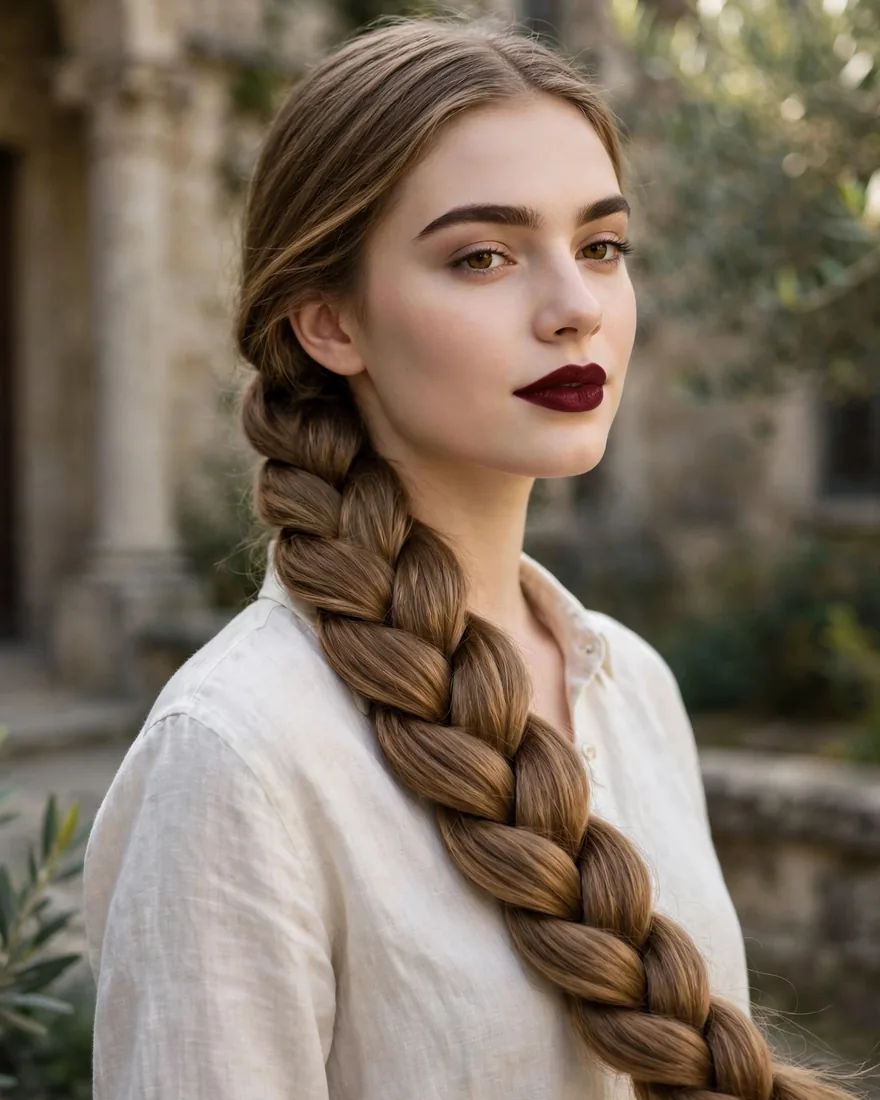
The humble three-strand braid deserves more respect than it gets. Worn over one shoulder or down the back, it is the fastest protective style for long hair: it keeps the ends tucked away, prevents the tangling that hair this long suffers on windy days, and takes about two minutes once your hands know the motion. It is also the single best thing you can do before bed, and a staple among winter hair braids when cold air makes ends brittle.
Benefits:
- Protects ends from friction, wind, and tangling
- Takes two minutes and zero heat
- Doubles as the best overnight protective style
Pro Tip: Braid loosely rather than tightly. A tight braid creates tension at the hairline and a stiff look; a loose braid looks softer and is kinder to your scalp.
How To Style: Gather hair to one side or the back, divide into three sections, and cross the outer sections over the middle. Secure with a fabric-covered elastic and gently pull the edges for fullness.
Best For: All textures; bedtime, windy days, and low-effort days.
10. Side Braid With Soft Curls
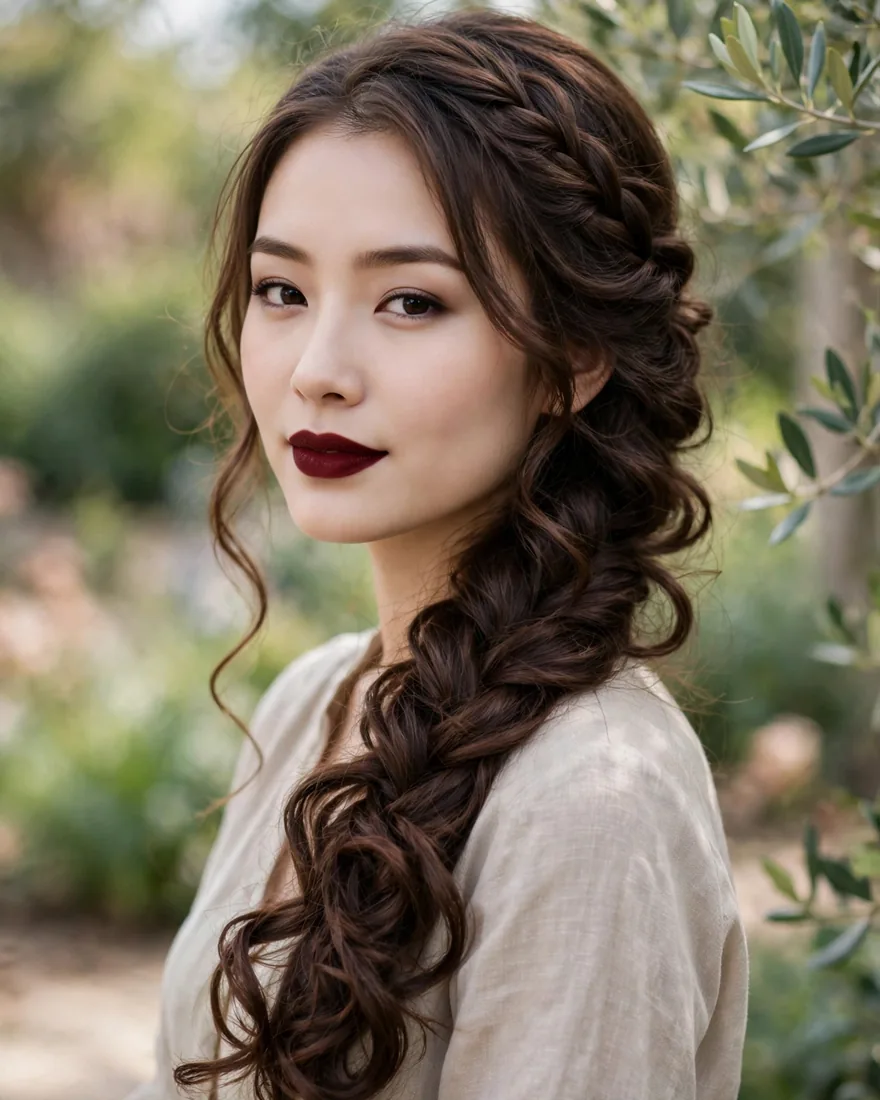
A loose side braid draped over one shoulder, worked into hair that has been softly curled first, is the romantic upgrade to the basic braid. The curls give the braid texture and fullness, and wearing it to the side means it is visible from the front instead of hiding down your back. It is also a clever way to camouflage grown-out layers, since the braid absorbs uneven ends.
Benefits:
- Hides grown-out or uneven layers inside the braid
- Visible from the front, so it photographs well
- Softer and more forgiving than a tight center braid
Pro Tip: Curl the hair first, then braid loosely and pull the braid edges apart. Braiding straight hair and hoping for texture afterward gives a flat result.
How To Style: Curl all of your hair in loose waves, sweep it over one shoulder, and braid loosely from behind the ear down. Tie off two inches above the ends and pancake the braid for fullness.
Best For: Wavy to curly textures; date nights, dinners, and photos.
11. Low Sleek Bun
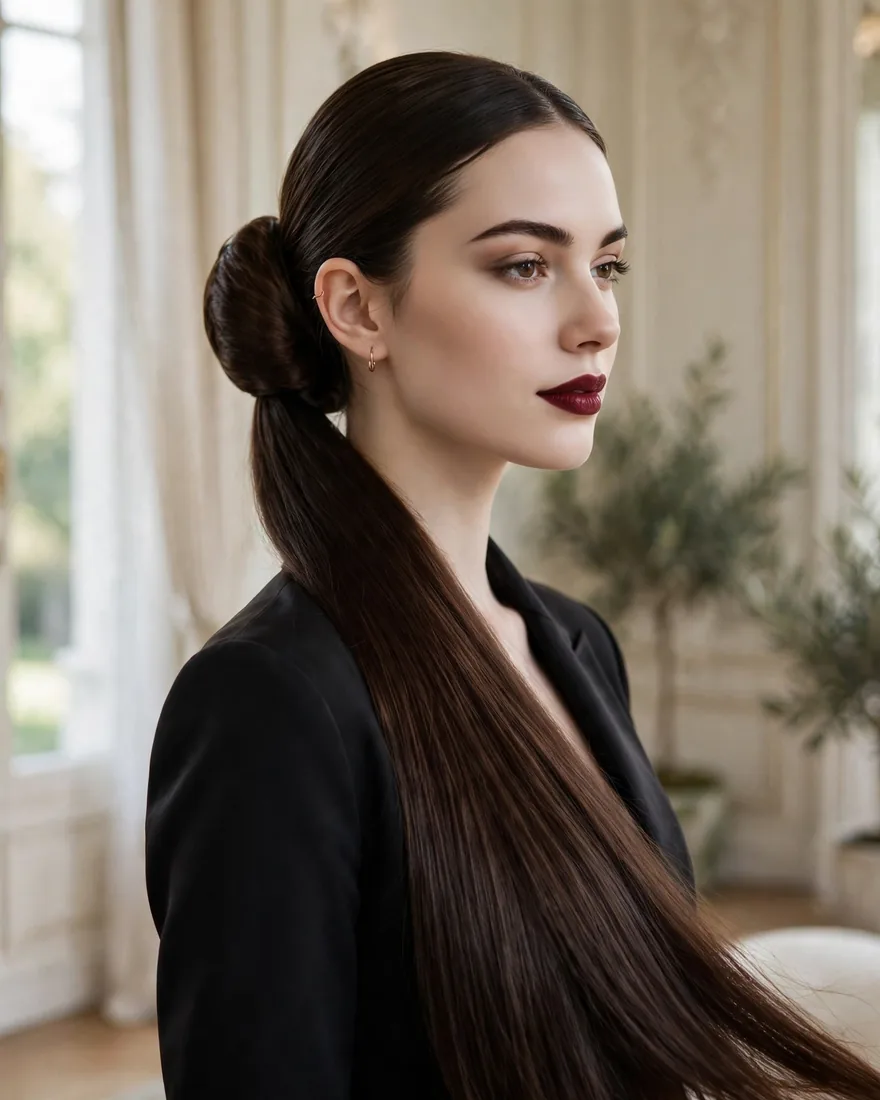
Hair smoothed back into a bun sitting at the nape is minimalism at its best. It is office-proof, wind-proof, and one of the few styles that looks better the longer your hair is, because the bun itself gets more substantial. The whole look hinges on the smoothing: flyaways are the difference between sleek and sloppy, so this is a style worth spending an extra three minutes on.
Benefits:
- Survives wind, humidity, and long commutes
- Reads professional without any accessories
- Uses the full weight of all that length to its advantage
Pro Tip: Apply smoothing cream to damp hair before you start, not after the bun is done. Product on damp hair controls flyaways from the inside out.
How To Style: Brush hair back low, twist into a bun at the nape, and pin securely. Smooth the crown with a boar-bristle brush and set with a light mist of strong-hold spray.
Best For: Straight to wavy textures; work, formal settings, and bad-weather days.
12. Twisted Half-Up
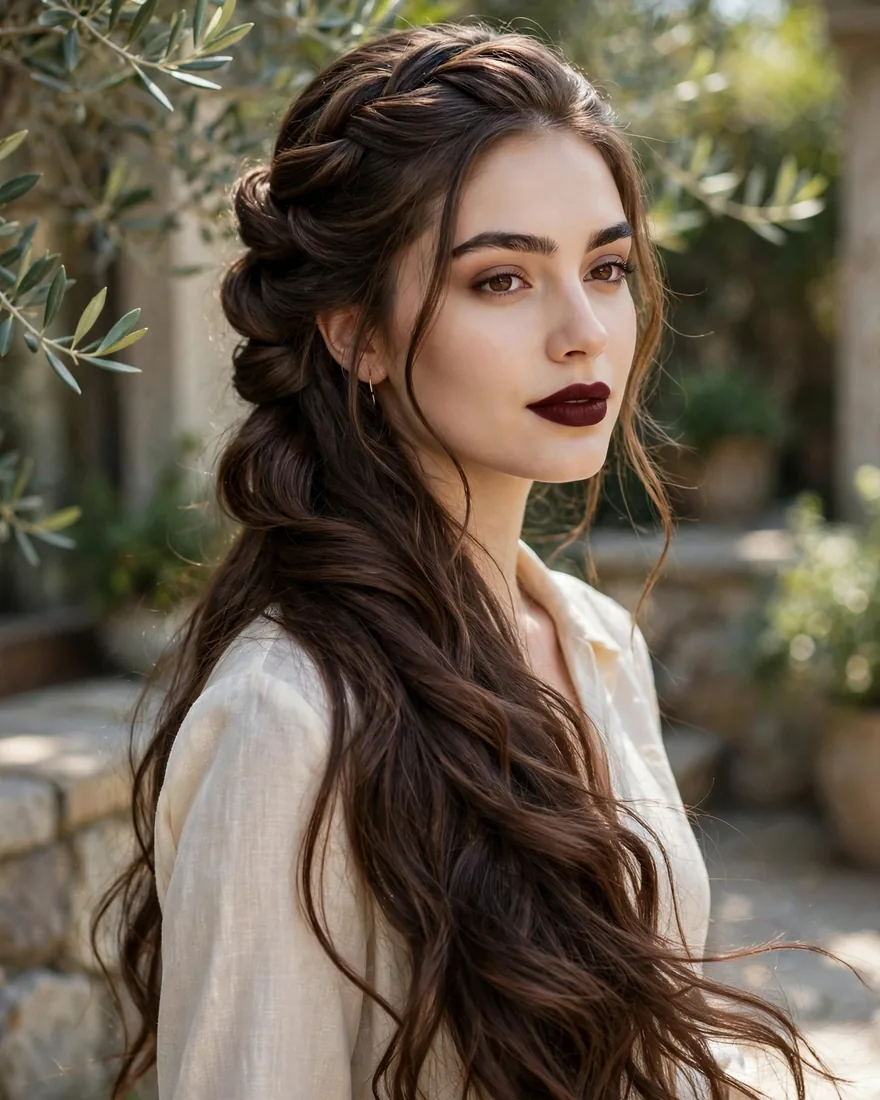
Two front sections twisted back and pinned is the five-minute style that saves long hair on busy mornings. It keeps hair out of your face without committing to a full updo, and the twists add just enough detail to look deliberate. On days when your hair feels like too much to deal with, this is the minimum effort that still looks like effort.
Benefits:
- Takes five minutes with no heat
- Keeps the front clear while length stays down
- Works on damp or dry hair
Pro Tip: Twist the sections away from your face, not toward it. Twisting toward the face pulls the hairline tight and creates bumps; twisting away sits flatter.
How To Style: Take a two-inch section from each temple, twist each one back, cross them at the back of the head, and pin with bobby pins in an X. A light spritz of texture spray keeps the twists from unraveling.
Best For: All textures; school runs, errands, and work-from-home video calls.
13. Utah Curls Volume
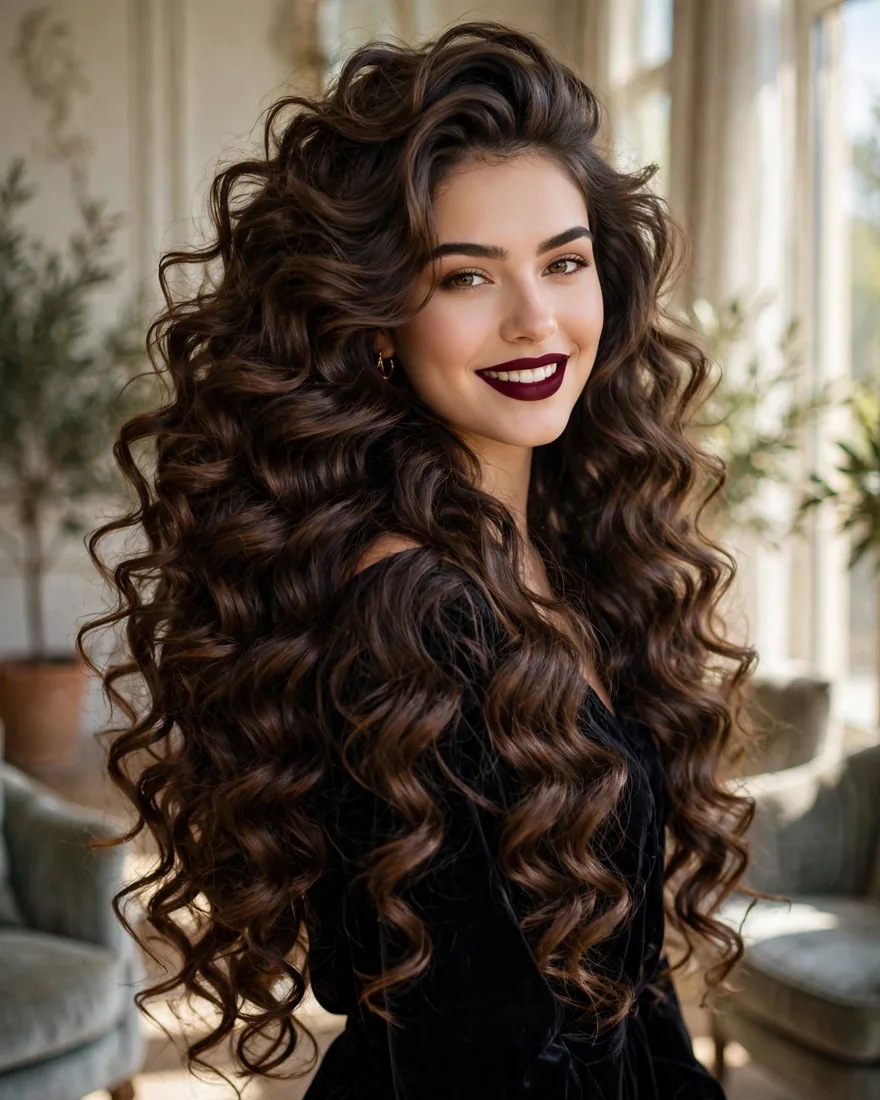
Utah curls are the viral technique where you curl the hair but run the iron straight down the last few inches, so the curl stops before the ends and the finish looks bouncy and rounded instead of spiraled. On long hair the effect is pure salon blowout: big, glossy volume with movement that lasts. If you love this kind of big texture, you will find more inspiration in our curly hairstyles collection. One honest caveat: this is a heat-heavy style, so heat protectant is non-negotiable.
Benefits:
- Salon-blowout volume achievable at home
- Rounded ends look thicker than spiral curls at this length
- Holds for two to three days with dry shampoo at the roots
Pro Tip: Let each curl cool completely in your palm or pinned before touching it. Your hair holds heat longer, and breaking up warm curls is the fastest way to lose the volume.
How To Style: Apply heat protectant, curl 1.5-inch sections, and pull the iron straight through the final two inches. Once cool, brush through gently with a wide-tooth comb for that bouncy finish.
Best For: Medium to thick textures; events, nights out, and photoshoots.
How the 13 looks compare at a glance:
| Look | Best Occasion | Hold Time |
|---|---|---|
| Classic Layered Cut | Everyday, office | Permanent cut; style lasts 1–2 days |
| Soft Beach Waves | Weekends, holidays | 4–6 hours on fine hair; all day on wavy hair |
| High Sleek Ponytail | Work, workouts | 6–8 hours; loosen at the crown for comfort |
| Low Twisted Chignon | Weddings, formal | 8–10 hours with enough pins |
| Half-Up Top Knot | Brunch, casual Friday | 5–7 hours; re-pin the knot once |
| Butterfly Layers | Everyday statement cut | Permanent cut; front layers need daily styling |
| Long Shag + Curtain Bangs | Creative workplaces | Permanent cut; bangs need styling each wash |
| Bubble Ponytail | Parties, festivals | 8+ hours; elastics hold all day |
| Classic Three-Strand Braid | Bedtime, windy days | All day; the most secure style here |
| Side Braid With Curls | Date night, photos | 5–8 hours depending on curl hold |
| Low Sleek Bun | Office, bad weather | 8–10 hours; nearly indestructible |
| Twisted Half-Up | Errands, video calls | 4–6 hours; re-pin once midday |
| Utah Curls Volume | Events, nights out | 2–3 days with root refresh |
How to Choose the Right Long Hair Cut
The shape of the cut matters more than the length when it comes to how long hair behaves. Layers are the default for a reason: they remove bulk, add movement, and stop all that hair from looking like a single heavy sheet. They suit thick hair best and are the most forgiving while growing out an old cut. One-length hair, by contrast, looks thicker and more dramatic at the ends, which makes it a good choice for fine hair that cannot afford to lose any density to layering.
Then there is the perimeter shape: the U-cut versus the V-cut. A U-cut rounds the bottom edge so the ends look full and blunt from behind. A V-cut tapers to a soft point, which looks striking but shows damage faster, since splits collect at that narrow tip. If your ends are fragile, the U-cut is the safer shape.
The hardest phase is growing out layers you no longer want. The honest fix is a bridge style rather than waiting it out: curtain bangs or face-framing pieces disguise the awkward in-between lengths while the shorter layers catch up. And if you are on the fence about keeping the length, there is no shame in a strategic chop. A long bob or shoulder length hair cut with healthy ends often looks longer and fuller than damaged hair six inches past it.
Keeping Long Hair Healthy Between Trims
Long hair is old hair: the ends on waist-length hair can be three or four years old, and they need to be treated accordingly. The single most effective habit is a regular trim every ten to twelve weeks. If you are actively growing, ask for a dusting, which takes off a quarter inch and nothing more. Skipping trims does not speed growth; it lets splits travel upward, eventually forcing a much bigger cut than the one you avoided.
Between appointments, protect the ends from friction, which is the quietest cause of damage at this length. Sleep with your hair in a loose braid or a low loose bun, and switch to a silk or satin pillowcase so the hair glides instead of catching. Color-treated hair needs one extra layer of care: shades like caramel highlights look stunning on long layers, but lightened ends dry out faster, so a weekly deep-conditioning mask on the mid-lengths and ends is worth it.
Washing matters too. Shampoo belongs on the scalp, not the lengths; the suds that rinse down are enough to clean the ends. Condition from the mid-lengths down, never at the roots. Small habits, compounded over months, are what separates hair that turns heads from hair that just hangs there.
Long Styles That Survive a Full Day
Not every pretty style earns its keep past noon, so here is the honest breakdown. For a full workday, the low sleek bun and the bubble ponytail are nearly indestructible at eight to ten hours. The classic three-strand braid is the most secure style on this entire list and will outlast everything else. The low twisted chignon holds eight-plus hours if you use enough pins in an X pattern.
For weddings and long events, the chignon is the safest bet, followed by the low sleek bun. Both keep the hair anchored close to the head, which is what survives hugging, dancing, and wind. Carry four extra bobby pins and a travel-size spray; even the best style benefits from one mid-event check.
What does not survive? Beach waves on fine, freshly washed hair usually fall flat by hour four, so save them for second-day hair or accept the touch-up. The half-up top knot and twisted half-up loosen around hour five or six on heavy hair, which is fine for a casual day but not for an event. And the high sleek ponytail, while gorgeous, can start aching at the crown after six to eight hours on thick hair. Knowing each style’s limits lets you pick the right one for the day ahead.
FAQs
How often should I trim long hair to keep it healthy?
Every ten to twelve weeks is the sweet spot for most long hair. If you are growing it out, ask your stylist for a dusting, which removes roughly a quarter inch and takes off the split ends without touching your length. Waiting six months between trims does not preserve length; it lets splits travel upward, eventually forcing a much bigger cut.
What is the best haircut shape for long hair?
It depends on your texture. Thick hair does best with long layers that remove bulk and add movement. Fine hair usually looks fuller with a blunt or softly rounded U-cut and minimal layering, since every layer thins the ends. For bangs, curtain bangs or face-framing strands are the most versatile pairing at this length.
What is the difference between a U-cut and a V-cut?
A U-cut rounds the bottom edge so the ends look full and even from behind. A V-cut tapers to a soft point, which looks dramatic but concentrates wear at that narrow tip, so splits and thinning show faster. The U-cut is the lower-maintenance choice for most lengths.
How do I stop my long hair from getting greasy so fast?
Wash the scalp only and let the suds rinse through the lengths; scrubbing the ends strips them and triggers more oil at the roots. A light dry shampoo applied at the roots before bed absorbs oil overnight and buys you an extra day. Keep heavy conditioners and oils on the mid-lengths and ends, never near the scalp.
Does long hair get heavy on the head?
Honestly, yes, especially once hair passes mid-back on thick textures. Layers help by removing bulk, and styles that distribute weight, like the bubble ponytail or a low bun, stay comfortable far longer than a single high ponytail pulling from one point. If updos regularly give you headaches, add layers or take an inch or two off rather than suffering through it.
How long does it take to grow long hair from shoulder length?
Hair grows about half an inch per month on average, so going from shoulder length to waist length typically takes around two years, minus whatever you trim along the way. No product meaningfully speeds this up; the real accelerator is retention: trims that stop splits, protective styles, and gentle handling so the length you grow is the length you keep.
How do I protect long hair while sleeping?
A loose three-strand braid is the simplest protection: it stops the tangling and friction that cause breakage overnight, and a low loose bun works too. Pair either with a silk or satin pillowcase so the hair glides instead of catching on cotton. Never sleep with wet hair; it stretches more easily and breaks at the slightest snag.
Can thin hair look good long?
Yes, but the cut has to be disciplined. Keep the perimeter blunt or in a soft U-shape, skip heavy layering that thins the ends, and avoid over-texturizing. Styles that gather the hair, like low buns and braids, make thin hair look denser, while Utah curls add visible volume. The real enemy is not length itself but straggly, see-through ends.
Length rewards patience, but it rewards smart choices even more. Pick a cut shape that suits your texture, protect the ends like the investment they are, and choose styles with honest hold times for the day ahead. Whether you keep it sleek, wavy, braided, or piled into a chignon, healthy hair with intention behind it never goes out of style.