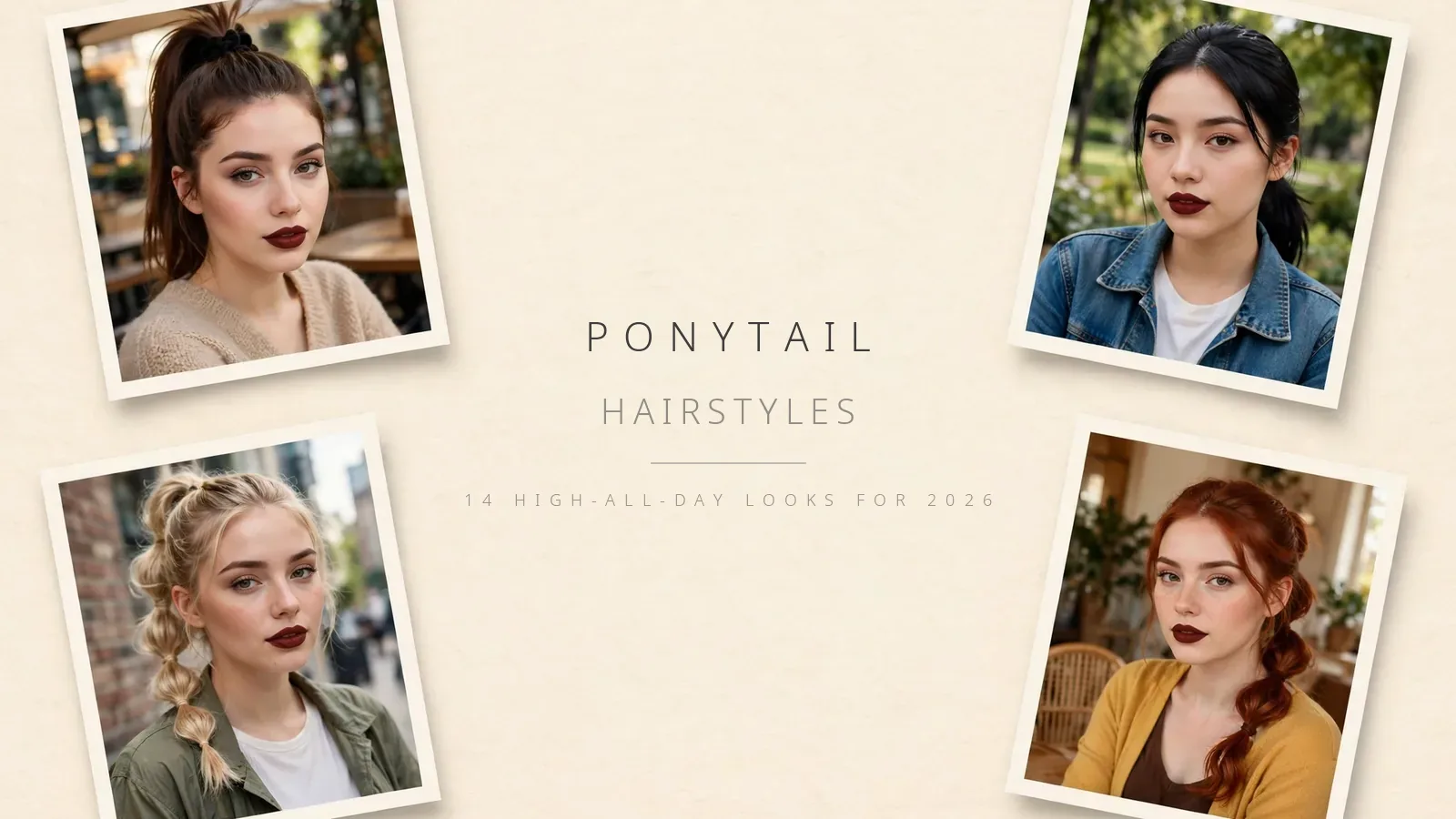
Ponytail Hairstyles – 14 High-All-Day Looks for 2026
Most ponytail hairstyles fail for the same three reasons: the ponytail sags to the nape by noon, it looks thin and stringy on fine hair, or it gives you a tension headache by dinner. The problem is rarely the ponytail itself — it is the placement, the anchoring, and the mismatch between the style and your hair’s texture.
This guide fixes all three. You get 14 ponytail hairstyles grouped by how they actually wear through a day — high styles that stay put, low styles that look polished, and braided hybrids that distribute tension — plus a no-sag anchoring system, face-shape placement rules, and damage-free methods for daily wear.
Table of Contents
- 14 Ponytail Hairstyles Ideas Worth Trying
- 1. Sleek High Ponytail
- 2. Low Side Ponytail
- 3. Bubble Ponytail
- 4. Braided Crown Ponytail
- 5. Messy Textured Ponytail
- 6. Wrapped-Base Low Pony
- 7. Double Dutch Into Ponytail
- 8. Half-Up Ponytail
- 9. Fishtail Ponytail
- 10. Twisted Rope Ponytail
- 11. Voluminous Curly Ponytail
- 12. Braided Box-Braid Ponytail
- 13. Ribbon-Tied Ponytail
- 14. Sleek Middle-Part Pony
- How to Choose the Right Ponytail
- The No-Sag Ponytail Fix
- Damage-Free Ponytails and the Thickness Trick
- Frequently Asked Questions
- How do I keep my ponytail from sagging during the day?
- What is the best ponytail height for my face shape?
- Are ponytails damaging to hair?
- How can I make my ponytail look thicker if I have fine hair?
- Can I wear a ponytail with short hair?
- How do I hide the elastic in my ponytail?
- What is the best ponytail for the gym?
- How long can I keep a ponytail in?
14 Ponytail Hairstyles Ideas Worth Trying
 1. Sleek High Ponytail
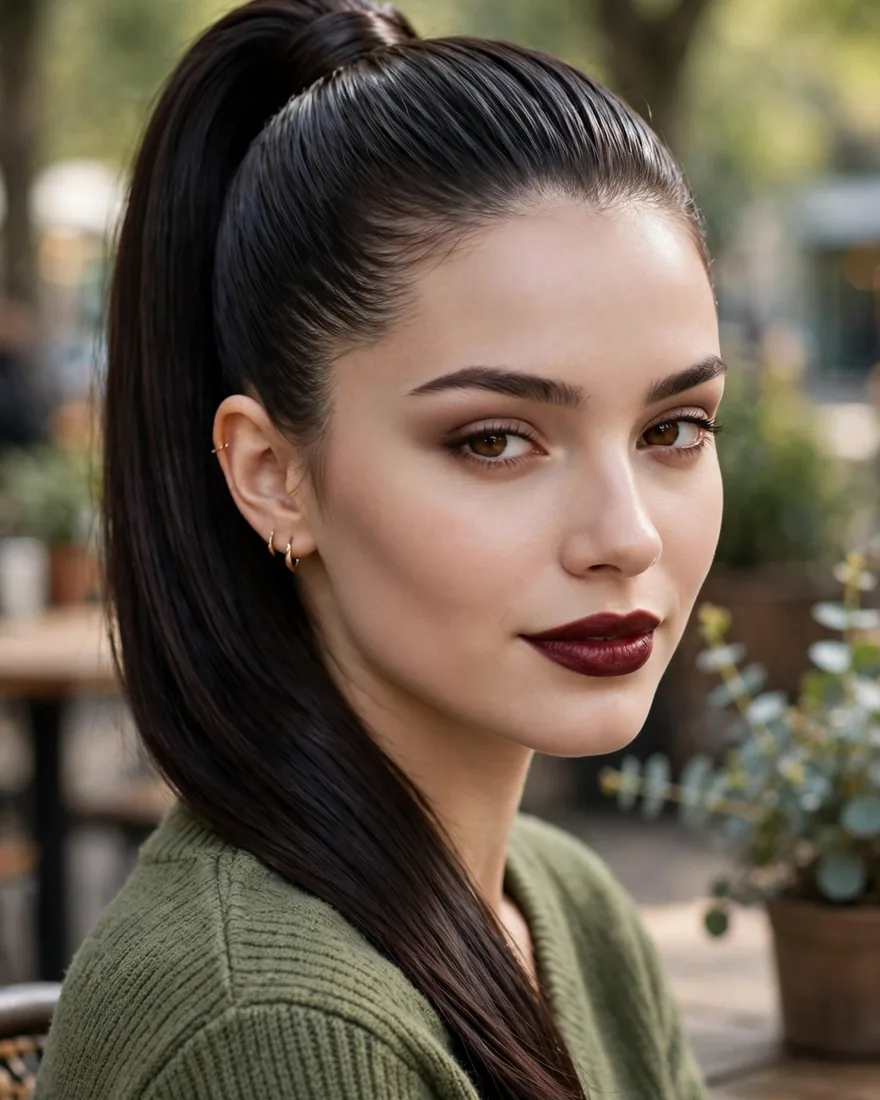 1. Sleek High Ponytail
The classic crown-grazing pony, smoothed flat at the roots with every flyaway tamed. It lifts the whole face, reads instantly polished, and works for everything from the gym to a night out. Among all ponytail hairstyles, this one demands the most prep — the sleekness is the entire point.
Benefits:
- Visually lengthens the neck and lifts the cheekbones
- Holds up well through long, active days
- Photographs cleanly — no texture competing with your outfit
Pro Tip: Brush hair upside down into the pony, then smooth with a toothbrush-size brush and a dab of gel just at the hairline. Flip back upright and the root line stays glassy.
How To Style: Blow-dry roots flat with tension, gather at the crown, and secure with two stacked elastics for grip. Wrap a thin strand of hair around the base and pin underneath. Mist with a light-hold spray — heavy spray makes it flake by afternoon. That extra smoothing step is what separates polished ponytail hairstyles from a quick gym tie-up.
Best For: Medium to long hair with some density; oval and heart face shapes.
2. Low Side Ponytail
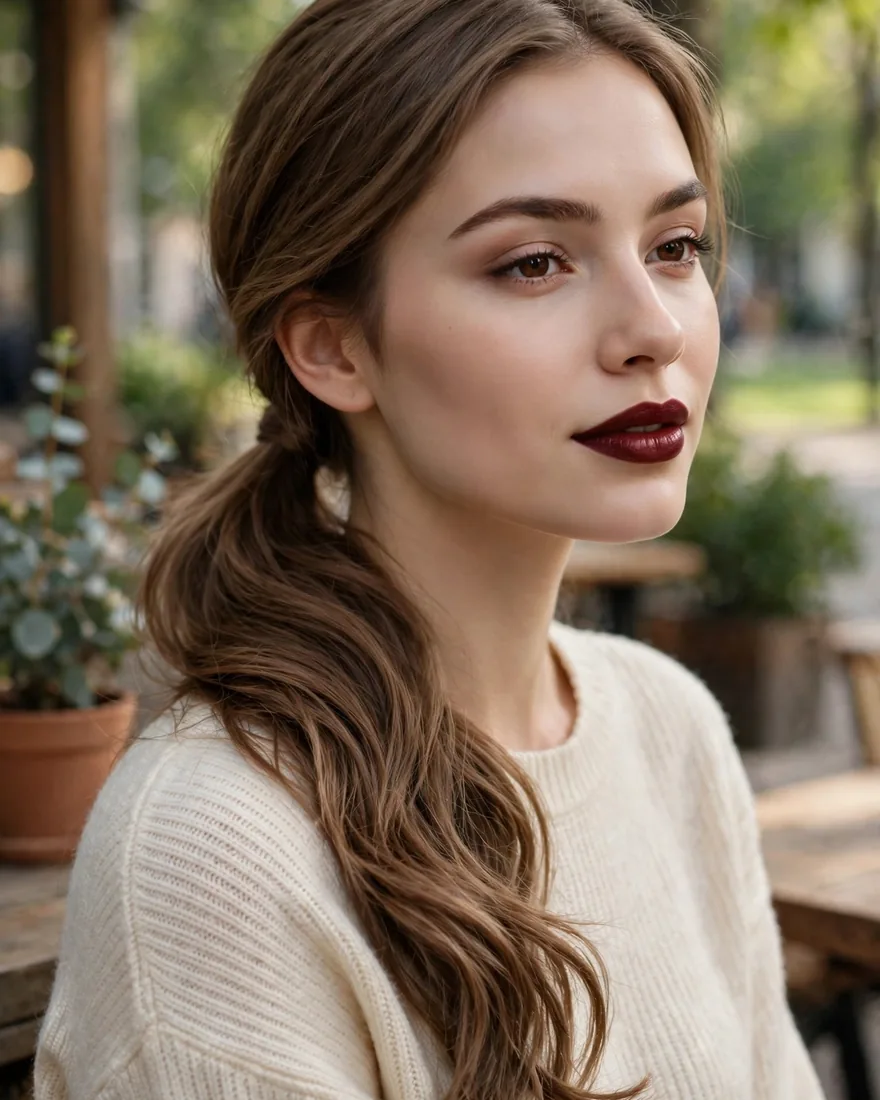 2. Low Side Ponytail
Swept over one shoulder and secured behind the ear, the low side pony is the relaxed answer to the high pony’s intensity. It softens a strong jaw, keeps hair off your neck without the severity of a center part, and looks intentional rather than lazy. This is one of the gentlest ponytail hairstyles for all-day tension.
Benefits:
- Distributes weight so there is almost no scalp pull
- Flatters square and heart faces by breaking up symmetry
- Easy second-day style — texture only improves it
Pro Tip: Part hair on the opposite side of where the pony sits. The diagonal sweep gives the style its shape; a center part makes it look accidental.
How To Style: Create a deep side part, sweep everything across, and gather low behind the opposite ear. Secure loosely — a tight side pony migrates by noon. Loosen the front with your fingers for softness. Among relaxed ponytail hairstyles, this one is the most forgiving of second-day texture.
Best For: Wavy or air-dried hair; square, heart, and diamond faces.
3. Bubble Ponytail
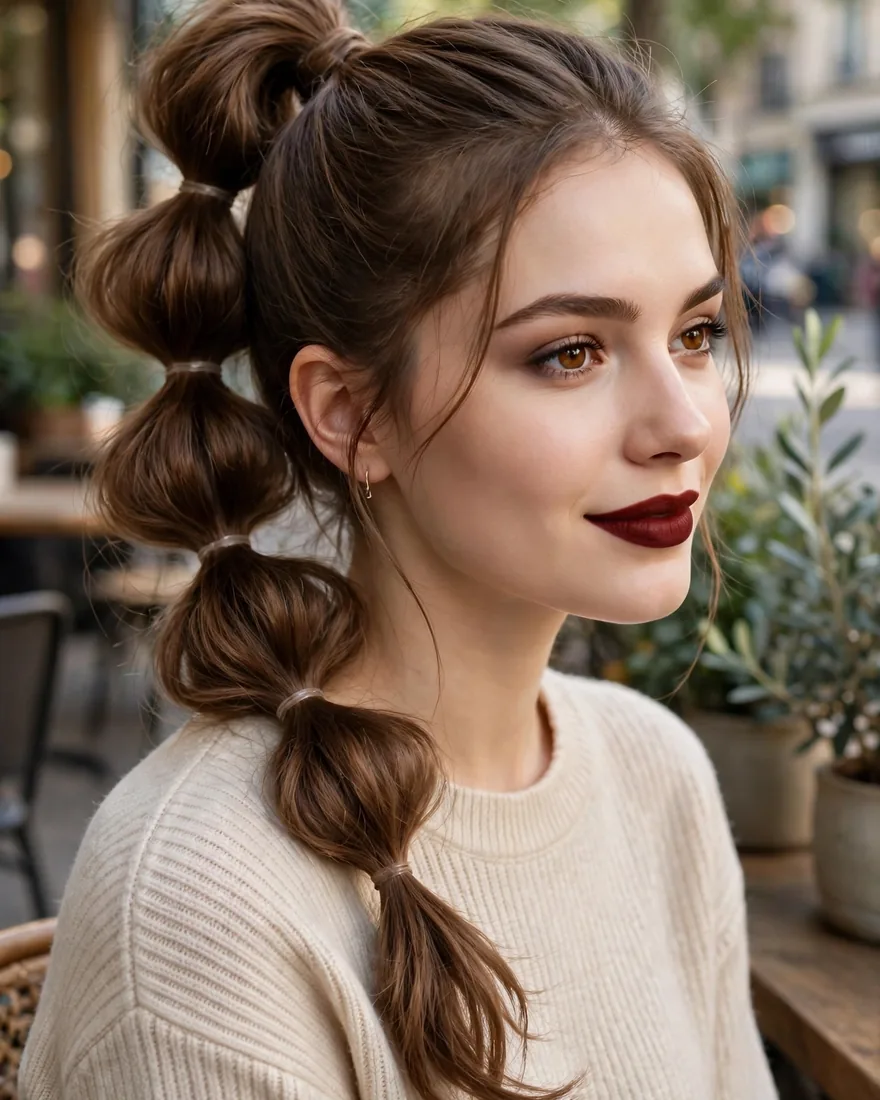 3. Bubble Ponytail
Elastics spaced down the length create a row of rounded “bubbles” that turn a basic pony into a statement. It adds instant fullness to fine hair and survives wind, workouts, and long commutes better than almost any of the other ponytail hairstyles here. Of all the playful ponytail hairstyles, this one gets the most compliments for the least effort.
Benefits:
- Fakes dramatic thickness on fine or thin hair
- Stays intact for hours — each segment is independently secured
- Works on any texture, including extensions
Pro Tip: Pancake each bubble by gently pulling it wider between the elastics. The fuller you make them, the more expensive the style looks.
How To Style: Secure a high or mid pony, then add clear mini elastics every two to three inches down the length. Fan out each section between elastics. Hide the top elastic with a hair wrap if you like.
Best For: Fine or thin hair; long hair or long extensions.
4. Braided Crown Ponytail
 4. Braided Crown Ponytail
A Dutch or French braid runs along the crown and feeds straight into a ponytail, so the style has a built-in headband effect. The braid anchors the pony — this is one of the most sag-proof ponytail hairstyles — and it looks far more intricate than it takes to learn. For more braided inspiration, explore our beautiful hairstyles with baby braids for delicate crown variations.
Benefits:
- The braid locks the ponytail in place — nearly zero sag
- Keeps the front hairline completely out of your face
- Transitions from day to evening without restyling
Pro Tip: Braid with the hair damp and a pea of styling cream. The braid stays tighter as it dries and you avoid flyaways along the part.
How To Style: Part hair where you want the braid to sit, Dutch-braid back toward the crown, and gather everything — braid tail included — into a pony at the point where the braid ends. Secure and pancake the braid lightly.
Best For: Medium to long hair; active days and humid weather.
5. Messy Textured Ponytail
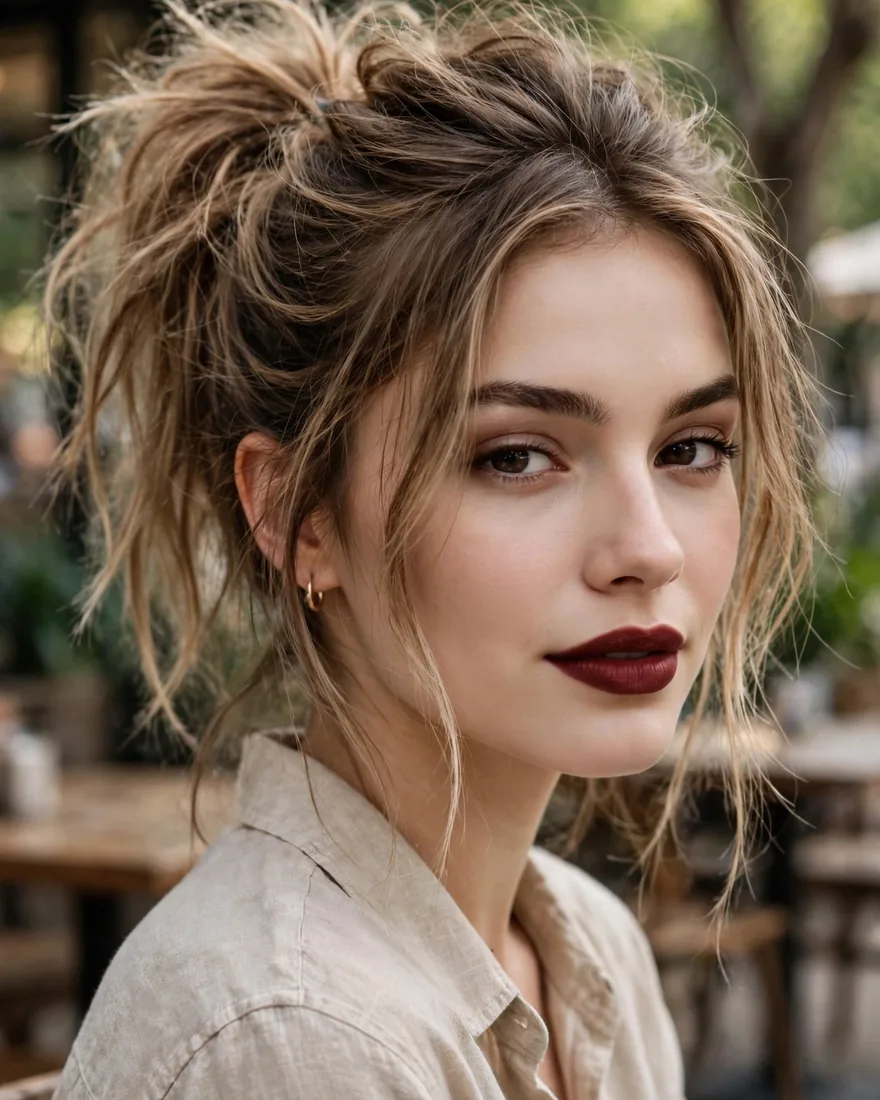 5. Messy Textured Ponytail
The undone pony: backcombed crown, loose face-framing pieces, a slightly off-center part. It looks effortless because the technique is genuinely forgiving — imperfection is the design. This is the most wearable of the casual ponytail hairstyles and the fastest to do on textured or second-day hair.
Benefits:
- Takes five minutes and hides unwashed roots completely
- The texture disguises thin spots and fine hair
- Zero precision required — it gets better the messier it is
Pro Tip: Pull out the face-framing pieces AFTER you secure the pony, not before. Pieces pulled too early get dragged into the elastic and look accidental instead of styled.
How To Style: Spritz dry shampoo at the roots, backcomb the crown lightly, and gather into a mid-height pony. Wrap the base or leave the elastic showing — in messy ponytail hairstyles, both read intentional. Pull a few pieces loose and scrunch the tail for texture.
Best For: Second- or third-day hair; wavy, curly, or thick textures.
6. Wrapped-Base Low Pony
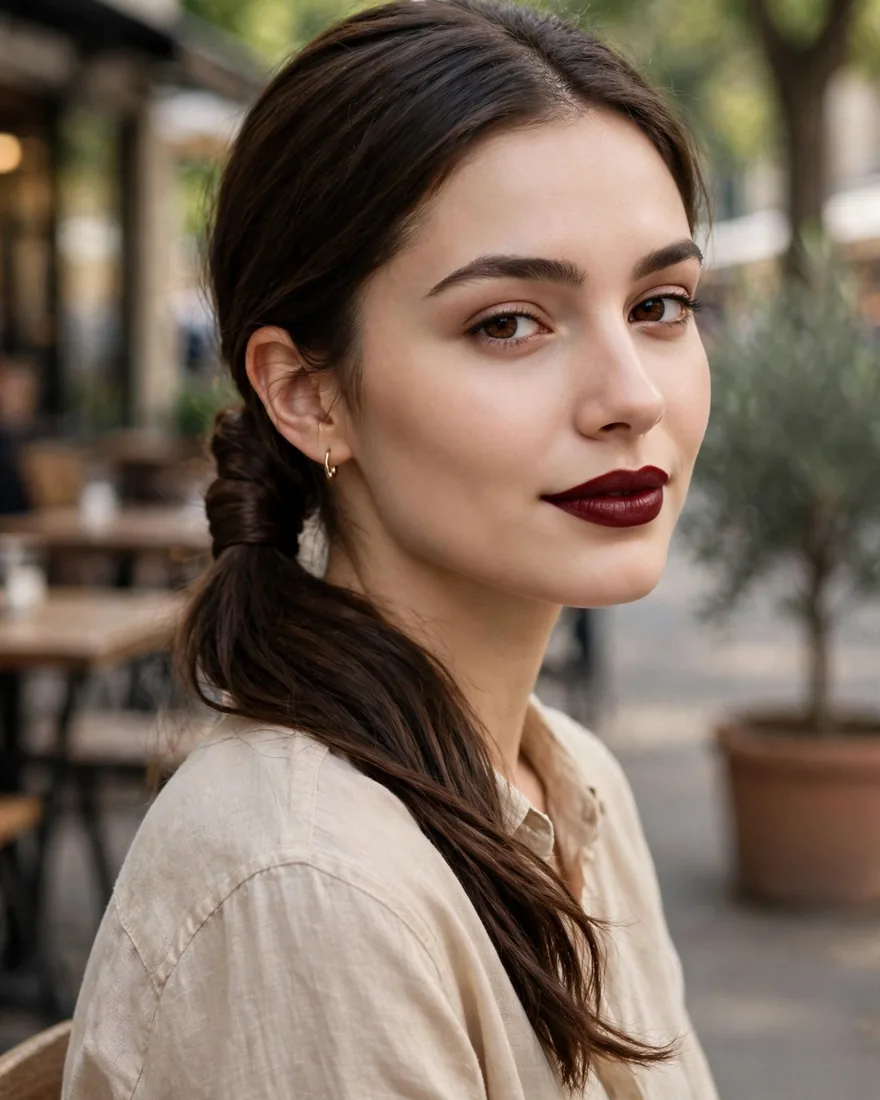 6. Wrapped-Base Low Pony
A low ponytail at the nape with the elastic concealed under a wrapped section of hair — the five-second upgrade that makes a plain pony look salon-done. It is the quiet-luxury choice among ponytail hairstyles: minimal, neat, and appropriate everywhere from the office to a wedding. See our bridal hairstyles guide if you want to dress this base up for a formal occasion.
Benefits:
- The wrap hides cheap elastics and adds a finished look
- Very low tension — safe for daily wear
- Works on shorter lengths that cannot hold a high pony
Pro Tip: Use a strand from the UNDERSIDE of the pony for the wrap. The top of the wrap stays smooth, and any pins hide underneath.
How To Style: Smooth hair into a low pony at the nape. Take a half-inch section from underneath, wrap it around the base two or three times, and secure with a bobby pin tucked upward into the elastic. Finish with a shine mist on the tail.
Best For: Straight or slightly wavy hair; fine hair; professional settings.
7. Double Dutch Into Ponytail
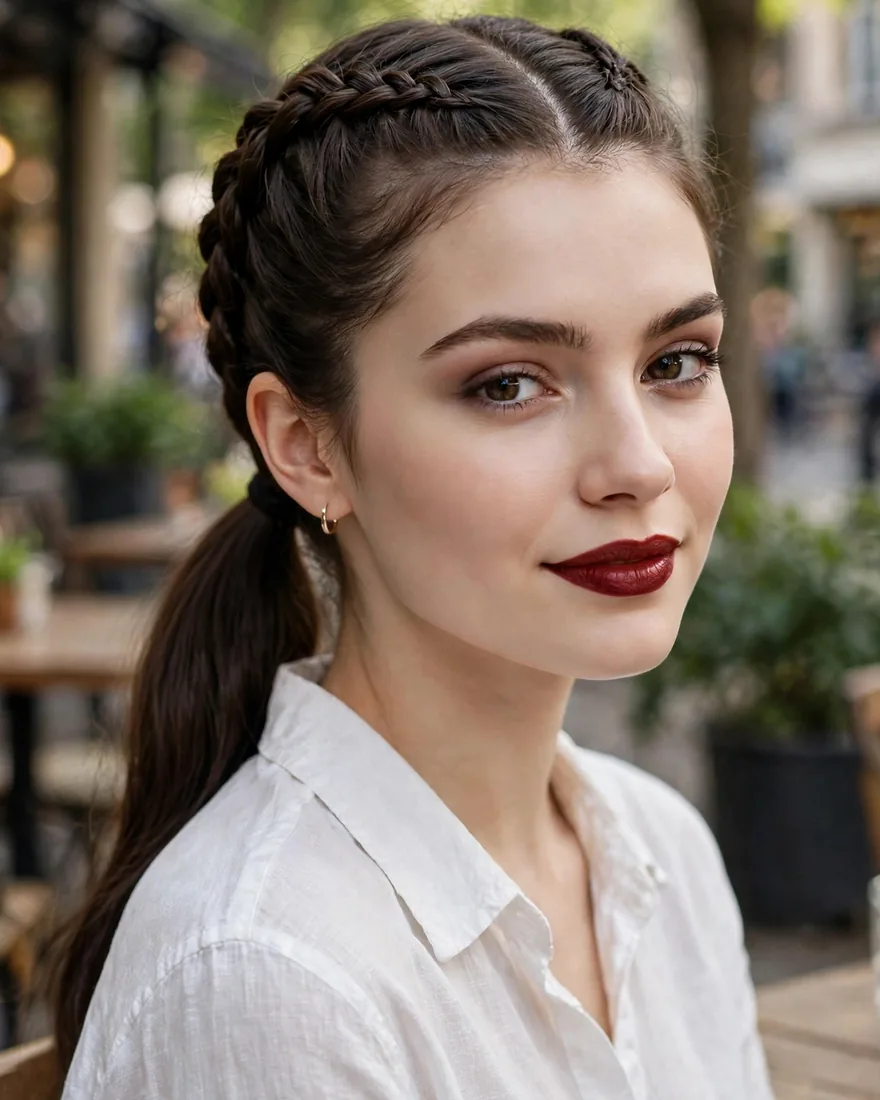 7. Double Dutch Into Ponytail
Two Dutch braids from the hairline converge into a single ponytail — the sporty, secure hybrid that survives workouts, wind, and toddlers. The braids do the holding work, so the ponytail itself barely needs tension. For step-by-step braid foundations, our Dutch braid hairstyles guide covers the technique in detail.
Benefits:
- The most secure style on this list — genuinely workout-proof
- Protects the hairline from breakage by distributing pull
- Looks polished for hours with no touch-ups
Pro Tip: Braid all the way to the merge point before gathering the pony. That merge point is where most sporty ponytail hairstyles fail — loose unbraided sections between the braids and the pony are what sag.
How To Style: Part down the middle, Dutch-braid each side from the hairline toward the crown, and join both braids into one pony. Secure firmly, then pancake the braids for fullness.
Best For: Gym days, travel, thick or long hair.
8. Half-Up Ponytail
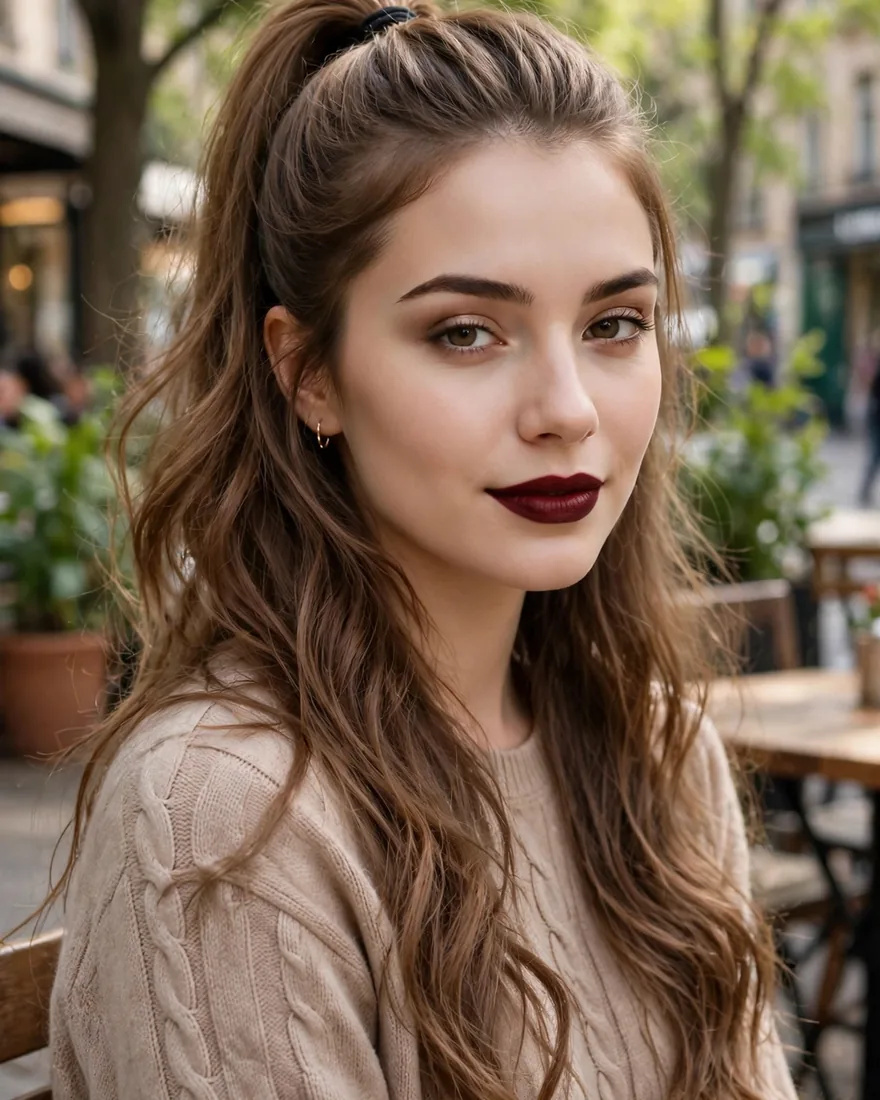 8. Half-Up Ponytail
Only the top section goes into the pony; the rest falls free. It gives you the lift and face-opening effect of a ponytail while keeping the length and movement of wearing your hair down. Among ponytail hairstyles, this is the most forgiving on short to medium lengths. Pair it with curtain bangs or face-framing layers — our types of bangs guide shows which fringe shapes flatter this style best.
Benefits:
- Works on lob and bob lengths that cannot do a full pony
- Adds crown volume that makes hair look thicker
- Keeps hair out of your face without full commitment
Pro Tip: Take the top section from temple to temple, no wider. A too-wide section pulls the style into a full pony and loses the half-up effect. It is the detail that separates intentional half-up ponytail hairstyles from a random clip-back.
How To Style: Section the top third, smooth it back, and secure at the crown — high for playful, mid for polished. Backcomb the section lightly before gathering if you want extra lift. Leave the bottom layer natural.
Best For: Short to medium hair; fine hair needing crown volume.
9. Fishtail Ponytail
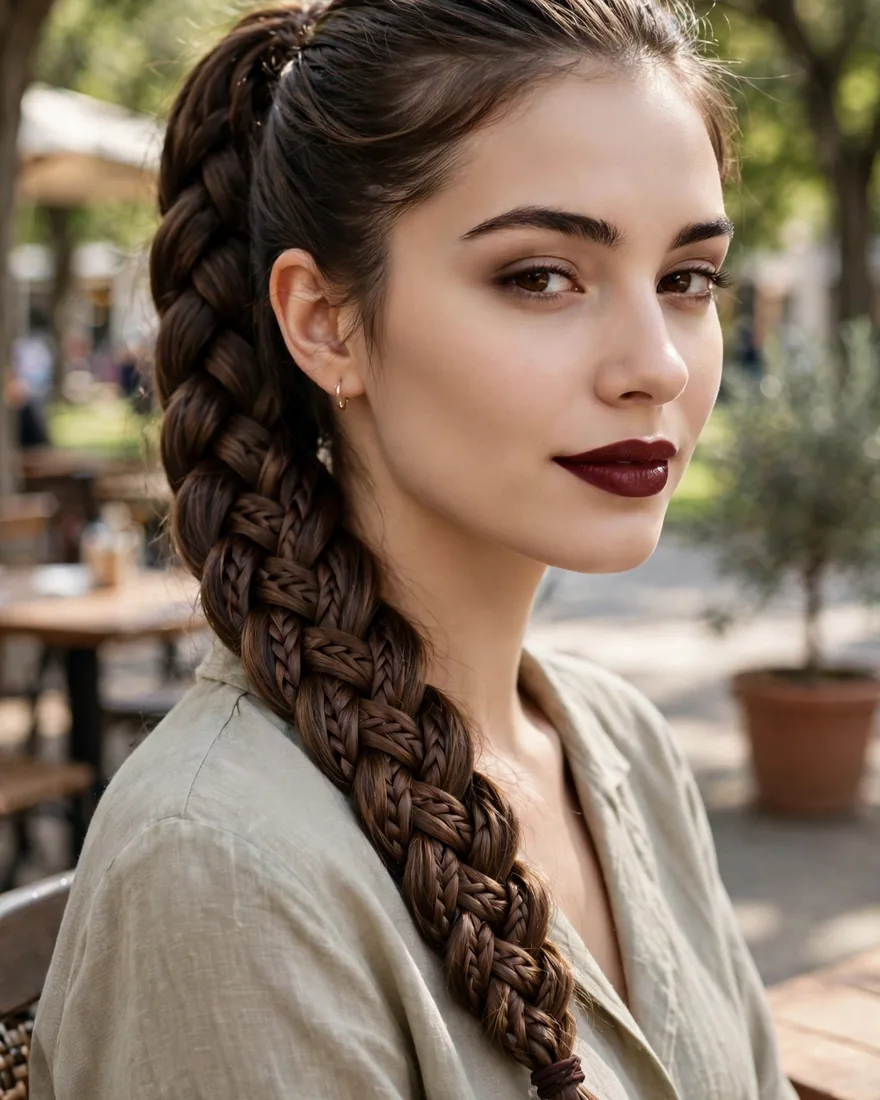 9. Fishtail Ponytail
The tail is woven into a fishtail braid, giving the ponytail a rope-like, intricate texture that looks far harder than it is. It keeps long tails from tangling and reads bohemian without going full festival. Fishtail weaving is one of those ponytail hairstyle techniques worth learning once and using forever — our winter hair braid roundup has more woven-tail ideas for cold months.
Benefits:
- Prevents the tail from tangling in wind or during activity
- The woven texture makes even thin tails look substantial
- Doubles as a protective style for long hair
Pro Tip: Fishtail over a ponytail, not over loose hair. The base pony gives you something to hold and keeps the braid from loosening at the top.
How To Style: Secure a mid or low pony first. Split the tail in two, and weave small outer sections across to the opposite side, alternating. Keep the pieces small — tiny sections make the fishtail look refined. Tie off and pancake gently.
Best For: Long hair; wavy textures; outdoor days.
10. Twisted Rope Ponytail
 10. Twisted Rope Ponytail
Two sections twisted in the same direction, then coiled around each other in the opposite direction — the rope twist that holds itself together. It is faster than any braid, looks sleek and sculptural, and stays put because the opposing tension locks it. A minimalist favorite among structured ponytail hairstyles.
Benefits:
- Faster than braiding with a similarly intricate result
- The twist tension keeps the tail from loosening
- Looks equally good sleek or slightly undone
Pro Tip: Apply a smoothing cream before twisting. Sleek ponytail hairstyles live or die on product — dry twists puff and unravel, while cream gives the rope its definition.
How To Style: Secure a pony, split the tail in two, and twist each section clockwise. Then wrap the two twisted sections around each other counter-clockwise, tie off the end, and tug the twists slightly for fullness.
Best For: Straight or relaxed hair; medium to long lengths.
11. Voluminous Curly Ponytail
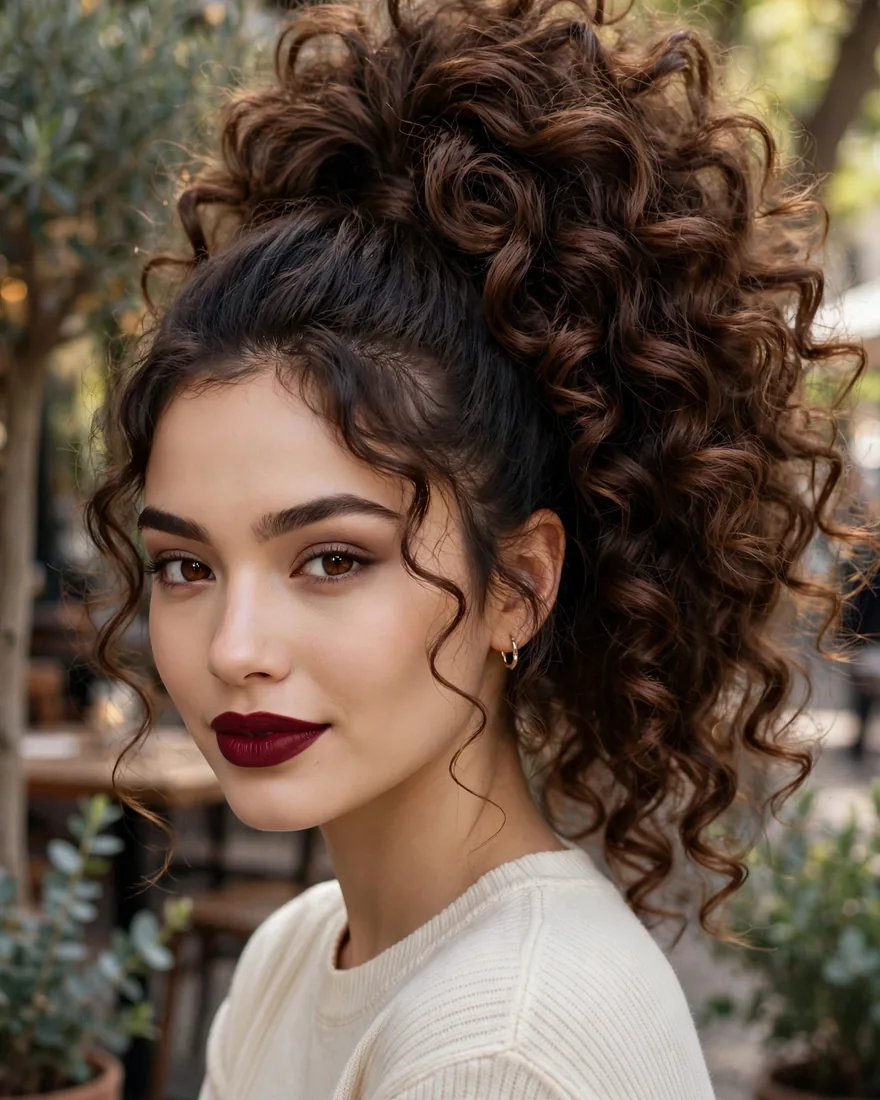 11. Voluminous Curly Ponytail
The pony sits high and the curls do all the talking — stretched, fluffed, and shaped into a halo of volume. The trick is protecting the curl pattern while getting height, which means working with your texture instead of fighting it. Protective ponytail hairstyles for curly hair all share this principle. For curl-care foundations, see our curly hairstyles guide.
Benefits:
- Maximum volume with zero heat and zero teasing
- The high placement elongates the face beautifully
- Protective when done loosely — ends stay tucked and safe
Pro Tip: Gather curls with your fingers and a satin scrunchie, never a brush. Brushing breaks the curl clumps and turns volume into frizz.
How To Style: On wash day or refreshed curls, flip forward and gather loosely at the crown with a satin scrunchie. Fluff the roots with a pick, arrange the halo with your fingers, and smooth the hairline with edge control. Pineapple it at night to preserve the shape.
Best For: Type 3 and 4 curls; anyone wanting heat-free volume.
12. Braided Box-Braid Ponytail
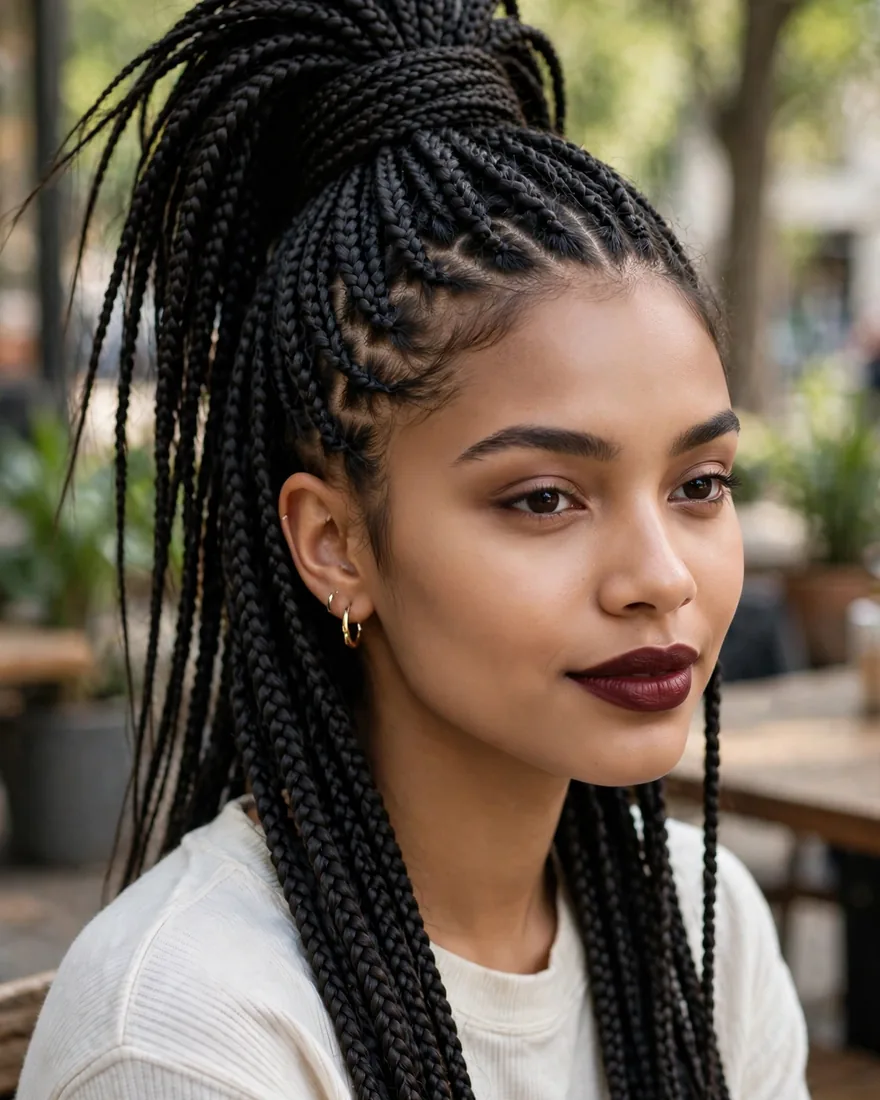 12. Braided Box-Braid Ponytail
Box braids — or any long braided install — gathered into a high ponytail. The braids themselves provide the volume, so the pony looks impossibly full with no teasing at all. This protective take on ponytail hairstyles is a staple because it is both low-maintenance and endlessly versatile: high, low, half-up, or side-swept.
Benefits:
- Instant dramatic fullness from the braids themselves
- Fully protective — your natural hair stays tucked away
- Lasts for weeks with minimal daily styling
Pro Tip: Protective ponytail hairstyles carry real weight, so respect it: do not pull the pony tight at the hairline — the combined weight of the braids plus tight tension is what causes edge breakage. Secure firmly but not aggressively.
How To Style: Gather the braids at your chosen height and wrap a large scrunchie or a braided section around the base. Arrange the braids over the shoulders or let them fall down the back. Refresh the scalp with a light oil as needed.
Best For: Box braids, knotless braids, or long faux locs.
13. Ribbon-Tied Ponytail
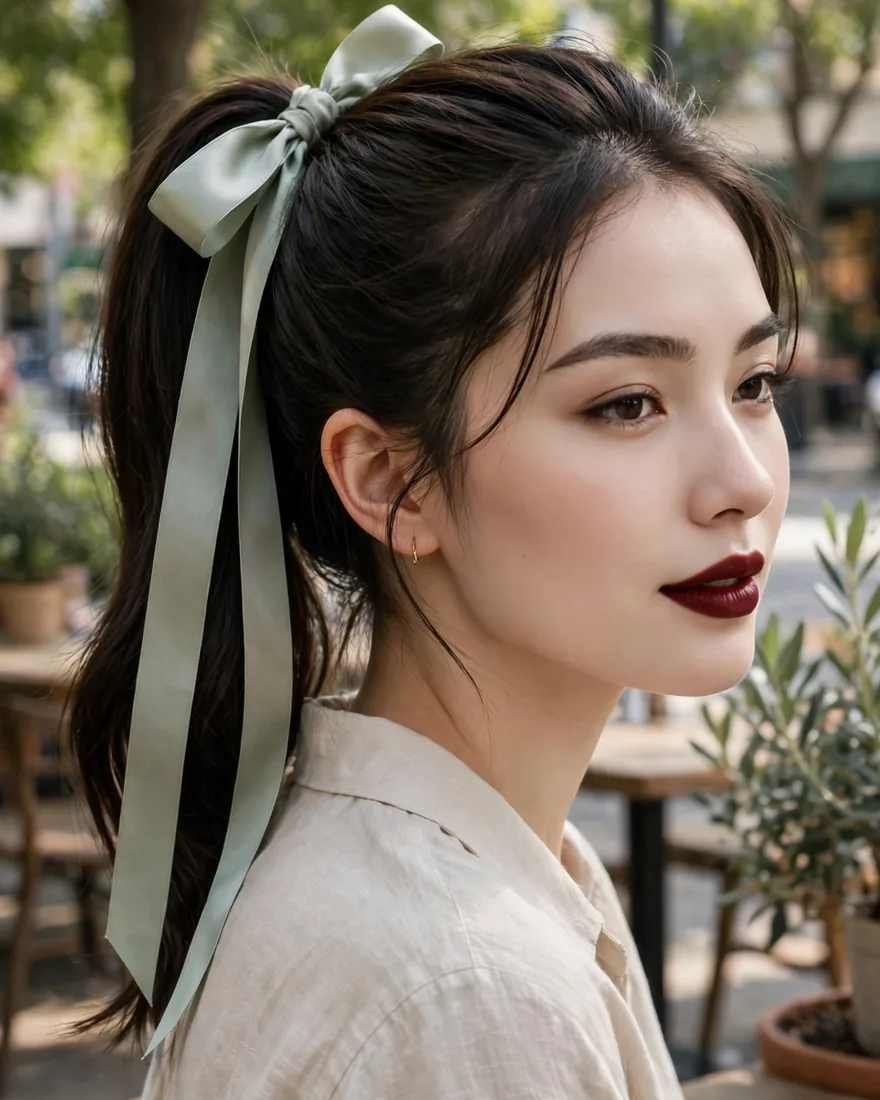 13. Ribbon-Tied Ponytail
A simple pony finished with a ribbon — tied in a bow, wrapped around the base, or woven down the tail. It is the easiest way to make the most basic ponytail hairstyles look considered, and it costs almost nothing. The ribbon does the styling work that accessories usually do.
Benefits:
- Instantly elevates a plain ponytail for events
- Cheapest styling upgrade there is — one ribbon, endless uses
- The soft tie is gentler on hair than an extra elastic
Pro Tip: Match the ribbon width to your hair’s thickness. Thin ribbons disappear in thick hair; wide ribbons overwhelm fine hair.
How To Style: Secure your pony as usual, then tie a ribbon around the base in a bow, letting the ends hang down the tail. For a woven look, tie the ribbon at the base and braid it into a three-strand plait down the tail.
Best For: Parties, holidays, weddings; all hair types.
14. Sleek Middle-Part Pony
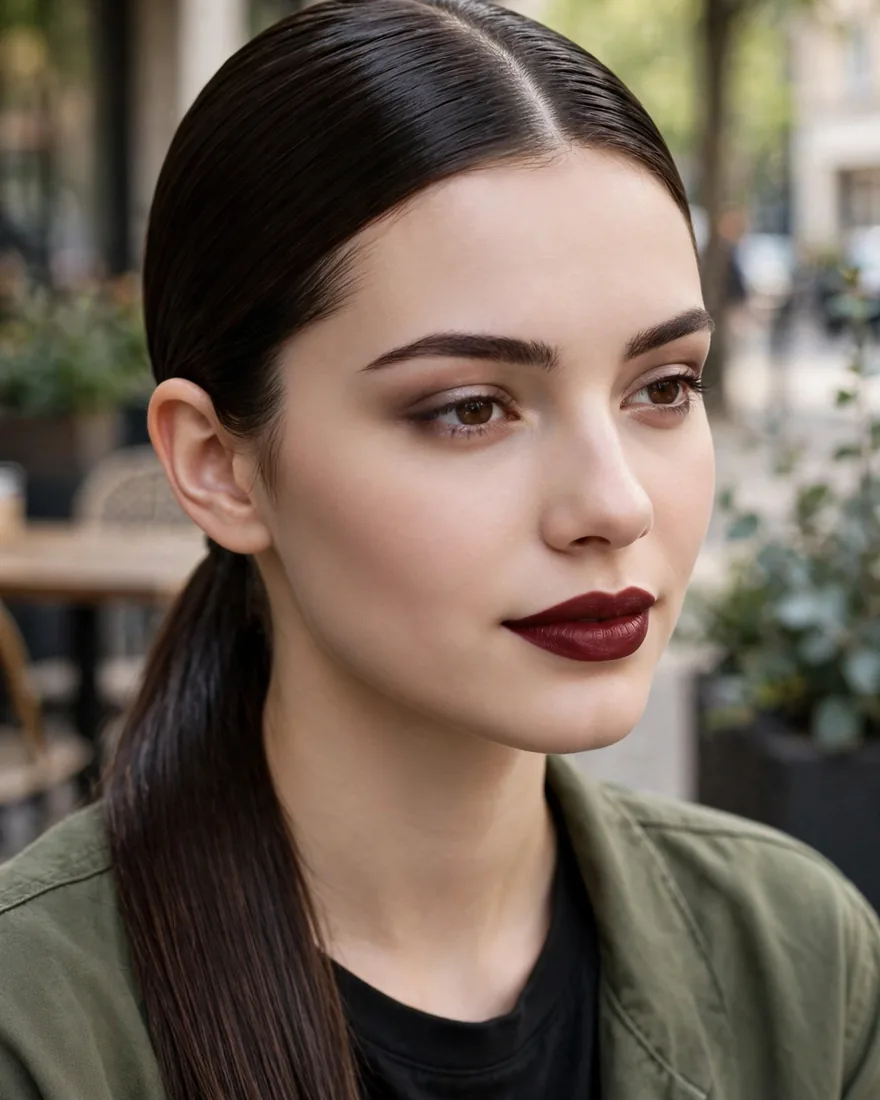 14. Sleek Middle-Part Pony
Dead-center part, flat roots, and a low-to-mid pony — the editorial minimalist pony. It is severe in the best way: clean lines, no volume games, just precision. The key is genuinely straight, smooth hair, so start with our straight hair smoothing routine if your texture fights the sleekness.
Benefits:
- The sharpest, most modern silhouette of all ponytail hairstyles
- Makes cheekbones and jawline the focal point
- Photographs like a fashion editorial
Pro Tip: Flat-iron the roots in the direction of the sweep before gathering. Roots that are only brushed — not ironed — puff back up within the hour.
How To Style: Part precisely down the middle with a tail comb. Smooth both sides back with a boar-bristle brush and light gel, gather low at the nape or mid-head, and wrap the base. Run a flat iron over the tail for a glass finish.
Best For: Straight or straightened hair; oval and oblong faces.
How the 14 ponytail hairstyles compare at a glance:
| Style | Best Occasion | Effort Level |
|---|---|---|
| Sleek High Ponytail | Night out, events | Medium |
| Low Side Ponytail | Casual days, errands | Low |
| Bubble Ponytail | Festivals, parties | Low |
| Braided Crown Ponytail | Active days, humidity | Medium |
| Messy Textured Ponytail | Second-day hair | Low |
| Wrapped-Base Low Pony | Office, weddings | Low |
| Double Dutch Into Ponytail | Gym, sports, travel | Medium |
| Half-Up Ponytail | Everyday, short hair | Low |
| Fishtail Ponytail | Outdoor days, boho events | Medium |
| Twisted Rope Ponytail | Work, minimal looks | Low |
| Voluminous Curly Ponytail | Heat-free volume days | Medium |
| Braided Box-Braid Ponytail | Protective styling weeks | Low |
| Ribbon-Tied Ponytail | Parties, holidays | Low |
| Sleek Middle-Part Pony | Editorial, formal looks | Medium |
How to Choose the Right Ponytail
Ponytail placement is a face-shape decision first and a style decision second. The height of the pony and where you part your hair change the proportions of your face more than the pony style itself — get the placement right and almost any of these 14 ponytail hairstyles will flatter you.
Round faces want height: a high pony with volume at the crown elongates the face, and a middle or deep side part adds angles. Avoid low, flat ponies that widen the cheeks. Oval faces can wear anything, but the sleek high pony and middle-part pony show off balanced proportions best. Square faces soften with side ponies and face-framing pieces that break up the jawline — skip severe center parts. Heart faces balance a wider forehead with low or side ponies that add fullness below the ears, while a high pony with volume at the sides (not just the top) works too.
Hair length sets your real options. Long hair can hold any of the 14, but heavy hair needs the no-sag anchoring below. Medium hair suits every style here. Short hair (lob and bob) should stick to the half-up pony, wrapped-base low pony, and low side pony — styles that do not demand length to look finished. For fine hair, the bubble pony, messy textured pony, and the double-ponytail thickness trick in the next sections are your best friends.
The No-Sag Ponytail Fix
Ponytails sag for one reason: gravity plus a single elastic fighting the full weight of your hair. The fix is a system, not a trick. First, anchor with two elastics stacked at the base instead of one — the second elastic grips the first and stops the slide. Second, place the pony while your head is tilted slightly back; gathering with your chin down sets the elastic low, and it only droops from there.
For heavy or long hair, add a hidden support: slide two bobby pins vertically into the underside of the pony, crossed like an X, pushing up into the elastic. The pins act as a shelf. Alternatively, split the pony into a top and bottom section, secure the bottom half first, then the top half over it — the double-ponytail method — so no single elastic carries the full weight. Braided bases (the crown braid, double Dutch) solve sagging structurally, which is why they are the most reliable ponytail hairstyles for all-day wear.
What not to do: do not just tighten the same elastic harder. Overtightening causes the tension headaches and hairline breakage that give ponytails a bad name, and it still sags — a stretched elastic cannot grip. If your pony still droops, the elastic is worn out. A fresh, thick elastic outperforms any trick.
Damage-Free Ponytails and the Thickness Trick
Wearing ponytails every day can damage hair — but the damage comes from habits, not from the style itself. Constant tight ponies in the same spot cause traction alopecia (gradual hairline thinning) and tension headaches. The prevention is simple: vary the placement daily (high one day, low the next), never sleep in a pony, and switch to fabric scrunchies or spiral ties instead of thin rubber elastics, which snap strands on removal.
For fine or thin hair, the double-ponytail trick is the single best volume hack among ponytail hairstyles. Secure the top half of your hair into a pony, then secure the bottom half into a second pony directly underneath it. The top pony sits on the bottom one like a shelf, and from the front the tail reads twice as thick. Backcomb the crown lightly before the top pony for extra lift, and choose the bubble pony or messy textured pony — both are designed to fake fullness.
One honest limit: if your hairline is already thinning, skip daily high ponies entirely and rotate in the low side pony and wrapped-base low pony, which put almost no pull on the hairline. A ponytail should never hurt. Pain is your scalp telling you the tension is too high — loosen it.
Frequently Asked Questions About Ponytail Hairstyles
How do I keep my ponytail from sagging during the day?
Use two stacked elastics instead of one, gather the pony with your head tilted slightly back, and for heavy hair add two bobby pins crossed in an X under the base as a shelf. Braided bases like the crown braid or double Dutch prevent sagging structurally. Replace stretched-out elastics — a fresh thick elastic grips far better than any trick.
What is the best ponytail height for my face shape?
Round faces suit high ponies with crown volume, which elongate the face. Oval faces can wear any height. Square faces soften with side ponies and face-framing pieces. Heart faces balance best with low or side ponies that add fullness below the ears. The parting matters too — deep side parts flatter square faces, while middle parts suit oval and oblong faces.
Are ponytails damaging to hair?
They can be if worn tight in the same spot every day, which can cause traction alopecia and tension headaches. Prevent damage by varying placement daily, never sleeping in a pony, using fabric scrunchies instead of thin rubber elastics, and keeping tension comfortable — a ponytail should never hurt. Low ponies are the gentlest option for daily wear.
How can I make my ponytail look thicker if I have fine hair?
Try the double-ponytail trick: secure the top half into a pony, then a second pony underneath it — the top sits on the bottom like a shelf and the tail reads twice as thick. The bubble ponytail and messy textured ponytail are also designed to fake fullness. Backcomb the crown lightly and use volumizing powder at the roots before gathering.
Can I wear a ponytail with short hair?
Yes — the half-up ponytail, wrapped-base low pony, and low side ponytail all work on lob and bob lengths. The half-up is the most reliable because it does not require all your hair to reach. Use small clear elastics, and let shorter layers fall naturally around the style rather than forcing them in.
How do I hide the elastic in my ponytail?
Take a half-inch strand from the underside of the pony, wrap it around the base two or three times, and pin it tucked upward into the elastic. The underside strand keeps the top smooth and hides the pins. A ribbon tied around the base works the same way and adds decoration.
What is the best ponytail for the gym?
The double Dutch into ponytail is the most secure of all gym-friendly ponytail hairstyles — the braids lock everything in place through any workout. The sleek high ponytail with double elastics is the simpler alternative. Avoid the ribbon-tied and messy textured styles for exercise; they loosen with sweat and movement.
How long can I keep a ponytail in?
For a daytime style, take it down when you get home — all-day-plus-evening wear in one spot stresses the hairline. Never sleep in a ponytail; switch to a loose braid or pineapple instead. If you wear ponytails daily, rotate the height and position so the same follicles are not under tension every day.
A good ponytail is not about the style you pick — it is about matching placement to your face, anchoring against sag, and keeping tension comfortable enough to wear all day. Start with the no-sag system and the face-shape rules above, and any of these 14 ponytail hairstyles will hold from morning to night without the headache.