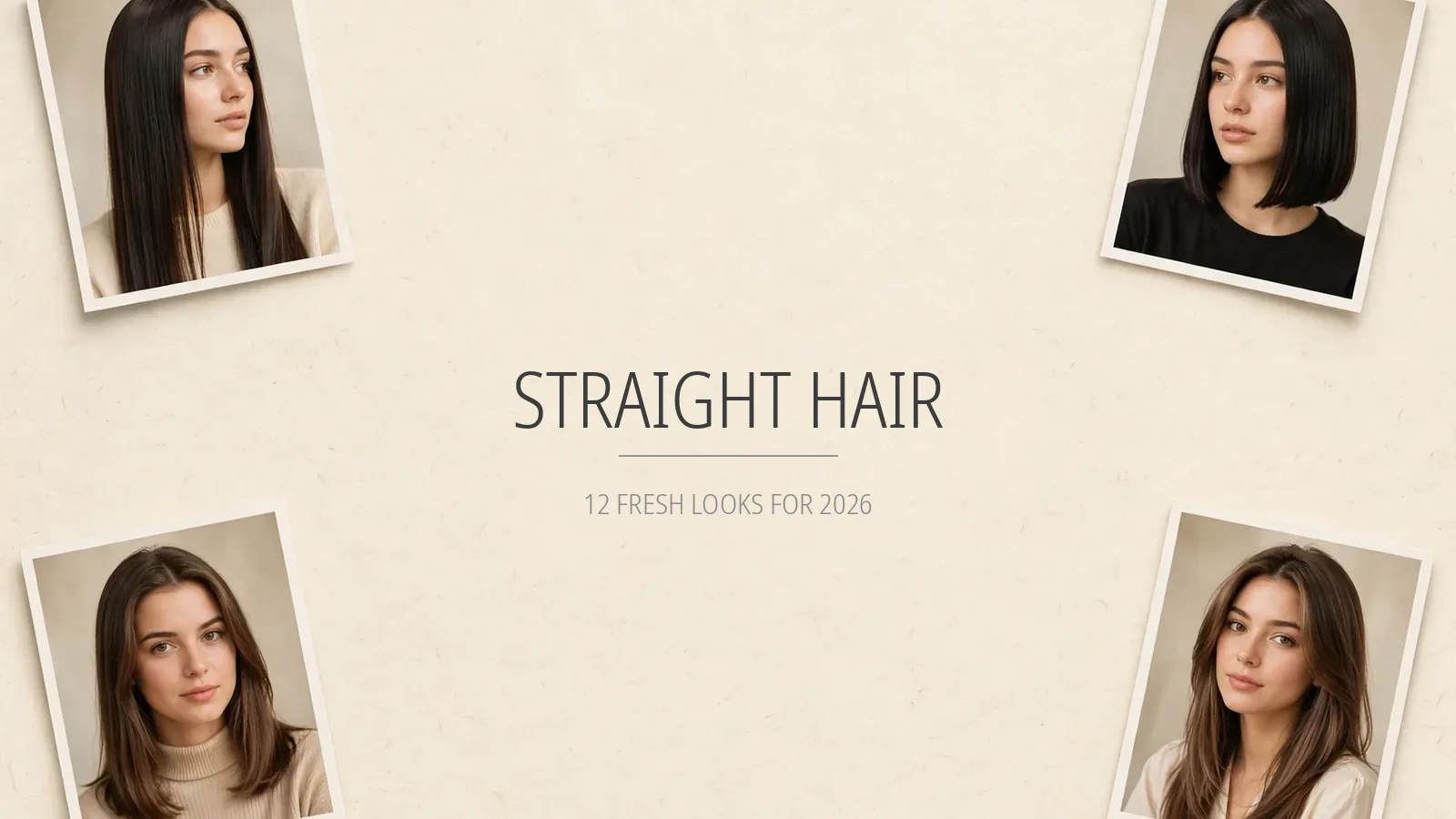
Straight Hair – 12 Looks That Feel Fresh and Modern
Straight hair is supposed to be the easy hair — the kind that just falls into place while everyone else fights frizz and tangles. But if you actually have it, you know the truth: by noon your roots are flat against your scalp, by day two the ends look limp and a little greasy, and that glossy mirror-finish you see in photos seems to require a flat iron, three products, and a level of patience nobody warns you about. It doesn’t misbehave loudly; it just quietly goes lifeless, and fixing that is its own skill.
The good news is that straight hair is more versatile than its reputation suggests. The trick is matching the cut and styling approach to your actual hair density — fine hair and thick hair have almost opposite problems — and choosing looks that work with your routine instead of against it. Below are 12 straight hair looks that feel fresh and modern, each with honest guidance on who it suits, how much effort it takes, and how to keep it healthy.
Table of Contents
- 12 Straight Hair Looks That Feel Fresh and Modern
- How to Choose the Right Straight Hair Look for Fine vs Thick Hair
- How to Keep Straight Hair Healthy
- Straight Hair FAQs
- How do I keep my hair from going flat by midday?
- How often should I wash straight hair?
- Is daily flat-ironing really that damaging?
- What’s the best way to get volume in fine hair without heat?
- Why does my straight hair get oily so fast?
- Can I get sleek hair without a flat iron?
- How do I make second-day hair look fresh?
- Does straight hair need trims more often?
12 Straight Hair Looks That Feel Fresh and Modern
1. Glass-Like Pin-Straight

The ultra-polished, mirror-shine finish where every strand lies in the same direction and the surface reflects light like glass. This is the red-carpet version of the look — dramatic, minimal, and completely unapologetic about how much work went into looking effortless.
Benefits:
- Maximum shine — the smoothest surface reflects the most light
- Photographs beautifully; the clean lines read expensive
- Works as a statement look for events with minimal accessories needed
Pro Tip: The “glass” effect comes from the ends, not the roots. Run the flat iron over the last two inches twice, slowly, and finish with a pea-sized amount of silicone serum pressed only onto the ends — serum at the roots kills the look in an hour.
How To Style: Blow-dry with a paddle brush pulling straight down, then flat-iron in thin sections at 180–200°C with a heat protectant. Set with a cool shot from the dryer to lock the cuticle flat.
Best For: Medium to thick straight hair with minimal damage; fine hair can pull it off but needs volumizing prep at the roots so it doesn’t look plastered.
2. Sleek Bob
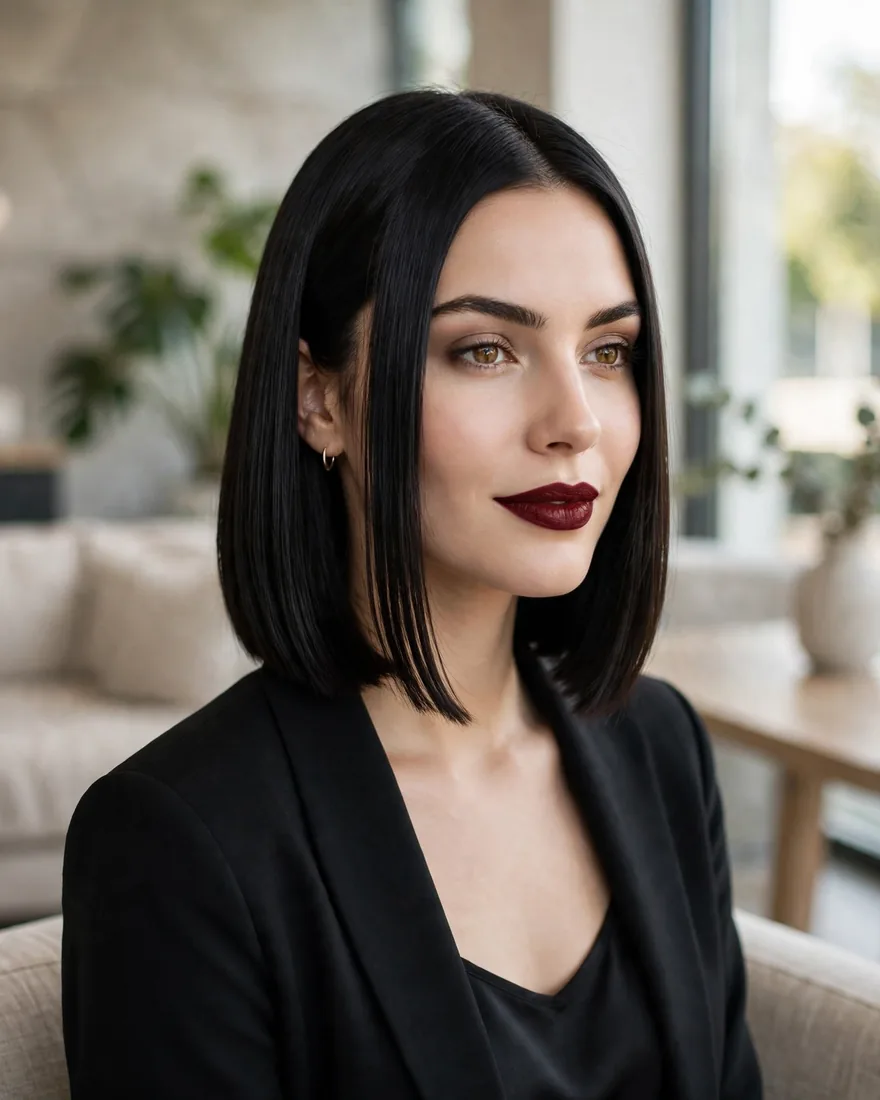
A chin-to-jaw-length bob worn pin-straight with tucked or flipped ends, giving structure and sharpness that longer lengths can’t. The shorter length means the hair’s own weight works for you instead of dragging everything flat, which makes this one of the easiest styles to keep looking intentional.
Benefits:
- Shorter length = less flat-ironing time and less heat damage
- Natural swing and movement that longer lengths often lack
- Reads polished even on second-day hair
Pro Tip: Ask for the perimeter to be cut blunt but the interior lightly textured — a fully blunt bob on very thick hair can look like a helmet; interior texture lets it move.
How To Style: Blow-dry with a round brush for a slight under-curve, or flat-iron and flick the ends under. A light-hold spray keeps flyaways down without stiffness.
Best For: Fine to medium straight hair that goes limp at longer lengths; also great for thick hair that needs shape. See our bob haircuts guide for length variations.
3. Long Layered
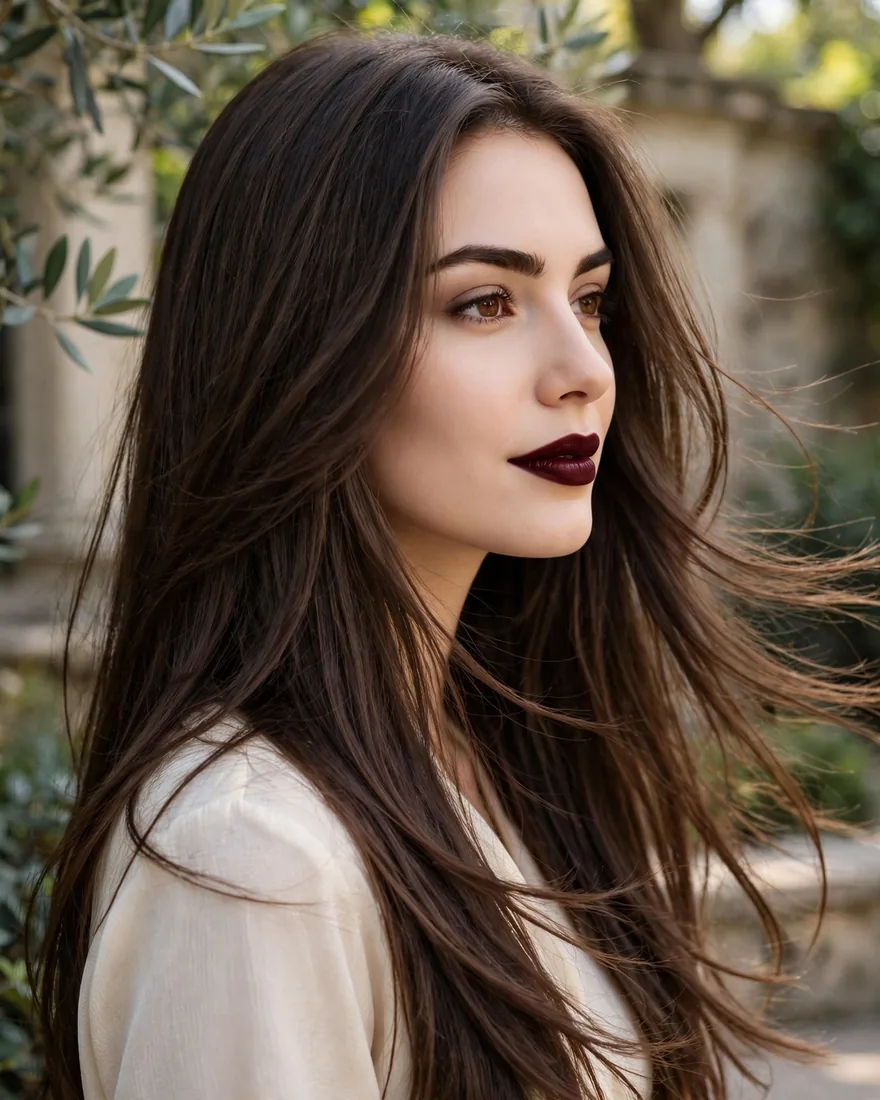
Long hair with soft face-framing layers that keep the length but add movement around the face and ends. Layers are the single most effective fix for the “curtain of hair” problem where one-length long hair hangs like a sheet and shows every bit of flatness.
Benefits:
- Layers create movement without sacrificing length
- Face-framing pieces add shape even when the rest is simple
- Grows out gracefully — no harsh lines between cuts
Pro Tip: Keep the shortest layer at or below the chin. Layers cut too short into long hair flip outward uncontrollably and create a shelf effect that’s hard to style smooth.
How To Style: Blow-dry with a large round brush, rolling the face-framing pieces away from the face. Flat-iron only the pieces that need it rather than the whole head.
Best For: Medium to thick straight hair that needs movement; fine hair should keep layers minimal (two at most). Pair with our long hair care tips and consider layered haircut options if your ends are thinning.
4. Middle-Part 90s

The center-parted, all-one-length look borrowed from 90s minimalism — hair parted dead center and worn long and straight with almost no layering. It’s stark, confident, and surprisingly forgiving, because the symmetry draws attention to the overall shape rather than any single imperfection.
Benefits:
- The center part elongates round and square faces
- Minimal layering means minimal styling decisions
- The 90s revival keeps it feeling current, not dated
Pro Tip: This look lives or dies on the part. Use the tail of a comb to draw it while hair is damp, then blow-dry the roots forward and flat on each side — a wobbly part ruins the whole effect.
How To Style: Straighten from roots to ends, keeping the iron close to the scalp for the first inch to get that flat, tucked-behind-the-ears option. Tuck one or both sides behind the ears for the full 90s feel.
Best For: Medium-density straight hair with a fairly symmetrical face; very fine hair may look sparse with zero layers, and very thick hair needs the weight thinned at the ends.
5. Blunt Ends
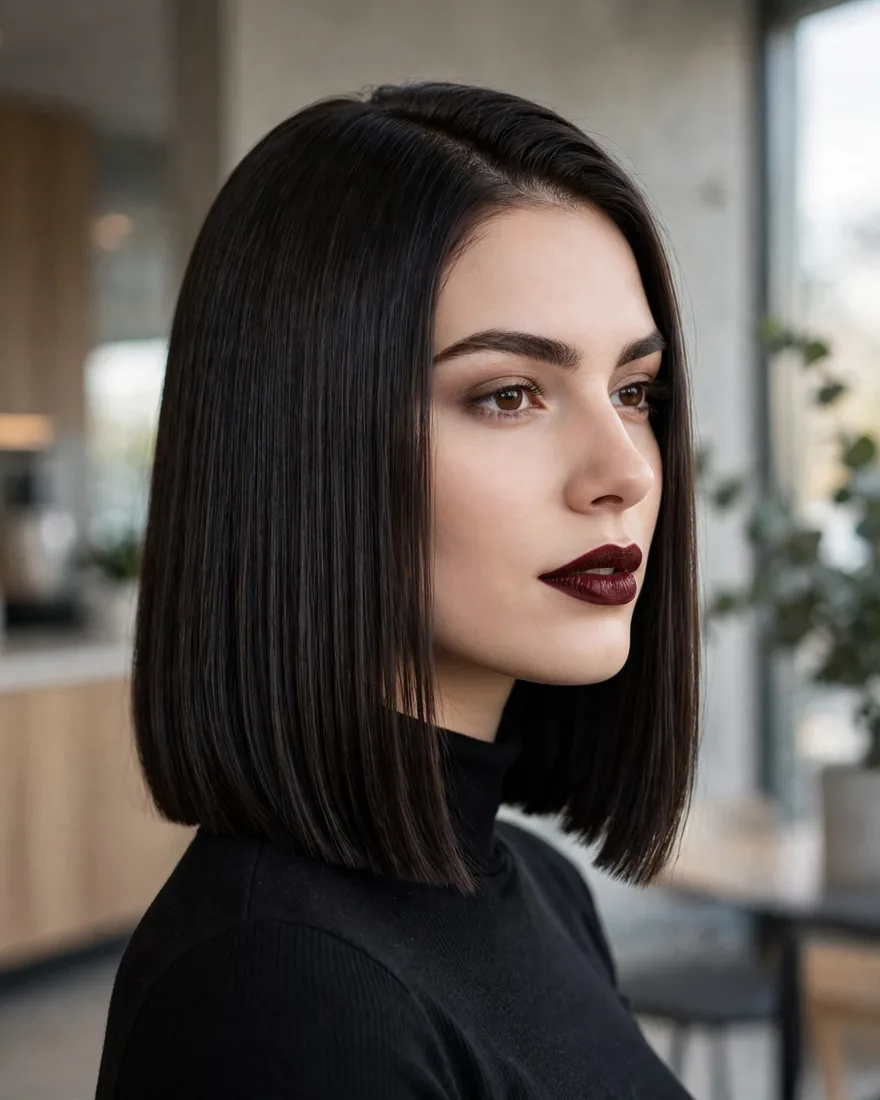
A straight cut across the bottom with zero layering or thinning, so the ends form one thick, clean line. Blunt ends make hair look instantly thicker and healthier — it’s the fastest visual fix for ends that have gone wispy or see-through, and it gives even fine hair a sense of density.
Benefits:
- Creates the illusion of thicker, fuller hair
- The clean line looks deliberate and modern
- Hides split ends between trims better than layered cuts
Pro Tip: Blunt ends show damage honestly — if your ends are fried, the blunt line will highlight it rather than hide it. Get the cut when ends are healthy, and trim every 8–10 weeks to keep the line crisp.
How To Style: Flat-iron the bottom two inches with extra care, pressing the iron firmly so the ends sit perfectly straight. A tiny amount of smoothing cream on the ends prevents them from flipping.
Best For: Fine to medium straight hair that needs the appearance of thickness; thick hair should have the very ends point-cut slightly so the blunt line doesn’t look heavy.
6. Soft Flipped Ends

Straight through the lengths with just the ends flipped outward — a subtle retro nod that adds playfulness without committing to curls or waves. The flip gives hair a finished, styled appearance with about thirty extra seconds of effort, which makes it perfect for days when full straightening feels like too much.
Benefits:
- Adds shape and personality with minimal effort
- The outward flip lifts the ends away from the neck and shoulders
- Works on second-day hair when roots are too flat for a full restyle
Pro Tip: Flip with a flat iron, not a curling iron — clamp the ends and rotate the iron outward as you pull through. A curling iron creates a curl; a flat iron creates the soft bend this look needs.
How To Style: Straighten as usual, then on the final pass, turn the iron outward at the last inch. Set with a light mist of flexible-hold spray.
Best For: Medium-length straight hair (shoulder to collarbone); very long hair’s flip gets weighed down, and very short hair flips into a full curl.
7. Straight with Curtain Bangs

Pin-straight lengths paired with soft, face-framing curtain bangs that part in the middle and sweep to each side. The bangs break up the severity of all-straight lengths and add softness around the face, which is exactly what long straight styles often lack.
Benefits:
- Bangs add interest without changing the overall length
- Face-framing softness flatters most face shapes
- Curtain bangs grow out gracefully into layers
Pro Tip: Style curtain bangs first, while they’re dampest — they set fastest and they’re the part everyone sees. Blow-dry them with a round brush pulling outward and away from the face on each side.
How To Style: Straighten the lengths, then give the bangs their own quick pass with the flat iron, bending them slightly outward. A dry texture spray at the roots of the bangs keeps them from sticking to the forehead.
Best For: Medium to thick straight hair; fine hair can work but the bangs need to stay light to avoid looking stringy. Browse types of bangs if you’re deciding between curtain and other fringe styles.
8. Half-Up Sleek
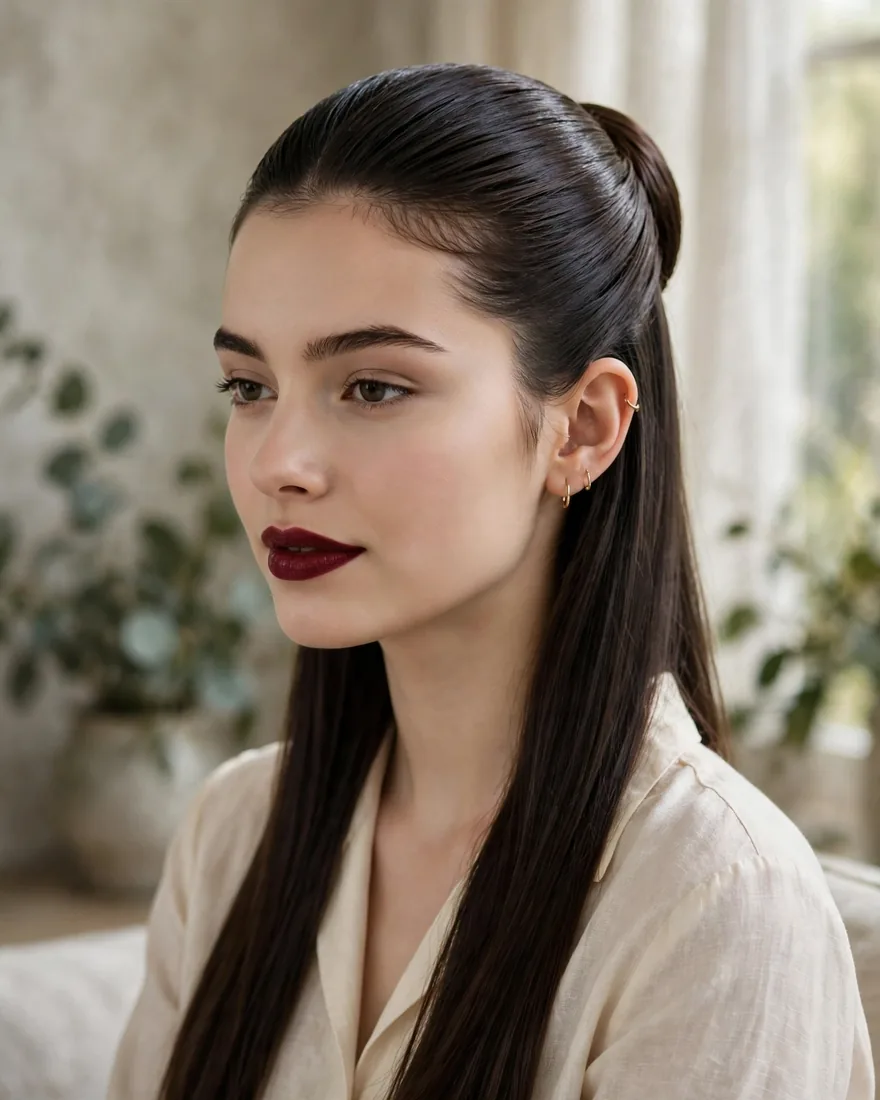
The top half pulled back smooth and secured, with the bottom half left long and straight. It solves the two biggest straight-hair complaints at once — flat roots (the pull-back creates tension and lift) and hair in the face — while keeping the length on display.
Benefits:
- Instant root lift from the tension of the pull-back
- Keeps hair off the face without a full updo
- Looks polished in under five minutes
Pro Tip: Tease the crown lightly before pulling back, then smooth the top layer over the teasing with a boar-bristle brush. The hidden volume lasts all day; the smooth top keeps it looking sleek, not messy.
How To Style: Straighten everything first. Gather the top section from temple to temple, smooth it back, and secure with a small elastic or clip. Flat-iron the bottom half for a uniform finish.
Best For: Medium to long straight hair of any density; very fine hair should keep the half-up section small so it doesn’t expose a sparse crown. See ponytail hairstyles for more pulled-back variations.
9. Low Ponytail Polished
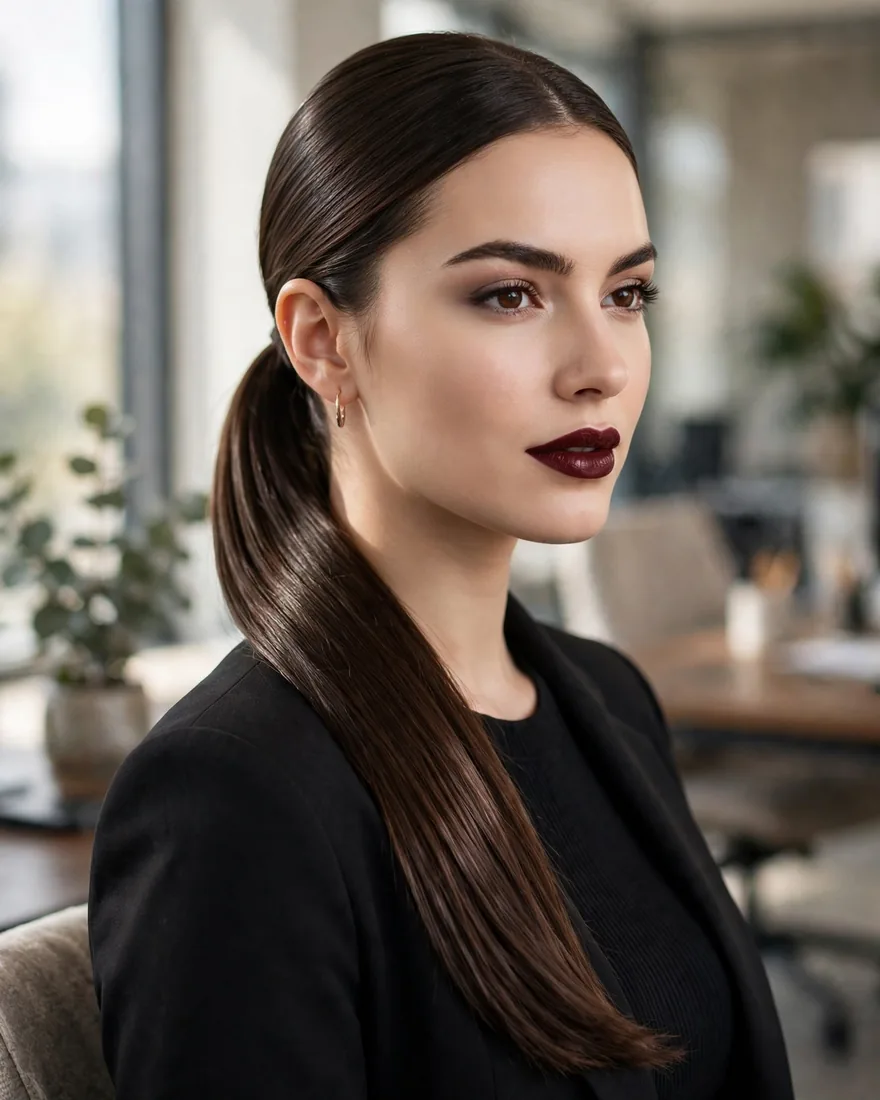
A low, sleek ponytail worn at the nape with every strand smoothed into place — the minimalist’s answer to a bad hair day. When straight hair is too oily at the roots or too flat to wear down, a polished low pony turns the problem into the style, since sleekness is the whole point.
Benefits:
- The ultimate second- and third-day hairstyle
- Takes under three minutes once the smoothing technique is down
- Looks intentional and chic, not like a gym ponytail
Pro Tip: Wrap a small strand of hair around the elastic and pin it underneath — it hides the band and instantly elevates the look from casual to polished. Finish with a smoothing brush over the crown to catch flyaways.
How To Style: Brush everything straight back (no part, or a clean center part), smooth with a flat iron if needed, and secure low at the nape. Run a tiny amount of gel or pomade over the hairline for a glassy finish.
Best For: All densities; fine hair gets a sleek look without needing volume, and thick hair is contained and controlled.
10. Straight with Accent Pin
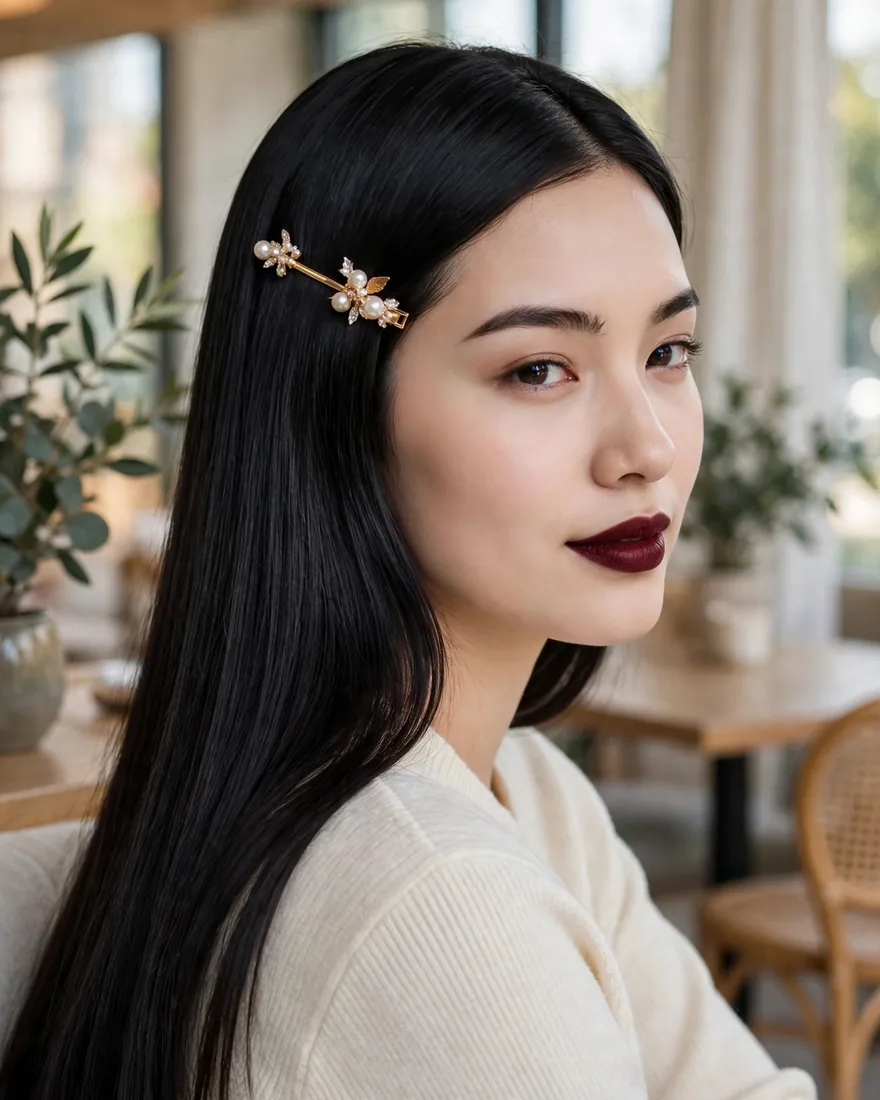
Hair worn down with one side pinned back using a decorative clip, barrette, or bobby pins — a tiny detail that transforms plain lengths into a styled look. It’s the lowest-effort upgrade on this list and genuinely useful for keeping hair out of the face on windy days.
Benefits:
- Zero heat required — works on air-dried hair
- One accessory does all the styling work
- Asymmetrical pinning adds visual interest to simple lengths
Pro Tip: Pin on the side you part away from, pulling the hair flat against the head before securing. If the pinned section poufs out, the look reads messy instead of minimal.
How To Style: Straighten or smooth as usual, sweep one side back behind the ear, and secure with your chosen pin just above the ear. Leave the other side down for contrast.
Best For: Fine to medium straight hair; very thick hair may need two pins or a stronger clip to hold the section flat.
11. Side-Part Glossy
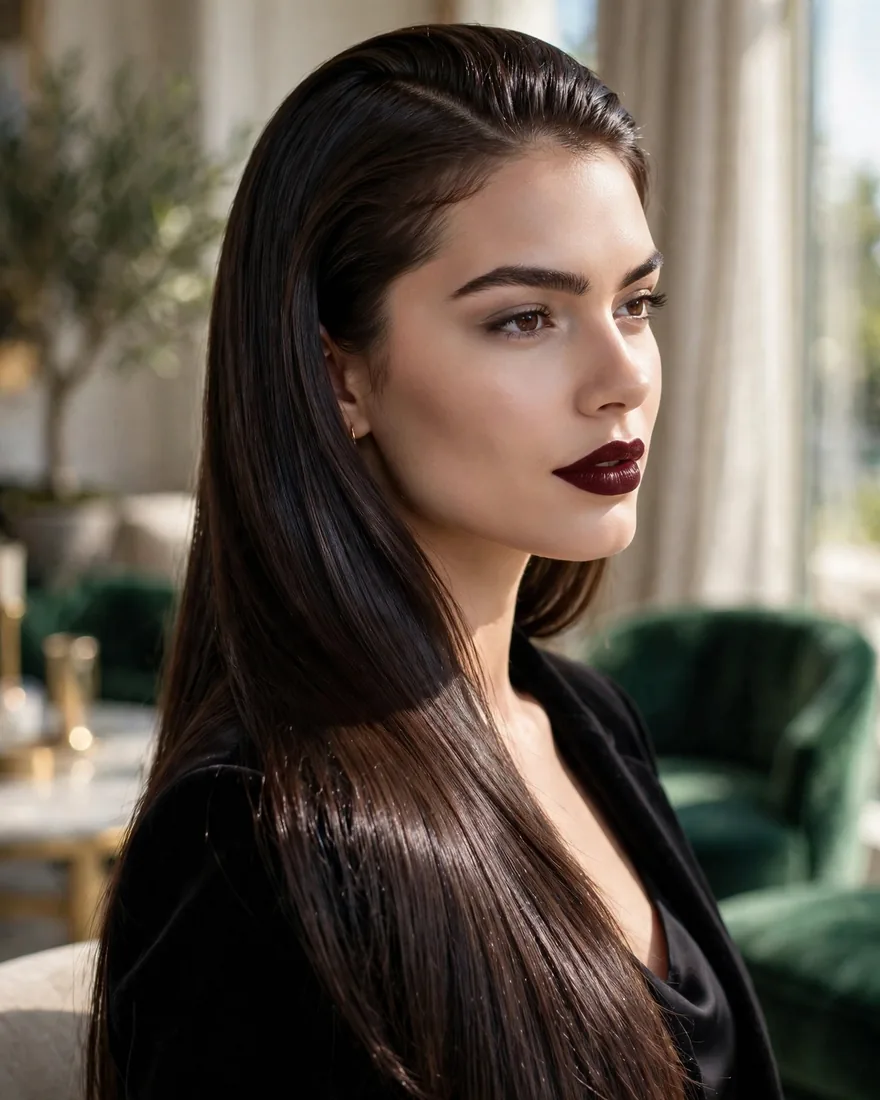
A deep side part with lengths worn straight and glossy, creating dramatic asymmetry and a sweep of hair across the forehead. The deep part adds instant volume at the crown — gravity pulls the larger section up and over — which makes this the best part choice for fine hair that falls flat with a middle part.
Benefits:
- Deep side parts create natural crown volume
- The asymmetry adds drama without any cutting
- Glossy finish makes the sweep look luxurious
Pro Tip: Train the part by blow-drying the roots in the side-part direction while damp — roots have memory, and a week of consistent drying in the new direction makes the part fall naturally.
How To Style: Create a deep part (two to three inches off-center), blow-dry the roots up and over for lift, then flat-iron the lengths. Finish with a shine spray, focusing on the large swept section.
Best For: Fine to medium straight hair needing volume; round faces benefit from the diagonal line the deep part creates.
12. Air-Dried Natural Straight
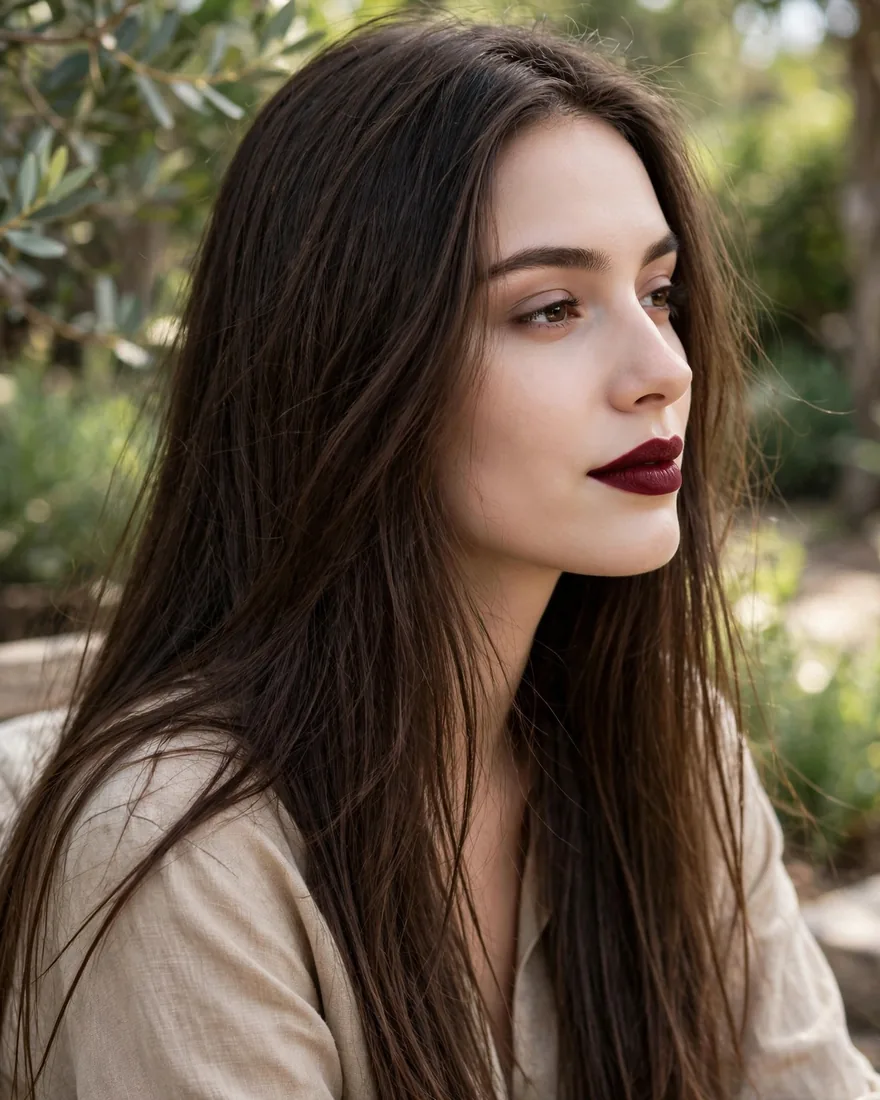
Hair worn in its natural air-dried state — no flat iron, no blow-dryer, just the texture your hair actually has. For naturally straight texture, this is the healthiest option and, with the right products, it can look soft and touchable rather than frizzy or undefined.
Benefits:
- Zero heat damage — the healthiest way to wear your hair
- Saves significant time on wash days
- Natural texture often has more body than flat-ironed hair
Pro Tip: The secret is applying a leave-in conditioner and a pea-sized amount of smoothing cream to soaking-wet hair, then not touching it until fully dry. Touching air-drying hair creates frizz; leaving it alone lets it settle smooth.
How To Style: After washing, gently squeeze out water with a microfiber towel, apply leave-in and smoothing cream, and let dry completely. Once dry, brush through once with a boar-bristle brush to polish.
Best For: Naturally straight hair of any density; if your natural texture has wave, see our wavy hair guide instead of fighting it straight.
How the 12 looks compare at a glance:
| Look | Best Density | Daily Effort |
|---|---|---|
| Glass-Like Pin-Straight | Medium to thick | High — full flat-iron routine |
| Sleek Bob | Fine to medium | Low — quick shape and go |
| Long Layered | Medium to thick | Medium — layers need directing |
| Middle-Part 90s | Medium | Medium — the part must be precise |
| Blunt Ends | Fine to medium | Low — the cut does the work |
| Soft Flipped Ends | Medium | Low — one extra iron pass |
| Straight with Curtain Bangs | Medium to thick | Medium — bangs need daily attention |
| Half-Up Sleek | Any | Low — under five minutes |
| Low Ponytail Polished | Any | Minimal — under three minutes |
| Straight with Accent Pin | Fine to medium | Minimal — no heat needed |
| Side-Part Glossy | Fine to medium | Low — part training pays off |
| Air-Dried Natural Straight | Any | Minimal — wash and leave it |
How to Choose the Right Straight Hair Look for Fine vs Thick Hair
Fine hair and thick hair look like the same thing from a distance, but they need almost opposite strategies. Fine hair’s enemy is flatness — there’s not enough of it for gravity to work with, so it collapses against the scalp and shows oil within hours. Thick hair’s enemy is weight — there’s so much of it that it pulls itself flat, takes forever to dry and straighten, and can look like a solid mass without interior shape.
If your hair is fine and straight, choose cuts that manufacture the appearance of density: blunt ends, bobs, and deep side parts. Avoid long one-length hair past the chest — it gets stringy no matter what you do — and be cautious with too many layers, which remove the very weight that gives fine hair its body. For volume without heat, the most reliable tricks are blow-drying roots upside down (even with just a regular dryer, no round brush needed), sleeping with hair loosely piled on top of the head, and using dry shampoo at the roots on clean hair as a preventative texturizer rather than waiting until it’s oily. Our haircuts for thin hair guide goes deeper into density-building cuts.
If your hair is thick and straight, choose cuts that remove weight strategically: long layers, interior thinning, and bobs with textured interiors. Avoid blunt one-length cuts at long lengths unless the ends are point-cut — a solid sheet of thick hair looks heavy rather than sleek. For manageability, straighten in smaller sections than you think you need (half-inch sections, not inch-wide), because thick hair hides unstraightened strands inside that puff out by afternoon. And if your “straight” hair has an underlying wave that you’re constantly fighting, consider whether embracing it with the right cut would save you an hour a day — our wavy hair guide covers the transition honestly.
How to Keep Straight Hair Healthy
Here’s the honest tradeoff nobody puts on the product label: the sleeker you want your hair, the more heat it usually takes, and heat is cumulative damage. Daily flat-ironing at high temperatures will, over months, create the exact problems you’re ironing to hide — dry ends, breakage, and a frizzy halo of broken hairs around the crown. That doesn’t mean you can’t have sleek hair; it means you need a strategy that doesn’t rely on maximum heat every single day.
The practical middle ground: reserve the full flat-iron routine for 2–3 days a week and use heat-free styling on the other days (low ponytails, half-up styles, accent pins, air-drying). When you do use heat, a protectant is non-negotiable, 180°C is enough for most hair — the jump to 230°C adds damage far faster than it adds smoothness — and one slow pass beats three fast ones. Keratin treatments are the other common shortcut; they genuinely reduce daily heat needs for months, but they grow out with a visible texture line, they don’t suit very fine hair (they can make it look even flatter), and the formaldehyde-free versions still involve significant chemical processing, so go in with realistic expectations.
Washing cadence matters more for straight hair than any other texture because oil travels visibly down a straight strand. Most straight hair does best washed every 2–3 days — daily washing strips the scalp and triggers rebound oil production, while stretching past day three usually means limp, separated strands no product can fully rescue. The dry shampoo strategy that actually works: apply it at night before bed, not in the morning. Overnight application gives the powder hours to absorb oil, and you wake up with volume instead of white residue. On oil control generally, touch your hair less during the day (hands transfer oil), keep conditioner off the roots entirely, and rinse with cool water to seal the cuticle. And on length: the longer your hair, the older and more damaged the ends are — if your ends won’t stay smooth no matter what you try, they’re telling you they need cutting, not more product. Shorter styles like a short hair cut remove years of accumulated damage in one appointment and make every styling routine faster.
Straight Hair FAQs
How do I keep my hair from going flat by midday?
Flatness by midday is usually a roots problem, not a lengths problem. Blow-dry your roots lifting upward (even roughly, with your fingers) instead of pulling them flat, and apply dry shampoo or volumizing powder to the roots when hair is freshly washed — as prevention, not rescue. Avoid heavy serums and oils anywhere above ear level; they migrate down and weigh the crown flat within hours.
How often should I wash straight hair?
Every 2–3 days works for most hair. Daily washing strips natural oils and can trigger the scalp to overproduce oil in response, making the problem worse. If you’re currently a daily washer, transition gradually — your scalp typically adjusts its oil production within two to three weeks of less frequent washing.
Is daily flat-ironing really that damaging?
Yes, over time. Heat damage is cumulative — each pass degrades the hair’s protein structure slightly, and daily use adds up to dryness, breakage, and split ends within months. You can reduce the harm significantly with heat protectant, keeping the temperature at or below 180°C, doing one slow pass instead of several fast ones, and giving hair heat-free days with styles like low ponytails or air-drying.
What’s the best way to get volume in fine hair without heat?
The most reliable heat-free volume trick is changing how hair dries: flip it upside down while air-drying, or sleep with it loosely piled in a high, loose bun. Dry shampoo applied to clean roots adds grit and lift, and a deep side part creates instant crown volume through gravity. Velcro rollers at the crown for 15 minutes while you do makeup also work without any heat.
Why does my straight hair get oily so fast?
Oil (sebum) travels down a straight strand with nothing to slow it — on curly or wavy hair, the twists and bends act as speed bumps. So it simply shows oil faster; it’s not a sign anything is wrong. Washing every 2–3 days, keeping conditioner off the roots, touching hair less during the day, and applying dry shampoo the night before (not the morning of) all meaningfully slow visible oiliness.
Can I get sleek hair without a flat iron?
Mostly, yes. A blow-dryer with a paddle brush or concentrator nozzle gets hair 85–90% of the way to flat-iron sleekness, especially on naturally straight texture. For the final polish, a boar-bristle brush run through cooled hair smooths the cuticle. You’ll rarely match the mirror finish of a flat iron, but for everyday sleekness the dryer is enough — and your ends will thank you.
How do I make second-day hair look fresh?
Target the roots, not the lengths — second-day hair almost always looks fine from the ears down. Refresh the crown with dry shampoo (applied the night before works best), smooth the hairline with a damp brush or a tiny amount of smoothing cream, and consider a half-up style or low ponytail, which turns flat roots into intentional sleekness. A quick pass of the flat iron just on the face-framing pieces also fakes a full restyle in two minutes.
Does straight hair need trims more often?
Straight hair shows damage more visibly than textured hair — split ends and uneven lengths have nowhere to hide. Every 8–12 weeks is the honest range for most hair, with blunt cuts needing the more frequent end of that range to keep their crisp line. If your ends refuse to stay smooth no matter what products you use, that’s the signal: the damage is beyond what styling can fix, and only scissors will solve it.
Straight hair rewards strategy over effort. The people with the glossiest, freshest-looking hair aren’t necessarily spending the most time on it — they’ve just matched the cut to their density, learned which heat-free styles rescue a flat day, and stopped fighting their hair’s actual texture. Pick one or two looks from this list that fit your routine, give your ends the trims they’re asking for, and let the simplicity of straight hair work for you instead of against you.