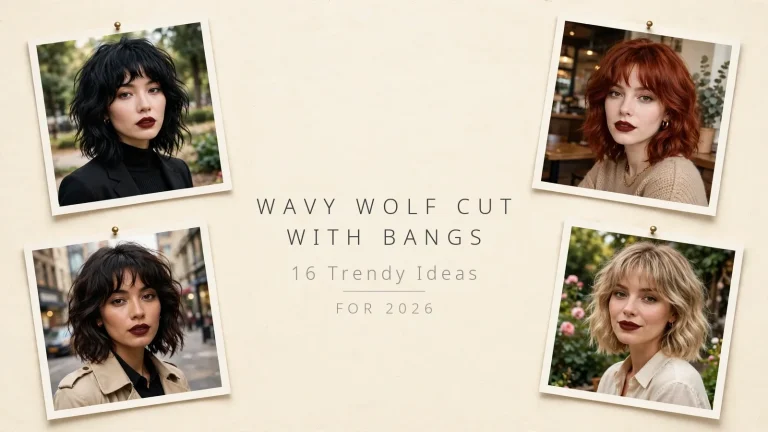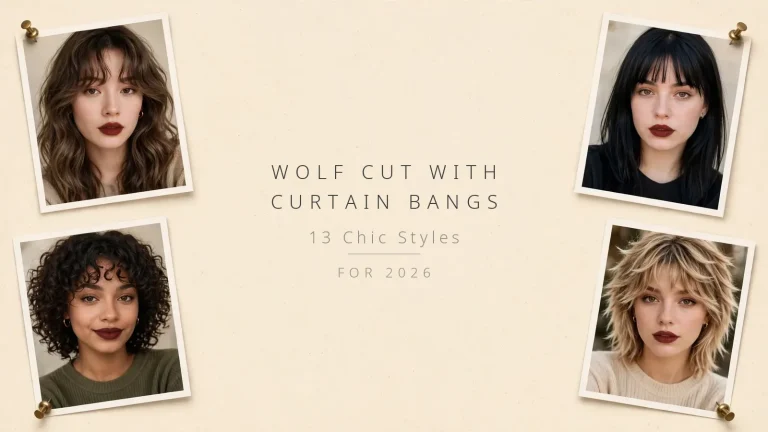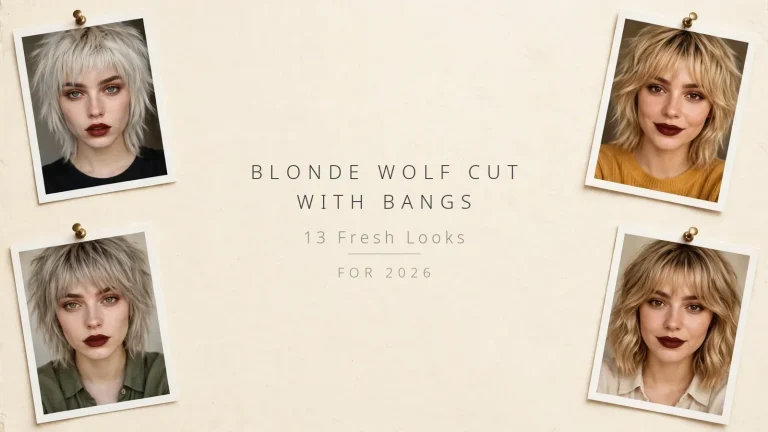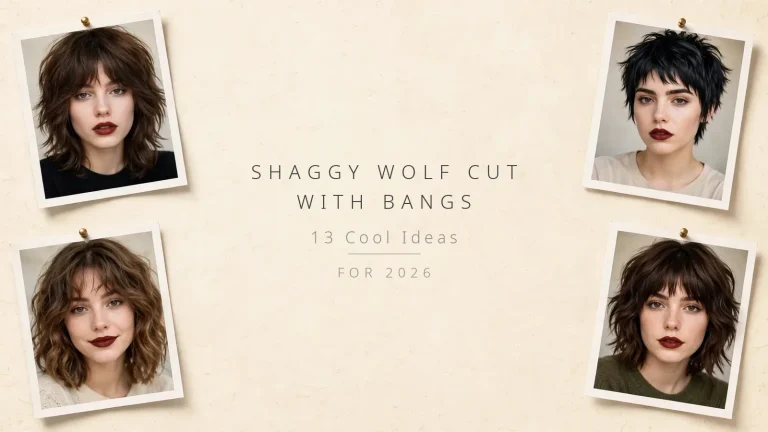
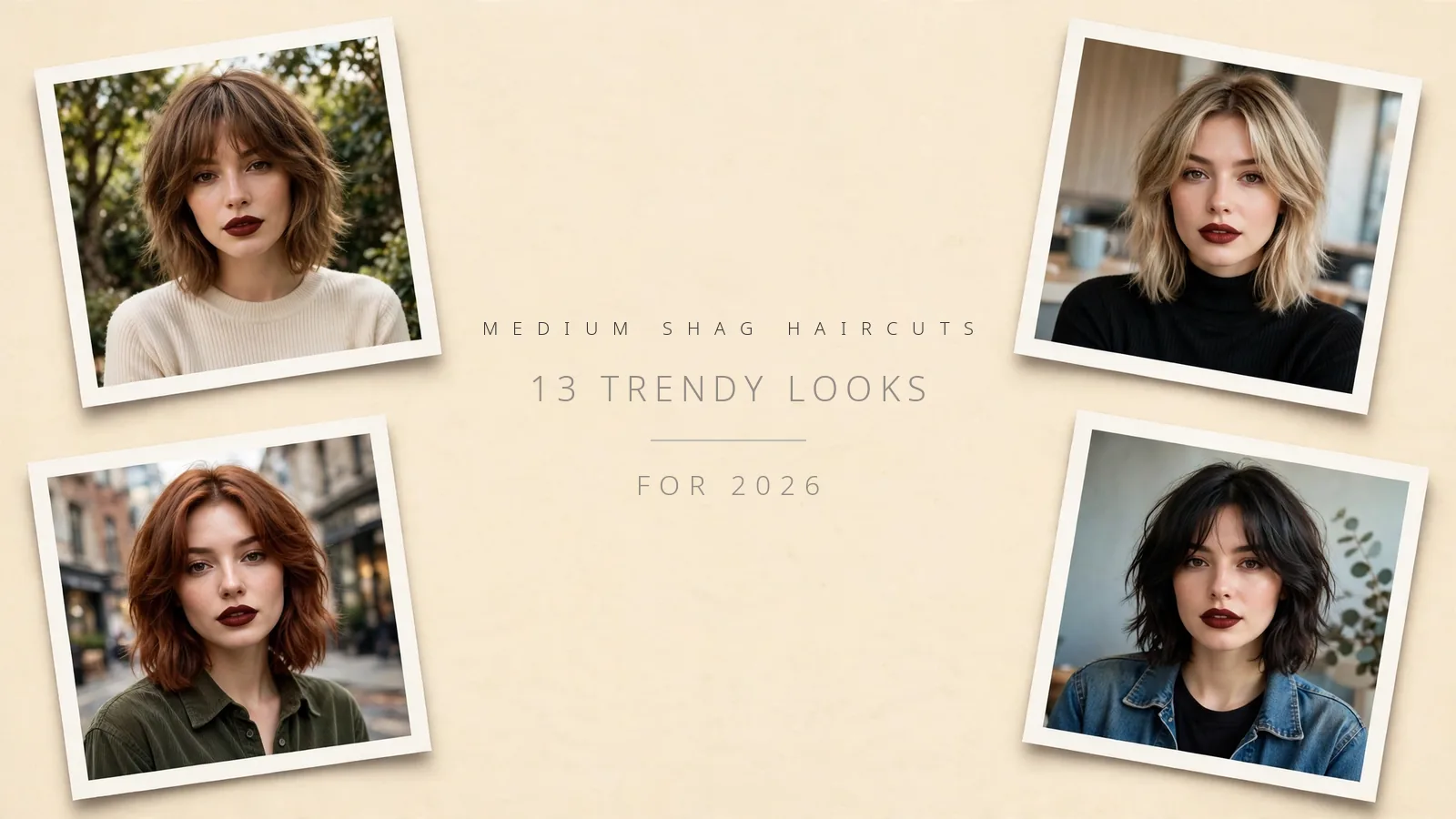
Medium Shag Haircuts – 13 Trendy Looks for 2026
Medium shag haircuts are the hardest shag length to get right, and that is exactly why they deserve a proper guide. Go too heavy on the layers and the ends turn stringy; play it too safe and you get a shapeless, heavy triangle with a fringe stuck on top. Most gallery posts show you pictures and stop there, leaving you to gamble at the salon. This one does not. Below you will find 13 medium shag haircuts broken down honestly — what each one does, who it actually suits, and how to style it — plus the decision help nobody else gives you: how to pick one for your hair type, how the medium shag differs from the wolf cut and the layered cut, and exactly what to say to your stylist.
If you have ever screenshotted a shag, sat in the chair, and walked out with something that looked nothing like the picture, the problem was almost never the stylist’s skill — it was a mismatch between the cut and your hair type. The 13 looks below fix that by telling you the truth about each one: the fine-hair warnings, the styling reality, the grow-out timeline. Pick the version that matches your texture and your maintenance appetite, and the medium shag becomes the easiest haircut you have ever owned.
Table of Contents
- 13 Medium Shag Haircuts Worth Copying
- Classic 70s-Inspired Medium Shag
- Wavy Medium Shag with Curtain Bangs
- Straight Medium Shag with Blunt Ends
- Copper Shag with Tousled Layers
- Feathered Medium Shag
- Textured Shaggy Lob
- Medium Shag with Wispy Bangs
- Ash Brown Shag with Full Curtain Bangs
- A-Line Medium Shag
- Razor-Cut Medium Shag
- Shoulder-Length Shag with Choppy Bangs
- Chestnut Shag Lob with Curtain Fringe
- Modern Medium Shag with Blended Layers
- How to Choose the Right Medium Shag for Your Hair Type
- Medium Shag vs Wolf Cut vs Layered Cut: Which One Is Right for You
- What to Ask Your Stylist, Plus Grow-Out and Trim Truth
- Frequently Asked Questions
- What is a medium shag haircut exactly?
- Will a medium shag work on fine hair?
- How often should I trim a medium shag?
- Can I get a medium shag on curly or coily hair?
- What is the difference between a medium shag and a wolf cut?
- How do I style a medium shag without heat?
- How do I ask my stylist for a medium shag?
- How long does a medium shag take to grow out?
13 Medium Shag Haircuts Worth Copying
1. Classic 70s-Inspired Medium Shag
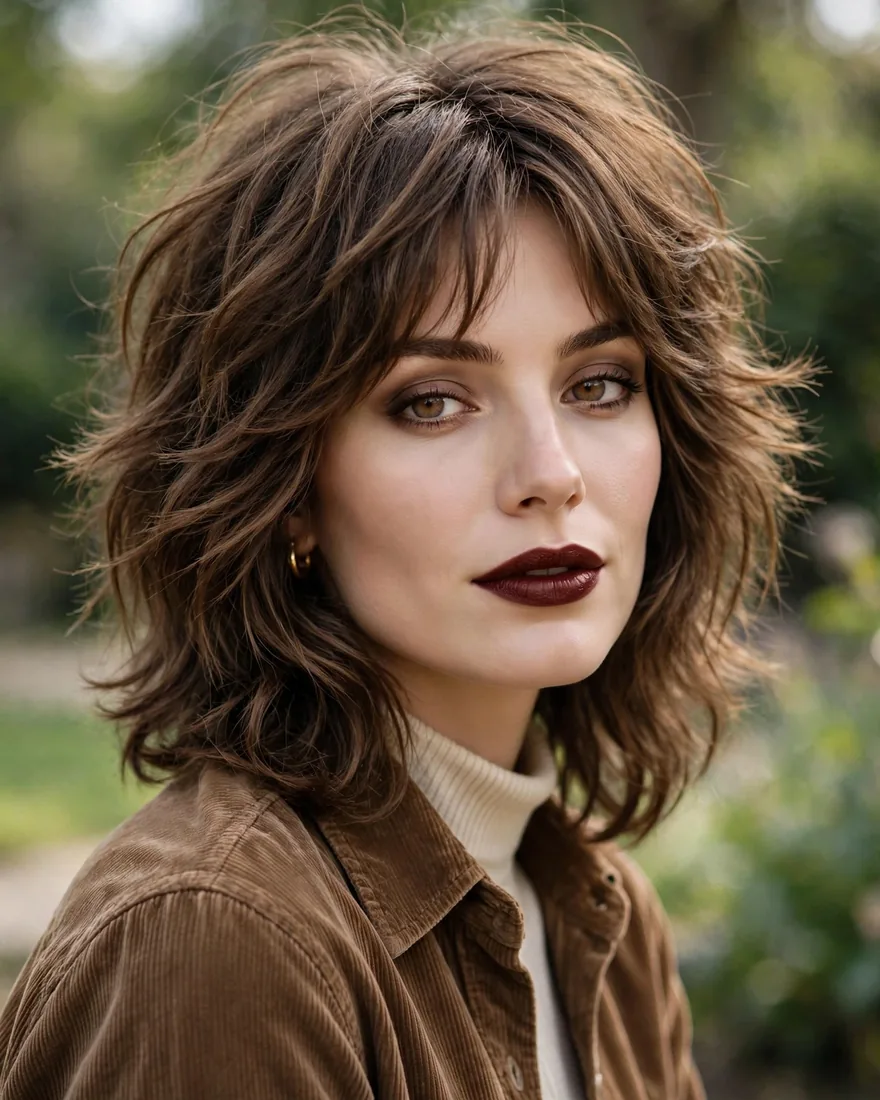
Description: The blueprint every shag traces back to: collar-to-shoulder length with lots of disconnected layers, shorter pieces through the crown and longer length left at the ends. It looks relaxed rather than polished, which is exactly why it still works in 2026. Few medium shag haircuts carry the original’s attitude this faithfully.
Benefits:
- Delivers the authentic shaggy texture that never looks stiff or overdone
- Layers built into the crown create natural lift without teasing
- Medium length keeps styling time short while looking intentional
Pro Tip: Ask for layers that start at the cheekbone so the shortest pieces still fall long enough to style away from the face.
How To Style: Work a small amount of texturizing spray into dry hair and scrunch the ends upward. Let it air-dry or rough-dry with a blow dryer for that lived-in finish.
Best For: Thick to medium hair with natural wave, anyone who wants maximum movement, and readers who style in under five minutes.
2. Wavy Medium Shag with Curtain Bangs
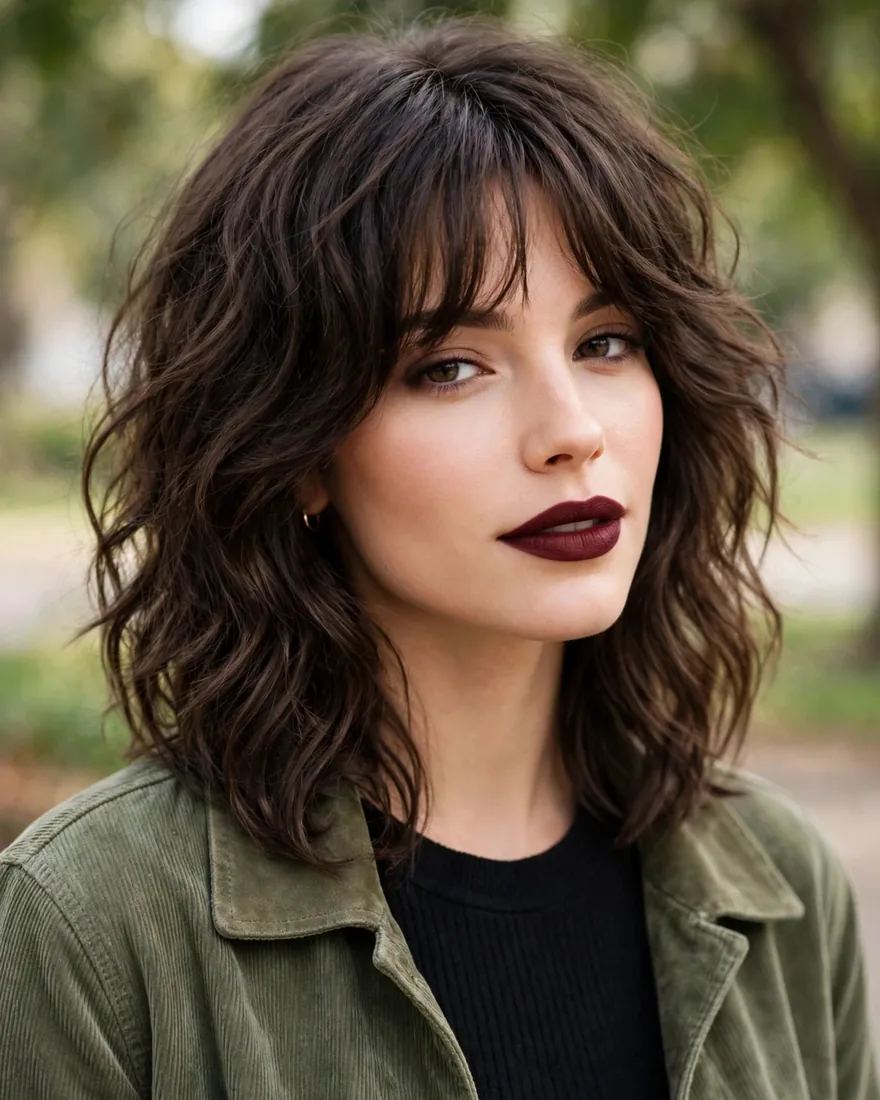
Description: The most-requested combination of the three elements that flatter almost everyone: wavy texture, medium length and a face-framing fringe. These wavy hair layers pair with parted curtain bangs that blend straight into the face frame, so the whole cut reads as one continuous shape. Among medium shag haircuts with bangs, this is the most forgiving grow-out.
Benefits:
- Curtain bangs soften the forehead and cheekbones without committing to a full fringe
- Waves give the layers built-in texture that hides grow-out
- One of the most forgiving medium shag haircuts while bangs are growing out
Pro Tip: Keep the curtain bangs a touch longer than you think you want them — they bounce up once they are dry.
How To Style: Diffuse waves with the head flipped upside down, then part the fringe down the center and train it outward with a round brush.
Best For: Wavy 2A to 2C textures, round and square faces, and anyone growing out a shorter fringe.
3. Straight Medium Shag with Blunt Ends
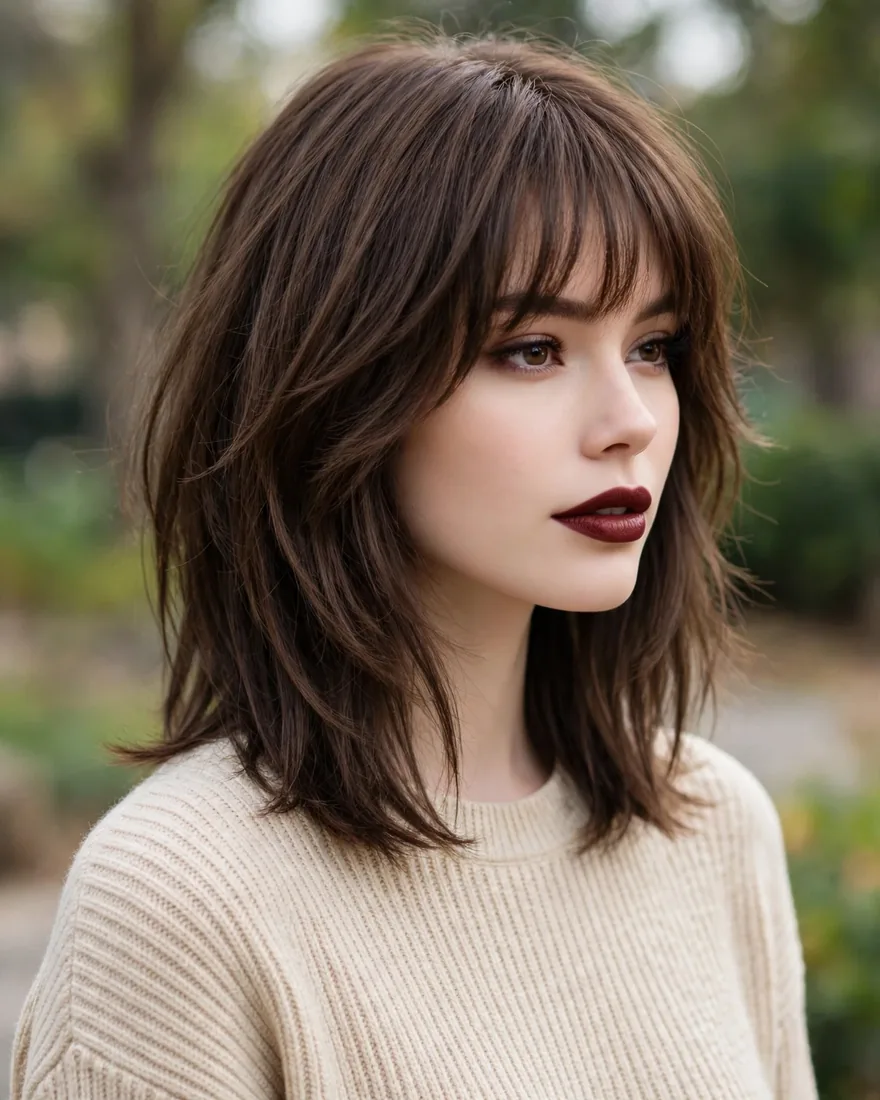
Description: For straight hair that cannot fake texture, the contrast between internal layers and clean-cut blunt ends is what makes this version work. The layers sit underneath doing the moving, while the perimeter stays strong and full-looking. These are the medium shag haircuts straight-haired readers ask for by name.
Benefits:
- Blunt perimeter keeps the ends looking thick even with heavy layering inside
- Straight texture shows off the layer architecture instead of hiding it
- Air-dries cleanly without the frizz that shags on wavy hair can develop
Pro Tip: Point-cut only the last half inch so the blunt line stays crisp while the very tips stay soft.
How To Style: Blow-dry smooth with a paddle brush, then run a flat iron through the mids and ends only — leave the roots alone for natural lift.
Best For: Straight and fine-to-medium hair, anyone who likes a precise finish, and readers who want shag texture without the mess.
4. Copper Shag with Tousled Layers
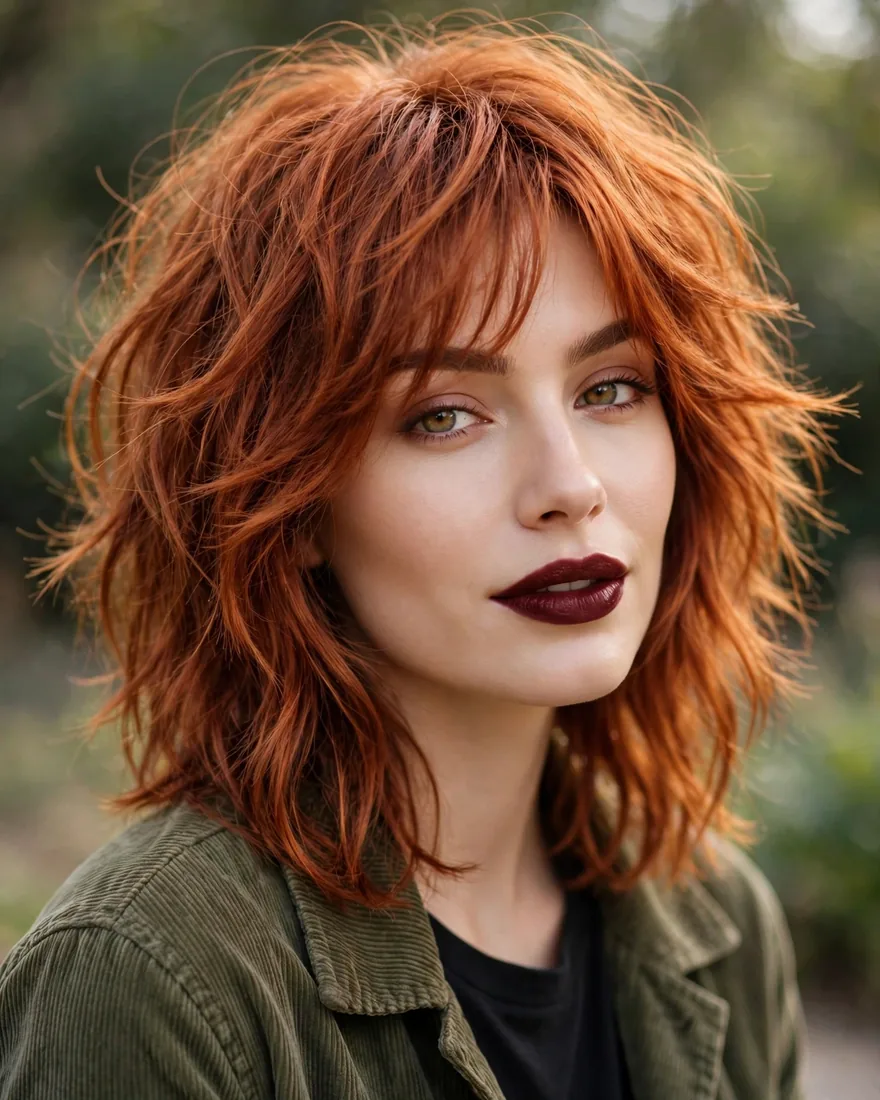
Description: Color does half the styling work here: a warm copper shade turns every layer edge into a visible highlight line. These medium shag haircuts suit readers who want the cut to look deliberate even on days they barely touch it. For low-effort days, these medium shag haircuts do the visual work for you.
Benefits:
- Warm tones make each layer catch light differently, multiplying the texture
- Tousled layers look richer and more dimensional in copper than in flat brown
- Color grows out softly because the layers already break up any harsh line
Pro Tip: Refresh copper with a tinted conditioner every other wash — the shag’s many ends fade color fastest.
How To Style: Scrunch a golf-ball of mousse into damp hair and diffuse or air-dry; twist random pieces while damp for extra piece-y-ness.
Best For: Warm and neutral skin tones, medium to thick hair, and anyone ready for the upkeep a fashion color asks for.
5. Feathered Medium Shag
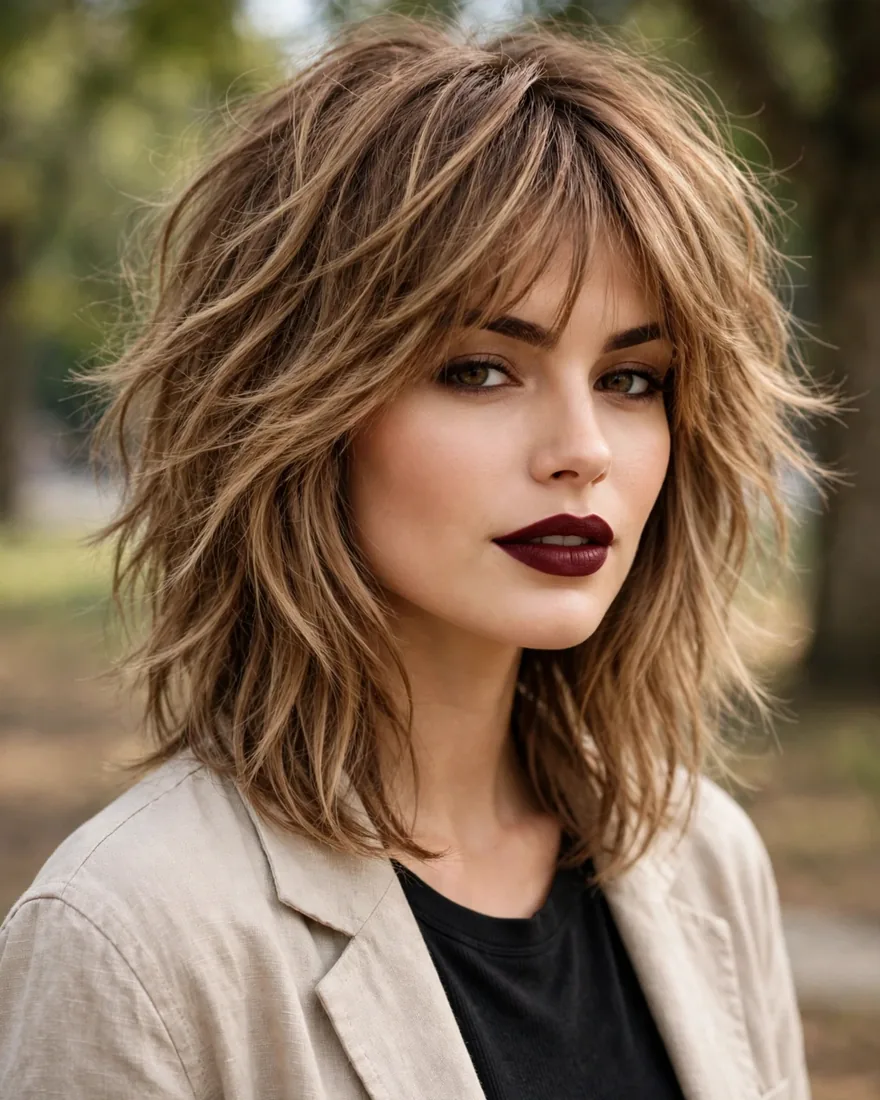
Description: Feathering — soft, outward-flicked layers around the face and through the ends — gives the shag a softer edge than a razor-heavy version. The layers flip and blend instead of chopping, which keeps the silhouette light at medium length. Among polished medium shag haircuts, this is the softest-edged option.
Benefits:
- Feathered edges flatter jawlines and soften angular features
- Grows out gracefully because the layers are already blended
- Works beautifully on medium shag haircuts that get blow-dried smooth
Pro Tip: Feathering needs clean ends to read well, so this version actually benefits from the full 6 to 8 week trim cycle.
How To Style: Blow-dry with a round brush, flipping the face-framing pieces outward and the ends under for the classic feathered curve.
Best For: Medium to thick straight or wavy hair, longer faces, and readers who prefer a polished shag over a messy one.
6. Textured Shaggy Lob
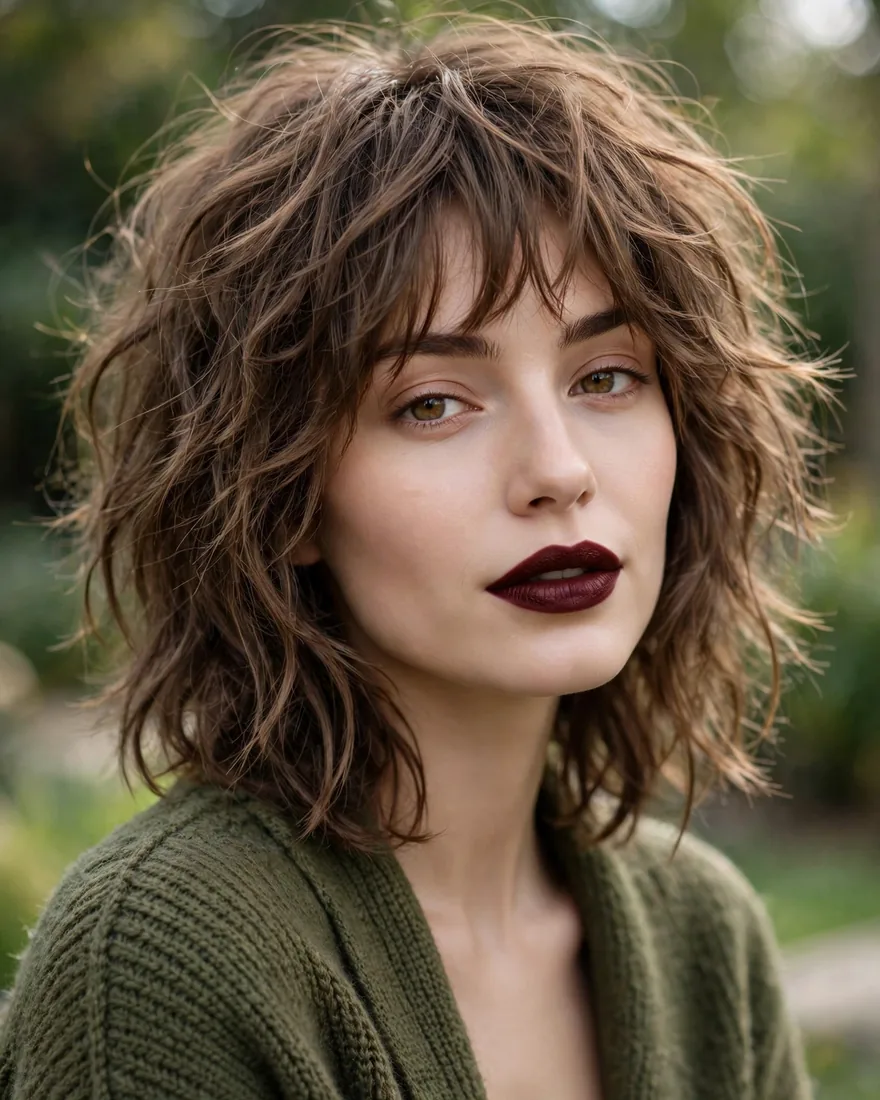
Description: The lob length is the safest entry point into shag territory: all the layered movement of a shag with the security of hair that still reaches past the shoulders. These medium shag haircuts are the safest first step into shag territory. It is the version most people picture when they say they want a low-commitment shag.
Benefits:
- Long enough to pull back on non-wash days, short enough to feel different
- One of the most versatile medium shag haircuts for first-time shag wearers
- Texture sits in the last few inches, so daily styling is minimal
Pro Tip: Keep the shortest layers below the chin so the cut still pulls into a ponytail — that is the whole point of the lob length.
How To Style: Mist with sea-salt spray on damp hair and scrunch; the layers do the rest without any heat.
Best For: Almost every hair type, shoulder-grazers who are nervous about chopping, and fine hair that needs texture only at the ends.
7. Medium Shag with Wispy Bangs
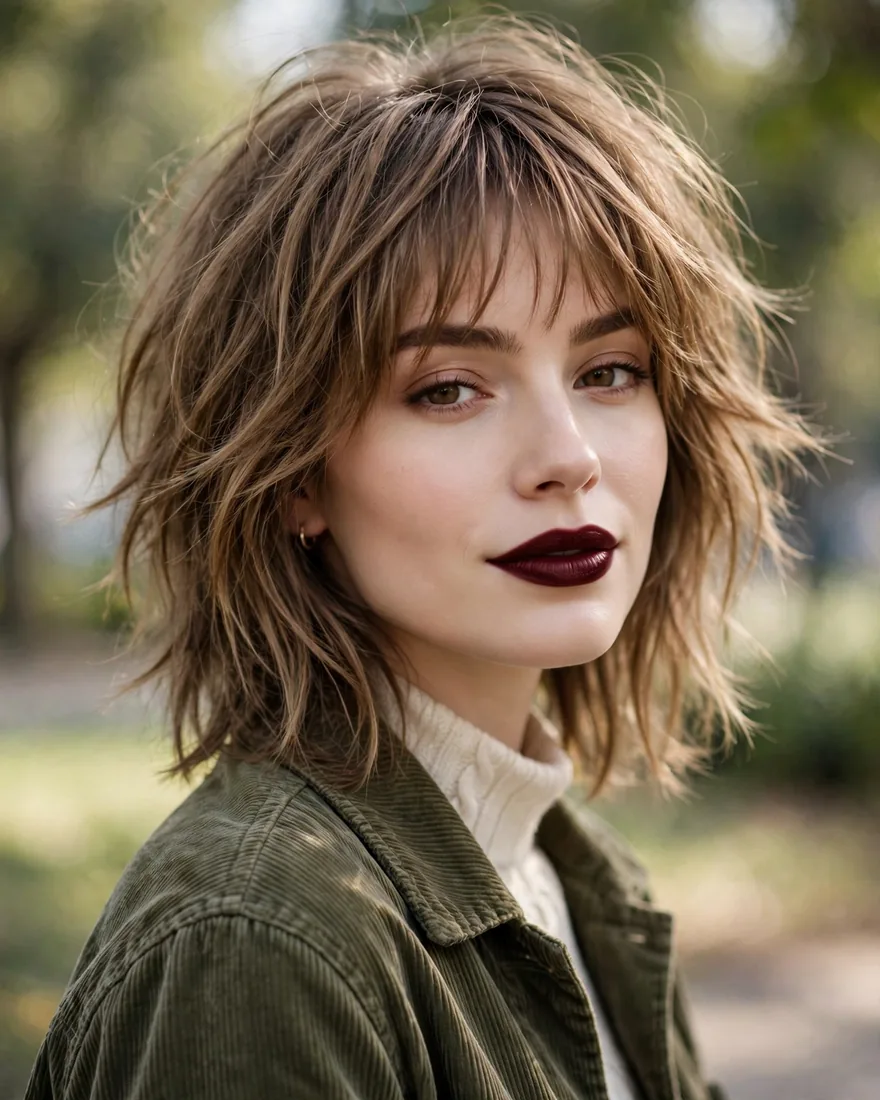
Description: Wispy bangs are the low-commitment fringe: light, see-through at the edges, and long enough to push aside. If bangs make you nervous, these medium shag haircuts are the gentle way in. Paired with a medium shag, they add face framing without the weight of a full bang.
Benefits:
- Wispy fringe opens up the forehead and suits more face shapes than blunt bangs
- Light ends blend into the shag layers so grow-out is nearly invisible
- Adds softness around the eyes without hiding the face
Pro Tip: Trim the wispies yourself between salon visits with dry-hair point-cutting — never cut them wet.
How To Style: Dry the fringe first with a small round brush, pulling it side to side so it sits flat against the forehead.
Best For: Fine to medium hair, high foreheads, and anyone who wants bangs they can abandon without drama.
8. Ash Brown Shag with Full Curtain Bangs

Description: Cool ash-brown color plus a full, parted curtain bang makes this one of the most modern medium shag haircuts in the gallery. The ashy tone keeps the heavy fringe from looking dated, and the cool color reads expensive against warm skin. Of all the color-forward medium shag haircuts here, this one photographs best.
Benefits:
- Ash brown flatters warm complexions by contrast and cools down redness
- Full curtain bangs balance long faces and high foreheads
- The color makes the layered texture look deliberately editorial
Pro Tip: Ash tones fade fastest on porous, layered ends — a purple gloss every few weeks keeps it from going brassy.
How To Style: Blow-dry the curtain section with a round brush in an outward arc so it frames the face instead of falling flat.
Best For: Cool and neutral undertones, long or oval faces, and medium hair that can carry a heavier fringe.
9. A-Line Medium Shag
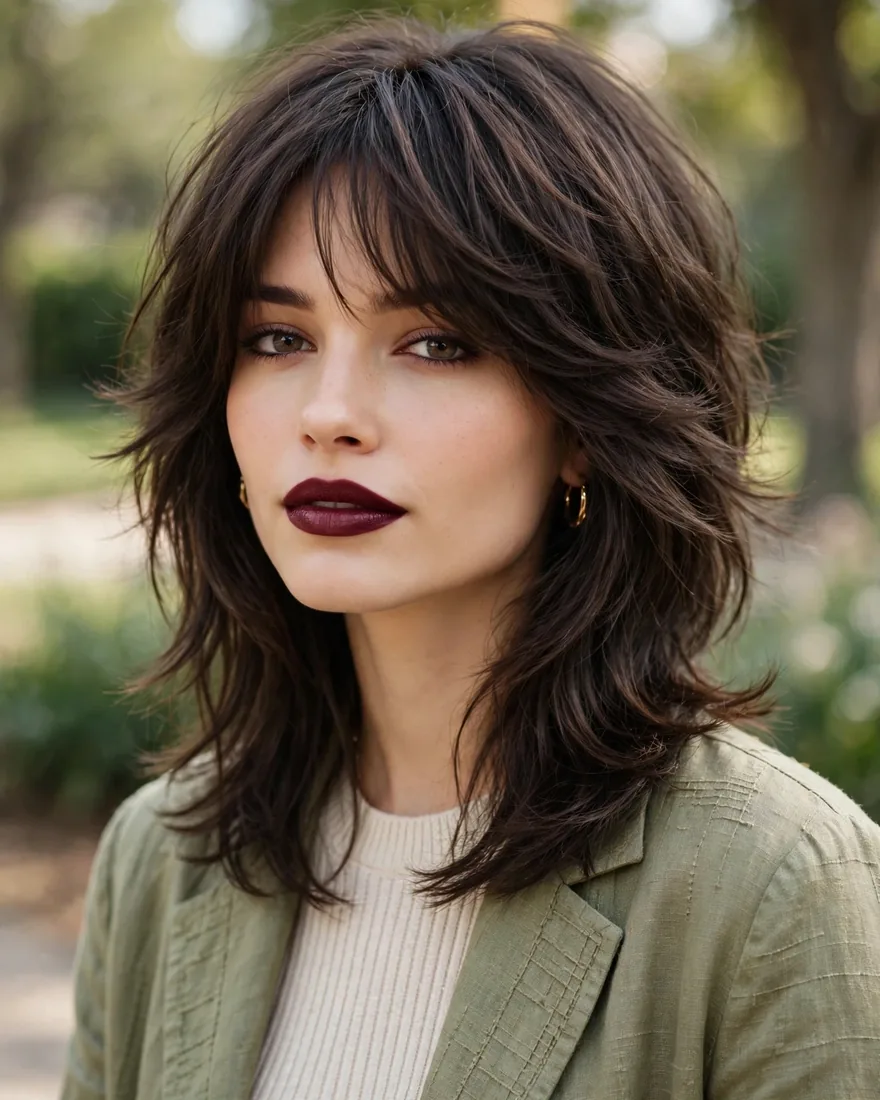
Description: Shorter at the back, longer toward the front — the A-line shape gives the shag structure that a same-length-everywhere shag can lack. The graduation keeps the back lifted while the front pieces do the framing work. For structure lovers, few medium shag haircuts beat this one.
Benefits:
- The graduated back creates automatic volume at the crown
- Longer front pieces slim the face and protect fine hair at the perimeter
- Looks neat from the back, textured from the front — the best of both
Pro Tip: The A-line angle only works if it is maintained, so book the trim before you leave the salon.
How To Style: Blow-dry the back upward at the roots for lift, and smooth the front pieces inward toward the face.
Best For: Fine to medium hair that needs lift, round faces, and readers who want a shag with architecture.
10. Razor-Cut Medium Shag
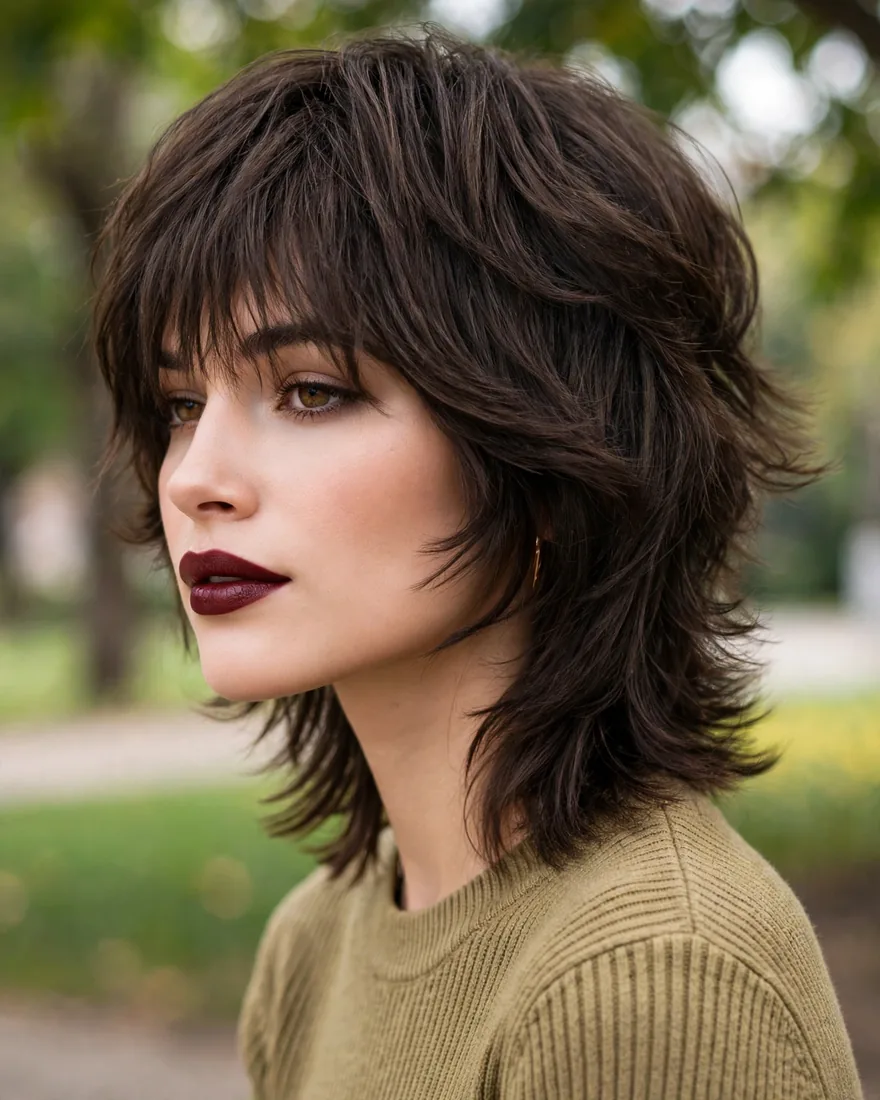
Description: Cut with a razor instead of shears, the layers get wispy, separated ends that no shear cut can fake. This is the rawest, most textured version of the medium shag — soft, lived-in and deliberately undone. These medium shag haircuts deliver the most authentic lived-in texture.
Benefits:
- Razor texturizing creates piece-y separation that styling products enhance
- Removes weight from thick hair better than any other cutting technique
- The most editorial-looking of all the medium shag haircuts
Pro Tip: Razor cutting is not for damaged or very fine hair — the feathered ends can split faster on fragile strands.
How To Style: Apply styling cream to dry ends and pinch small sections to define the piece-y texture.
Best For: Thick, coarse or wavy hair, experienced shag wearers, and anyone who loves the undone aesthetic.
11. Shoulder-Length Shag with Choppy Bangs
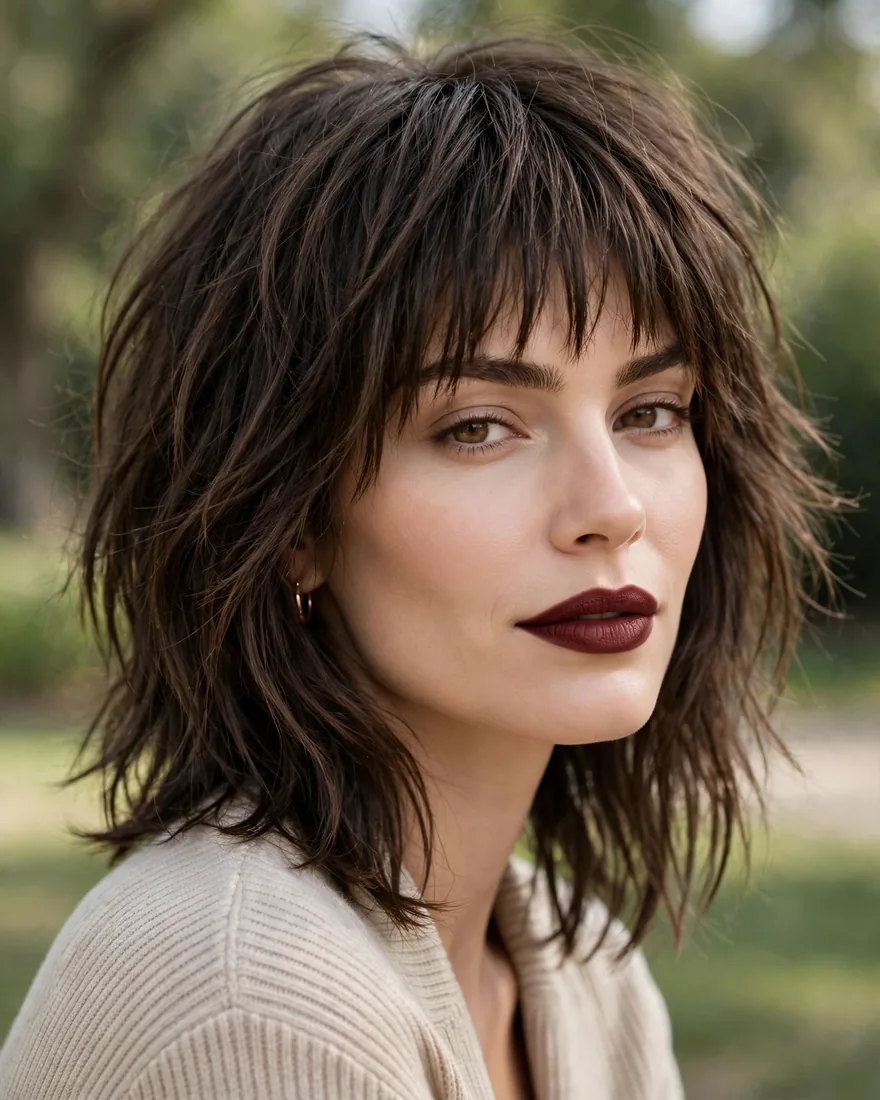
Description: Choppy bangs are cut at uneven lengths on purpose, and against a shoulder-length shag they create the most fashion-forward silhouette in this set. It is bold, but the medium length keeps it wearable. For edge seekers, these medium shag haircuts offer the boldest silhouette.
Benefits:
- Choppy fringe adds instant edge without shortening the overall length
- Uneven texture hides cowlicks and stubborn crown growth patterns
- The strongest personality of any of these medium shag haircuts
Pro Tip: Choppy bangs need to be cut dry — ask your stylist to dry-cut the fringe so the texture shows up before any length is taken.
How To Style: Flat-iron just the bangs for separation, and leave the rest of the hair textured with salt spray.
Best For: Confident wearers, oval and heart faces, and thick hair that can support the heavier texture.
12. Chestnut Shag Lob with Curtain Fringe
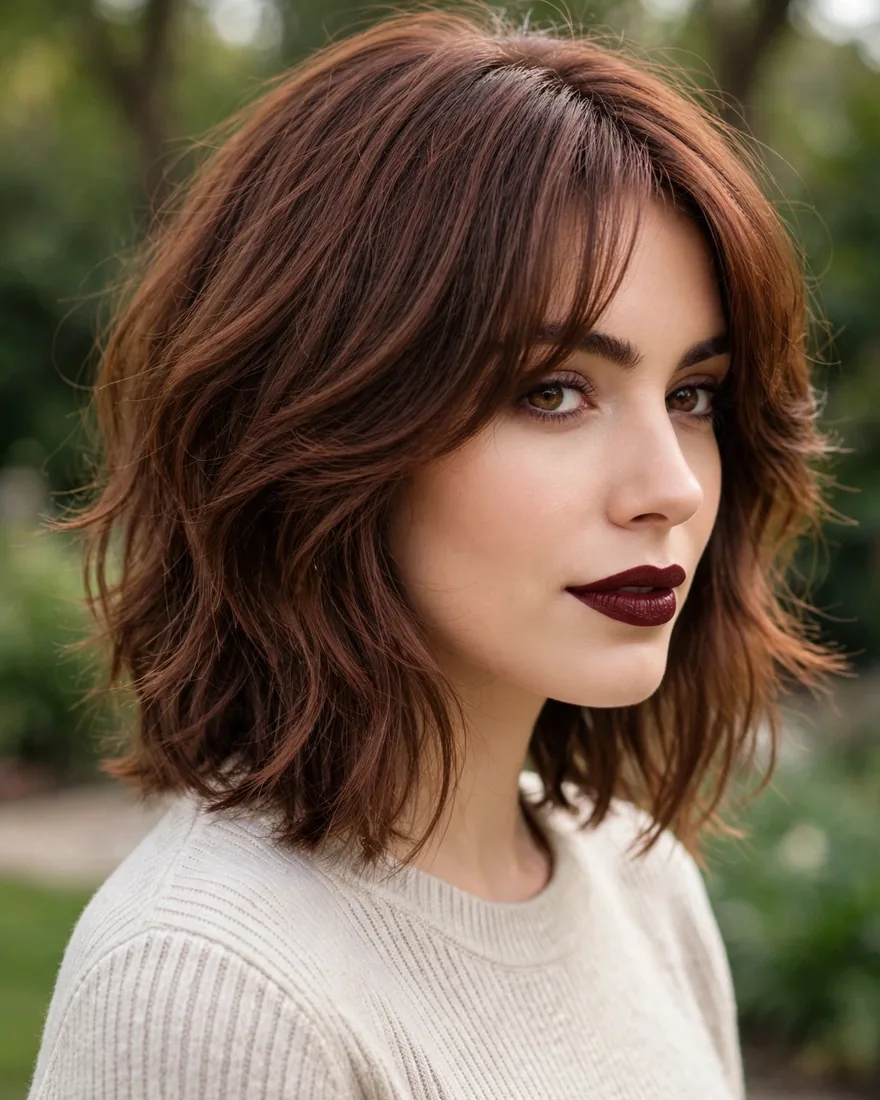
Description: Rich chestnut color plus a lob-length shag with curtain fringe is the warm, glossy end of the spectrum. It is the most universally flattering combination here because the color warms the skin while the cut does the shaping. Universally flattering medium shag haircuts like this one suit nearly every reader.
Benefits:
- Chestnut suits almost every skin tone and makes brown eyes stand out
- Lob length plus curtain fringe frames the face from every angle
- Glossy color makes the shag look polished rather than grungy
Pro Tip: A clear gloss treatment between color appointments keeps chestnut from going dull on layered ends.
How To Style: Blow-dry with a round brush for shine, then bend the curtain fringe outward for that soft parted look.
Best For: Warm and neutral undertones, medium to thick hair, and readers who want a shag that still looks office-appropriate.
13. Modern Medium Shag with Blended Layers
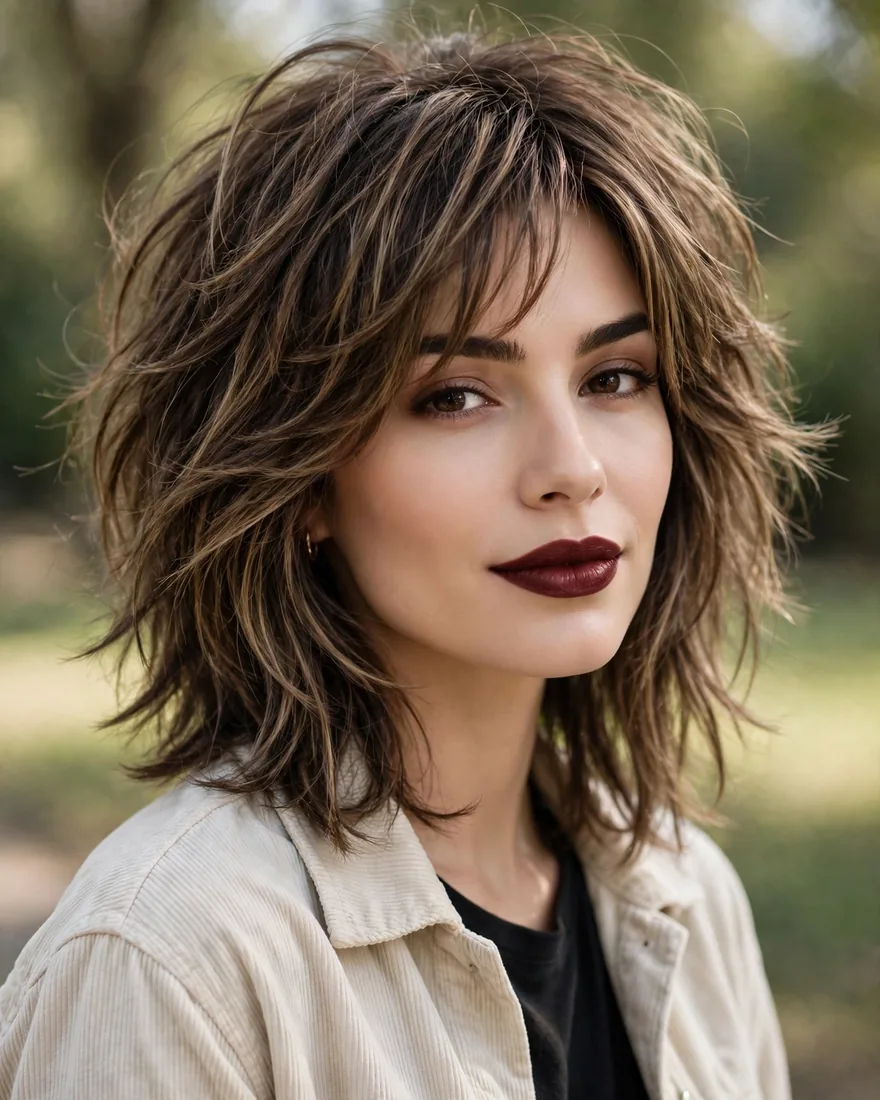
Description: The 2026 update on the classic: the same collar-to-shoulder length, but the layers are blended instead of disconnected, so the grow-out is seamless. It is the shag for people who loved the idea but hated the mullet-adjacent maintenance. For time-poor readers, medium shag haircuts do not get more practical than this.
Benefits:
- Blended layers mean the cut looks good for weeks longer than a choppy shag
- The most versatile of these medium shag haircuts for different styling moods
- Works with air-drying, blow-drying or heat styling equally well
Pro Tip: This is the version to request if you only get your hair cut three or four times a year.
How To Style: Cocktail mousse and a light cream, scrunch dry or blow-dry smooth — both finishes look intentional.
Best For: Busy schedules, grow-out phases, and anyone who wants shag texture without salon-frequency maintenance.
How the 13 medium shag haircuts compare at a glance:
| Style | Best Hair Type | Upkeep Level |
|---|---|---|
| Classic 70s-Inspired | Thick to medium, wavy | Medium |
| Wavy + Curtain Bangs | Wavy 2A–2C | Low |
| Straight + Blunt Ends | Straight, fine to medium | Medium |
| Copper Tousled | Medium to thick, warm tones | High (color upkeep) |
| Feathered | Medium to thick, straight/wavy | Medium |
| Textured Shaggy Lob | All types, first-timers | Low |
| Wispy Bangs | Fine to medium | Low |
| Ash Brown + Full Curtain | Medium, cool/neutral undertones | High (color upkeep) |
| A-Line | Fine to medium, needs lift | Medium |
| Razor-Cut | Thick, coarse, wavy | Medium |
| Choppy Bangs | Thick, oval/heart faces | Medium |
| Chestnut Shag Lob | Medium to thick, warm undertones | Medium |
| Modern Blended | All types, low maintenance | Low |
How to Choose the Right Medium Shag for Your Hair Type
The single biggest reason a medium shag disappoints is a hair-type mismatch, not a bad stylist. Here is the honest filter no gallery of medium shag haircuts gives you.
Fine hair: this is the honest part — a shag removes weight, and on fine hair too much removal makes the ends look thin and see-through. The fix is a shag with fewer, longer layers and a blunt-ish perimeter, like the straight version with blunt ends or the A-line above. Ask for the layering to stay internal and the density to be protected at the ends.
Thick or coarse hair: you are the ideal candidate. Razor cutting and heavy texturizing remove the bulk that makes medium lengths puff out, and the layers create movement instead of a pyramid shape. The razor-cut and 70s-inspired versions above were made for you. And if you are torn between medium and short, the short shaggy versions trade versatility for punch — medium keeps the ponytail option, short does not.
Curly and coily hair: a shag can be spectacular on curly hair, but it must be cut dry and in its natural curl pattern — layers that look right wet can spring up three inches shorter dry. Ask for longer layers than you think you need, and expect the shape to need a week of settling before you judge it.
Straight hair: you get the most architectural shag, but also the least forgiving one. Every layer shows, so precision matters; blended layers (idea 13) hide grow-out better than disconnected ones. Cowlicks show on straight shags, so if you have a stubborn one, the choppy-bang version above works with it instead of against it.
Medium Shag vs Wolf Cut vs Layered Cut: Which One Is Right for You
These three get confused constantly, and choosing the wrong one is how people end up hating their haircut. The difference is in the layer philosophy.
Medium shag: layers of varying lengths throughout, shorter at the crown, texture through the ends, usually with a fringe. Balanced — movement everywhere, wearable length everywhere.
Wolf cut: the shag’s wilder cousin — much shorter layers on top with very long length left at the bottom, more extreme disconnect between crown and ends. A wolf cut suits thick hair and bold styling; it looks mullet-adjacent on fine hair and demands more styling commitment than a medium shag.
Layered cut: the safe option — long, blended layers with no short crown and no fringe requirement. A layered haircut grows out the most gracefully and needs the least styling, but it will never give you the texture and edge of a shag.
The shortcut: want edge with wearability, pick the medium shag. Want maximum drama and have thick hair, pick the wolf cut. Want movement with zero risk, pick the layered cut. And if you are torn between medium and short, the short shaggy versions trade versatility for punch — medium keeps the ponytail option, short does not.
What to Ask Your Stylist, Plus Grow-Out and Trim Truth
Walk in with this language and you will get the shag you pictured: layer starting point (cheekbone for face framing, jawline for a softer start), fringe length (curtain bangs to the cheekbone, wispy bangs just above the brow), perimeter (blunt for fine hair, textured for thick hair), and crown weight (how much to remove up top for lift versus keeping density).
Bring reference photos of hair with your texture — a shag on thick wavy hair is a different haircut than a shag on fine straight hair, and photos communicate that faster than words.
Trim truth: the medium shag needs a trim every 6 to 8 weeks. Medium shag haircuts lose their shape faster than a one-length cut, and split ends show sooner on textured ends. Skipping trims turns a shag into a mullet — that is not a myth, it is geometry.
Grow-out path: growing a medium shag out is one of the easier grow-outs because the length is already there. Let the crown layers catch up while keeping the perimeter trimmed; within four to six months you land at long hair with soft layers. The awkward phase is minimal if you keep the fringe shaped while the rest grows.
Frequently Asked Questions
What is a medium shag haircut exactly?
A medium shag is a layered haircut that falls between the chin and the shoulders, with shorter layers through the crown and textured, piece-y ends. It almost always includes some kind of fringe or face-framing, and the layers are cut to create movement rather than a smooth, even perimeter.
Will a medium shag work on fine hair?
It can, but only with the right version. The honest rule for fine hair is fewer, longer layers and a protected, slightly blunt perimeter so the ends do not look thin. Heavy razor texturizing and very short crown layers remove the density fine hair cannot spare — pick the straight shag with blunt ends or the A-line version instead.
How often should I trim a medium shag?
Every 6 to 8 weeks. The layers lose their architecture faster than a one-length cut, and split ends show sooner on textured ends. Regular trims are what keep a shag looking like a shag instead of drifting toward a mullet.
Can I get a medium shag on curly or coily hair?
Yes — a shag is one of the best cuts for curls because the layers create shape instead of a triangle. The non-negotiable rule is that it must be cut dry, in your natural curl pattern, with longer layers than you think you need, since curls spring up once dry.
What is the difference between a medium shag and a wolf cut?
A medium shag keeps its layers balanced through the whole cut with wearable medium length everywhere. A wolf cut goes much shorter on top with very long length left at the bottom — more dramatic, more mullet-adjacent, and better suited to thick hair and bold styling.
How do I style a medium shag without heat?
Mousse or texturizing spray on damp hair, scrunch, and air-dry — that is genuinely the whole routine for most shags. Twisting a few damp pieces creates extra definition, and a little styling cream on dry ends separates the layers. The honest caveat: bangs usually still need a quick blow-dry to sit right.
How do I ask my stylist for a medium shag?
Name four things: where the layers should start (cheekbone or jawline), what fringe you want and its length, whether the perimeter should be blunt or textured, and how much weight to remove at the crown. Bring reference photos of hair with your texture, because the same words mean different cuts on different hair types, and your stylist can match you to the right of these medium shag haircuts on the first visit.
How long does a medium shag take to grow out?
It is one of the easier grow-outs — the length is already there, so you mostly wait for the crown layers to catch up while keeping the perimeter trimmed. Expect four to six months to reach long layered hair, with a minimal awkward phase if you keep the fringe shaped during the wait.
Medium shag haircuts reward the chooser more than the chopper. Pick the version that matches your texture — blunt-ended or A-line for fine hair, razor-cut or 70s-inspired for thick hair, dry-cut longer layers for curls — learn the four sentences of consultation language, and keep the 6-to-8-week trim rhythm. Do that, and the medium shag stops being a gamble and becomes the haircut that finally looks like the picture you saved.