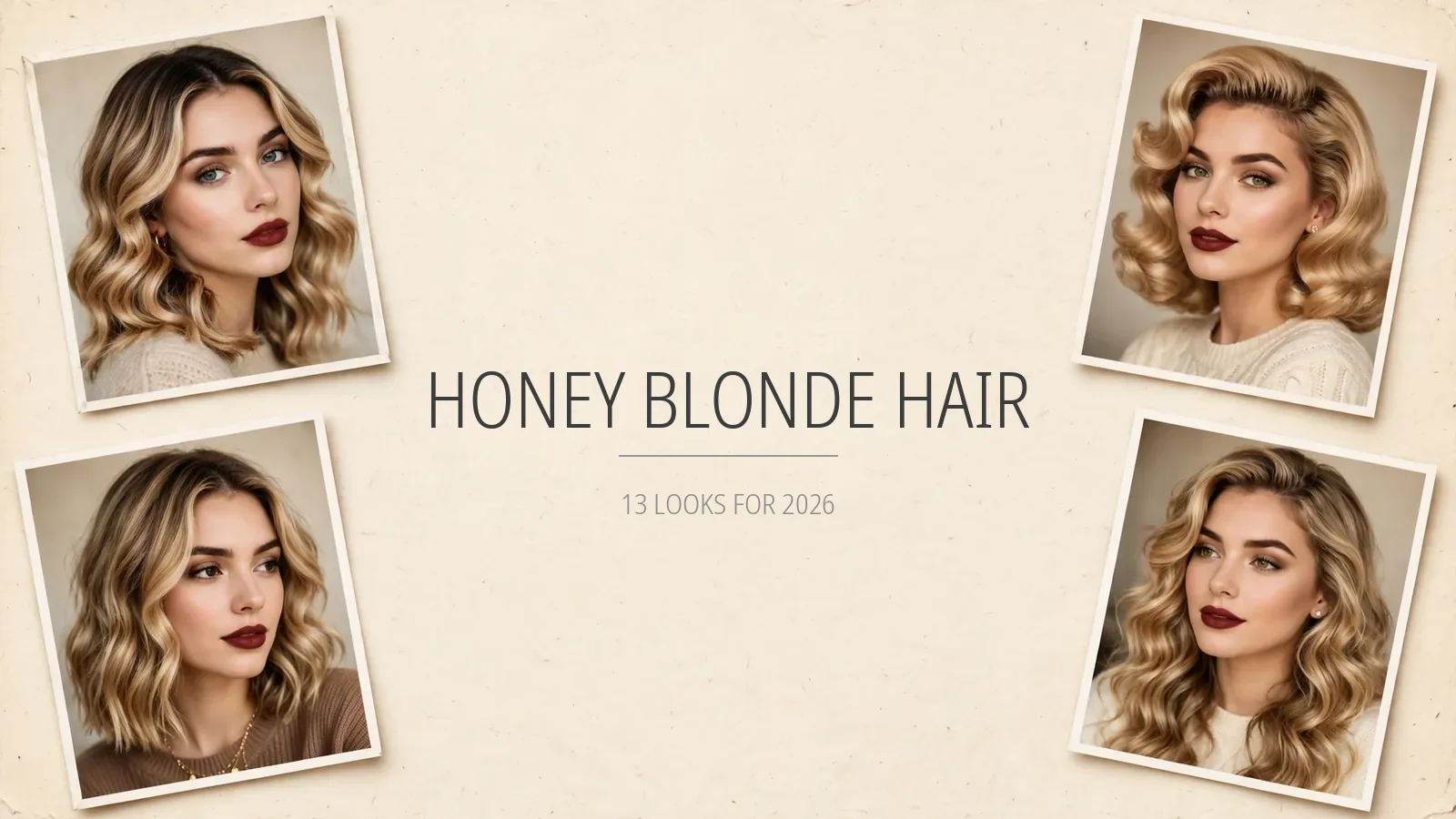
Honey Blonde Hair – 13 Looks to Try in 2026
There is a specific heartbreak that belongs to warm blondes: you walk out of the salon with honey blonde hair that looks like liquid gold under the salon lights, and three weeks later your mirror shows something flat, dull, or worse — brassy in all the wrong places. It happens because honey blonde hair lives in a narrow lane between golden and orange, and without the right base color, the right toner, and the right vocabulary at your appointment, it drifts. The good news is that this drift is almost always preventable.
The fix is not a different shade — it is a better plan. When honey blonde hair is built on a realistic base, placed with a grow-out strategy, and maintained with the right gloss cadence, it stays warm and expensive-looking for months instead of weeks. Below are 13 honey blonde hair looks worth booking, each with honest notes on who they suit, plus exactly what to ask your colorist and how the color fades so there are no surprises.
Table of Contents
- Honey Blonde Hair Looks Worth Booking
- 1. S-Waves With Soft Root Shadow
- 2. Vintage Blowout Curls
- 3. Bronde Melt With Feathered Layers
- 4. Ribbon Highlights on a Lob
- 5. Sleek Blunt Bob
- 6. Balayage With Loose Curls
- 7. Dimensional Highlights
- 8. Money Piece Face Frame
- 9. Shadow Root Melt With Beachy Waves
- 10. Creamy Beige-Gold Lob
- 11. Textured Bob With Rooted Balayage
- 12. Lived-In Balayage Waves
- 13. Toasted Honey Blowout
- How to Choose the Right Honey Blonde
- What to Ask Your Colorist (Salon Vocabulary)
- How Honey Blonde Fades and How to Keep It Warm
- FAQs
- Is honey blonde hair warm or cool?
- What skin tones look best with honey blonde hair?
- Do I need bleach to get honey blonde hair?
- How do I stop my honey blonde hair going brassy?
- What is the difference between honey blonde and caramel?
- Can I get honey blonde hair on dark brown hair?
- How often should honey blonde hair be toned or glossed?
- Is honey blonde hair high maintenance?
Honey Blonde Hair Looks Worth Booking
1. S-Waves With Soft Root Shadow
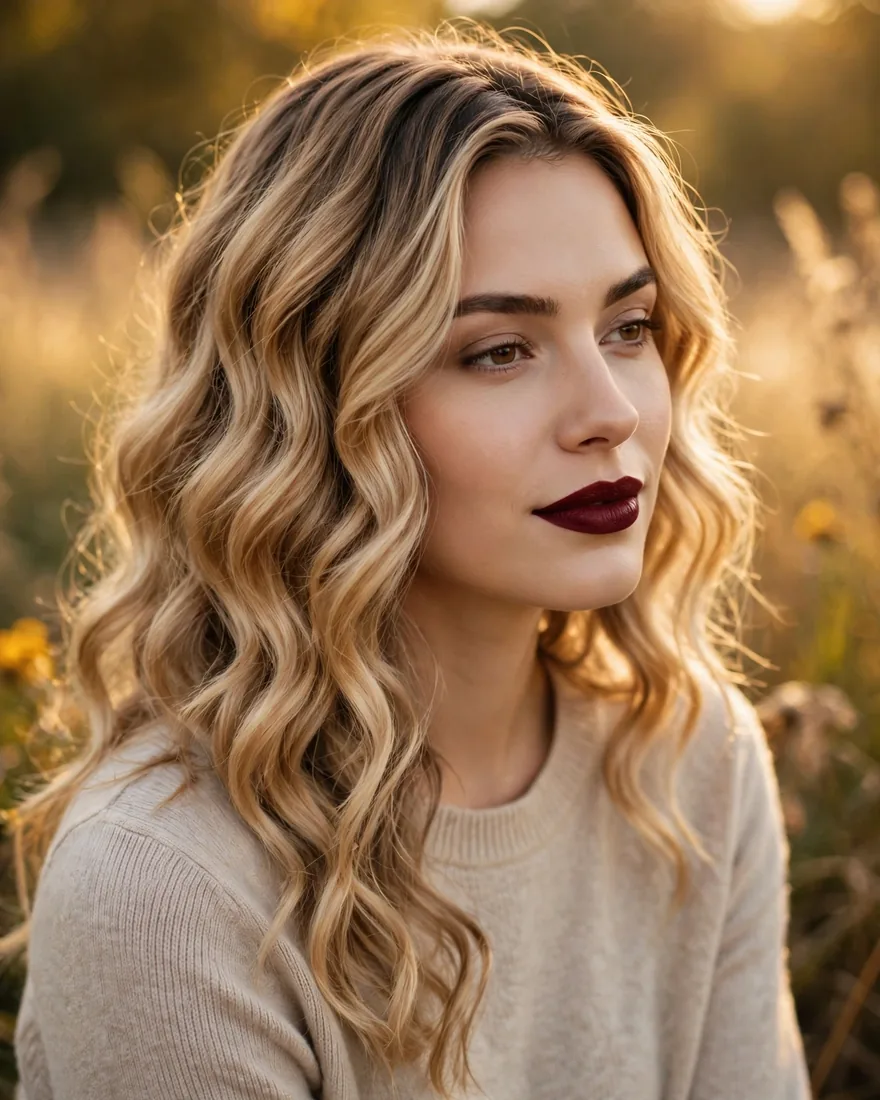
S-waves are the undone answer to perfect curls — flat-iron bends that create a ribbon of movement instead of ringlets. Pair them with honey blonde hair and a soft root shadow, where your colorist melts your natural base into the honey for the first couple of inches, and the grow-out line simply disappears. This is the look people mean when they say “expensive blonde.”
Benefits:
- A root shadow stretches the time between salon visits to 10–12 weeks
- S-waves make honey blonde hair look dimensional even in flat indoor light
- The melted root keeps regrowth looking intentional, not neglected
Pro Tip: Ask for the shadow to sit no more than two levels darker than the honey itself — any deeper and it reads as ombre rather than a soft melt.
How To Style: Clamp a flat iron mid-shaft, twist it a half-turn away from your face, and glide down. Alternate the direction of each bend, then rake through with your fingers — never a brush — to keep the wave ribbon-like.
Best For: Natural bases from light brown to dark blonde; warm and neutral skin undertones; medium to long lengths.
2. Vintage Blowout Curls

Big, bouncy, brushed-out curls in a honey blonde shade channel old-Hollywood glamour without looking costume-y. The warmth of honey blonde hair is what makes this work — the same blowout in an ashy blonde can look flat, but golden tones catch light on every curve of the curl. It is a high-impact style that genuinely suits evenings, weddings, and photos.
Benefits:
- Volume and bounce that lasts two to three days with the right prep
- Honey tones read richer and deeper on large curls than on straight hair
- Photographs beautifully — golden hair glows under camera flash
Pro Tip: Set each blow-dried section in a velcro roller while it cools completely. The ten minutes of cooling time is what separates curls that last all night from curls that fall by dinner.
How To Style: Blow dry with a large round brush, rolling each section up and away from the face. Once cool, remove rollers, flip your head upside down, and brush through gently with a paddle brush for that soft vintage finish.
Best For: Medium to thick hair that holds a curl; warm undertones; anyone comfortable with 30 minutes of styling.
3. Bronde Melt With Feathered Layers
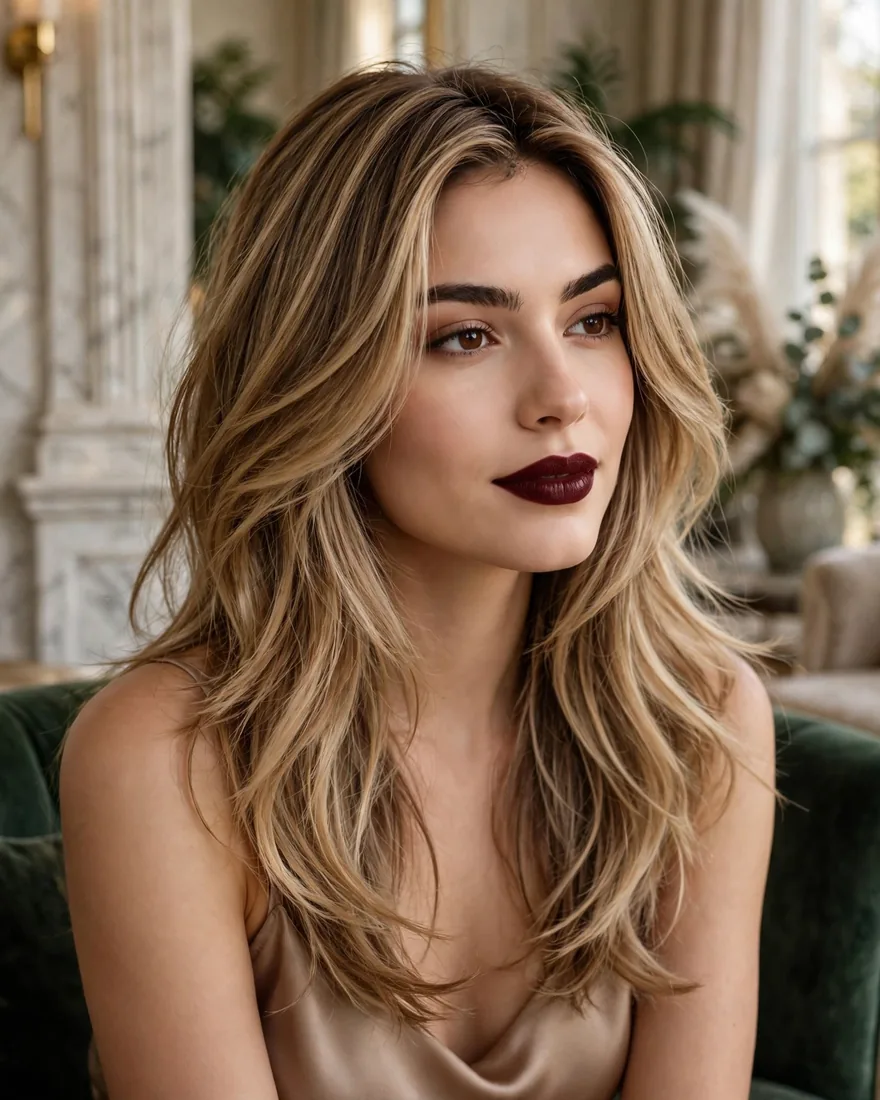
Bronde — the halfway house between brown and blonde — is honey blonde hair at its most wearable. Your colorist melts a brunette root into honey ends with no visible line, and feathered layers keep the whole thing moving. If your natural base is light brown hair, this is the lowest-lift route to honey blonde because the colorist is enhancing what is already there rather than fighting it.
Benefits:
- The most forgiving grow-out of any honey blonde hair technique
- Feathered layers remove bulk and add movement to thick hair
- Reads natural in daylight — no one guesses it is salon color
Pro Tip: Ask for the lightest pieces to sit around the face and through the ends, keeping the interior slightly deeper. That contrast is what creates the “melt” instead of a flat all-over blonde.
How To Style: Blow dry with a medium round brush, flicking the ends outward on the top layers and under on the bottom ones for that feathered flip.
Best For: Natural light brown to dark blonde bases; anyone wanting honey blonde hair without heavy bleaching; thick or dense hair.
4. Ribbon Highlights on a Lob

Ribbon highlights are exactly what they sound like — wide, ribbon-like ribbons of honey blonde hair woven through a deeper base, rather than the fine babylights of years past. On a lob (long bob), they create bold stripes of dimension that look deliberate and modern. Compared with classic brown hair highlights, the ribbons here are chunkier and warmer, which is the whole point.
Benefits:
- High visual impact with less foiling than a full highlight
- The lob length keeps styling time under fifteen minutes
- Ribbons grow out softer than fine highlights because the placement is chunky
Pro Tip: Ribbons need to be at least a finger-width wide — too thin and they just look like regular highlights. Show your colorist a photo so “ribbon” does not get translated into babylights.
How To Style: Add a loose bend with a flat iron through the mid-lengths only, leaving the ends straight. The bend opens up the ribbons so the dimension is visible.
Best For: Straight to wavy hair where the ribbons stay visible; medium brown to dark blonde natural bases; warm undertones.
5. Sleek Blunt Bob
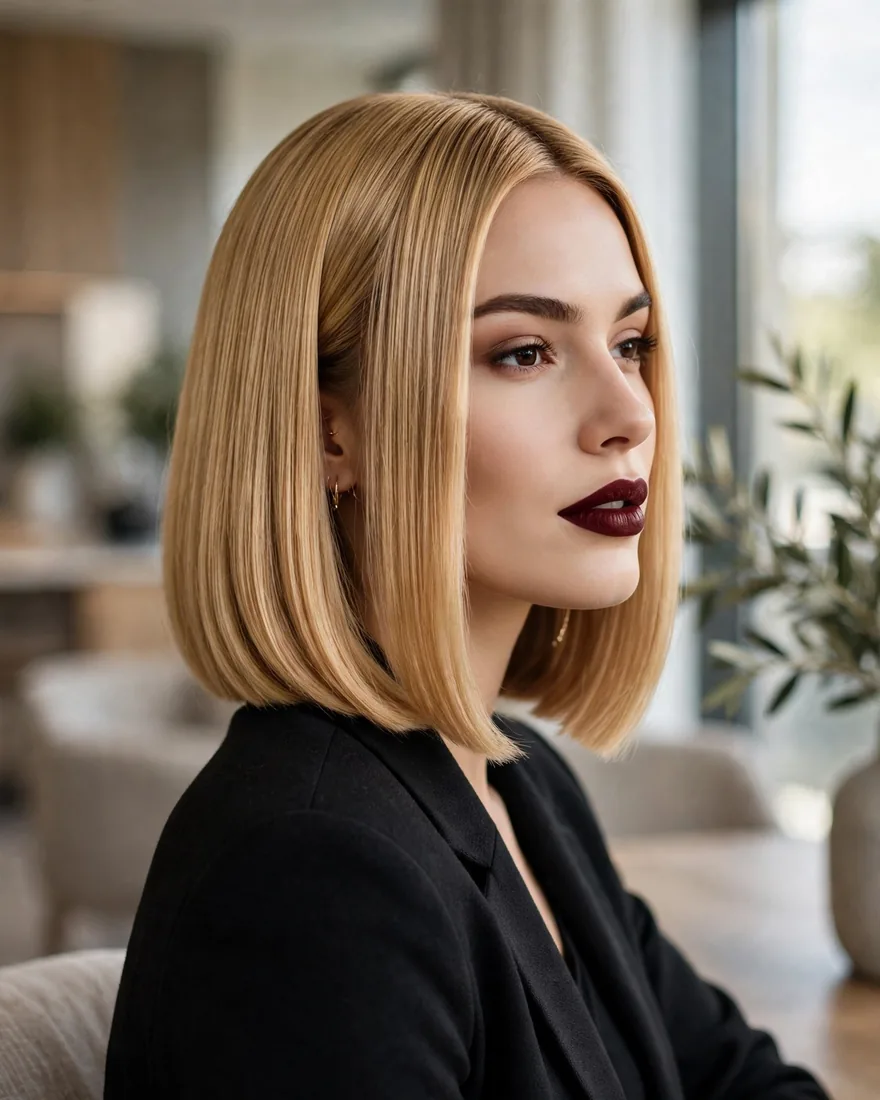
A glass-smooth blunt bob in honey blonde hair is a study in contrast: the cut is sharp and graphic while the color is warm and soft. Because there are no layers to break up the color, the honey reads as one rich, glossy sheet — which means the tone has to be exactly right, since there is nowhere for brassiness to hide. If you prefer texture over glass ends, textured choppy bob hairstyles offer the same length with more forgiveness.
Benefits:
- The blunt cut makes fine hair look instantly thicker
- One-length hair shows off honey blonde hair color at its glossiest
- Styling is genuinely wash-and-go for straight hair types
Pro Tip: This cut lives or dies on the ends — book a dusting trim every six to eight weeks, because even slightly frayed ends ruin the glass effect.
How To Style: Blow dry smooth with a paddle brush, then run a flat iron over the ends in one pass. Finish with a pea-sized drop of shine serum, mid-lengths to ends only.
Best For: Fine to medium straight hair; oval and heart face shapes; anyone who wants honey blonde hair with maximum polish.
6. Balayage With Loose Curls
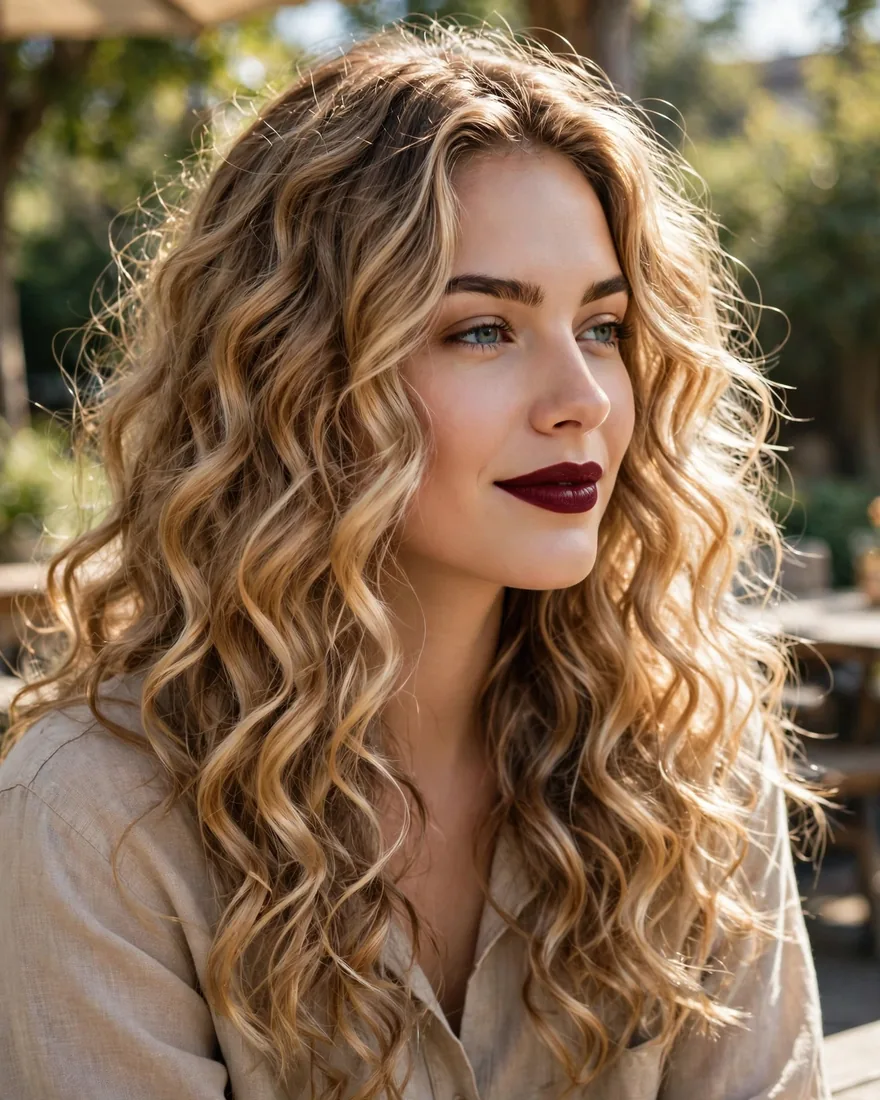
Balayage and honey blonde hair were made for each other — the hand-painted technique creates exactly the sun-kissed, graduated warmth that defines the shade. Worn in loose curls, the color shifts from deeper honey at the roots to brighter golden ends with every turn of the hair. Among balayage hairstyles, the honey version is the warmest and most forgiving of regrowth.
Benefits:
- The lowest-maintenance blonde technique — touch-ups every 12–16 weeks
- Loose curls multiply the dimension the balayage creates
- No harsh regrowth line, ever, when the blend is done correctly
Pro Tip: Ask your colorist to keep the brightness concentrated from the mid-lengths down and leave the top third close to your natural color. That placement is what makes balayage grow out invisibly.
How To Style: Wrap one-inch sections around a curling wand, leaving the last inch of ends out for a modern finish. Shake out with your fingers and mist with flexible-hold spray.
Best For: Medium brown to dark blonde natural bases; wavy to curly textures; anyone who wants honey blonde hair without quarterly salon bills.
7. Dimensional Highlights
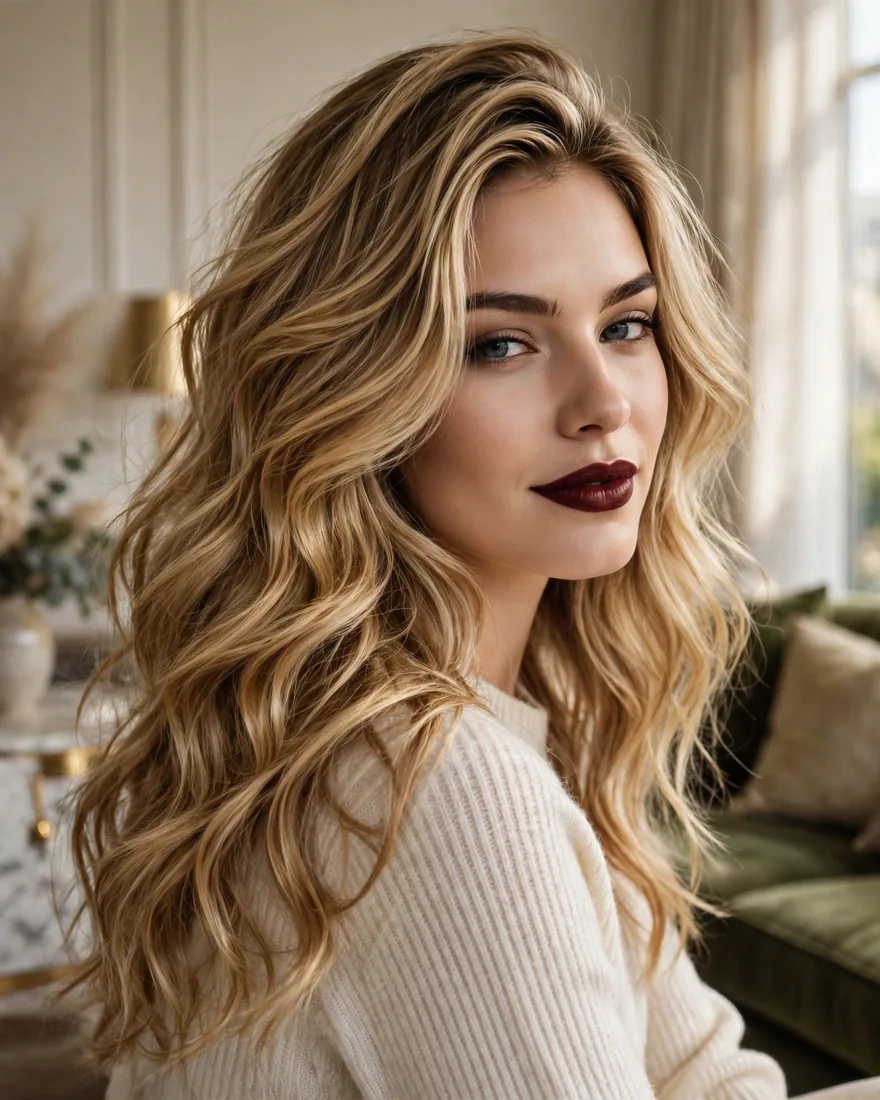
Dimensional color means weaving two or three related honey tones through the hair instead of lifting everything to one flat shade — think golden honey, warm beige, and a whisper of caramel highlights for depth. The result is honey blonde hair with shadows and light built in, so it never looks one-dimensional or wig-like. This is the technique behind most “how is her blonde so good?” moments.
Benefits:
- Multiple tones make hair look thicker and fuller
- Depth at the roots means softer, longer-lasting grow-out
- Flatters nearly every skin tone because warm and neutral tones coexist
Pro Tip: Bring three reference photos, not one — and make sure they show the hair in daylight, not just salon lighting. Dimensional color looks different in each, and your colorist needs the range.
How To Style: This color does the work, so keep styling simple: a smooth blowout or loose waves let the dimension show. Avoid tight curls, which can chop the color into stripes.
Best For: All natural bases from dark blonde to medium brown; fine hair that needs the illusion of fullness; warm and neutral undertones.
8. Money Piece Face Frame

The money piece — two bright ribbons of honey blonde hair framing the face — is the highest-impact, lowest-commitment way to wear the shade. The rest of your hair can stay its natural color while the face frame does all the brightening work. It is also the smartest trial run: if you are unsure honey blonde hair suits you, a money piece answers the question for a fraction of the cost of a full color.
Benefits:
- Instant brightness around the face with minimal chemical processing
- Quick and affordable to touch up — often a single salon visit under an hour
- Grows out without a visible line when blended with a slight shadow at the root
Pro Tip: Keep the money piece slightly wider than you think — about an inch on each side. Too thin and it disappears; too thick and it becomes a chunky highlight from 2003.
How To Style: Blow dry the front sections forward and away from your face with a small round brush. A slight bend at the ends keeps the frame soft rather than stripey.
Best For: Darker natural bases that want brightness without full bleaching; all face shapes; anyone testing honey blonde hair before committing.
9. Shadow Root Melt With Beachy Waves
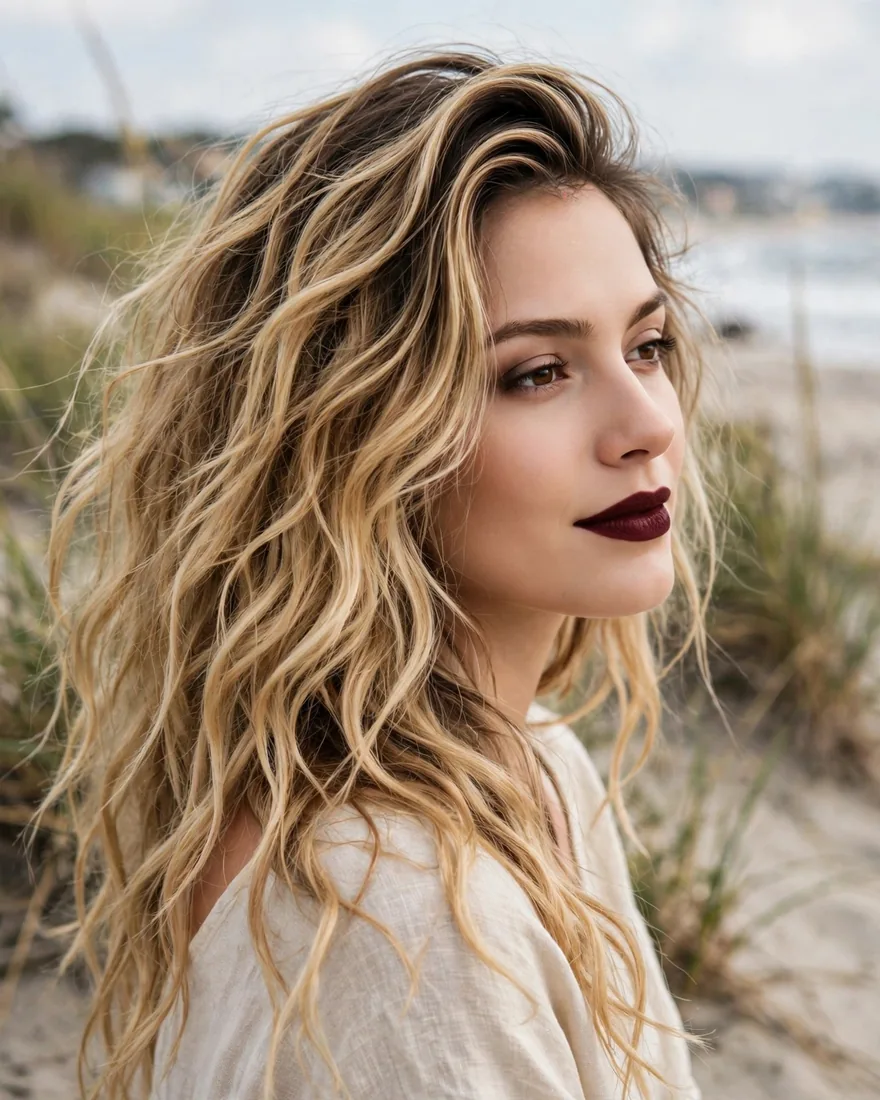
A shadow root takes the root-shadow idea further: your colorist deliberately colors the first two to three inches a deeper honey-brown, then melts it into brighter honey blonde hair through the lengths. Add beachy waves and the whole thing reads as the grown-out surfer blonde everyone wants but nobody wants to maintain. The honesty here is that the “grown-out” part is engineered — which is exactly why it works.
Benefits:
- Engineered grow-out means four to five months between full appointments
- Beachy texture disguises any uneven fading as it grows
- The deeper root makes the honey lengths look brighter by contrast
Pro Tip: The shadow root should be a true honey-brown, not your uncolored dark root — matching it to your natural base is what makes the grow-out seamless.
How To Style: Mist damp hair with salt spray, braid into two loose braids, and let it air dry. Undo, scrunch, and you have beachy waves that show off the melt.
Best For: Medium to long hair; natural bases medium brown and darker; anyone prioritizing low salon frequency.
10. Creamy Beige-Gold Lob
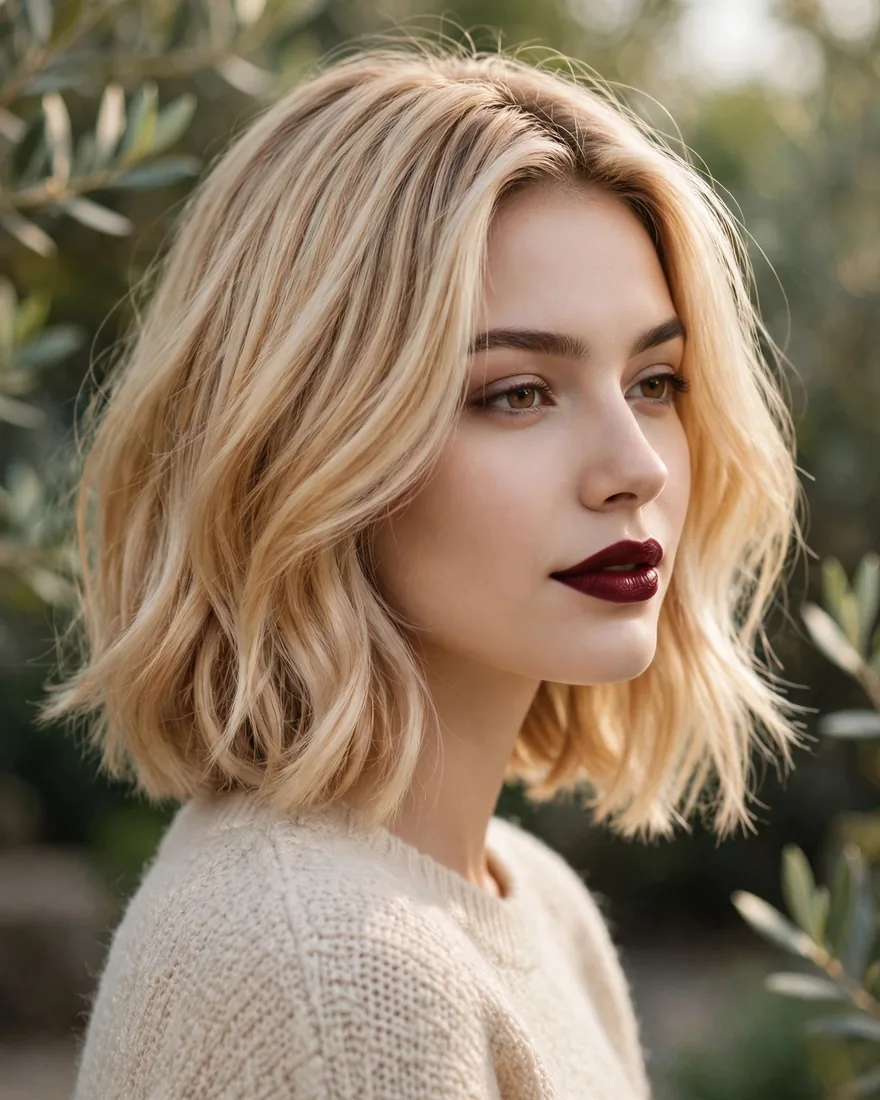
Not all honey blonde hair leans orange-gold — the creamy beige-gold version pulls the shade toward neutral, which makes it the best honey option for cooler skin undertones. On a lob, it has a quiet-luxury feel, closer to old money blonde than beachy blonde. The beige in the formula is doing real work: it cancels the brassiness that warm blondes fight, while the gold keeps it from going flat and ashy.
Benefits:
- The most wearable honey blonde hair for cool and neutral undertones
- Beige-gold tones resist brassiness longer than pure golden honey
- The lob cut keeps the look current and professional
Pro Tip: The word to use at the salon is “beige” — say “honey blonde with a beige base, not a gold base” and you will avoid the orange-gold result many colorists default to.
How To Style: Blow dry straight with a slight bend at the ends, or add soft waves with a flat iron. This shade looks best polished rather than tousled.
Best For: Cool to neutral skin undertones; fine to medium hair; anyone who loves honey warmth but fears brassiness.
11. Textured Bob With Rooted Balayage

Take a chin-to-shoulder textured bob, paint honey blonde hair through it with balayage, and keep the roots deliberately deeper — that is this look, and it is one of the most modern ways to wear honey right now. The texture (point-cut ends, piecey layers) breaks up the color so the balayage reads as natural variation rather than salon stripes. Short hair, interestingly, shows off balayage placement better than long hair because there is less length to dilute it.
Benefits:
- Short length means less hair to color, tone, and maintain
- Textured ends make the balayage grow out without any line
- The rooted base keeps it office-appropriate while the honey keeps it fun
Pro Tip: On short hair, balayage placement matters more, not less — ask for brightness concentrated around the face and the top layer, with the underlayers kept deeper for contrast.
How To Style: Work a pea-sized amount of texturizing cream through dry hair, twisting random sections. The piecey finish is the point — do not over-smooth it.
Best For: Straight to wavy textures; oval, heart, and long face shapes; anyone wanting honey blonde hair with an edge.
12. Lived-In Balayage Waves

“Lived-in” is salon shorthand for color that looks good at week twelve, not just week one — and honey blonde hair in a lived-in balayage is the poster child. The colorist leaves significant depth between the honey pieces, keeps the root area soft and shadowed, and lets the waves do the blending. It is the least precious blonde on this list, which is precisely its appeal: it is designed to be low-drama.
Benefits:
- Realistically goes four to six months between color appointments
- Depth between pieces means it never looks flat as it fades
- Waves camouflage grow-out, fading, and everything in between
Pro Tip: “Lived-in” only works if the colorist leaves enough of your natural color showing — if every strand gets lightened, it is just blonde, and it will grow out like blonde. Ask what percentage stays natural.
How To Style: The messier the wave, the better the color looks. Use a wand on alternating sections, then shake everything out aggressively — polished curls fight the lived-in brief.
Best For: Busy schedules and low-maintenance preferences; medium brown to dark blonde bases; wavy and curly textures.
13. Toasted Honey Blowout

Toasted honey is honey blonde hair taken one step deeper — think honey with the edges caramelized, like the top of a crème brûlée. It is the answer for anyone who finds classic honey blonde a touch too light or too golden. A bouncy blowout shows off the “toasted” dimension: the deeper golden-brown lowlights and the brighter honey top notes shifting as the hair moves.
Benefits:
- Deeper honey suits medium and dark bases better than pale honey
- The toasted lowlights make hair look thicker and healthier
- Fades more gracefully than lighter honey because there is less lift involved
Pro Tip: “Toasted” is not a standard salon term, so translate it: ask for “honey blonde with deeper golden-brown lowlights, about a level darker than the honey.” Photos help enormously here.
How To Style: A classic bouncy blowout — round brush, tension, and cool shot on each section. The volume is what displays the toasted dimension, so do not skip the crown lift.
Best For: Medium brown natural bases; warm and olive undertones; thick hair that can carry deeper color.
How the 13 looks compare at a glance:
| Look | Best Natural Base | Upkeep Level |
|---|---|---|
| S-Waves With Soft Root Shadow | Light brown to dark blonde | Medium — gloss every 8–10 weeks |
| Vintage Blowout Curls | Dark blonde to medium brown | Medium — toner every 6–8 weeks |
| Bronde Melt With Feathered Layers | Light brown to dark blonde | Low — touch-up every 12–16 weeks |
| Ribbon Highlights on a Lob | Medium brown to dark blonde | Medium — partial highlight every 10–12 weeks |
| Sleek Blunt Bob | Dark blonde to light brown | Medium-high — tone every 6–8 weeks, trims every 6–8 weeks |
| Balayage With Loose Curls | Medium brown to dark blonde | Low — touch-up every 12–16 weeks |
| Dimensional Highlights | Dark blonde to medium brown | Medium — gloss every 8–10 weeks |
| Money Piece Face Frame | Any, including dark brown | Low — quick touch-up every 8–12 weeks |
| Shadow Root Melt With Beachy Waves | Medium brown and darker | Low — full refresh every 4–5 months |
| Creamy Beige-Gold Lob | Dark blonde to light brown | Medium — gloss every 6–8 weeks to hold the beige |
| Textured Bob With Rooted Balayage | Light to medium brown | Low — balayage refresh every 12–16 weeks |
| Lived-In Balayage Waves | Medium brown to dark blonde | Lowest — 4–6 months between appointments |
| Toasted Honey Blowout | Medium brown | Medium — gloss every 8–10 weeks |
How to Choose the Right Honey Blonde
Your natural base color decides how easily — and how healthily — you can reach honey blonde hair, so be honest about your starting point before you fall in love with a photo. Light brown and dark blonde bases are the sweet spot: they lift to honey with minimal bleaching, sometimes with high-lift color alone, which means less damage and a more predictable tone. Medium brown hair can absolutely go honey, but it needs genuine lightening, and the warmer your natural pigment, the harder your colorist has to work to keep the result golden rather than orange.
Dark brown and near-black hair can reach honey blonde hair too, but this is where honesty matters most: it usually takes more than one session, it costs more, and there is real breakage risk if it is rushed. A good colorist will tell you this upfront and plan a two-visit route. If yours promises dark-to-honey in a single afternoon, get a second opinion.
Texture changes the equation as well. On textured and curly hairstyles, honey blonde hair behaves differently because curls have uneven porosity — the bends in each strand absorb lightener faster than the straighter sections, which can lead to patchy lift. Colorists who work with curls know to adjust timing and formulation section by section, and to lean on balayage-style painting rather than full foiling. If your curls are color-treated, expect your stylist to prioritize bond-builders and deep conditioning in the plan, and to space sessions further apart. The result is worth the patience: honey tones on defined curls catch light in a way straight hair simply cannot match.
What to Ask Your Colorist (Salon Vocabulary)
Here is the uncomfortable truth about booking honey blonde hair: the phrase means different things to different colorists. To one it is a golden level-8 all-over color; to another it is a warm balayage; to a third it is practically caramel. The appointment goes wrong when you say “honey blonde” and assume you are picturing the same thing. The fix is vocabulary — a few precise terms that close the gap between your photo and their formulation.
Start with level and tone: honey blonde hair generally lives around a level 7 to 8 with a gold base. Saying “level 8 gold, warm but not orange” gives your colorist a technical anchor that a photo alone cannot. Then name the technique you want — balayage for a soft grow-out, foilyage (foiled balayage) for more brightness with a similar blend, or a root shadow/root melt if you want depth at the scalp. If brightness around your face matters, say “money piece” and specify how bold you want it.
Two more terms earn their keep. “Toner” or “gloss” is the sheer color applied after lightening that actually creates the honey — lightener alone only makes hair pale yellow, and the gloss is what turns it golden, beige, or toasted. And “grow-out plan” is the question most people forget: ask how this color will look in ten weeks and when you should come back. A colorist who answers that clearly is one who is planning your honey blonde hair as a long-term relationship, not a one-time service.
How Honey Blonde Fades and How to Keep It Warm
Honey blonde hair does not fade all at once — it follows a predictable timeline, and knowing it removes most of the panic. Weeks one to two are the honeymoon: the gloss is fresh, the tone is exactly as planned, and the shine is at its peak. Weeks three to four bring softening — the very brightest pieces settle, which most people actually prefer. Around weeks six to eight, the warmth starts tipping from golden toward brassy, especially on previously lightened ends and if you wash frequently. This is normal chemistry, not a failed color job.
The single most effective maintenance habit is a gloss or toner refresh every six to eight weeks. It is a short, inexpensive appointment — often under an hour — and it resets the honey tone without re-lightening anything. Between appointments, shampoo choice matters more than most people expect: use a sulfate-free formula to slow color washout, and be cautious with purple shampoo. Purple shampoo neutralizes yellow, which is useful for icy blondes but can drag honey blonde hair toward dull beige if overused — once a week at most, and skip it entirely if your honey leans beige-gold already.
Two quiet culprits accelerate fading: heat and hard water. Flat irons and curling wands at maximum temperature cook toner out of the hair shaft, so keep tools at or below 350°F and always use a heat protectant. Hard water deposits minerals that turn honey blonde hair brassy and rough — if your shower water is hard, a shower filter is one of the highest-return purchases in hair care. None of this is complicated; it is just consistent, and consistency is what keeps honey blonde hair looking like week two in week ten.
FAQs
Is honey blonde hair warm or cool?
Honey blonde hair is firmly warm — its defining characteristic is a golden-yellow base that reads sunny rather than icy. Within that warmth there is range: classic honey leans golden, beige-gold versions pull toward neutral, and toasted honey dips deeper toward caramel. If you want a cool blonde, honey is the wrong family; look at ash or platinum shades instead.
What skin tones look best with honey blonde hair?
Honey blonde hair flatters warm and neutral undertones most naturally — it echoes the golden tones already in the skin. Olive undertones pair beautifully with deeper toasted honey. Cool undertones can absolutely wear it, but the beige-gold version works better than pure golden honey, which can make cool skin look sallow. When in doubt, hold a gold and a silver fabric to your face in daylight: gold winning means honey blonde is your shade.
Do I need bleach to get honey blonde hair?
It depends on your starting color. Dark blonde and light brown hair can often reach honey blonde with high-lift permanent color alone, no bleach needed. Medium brown hair and darker generally requires lightener (bleach) to lift through the underlying warm pigment. Your colorist should assess your base and be honest about which route yours needs — anyone who bleach-lightens hair that could have lifted with color is over-processing.
How do I stop my honey blonde hair going brassy?
Brassiness is faded toner plus exposed underlying pigment, so the fix is re-toning, not stripping. Book a gloss refresh every six to eight weeks, wash with sulfate-free shampoo, limit purple shampoo to once a week at most, protect hair from high heat, and consider a shower filter if your water is hard. Chasing brassiness with more lightening usually makes it worse — tone, don’t lift.
What is the difference between honey blonde and caramel?
Honey blonde is lighter and sits in the blonde family — golden, bright, around a level 7 to 8. Caramel is deeper and sits between blonde and brown, with a richer brown-gold base around a level 6 to 7. On the head, honey reads as “warm blonde” and caramel reads as “golden brown.” They blend beautifully together, which is why dimensional honey color often includes caramel lowlights.
Can I get honey blonde hair on dark brown hair?
Yes, but plan for a journey rather than a single appointment. Dark brown hair needs significant lift to reach honey blonde, which usually means two sessions spaced several weeks apart to protect the hair’s integrity. Techniques like balayage, a money piece, or a shadow root melt are smarter starting points than all-over lightening — they deliver the honey effect with less damage and an easier grow-out.
How often should honey blonde hair be toned or glossed?
Every six to eight weeks for most people. Gloss appointments are quick — typically 30 to 45 minutes — and they restore the golden tone without any additional lightening. If you wash your hair daily, swim frequently, or have hard water, you may drift toward the six-week end of that range. Lived-in balayage versions can sometimes stretch to ten weeks because the deeper roots disguise fading.
Is honey blonde hair high maintenance?
It depends entirely on the technique, not the shade. A lived-in honey balayage or shadow root melt is genuinely low maintenance — months between appointments. A global honey blonde with no root shadow is high maintenance, needing root touch-ups every four to six weeks plus regular glossing. When booking, ask your colorist for the honest maintenance schedule of the specific technique, not just the color.
Honey blonde hair rewards planning more than any other blonde shade — choose the technique that matches your base color and your real-life maintenance appetite, learn the five salon terms that get you the right result, and treat the six-week gloss as non-negotiable. Do that, and the warm, golden color you walk out with is the color you keep.