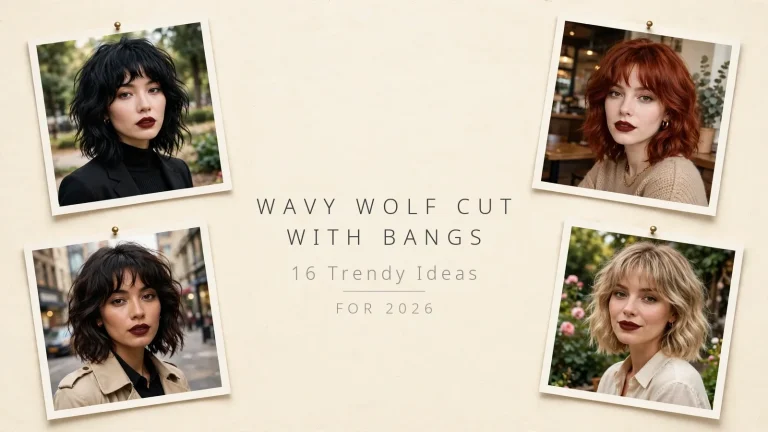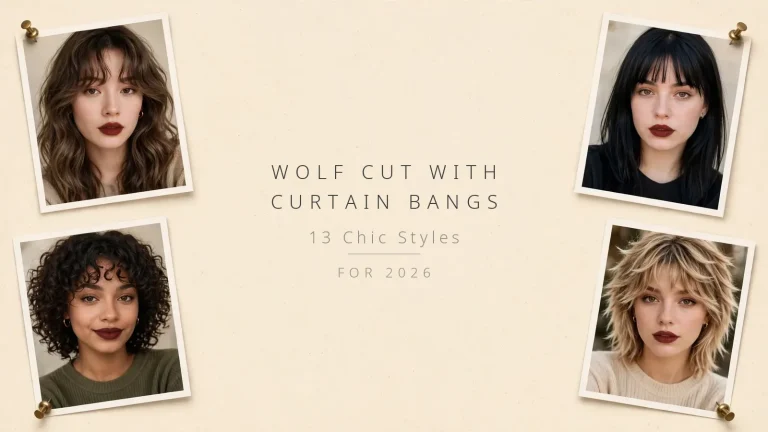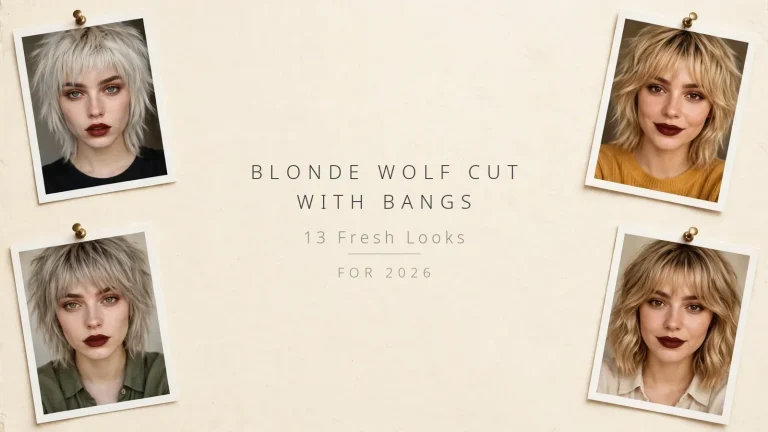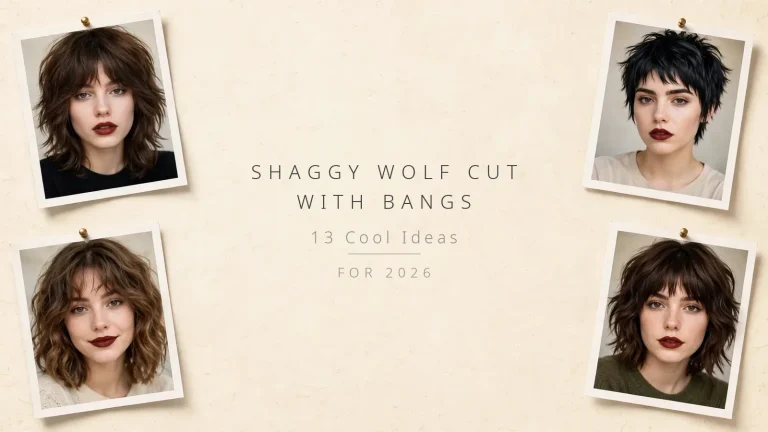
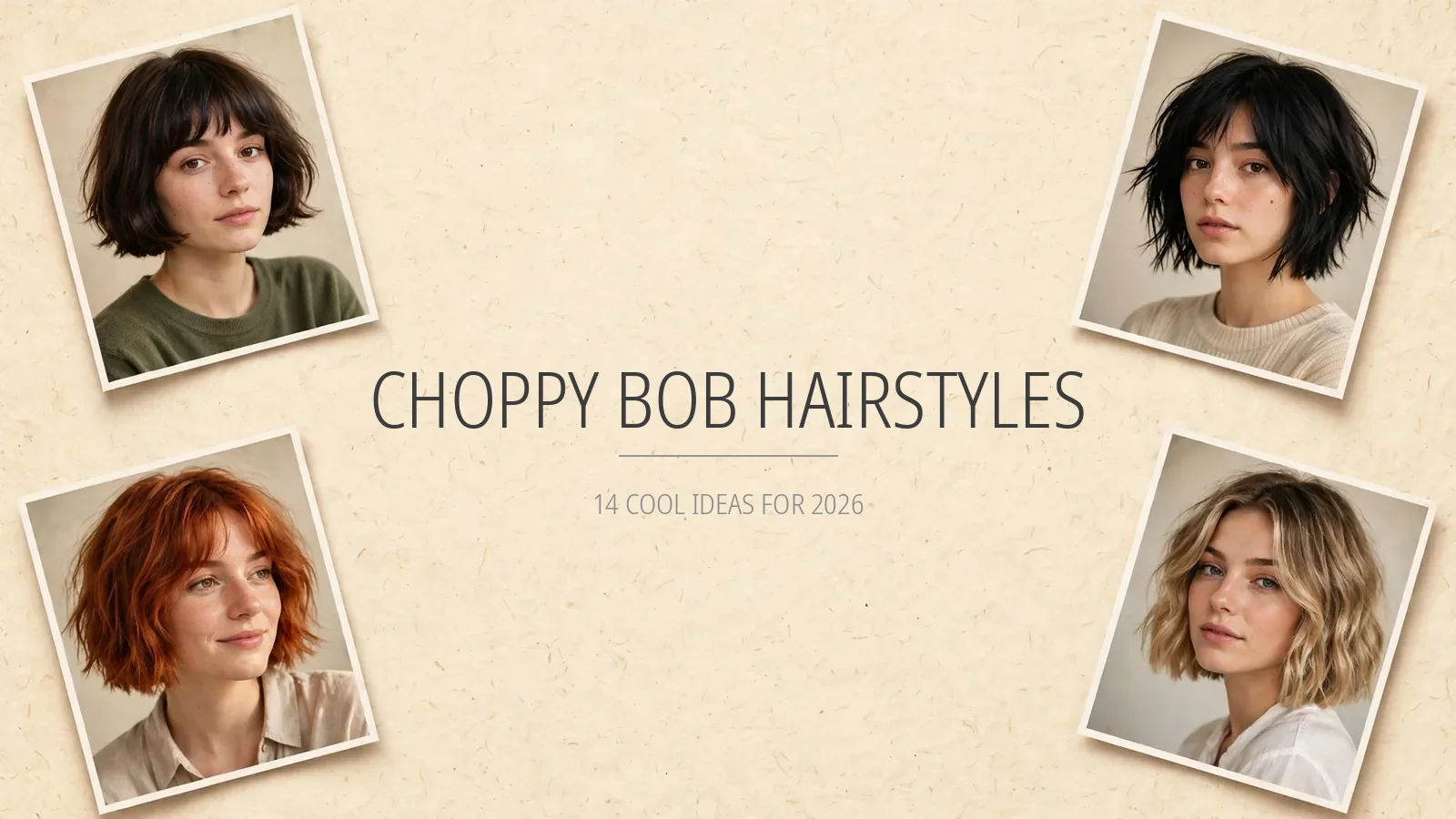
Choppy Bob Hairstyles – 14 Cool Ideas for 2026
There is a particular kind of haircut envy that hits when you see a choppy bob in the wild — the ends flick exactly where they should, the texture looks accidental in the best way, and the whole thing reads expensive without trying. Then you show the same photo to your stylist, and what grows out of the chair is either flat, puffy, or a shaggy triangle that looks nothing like the reference. Choppy bob hairstyles are not one haircut; they are a cutting technique applied to your specific hair density and texture, and getting the wrong technique for your hair type is the entire difference between cool and catastrophe.
This guide fixes that. You will get 14 honest, hair-type-matched choppy bob ideas, a density-based decision framework so you can filter the list before you ever book, and the razor-vs-shears conversation to have with your stylist — because the tool they use matters more than the photo you bring. Everything here is written for real hair that grows, frizzes, and goes flat on humid days, not for studio hair.
Table of Contents
- 14 Choppy Bob Ideas for Every Hair Type
- 1. The Classic Choppy Bob
- 2. Soft Choppy Bob
- 3. Jaw-Length Choppy Bob
- 4. Chin-Length Textured Bob
- 5. Choppy Lob
- 6. Undone Choppy Bob
- 7. Choppy Bob with Curtain Bangs
- 8. Asymmetrical Choppy Bob
- 9. Stacked Choppy Bob
- 10. Choppy Bob with Disconnected Fringe
- 11. Boy Bob Chop
- 12. Copper Choppy Bob
- 13. Blonde Balayage Choppy Bob
- 14. The Minimalist Chop
- How to Choose the Right Choppy Bob for Your Hair Density
- Razor vs Shears: What to Ask Your Stylist
- Choppy Bob Hairstyles FAQs
- Will a choppy bob work on fine or thin hair?
- Are choppy bobs high maintenance?
- Razor cut or shears — which is better for my hair type?
- How do I style a choppy bob to look undone, not messy?
- Can I get a choppy bob with curly hair?
- How long does a choppy bob take to grow out?
- How often does a choppy bob need trimming?
- Will a choppy bob suit a round face?
14 Choppy Bob Ideas for Every Hair Type
1. The Classic Choppy Bob

The one that started it all: a chin-to-neck length bob with piecey, textured ends that move instead of sitting in one solid block. The classic choppy bob works because the interior texture removes bulk without shortening the outline, which is why it photographs with that separated, feathered finish everyone screenshots.
Benefits:
- Removes weight from thick hair while keeping the length that frames the face.
- The textured perimeter means the cut holds its shape as it grows out, so bad-hair days are rarer.
- Works with a middle part, side part, or no part at all — the chop is forgiving.
Pro Tip: Ask for the perimeter to be cut first and texturized second. If your stylist starts thinning before the length is set, the ends go stringy instead of piecey.
How To Style: Rough-dry with your fingers, then work a pea-sized amount of texture cream through the mid-lengths and ends only. Pinch random sections to encourage separation — brushing it smooth kills the point of the cut.
Best For: Medium to thick density; straight to wavy texture. This is the safest first choppy bob if you have never had textured ends before.
2. Soft Choppy Bob

A gentler take on the chop: the layers are beveled rather than shattered, so the ends look lived-in instead of edgy. The soft choppy bob is the answer for anyone who loves the idea of texture but works somewhere a severe razor edge would raise eyebrows — it reads polished at first glance and interesting up close.
Benefits:
- Gives fine to medium hair the illusion of fullness, because bevelled ends look thicker than blunt ones that collapse.
- Office-friendly: texture is visible without reading messy or rebellious.
- Forgiving grow-out — the soft edges just turn into a regular bob over a couple of months.
Pro Tip: This version suits point-cutting over razor work. Razors can fray fine ends and make them look thinner; point-cut texture keeps the outline denser.
How To Style: Blow-dry with a round brush turned slightly under, then finish with a light dry oil on the ends. The goal is movement with shine, not matte separation.
Best For: Fine to medium density; straight to slightly wavy hair. Anyone who wants texture without commitment to an edgy look.
3. Jaw-Length Choppy Bob

Short, sharp, and unapologetic — the jaw-length choppy bob ends right at the jawline with flicked, separated ends that draw every eye to your cheekbones. Because there is less length to absorb mistakes, the texturizing has to be precise: too much and the ends disappear, too little and it reads as an ordinary short bob. If you like the precision of a razor cut bob, this is where that technique shows its best work.
Benefits:
- Instantly defines the jawline and cheekbones — the strongest face-framing cut on this list.
- Dries fast and styles in minutes because there is simply less hair.
- Makes fine hair look dramatically fuller, since short ends stack with nowhere to collapse to.
Pro Tip: Bring a photo of the exact jawline length you want, because “jaw length” means different things to different stylists — front-of-jaw versus under-the-jaw is a full inch of difference.
How To Style: Air-dry or rough-dry, then use a flat iron to flick alternate sections outward and inward. A tiny amount of wax on the ends locks the flick without stiffness.
Best For: Medium density; straight texture that holds a flick. Oval, heart, and long face shapes get the most from the jawline focus.
4. Chin-Length Textured Bob

The chin-length textured bob sits a touch longer than the jaw-length version, with interior chopping that keeps the silhouette slim instead of bulky at the sides. This is the choppy bob for thick-haired people who have been burned before — the texture is placed inside the cut where it removes weight, not at the perimeter where it would create a triangle.
Benefits:
- Takes serious weight out of thick hair without visible thinning, which is the classic complaint with textured bobs.
- The extra inch over jaw length makes it versatile: tuck one side, wear it straight, or add a wave.
- Grows out gracefully because the weight distribution stays balanced as length returns.
Pro Tip: If your hair is thick, ask your stylist to texturize the interior in vertical sections rather than thinning the ends. End-thinning on thick hair creates the dreaded see-through tips.
How To Style: Dry with a paddle brush for a sleek base, then scrunch a dime of mousse into the ends for texture. The contrast between smooth roots and piecey ends is the whole look.
Best For: Medium to thick density; straight to wavy hair that tends to go wide instead of falling flat.
5. Choppy Lob

The choppy lob keeps everything people love about the chop but at collarbone length, which makes it the lowest-risk entry point on this list. You get the piecey ends and movement with enough length to still pull back, and if you hate the texture, it grows into a regular shaggy lob with zero awkwardness.
Benefits:
- The most versatile length — ponytails, half-ups, and full styling range all still work.
- Texture shows up beautifully on longer lengths because there is more hair to separate.
- Suits every density: stylists can adjust how much texture goes in without changing the look.
Pro Tip: The choppy lob photographs best with the front pieces slightly longer than the back — a nearly invisible A-line that keeps it from looking boxy.
How To Style: Wrap random sections around a 1.25-inch curling iron, leaving the ends out, then shake it through. Sea-salt spray on day two brings the texture back to life.
Best For: All densities and textures. The universal pick if you are nervous about going short.
6. Undone Choppy Bob

The undone choppy bob is the “I woke up like this” cut — heavily textured ends, a lived-in part, and zero obligation to look polished. It is the easiest choppy bob to live with because the entire aesthetic is controlled imperfection, and it shares DNA with the longer long bob in how it rewards air-drying.
Benefits:
- Genuinely low-effort: this cut is designed to be air-dried and scrunched.
- Hides regrowth and uneven texture better than any precise cut on this list.
- Gets better on day two and three, when natural oils add separation.
Pro Tip: “Undone” still needs clean ends — split ends make this cut look neglected instead of cool. A micro-trim every 10 weeks keeps the illusion intact.
How To Style: Apply mousse to damp hair, scrunch upward, and air-dry or diffuse. Once dry, flip your part to the opposite side for instant volume.
Best For: Medium to thick density; wavy texture is the natural home of this cut, though straight hair can fake it with product.
7. Choppy Bob with Curtain Bangs

Adding curtain bangs to a choppy bob doubles the face-framing: the bangs soften the forehead while the chopped ends add edge around the jaw. The two textures need to speak to each other, though — wispy curtain bangs with heavily shattered ends look disconnected, so the stylist has to match the bang texture to the bob texture. Fans of the short shag with bangs will recognize the same balancing act.
Benefits:
- Curtain bangs disguise forehead width and draw attention to the eyes.
- The combination reads softer than a chop alone, which suits people who want edge without severity.
- Bangs can be grown into face-framing layers if you change your mind — low commitment.
Pro Tip: Ask for the bangs to be cut dry or nearly dry. Wet bangs shrink as they dry, and curtain bangs that end up too short next to a choppy bob look choppy in the wrong way.
How To Style: Blow-dry the bangs first with a round brush, curving them away from the face. Style the bob separately — trying to dry everything at once is how bangs get lost.
Best For: Medium density; straight to wavy hair. Round and heart face shapes benefit most from the curtain framing.
8. Asymmetrical Choppy Bob
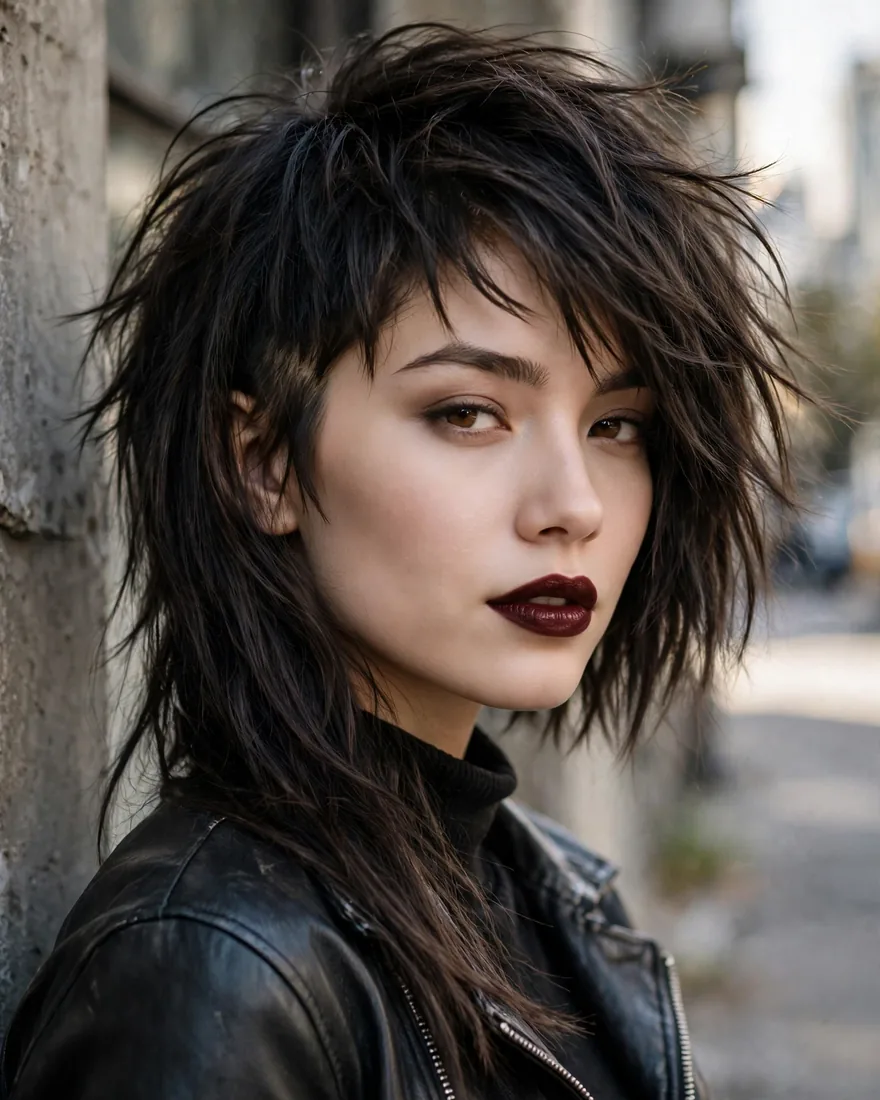
One side sits at the chin, the other grazes the collarbone — the asymmetrical choppy bob is the boldest silhouette on this list, and the choppy texture is what keeps it from looking like a styling accident. The asymmetry has to be deliberate and visible; anything less than an inch of difference just reads as uneven.
Benefits:
- The most fashion-forward option — it stands out in a sea of even bobs.
- The longer side slims a round face, while the short side shows off the jawline.
- Texture hides the grow-out line better than a blunt asymmetrical cut.
Pro Tip: Decide which side is longer based on your natural part, not the photo. Asymmetry fights your part and you will lose the battle every morning.
How To Style: Straighten or smooth the longer side and add texture to the shorter side — the contrast between sleek and piecey is what sells the asymmetry.
Best For: Medium to thick density; straight hair shows the line best. Confident wearers who do not mind answering “is your haircut uneven?” from relatives.
9. Stacked Choppy Bob

The stacked choppy bob pairs a graduated, voluminous back with textured ends — all the crown lift of the classic stacked cut, but the chop keeps it from looking like a 2000s helmet. The stacking does the heavy lifting for volume, so the ends can be textured lightly rather than aggressively.
Benefits:
- Built-in crown volume that survives even on fine hair, which is rare for textured cuts.
- The graduation means the back never goes flat, even on day three.
- Looks intentional and styled with almost no effort — the architecture does the work.
Pro Tip: Stacking plus heavy texturizing is a recipe for a mullet silhouette. Tell your stylist you want the stack OR the texture to be the star, not both at full strength.
How To Style: Lift the crown with a round brush while blow-drying, directing the back sections upward. A root-lift spray at the crown is worth it for this cut.
Best For: Fine to medium density; straight hair. The best choppy bob for flat crowns that refuse to hold volume.
10. Choppy Bob with Disconnected Fringe

The disconnected fringe is cut as a separate, deliberate element — shorter and more textured than the rest of the bob, with a visible break between the fringe and the face-framing layers. It is editorial and striking, and it is also the highest-maintenance fringe on this list because the disconnect has to be maintained or it just grows into regular bangs.
Benefits:
- Instantly distinctive — nobody mistakes this for a safe haircut.
- The short fringe makes eyes the focal point of the whole face.
- Pairs beautifully with the piecey ends of the bob for a cohesive textured story.
Pro Tip: This fringe needs a trim every 3–4 weeks to keep the disconnect crisp. If you will not book that often, choose the curtain bangs (idea 7) instead.
How To Style: Style the fringe separately with a small round brush or flat iron, piece by piece. Product on the fringe, then hands off — touching it transfers oils and flattens it by noon.
Best For: Medium density; straight hair that holds a sharp edge. Oval and long face shapes carry a short fringe best.
11. Boy Bob Chop
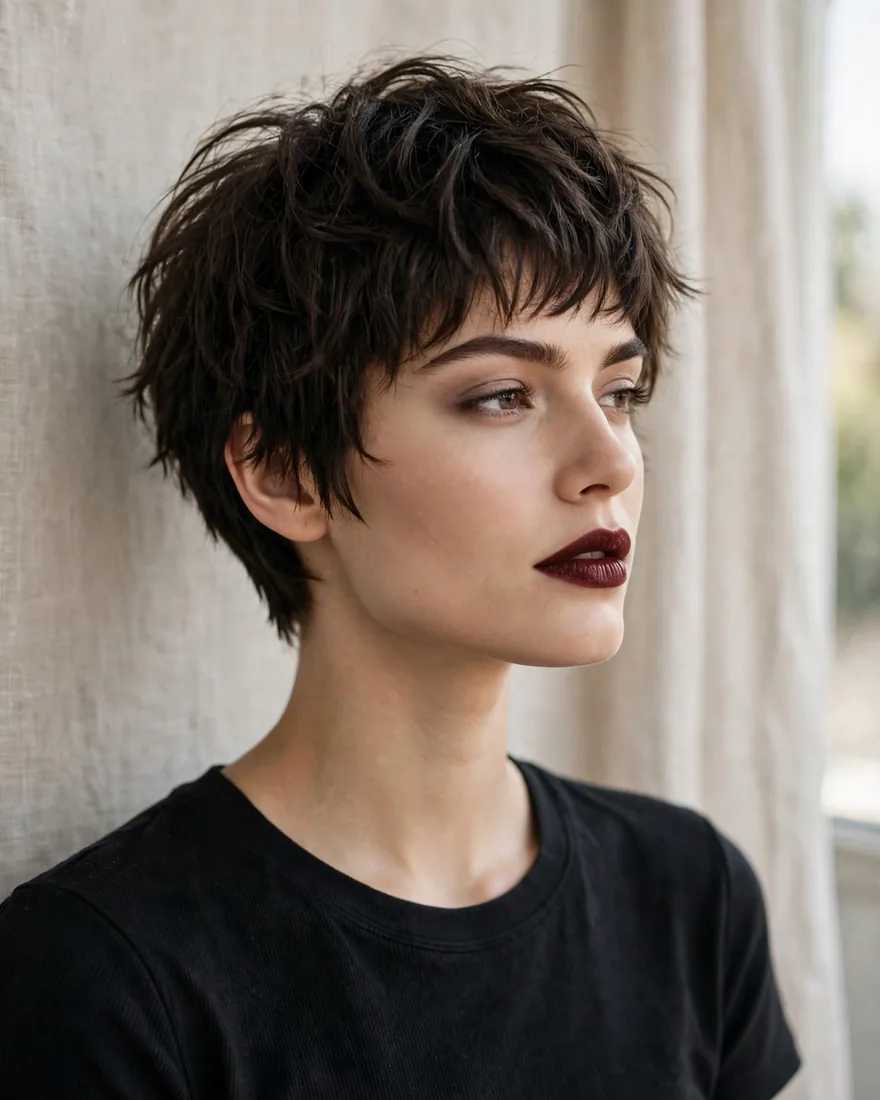
The boy bob chop is the shortest, most androgynous cut here — a chin-grazing bob with rough, boyish texture that sits somewhere between a bob and a grown-out pixie. It borrows the easy attitude of a layered haircut but keeps the bob perimeter, which is why it works for people who want short hair without committing to a pixie.
Benefits:
- The easiest grow-out on this list: it transitions naturally into a longer bob.
- Makes fine hair look thicker because the perimeter stays dense while the interior is textured.
- Wash-and-go friendly — the rough texture is the style.
Pro Tip: Keep the nape clean and the perimeter strong. If the back gets over-textured, the whole cut collapses into a pixie and the bob identity is lost.
How To Style: Towel-dry, add a little matte paste, and push the hair in different directions with your fingers. Done.
Best For: Fine to medium density; straight to wavy hair. Anyone flirting with a pixie but not ready to commit.
12. Copper Choppy Bob

Same chop, new attitude: the copper choppy bob uses rich copper color to make every textured piece visible, because dimension is what makes choppy ends readable. Color and cut amplify each other here — the copper catches light on every separated piece, and the texture keeps the copper from looking flat. It is the loudest option on this list and unapologetic about it.
Benefits:
- Color makes the texture visible in a way natural shades cannot — every piece catches light.
- Copper flatters an enormous range of skin tones when the undertone is matched (more on that below).
- The combination looks expensive and intentional, never accidental.
Pro Tip: Copper fades fast — faster than any other shade here. Budget for a gloss refresh every 4–6 weeks, or the texture you paid for disappears with the color.
How To Style: Shine is everything with copper. A glossing serum on the ends after styling keeps the color reflective so the chop reads.
Best For: Medium to thick density; warm and neutral skin tones. Anyone ready for color maintenance as a lifestyle.
13. Blonde Balayage Choppy Bob
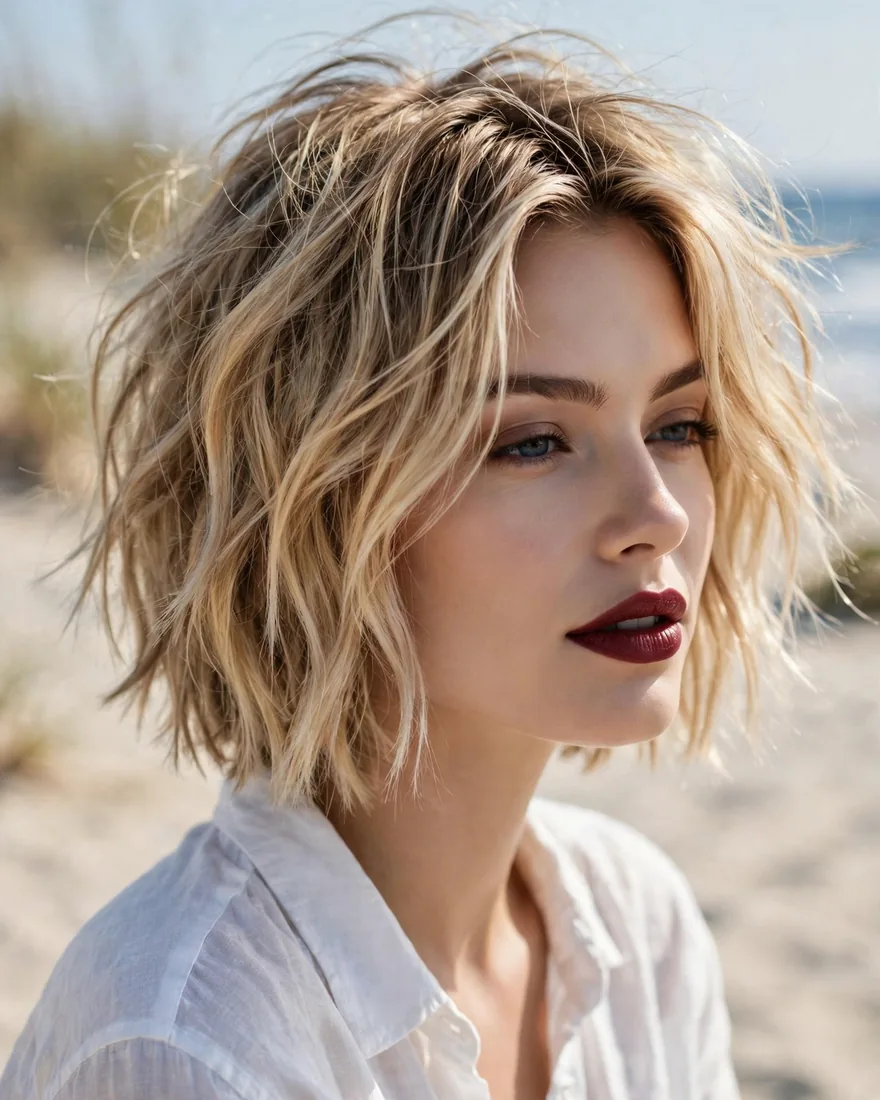
Blonde balayage painted through a choppy bob is the dimensional dream — the lightened pieces sit exactly where the texture separates, so the cut practically styles itself visually. This is the most salon-dependent idea on the list: the balayage placement has to follow the texture, not fight it, which means finding a colorist who understands how the cut moves. A good reference for the color family is honey blonde hair tones, which flatter the widest range of skin tones.
Benefits:
- Maximum visible dimension — light and texture multiply each other.
- Balayage grows out softly, so the color maintenance is lower than full highlights.
- Brightens the face without the harshness of all-over blonde.
Pro Tip: Get the cut first, then the balayage two weeks later — or find one stylist who does both in the right order. Balayage painted before the chop gets cut away.
How To Style: Waves show off the dimension best. Loose bends with a curling iron, ends left out, then a shine spray.
Best For: Medium density; hair that lightens without excessive damage. Cool and neutral skin tones suit the classic blonde; warm tones suit honey.
14. The Minimalist Chop
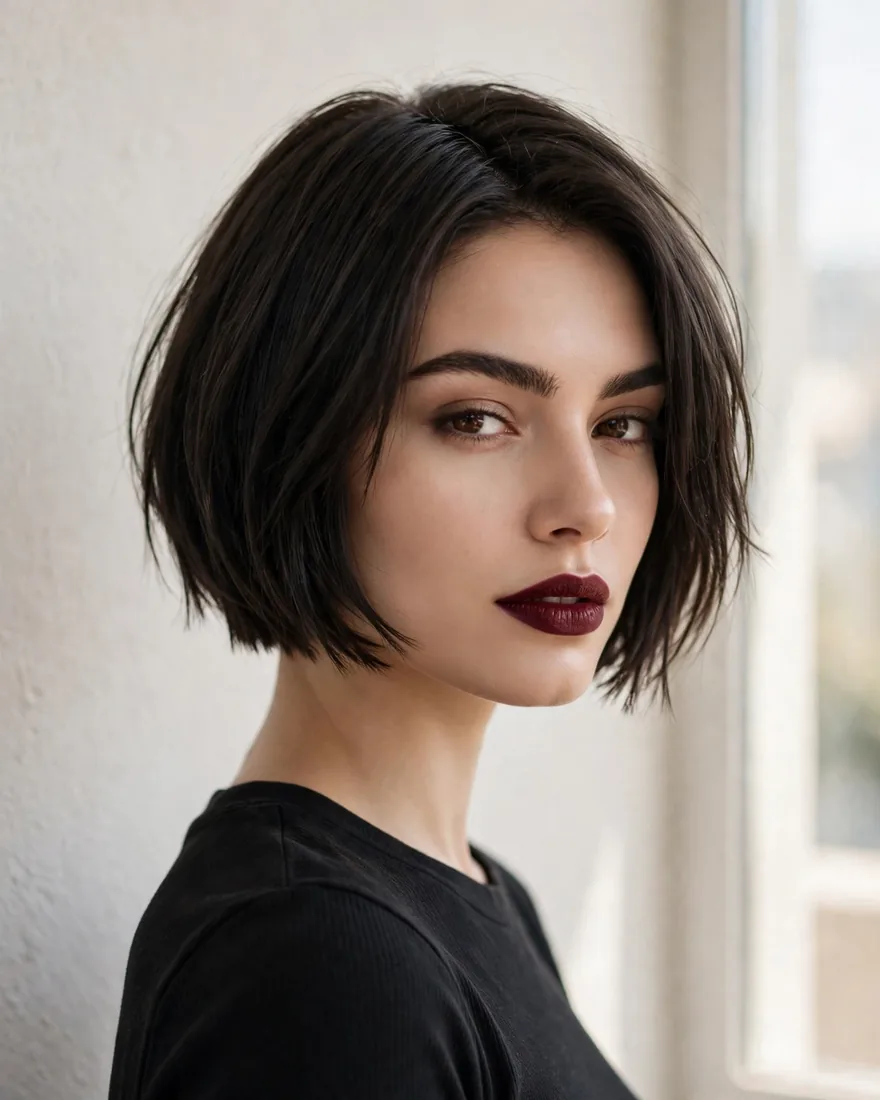
The minimalist chop is choppy texture at its quietest — a clean bob perimeter with just a whisper of interior texture, no visible shattering, no drama. It is for the person who wants the movement and grow-out benefits of a textured cut without anyone being able to point at the texture. Think of it as the choppy bob for minimalists who still want their hair to do something.
Benefits:
- All the grow-out and movement benefits of texture with none of the edginess.
- Works in the most conservative settings — nobody will call this an edgy haircut.
- The easiest texture to maintain: it barely needs refreshing between trims.
Pro Tip: Because the texture is subtle, the cut underneath has to be excellent. This is the idea where your stylist’s precision matters more than their texturizing skill.
How To Style: Blow-dry smooth with a paddle brush, then bend the very ends under with a round brush. The movement is in the ends, not the body.
Best For: Fine to medium density; straight hair. Anyone who wants the benefits of a choppy bob without the look of one.
How the 14 styles compare at a glance:
| Style | Best Density | Upkeep Level |
|---|---|---|
| The Classic Choppy Bob | Medium–thick | Medium |
| Soft Choppy Bob | Fine–medium | Low |
| Jaw-Length Choppy Bob | Medium | Medium |
| Chin-Length Textured Bob | Medium–thick | Medium |
| Choppy Lob | All densities | Low |
| Undone Choppy Bob | Medium–thick | Low |
| Choppy Bob with Curtain Bangs | Medium | Medium |
| Asymmetrical Choppy Bob | Medium–thick | Medium |
| Stacked Choppy Bob | Fine–medium | High |
| Choppy Bob with Disconnected Fringe | Medium | High |
| Boy Bob Chop | Fine–medium | Low |
| Copper Choppy Bob | Medium–thick | High |
| Blonde Balayage Choppy Bob | Medium | High |
| The Minimalist Chop | Fine–medium | Low |
How to Choose the Right Choppy Bob for Your Hair Density
Density is the filter that decides everything, so start here before falling in love with a photo. Fine hair is the trickiest: texture removes hair, and fine hair has the least to spare. The honest rule is that fine hair can absolutely wear a choppy bob, but the texture must be shallow and concentrated at the very ends — ideas 2, 9, 11, and 14 are your safe zone. If a stylist starts deep-point-cutting fine hair all the way up the strand, the ends go transparent and the bob looks sparse instead of piecey. Walk out of any consultation where the stylist reaches for thinning shears on fine hair without explaining exactly where the texture goes.
Medium density is the sweet spot — nearly every idea on this list works, and your main decision is aesthetic: sharp or soft, short or lob. Thick hair has the opposite problem: texture is your friend, but it must go inside the cut, not at the ends. End-thinning thick hair creates see-through tips; interior layering removes the weight that causes the triangle shape. Ideas 1, 4, 6, and 8 were built for you.
Curly and wavy hair deserves honesty: a choppy bob on curls is gorgeous but unpredictable. The texture technique matters less than the cutting method — curls should be cut dry or in their natural state, because wet-cut texture springs up unevenly. If your stylist insists on cutting your curls wet and texturizing aggressively, find a curl specialist instead. And the grow-out: month one to two looks great, month three brings the flip stage where the ends kick outward at the jaw. This is normal, not a bad cut — a round brush or a flat iron flick gets you through it, and by month four you are in lob territory. Anyone weighing shorter options should also browse short hair ideas to see how the chop compares at pixie-adjacent lengths, and wavy hair styling guides if your texture needs taming between cuts.
Razor vs Shears: What to Ask Your Stylist
The tool your stylist uses changes the texture more than any other single decision, so this is the conversation to have in the chair. Razor cutting creates soft, feathered, lived-in ends — the classic undone finish. It excels on medium to thick, straight to wavy hair, and it is the reason ideas 1, 3, and 6 look the way they do. But razors have real limits: on fine hair they can fray the ends and make them look thinner; on very curly hair they can create frizz that no product fully tames; and a dull razor is worse than no razor, dragging and damaging the cuticle. If your stylist razors, ask when the blade was last changed — a good stylist will not be offended.
Shears — specifically point-cutting and slide-cutting — create more controlled, deliberate texture. Point-cutting notches the ends for piecey separation without removing much weight, which is why it suits fine to medium hair (ideas 2, 11, 14). Slide-cutting removes interior weight while keeping the perimeter strong, the go-to for thick hair. The question to ask is not “razor or shears?” but “where are you putting the texture, and why?” A stylist who can explain their texture map in plain language is one you can trust.
For styling products, match the product to your hair type, not the cut: fine hair needs lightweight mousse or texture spray applied to damp hair; thick hair needs a cream or serum to weigh the ends just enough; wavy hair does best with a curl-enhancing cream scrunched in. And on maintenance — a choppy bob needs reshaping every 6 to 8 weeks, which is more often than a blunt bob’s 10 to 12. The texture grows out unevenly, so skipping trims turns piecey into scraggly. Budget for the chair time honestly before you commit.
Choppy Bob Hairstyles FAQs
Will a choppy bob work on fine or thin hair?
Yes, but with a strict limit: the texture must stay shallow and near the ends. Ideas like the soft choppy bob, the stacked choppy bob, the boy bob chop, and the minimalist chop were designed for fine hair. The danger is over-texturizing — deep point-cutting or thinning shears on fine hair remove too much, and the ends go transparent. Tell your stylist you want texture for movement, not for weight removal, and those are opposite goals.
Are choppy bobs high maintenance?
More than a blunt bob, less than most people fear. The cut itself is wash-and-go friendly, especially the undone and lob versions. The maintenance is in the chair, not the bathroom: plan on a reshape every 6 to 8 weeks, because texture grows out unevenly. Skip trims and piecey turns scraggly around week ten.
Razor cut or shears — which is better for my hair type?
Razors suit medium to thick, straight to wavy hair and create the softest, most lived-in ends. Shears (point-cutting) suit fine to medium hair because the texture is more controlled and does not fray the ends. Very curly hair should generally avoid aggressive razor work, which can increase frizz. The real question for your stylist is where the texture goes, not which tool — a good answer in plain language matters more than the tool itself.
How do I style a choppy bob to look undone, not messy?
The line between undone and messy is product control. Use less product than you think — a pea of cream or a light mist of texture spray — and apply it to the mid-lengths and ends, never the roots. Pinch sections to encourage separation instead of raking product through, which blends everything into frizz. And clean ends are non-negotiable: split ends make texture look neglected, not cool.
Can I get a choppy bob with curly hair?
Yes, and it can be stunning, but find a stylist who cuts curls dry or in their natural state. Wet-cut texture on curls springs up unevenly as it dries, which is where curly choppy bobs go wrong. Keep the texture conservative — curls already have natural separation, so the cut needs less help than straight hair. Expect more styling effort than the wash-and-go promise: curls at bob length need definition work most days.
How long does a choppy bob take to grow out?
Hair grows roughly half an inch a month, so a chin-length bob reaches the collarbone in about 4 to 6 months. The awkward phase hits around month three: the ends flip outward at the jaw and the texture looks grown-out rather than intentional. A round brush, a flat-iron flick, or a light trim of just the ends gets you through it. The choppy texture actually helps here — it disguises the grow-out line better than a blunt cut.
How often does a choppy bob need trimming?
Every 6 to 8 weeks for a reshape, which keeps the texture intentional. If your bob includes a fringe — especially the disconnected fringe — that needs its own trim every 3 to 4 weeks to stay crisp. Color-treated versions like the copper or blonde balayage need gloss refreshes on their own schedule, separate from the cut.
Will a choppy bob suit a round face?
Yes, with the right version. Longer choppy styles — the lob, the asymmetrical bob, anything with face-framing layers that fall past the chin — elongate a round face. Avoid cuts that end exactly at the widest part of the cheek with outward flips, which add width. A side part also helps more than a middle part on round faces. The jaw-length chop is the riskiest pick for round faces; the choppy lob is the safest.
A choppy bob is one of those rare cuts that rewards honesty: honest about your density, honest about your styling effort, honest with your stylist about the texture map. Pick the idea that matches your hair type rather than the photo you love most, have the razor-vs-shears conversation in the chair, and you will get the cool, piecey, expensive-looking result the reference photos promise. The chop does the work — you just have to point it at the right head of hair.