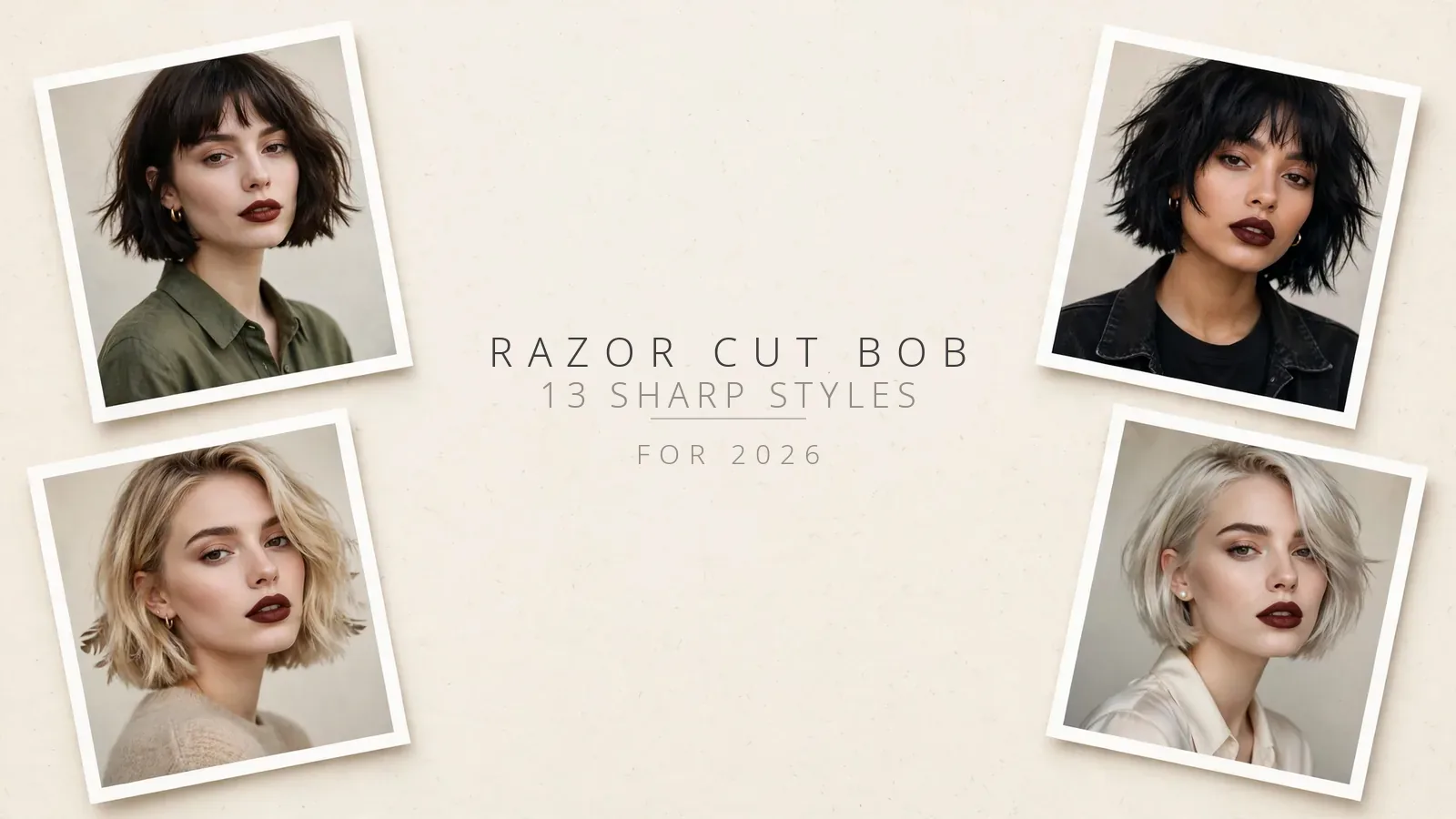
Razor Cut Bob – 13 Sharp Styles for 2026
The razor cut bob looks effortless in photos — piecey ends, natural movement, that undone-but-deliberate finish everyone screenshots. The problem is that the razor technique itself changes how your ends behave, and on the wrong hair type those feathery ends can turn into frizz within a week. A razor cut bob is shaped with a straight razor instead of scissors, which creates soft, wispy ends rather than blunt lines — but that same wispy finish is exactly what makes fragile or very fine hair split faster.
The fix is not avoiding the cut, it is choosing the right version of it for your hair. These 13 styles are matched to real hair types — thick, wavy, straight, fine — with honest notes on who should skip the razor entirely. Every style below comes with benefits, styling guidance, and the maintenance truth most galleries never tell you.
Table of Contents
- 13 Sharp Razor Bob Styles Worth Copying
- 1. Classic Razor Cut Bob
- 2. Textured Razor Cut Bob with Side-Swept Bangs
- 3. Choppy Razor Cut Bob
- 4. Razor Cut Bob with Blunt Ends
- 5. Asymmetrical Razor Cut Bob
- 6. Long Razor-Cut Bob
- 7. Wavy Razor Cut Bob
- 8. Messy Razor-Cut Bob
- 9. Razor Cut Bob with Curved Ends
- 10. Feathered Razored Bob
- 11. Razored A-Line Bob
- 12. Razor Cut Bob with Curtain Bangs
- 13. Razor Cut Bob with Money-Piece Highlights
- How to Choose the Right Razor Bob for Your Hair Type
- Razor vs Scissors: What the Technique Actually Changes
- How to Style and Maintain a Razor-Cut Bob
- Frequently Asked Questions
- What is a razor cut bob, exactly?
- Who suits a razor cut bob best?
- Is a razor cut bob bad for thin or fine hair?
- How often does a razor cut bob need a trim?
- How does a razor cut bob grow out?
- What should I ask my stylist before getting a razor cut?
- How do I style a razor cut bob at home?
- Can I get a razor cut bob if my hair is curly?
13 Sharp Razor Bob Styles Worth Copying
1. Classic Razor Cut Bob
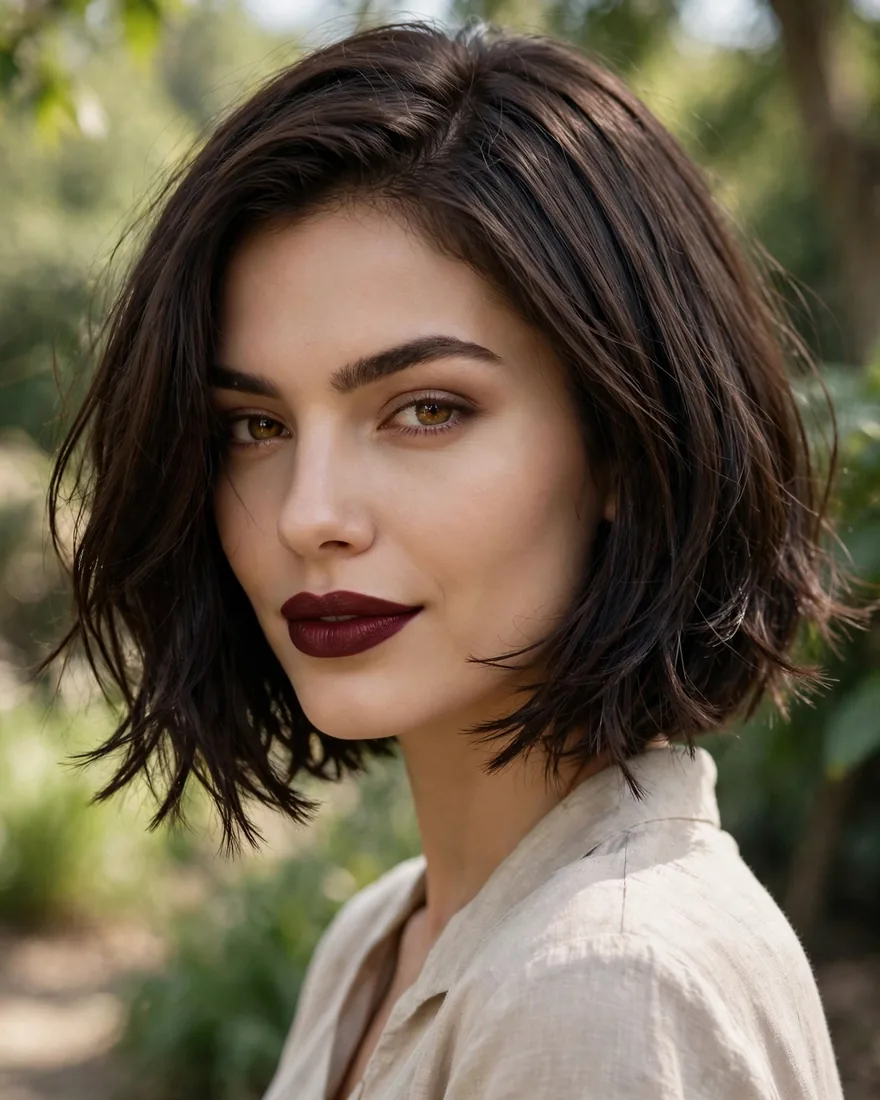
The classic version is the clean foundation every other version builds on: jaw-skimming length with ends shaped by a razor for a soft, feathered edge instead of a hard blunt line. It has that salon-fresh polish without looking stiff, and the razored perimeter gives it movement that a scissor-cut bob simply cannot fake. This is the version to book when you want the razor texture but a conservative silhouette.
Benefits:
- Soft razored ends remove the harshness of a blunt bob while keeping the shape tidy
- Built-in movement means it styles well air-dried or with a quick blowout
- The most forgiving razor cut bob for professional settings
Pro Tip: Ask for the razor work concentrated on the last inch of the ends — over-razoring higher up thins the perimeter too fast and the shape collapses between trims.
How To Style: Blow-dry smooth with a medium round brush, tucking the ends slightly under. A light smoothing cream on damp hair keeps the razored edges polished without weighing them down.
Best For: Straight to slightly wavy hair with medium density. The classic version suits oval, heart, and long face shapes because the jaw-length edge adds width where it is needed.
2. Textured Razor Cut Bob with Side-Swept Bangs
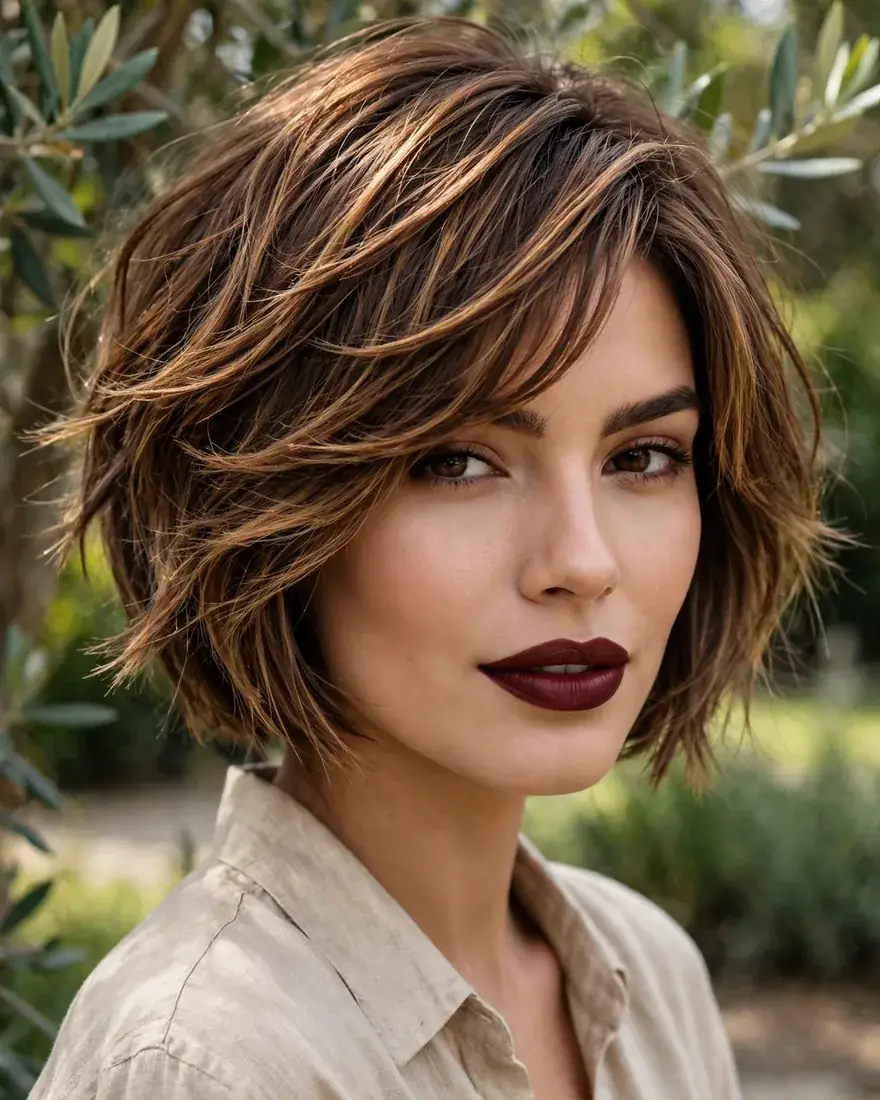
Side-swept bangs cut with a razor melt into the rest of this textured style instead of sitting on top of it like a separate piece. The razor creates piecey, separated strands through the crown and bangs, so the whole cut reads as one continuous, flowy shape. It is the friendliest version for anyone growing out bangs, because the razored texture hides the transition.
Benefits:
- Razored bangs blend seamlessly with layered sides — no harsh bang line
- Side-swept shape softens forehead and cheekbones
- Texture through the crown adds fullness for medium-density hair
Pro Tip: Have the bangs razored dry at the end of the appointment, not wet — razor cuts shrink more unpredictably on wet fringe, and dry cutting shows the true fall.
How To Style: Rough-dry with your fingers, directing the bangs to the side, then pinch a pea-sized amount of dry wax through the ends to define the piecey strands.
Best For: Medium to thick straight or wavy hair. This textured version flatters round and square faces by breaking up width across the forehead.
3. Choppy Razor Cut Bob
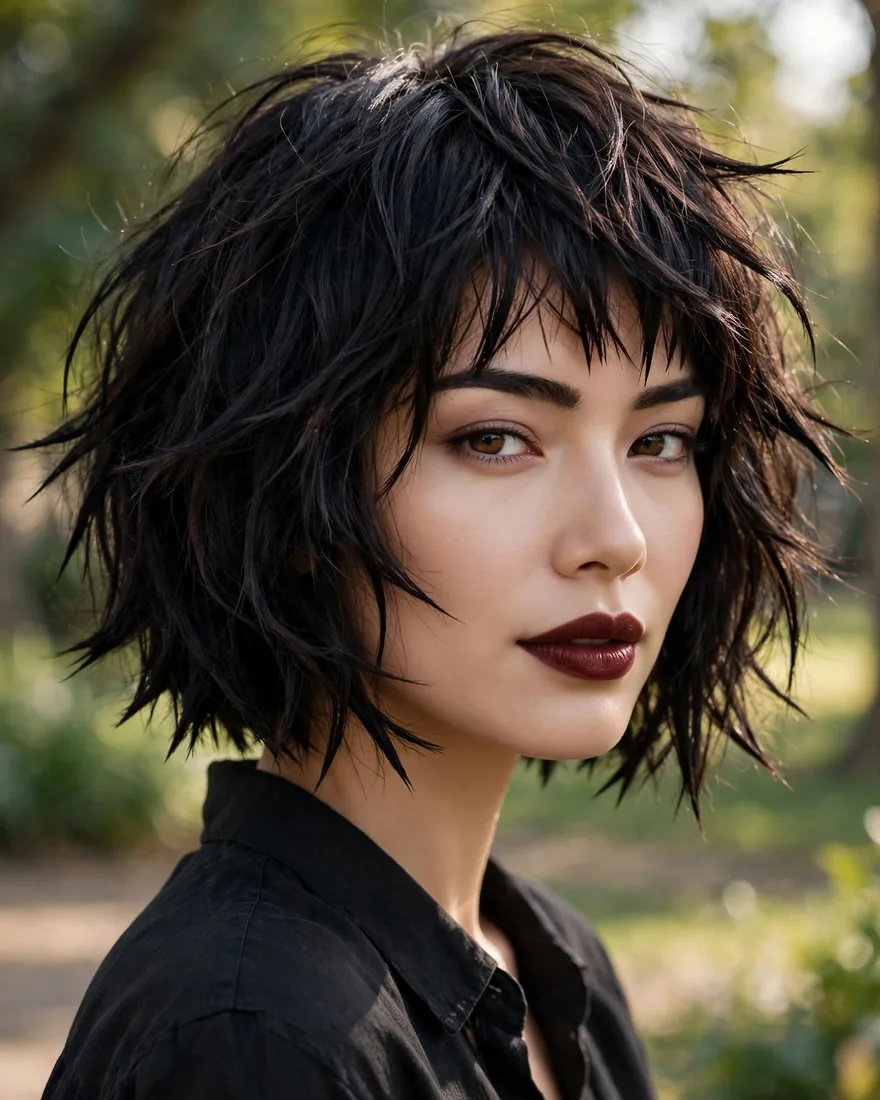
The choppy version pushes the razor technique to its boldest: deliberately uneven, jagged ends with visible texture chunks throughout. Nothing about it is polished, and that is the point — it is the edgiest of the 13 styles and the best at making thick hair feel lighter. If the classic version is a tailored blazer, this one is a leather jacket.
Benefits:
- Maximum texture and edge; the most statement-making of the razor cut bob styles
- Removes serious bulk from thick, heavy hair
- Hides uneven growth between appointments better than polished cuts
Pro Tip: This cut lives or dies on product — without texturizer it can read messy in the wrong way. Commit to sea salt spray or dry shampoo before you book.
How To Style: Mist sea salt spray onto damp hair and scrunch while diffusing on low heat. Once dry, twist a few random pieces with texturizing paste for that lived-in separation.
Best For: Thick, straight to wavy hair that needs weight removed. For even more deliberately undone texture, our choppy bob hairstyles roundup covers the scissor-textured cousins of this look.
4. Razor Cut Bob with Blunt Ends
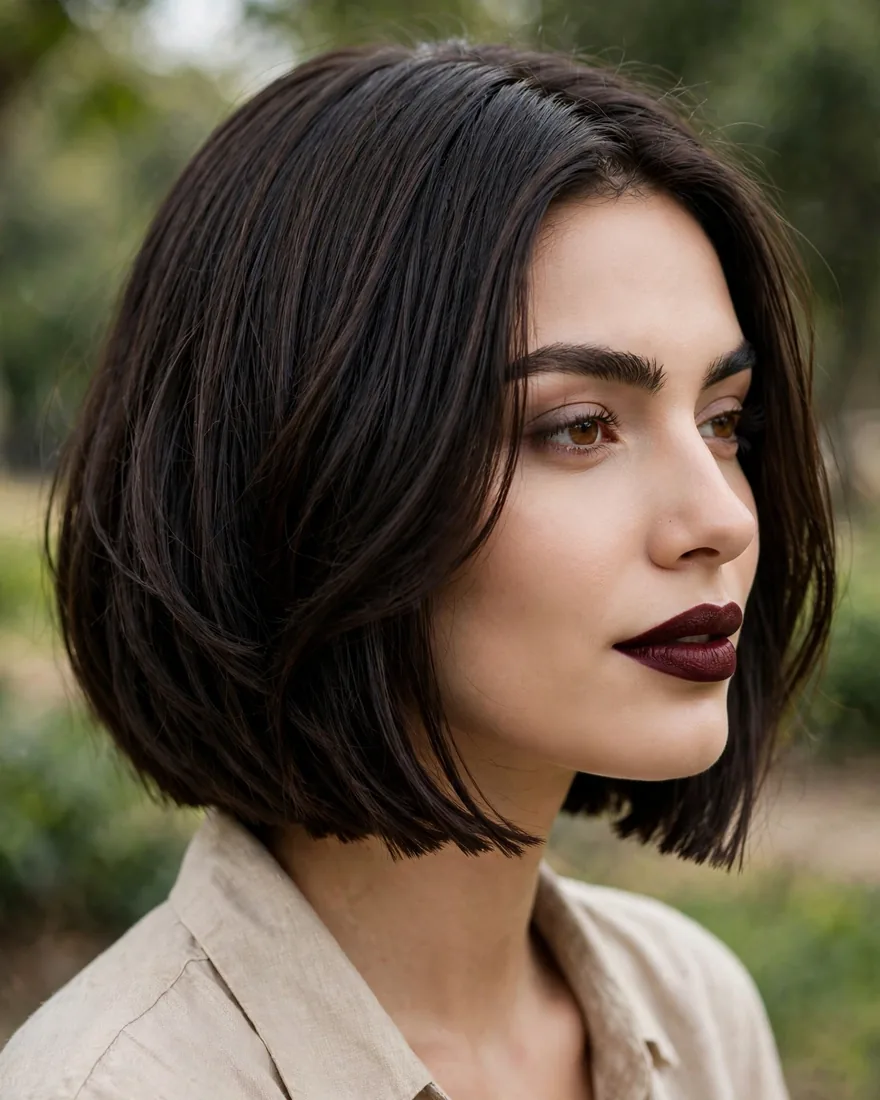
This hybrid keeps the clean, graphic perimeter of a blunt bob but uses the razor on the interior layers, so the bottom edge stays strong while the inside moves. It solves the classic dilemma: blunt bobs can look helmet-like, and fully razored bobs can look wispy — this hybrid gives you both structure and softness. The contrast between the sharp edge and textured interior is what makes it photograph so well.
Benefits:
- Strong bottom line makes ends look thicker — good for medium-fine hair
- Interior razor texture prevents the heavy, one-length look
- Reads polished from a distance, interesting up close
Pro Tip: The blunt perimeter needs a scissor check after the razor work — razors naturally feather edges, so the stylist should clean up the bottom line with shears to keep it graphic.
How To Style: Flat-iron the perimeter smooth for maximum blunt effect, then tousle the crown with your fingers and a light texturizing spray so the interior layers separate.
Best For: Straight hair with medium density. This blunt-ends version suits oval and long faces; the strong horizontal line adds visual width.
5. Asymmetrical Razor Cut Bob
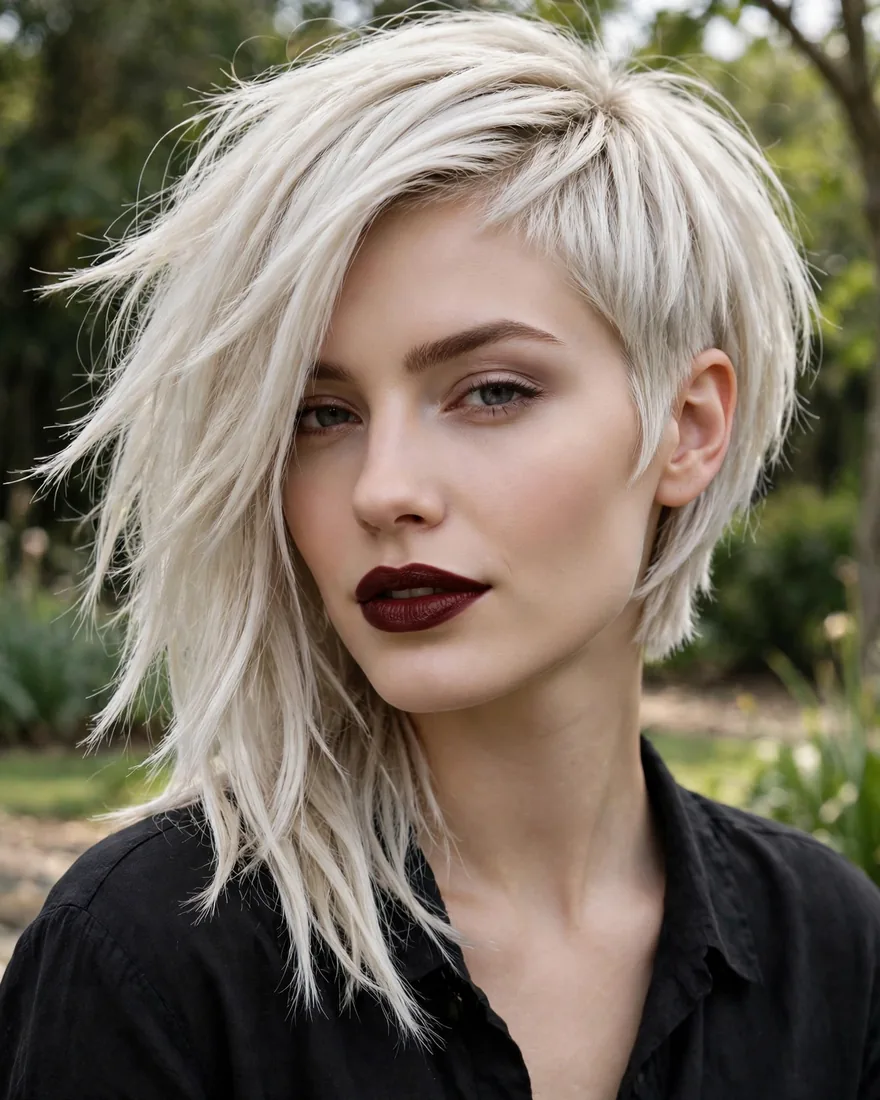
One side sits longer than the other, and the razor softens the transition so the asymmetry looks intentional rather than lopsided. The uneven perimeter draws the eye diagonally, which is why the asymmetrical version is the most face-slimming of the 13 styles. The razor technique matters here more than anywhere — scissors would make the longer side look heavy and blocky.
Benefits:
- Diagonal line slims and elongates round and wide faces
- Razored ends keep the longer side light and swingy, not chunky
- Instantly modern — the asymmetry does the styling work for you
Pro Tip: Keep the length difference to 1–2 inches. More than that and the short side grows into an awkward pixie phase while the long side is still a bob.
How To Style: Wear it with a deep side part on the longer side to exaggerate the sweep. A shine serum on the longer panels emphasizes the asymmetric line.
Best For: Straight to wavy hair with medium to thick density. If you are weighing this against other short statement cuts, our short hair guide compares the commitment levels honestly.
6. Long Razor-Cut Bob

The long razor-cut bob — the lob version — sits at collarbone length with razored ends and light interior texture. It is the lowest-commitment entry into the razor-cut world: long enough to pull back into a ponytail, short enough that the razored ends show. This is the version stylists recommend when you want the texture but are nervous about going short.
Benefits:
- Collarbone length still pulls back — no awkward grow-out panic
- Razored ends prevent the lob from looking like a grown-out haircut
- The easiest razor cut bob to style for beginners
Pro Tip: On lob length, razoring works best on the bottom two inches only. Thinning higher up at this length creates a triangle effect where the bottom looks stringy.
How To Style: Air-dry with a curl cream for natural wave, or do loose bends with a flat iron, alternating directions. Finish with a flexible-hold spray so the ends keep their piecey separation.
Best For: All densities, straight to wavy hair. The long version flatters every face shape, and pairs beautifully with face-framing color — see our long bob styles for more lob-length inspiration.
7. Wavy Razor Cut Bob
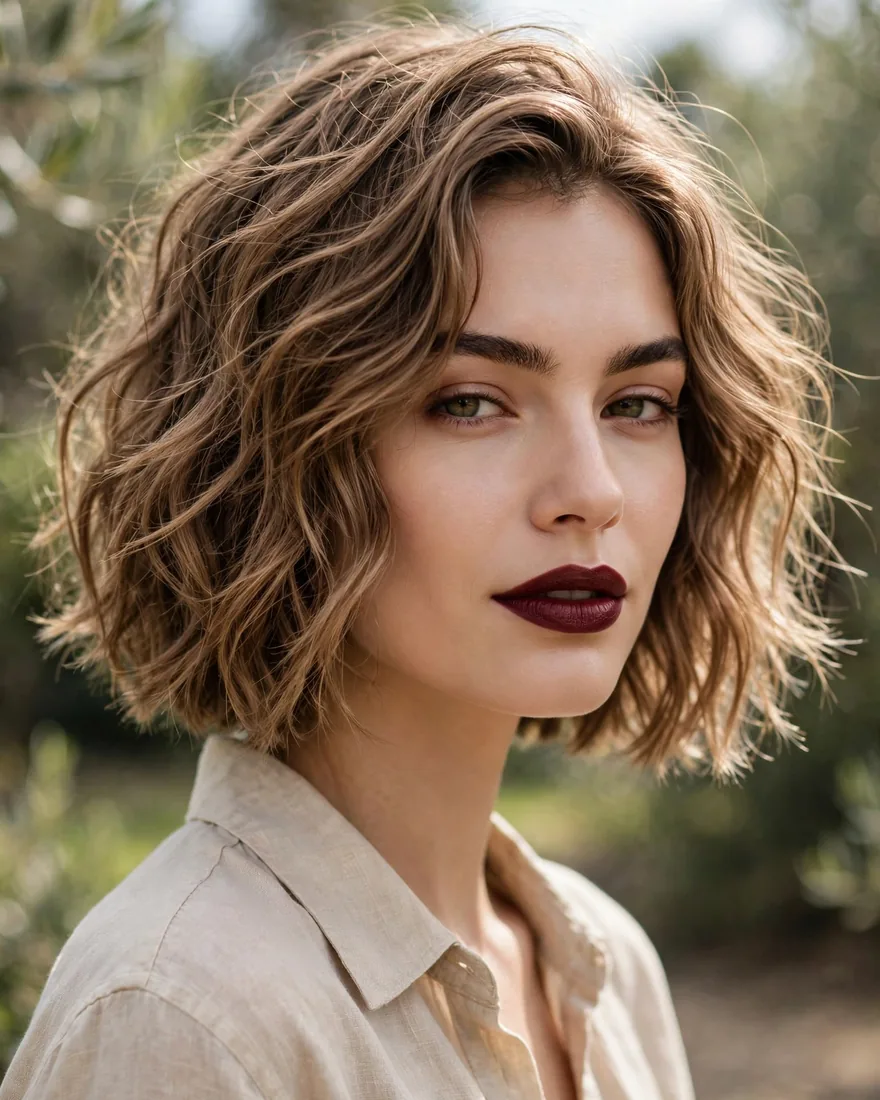
The wavy version is arguably the technique’s natural habitat: the razor’s feathered ends enhance the wave pattern instead of fighting it, and the cut practically styles itself once the waves are in. Where straight hair needs product to show off razor texture, waves reveal it automatically. This is the lowest-effort of the 13 styles if your hair has natural bend.
Benefits:
- Razor texture and natural wave amplify each other — minimal styling needed
- Feathered ends keep waves from looking triangular or bulky
- Grows out more gracefully than razored straight styles
Pro Tip: Get it cut to enhance your natural wave pattern, not against it — ask the stylist to cut it mostly dry so they can see where your waves actually fall.
How To Style: Scrunch a wave-enhancing cream into damp hair and diffuse or air-dry. Refresh second-day waves with a water-and-conditioner mist rather than rewashing.
Best For: Natural 2A to 2C waves with medium density. Our wavy hair guide has wave-type-specific styling routines that pair perfectly with this cut.
8. Messy Razor-Cut Bob

The messy razor-cut bob is the “I woke up like this” version: deliberately undone texture, flipped-out pieces, and zero interest in symmetry. The razor does the heavy lifting by building in the tousled separation, so you are not fighting your hair into messiness every morning. Among the 13 styles, this one has the shortest styling time and the highest cool factor.
Benefits:
- Fastest morning routine — the cut is designed to look undone
- Disguises second- and third-day hair better than polished styles
- The razor texture makes it look intentional, not neglected
Pro Tip: “Messy” still needs shape underneath — make sure the perimeter has a clean line, or it crosses from cool-messy into just-messy within two weeks of growth.
How To Style: Work texturizing powder into the roots and dry wax through the mid-lengths, then flip sections in random directions with your fingers. Sleep on it once for the authentic version.
Best For: Medium to thick hair with natural texture or wave. Fine straight hair struggles here — without density, the messy version can read flat rather than tousled.
9. Razor Cut Bob with Curved Ends

The curved-ends version bends the razored perimeter softly under, creating that rounded, almost retro silhouette with a modern feathered edge. The curve comes from the cutting angle and styling, not from a curling iron — the razor shapes the ends to turn inward naturally. It is the most feminine of the 13 styles and the best at softening angular features.
Benefits:
- Rounded silhouette softens square jawlines and sharp cheekbones
- The inward curve makes the cut look fuller at the ends
- Elegant enough for formal settings, easy enough for daily wear
Pro Tip: The curve depends on layer length — the bottom layers need to be slightly longer than the top ones, or the ends flip out instead of tucking under.
How To Style: Blow-dry with a round brush, rolling the ends under as you go. A large velcro roller at the crown for five minutes while you do makeup adds the rounded volume this shape needs.
Best For: Straight to slightly wavy hair with medium density. The curved-ends version is especially flattering on square and heart face shapes.
10. Feathered Razored Bob
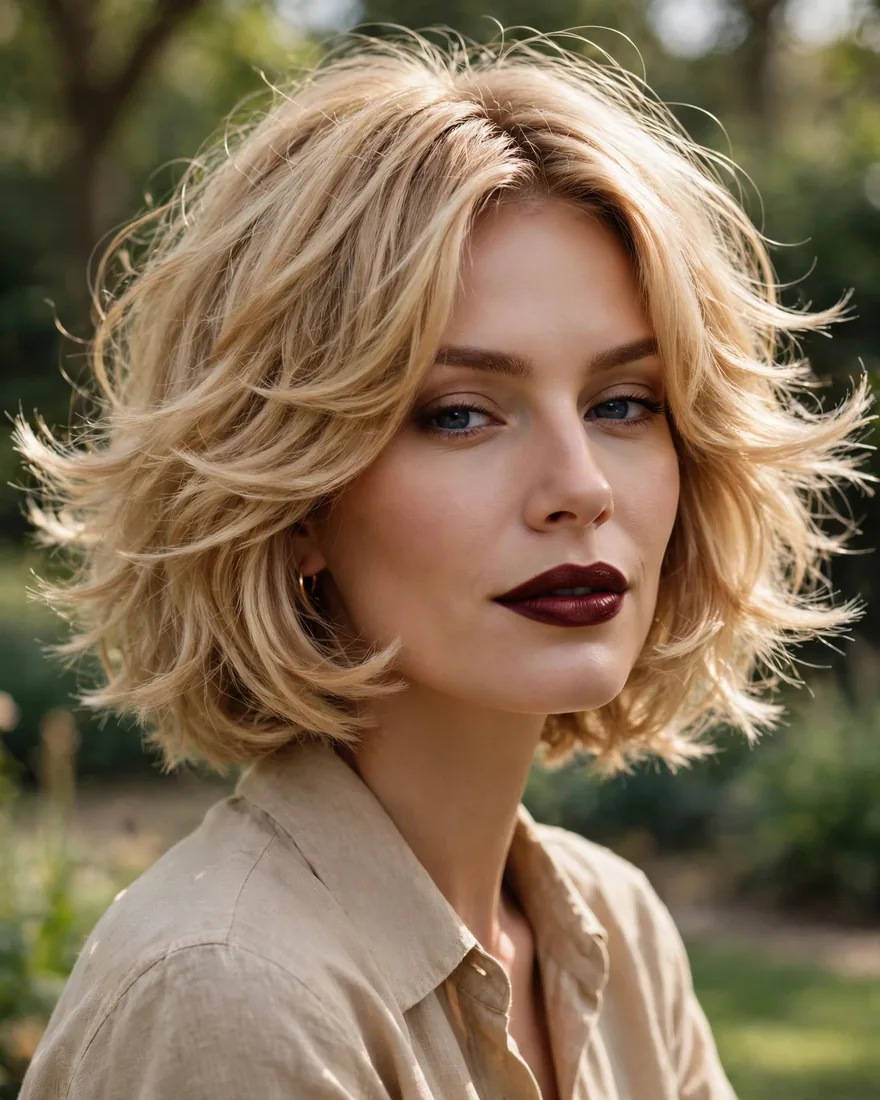
The feathered razored bob leans fully into the razor’s signature move: long, wispy, feathered layers that flick outward through the ends. It has a soft retro energy — think updated 70s feathering rather than a costume — and the razor is non-negotiable for getting those feathery, see-through tips. This style is all about airy movement and volume at the crown.
Benefits:
- Feathered layers create the illusion of fullness around the crown
- The most movement of any razor cut bob style
- Layers frame the face softly without needing bangs
Pro Tip: Feathering eats length visually — the cut will look shorter than it measures. If you are between lengths, ask for the longer option.
How To Style: Blow-dry with a round brush, flicking the ends outward and away from the face. A volumizing mousse at the roots before drying gives the feathered layers their lift.
Best For: Medium-density straight to wavy hair. For more layer-heavy inspiration beyond the bob, our layered haircut guide covers longer feathered options.
11. Razored A-Line Bob

The razored A-line bob keeps the classic A-line geometry — shorter at the back, longer toward the front — but the razor softens what is usually a severe, graphic cut. The angled front pieces get feathered ends instead of a heavy curtain, so the dramatic line feels wearable instead of harsh. It is the sharpest silhouette among the 13 styles, made approachable by the technique.
Benefits:
- The forward angle elongates the neck and slims the jawline
- Razored ends prevent the heavy, blocky front panels of scissor A-lines
- Dramatic from the side, soft from the front — the best of both
Pro Tip: The angle needs to be precise: have the stylist check both sides with you sitting fully upright, since tilting your head even slightly throws off the symmetry.
How To Style: Flat-iron the front panels smooth to show off the angle, keeping the back slightly tousled for contrast. Tuck one side behind the ear to display the line.
Best For: Straight hair with medium to thick density — the angle only reads on smooth textures. The A-line version suits round faces especially well.
12. Razor Cut Bob with Curtain Bangs

Curtain bangs cut with a razor part softly in the middle and blend into the bob’s layers without a visible starting point. The razor keeps the bang edges wispy rather than blunt, so they grow out gracefully instead of turning into an eye-poking shelf. Paired with razored layers, curtain bangs create the most face-framing version of the cut.
Benefits:
- Razored curtain bangs blend into layers — no harsh regrowth line
- Center-parted fringe frames both sides of the face symmetrically
- The lowest-maintenance bang option for a razor cut bob
Pro Tip: Curtain bangs need to be cut longer than you think — razor-cut fringe springs up as it dries, so start at cheekbone length and adjust at a follow-up.
How To Style: Blow-dry the bangs forward and down with a small round brush, then part in the middle and sweep each side back. A light-hold spray keeps them in place without stiffness.
Best For: Medium to thick hair, straight to wavy. If you are still deciding on fringe shapes, our types of bangs guide compares every option side by side.
13. Razor Cut Bob with Money-Piece Highlights
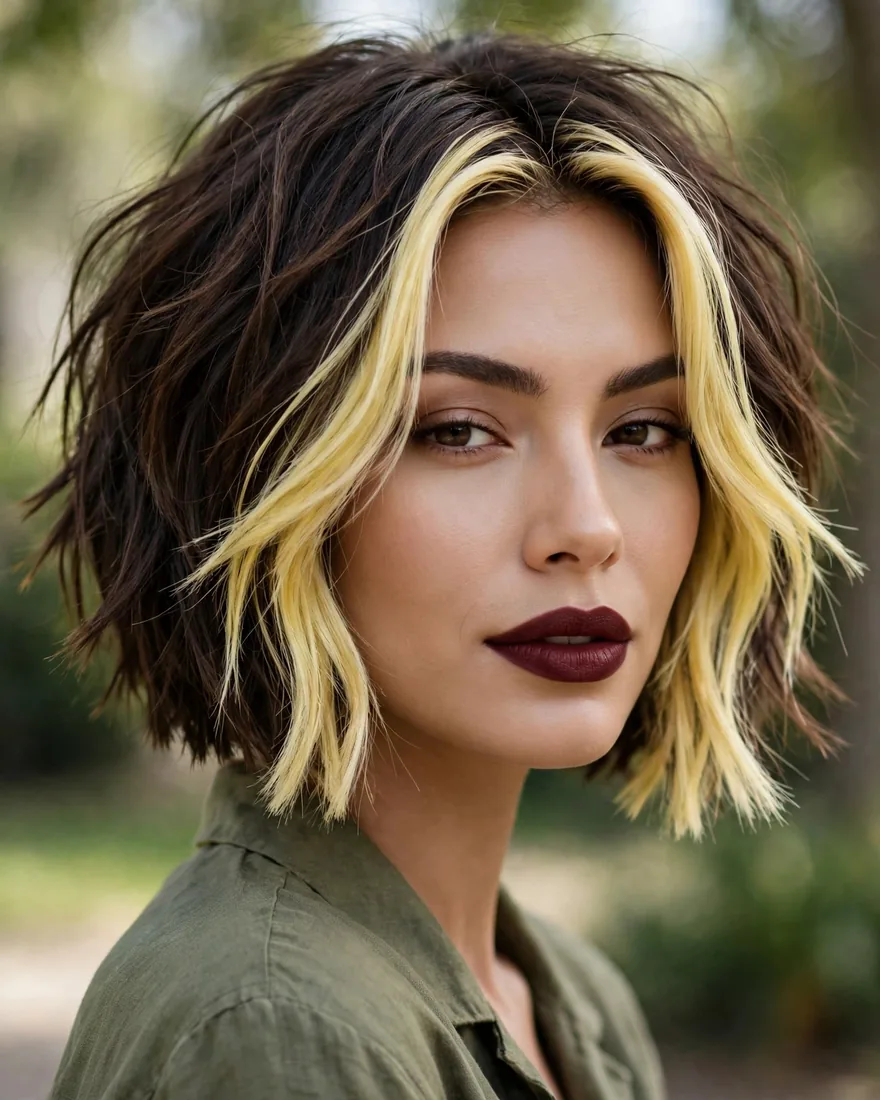
Money-piece highlights — the bright face-framing panels — pair perfectly with razored layers because the texture breaks up the color’s edges instead of letting it sit in a solid block. The result is dimension that looks expensive rather than stripy, with the lightened pieces catching the feathered ends. It is the only color-paired style in this roundup, and the combination is what makes the layers photograph with so much depth.
Benefits:
- Bright face-framing color makes the razor texture more visible
- Razored ends diffuse the highlight line — no harsh grow-out stripe
- Instant brightness without coloring the whole head
Pro Tip: Razor-cut ends are more porous and grab color faster, so ask your colorist to process the money piece for slightly less time than usual to avoid over-lightening the feathered tips.
How To Style: Style with the money piece forward — tuck hair behind the ears on non-highlight days is a waste of the color. A purple-toning gloss every few weeks keeps blonde pieces from going brassy.
Best For: Straight to wavy hair with medium density; works on dark and light bases. For more face-framing color ideas, see our balayage hairstyles guide.
How the 13 styles compare at a glance:
| Style | Best Hair Type | Upkeep Level |
|---|---|---|
| Classic Razor Cut Bob | Straight, medium density | Low – trims every 6–8 weeks |
| Textured with Side-Swept Bangs | Medium–thick, straight/wavy | Medium – bangs need shaping |
| Choppy Razor Cut Bob | Thick, straight/wavy | Low – hides growth well |
| Razor Cut Bob with Blunt Ends | Straight, medium density | Medium – perimeter needs upkeep |
| Asymmetrical Razor Cut Bob | Medium–thick, straight/wavy | Medium – angle needs maintaining |
| Long Razor-Cut Bob | All densities, straight/wavy | Low – most forgiving length |
| Wavy Razor Cut Bob | Natural waves, medium density | Low – air-dries well |
| Messy Razor-Cut Bob | Medium–thick with texture | Low – designed to look undone |
| Razor Cut Bob with Curved Ends | Straight, medium density | Medium – needs round-brush styling |
| Feathered Razored Bob | Medium density, straight/wavy | Medium – layers need refreshing |
| Razored A-Line Bob | Straight, medium–thick | Medium – angle precision matters |
| Razor Cut Bob with Curtain Bangs | Medium–thick, straight/wavy | Medium – bangs grow fast |
| Razor Cut Bob with Money-Piece Highlights | Straight/wavy, medium density | High – color + cut maintenance |
How to Choose the Right Razor Bob for Your Hair Type
Here is the honesty no gallery gives you: this cut is not for everyone, and the razor is the reason. A straight razor thins and feathers the ends as it cuts, which is wonderful for thick, coarse, or dense hair that needs weight removed — and actively bad for very fine, fragile, or highly frizz-prone hair, where those feathered ends split faster and puff up instead of lying smooth. If your hair snaps easily, breaks when you brush it wet, or frizzes at the mere suggestion of humidity, ask for scissor texture instead of a razor.
For everyone else, match the style to your density and texture. Thick straight hair gets the most from the choppy, asymmetrical, or A-line versions, which remove the most bulk. Medium-density wavy hair is the sweet spot for the wavy, messy, and long versions — your texture does half the styling work. Medium-fine straight hair should stick to the classic, blunt-ends, or curved-ends versions, which keep the perimeter stronger and avoid over-thinning. Curly hair is the edge case: a razor can work on loose curls and waves, but on tight curl patterns the razor disrupts the curl formation and causes frizz, so most curl specialists prefer scissors.
Razor vs Scissors: What the Technique Actually Changes
A razor and scissors do fundamentally different things to a strand. Scissors cut straight across, leaving a blunt, sealed end that looks dense and holds a crisp line. A razor slices at an angle, tapering the end into a soft point — which is why razored ends look wispy, piecey, and full of movement, but also why they are more vulnerable to splitting if your hair is already fragile. The texture difference is real and visible: the same bob shape looks sharper cut with scissors and softer with a razor.
So when should you skip the razor? Skip it if your hair is very fine (the feathered ends will look thinner, not textured), if it is chemically damaged or fragile (razor ends split faster on compromised hair), or if you want a crisp graphic line like a true blunt bob (scissors do that better). The razor vs scissor comparison comes down to density: thick hair benefits from the razor’s weight removal, while fine-to-medium hair often gets better texture from scissor point-cutting, which creates separation without thinning the ends as aggressively. If you love the shaggy, layered look but your hair is on the finer side, our medium shag haircuts guide covers scissor-textured options that deliver movement without the razor’s risks.
How to Style and Maintain a Razor-Cut Bob
This cut needs trims every 6–8 weeks — not because the length grows out, but because the razor texture does. As the feathered ends grow, they lose their piecey separation and start looking scraggly rather than textured, and split ends travel faster up tapered strands than blunt ones. Skip the trim schedule and the cut goes from effortless to unkempt in about ten weeks; there is no product that substitutes for fresh razor work.
For daily styling, the holy trinity is sea salt spray for texture, texturizing mousse for body, and dry wax for piece definition — pick one or two, not all three, or the hair gets product-heavy and the razor texture disappears under buildup. And before the razor ever touches your hair, use real consultation language: ask “will you razor the perimeter or just the interior layers?”, “how much weight are you taking out?”, and “show me where the shortest layer will fall when dry.” A good stylist answers all three without hesitating. Growing out this cut takes patience — the in-between phase around month three looks wispy and uneven, and the fix is a shaping trim that evens the perimeter, not waiting it out untouched.
Frequently Asked Questions
What is a razor cut bob, exactly?
A razor cut bob is a bob haircut shaped with a straight razor instead of scissors. The razor slices each strand at an angle, creating tapered, feathered ends with built-in texture and movement, while scissors cut straight across for a blunt, dense edge. The result is a softer, piecey finish that looks more lived-in than a classic scissor-cut bob.
Who suits a razor cut bob best?
Medium to thick straight or wavy hair suits this cut best, because the hair has enough density to support the feathered ends without looking thin. Oval, heart, and long face shapes pair well with most versions, while round faces benefit most from the asymmetrical or A-line variations that add diagonal lines.
Is a razor cut bob bad for thin or fine hair?
It can be. A razor thins the ends as it textures them, so on very fine or sparse hair the result often looks thinner rather than textured, and fragile strands split faster at tapered ends. If your hair is fine, the classic or blunt-ends versions with minimal interior razoring are the safest choices — or ask your stylist for scissor point-cutting instead.
How often does a razor cut bob need a trim?
Every 6 to 8 weeks. The razor texture itself is what grows out — the feathered ends lose their piecey separation and start looking scraggly, and tapered ends split faster than blunt ones. Regular trims keep the texture fresh; stretching past ten weeks usually means the cut reads messy rather than effortless.
How does a razor cut bob grow out?
The awkward phase hits around month three, when the razored ends look wispy and uneven as different layers grow at different rates. The fix is a shaping trim that evens the perimeter rather than waiting it out untouched — a good stylist can transition a growing razor bob into a lob with one cleanup appointment.
What should I ask my stylist before getting a razor cut?
Ask three things: will you razor the perimeter or just the interior layers, how much weight are you taking out, and where will the shortest layer fall when dry. Also mention your hair’s history — fine, fragile, or damaged hair should be flagged before the razor comes out, since a good stylist may recommend scissors for part of the cut.
How do I style a razor cut bob at home?
Pick one or two products from the core trio: sea salt spray for texture, texturizing mousse for body, or dry wax for piece definition. Rough-dry or air-dry for the undone versions, round-brush for the polished ones like the curved-ends style. Using all three products at once weighs the hair down and hides the razor texture under buildup.
Can I get a razor cut bob if my hair is curly?
Loose waves and large curls can work with a razor cut, but tight curl patterns usually should not be razor-cut — the razor disrupts curl formation and causes frizz at the tapered ends. Most curl specialists prefer scissor dry-cutting for curly bobs because it preserves the curl pattern and keeps the ends sealed.
This cut earns its reputation when it is matched to the right hair — the razor’s feathered texture is a genuine advantage on thick, wavy, or dense straight hair, and a genuine risk on fine or fragile strands. Choose your version from the 13 above based on your density and texture, keep the 6–8 week trim schedule, and use the consultation questions before you sit in the chair. Do that, and the cut delivers exactly what the photos promise: effortless-looking texture that is anything but accidental.