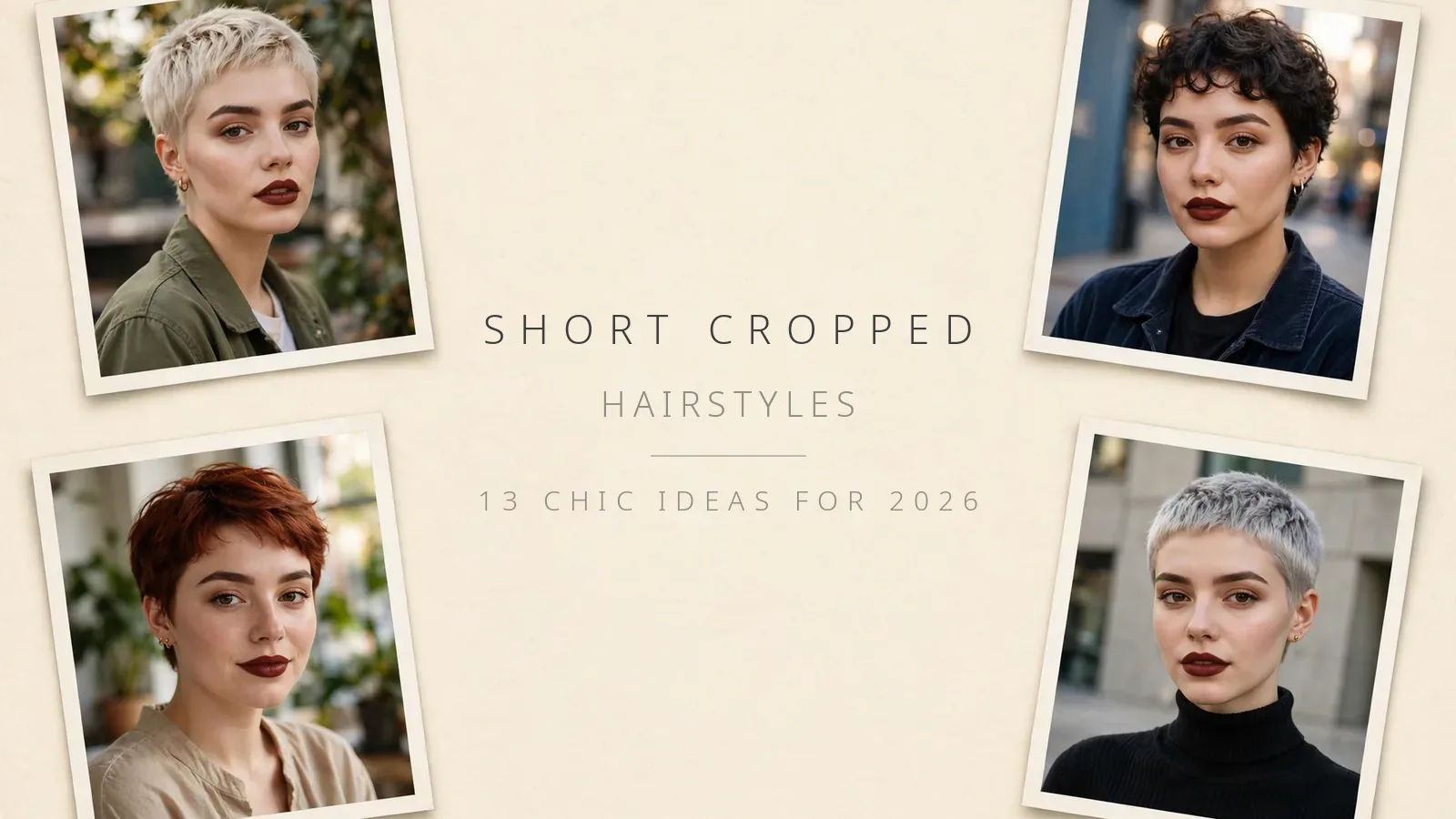
Short Cropped Hairstyles – 13 Chic Ideas for 2026
Going short is the haircut people fantasize about for years and then talk themselves out of in the salon chair. The fear is always the same: what if it does not suit me, what if I hate the grow-out, what if I look like I lost a bet? Those are fair questions — and they are exactly why most galleries fail you, showing pretty pictures with zero honest guidance about commitment.
This guide to short cropped hairstyles answers the questions galleries skip: which of the 13 crops actually suits your face shape and texture, what the upkeep really costs you in salon visits, and how to grow any of them out without the dreaded awkward stage. Every idea below comes with honest styling notes and a real maintenance picture, so you can choose with confidence instead of hope.
Table of Contents
- 13 Short Cropped Hairstyles Ideas Worth Trying
- How to Choose the Right Crop for Your Face Shape and Texture
- Growing Out a Crop Without the Awkward Stage
- Styling Short Hair in 5 Minutes: Products and Routine
- Short Crop FAQs
- How often do short cropped hairstyles need trimming?
- Can I grow out a pixie without going through an awkward stage?
- Which short crop suits a round face best?
- Do short cropped hairstyles work on curly or coily hair?
- What products do I actually need for short cropped hair?
- I have never gone short before — how do I know a crop will suit me?
- How do I style a short crop for a formal event?
- Are short cropped hairstyles high maintenance?
13 Short Cropped Hairstyles Ideas Worth Trying
These thirteen short cropped hairstyles cover every texture, face shape, and commitment level — from wash-and-go buzz cuts to soft feathered crops that grow out gracefully. Each one below includes honest styling notes, upkeep reality, and who it suits best.
 1. Classic Textured Pixie
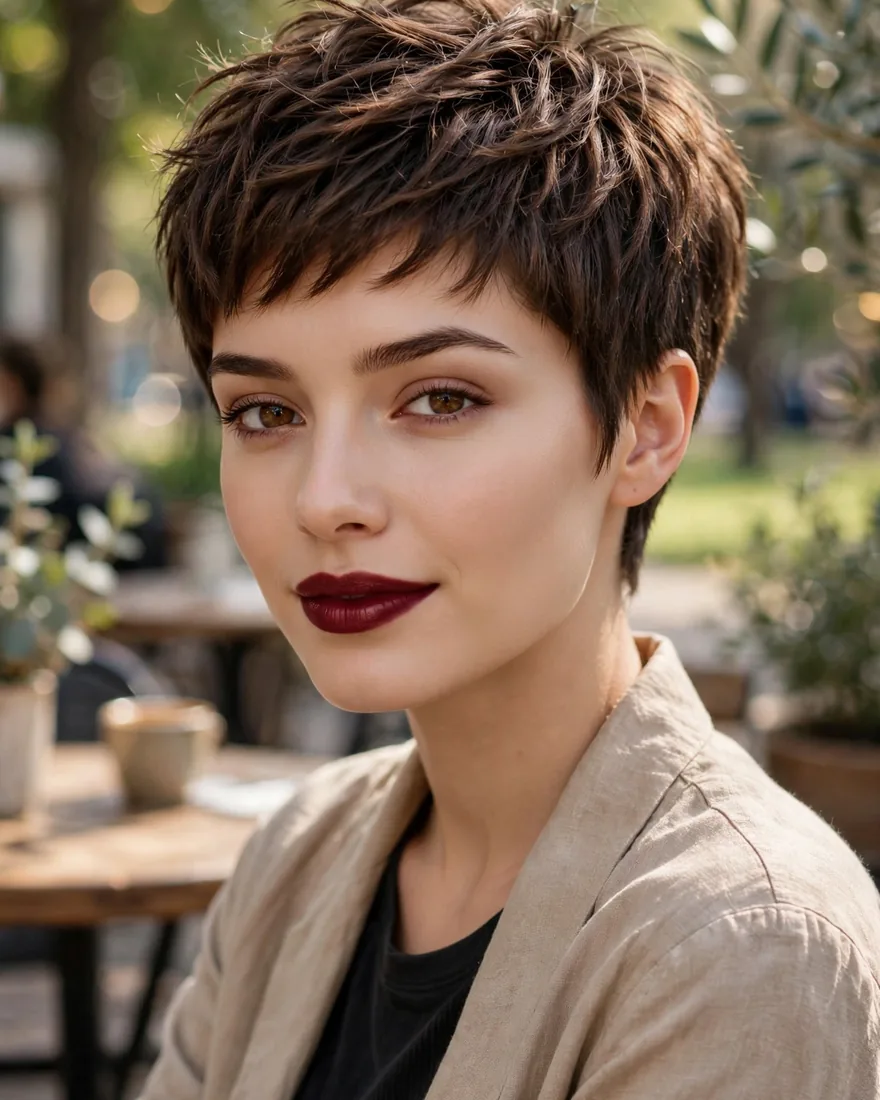 1. Classic Textured Pixie
The classic textured pixie is the crop everyone pictures when they think of short hair: soft, piecey layers on top, a little length through the fringe, and a neckline that sits neat without looking severe. What makes it timeless is the texture — choppy, separated ends keep it from reading like a helmet and let it move naturally.
This is the lowest-risk entry point into short cropped hairstyles. It flatters most face shapes because the fringe can be adjusted — longer and side-swept for round faces, piecey and forward for longer faces — and it grows out more gracefully than tighter crops.
Benefits:
- Versatile enough for work, weekends, and formal events
- Grows out into a bixie or shaggy bob with minimal awkwardness
- Works with straight, wavy, and loosely curly textures
Pro Tip: Ask your stylist to point-cut the ends rather than blunt-cutting them. Point-cutting creates the soft, separated texture that defines this crop; blunt ends turn a pixie into a cap.
How To Style: Work a pea-sized amount of matte paste through dry hair, pulling pieces forward and apart with your fingers. For extra lift at the crown, rough-dry with your head tipped forward, then press the roots flat where you want polish.
Best For: First-time choppers, oval and heart-shaped faces, and anyone who wants a crop that still reads feminine and soft. If you are weighing up a pixie cut, this textured version is the most forgiving place to start.
2. Tapered Pixie
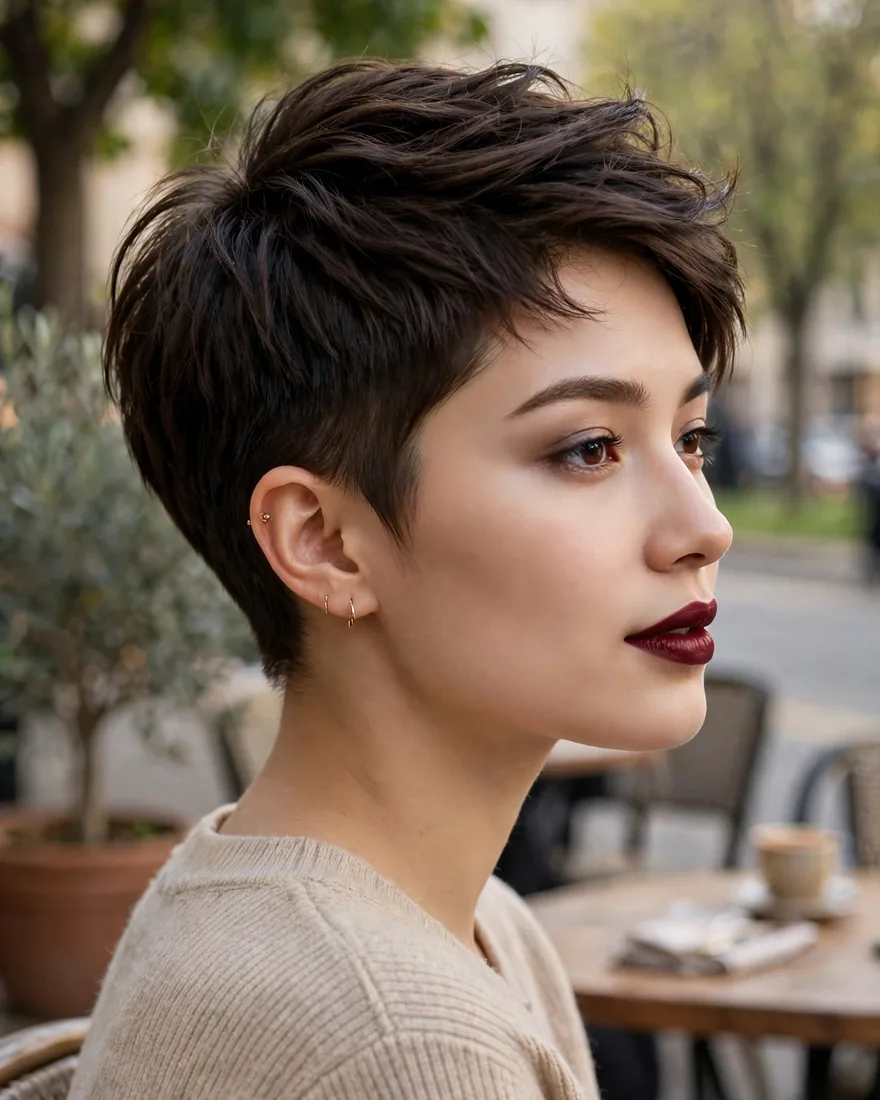 2. Tapered Pixie
A tapered pixie keeps length on top but graduates the sides and nape down close, creating a clean silhouette that shows off the neck and jawline. The taper is the star here: faded gradually from the crown down, it gives the cut a polished, almost architectural feel.
Among short cropped hairstyles, the tapered pixie is the neatest-looking option, which is why it works so well in professional settings. It also photographs beautifully, since the contrast between the close sides and the fuller top adds dimension from every angle.
Benefits:
- Sharp, professional silhouette that reads intentional
- Minimal daily styling — the shape does the work
- Beautiful on defined jawlines and long necks
Pro Tip: The taper needs refreshing every 3–4 weeks or the clean gradient turns fuzzy. If you cannot commit to that schedule, ask for a softer, longer taper that forgives an extra week.
How To Style: Smooth a smoothing cream through the top, then direct it with a vent brush while blow-drying forward. Finish the sides with a tiny amount of pomade, pressing them flat for that crisp tapered line.
Best For: Straight and fine hair (the taper adds structure where fine hair lacks it), oval faces, and anyone who likes a neat, low-fuss crop. If you browse short cropped hairstyles for fine hair specifically, this one tops most stylists’ lists.
3. French Crop
 3. French Crop
Borrowed from classic barbering, the French crop pairs a short, textured top with a straight-across fringe and faded or tapered sides. It is androgynous, confident, and quietly fashion-forward — the kind of cut that looks like a style choice rather than a convenience cut.
What keeps the French crop from feeling severe is texture on top. Worn matte and slightly messy, it has a relaxed Parisian energy; worn sleek, it turns sharp and editorial. Few short cropped hairstyles swing between casual and polished this easily.
Benefits:
- Edgy but wearable — bold without being costume-y
- The fringe hides a high hairline or forehead you want to soften
- Very fast morning routine once you learn the technique
Pro Tip: The fringe is the whole cut — it must sit perfectly straight. Ask your stylist to cut it dry, point by point, so it falls exactly where it will live day to day.
How To Style: On towel-dried hair, work in a matte clay and push everything forward. Comb the fringe straight down while drying, then break it up with your fingertips so it does not look stamped on.
Best For: High foreheads, oval and oblong faces, and anyone drawn to androgynous style. Works best on straight to wavy hair that falls forward naturally.
4. Modern Bowl Cut
 4. Modern Bowl Cut
Forget the childhood bowl cut — the modern version is disconnected, textured, and deliberately fashion-forward. The perimeter keeps a rounded, graphic line while the top is layered and piecey, so it reads as a style statement rather than a kitchen-table haircut.
This is one of the boldest short cropped hairstyles, and it demands confidence. It frames the entire face, which means it highlights your features — strong brows, defined cheekbones, and striking eyes all get more attention.
Benefits:
- Maximum fashion impact — a genuine statement cut
- Frames and highlights facial features
- Surprisingly easy to maintain between trims
Pro Tip: Modern bowl cuts live or die on the perimeter line. Book a clean-up trim every 4 weeks to keep the graphic edge crisp; once it softens, the whole look loses its intent.
How To Style: Apply texturizing spray to damp hair and rough-dry. Use a flat iron to bend small sections under or out for a lived-in, piecey finish, then set with a light wax.
Best For: Oval faces and anyone with strong features who wants a high-fashion crop. Of all the short cropped hairstyles here, this one makes the boldest first impression. Think carefully if you have a very round face — the rounded line can emphasize fullness.
5. Buzz Cut
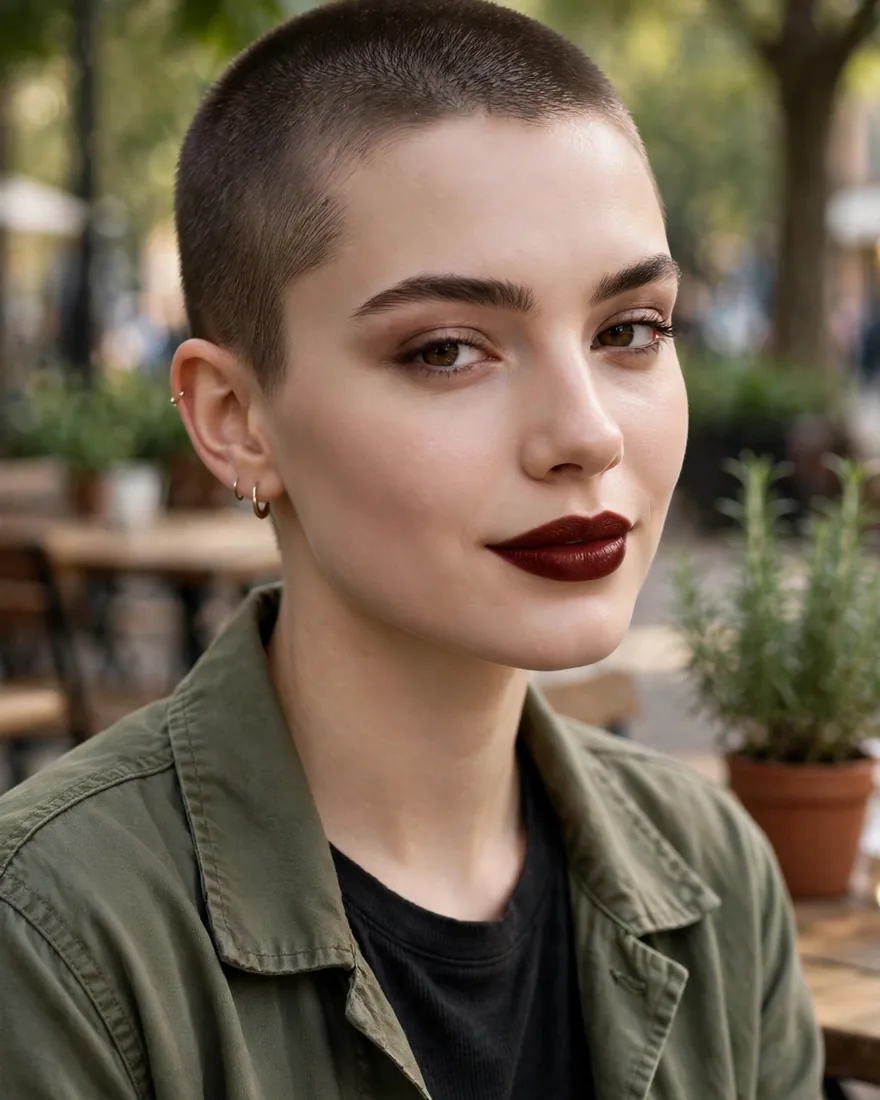 5. Buzz Cut
The buzz cut is the ultimate commitment crop: one guard length all over, no hiding, no fuss. It strips a hairstyle down to pure shape — your head shape, your features, your confidence — and there is something genuinely freeing about that.
Do not mistake simple for easy, though. A buzz cut needs re-cutting every 1–2 weeks to stay sharp, and the grow-out is its own project. But for pure wash-and-go freedom, nothing in the world of short cropped hairstyles beats it.
Benefits:
- Zero daily styling time — wash and go, literally
- Cheapest to maintain (clippers at home pay for themselves fast)
- Shows off bone structure and makes a powerful statement
Pro Tip: Start with a #3 or #4 guard, not a #1. You can always go shorter next time, but jumping straight to skin exposes every bump and scar you forgot you had. If you want the full picture first, read our honest buzz cut guide before you book.
How To Style: There is no styling — that is the point. Keep the scalp healthy with a light moisturizer or scalp oil, especially in the first weeks while it adjusts to sun exposure.
Best For: Confident minimalists, great head shapes, and anyone craving total freedom from styling. Less ideal if you rely on hair to balance a very round or very long face.
6. Bixie
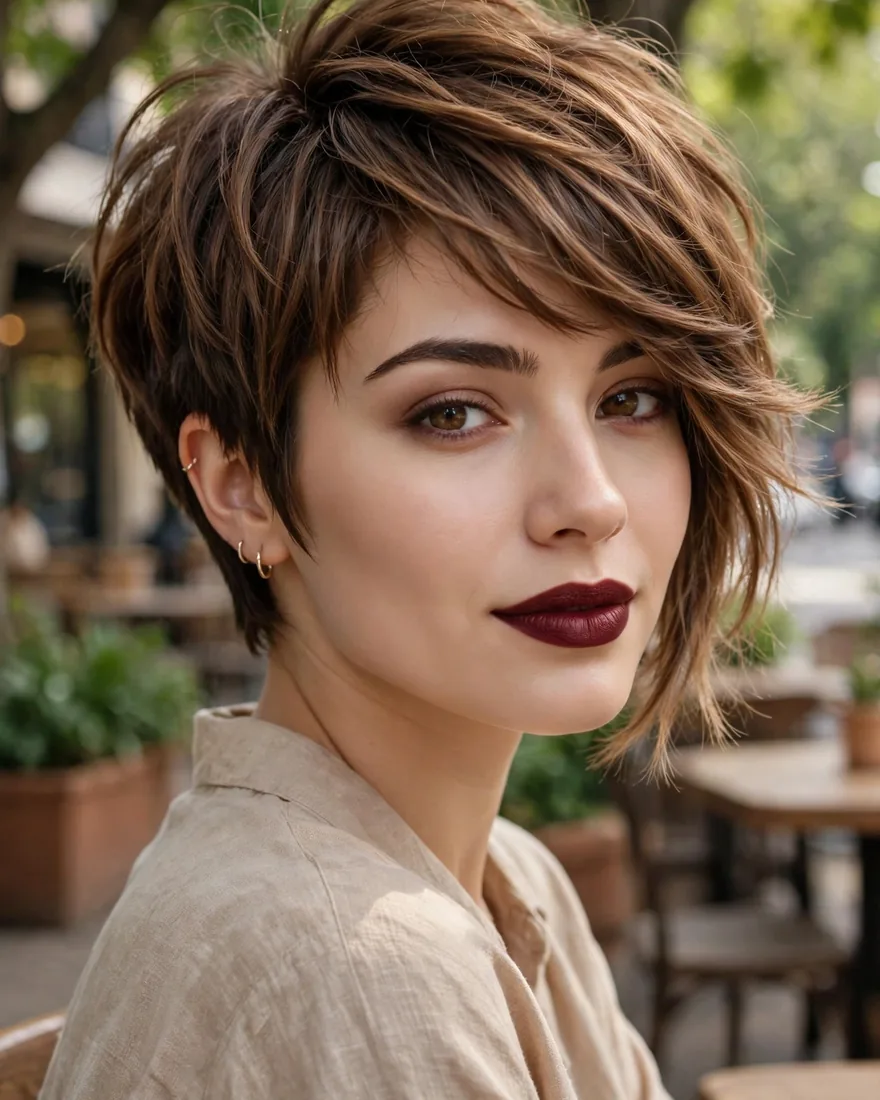 6. Bixie
The bixie — a bob-pixie hybrid — is the crop for people who want short hair with a safety net. It keeps pixie-like texture on top with a longer, bob-ish perimeter around the ears and nape, so it never feels as exposed as a true pixie.
This hybrid is one of the most forgiving short cropped hairstyles because the extra length gives you styling options: tuck it, flip it, wear it messy or sleek. It is also the natural grow-out destination for a pixie, which makes it a smart strategic choice.
Benefits:
- Short feel with more styling versatility than a pixie
- The ideal bridge cut when growing out shorter crops
- Flatters round and square faces better than very short pixies
Pro Tip: The bixie needs the back kept shorter than the front to earn the name. If the perimeter goes one length all around, you have a bob — ask for graduation through the nape. It also pairs well with textured finishes you will recognize from short shaggy hair, which shares the same piecey DNA.
How To Style: Scrunch in sea-salt spray for a messy, undone finish, or smooth with a flat brush for a sleek version. The bixie takes both directions well, which is its whole appeal.
Best For: Nervous first-timers, thick hair (the length tames bulk), and anyone growing out a pixie who wants to look intentional in between.
7. Mixie
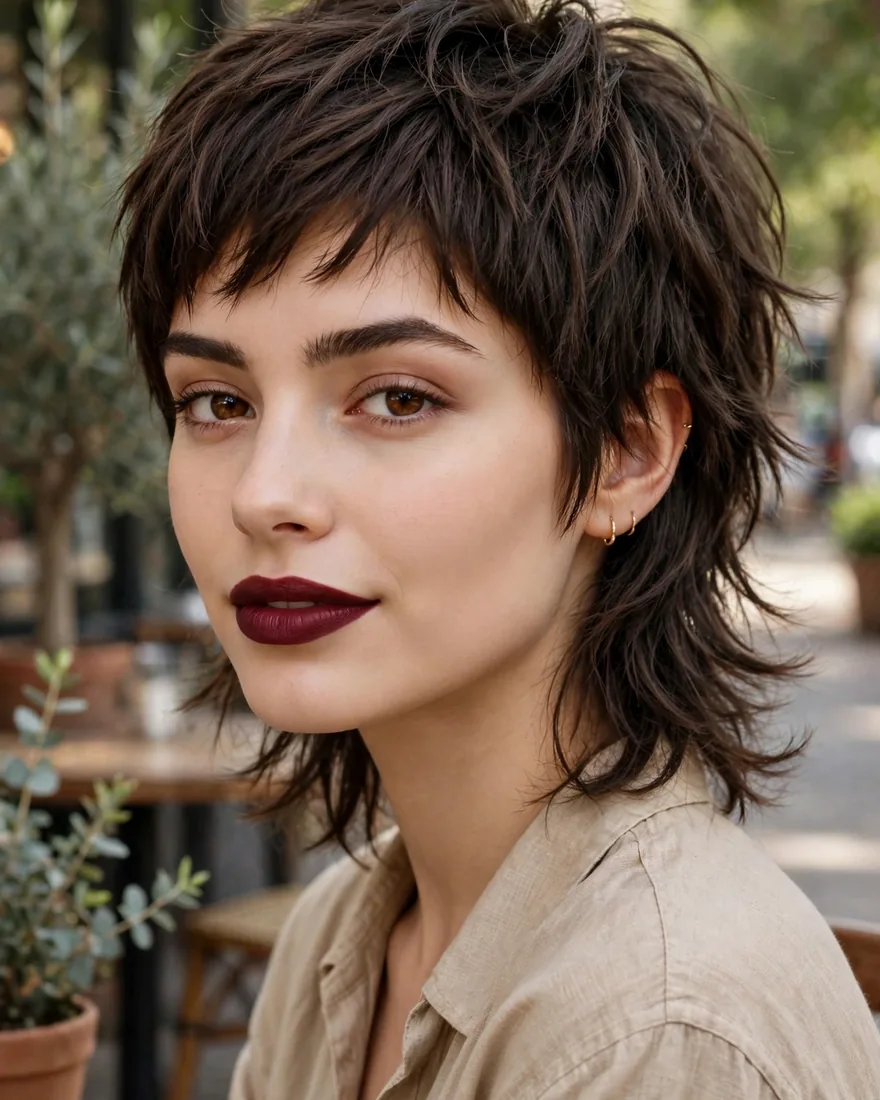 7. Mixie
The mixie blends a mullet and a pixie: short and piecey on top with longer, wispy length through the nape. It has quickly become one of the most requested short cropped hairstyles among readers who want edge without severity. It is the crop of the moment for anyone who likes their hair a little rebellious — structured at the crown, wild at the back.
Among short cropped hairstyles, the mixie has the most personality. It suits wavy and curly textures beautifully, since the natural movement does half the styling for you, and it looks better slightly grown out than freshly cut.
Benefits:
- Edgy, current, and full of movement
- Looks better with a little grow-out — low pressure
- Fantastic on wavy and curly textures
Pro Tip: The mixie must be cut with your natural texture in mind — ideally on dry hair. A mixie cut wet and straight on curly hair can spring up into a completely different shape once it dries.
How To Style: Embrace the mess. Work texturizing paste through dry hair, pinch the nape pieces outward, and let the crown do what it wants. This is not a precision crop.
Best For: Wavy and curly hair, creative spirits, and anyone who wants a crop with edge. Oval and heart-shaped faces wear it best.
8. Micro Fringe Crop
 8. Micro Fringe Crop
A micro fringe crop pairs any short pixie base with a bold, ultra-short fringe — cut well above the brows. It is a high-fashion detail that instantly makes a simple crop look deliberate and styled.
The micro fringe draws all attention to the eyes and brows, which is exactly why it works: strong brows and good skin become the accessories. Of all short cropped hairstyles, this one is the most transformative for the least amount of hair removed. Pair it with what you learn about types of bangs to pick the right fringe length for your forehead.
Benefits:
- Instant edge — transforms even a basic pixie
- Spotlights eyes and brows
- Surprisingly easy to grow out (it just becomes a fringe)
Pro Tip: Micro fringes show every cowlick. If your hairline grows in swirls at the front, tell your stylist — they may need to cut it slightly longer or work with the growth pattern instead of against it.
How To Style: Keep it piecey, not perfect. A tiny amount of wax on the fingertips, pressed through the fringe, gives that separated, editorial finish. Flat and blunt reads harsher.
Best For: Oval and long faces (it shortens the face visually), strong brows, and anyone who wants maximum style per inch of hair.
9. Side-Part Crop
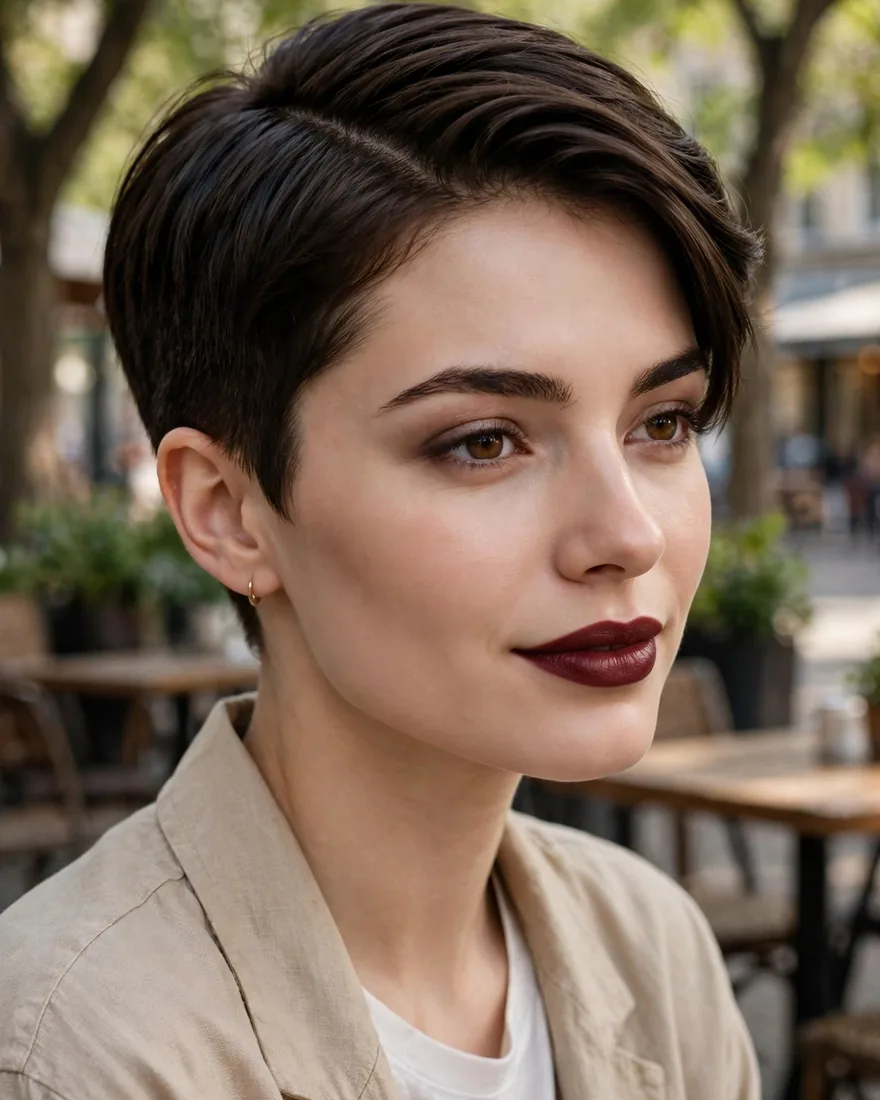 9. Side-Part Crop
The side-part crop is the grown-up, polished member of the crop family: a neat pixie base with a defined side part and smoothly directed top. It has a vintage Hollywood energy — think classic screen sirens — but cut with modern texture so it never looks costume-y.
This is the most boardroom-friendly of the short cropped hairstyles. The side part adds structure and intention, making it ideal if you love short hair but need your cut to behave in conservative settings.
Benefits:
- Polished and professional — the most versatile crop
- The side part flatters most face shapes
- Ages beautifully; elegant at every age
Pro Tip: Find your natural part before the appointment and show your stylist. Cutting against your natural fall means fighting your hair every morning; working with it makes the part effortless.
How To Style: On damp hair, create the part and smooth the top over with a vent brush while blow-drying. A pea-sized amount of shine pomade keeps it sleek without looking wet.
Best For: Professionals, fine hair (the directed top creates fullness), and anyone who wants short hair that always looks “done.”
10. Curly Crop
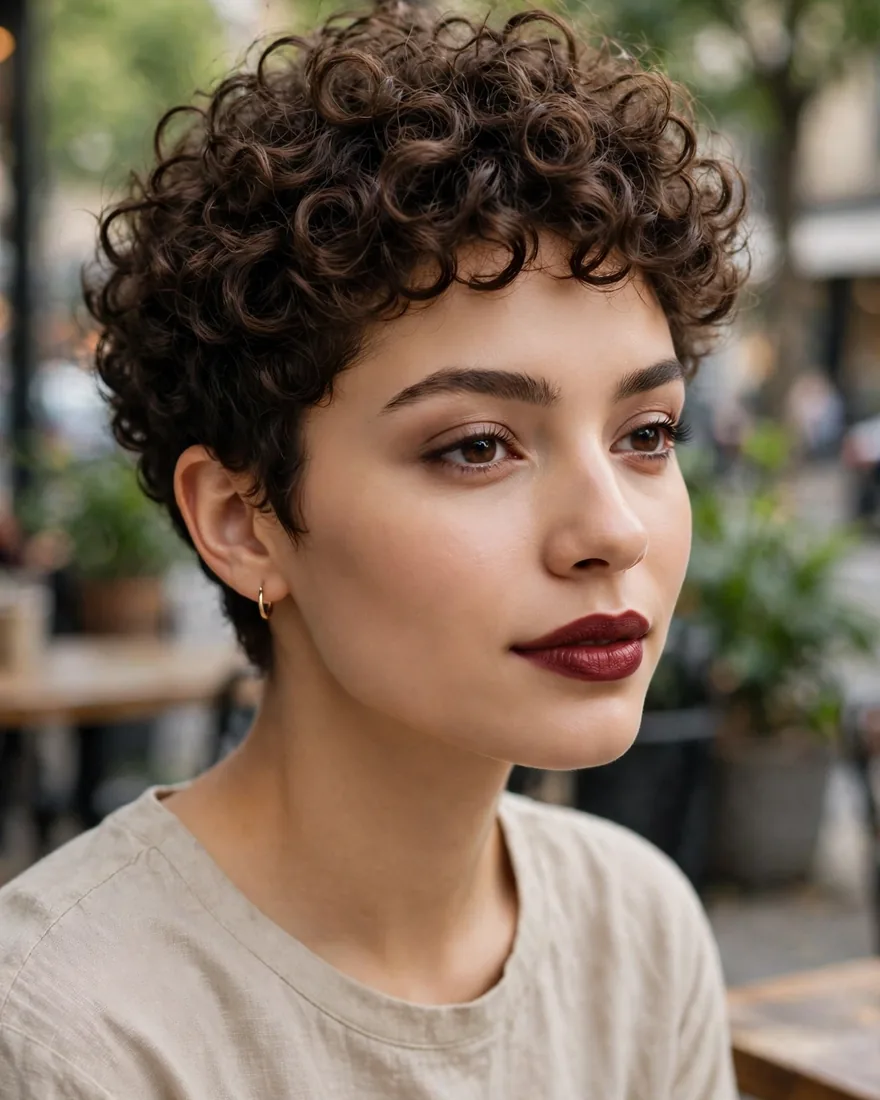 10. Curly Crop
A curly crop lets natural texture be the star: curls cut short enough to spring up and show their shape, with enough length on top to keep the silhouette soft and rounded. Done right, it is joyful, bouncy, and full of life.
The key difference from straight-hair crops is technique — curly crops should be cut dry, curl by curl, so the stylist sees exactly where each curl lands. A wet cut on curly hair is a gamble, because shrinkage changes everything. Our guide to curly hairstyles covers the texture principles that apply here too.
Benefits:
- Celebrates natural texture instead of fighting it
- Volume and shape with minimal heat styling
- Grows out into a beautiful curly pixie or bob
Pro Tip: Never let anyone thin a curly crop with thinning shears — it creates frizz, not lightness. Shape should come from strategic cutting, not bulk removal.
How To Style: Apply curl cream to soaking-wet hair, scrunch, and either diffuse or air-dry. Refresh on day two with a water-and-conditioner mist rather than re-wetting fully.
Best For: Naturally curly and coily hair (3A–4C), round faces (height on top elongates), and anyone ready to stop straightening. Short cropped hairstyles for curly hair work best when the cut respects shrinkage — this one does.
11. Asymmetric Crop
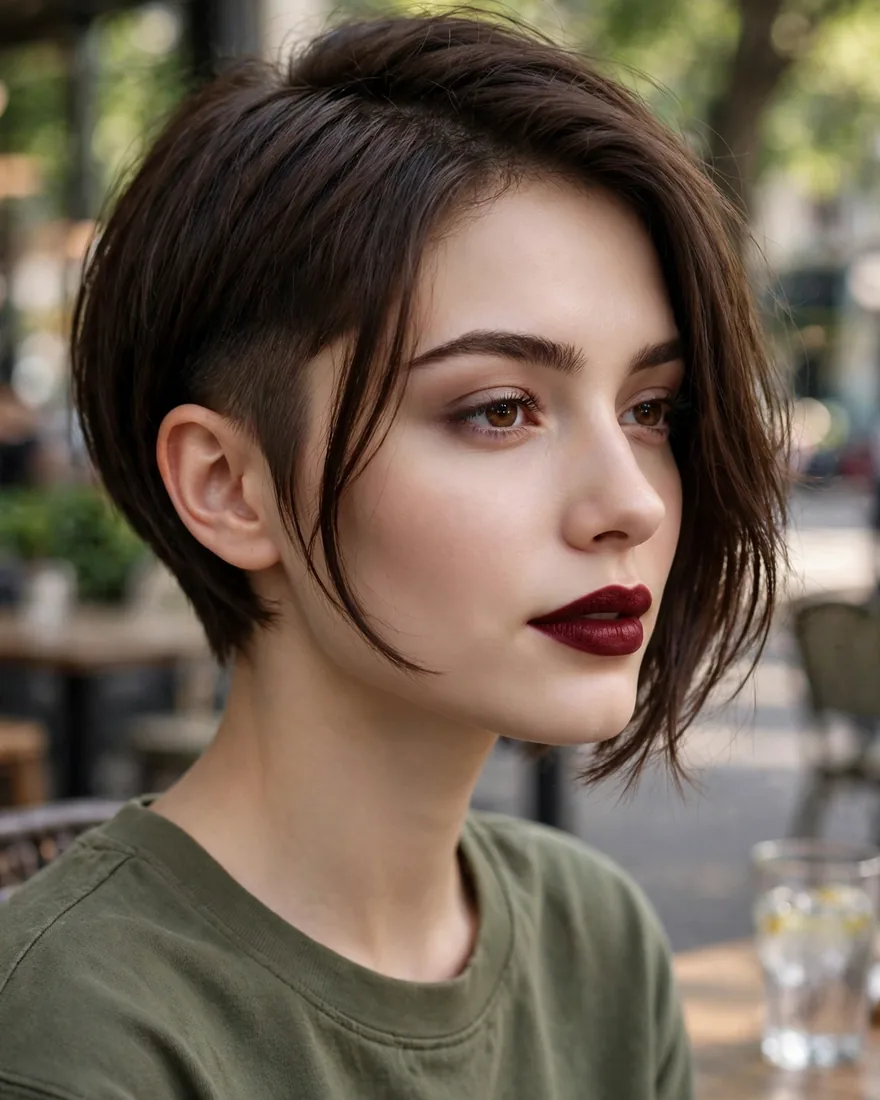 11. Asymmetric Crop
The asymmetric crop keeps one side noticeably longer than the other — a deep side sweep, an angled fringe, or a full disconnect. It is the crop for people who find symmetry boring and want their haircut to have a point of view.
Asymmetry is also quietly practical: the longer side can be tucked, pinned, or swept to change the look, giving you styling range that symmetrical short cropped hairstyles do not offer.
Benefits:
- Distinctive and fashion-forward
- The longer side gives extra styling options
- Asymmetry slims and angles round faces
Pro Tip: Decide which side is your “good side” in photos and keep the longer sweep there. Asymmetry should flatter your face, not fight it.
How To Style: Direct everything toward the long side while blow-drying, then define the sweep with a flat iron bend. A light-hold spray keeps the angle in place without stiffness.
Best For: Round and square faces (the diagonal line slims), confident dressers, and anyone bored of symmetrical cuts.
12. Undercut Crop
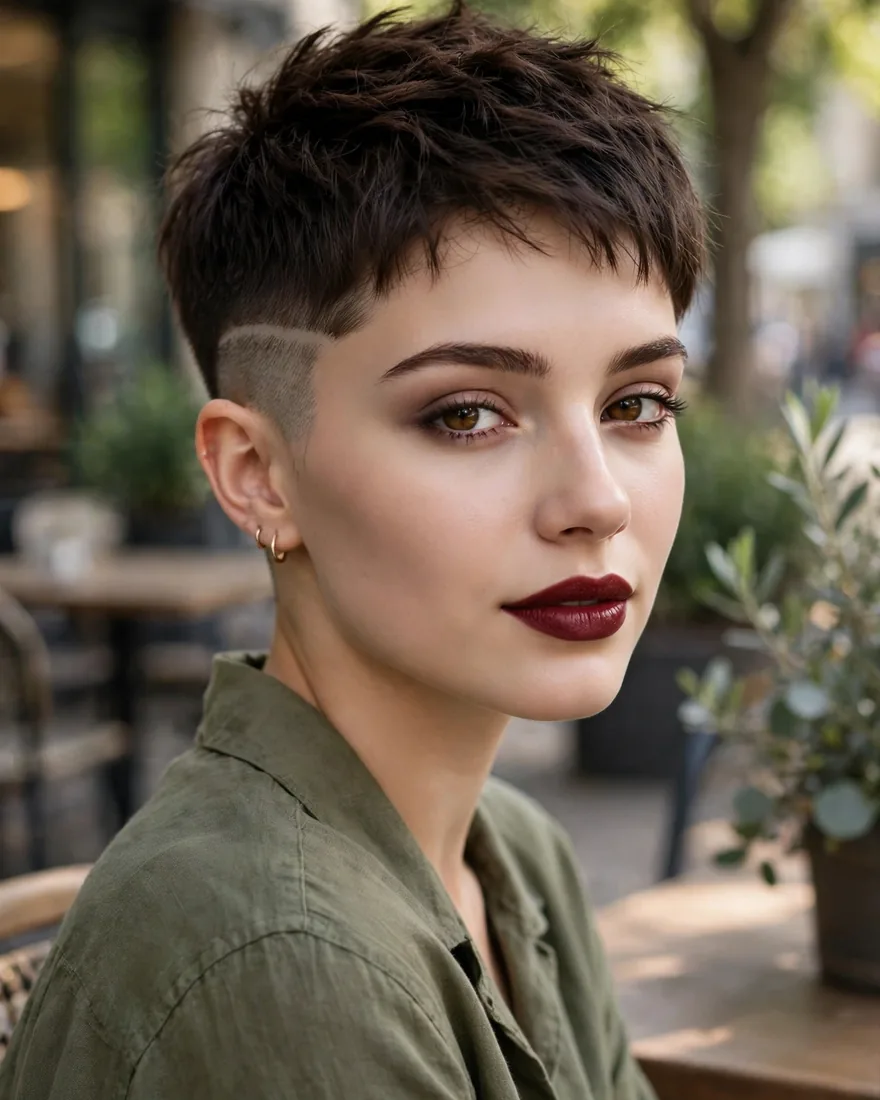 12. Undercut Crop
An undercut crop pairs a textured pixie top with shaved or faded sides — the contrast is the whole point. It is bold, modern, and unapologetic, with a rock-and-roll energy that softer crops cannot touch.
The undercut can be hidden or shown: wear the top down for a conservative look, sweep it up to reveal the shaved sides when you feel like it. That dual personality makes it more versatile than its reputation suggests. For more on the undercut family, see our undercut bob guide.
Benefits:
- Maximum contrast and edge
- Removes bulk — great for very thick hair
- Can be hidden or revealed depending on styling
Pro Tip: Undercuts need re-shaving every 2–3 weeks. If that maintenance sounds like too much, ask for a longer disconnected undercut that grows out softly instead of a skin fade.
How To Style: Texture the top with matte paste, pushing it up and back to show the sides, or forward and down to cover them. Two looks, one cut.
Best For: Thick hair (the undercut removes serious weight), bold personalities, and anyone who wants a crop with a hidden wild side.
13. Feathered Crop
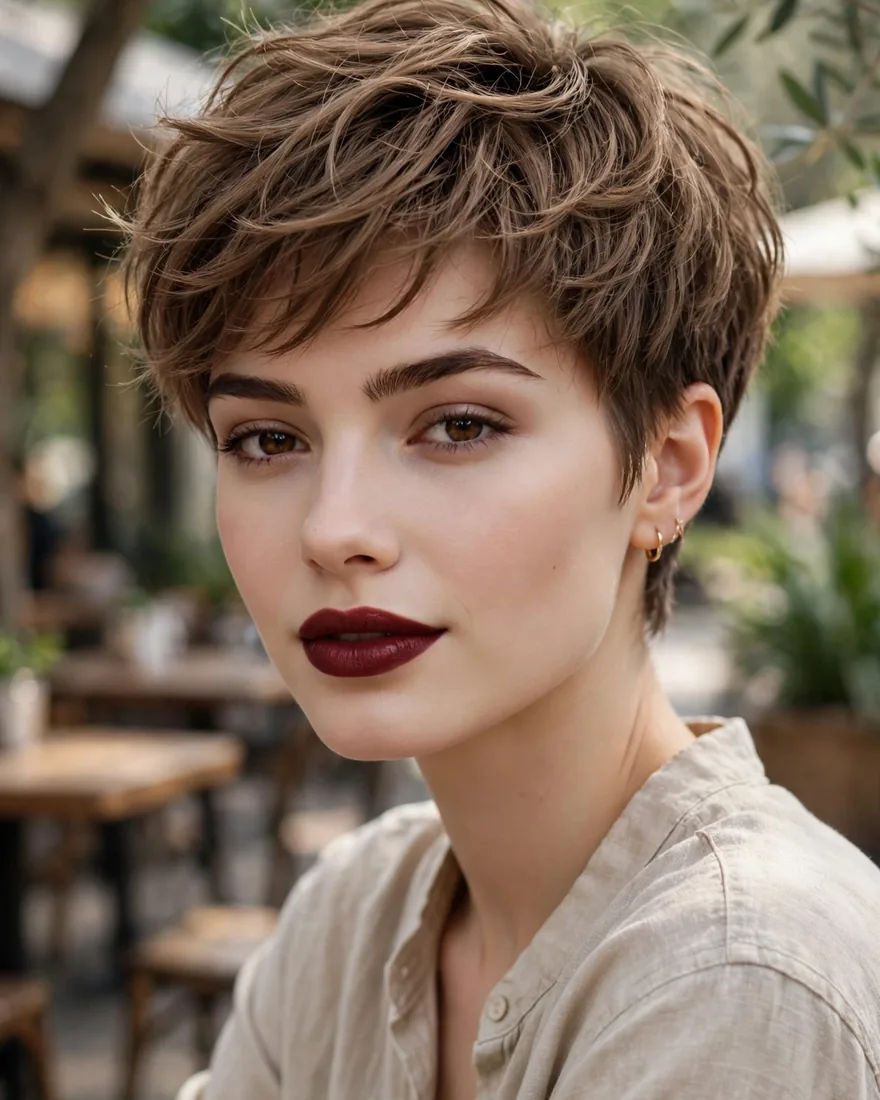 13. Feathered Crop
The feathered crop is softness incarnate: wispy, layered ends that flick and flutter around the face and nape, with a light, airy finish. It is the gentlest of the short cropped hairstyles — the one that reads romantic rather than edgy.
Feathering works by cutting the ends at an angle so they taper to soft points instead of blunt lines. The result moves beautifully and is wonderfully forgiving on fine hair, which can look fuller with feathered layers than with blunt ones.
Benefits:
- Soft, feminine finish — the gentlest crop
- Adds movement and the illusion of fullness to fine hair
- Grows out softly with no harsh lines
Pro Tip: Feathering needs sharp shears and a light hand — it is a technique-driven cut. Ask to see your stylist’s layered short cuts before you book, because bad feathering just looks thin.
How To Style: Blow-dry with a small round brush, flicking the ends outward. A volumizing mousse at the roots gives the feathered layers lift without weighing them down.
Best For: Fine hair, heart-shaped faces, and anyone who wants short hair that feels soft and romantic rather than sharp. It is the gentlest entry into short cropped hairstyles for anyone nervous about going short.
How the 13 short cropped hairstyles compare at a glance:
| Style | Upkeep Level | Best For |
|---|---|---|
| Classic Textured Pixie | Low | Most textures; first-timers |
| Tapered Pixie | Low daily / frequent trims | Fine, straight hair |
| French Crop | Very low | Straight to wavy; high foreheads |
| Modern Bowl Cut | Low | Oval faces; bold style lovers |
| Buzz Cut | None daily / very frequent trims | Confident minimalists |
| Bixie | Low | Thick hair; grow-out bridge |
| Mixie | Very low | Wavy/curly; edgy tastes |
| Micro Fringe Crop | Low | Oval/long faces; strong brows |
| Side-Part Crop | Low–medium | Professionals; fine hair |
| Curly Crop | Low | Curly/coily textures |
| Asymmetric Crop | Low–medium | Round/square faces |
| Undercut Crop | Low daily / frequent shaves | Thick hair; bold personalities |
| Feathered Crop | Low | Fine hair; soft finish lovers |
How to Choose the Right Crop for Your Face Shape and Texture
Choosing among short cropped hairstyles starts with honesty, not trends. Face shape matters: round faces benefit from height on top and asymmetry (try the asymmetric crop or a textured pixie with lift); long faces need width and fringe to avoid elongating further (the French crop or micro fringe crop works well); square faces soften with texture and side-swept lines; oval faces can wear almost anything.
Texture is the second filter when comparing short cropped hairstyles. Fine hair needs structure — tapered pixies and side-part crops create fullness that wispy cuts cannot. Thick hair needs weight removal — undercut crops and heavily textured pixies prevent the dreaded triangle. Curly and coily hair needs a dry-cut specialist and a crop designed for shrinkage, like the curly crop. And be honest about upkeep: a buzz cut or tapered pixie demands salon visits every few weeks, while a bixie or mixie forgives an extra month. Pick the crop that fits your real life, not your aspirational one, and check our short hair hub for more length-comparison guidance.
Growing Out a Crop Without the Awkward Stage
Every pixie grow-out follows the same stages, and knowing them removes the fear. Months 1–2: the awkward mullet phase, where the nape outgrows the top — manage it with trims that keep the back neat while the top catches up. Months 3–5: you have a shaggy bixie, which is genuinely a cute cut, not a punishment — lean into texture and headbands. Months 6–8: the top reaches bob length and your stylist can shape the whole thing into a proper bob.
The rules that make it painless: trim the nape and around the ears every 6 weeks (never let the back go full mullet unless you want the mixie), use accessories strategically during the in-between, and tell your stylist at the start that you are growing it out so they cut with the future shape in mind. Growing out short cropped hairstyles is a plan, not an accident — treat it like one.
Styling Short Hair in 5 Minutes: Products and Routine
Short hair styles fast — that is the whole point — but only if you own the right three products. Your starter kit: a matte paste or clay for texture and separation, a light pomade for polish and flyaways, and a texturizing spray for second-day grit. That is genuinely all most crops need.
The 5-minute routine: on damp hair, work a pea-sized amount of product through, rough-dry with your fingers (no brush needed for textured crops), then pinch and piece the ends where you want definition. For sleek crops like the side-part, swap the rough-dry for a vent brush and finish with pomade. Wash every 2–3 days if you can — short cropped hairstyles show oil fast, but daily washing strips it. If your hair is on the finer side, our haircuts for thin hair guide has product advice that applies directly to crops too.
Short Crop FAQs
How often do short cropped hairstyles need trimming?
Most short cropped hairstyles need a trim every 4–6 weeks to hold their shape. Tighter cuts like tapered pixies and buzz cuts need attention every 2–4 weeks, while bixies and mixies can stretch to 8 weeks. The shorter and more precise the cut, the faster it loses its line — budget for maintenance before you commit.
Can I grow out a pixie without going through an awkward stage?
You cannot skip the awkward stage of short cropped hairstyles entirely, but you can manage it. Keep the nape and ears trimmed every 6 weeks while the top grows, lean into the bixie phase (months 3–5 are genuinely cute), and use headbands, clips, and texture products during the in-between. Tell your stylist you are growing it out so every trim shapes toward a bob.
Which short crop suits a round face best?
Look for height on top and asymmetry: a textured pixie with crown lift, an asymmetric crop, or a mixie all elongate a round face. Avoid cuts that add width at the cheeks — blunt bobs and rounded bowl cuts can emphasize fullness. A side part also helps break up roundness.
Do short cropped hairstyles work on curly or coily hair?
Absolutely, but the technique matters more than the cut name. Curly and coily crops should be cut dry, curl by curl, by a stylist experienced with your texture — shrinkage means a wet cut is unpredictable. The curly crop is designed for this, and tapered shapes work well on coily hair when the sides are shaped rather than faded too tight.
What products do I actually need for short cropped hair?
Three cover almost everything: a matte paste or clay for texture, a light pomade for polish and flyaways, and a texturizing spray for grit and second-day refresh. Fine hair may want a volumizing mousse instead of heavy paste. You do not need a shelf of products — short hair uses so little that one tub lasts months.
I have never gone short before — how do I know a crop will suit me?
Start with the least committed option: a bixie or a longer textured pixie gives you the short feeling with a safety net of length. Use the face-shape and texture filters in our choosing guide above, bring reference photos of your actual hair texture (not just the cut), and have an honest consultation — a good stylist will tell you if your dream crop fights your growth patterns.
How do I style a short crop for a formal event?
Sleek it: the side-part crop with shine pomade reads instantly formal, and a tapered pixie smoothed with a vent brush looks elegant. Add a deep side part, tuck one side behind the ear, and finish with a decorative clip or headband. Wet-look styling with gel is another formal option that works on most crops.
Are short cropped hairstyles high maintenance?
It depends on the crop, and this is where honesty matters. Daily styling is low — most crops take 5 minutes. But salon maintenance is higher than long hair: precision crops need trims every 3–6 weeks versus 8–12 for long hair. Buzz cuts need the most frequent upkeep; bixies and feathered crops need the least. Factor the trim schedule into your decision, not just the morning routine.
Short cropped hairstyles are not really about bravery — they are about clarity. When you choose by face shape, texture, and the upkeep you will honestly do, the chop stops feeling like a gamble and starts feeling like the most practical decision you have made all year. Pick the crop that fits your real mornings, find a stylist who cuts your texture dry when it matters, and give yourself two weeks to learn the styling — by week three, you will wonder why you waited.