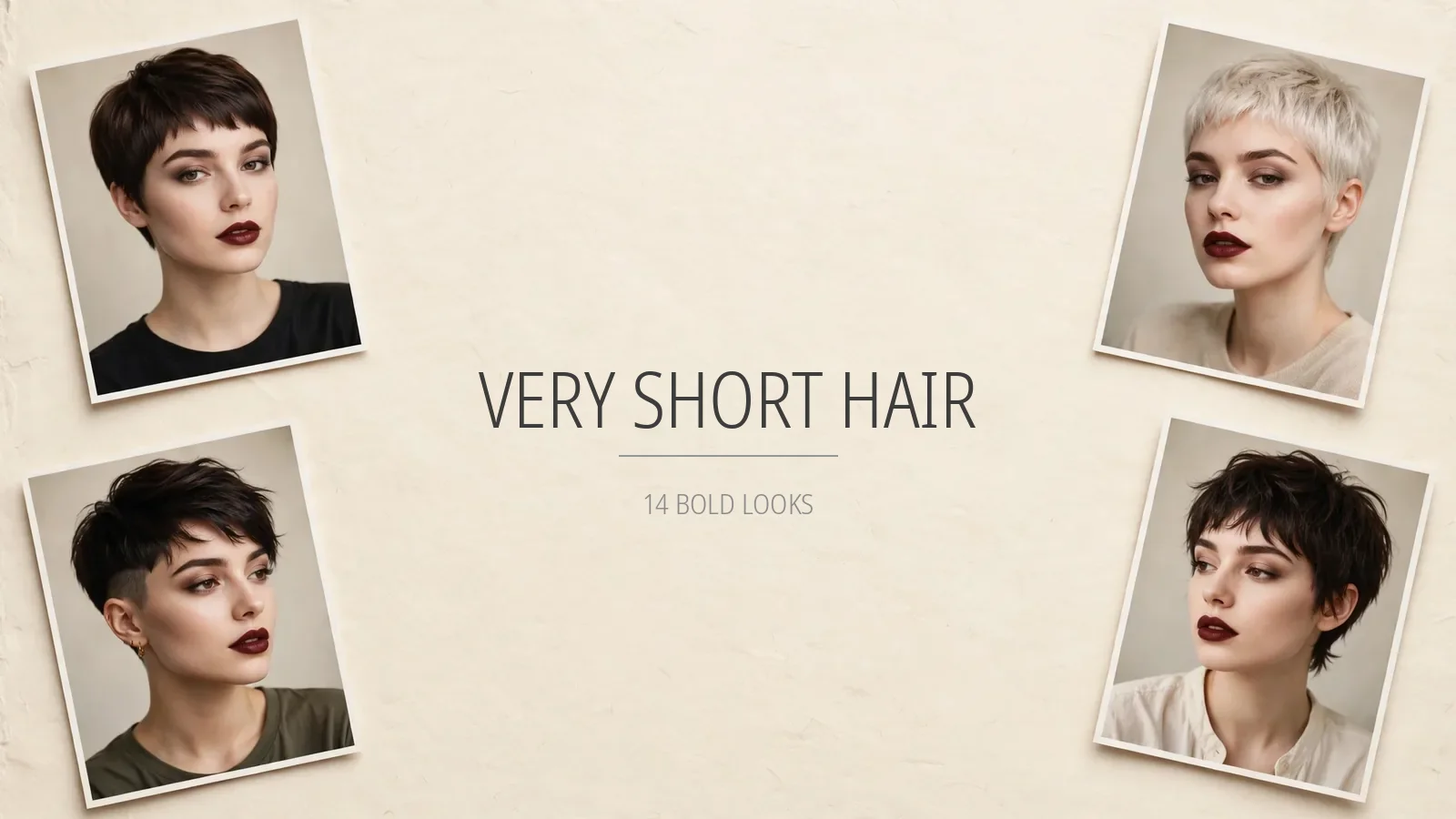
Very Short Hairstyles – 14 Bold Looks That Own the Room
There is no haircut with higher stakes than going very short. A bad bob can be grown out in a few months of awkwardness; a bad very short cut is something you wear on your face, every day, with nowhere to hide it. The photos make it look effortless — one sweep of texture paste and out the door — but the truth is that very short hairstyles demand the most honest guidance of any length, because the margin between “striking” and “regret” is razor thin.
This guide exists to close that gap. Below are 14 very short hairstyles that genuinely work on real hair and real faces — not just on models — each with honest notes on who it flatters, who should think twice, how it grows out, and what the daily reality looks like. No hype, no “this suits everyone” claims. Just the information you need before you book the chair.
Table of Contents
- Very Short Hairstyles That Own the Room
- 1. The Classic Pixie Cut
- 2. Textured Micro Pixie
- 3. Cropped Pixie with Taper
- 4. Undercut Pixie
- 5. Silver Ash Stacked Pixie
- 6. Sculpted Blonde Pixie
- 7. Choppy Layered Crop
- 8. Shaggy Mullet Pixie
- 9. French Girl Crop
- 10. Micro Fringe Pixie
- 11. Platinum Cropped Pixie
- 12. Asymmetric Crop
- 13. The Clean Shave
- 14. Tapered Nape Pixie
- The Grow-Out Roadmap: Pixie and Buzz Back to a Bob
- Face-Shape Honesty: What Very Short Cuts Really Do
- Workplace Reception and Regrow Planning
- FAQs
- How do I know if I can pull off very short hair?
- How long does it take to grow out a pixie cut?
- Can very short hairstyles work on round faces?
- Will a very short cut work on thin or fine hair?
- Are very short hairstyles really low maintenance?
- Can I wear very short hair in a professional workplace?
- What should I do if I regret going very short?
- What should I tell my stylist before a very short cut?
Very Short Hairstyles That Own the Room
1. The Classic Pixie Cut
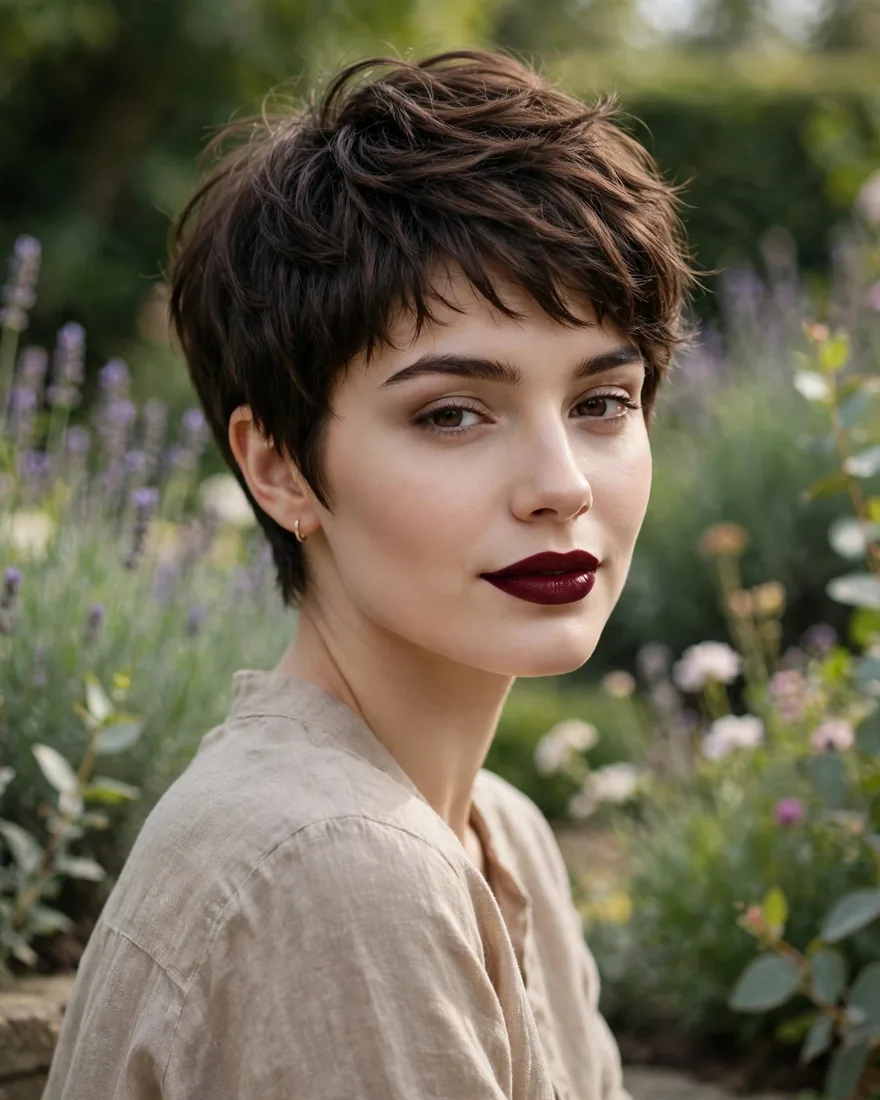
The benchmark all very short hairstyles are measured against: short through the back and sides with enough length on top to style with direction. It is the safest entry point into very short hair because it keeps styling options open while still reading unmistakably short.
Benefits:
- The most versatile of all very short hairstyles — wears sleek, textured, or swept
- Shows off cheekbones, jawline, and earrings like no longer cut can
- Grows out more gracefully than buzzed or undercut styles
Pro Tip: Ask your stylist to cut it slightly longer than the reference photo. Very short hair always looks shorter once it settles, and you can take more off in a follow-up — you cannot put it back. This caution applies to all very short hairstyles, not just the classic.
How To Style: Work a pea-sized amount of pomade or texture paste through dry hair, directing the top forward or to the side. For a sleeker finish, blow-dry the top with a small round brush first.
Best For: Oval and heart faces; fine to medium straight hair. Round faces need height on top and asymmetry added — ask for it explicitly, or this cut can widen the face. If your texture runs curly, a curly pixie cut approach will serve you better than a straight-cut classic.
2. Textured Micro Pixie
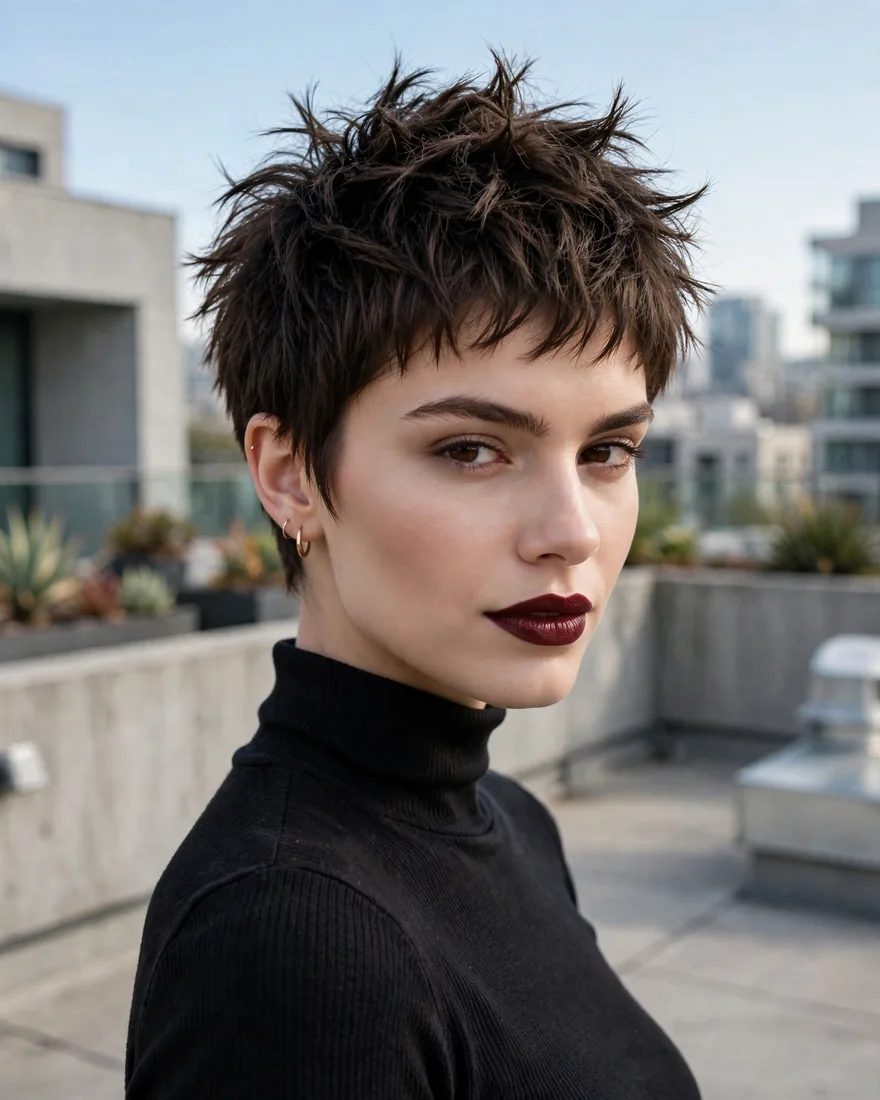
A pixie taken shorter all over, with point-cut texture through the top so it never sits flat. The wash-and-go champion among very short hairstyles — the choppiness does the styling for you.
Benefits:
- Genuinely low daily effort — texture paste and fingertips, done in two minutes
- Point-cutting makes fine hair look denser than a blunt cut ever could
- Disguises cowlicks and growth quirks that longer cuts would expose
Pro Tip: The product is not optional here. Without wax or paste, textured layers read as unfinished rather than intentional — keep a travel-size clay in your bag.
How To Style: Warm a small amount of matte clay between your palms and pinch the ends into points. No brush, no dryer needed on most hair types — which is why textured very short hairstyles win the low-effort contest.
Best For: Fine to medium hair needing the illusion of density; oval, heart, and square faces. Very round faces should add volume at the crown to avoid widening. For more close-cut texture ideas, browse our short cropped hairstyles guide.
3. Cropped Pixie with Taper
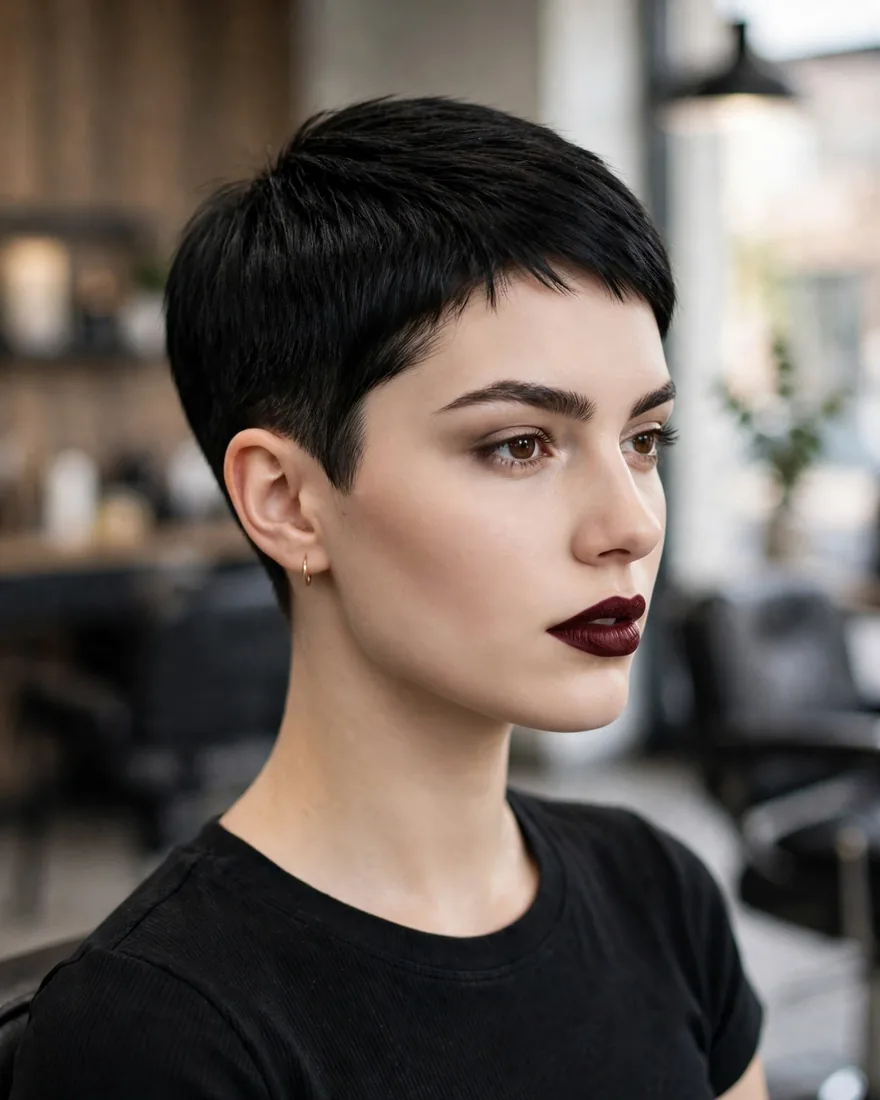
A pixie with precision-tapered sides and nape that hug the head, contrasted against a slightly longer top. The taper is what makes this one of the most polished very short hairstyles — clean lines at the neckline and around the ears signal intention.
Benefits:
- Tapered sides remove bulk exactly where thick hair misbehaves — the nape and behind the ears
- The clean neckline stays sharp for three to four weeks between trims
- Reads refined and deliberate, which helps in conservative settings
Pro Tip: Find a stylist genuinely skilled with clippers. A bad taper grows into a visible shelf within two weeks, and you will see it in every mirror.
How To Style: Style the top with your preferred product; keep the tapered areas neat with a dab of pomade along the hairline. Edge-ups every two to three weeks keep it crisp.
Best For: Thick or coarse hair; oval and long faces. The taper elongates the neck, which flatters shorter necks especially.
4. Undercut Pixie
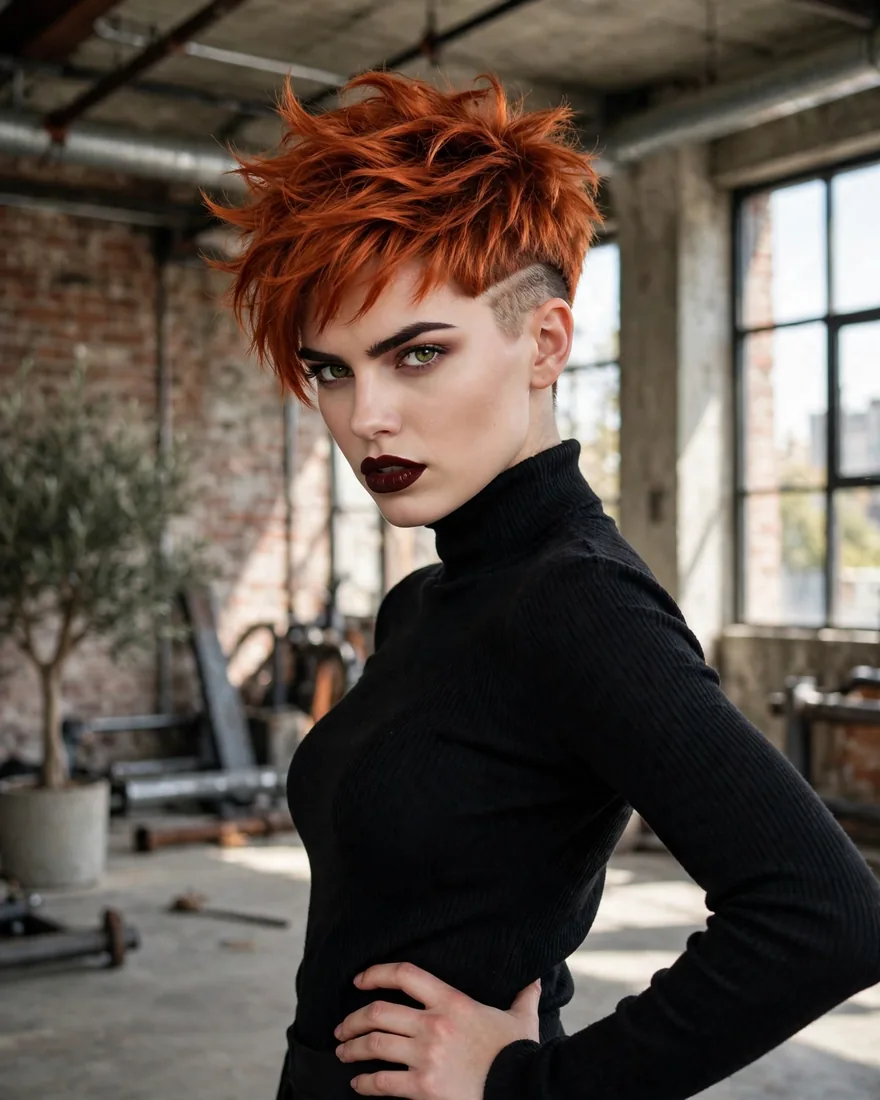
A pixie on top with the sides, the nape, or both buzzed or faded underneath. Maximum contrast, minimum bulk — the undercut removes up to half the hair’s volume in a single move, which is why thick-haired wearers of very short hairstyles swear by it.
Benefits:
- Dramatically reduces styling time and bulk for very thick hair
- A hidden nape-only undercut offers edge with zero visible commitment
- Keeps you noticeably cooler in warm weather
Pro Tip: Start with a nape-only undercut if you are nervous. It is invisible when your hair is down, and it grows out without any awkward phase.
How To Style: Style the top as usual; the undercut needs nothing daily. Get it edged every two to three weeks — many barbershops do quick cleanups inexpensively.
Best For: Very thick or coarse hair; oval and heart faces. Be honest with yourself about upkeep: the contrast only looks sharp when the undercut is fresh. Among very short hairstyles, this one demands the most regular salon rhythm.
5. Silver Ash Stacked Pixie
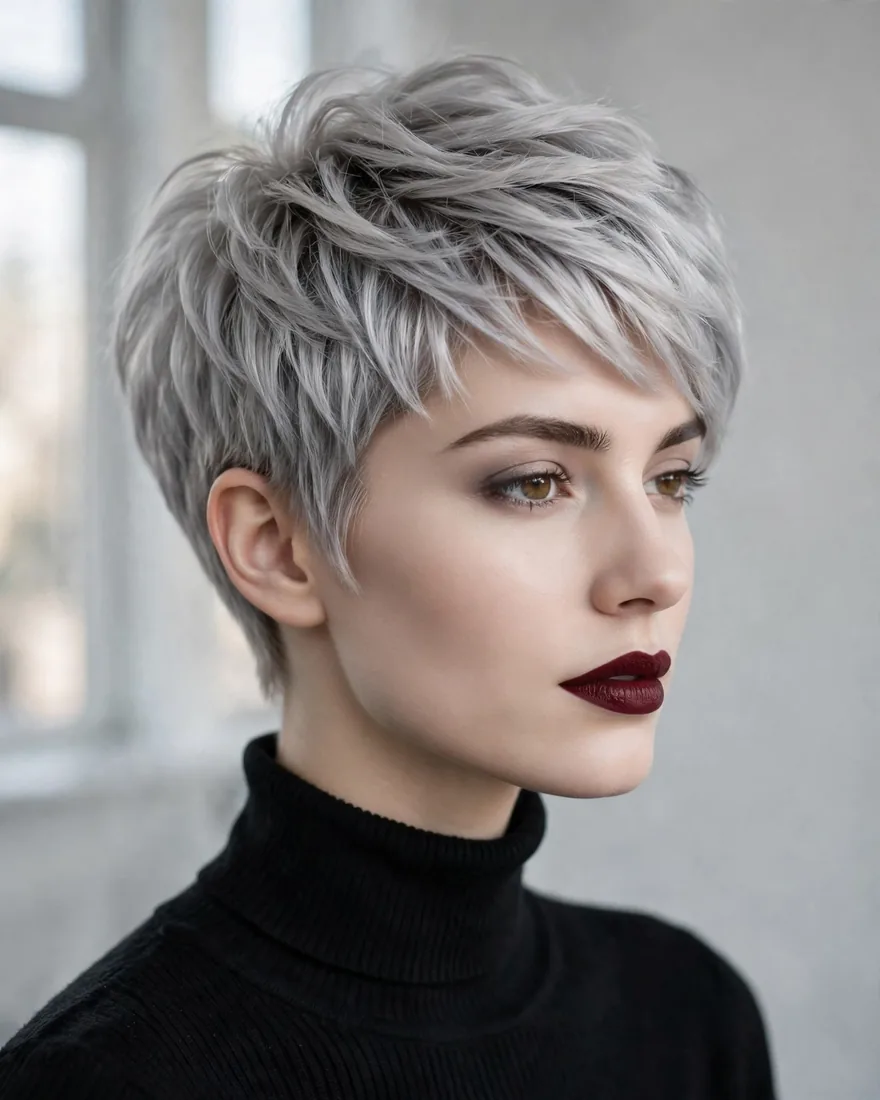
A pixie with stacked layers at the back, worn in silver, ash, or natural gray. There is no better haircut for going gray gracefully among very short hairstyles — less old dyed length to grow out, and the crop makes silver look intentional rather than neglected.
Benefits:
- The fastest, most flattering route to embracing natural gray
- Silver tones reflect light, making fine hair look visibly denser
- Stacked layers at the back create fullness where short cuts often go flat
Pro Tip: Use purple shampoo weekly to stay bright. Without it, gray and silver turn yellow and dull, especially in hard water — and on very short hair, dullness has nowhere to hide.
How To Style: Style as usual, then finish with a shine serum. Gray hair can look dry even when perfectly healthy, and shine is what sells the look.
Best For: Women embracing natural gray; fine hair that needs light reflection; all face shapes. Cool skin undertones carry silver most naturally.
6. Sculpted Blonde Pixie
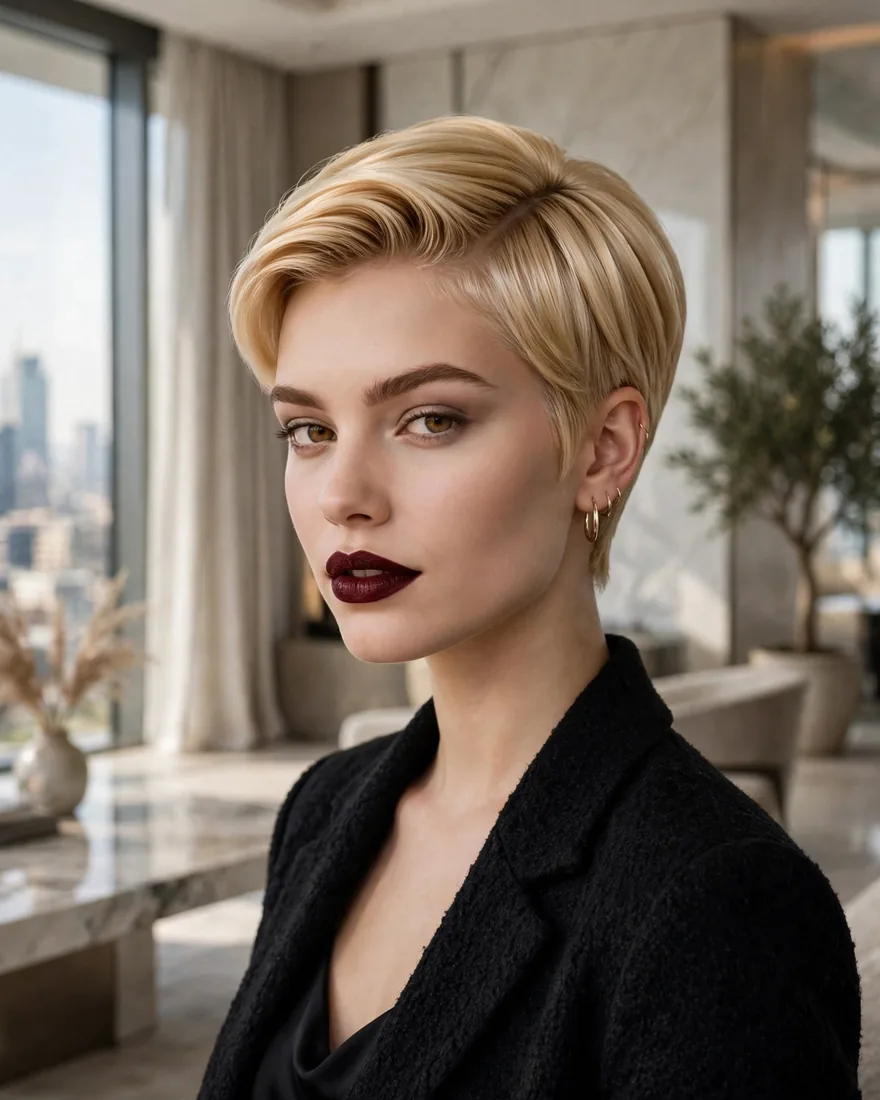
A precisely shaped pixie in blonde — from icy platinum to warm honey — where the cut’s architecture is the star. On very short hair, blonde shows every line of the cut, which is exactly why this pairing works: the color spotlights the sculpting.
Benefits:
- Blonde on very short hair looks striking with minimal styling effort
- The light color softens the severity that dark very short cuts can carry
- Precision cutting shows best on light hair — every layer is visible
Pro Tip: Bleaching very short hair is actually easier on the hair than bleaching long hair — less overlapping, faster processing — but the regrowth line shows within two to three weeks. Budget for root touch-ups or embrace the shadow root, as many wearers of blonde very short hairstyles do.
How To Style: A smoothing cream or light pomade defines the sculpted lines. Keep heat styling minimal to protect the blonde.
Best For: Fair to medium skin tones; straight to slightly wavy hair. If your natural base is very dark, be realistic about the maintenance rhythm before committing. For the in-between length when growing this out, see our long pixie bob ideas.
7. Choppy Layered Crop

Disconnected, piece-y layers all over a very short base — the rock-and-roll end of very short hairstyles. The choppiness creates movement that makes even fine hair look like it has twice the density, and the finish only improves as the day goes on.
Benefits:
- The ultimate low-effort very short cut — bedhead is the intended finish
- Wispy layers add movement to straight, limp hair
- Razored ends remove weight without the see-through look of thinning shears
Pro Tip: Choppy does not mean shapeless. The outline still needs precision cutting, or it grows out mullet-adjacent within a month — book the follow-up trim before you leave the salon.
How To Style: Air-dry with sea salt spray scrunched in, then piece out the ends with a tiny amount of wax. Hands off after that.
Best For: Straight to wavy medium-density hair; oval, heart, and square faces. Fine hair gains the most from the texture illusion.
8. Shaggy Mullet Pixie

The hybrid that refuses to pick a lane: pixie-short on top and through the sides, with shaggy length left at the nape. For people who want edge without fully surrendering back length, this is among the most forgiving very short hairstyles.
Benefits:
- The nape length gives you something to play with — tuck, flip, or leave shaggy
- Shaggy layers flatter strong jawlines by breaking up the outline
- Grows out into a shaggy bob more gracefully than most very short cuts
Pro Tip: This cut lives on the edge of “intentional” and “overgrown.” The difference is the perimeter — keep the outline shaped every six to eight weeks or it slides into mullet territory.
How To Style: Work texture spray through damp hair and rough-dry. Define the nape pieces with a touch of wax, pointing them outward for the signature silhouette.
Best For: Wavy to curly textures that enhance the shag; oval and heart faces. Straight very fine hair can look stringy at the nape — ask for blunter ends there.
9. French Girl Crop
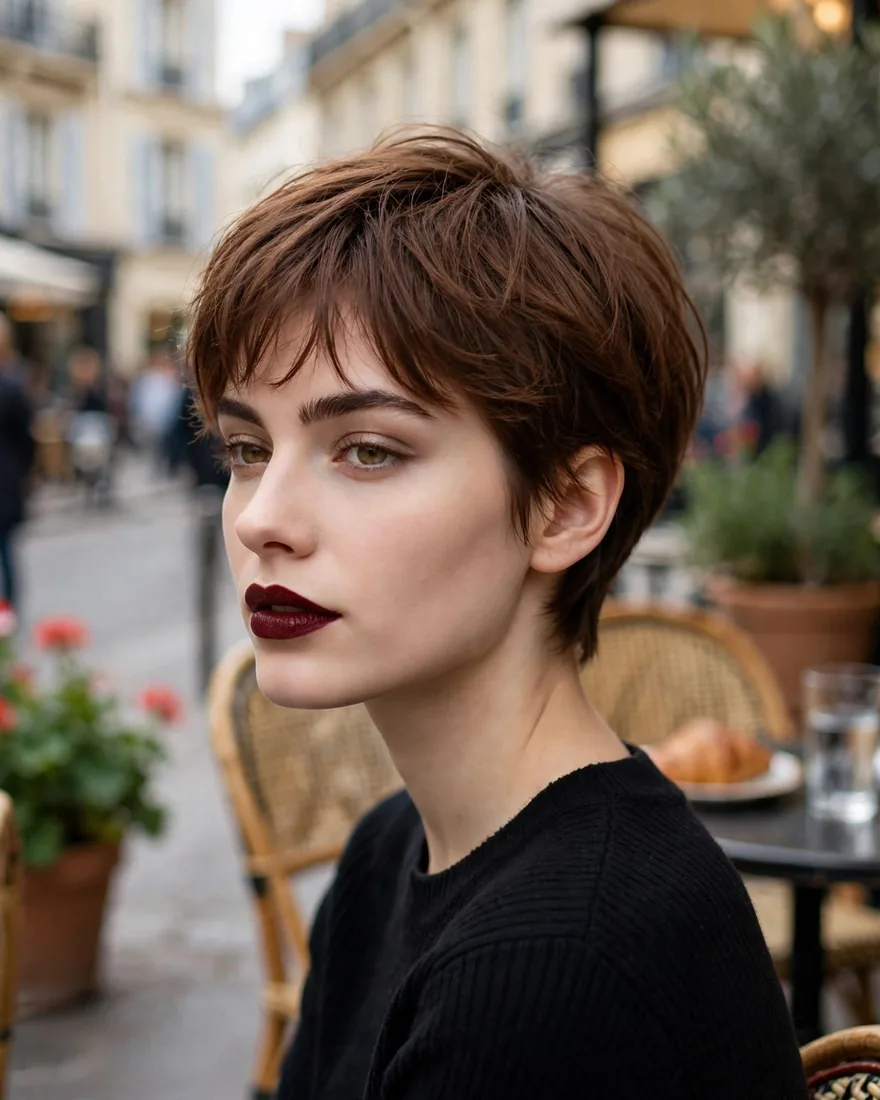
The soft, undone crop — short but never severe, with a wispy fringe and airy texture that looks like you cut it yourself on a whim (you should not). This is the most romantic of all very short hairstyles, and the most forgiving as it grows.
Benefits:
- Softness around the face makes it the most universally flattering very short cut
- The wispy fringe disguises forehead lines and strong brow bones
- Grows out with minimal awkwardness — the softness hides uneven stages
Pro Tip: The “undone” look requires a very done cut. This needs a stylist who understands soft point-cutting — a blunt crop with the same length will not give you this effect.
How To Style: A dab of styling cream on damp hair, then air-dry. The goal is touchable softness, not piece-y definition — go easy on strong-hold products.
Best For: Nearly all face shapes thanks to the soft fringe; fine to medium hair. The best first very short cut for the nervous.
10. Micro Fringe Pixie
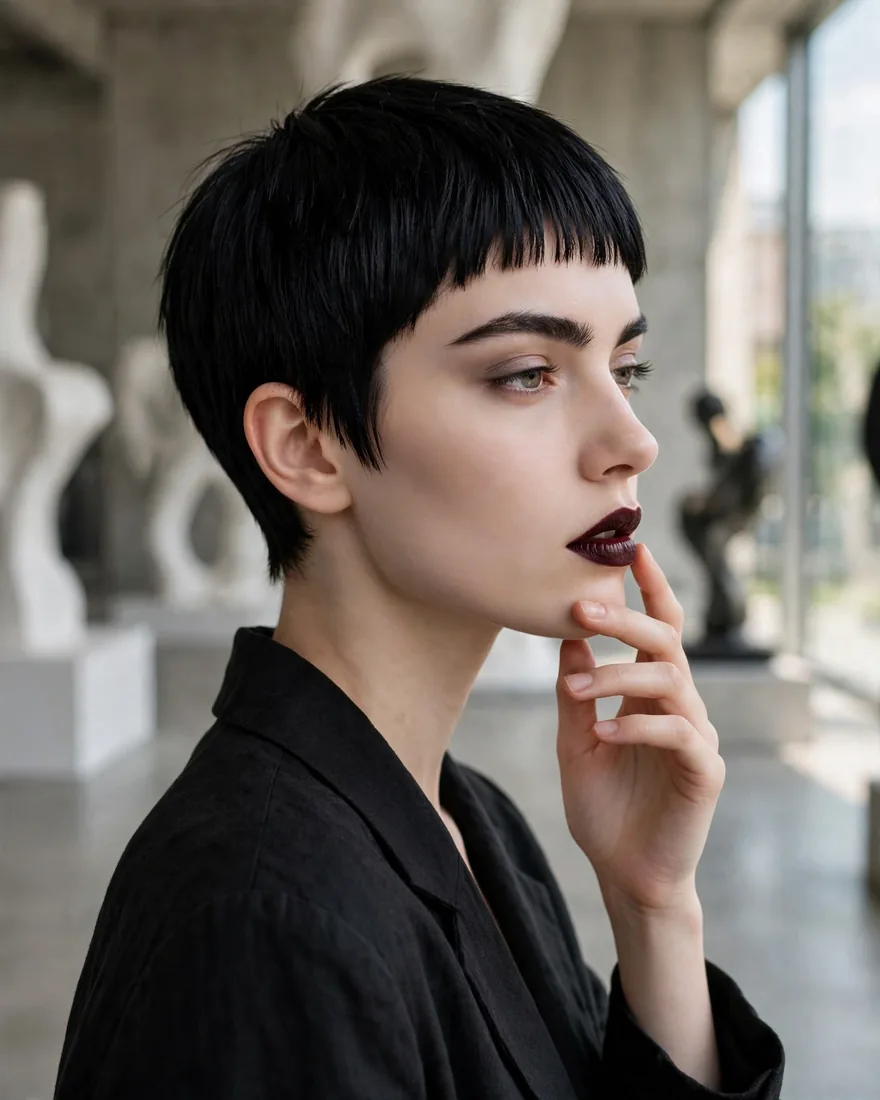
A pixie paired with a very short, straight-across or slightly textured fringe sitting well above the brows. This is the boldest fringe choice among very short hairstyles — it puts your entire face on display and makes a definitive style statement.
Benefits:
- Instantly distinctive — no one forgets a micro fringe
- Opens up the face completely, showcasing eyes and cheekbones
- Makes the pixie read fashion-forward rather than merely practical
Pro Tip: This is the highest-commitment fringe in the lineup. It takes months to grow to brow length, and there is no hiding a micro fringe on a bad hair day — be sure before you commit.
How To Style: Keep the fringe piece-y with a tiny amount of paste, or sleek it down with a flat iron for a sharper graphic line. Trim the fringe every two to three weeks yourself between salon visits.
Best For: Oval and long faces; small to medium foreheads. Very round faces and very high foreheads should approach with caution — the short fringe emphasizes width and exposes the full forehead. Our types of bangs guide breaks down fringe placement in detail.
11. Platinum Cropped Pixie
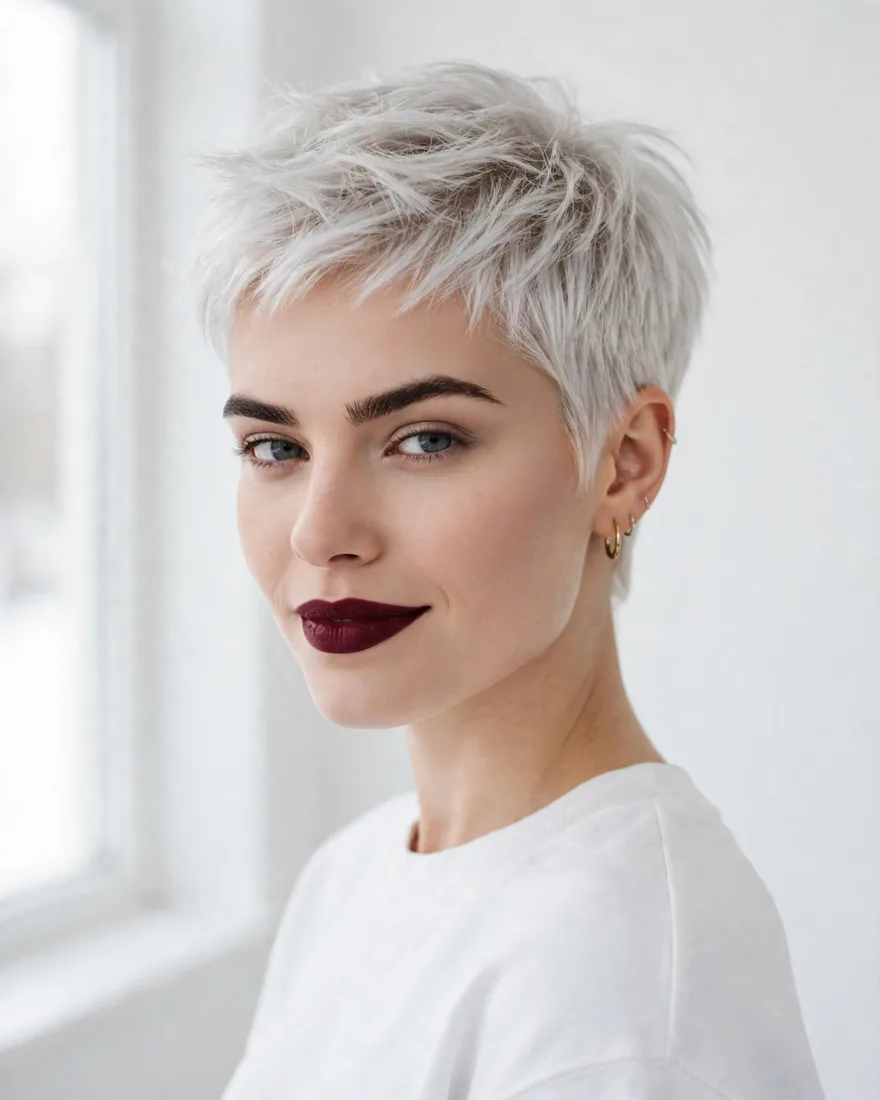
Cropped close all over in icy platinum — the most dramatic combination of cut and color in very short hairstyles. The near-white shade turns a simple crop into a statement, and the short length makes the notoriously high-maintenance platinum far more manageable.
Benefits:
- Platinum on short hair is dramatically easier to maintain than on long hair — faster appointments, less breakage risk
- The icy tone makes eyes look brighter and skin look clearer by contrast
- Regrowth is honest and even — the short length means no banding or uneven lift
Pro Tip: Purple shampoo once a week is non-negotiable, and a deep conditioning mask weekly keeps the bleach from turning straw-like. On very short hair, damage shows immediately — there is no length to disguise it.
How To Style: Minimal product — a light smoothing cream is enough. Let the color do the talking.
Best For: Cool and neutral skin undertones; healthy hair that can take bleach. If your hair is already compromised, get it healthy first — platinum on damaged very short hair breaks instead of growing.
12. Asymmetric Crop

One side cropped close, the other left dramatically longer — sometimes sweeping past the cheekbone. The asymmetry does genuine contouring work, drawing the eye diagonally instead of letting it rest on width. It is the most sculptural of these very short hairstyles.
Benefits:
- The diagonal line visually slims wide cheeks and strong jawlines
- The long side can be tucked, pinned, or swept for day-to-night variety
- Makes a strong style statement with minimal daily effort
Pro Tip: The long side needs enough length to tuck behind the ear — at least three inches — or it flips outward and ruins the line. Confirm the length plan with your stylist before the first cut.
How To Style: Smooth the long side with a flat iron and tuck it for daytime polish; add a wave with a curling wand for evening drama.
Best For: Round and square faces benefit most from the slimming diagonal; straight or slightly wavy hair holds the asymmetry cleanest. When the long side finally reaches chin length, you are effectively growing into bob haircuts territory.
13. The Clean Shave
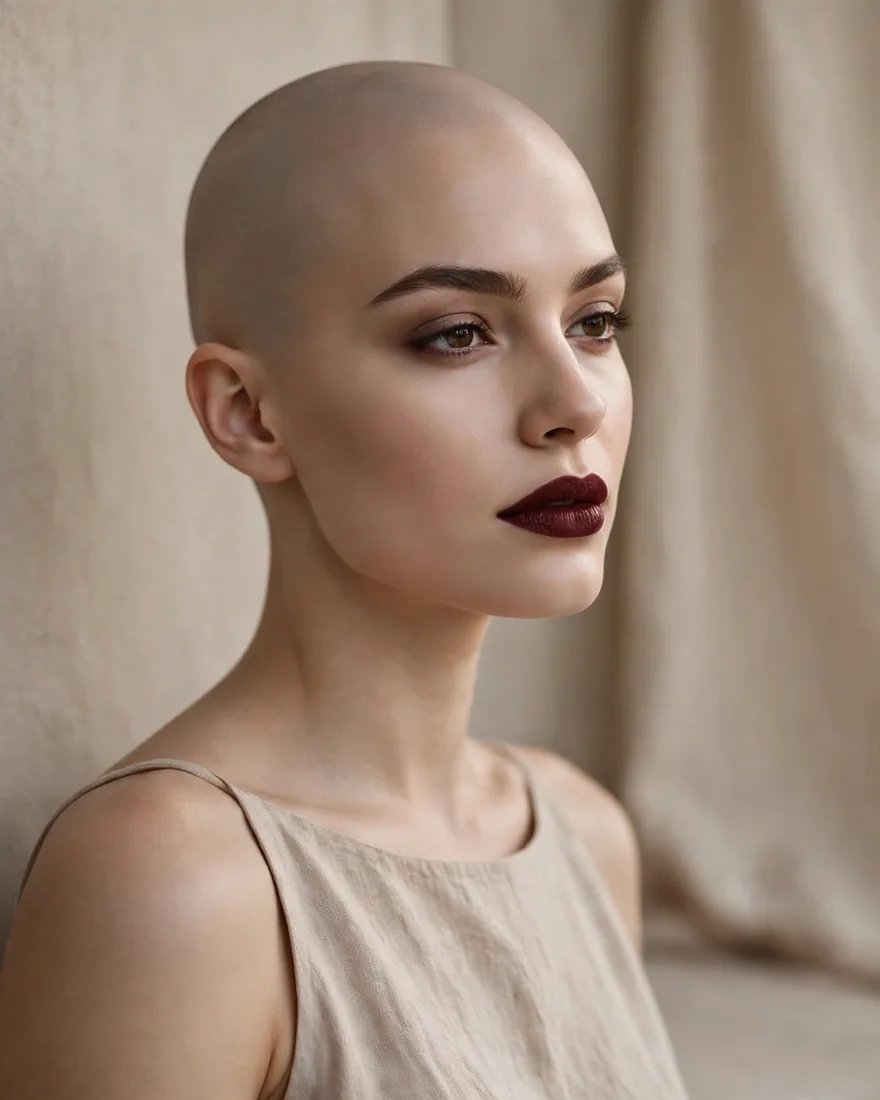
The full commitment: hair buzzed to the scalp or shaved clean. The most radical of all very short hairstyles, and paradoxically one of the most liberating — no styling, no bad hair days, no decisions.
Benefits:
- Zero daily styling time and near-zero product cost
- The ultimate reset for damaged, over-processed hair — healthy regrowth from scratch
- Showcases bone structure, eyes, and personal style like nothing else
Pro Tip: Do a trial run first: have a stylist buzz it to a #2 or #3 guard before going to the scalp. You will learn how your head shape looks with almost no hair while keeping a safety net.
How To Style: There is nothing to style. Keep the scalp healthy with sunscreen — a shaved head burns fast — and moisturize to prevent dryness and flaking. Of all very short hairstyles, this one trades styling time for scalp care.
Best For: Confident bone structure — strong cheekbones and a well-shaped head carry this best. Anyone can wear it, but go in with open eyes: this exposes everything, including head shape irregularities and scalp issues.
14. Tapered Nape Pixie
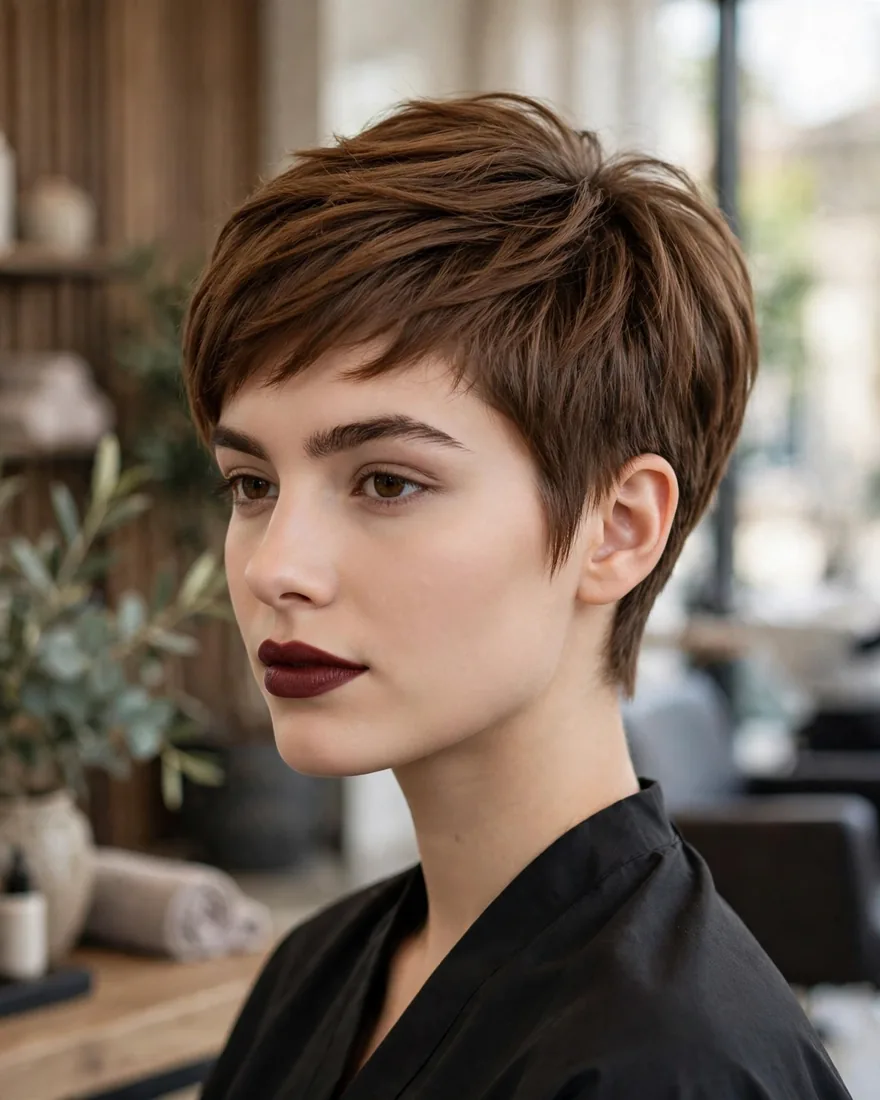
A pixie defined by its beautifully tapered nape — faded or scissored to hug the neck — with softness kept on top. The tapered nape is the detail that separates polished very short hairstyles from merely short ones.
Benefits:
- The clean nape elongates the neck and reads elegant from every angle
- Removes bulk where thick hair misbehaves most
- The contrast between the soft top and sharp nape looks expensive
Pro Tip: The nape grows out fastest and looks unkempt first — book edge-up appointments every two to three weeks, or learn to clean it up at home with trimmers.
How To Style: Style the top to your preference; run a dab of pomade along the nape hairline for a crisp finish.
Best For: Thick hair; all face shapes. Shorter necks gain the most visually from the elongating effect.
How the 14 very short hairstyles compare at a glance:
| Cut | Face Shape Note | Grow-Out Difficulty |
|---|---|---|
| The Classic Pixie Cut | Oval, heart; add height for round faces | Easy — grows toward a bob naturally |
| Textured Micro Pixie | Oval, heart, square; crown volume for round | Moderate — texture hides uneven stages |
| Cropped Pixie with Taper | Oval, long; elongates the neck | Moderate — taper needs reshaping |
| Undercut Pixie | Oval, heart; keep contrast fresh | Hard — buzzed sections grow at different rates |
| Silver Ash Stacked Pixie | All; cool undertones carry silver best | Easy — stacked shape grows evenly |
| Sculpted Blonde Pixie | Fair to medium skin; all face shapes | Moderate — roots show fast on blonde |
| Choppy Layered Crop | Oval, heart, square; density illusion for fine hair | Moderate — needs reshaping trims |
| Shaggy Mullet Pixie | Oval, heart; softens strong jawlines | Easy — grows into a shaggy bob |
| French Girl Crop | Nearly all; softest option | Easy — softness hides awkward stages |
| Micro Fringe Pixie | Oval, long; caution for round faces | Hard — fringe takes months to grow out |
| Platinum Cropped Pixie | Cool, neutral undertones | Moderate — even regrowth, color grows out visibly |
| Asymmetric Crop | Round, square benefit most | Hard — asymmetry must be grown through deliberately |
| The Clean Shave | Strong bone structure carries it best | Hard — months before styling options return |
| Tapered Nape Pixie | All; elongates shorter necks | Moderate — nape needs regular edging |
The Grow-Out Roadmap: Pixie and Buzz Back to a Bob
Honest timeline first: hair grows about half an inch per month, so a pixie needs eight to twelve months to reach a chin-length bob, and a buzz cut needs twelve to eighteen months before real styling options return. No product changes that math. What changes the experience is growing through deliberate bridge cuts instead of enduring an amorphous in-between.
Months one to three are the honeymoon — the cut still looks intentional. Keep your trim schedule but let the top grow while the nape and sides stay neat. Months four to six are where people panic: the back gets shaggy, the top flops but will not tuck. Book a reshaping trim here, not a surrender — a good stylist rebalances the cut into a bixie, the pixie-bob hybrid that looks like a choice. Our short hair guide covers these in-between lengths in detail.
Months seven to twelve are the home stretch: the bixie becomes a shaggy bob, and you can finally tuck hair behind your ears. Throughout, keep the neckline and the hair around your ears trimmed — a clean perimeter separates “growing out” from “grown out of control.” Buzzed sections and undercuts grow at different rates than the top, so asymmetric grow-outs need the most frequent reshaping. Patience plus shaping beats patience alone, every time.
Face-Shape Honesty: What Very Short Cuts Really Do
Very short hair hides nothing — that is both its power and its risk. Where long hair camouflages, very short hairstyles expose the jawline, forehead, and facial symmetry. Not a reason to avoid going short; a reason to choose honestly.
Round faces need what very short cuts do not give naturally: length and angles. Add height at the crown, asymmetry like a deep side part, and avoid volume at the sides near the chin. Long faces need width at the sides and fringe coverage — a micro fringe shortens the face, while sleek flat cuts elongate it further. Square faces need softness around the jawline: wispy ends and side-swept texture. Heart faces do beautifully with side volume balancing a narrower chin.
Two more honest truths. First, very short cuts expose asymmetry — most faces are slightly uneven, and long hair hides it. Softer textured very short hairstyles disguise this better than graphic ones. Second, head shape matters: a close crop reveals every bump. Not a flaw — just information worth having before you commit. The pixie cut guide goes deeper on matching variants to face shapes.
Workplace Reception and Regrow Planning
In creative, tech, media, healthcare, and most modern corporate environments, a polished pixie or crop reads as confident and contemporary. What reads as unprofessional is not shortness but unkemptness: overgrown tapers, fuzzy napes, visible grow-out. The very short hairstyles that succeed at work are the maintained ones — regular trims, clean edges, intentional styling.
In conservative fields — law, finance, certain client-facing roles — expectations still skew traditional. The French girl crop and classic pixie are your safest options: soft, neat, uncontroversial. Undercuts and platinum carry more edge. If you are interviewing or starting a new role soon, consider timing the cut for after you settle in.
Before you cut, decide: is this a season or a new identity? If you might want length back within a year, choose a very short cut with an easy grow-out path — classic pixie, French girl crop, shaggy mullet pixie — and avoid undercuts, micro fringes, and asymmetry. Tell your stylist your long-term plan at the first appointment; a good stylist cuts with the grow-out in mind. The buzz cut guide covers the most extreme end of the commitment spectrum.
FAQs
How do I know if I can pull off very short hair?
Start with your motivation: if you want very short hair because you love how it looks, you will almost certainly pull it off — confidence carries these cuts. Then check the practical boxes: are you comfortable with your face shape and features fully exposed, can you commit to trims every four to six weeks, and does your lifestyle allow the grow-out timeline if you change your mind? A consultation with a stylist experienced in very short hairstyles, with reference photos of both cuts you love and cuts you hate, answers the rest.
How long does it take to grow out a pixie cut?
Roughly eight to twelve months to reach a chin-length bob, since hair grows about half an inch per month. Growing out a buzz cut or clean shave takes twelve to eighteen months. The key is growing through deliberate bridge cuts — the bixie, then a shaggy bob — with reshaping trims every eight to ten weeks, rather than simply not cutting and hoping for the best.
Can very short hairstyles work on round faces?
Yes, with the right engineering. Round faces need height at the crown, asymmetry like a deep side part or asymmetric crop, and no volume at the sides near the chin. The classic pixie with added crown height, the asymmetric crop, and textured micro pixies with volume on top all work well. What to avoid: one-length crops with volume at the sides, which widen the face, and micro fringes, which emphasize roundness.
Will a very short cut work on thin or fine hair?
Fine hair is one of the best candidates for very short hair. Short hair cannot drag itself flat the way long fine hair does, and textured very short cuts — the textured micro pixie, choppy layered crop — create the illusion of density through point-cutting. Avoid one-length sleek crops, which expose thinness, and ask for point-cut ends rather than thinning shears, which can make fine hair look sparser.
Are very short hairstyles really low maintenance?
Daily styling, yes — most very short cuts take five minutes or less. Salon maintenance, no — a pixie needs trimming every four to six weeks to keep its shape, and tapered or undercut styles need edging every two to three weeks. The honest trade: minutes saved every morning, paid for in salon visits. Budget for it before you commit and you will never resent it.
Can I wear very short hair in a professional workplace?
In most modern workplaces, absolutely — a polished, well-maintained very short cut reads as confident. What matters is upkeep: clean edges, fresh trims, intentional styling. In conservative fields like law or finance, choose softer options like the French girl crop or classic pixie. Avoid undercuts and extreme colors if you are interviewing or in a traditional client-facing role.
What should I do if I regret going very short?
First, do not panic — hair grows, and the first two weeks are the hardest as you adjust to the mirror. Experiment with styling: different products, accessories, and partings can transform how a very short cut feels. If you truly want length back, start the grow-out plan immediately: book reshaping trims every eight to ten weeks and grow through the bixie stage deliberately. Most regret fades by week three as the cut softens and you learn to style it.
What should I tell my stylist before a very short cut?
Bring three reference photos of cuts you love and one of a cut you hate — the “hate” photo tells your stylist as much as the loves. Be honest about your daily routine: how much time you will actually spend styling, how often you will come for trims, and whether you plan to grow it out. Mention cowlicks, growth patterns, and any past cuts that went wrong. And ask your stylist to cut slightly longer than the photo first — you can always take more off.
Very short hair is not for everyone, and this guide was never going to pretend otherwise. But for the right person — someone who wants the freedom, the confidence, the five-minute mornings — there is no better haircut on earth. Choose from these fourteen very short hairstyles with honest eyes, find a stylist who truly understands very short hairstyles, budget for the trims, and wear it like you mean it. The room is yours.