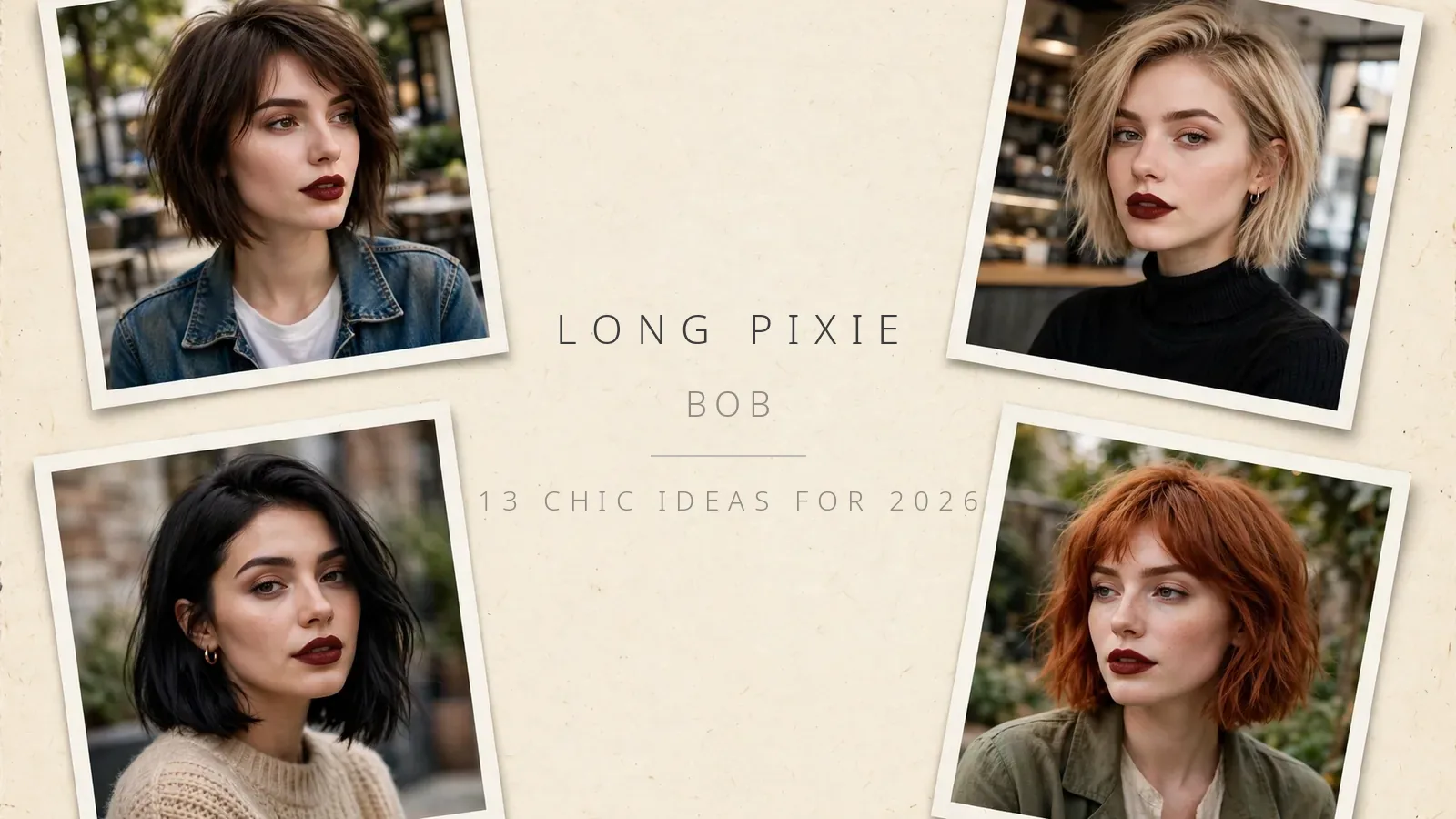
Long Pixie Bob – 13 Chic Ideas for 2026
You are torn between a pixie and a bob — and every photo you save looks like a different haircut. That indecision is exactly what the long pixie bob was made for: a hybrid cut with a tapered nape, length through the crown, and face-framing front pieces that give you the best of both worlds without committing to either extreme.
The catch is that bixie means different things to different stylists, and the wrong version for your face shape or hair texture leads straight to regret. This guide fixes that: 13 named variations with honest styling notes, a face-shape chooser, the exact words to use at the salon, and a realistic grow-out plan — so you book with confidence instead of hope.
Table of Contents
- 13 Long Pixie Bob Ideas Worth Trying
- Classic Long Pixie Bob
- Stacked Pixie Bob
- Textured and Choppy Long Pixie Bob
- Long Pixie Bob with Side-Swept Bangs
- Asymmetrical Long Pixie Bob
- Feathered Long Pixie Bob
- Wavy and Tousled Long Pixie Bob
- Long Pixie Bob with Blonde Balayage
- Undercut Long Pixie Bob
- Platinum Long Pixie Bob with Wispy Fringe
- Tapered Bixie with Dark Roots
- Polished Formal Long Pixie Bob
- Curly Long Pixie Bob
- How to Choose the Right Long Pixie Bob for Your Face Shape
- What to Tell Your Stylist for a Perfect Bixie
- Long Pixie Bob Grow-Out: The Honest Timeline
- Long Pixie Bob FAQs
- Is a long pixie bob the same as a bixie?
- How do I know if this cut will suit me?
- Is the bixie high maintenance?
- Can I get this cut with curly hair?
- How long does it take to grow out a bixie?
- What should I ask for at the salon to get a real bixie?
- Will a bixie work on fine, thin hair?
- How do I style a bixie on the second day?
13 Long Pixie Bob Ideas Worth Trying
 1. Classic Long Pixie Bob
 1. Classic Long Pixie Bob
The classic bixie is the blueprint everything else is built on: a softly tapered nape, longer length through the crown, and face-framing pieces that sit somewhere between a pixie and a bob. It reads polished without looking fussy, and it is the version most stylists picture when you say the word bixie.
What makes it timeless is restraint. There is no harsh disconnection, no extreme asymmetry — just clean lines that grow out gracefully and suit an office as easily as a weekend.
Benefits:
- Works on straight, wavy, and loosely curly textures
- Grows out without an awkward phase for months
- Easy to style in under five minutes
Pro Tip: Ask for the nape to be tapered, not shaved — a shaved nape makes this classic version look edgy instead of timeless.
How To Style: Work a pea-sized amount of light styling cream through damp hair, blow-dry the crown forward with a flat brush for lift, then tuck one side behind the ear for a relaxed finish.
Best For: Oval, heart, and long face shapes; anyone getting a bixie for the first time.
2. Stacked Pixie Bob
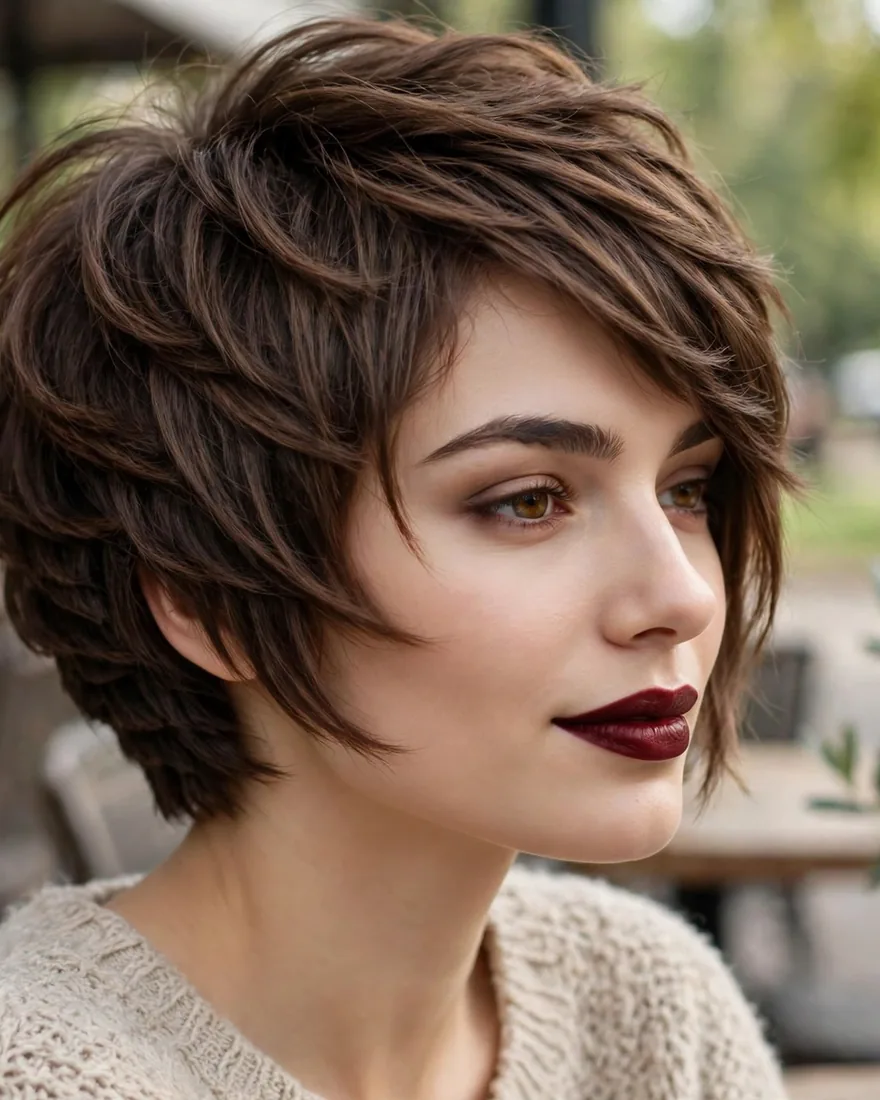 2. Stacked Pixie Bob
The stacked pixie bob borrows the graduated layers of a classic stacked bob and shrinks them into pixie-bob proportions. Short, angled layers build volume at the back of the crown while the front stays long enough to frame the face.
This is the best version for hair that falls flat. The stacking creates lift that fine hair cannot manage on its own, and the shape holds for weeks between trims.
Benefits:
- Builds real volume at the crown for fine hair
- The graduated shape keeps its silhouette as it grows
- Looks intentional even on second-day hair
Pro Tip: Stacking works best when the back is cut dry or nearly dry — ask your stylist to check the graduation with your hair in its natural fall.
How To Style: Apply volumizing mousse at the roots, blow-dry upside down for lift, then smooth the crown with a round brush. A traditional pixie cut styling routine works well here, just with more crown volume.
Best For: Fine to medium hair that needs lift; round faces benefit from the added height.
3. Textured and Choppy Long Pixie Bob
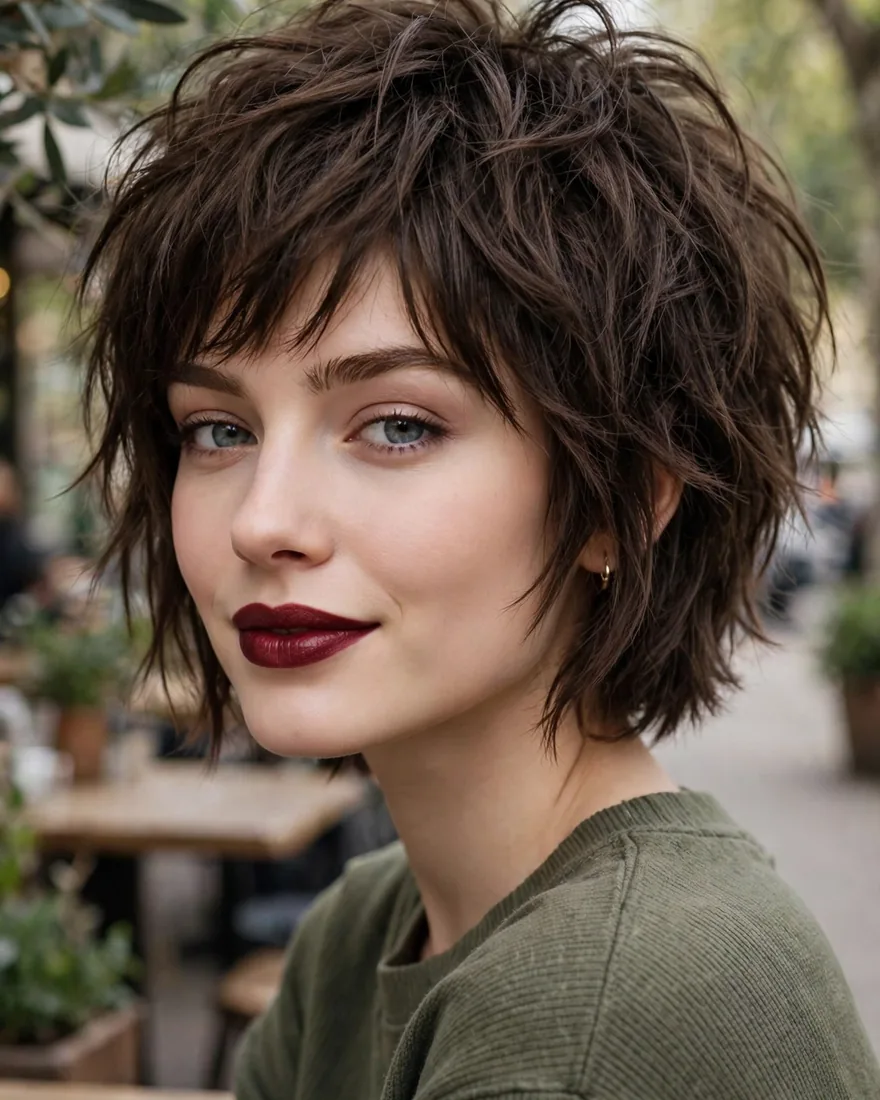 3. Textured and Choppy Long Pixie Bob
Choppy layers and point-cut ends give this version its lived-in, piecey character. The texture does the styling work for you — shake it, scrunch it, and walk out the door.
It is also the most forgiving bixie if your hair has cowlicks or an uneven growth pattern, because the deliberate messiness hides everything.
Benefits:
- Hides cowlicks and uneven growth patterns
- Air-dries beautifully on wavy textures
- Needs the least daily effort of any version here
Pro Tip: Texture comes from the cutting technique, not just product — ask for point cutting or slide cutting rather than blunt ends.
How To Style: Scrunch texturizing spray into damp hair and let it air-dry, or rough-dry with your fingers for extra piece separation. Pinch small sections with a dab of paste to define the choppiest pieces.
Best For: Thick, straight, or wavy hair; low-effort stylers who hate round brushes.
4. Long Pixie Bob with Side-Swept Bangs
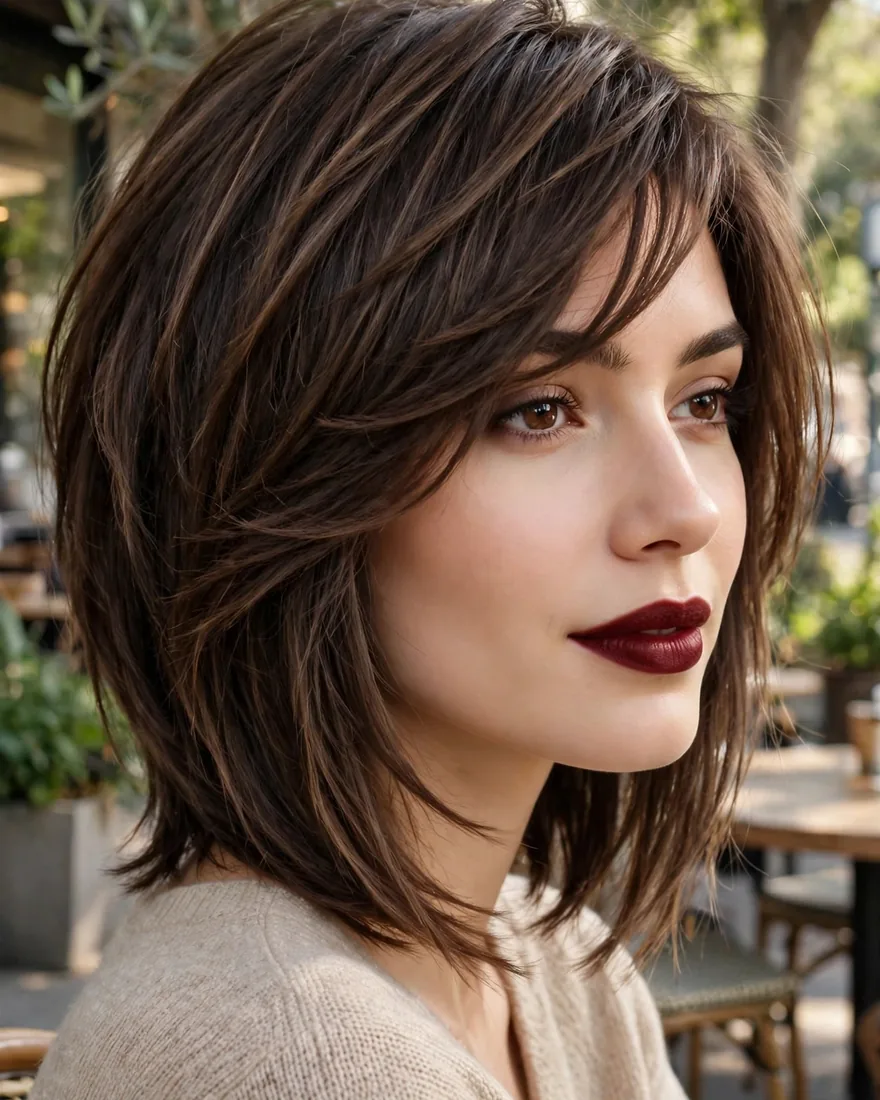 4. Long Pixie Bob with Side-Swept Bangs
Long, side-swept bangs are the face-shape fixer of the bixie world. The diagonal line across the forehead softens wide cheekbones and strong jawlines while keeping the cut feminine and wearable.
The bangs also do practical work: they disguise a high forehead, balance a long face, and give you something to tuck, pin, or sweep depending on your mood.
Benefits:
- Softens square jawlines and wide cheekbones
- Bangs can be worn swept, tucked, or pinned back
- Adds movement without adding overall length
Pro Tip: If you are unsure about fringe commitment, start with bangs that reach the cheekbone — they blend into the cut if you change your mind. Our guide to types of bangs can help you pick the right length.
How To Style: Blow-dry bangs to the side with a flat brush, directing them across the forehead. A light-hold spray keeps the sweep in place without stiffness.
Best For: Round and square faces; anyone who wants the cut to feel softer.
5. Asymmetrical Long Pixie Bob
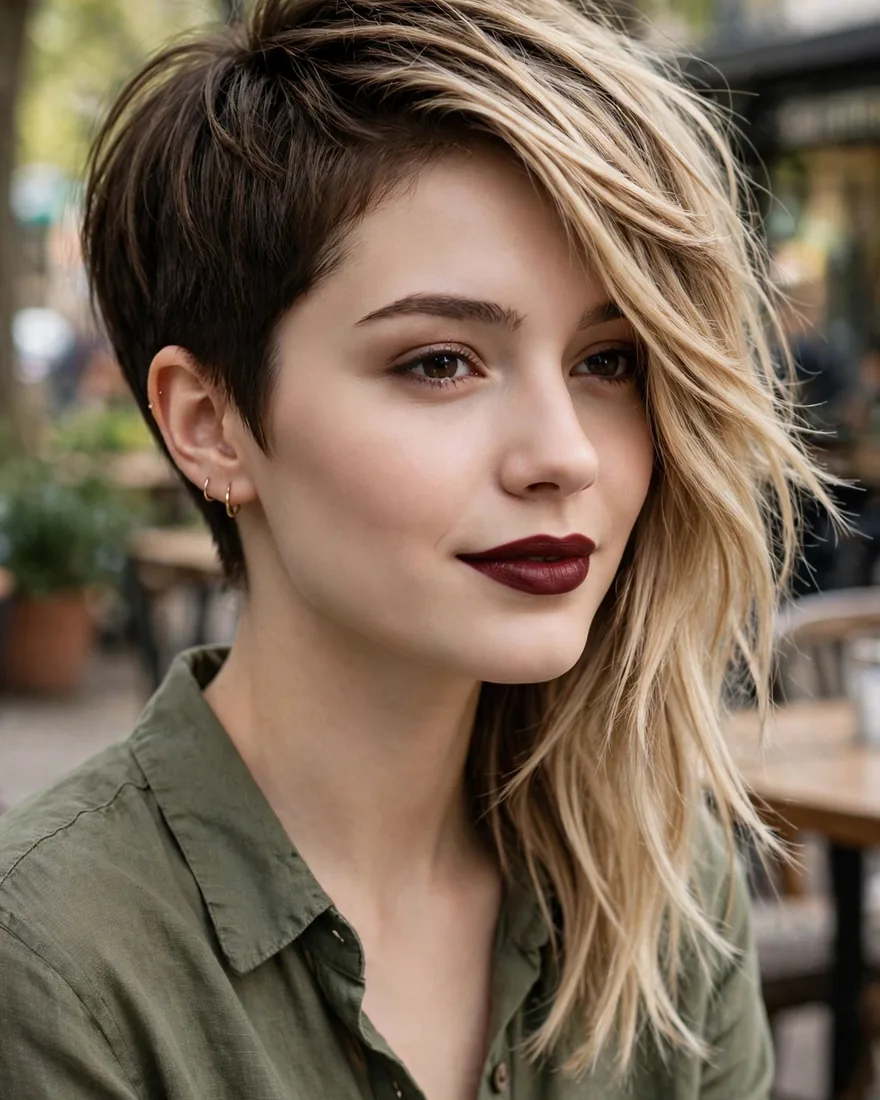 5. Asymmetrical Long Pixie Bob
One side longer than the other — that is the whole trick, and it works. The asymmetry draws the eye diagonally, which slims round faces and adds drama to an otherwise simple cut.
Keep the difference moderate (an inch or two) for a wearable version, or push it further for a statement look. Either way, the longer side gives you styling versatility the classic lacks.
Benefits:
- Creates a slimming diagonal line on round faces
- The longer side can be tucked, braided, or pinned
- Looks striking with minimal styling effort
Pro Tip: Asymmetry grows out unevenly by design, so book trims every five to six weeks to keep the difference deliberate rather than accidental.
How To Style: Blow-dry smooth with a side part on the shorter side so the longer side drapes forward. A flat iron pass on the long side keeps the line sharp.
Best For: Oval and heart faces; anyone who wants edge without an undercut.
6. Feathered Long Pixie Bob
 6. Feathered Long Pixie Bob
Feathered ends — thin, wispy, layered outward — give this bixie a soft, airy finish that flatters fine hair. The feathering removes just enough weight for the ends to flick and move instead of hanging limp.
This is the gentlest version on the list, and one of the best for mature hair, since the softness around the face is flattering rather than severe.
Benefits:
- Makes fine hair look fuller through the ends
- Softens the jawline and neck area
- Grows out with a natural, blended edge
Pro Tip: Feathering should be done with thinning shears or a razor on dry hair — wet feathering often gets over-thinned.
How To Style: Blow-dry with a round brush, flicking the ends outward. A drop of shine serum on the mid-lengths keeps the feathers from looking dry.
Best For: Fine or thinning hair; anyone who wants softness over structure.
7. Wavy and Tousled Long Pixie Bob
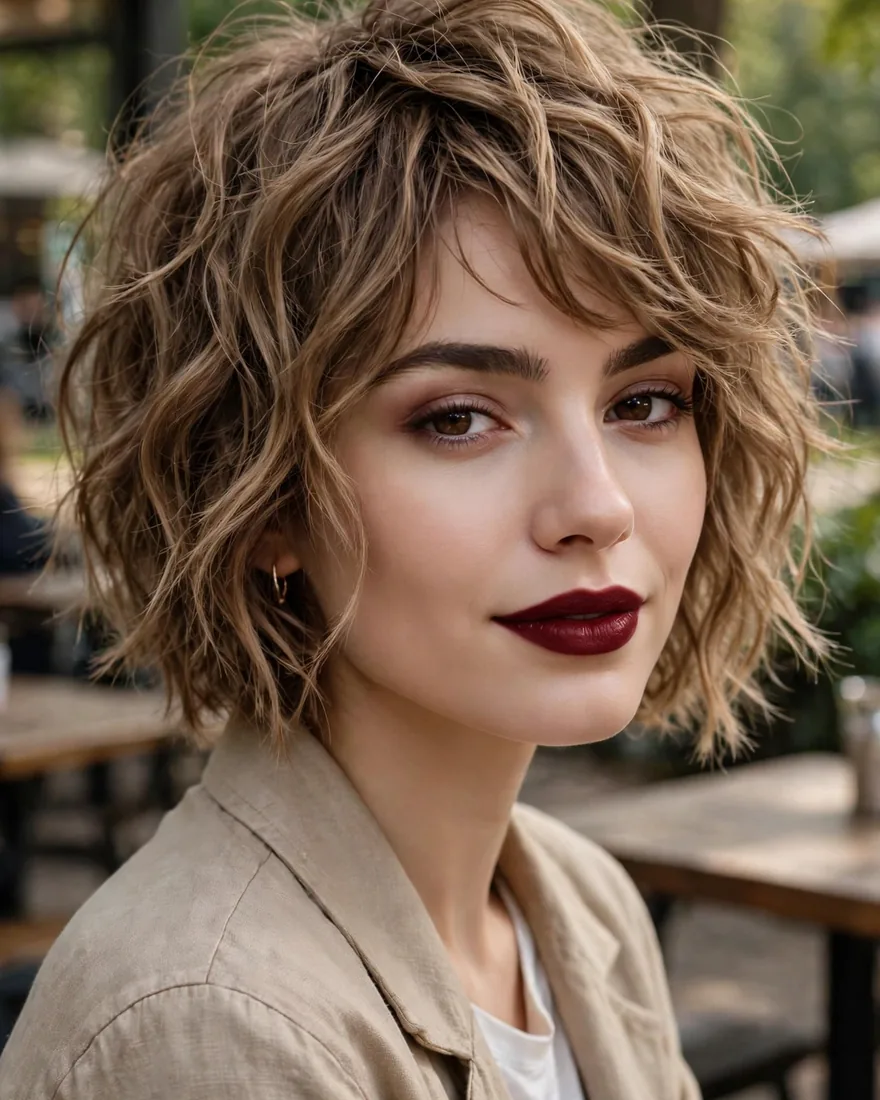 7. Wavy and Tousled Long Pixie Bob
This is the bixie for people who were blessed with natural wave and punished with frizz. The cut works with the wave instead of against it: layers are left long enough to let the texture form, and the tousled finish is the whole point.
It is the closest thing to a wash-and-go bixie. The messier it looks, the more correct it is.
Benefits:
- Genuinely wash-and-go on wavy hair
- Frizz reads as texture, not a flaw
- Second-day hair often looks better than first-day
Pro Tip: Ask for layers cut to enhance your wave pattern, not fight it — and skip the thinning shears, which turn waves into frizz.
How To Style: Scrunch a curl-enhancing cream into damp hair and diffuse or air-dry. On day two, revive with a mist of water and a pea-sized amount of cream scrunched back in.
Best For: Natural waves from 2A to 2C; anyone who wants the lowest-maintenance version.
8. Long Pixie Bob with Blonde Balayage
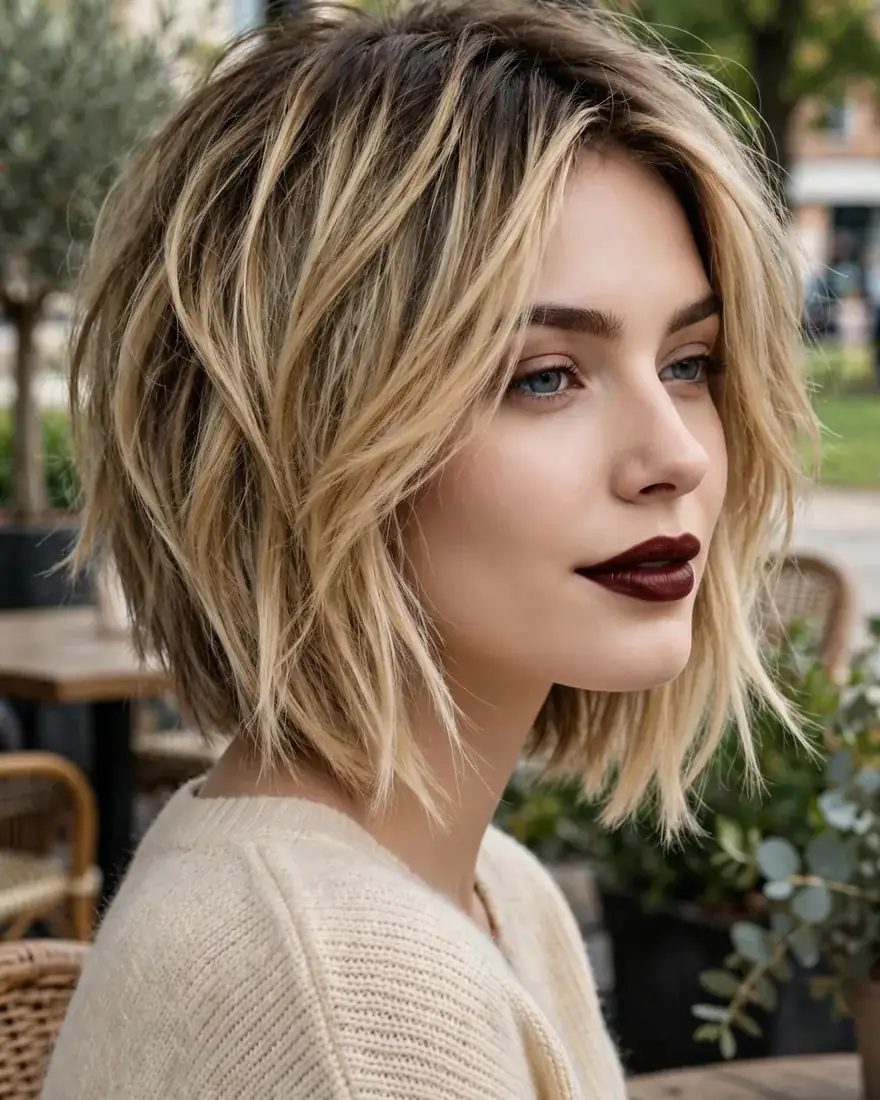 8. Long Pixie Bob with Blonde Balayage
Blonde balayage painted through a bixie adds dimension exactly where short hair needs it: the crown and the face-framing pieces. The hand-painted lightness makes the layers readable instead of blending into one dark mass.
Because balayage grows out softly, this is one of the few blonde options that does not chain you to the salon every six weeks.
Benefits:
- Makes the layer structure visible
- Grows out without a harsh line
- Brightens the face without full-head bleach
Pro Tip: Keep the lightest pieces around the face and crown, and leave the nape deeper for contrast — that depth is what makes the blonde pop. See our balayage hairstyles guide for placement ideas.
How To Style: Style smooth to show off the color dimension — a round-brush blowout makes balayage glow. Use a purple shampoo once a week to keep the blonde from turning brassy.
Best For: Warm and neutral skin tones; dark-haired readers who want blonde without the upkeep of foils.
9. Undercut Long Pixie Bob
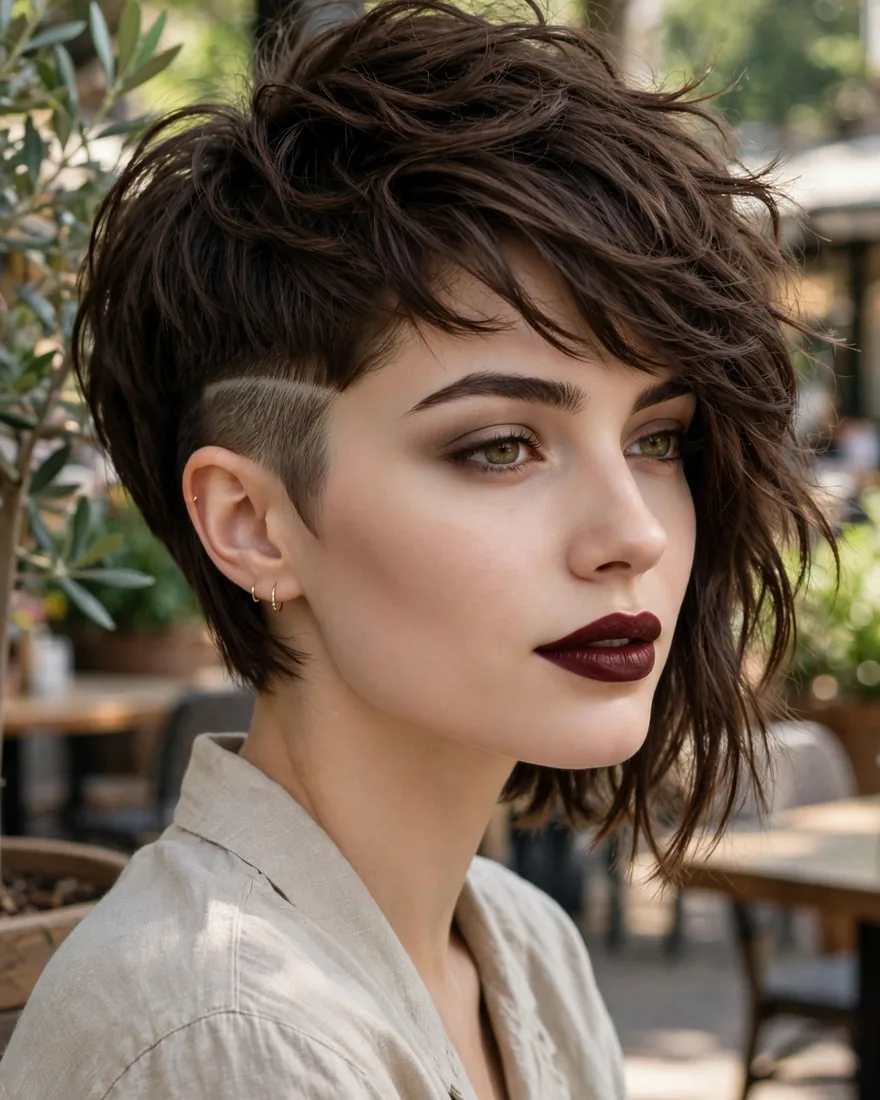 9. Undercut Long Pixie Bob
An undercut — closely cropped sides or nape beneath longer top layers — takes the bixie from pretty to bold. The contrast between the tight underneath and the soft length on top is the entire appeal.
It also removes serious bulk, which makes this the smartest version for very thick hair. Less hair underneath means the top layers actually move.
Benefits:
- Removes bulk from thick hair dramatically
- The hidden undercut option keeps it office-safe
- Grows out into a tapered nape naturally
Pro Tip: Start with a hidden undercut (only the nape, covered by the top layer) if you are undercut-curious but commitment-shy.
How To Style: Style the top as usual — the undercut needs nothing except a trim every three to four weeks to stay sharp. The routine is close to a classic short hair undercut pixie on the sides.
Best For: Thick, dense hair; anyone who wants edge and is fine with frequent nape trims.
10. Platinum Long Pixie Bob with Wispy Fringe
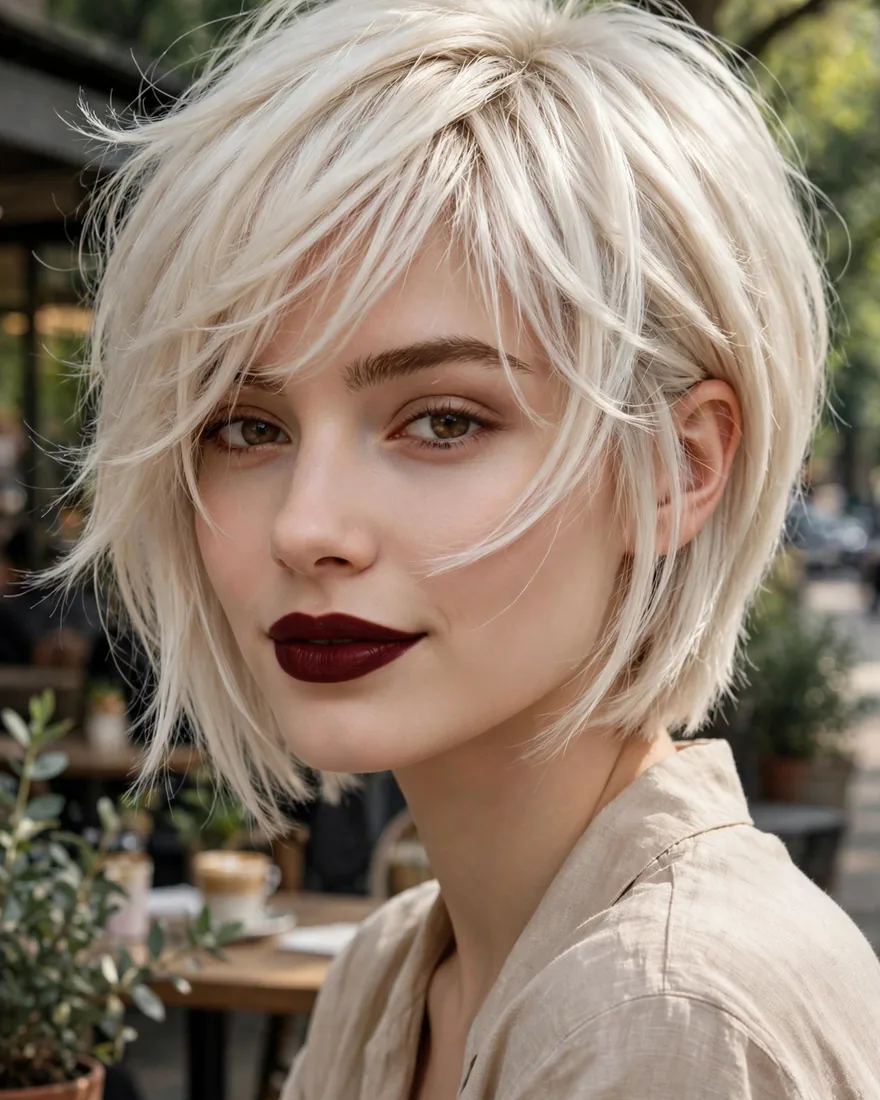 10. Platinum Long Pixie Bob with Wispy Fringe
Icy platinum paired with a soft, wispy fringe is the highest-impact version on this list. The pale color exposes every line of the cut, so the shape has to be precise — and when it is, nothing else looks like it.
Be honest with yourself about the maintenance before booking: platinum on short hair means root touch-ups every three to four weeks, no exceptions.
Benefits:
- Maximum visual impact and dimension
- Wispy fringe keeps the severe color wearable
- Photographs beautifully — the color catches light
Pro Tip: Do not bleach at home for this one. Short platinum shows every band and hot root, and fixing it costs more than doing it right the first time.
How To Style: Blow-dry smooth and sleek to show the color at its best. Purple shampoo and a weekly bond-building mask are non-negotiable for keeping platinum healthy.
Best For: Cool skin tones; anyone ready for genuinely high-maintenance color.
11. Tapered Bixie with Dark Roots
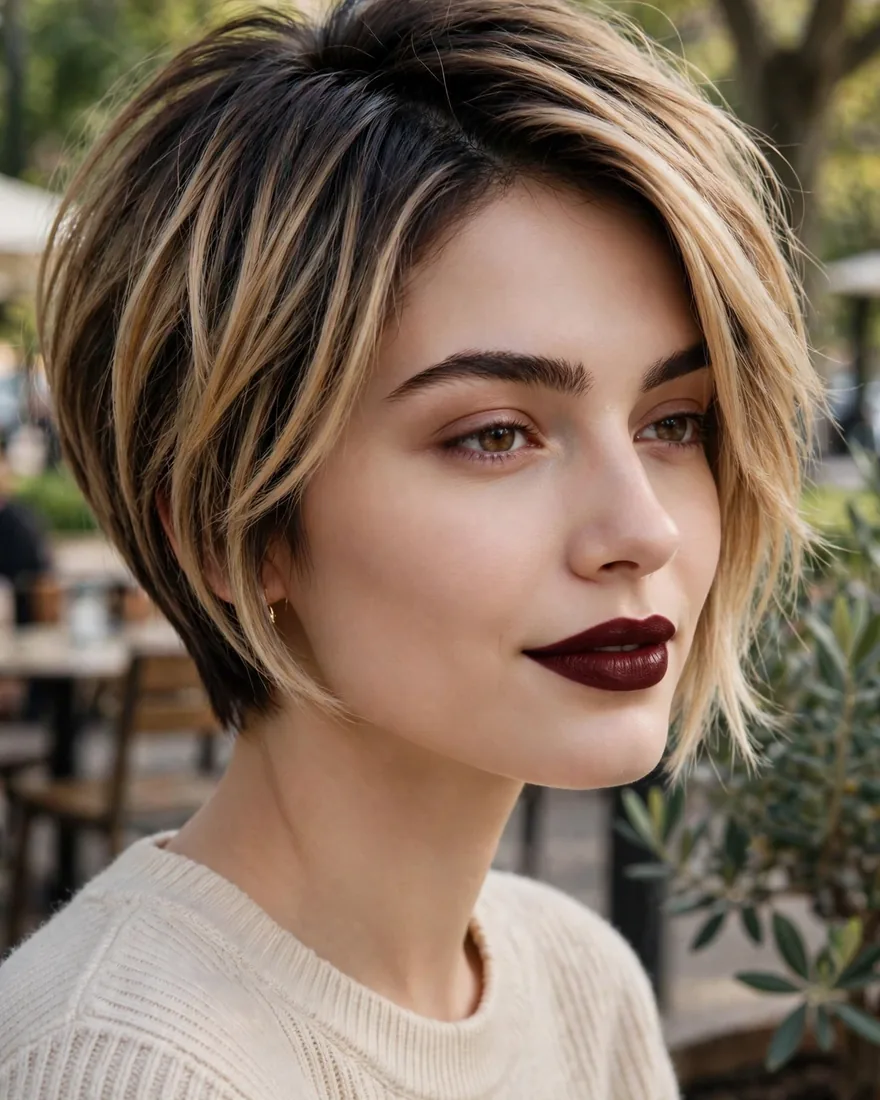 11. Tapered Bixie with Dark Roots
Dark roots melting into lighter lengths — the shadow-root effect — is the low-maintenance colorist’s best friend on a bixie. The depth at the root makes the tapered shape look intentional and adds the illusion of thickness.
This is also the grow-out cheat code: when your color grows, it just looks like more root shadow instead of regrowth.
Benefits:
- The most forgiving color grow-out of any version here
- Root depth makes fine hair look thicker
- Works with blonde, copper, or brunette lengths
Pro Tip: Ask for a soft, diffused root melt rather than a harsh line — the transition zone should be at least two inches of blend.
How To Style: Style with texture to show off the color melt — piecey, separated layers make the root-to-end gradient visible. A little dry shampoo at the roots adds grip and volume.
Best For: Anyone who wants color dimension without salon visits every month.
12. Polished Formal Long Pixie Bob
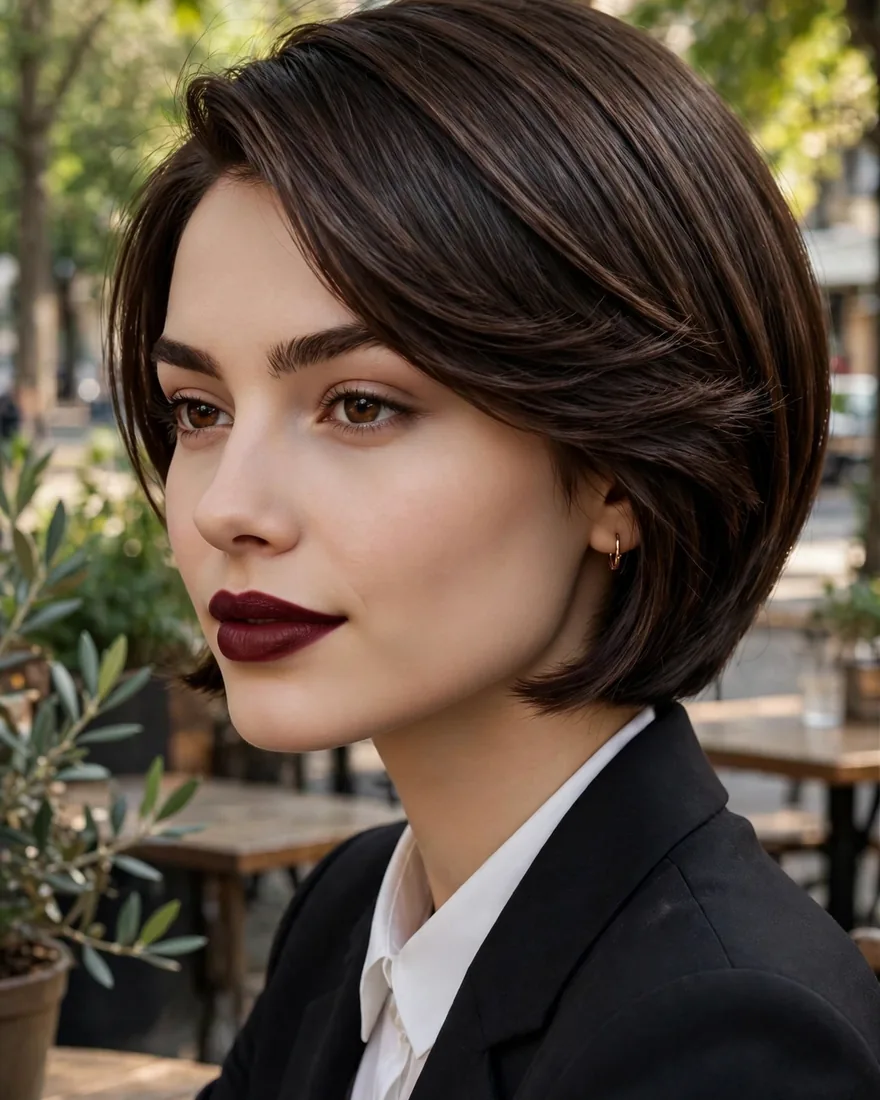 12. Polished Formal Long Pixie Bob
Sleek, smooth, tucked behind one ear with a deep side part — this is the bixie dressed for a wedding, a gala, or a job interview. The same cut you wear messy all week becomes elegant with twenty minutes and a flat iron.
The key is control: frizz-free, glossy, every piece in place. It proves the bixie is not just a casual cut.
Benefits:
- Transforms the everyday bixie into event hair
- Photographs cleanly — no flyaways
- Works with headbands, clips, and statement earrings
Pro Tip: For events, style it the night before and sleep with it loosely pinned — day-old sleekness holds better than freshly washed.
How To Style: Blow-dry smooth with a paddle brush, then flat-iron in small sections. Finish with a shine spray and a firm-hold hairspray misted from arm’s length.
Best For: Special occasions; anyone who needs proof a bixie can look formal.
13. Curly Long Pixie Bob
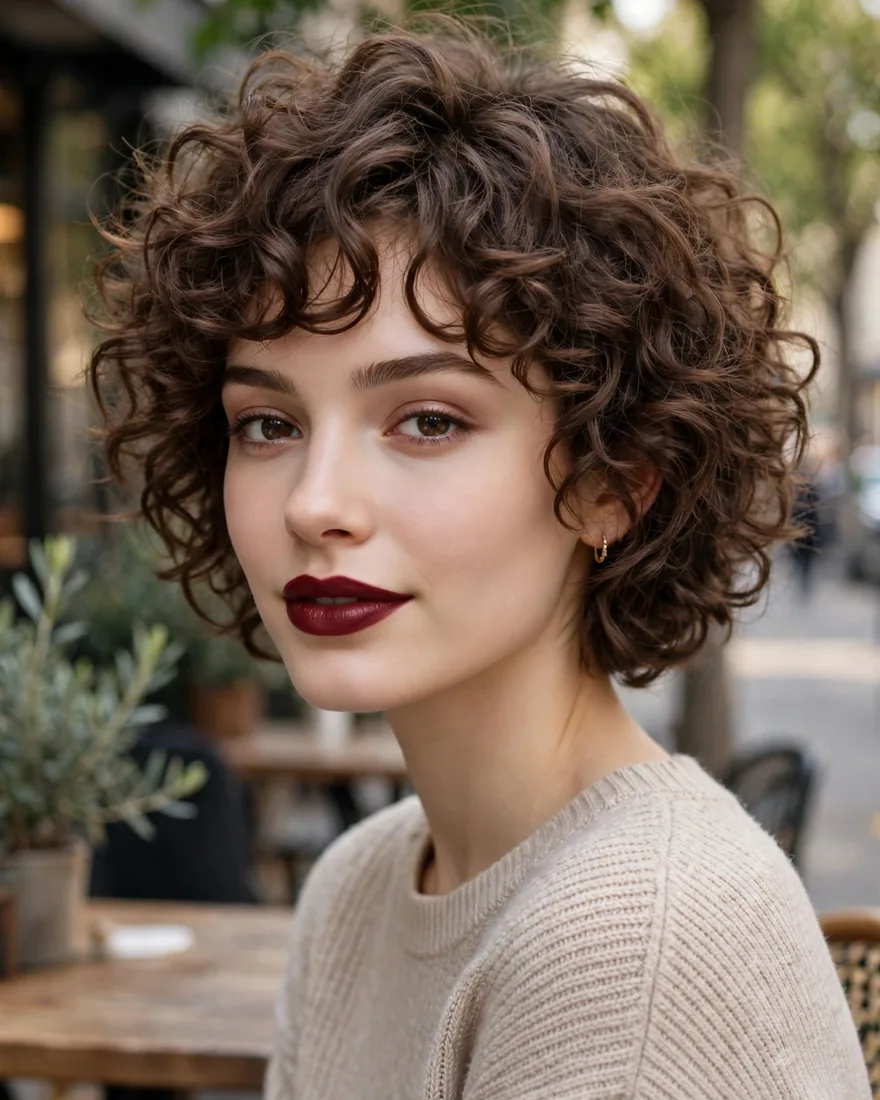 13. Curly Long Pixie Bob
A bixie on curly hair keeps the length on top and through the crown while the sides and nape are shaped close — letting curls do what they do best up top. The result has more personality than any straight-hair version here.
The critical rule: it must be cut dry, curl by curl. A wet cut on curly hair springs up unpredictably and the bixie shape disappears.
Benefits:
- Celebrates natural curl pattern instead of fighting it
- Less daily heat styling than straight versions
- The shape actually improves as curls settle over the first week
Pro Tip: Find a stylist experienced with curly cuts specifically — ask to see their curly portfolio before booking. Our curly hairstyles hub has more curl-specific cutting advice.
How To Style: Apply curl cream to soaking-wet hair, scrunch, and diffuse or air-dry. Pineapple at night to protect the shape, and refresh mornings with a water mist.
Best For: Curly and coily hair (3A through 4C); anyone done with straightening.
How the 13 ideas compare at a glance:
| Style | Best For | Upkeep |
|---|---|---|
| Classic | Most face shapes | Low |
| Stacked | Fine to medium hair | Medium |
| Textured/Choppy | Thick or straight hair | Low |
| Side-Swept Bangs | Round and square faces | Low |
| Asymmetrical | Oval and heart faces | Medium |
| Feathered | Fine hair | Low |
| Wavy/Tousled | Natural waves | Low |
| Blonde Balayage | Warm and neutral skin tones | Medium |
| Undercut | Thick hair | Medium |
| Platinum/Wispy Fringe | Cool skin tones | High |
| Tapered Bixie | Low-maintenance color lovers | Low |
| Polished/Formal | Special occasions | Medium |
| Curly | Curly and coily hair | Low |
How to Choose the Right Long Pixie Bob for Your Face Shape
Face shape is the single biggest predictor of whether a bixie will thrill you or disappoint you, and most consultations skip it entirely. The good news: the bixie is unusually adaptable, because the two levers that matter — front length and crown volume — can be tuned to almost any face.
Round faces need height and diagonal lines: ask for extra crown volume, a side part, and face-framing pieces that fall past the cheekbone to visually lengthen. Square faces need softness around the jaw, so longer front pieces and wispy texture beat blunt edges every time. Heart faces do best with volume through the lower half — a wispy fringe and fuller sides balance a narrow chin. Oval faces can wear nearly any version, which makes the choice about hair texture instead of geometry.
The honest exceptions matter too. Very long, narrow faces can look longer with too much crown height — keep the volume moderate and add width with side-swept bangs. And if your hair is very fine and your face is very round, the combination needs a skilled cutter; the wrong bixie can emphasize width instead of balancing it. A consultation with photos of your face shape, not just the haircut, prevents most regrets. For curl-specific face-shape tweaks, our short curly hairstyles guide goes deeper.
What to Tell Your Stylist for a Perfect Bixie
The word bixie means different things to different stylists, and that ambiguity is where bad haircuts are born. Walk in and say pixie bob, and one stylist hears short bob while another hears long pixie — you can leave with either. The fix is specific language, not hope.
Say this: I want a bixie. Tapered nape, not shaved unless we discuss an undercut. Length through the crown and the front pieces should reach at least the cheekbone, longer than a traditional pixie. I want the back shorter than the front, with a graduated shape. Then show three photos: one you love, one showing the nape shape you want, and one showing what you do not want.
Fine hair needs its own instructions: keep the perimeter fuller, avoid over-thinning, and build the shape with graduation rather than razoring out weight. Thick hair is the opposite — ask for internal weight removal and texturizing so the cut does not turn into a triangle, and confirm the nape will be kept clean as it grows. These two sentences separate a stylist who understands the cut from one who will give you a generic short cut with a trendy name. If you are torn between a bixie and more length through the layers, our layered haircut guide compares the two cuts.
- Bring 3 photos: the goal, the nape shape, and one anti-reference
- Name the nape: tapered, graduated, or undercut — never leave it vague
- State your grow-out intention: keeping it short or growing toward a bob
- Fine hair: fuller perimeter, minimal thinning. Thick hair: internal weight removal
Long Pixie Bob Grow-Out: The Honest Timeline
Every bixie owner eventually faces the fork: trim it back into shape, or let it grow into a bob. Both are valid, but they need different plans — and the awkward middle is real. Around weeks eight to twelve, the nape loses its taper, the crown goes flat, and the cut stops looking like either a pixie or a bob.
If you are keeping it short, book trims every five to seven weeks and ask for the nape cleaned up between full cuts if needed. If you are growing it out, tell your stylist at the start: they can leave the top longer at each trim while only tidying the nape and perimeter, steering the shape toward a bob instead of a mullet. Expect the full transition to take four to six months depending on your starting length. Our long bob guide picks up where this one leaves off, with styling ideas for your destination cut.
Second- and third-day styling is where bixie owners actually live. Do not wash daily — instead, mist the roots with water, add a tiny amount of styling cream or paste, and reshape with your fingers. A silk pillowcase reduces morning flattening dramatically. Dry shampoo at the crown on day two keeps volume alive, and tucking one side behind the ear hides a multitude of day-three sins. The cut is short enough that a two-minute refresh genuinely works.
Long Pixie Bob FAQs
Is a long pixie bob the same as a bixie?
Yes — bixie is simply the popular nickname for this cut, the hybrid that sits between a pixie and a bob. Some stylists use bixie for slightly longer, shaggier versions, but in practice the terms describe the same family of cuts: tapered nape, volume through the crown, and front pieces longer than a traditional pixie.
How do I know if this cut will suit me?
The two things that matter most are your face shape and your hair texture. Oval and heart faces suit nearly every version; round faces need crown height and longer front pieces; square faces need softness around the jaw. Fine hair does best with stacked or feathered versions, while thick hair needs internal weight removal. Bring face-shape photos — not just haircut photos — to your consultation.
Is the bixie high maintenance?
It depends on the version. The classic, textured, and wavy versions need about five minutes a day and trims every six to eight weeks. Undercuts need nape trims every three to four weeks, and platinum color needs root touch-ups on the same schedule. Most bixies are refresh-friendly on second and third day hair, which keeps daily effort low.
Can I get this cut with curly hair?
Absolutely, and it can look fantastic — but it must be cut dry, curl by curl, by a stylist experienced with curly hair. Keep length through the crown and let the curls form the shape. Avoid razors and heavy thinning, which create frizz. Expect the shape to settle and improve over the first week as your curls find their pattern.
How long does it take to grow out a bixie?
Growing a bixie into a bob typically takes four to six months. The awkward phase hits around weeks eight to twelve when the nape loses its taper. Tell your stylist your grow-out goal early so trims steer the shape toward a bob — tidying the nape and perimeter while leaving the top to grow — instead of drifting toward a mullet.
What should I ask for at the salon to get a real bixie?
Use specific language: a bixie with a tapered nape, length through the crown, and front pieces reaching at least the cheekbone — shorter in back, longer in front, with graduation. Name the nape shape explicitly, bring three reference photos including one anti-reference, and state whether your hair is fine (keep the perimeter full, minimal thinning) or thick (remove internal weight).
Will a bixie work on fine, thin hair?
Yes — it is one of the better short cuts for fine hair, because the stacked and feathered versions build volume mechanically through the cut itself. The rules: keep the perimeter fuller rather than wispy, skip aggressive thinning, and ask for graduation at the back for crown lift. Avoid over-layering, which can make fine hair look thinner instead of fuller.
How do I style a bixie on the second day?
Skip the wash. Mist the roots lightly with water, work a pea-sized amount of cream or paste through with your fingers, and reshape the crown and front pieces. Dry shampoo at the roots revives volume, and a silk pillowcase the night before prevents most morning flattening. The whole refresh takes about two minutes.
The bixie earns its popularity honestly: it is the rare cut that flatters most face shapes, works across textures, and asks for minutes rather than hours. Whether you choose the classic, the stacked, the curly, or the bold undercut version, the decision framework is the same — match the version to your face shape, speak the right language at the salon, and have a plan for the grow-out. Do that, and the bixie stops being a gamble and starts being the best haircut you have had in years.