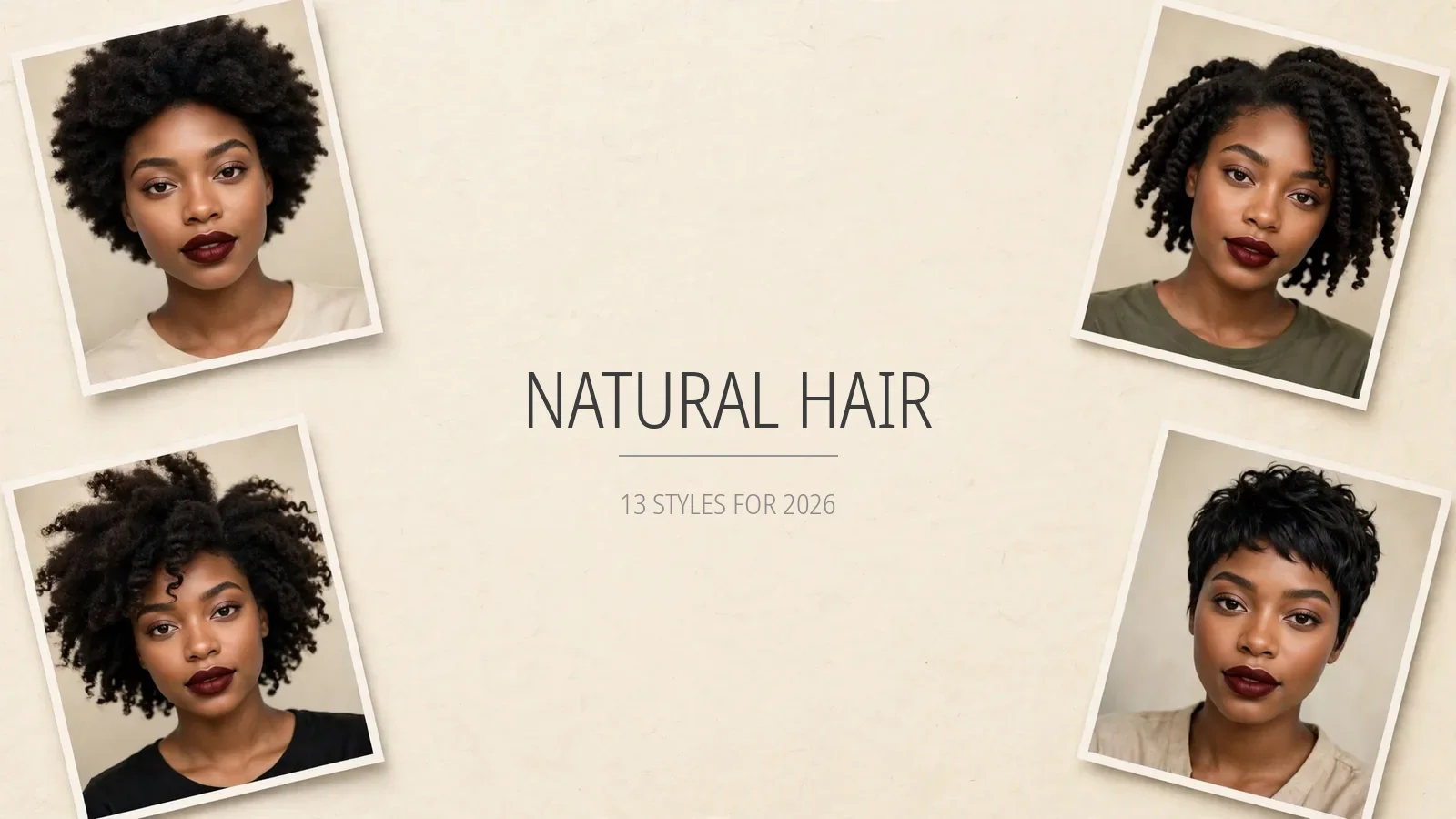
Natural Hair Styles – 13 Looks for Every Texture
Search “natural hair styles” and you get two different internets: one telling you to hide your hair under protective styles for months, another insisting you wear your texture loose daily. Both talk like the other is damaging your hair, and if you’re new to your natural texture, the contradiction is paralyzing. The truth most guides skip: your hair needs both — protection and freedom — and the balance depends on your texture, lifestyle, and patience.
That is what this guide is built around. These are 13 natural hair styles covering the full spectrum: wash-and-go textures, defined twist-outs and braid-outs, low-manipulation updos, and protective options that genuinely protect rather than quietly breaking your edges. Every style comes with an honest read on who it suits — Type 3 curls behave nothing like Type 4 coils — plus real daily-effort costs.
Table of Contents
- Natural Hair Styles Worth Trying
- 1. Soft Layered Cut With Wispy Ends
- 2. Blunt Collarbone Bob Without Layers
- 3. Long Curtain Bangs With Barely Layered Length
- 4. Rounded Afro With Defined Coils
- 5. Loose Beach Waves on Long Hair
- 6. Twist-Out With Volume
- 7. Chunky Two-Strand Twists
- 8. Banded Natural Ponytail With Puff
- 9. Center-Parted Curls Air-Dried
- 10. Textured Pixie on Coily Hair
- 11. Braid-Out With Defined Ends
- 12. Low Bun on Natural Hair
- 13. Pineapple Puff
- Protective Styles vs. Wearing Your Texture: You Need Both
- Natural Hair Care Fundamentals That Make Every Style Work
- Tension and Breakage Honesty: Which “Natural” Styles Damage Hair
- FAQs
- What counts as a natural hair style?
- How do I grow out natural hair without constant breakage?
- How long can I keep a protective style in?
- How do I make a twist-out last more than two days?
- Why is my natural hair breaking even though I never use heat?
- How should I protect natural hair at night?
- How often should I moisturize natural hair?
- Is shrinkage a sign my hair is healthy?
Natural Hair Styles Worth Trying
1. Soft Layered Cut With Wispy Ends
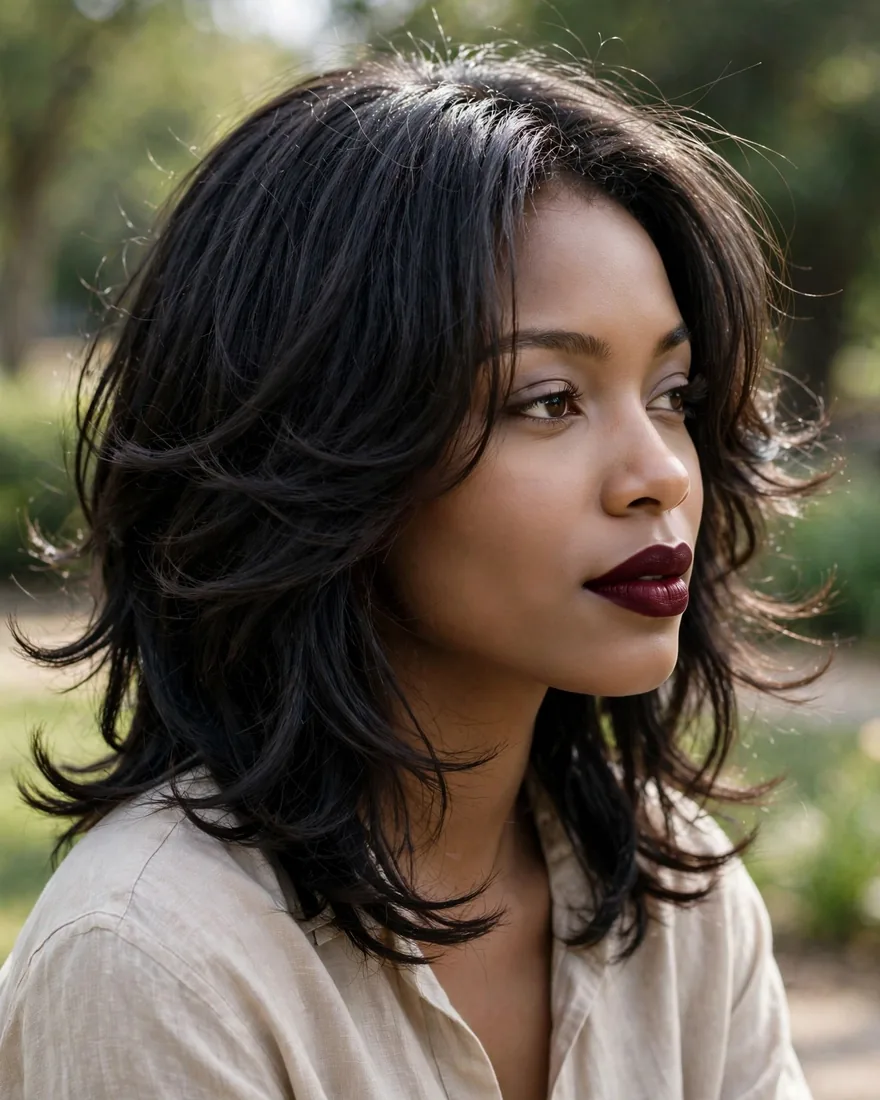
Long, feathered layers with softly thinned ends that let natural texture move instead of stacking into a heavy triangle. On wavy and loose-curly hair, this is the cut that makes wash-and-go actually look intentional — the layers remove bulk where it pyramids and the wispy ends keep the silhouette light. It is one of the most forgiving natural hair styles for anyone growing out a blunt cut.
Benefits:
- Layers distribute volume so curls fall in a shape instead of a blob
- Wispy ends reduce the triangle effect on thick hair
- Grows out gracefully — layers blend instead of hitting awkward stages
Pro Tip: Ask for layers cut on dry, styled hair if your texture shrinks. A wet cut on curly hair routinely removes more length than agreed once it dries.
How To Style: Scrunch curl cream or light mousse into damp hair, diffuse or air-dry, then shake at the roots. For fine waves needing extra body, a natural hair styles routine built on mousse rather than heavy cream keeps volume alive.
Best For: Type 2 waves and Type 3 curls; medium to thick density. If your waves need more encouragement, our wavy hair guide covers enhancing techniques.
2. Blunt Collarbone Bob Without Layers
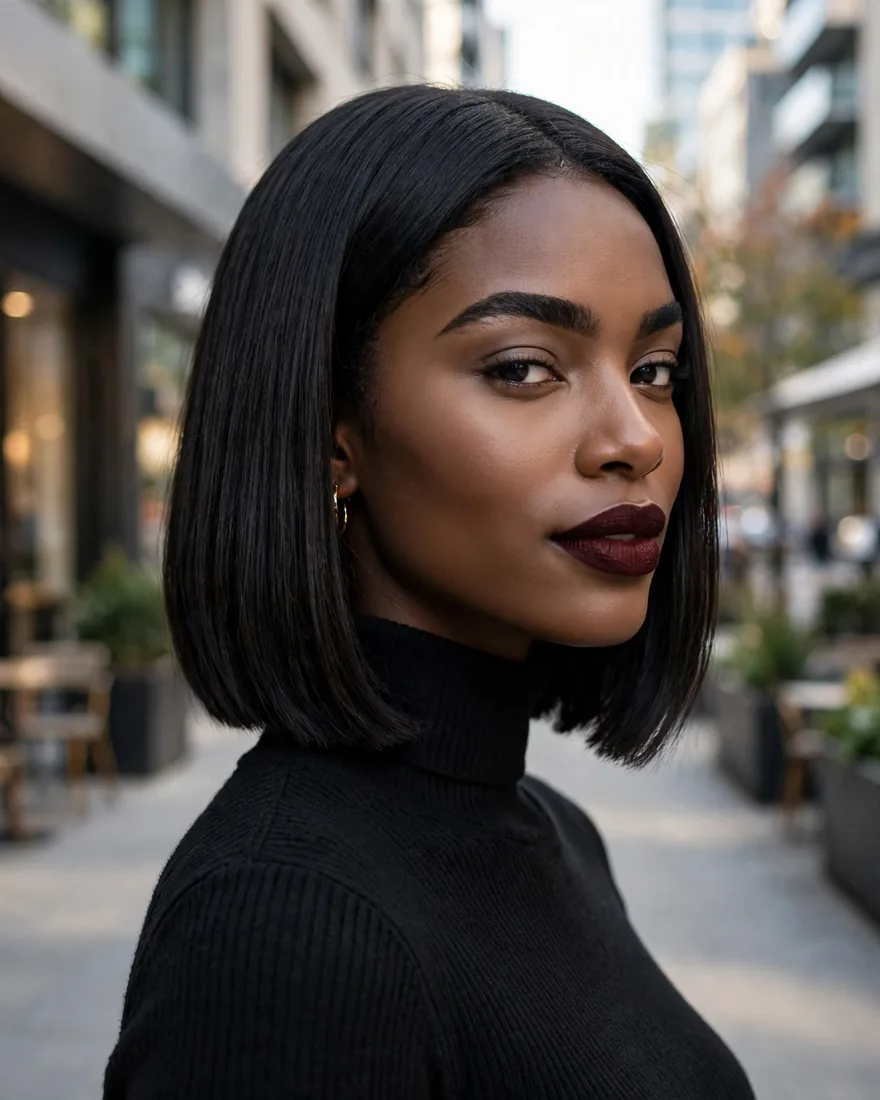
A sharp, one-length bob at the collarbone — no layers, just a clean perimeter that shows off density. Among natural hair styles, the blunt bob makes the strongest thickness statement: the solid edge makes even fine hair look substantial. It suits straightened hair or naturally straighter textures best, since coils shrink it well above the collarbone.
Benefits:
- The blunt line makes hair look thicker than any layered cut can
- One length means minimal styling decisions on busy mornings
- Photographs beautifully — the clean edge is the whole point
Pro Tip: Budget for trims every eight to ten weeks. A blunt perimeter shows uneven growth faster than any other cut, and natural hair grows unevenly by nature.
How To Style: Blow out smooth with a paddle brush or wear it straightened; tuck one side behind the ear for asymmetry. A light serum on the ends keeps the edge crisp.
Best For: Type 2 waves worn straight, or silk-pressed Type 3/4 hair; fine to medium density that needs the illusion of fullness.
3. Long Curtain Bangs With Barely Layered Length
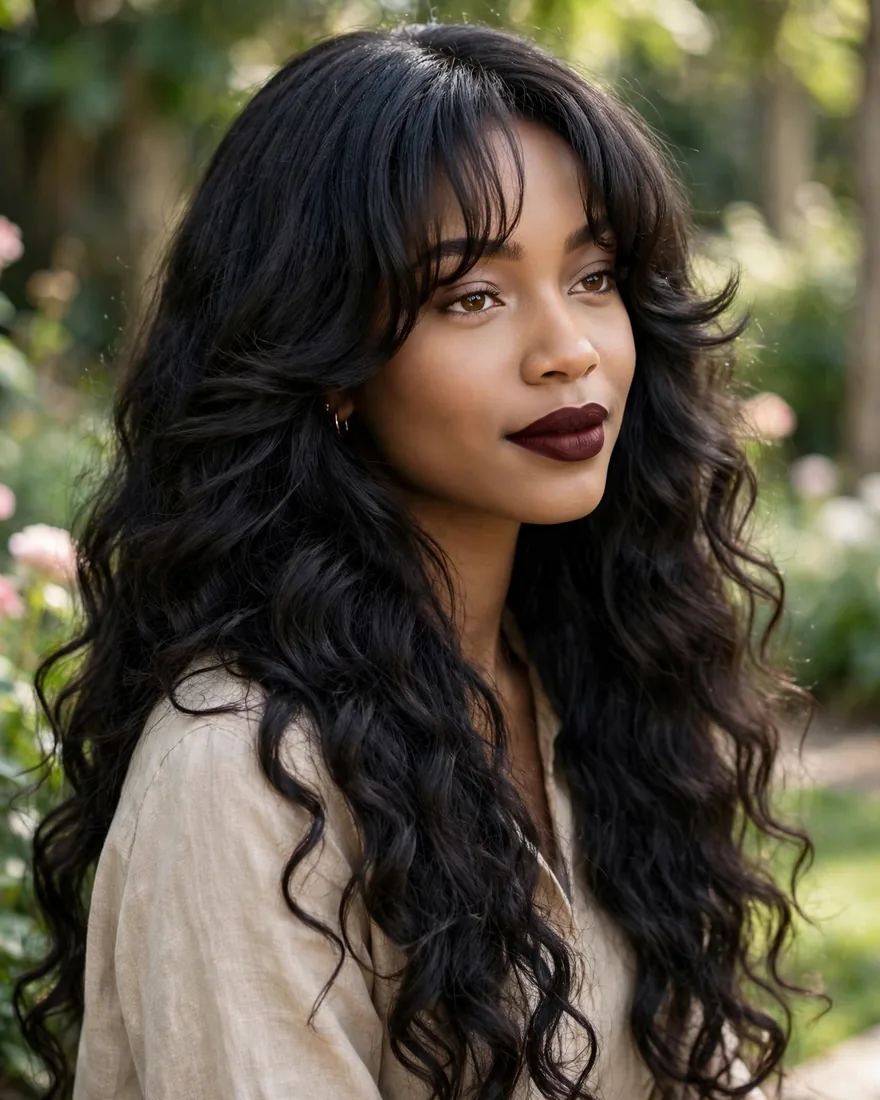
Face-framing curtain bangs — long enough to tuck, sweep, or pin — on otherwise nearly one-length hair. This is the lowest-commitment way to change your natural hair styles rotation without touching your length. The bangs add movement around the face while the barely-there layers keep the ends from looking blunt and heavy.
Benefits:
- Bangs update your look without sacrificing a single inch of length
- Curtain shape grows out into face-framing layers, never an awkward fringe
- Softens strong jawlines and wide foreheads
Pro Tip: On coily hair, cut curtain bangs longer than you think — shrinkage will pull them up significantly, and bangs cut too short on Type 4 hair are a long grow-out.
How To Style: Blow-dry the bangs forward with a round brush or twist them while damp for definition. The rest of the hair can be worn in any texture.
Best For: All texture types with medium to long length; oval, square, and heart faces especially.
4. Rounded Afro With Defined Coils
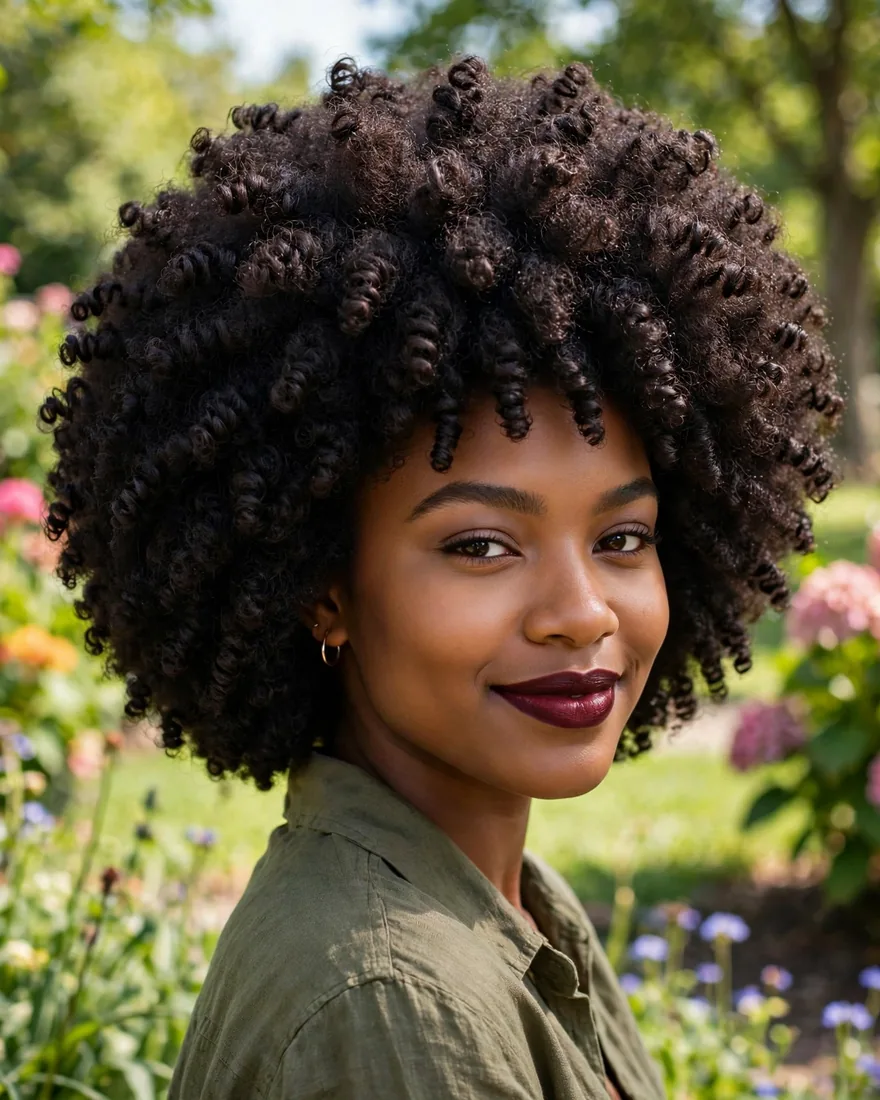
The iconic shape: a full, rounded afro with each coil defined and separated for maximum dimension. This is natural hair worn exactly as it grows, shaped rather than stretched — and it remains one of the most powerful natural hair styles because it asks for nothing except healthy hair and a good pick. Definition comes from proper moisture and a styler with hold, not from heat.
Benefits:
- Zero heat, zero tension — the gentlest possible way to wear your hair
- The rounded shape flatters nearly every face shape
- Showcases your actual curl pattern at its best
Pro Tip: Shape the afro when damp and fully detangled, then let it dry untouched. Picking dry hair creates frizz; shaping damp hair sets the silhouette for these natural hair styles.
How To Style: On wash day, apply leave-in and curl-defining cream in sections, then lift at the roots with fingers. Diffuse or air-dry, then pick gently for volume.
Best For: Type 4 coils and tight Type 3 curls; anyone wanting a true wash-and-go with presence. See our curly hairstyles for more definition techniques.
5. Loose Beach Waves on Long Hair
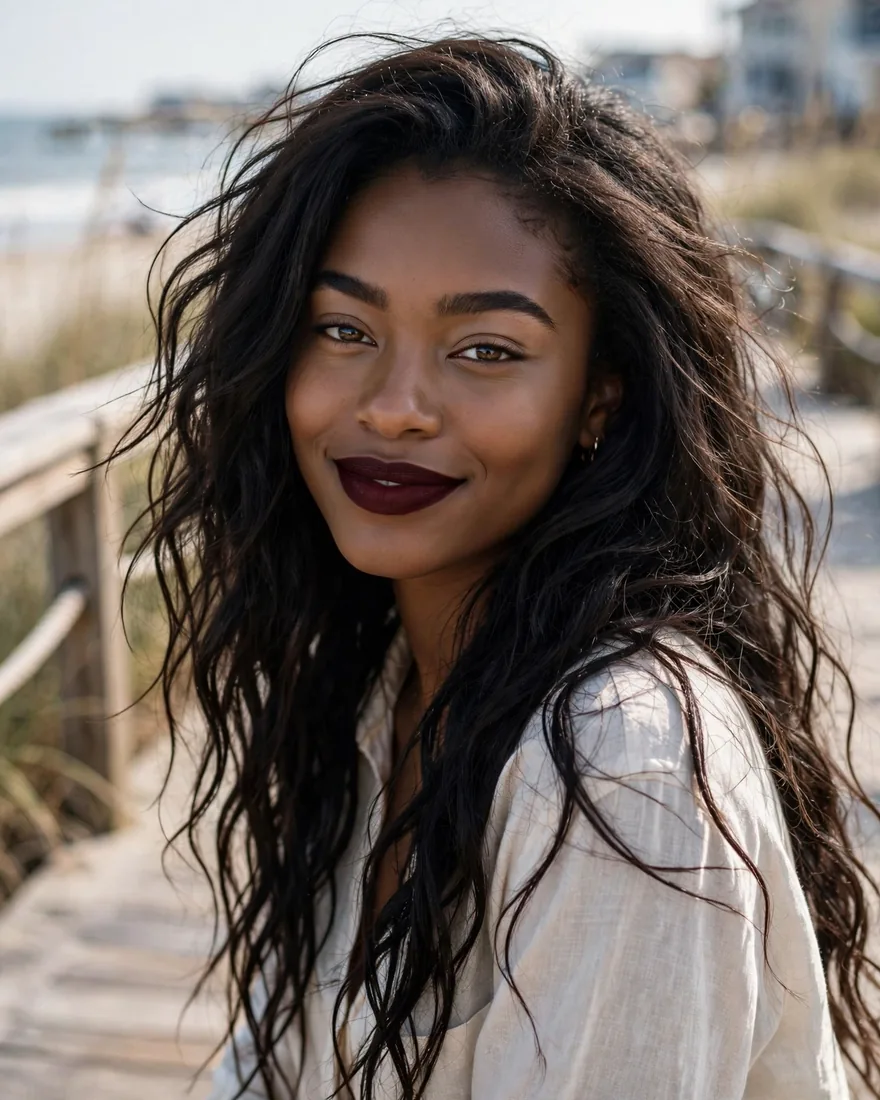
Undone, airy waves through long hair — the “I woke up like this” texture. On Type 2 and loose Type 3 hair, beach waves are a genuine wash-and-go; on tighter textures, they’re a stretched style from overnight braids. As natural hair styles go, this is the most effortless-looking option that actually requires a simple overnight set.
Benefits:
- Low-manipulation styling that lasts two to three days with night protection
- The loose texture hides new growth and uneven trims
- Works for casual days and dresses up easily for evenings
Pro Tip: For Type 4 hair, do the braids or twists on damp, moisturized hair and leave them in a full eight hours. Rushing the set is why braid-outs fall flat by noon.
How To Style: Braid damp hair into four to six loose braids (or twist into sections), sleep on it, then unravel and separate gently. A tiny amount of oil on your fingertips prevents frizz while separating.
Best For: Type 2 waves naturally; Type 3 curls with light product; Type 4 as an overnight stretched style. For more length-focused ideas, browse long hair styles.
6. Twist-Out With Volume
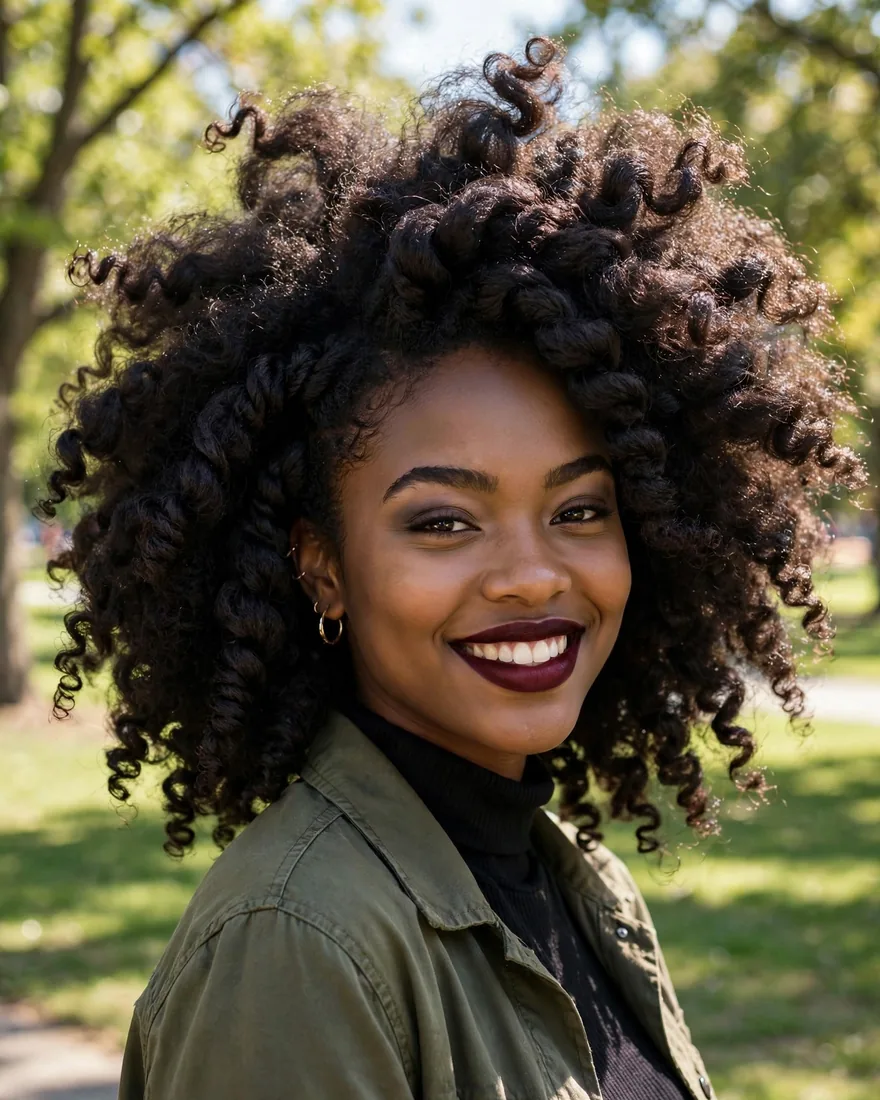
Two-strand twists installed on damp hair, unraveled the next day into defined, voluminous curls. The twist-out is arguably the most beloved of all natural hair styles — it gives Type 4 hair the definition wash-and-go sometimes can’t, with volume that wash-and-go sometimes won’t. The secret is in the takedown: separate each twist into three or four pieces for fullness.
Benefits:
- Definition plus volume in one style — the best of both worlds
- Lasts three to five days with proper night care
- No heat required at any stage
Pro Tip: Twist on damp — not soaking — hair, and ensure twists are fully dry before unraveling. Unraveling damp twists is the top cause of frizz in twist-out natural hair styles.
How To Style: Section damp, moisturized hair, apply twisting butter, and two-strand twist each section. Dry fully overnight or under a hooded dryer, then unravel with oiled fingers and fluff roots.
Best For: Type 4 coils primarily; Type 3 curls get a looser, beachier version. Our hairstyles for curly hair guide has more twist variations.
7. Chunky Two-Strand Twists
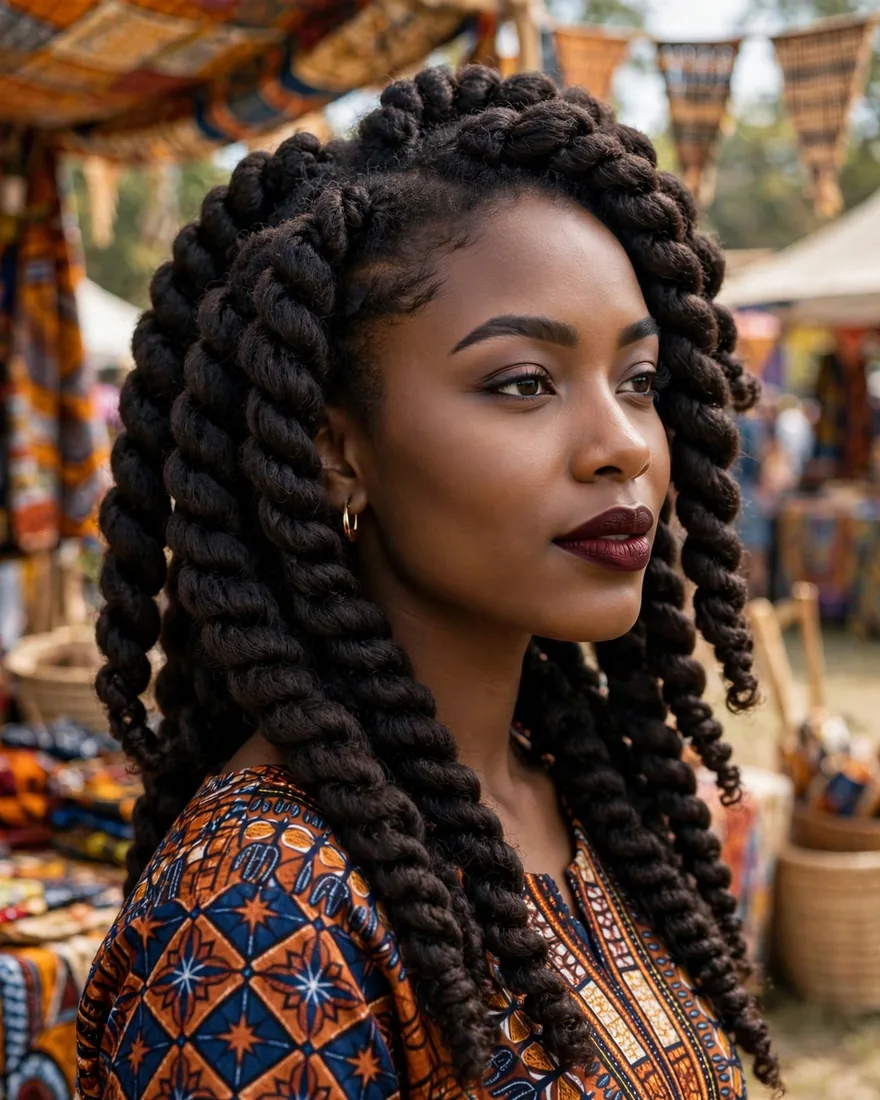
Large, rope-like two-strand twists worn as the finished style. Chunky twists are true protective natural hair styles: ends tucked, manipulation near zero, lasting two to three weeks. Far faster to install than small twists — which matters when you’re doing your own hair.
Benefits:
- Genuine protection — ends tucked, minimal daily handling
- Installs far faster than small twists or braids
- Doubles as a twist-out set at takedown
Pro Tip: Keep the parts clean and the twists uniform in size. Uneven chunky twists look messy within days, while neat ones stay sharp for weeks.
How To Style: On clean, deep-conditioned hair, section into large squares, apply leave-in and holding cream, and twist root to tip. Tuck the ends so they don’t unravel.
Best For: Type 3c to 4c hair; anyone wanting low-maintenance protection without extensions.
8. Banded Natural Ponytail With Puff
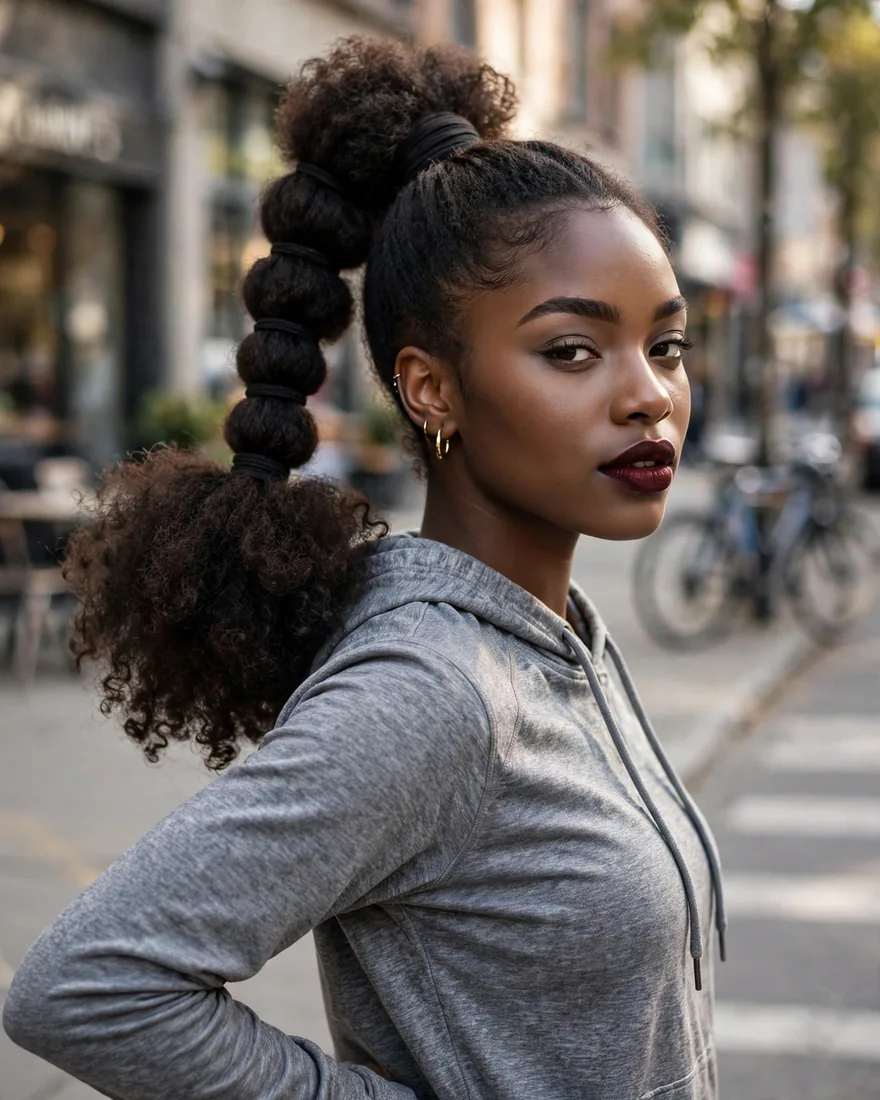
A high ponytail secured with the banding method — bands wrapped down the length — fluffed into a full puff. Banding stretches hair without heat and spreads tension so edges don’t take all the punishment. It’s among the most practical natural hair styles for workouts, humid days, and second-week hair.
Benefits:
- Heat-free stretching that actually lasts
- Banding spreads tension along the hair instead of concentrating it at the hairline
- Takes ten minutes once you know the method
Pro Tip: Never secure the base with a tight elastic alone — that is how edges disappear. Use a soft fabric band or the banding method, and keep the base snug, not strangling.
How To Style: Gather hair into a high ponytail with a soft band, then wrap additional covered bands every inch or two down the length. Leave for an hour or overnight, remove the lower bands, and pick the puff into shape.
Best For: Type 3 and 4 hair of medium to long length; active lifestyles.
9. Center-Parted Curls Air-Dried
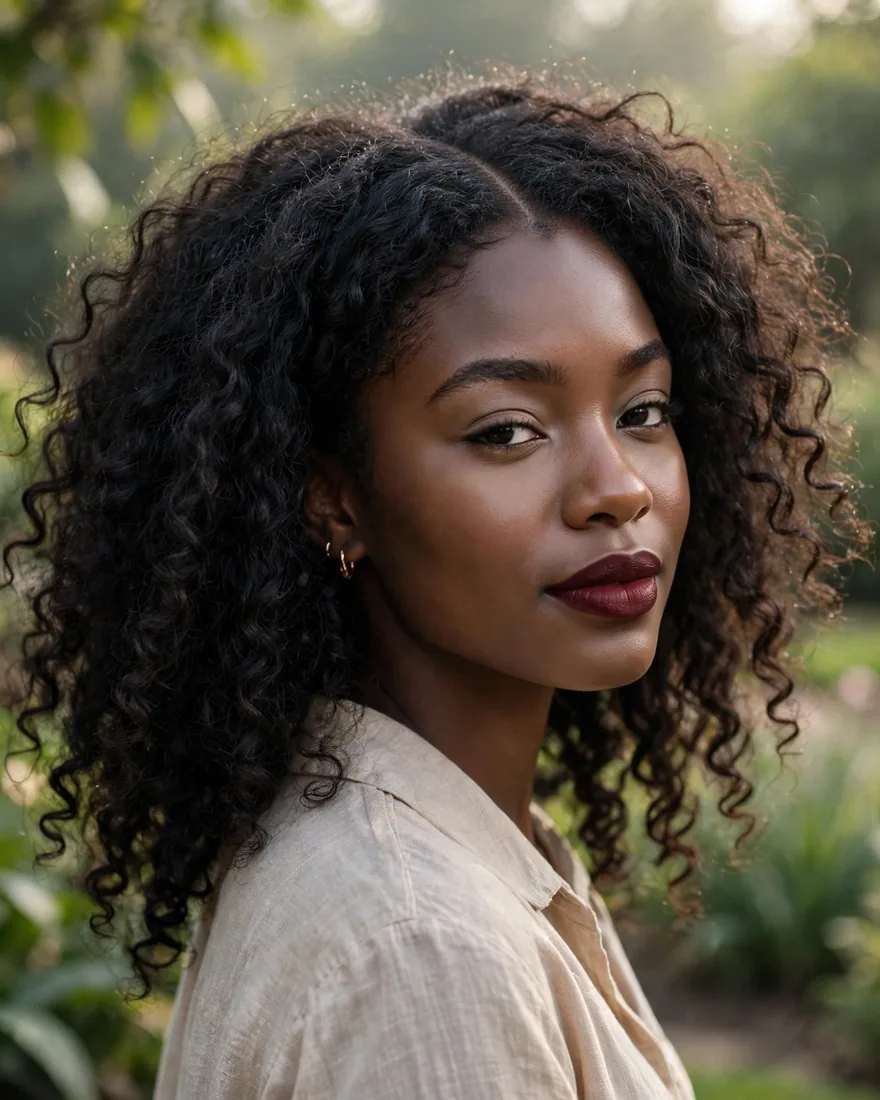
Curls parted down the middle and air-dried into soft, symmetrical definition. The center part frames the face evenly and shows off curl pattern on both sides. It’s pure wash-and-go natural hair styles minimalism — the only “styling” is the part and the product.
Benefits:
- The simplest possible routine: wash, product, part, done
- Symmetrical parting makes curl clumps fall evenly
- Shows off length and shrinkage honestly
Pro Tip: Set the part while hair is soaking wet and don’t touch it again. Re-parting damp curls breaks clumps and creates frizz along the part line.
How To Style: Apply leave-in and gel or curl cream to soaking-wet hair in sections, set a clean center part with a rat-tail comb, and air-dry without touching. Scrunch out any crunch once fully dry.
Best For: Type 3 curls and looser Type 4 patterns; oval and heart faces. More wash-and-go ideas live in our short curly hairstyles guide.
10. Textured Pixie on Coily Hair
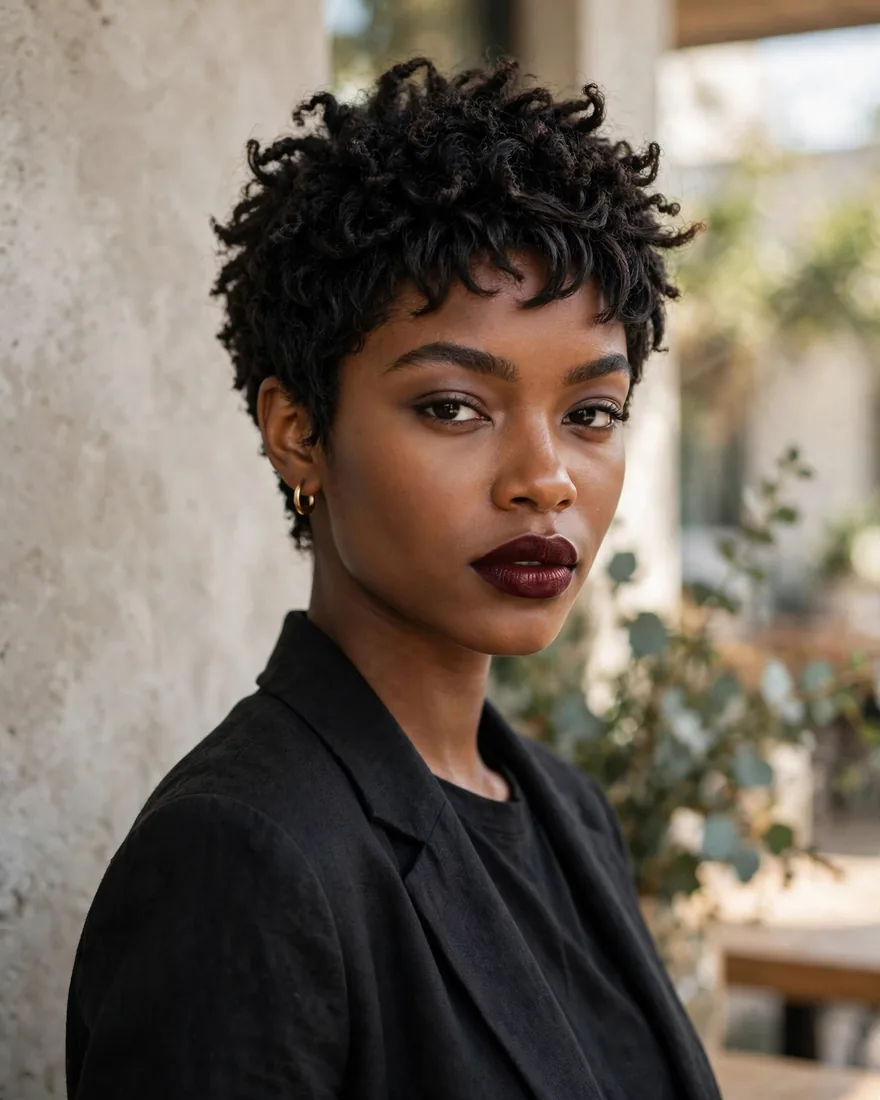
A short, shaped pixie cut that lets coily texture be the star — tapered sides, length on top, coils doing all the talking. On Type 4 hair, a pixie is wash-and-go in its purest form: the texture is the style. It is also one of the boldest natural hair styles because there is nowhere to hide — which is exactly why it works.
Benefits:
- The fastest morning routine of any style on this list
- Coils create natural volume and shape with zero effort
- Eliminates damaged ends in one cut — the ultimate fresh start
Pro Tip: Find a stylist who cuts coily hair dry or stretched. Wet cuts on Type 4 hair shrink dramatically — a shock no natural hair styles guide can prepare you for.
How To Style: Moisturize, apply curl cream or light gel, and go. A sponge enhances pattern on very short cuts; otherwise fingers are enough.
Best For: Type 4 coils; anyone ready for a big chop or tired of long-hair maintenance.
11. Braid-Out With Defined Ends
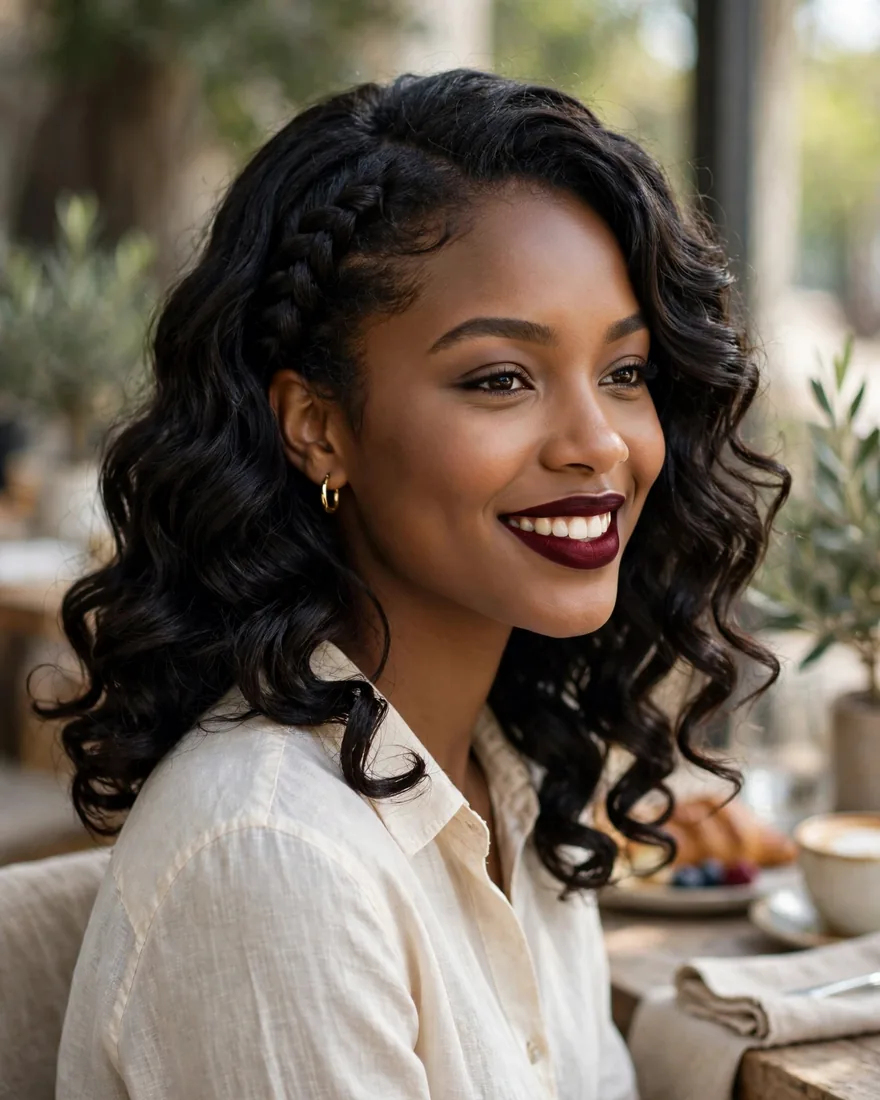
Three-strand braids set overnight and unraveled into crimped, defined waves with smooth ends. A braid-out gives a different texture than a twist-out — more stretched, more wave-like, with ends that stay sleek instead of coiling up. It is the natural hair styles answer for anyone whose twist-outs shrink too much but who still wants definition.
Benefits:
- More stretch and length retention than a twist-out
- Ends stay smooth and defined rather than puffing out
- Lasts three to four days with night protection
Pro Tip: Braid the last inch extra tightly and seal ends with butter or gel. Loose ends unravel overnight and the natural hair styles polish disappears.
How To Style: Braid damp, moisturized hair into medium three-strand braids, dry completely, then unravel with oiled fingers. Separate each braid once — over-separating creates frizz.
Best For: Type 3c to 4b hair; anyone wanting a stretched, wavy finish without heat.
12. Low Bun on Natural Hair
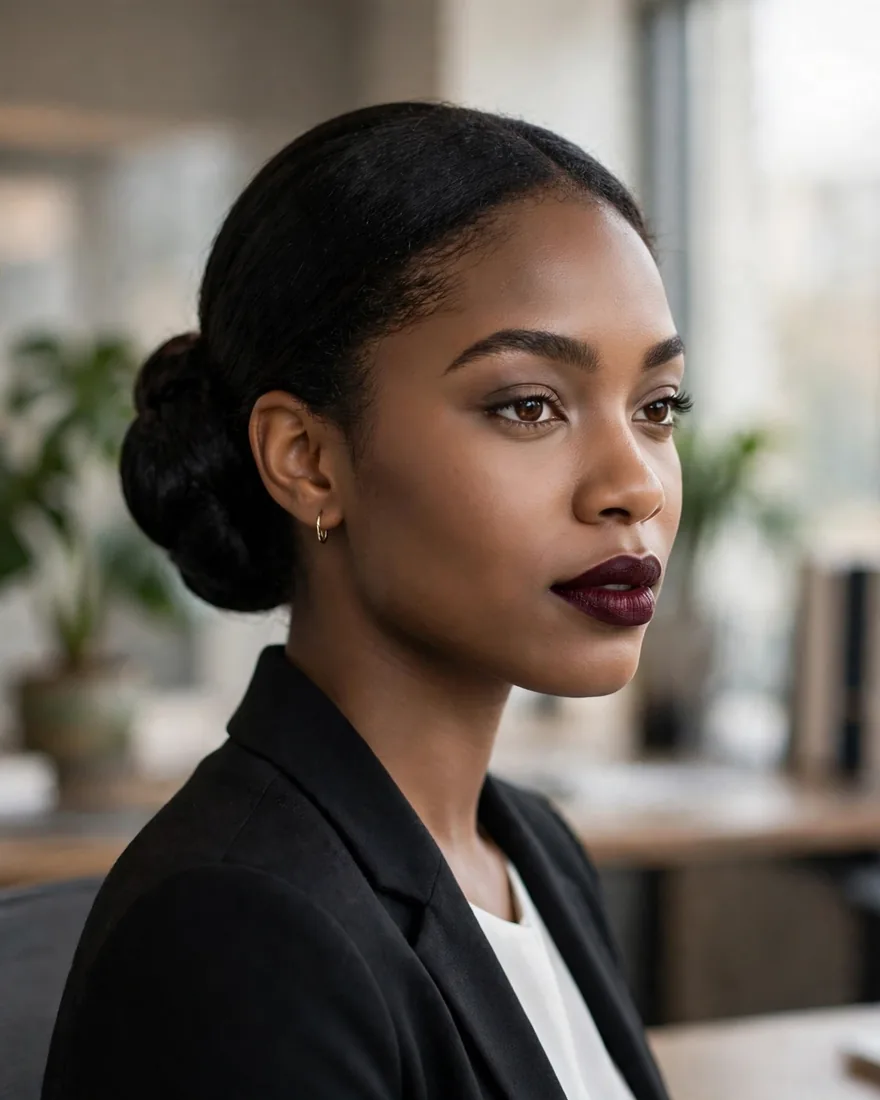
A smooth, low bun at the nape — the polished workhorse of natural hair styles. It tucks ends away completely, works for professional settings, and takes minutes. The key is prepping the hair first: a low bun on dry, unmoisturized natural hair is a breakage machine, but on properly moisturized hair it is genuinely protective.
Benefits:
- Ends fully tucked — real protection in a two-minute style
- Appropriate for every setting from office to wedding
- Stretches wash day by several days
Pro Tip: Moisturize and seal before smoothing back, and never pull tight enough to hurt. Pain at the hairline means your edges are protesting — loosen it. Even protective natural hair styles fail when tension is ignored.
How To Style: On moisturized hair, smooth back with a brush and light gel, gather at the nape, twist into a bun, and pin. A silk scarf for ten minutes sets edges smooth.
Best For: All texture types; medium to long length; professional and formal settings.
13. Pineapple Puff
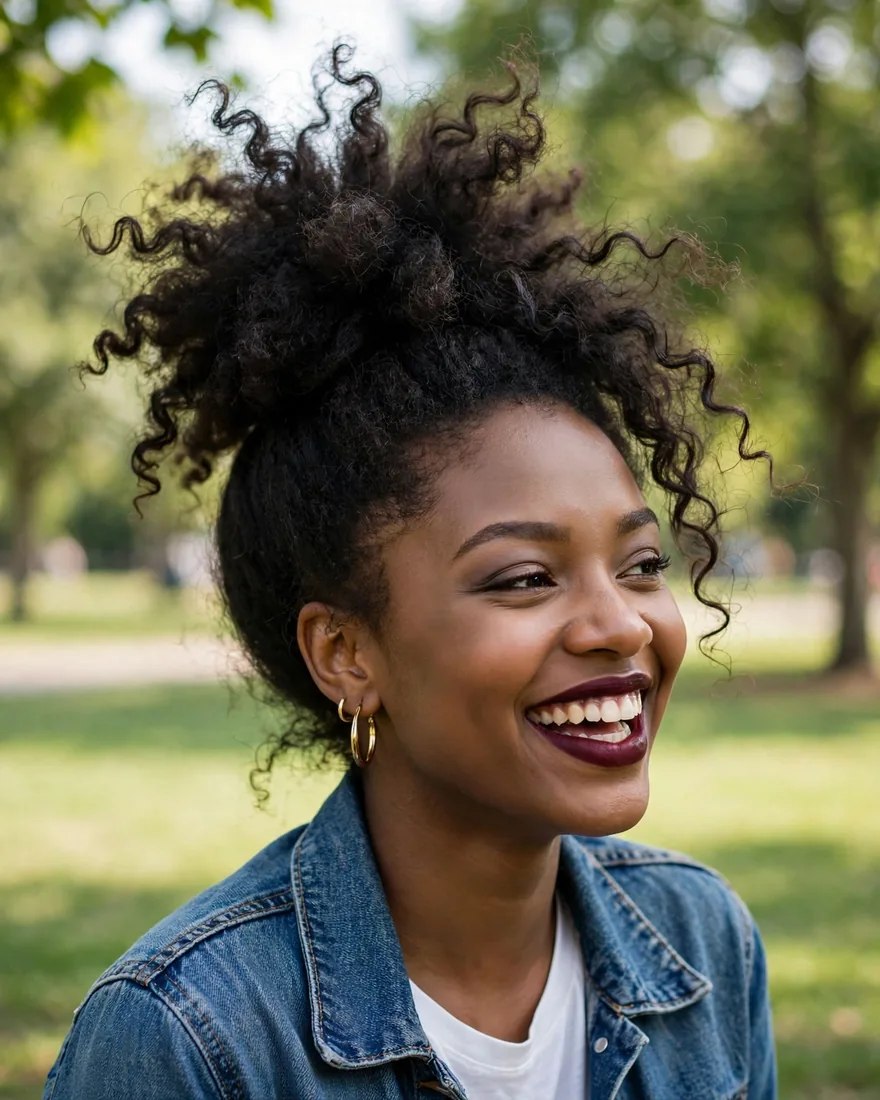
The beloved high puff — hair gathered loosely at the very top like a pineapple crown. It’s equal parts daytime style and nighttime preservation method, which is why it closes this list of natural hair styles. As a style it’s playful; as a technique it keeps curls stretched and frizz-free overnight.
Benefits:
- Doubles as a style and a sleep-preservation method
- Keeps curls off the pillow, reducing frizz and flattening
- Takes under two minutes — the ultimate lazy-day win
Pro Tip: Use a loose satin scrunchie, never a tight elastic, and don’t pull it snug. The pineapple should sit loosely — tension defeats its whole purpose as a protective method.
How To Style: Flip your head forward, gather hair loosely at the crown with a satin scrunchie, and fluff the puff into shape. For daytime, smooth the hairline with a brush and a touch of gel.
Best For: Type 3 and 4 hair of medium to long length; curly nights and casual days alike.
How the 13 natural hair styles compare at a glance:
| Style | Protective? | Daily Effort |
|---|---|---|
| Soft Layered Cut With Wispy Ends | No — wear-your-texture cut | Low — wash and go |
| Blunt Collarbone Bob Without Layers | No — needs regular trims | Low to medium |
| Long Curtain Bangs With Barely Layered Length | No — styling cut | Low — bangs need daily attention |
| Rounded Afro With Defined Coils | Partial — no tension, but ends exposed | Low after wash day |
| Loose Beach Waves on Long Hair | Partial — low manipulation | Low — overnight set |
| Twist-Out With Volume | Partial — no heat or tension | Low — night pineapple to refresh |
| Chunky Two-Strand Twists | Yes — ends tucked for weeks | Minimal for 2–3 weeks |
| Banded Natural Ponytail With Puff | Partial — tension distributed | Low — 10-minute style |
| Center-Parted Curls Air-Dried | No — wash-and-go | Minimal — wash, product, done |
| Textured Pixie on Coily Hair | No — but zero manipulation needed | Minimal — fastest routine here |
| Braid-Out With Defined Ends | Partial — stretched, low tension | Low — overnight set |
| Low Bun on Natural Hair | Yes — ends fully tucked | Low — 2-minute style |
| Pineapple Puff | Partial — great for nights | Minimal — under 2 minutes |
Protective Styles vs. Wearing Your Texture: You Need Both
The loudest argument in natural hair communities is protective styling versus wearing your texture out, and both sides oversell it. Protective natural hair styles — twists, buns, tucked styles — reduce manipulation and let ends rest, which is how length is retained. But months of continuous protective styling without breaks causes its own problems: scalp buildup, weakened strands from constant tension, and ends that never get properly moisturized because they’re hidden.
Wearing your texture keeps you honest about your hair’s actual condition — you notice dryness, knots, and thinning immediately — but wash-and-gos expose ends to friction and daily handling. The approach that works is cycling: a few weeks of chunky twists or low buns, then a week or two of twist-outs and puffs where you can assess and deep-condition freely. Even simple low-manipulation cuts like the bob haircuts in our collection work as a middle ground — short enough to need little handling, textured enough to wear your pattern proudly. The smartest natural hair styles routine mixes both intents instead of picking a camp.
Natural Hair Care Fundamentals That Make Every Style Work
No style on this list survives bad fundamentals. Natural hair — especially Type 4 — loses moisture fast because the curl pattern blocks scalp oils from traveling down the strand. Cleanse regularly (buildup blocks moisture), deep-condition on wash day, and moisturize in sections so every strand gets product. The LOC/LCO layering method isn’t a trend; it’s just a system for keeping moisture in. These basics decide whether your chosen natural hair styles last days or fall apart by noon.
Night protection is non-negotiable: cotton pillowcases wick moisture out while you sleep, so use a satin or silk bonnet, scarf, or pillowcase to cut friction breakage. Keep manipulation low between wash days — every extra comb-through is mechanical stress. If your hair is short, our short hair notes apply too: faster routines, same moisture rules.
Tension and Breakage Honesty: Which “Natural” Styles Damage Hair
Some styles marketed as “natural” quietly destroy hairlines. Anything that pulls — tight ponytails, snatched buns, edges laid with heavy gel daily — creates traction, and sustained traction causes traction alopecia, which is often permanent. If a style hurts or leaves bumps along your hairline, it’s too tight. “It’ll loosen up” is how edges get lost — and this warning applies to many popular natural hair styles, not just relaxed-hair looks.
The fix is technique, not abandoning updos. Distribute tension (banding instead of one tight elastic), keep styles snug rather than strangling, and give your hairline regular breaks — alternate high puffs with low buns, or wear hair loose for days between pulled-back styles. Be honest about daily edge control too: scraping edges down with strong-hold gel every morning plus a tight style is a recipe for thinning. If ponytails are your daily go-to, read our ponytail hairstyles guide and choose the looser variations.
FAQs
What counts as a natural hair style?
Any style on unaltered texture — no relaxers or texturizers — counts: wash-and-go afros, twist-outs, braids, or silk-pressed unrelaxed hair. The distinction is chemical, not heat: frequent heat without protection still damages any texture.
How do I grow out natural hair without constant breakage?
Length retention is about preventing breakage, not speeding growth. Keep ends moisturized and tucked in protective styles, trim splits before they travel, detangle gently on damp conditioned hair (never dry), and sleep in satin nightly. Most “my hair won’t grow” cases are really “my hair breaks as fast as it grows.”
How long can I keep a protective style in?
Two to three weeks for twists without extensions; six to eight weeks maximum for styles with extensions like braids — with regular scalp cleansing and moisturizing underneath. Leaving any protective style in longer invites matting and breakage at takedown, defeating the purpose. Among all natural hair styles, protective ones demand the most discipline at removal: detangle patiently and deep-condition right after.
How do I make a twist-out last more than two days?
Three things: start dry (twists fully dry before unraveling), pineapple nightly with a satin scrunchie, and re-twist just the front and crown on night two or three. A light water/leave-in mist revives flattened sections. Most twist-outs die from moisture loss and friction, not style failure.
Why is my natural hair breaking even though I never use heat?
Heat is only one cause of breakage. The usual culprits for heat-free breakage are dryness (skipping regular moisturizing), mechanical damage (rough detangling, tight styles, cotton pillowcases), and lack of trims letting splits travel. Also check your protective styles — constant tension breaks hair just as effectively as a flat iron. Audit dryness, tension, and ends before blaming anything else.
How should I protect natural hair at night?
A satin or silk bonnet, scarf, or pillowcase — every night, no exceptions. Pineapple longer natural hair styles loosely on top first; twists or braids go straight under the bonnet. Cotton absorbs moisture and creates friction that causes breakage and frizz. This single habit extends every style on this list by days.
How often should I moisturize natural hair?
As often as your hair tells you it needs it — there’s no universal schedule. Many Type 4 heads do well with light moisturizing every two to three days between wash days; looser textures may need less. The test is simple: if your hair feels dry, rough, or brittle, it needed moisture yesterday. Deep-condition on every wash day without fail, and seal with an oil or butter after moisturizing.
Is shrinkage a sign my hair is healthy?
Yes — shrinkage means your curl pattern has strong elasticity, which is a hallmark of healthy natural hair. Hair that has lost its ability to shrink and spring back is often heat-damaged or over-processed. Shrinkage can be frustrating when you want length to show, but stretched styles like braid-outs and banding give you the best of both: visible length without fighting your hair’s nature.
The best natural hair styles aren’t the trendiest — they’re the ones your texture, schedule, and patience can sustain. Cycle between protection and freedom, keep tension honest, moisturize consistently, and protect your hair nightly. Do those four things and any of these 13 styles will look better and last longer.