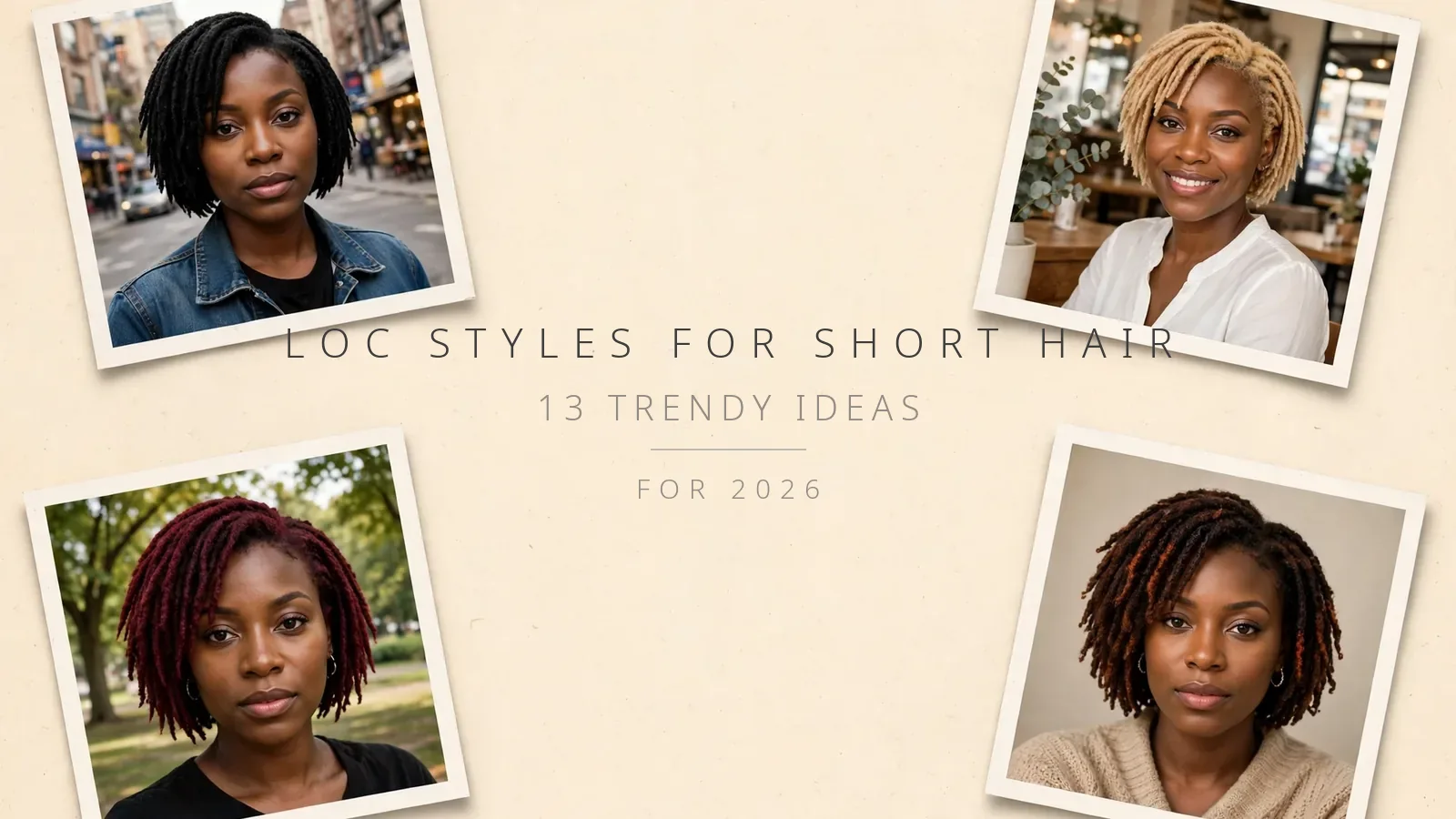
Loc Styles for Short Hair – 13 Trendy Ideas for 2026
Most loc galleries show shoulder-length and waist-length hair, leaving anyone with short locs to guess which styles actually work on a bob or a fresh set of coils. Copying a style meant for mature, long locs onto starter locs is the fastest way to frustration — the hold is wrong, the tension is wrong, and the result falls apart by evening. The missing piece in nearly every guide is loc stage: what you can style at three months is completely different from what you can style at three years.
The fix is choosing styles that match your stage, your loc size, and your real retwist schedule. These loc styles short hair wearers love span starter locs, freeform locs, tapered bobs, and colored locs — each tagged with the stage it suits. Below are 13 ideas with honest effort notes, plus guides to picking by stage and size, questions for your loctician, and a care routine built specifically for short locs.
Table of Contents
- 13 Loc Styles for Short Hair Worth Copying
- 1. Mini Starter Locs
- 2. Freeform Short Locs
- 3. Short Coils with Tapered Sides
- 4. Neat and Tapered Loc Bob
- 5. Classic Brown Loc Bob with Layers
- 6. Blonde Loc Bob
- 7. Side-Parted Burgundy Locs
- 8. Spiral Curl Locs with Highlights
- 9. Burgundy Locs with Side Bangs
- 10. Undercut Loc Bob
- 11. Short Loc Pompadour
- 12. Curly End Locs
- 13. Soft Brown and Copper Locs
- How to Choose the Right Short Loc Style for Your Loc Stage and Size
- What to Ask Your Loctician: Parts, Retwist Schedule, and Tension
- Short Loc Care Routine: Moisture, Washing, and Night Protection
- FAQs
- How long does it take for starter locs to lock?
- How often should I retwist my short locs?
- Can I color my locs blonde or burgundy without damage?
- What is the difference between microlocs and regular locs?
- How do I keep short locs moisturized?
- Can I wear locs to a professional workplace?
- Do I need to retwist if I want freeform locs?
- How do I protect short locs at night?
13 Loc Styles for Short Hair Worth Copying
1. Mini Starter Locs

The very beginning of the journey — small two-strand twists or coils that are still in their fluffy, unraveled phase. Starter locs look like tight twists at first and slowly mesh into locs over months. Styling is deliberately simple: a headband tuck, a tiny half-up pony, or small space buns keep them neat while they form — some of the easiest loc styles short hair beginners can manage.
Benefits:
- Lowest commitment entry — your hair stays short and manageable while locs form
- Mini parts create fullness that makes short hair look denser
- Minimal product and manipulation needed in the early months
Pro Tip: Resist the urge to re-twist every week. Starter locs need to unravel slightly to mesh — over-twisting in months one through three slows the locking process and stresses roots. Patience is the real product with loc styles short hair starters grow.
How To Style: Keep twists moisturized with a light oil and tuck them under a wide headband or pin one side back. A tiny half-up pony with a covered band works for the first few months.
Best For: Starter stage (months 0–6); all loc sizes. Anyone beginning their loc journey who wants to look polished while hair is still locking. A gentle starting point among loc styles short hair beginners love.
2. Freeform Short Locs

No retwisting, no palm-rolling, no parts — freeform locs form naturally as hair mats on its own. The result is organic, uneven, and full of character: some locs thick, some thin, all with personality. Short freeform locs have a beautiful sculptural quality because the irregular texture reads as intentional at this length.
Benefits:
- Zero retwist schedule — no tension, no traction risk, no salon dependency
- Thick, chunky texture that looks fuller than maintained locs at the same length
- The most authentic expression of the loc journey
Pro Tip: Freeform does not mean zero care. You still wash, separate roots that try to join into one mega-loc, and moisturize — you simply skip the retwisting. Separation every wash day is the one non-negotiable.
How To Style: Wash, separate, moisturize, and let them be. A middle or side part forms on its own; add beads or cuffs if you want polish without retwisting.
Best For: All stages once locs have formed; thick and medium loc sizes. Anyone who wants a hands-off routine and an organic look. The purest expression among loc styles short hair minimalists love.
3. Short Coils with Tapered Sides

Tight coils on top with cleanly tapered sides and nape — the sharpest contrast cut in short loc styling. The taper keeps the silhouette crisp and modern while the coils up top give softness and movement, similar in spirit to a buzz cut with texture on top. This is one of the most requested cuts because it looks deliberate from every angle and photographs beautifully, which is why it tops so many loc styles short hair roundups.
Benefits:
- The tapered sides sharpen the whole look — zero bulk at the nape or ears
- Works on both starter coils and mature short locs
- Easy to maintain with a barber or loctician visit every few weeks for the taper
Pro Tip: Ask for a skin-taper or low taper rather than a full fade if your hairline is fragile — less cutting near the hairline means less stress on delicate edges.
How To Style: Define coils with a sponge or finger coils on wash day, keep the taper lined up, and use a light edge control on the hairline. Done in under ten minutes.
Best For: Starter to semi-mature stage; small to medium loc sizes. Great on round faces because the height on top lengthens the silhouette. A sharp favorite among loc styles short hair trend-followers love.
4. Neat and Tapered Loc Bob
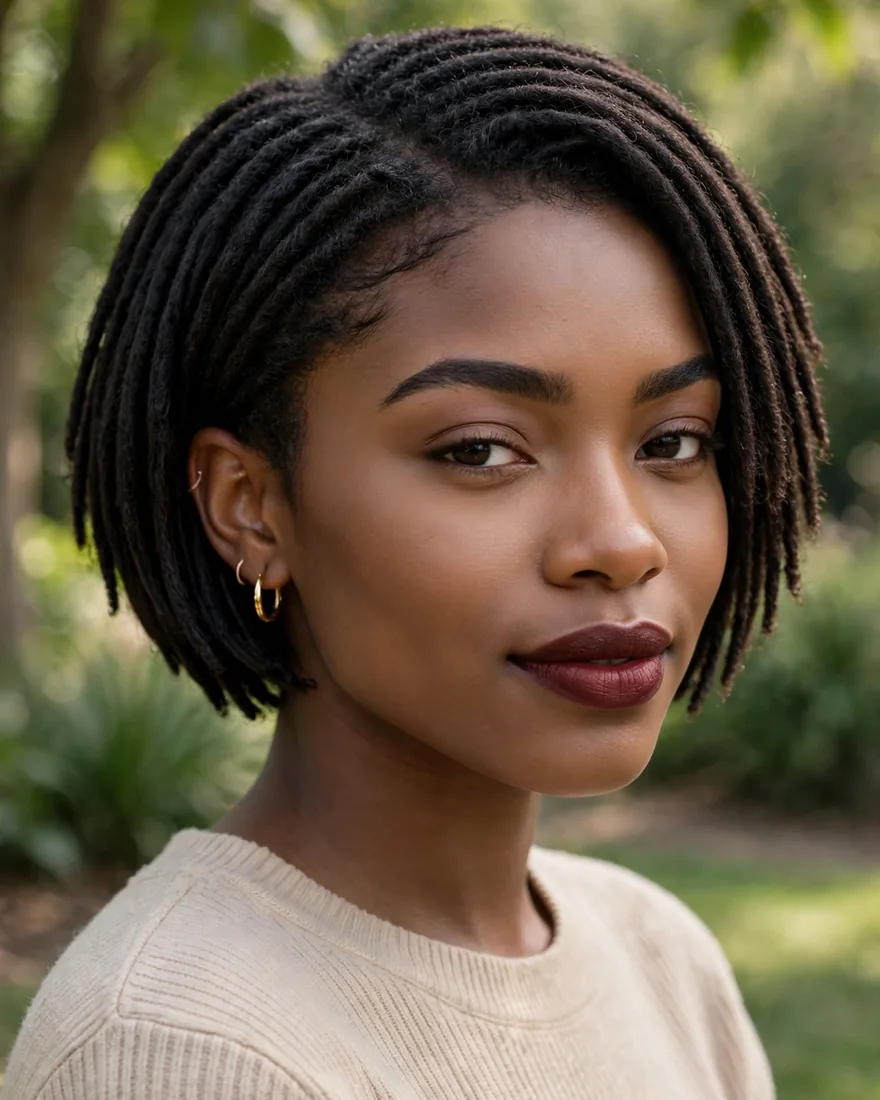
A chin-to-neck length bob of uniform locs, shaped with a gentle taper at the nape so the back sits clean against the neck. This is the office-friendly loc bob — polished parts, smooth roots, and a curved silhouette that reads professional without looking severe. It is the single most referenced work-appropriate loc style because it keeps the structure of a classic bob.
Benefits:
- Professional and polished — the safest choice for conservative workplaces
- The tapered nape eliminates the shelf or ledge that unshaped bobs get at the back
- Long enough to pull into a low ponytail or pin back on busy days
Pro Tip: Ask your loctician for a stacked or graduated back rather than a blunt cut — locs are heavier than loose hair, and a blunt back can kick outward instead of curving under.
How To Style: After a fresh retwist, part as desired and let locs fall naturally. Smooth flyaways with a light holding foam and keep the nape tapered with regular trims.
Best For: Mature locs (1 year+); medium loc sizes. Anyone who needs a style that works in every professional setting. The safest office pick among loc styles short hair professionals wear.
5. Classic Brown Loc Bob with Layers
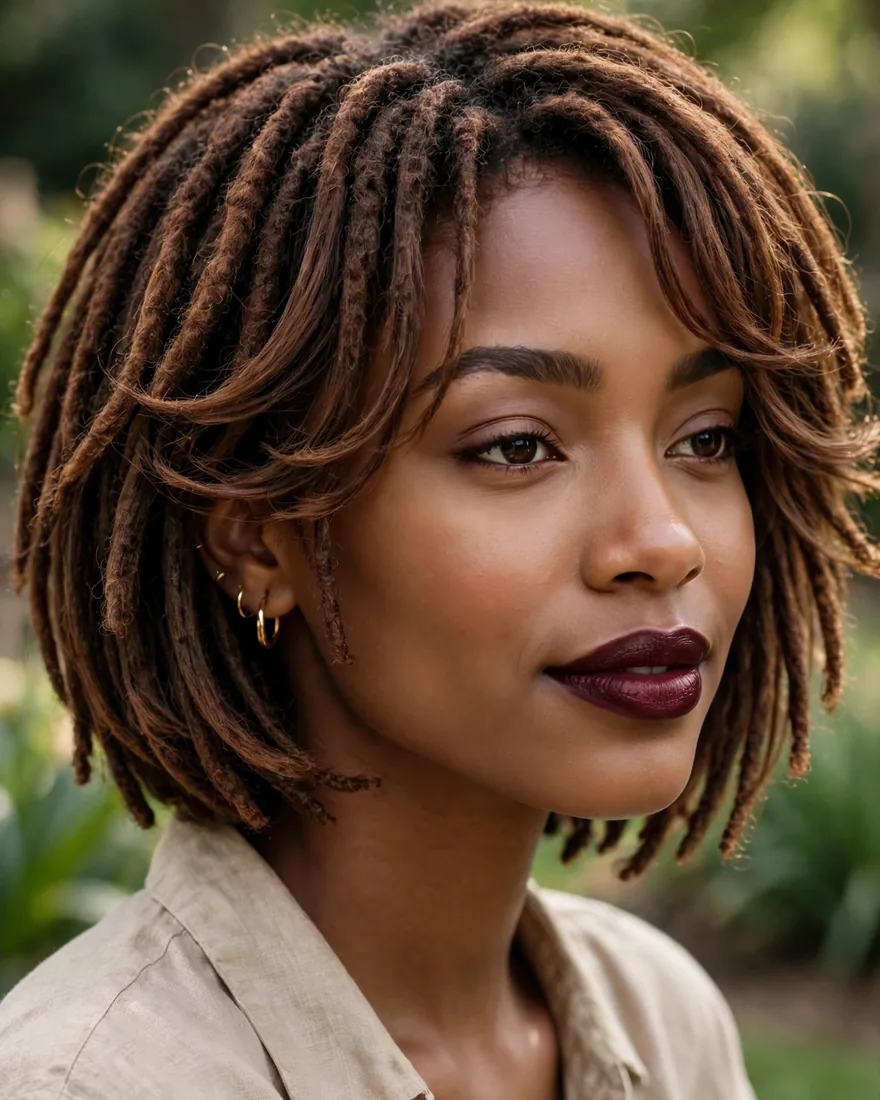
The natural-color loc bob with subtle layering through the front and crown. Layers break up the solid mass of a bob so it moves instead of hanging like a curtain, and the natural brown tone keeps maintenance near zero. This is the everyday workhorse of loc styles for short hair — timeless, low-drama, and flattering on nearly everyone.
Benefits:
- Layers add swing and prevent the helmet effect of one-length bobs
- Natural brown color means no color upkeep, no bleach, no fading line
- Grow-out friendly — layers keep looking good as length increases
Pro Tip: Layers in locs are cut per-loc, not sliced like loose hair. Ask for varied loc lengths at the ends rather than true layering — it creates the same movement without weakening individual locs.
How To Style: Wear as-is after moisturizing; tuck one side behind the ear or add a decorative cuff near the front for a little asymmetry.
Best For: Mature locs; medium to thick loc sizes. The universal safe pick for a first styled loc bob. The everyday classic among loc styles short hair wearers keep returning to.
6. Blonde Loc Bob
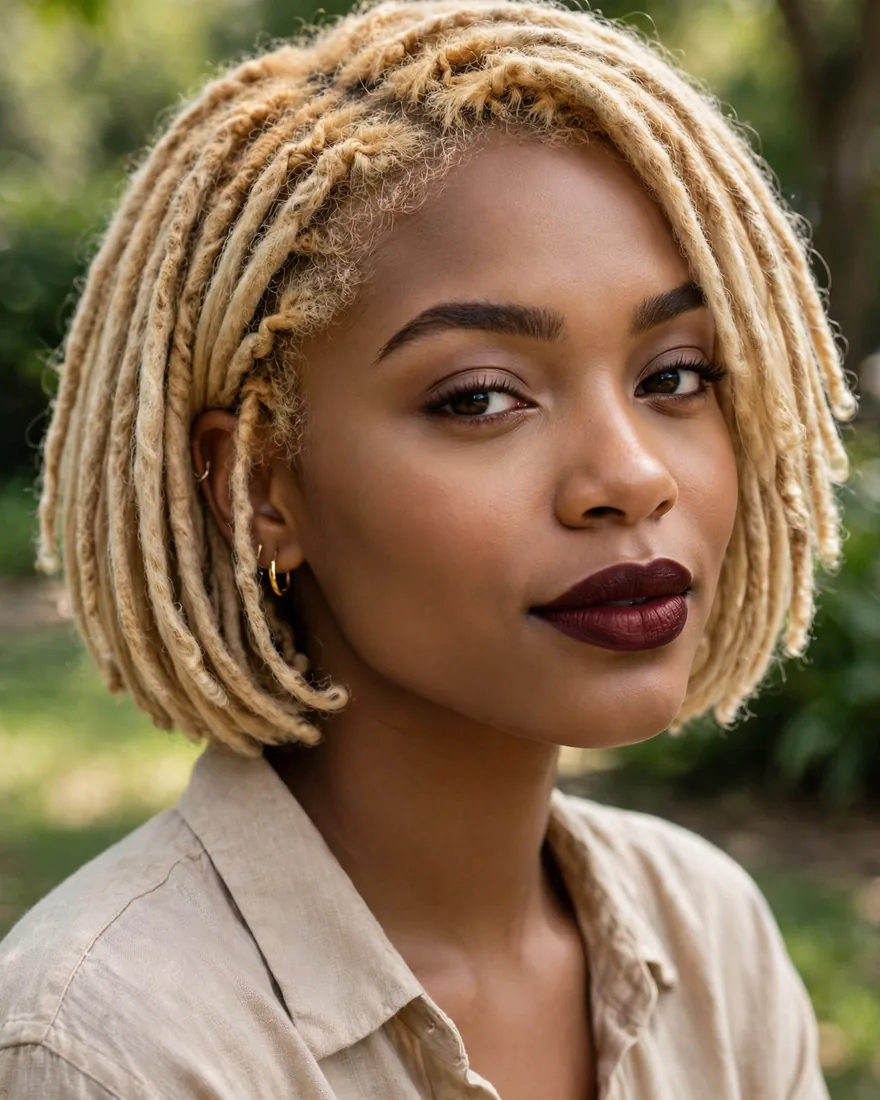
A chin-length bob lifted to honey or golden blonde — the highest-impact color in the short-loc world. Blonde opens up the texture so every twist and coil reads clearly, and on a bob the color frames the face like a halo. The honest truth: bleach on locs is the riskiest color move there is, so this style is only as good as the colorist behind it.
Benefits:
- Maximum visibility of texture — blonde makes every coil and twist pop
- Brightens the face and photographs dramatically
- A bob keeps the bleached length manageable and trims away damage faster
Pro Tip: Never bleach locs at home. Locs absorb bleach unevenly because of their density, which leads to weak spots and breakage. A colorist experienced with locs will lift gradually, and a strand test on one loc first is non-negotiable.
How To Style: Keep blonde locs deeply conditioned — bleached locs dry out faster. A purple-toned conditioner every few washes keeps brassiness down.
Best For: Mature, healthy locs only; medium loc sizes. Skip this if your locs are already dry, thin, or newly formed. The boldest color play among loc styles short hair risk-takers try.
7. Side-Parted Burgundy Locs
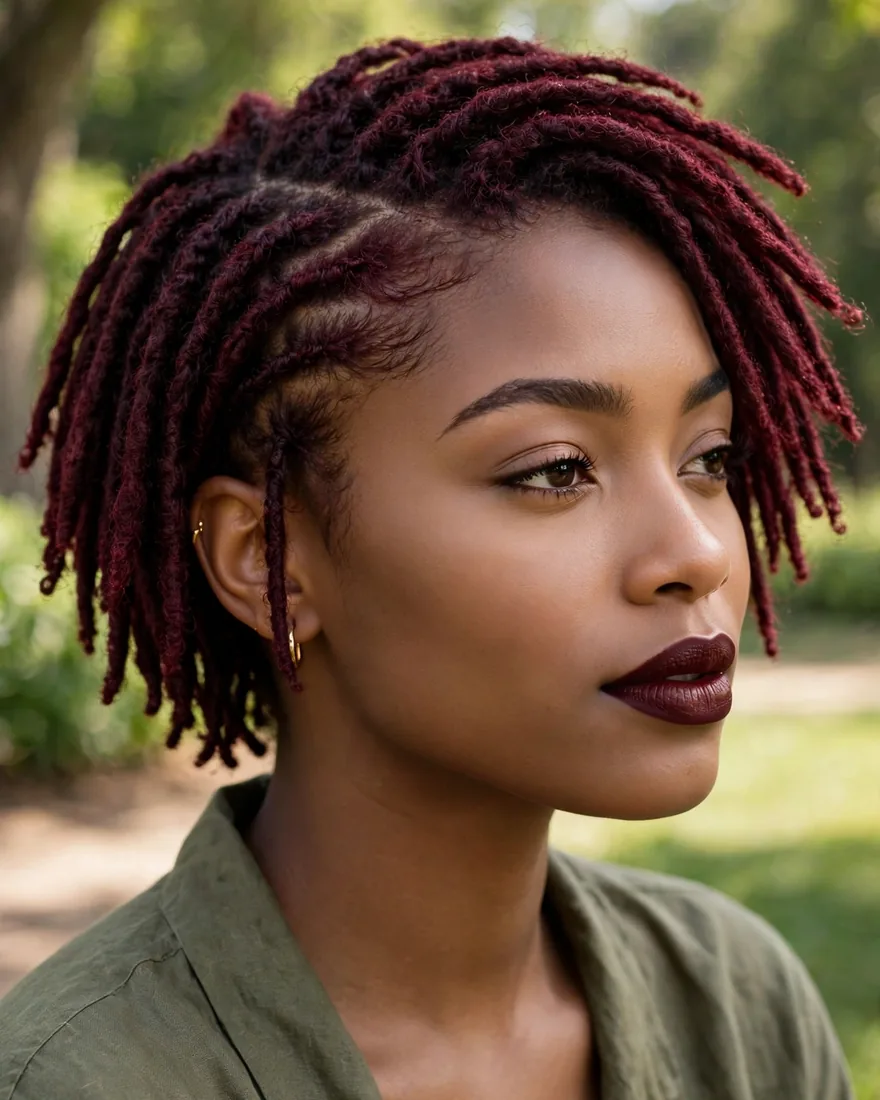
Deep burgundy locs swept to one side from a defined side part — rich color with a soft, face-framing fall. Burgundy is the friendliest fashion color for locs because it usually needs less lift than blonde, and on brown or black hair it can be achieved with high-lift color rather than full bleach. The side part adds asymmetry that flatters round and square faces.
Benefits:
- Burgundy fades gracefully into auburn rather than going brassy overnight
- Less damaging than blonde — often achievable without aggressive bleaching
- The side part creates instant shape on a simple bob or shoulder-grazing length
Pro Tip: Burgundy bleeds in the first few washes — wash with cool water and a color-safe cleanser, and keep a dark towel and pillowcase handy for the first two weeks.
How To Style: Set the side part on damp hair after retwisting, sweep locs to the heavier side, and let them fall. A couple of gold cuffs near the part catch the light beautifully. Burgundy glow is why these loc styles short hair colorists recommend most.
Best For: Mature locs; all loc sizes. A great first fashion color for loc wearers. A rich, wearable color among loc styles short hair color fans love.
8. Spiral Curl Locs with Highlights

Locs finished with spiral curls at the ends and painted highlights woven through — the dressiest look on this list. The curls are set with rods or flexi-rods and the highlights (honey or caramel tones) are hand-painted onto select locs. It is occasion hair: weddings, photoshoots, nights out. On short locs the curls create bounce that longer locs cannot match.
Benefits:
- Transforms a simple bob into event-ready hair in one styling session
- Highlights add dimension so individual locs read clearly in photos
- Temporary — the curls wash out, so there is no long-term commitment
Pro Tip: Set curls on freshly retwisted, fully dry locs for the longest hold. Damp locs plus rods equals curls that drop by dinner. If your locs are fine, ask your stylist about hairstyles for curly hair rod techniques — the setting logic transfers directly.
How To Style: Wrap loc ends around perm rods or flexi-rods, sit under a dryer or air-dry completely, then release and separate gently. Mist with a light oil sheen for shine.
Best For: Mature locs; medium loc sizes. Best as an occasional style rather than a daily one — repeated heat setting dries locs out. The dressiest option among loc styles short hair event-goers choose.
9. Burgundy Locs with Side Bangs
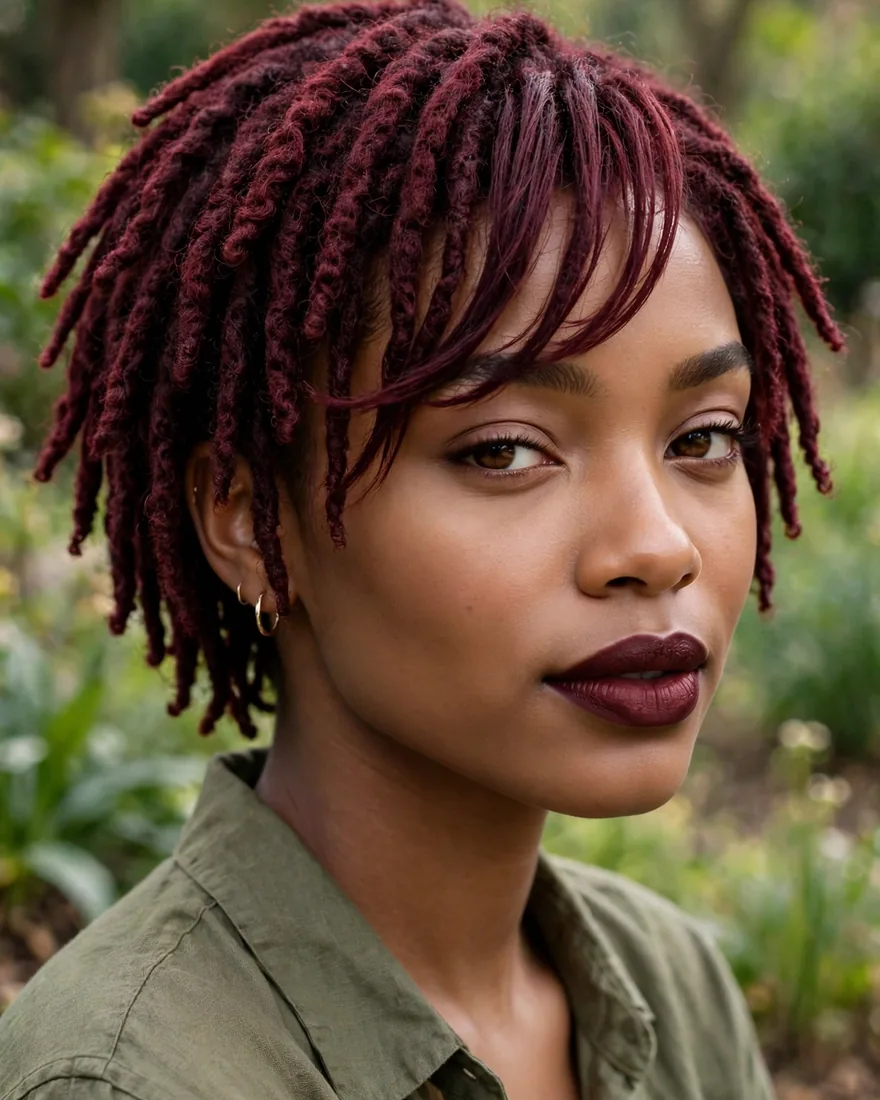
Burgundy locs with a fringe of shorter locs swept across the forehead — bangs on locs, done right. The side-swept bang softens the hairline and balances longer face shapes, and the burgundy color keeps the whole look rich rather than heavy. Bangs on locs mean a few locs cut shorter at the front, so this is a commitment, but a flattering one.
Benefits:
- Side bangs balance long and oval faces and soften strong foreheads
- The fringe draws attention to the eyes
- Burgundy keeps the look dimensional instead of flat
Pro Tip: Loc bangs need trimming more often than the rest — they sit against the forehead and collect oil and product. Rinse or refresh the fringe between full wash days. For bang placement ideas, the logic in types of bangs applies to loc fringe too.
How To Style: After retwisting, direct the shorter front locs diagonally across the forehead and let them set. Pin one side if you want an asymmetric sweep.
Best For: Mature locs; small to medium loc sizes. Long, oval, and heart face shapes benefit most. A face-framing favorite among loc styles short hair bang lovers try.
10. Undercut Loc Bob
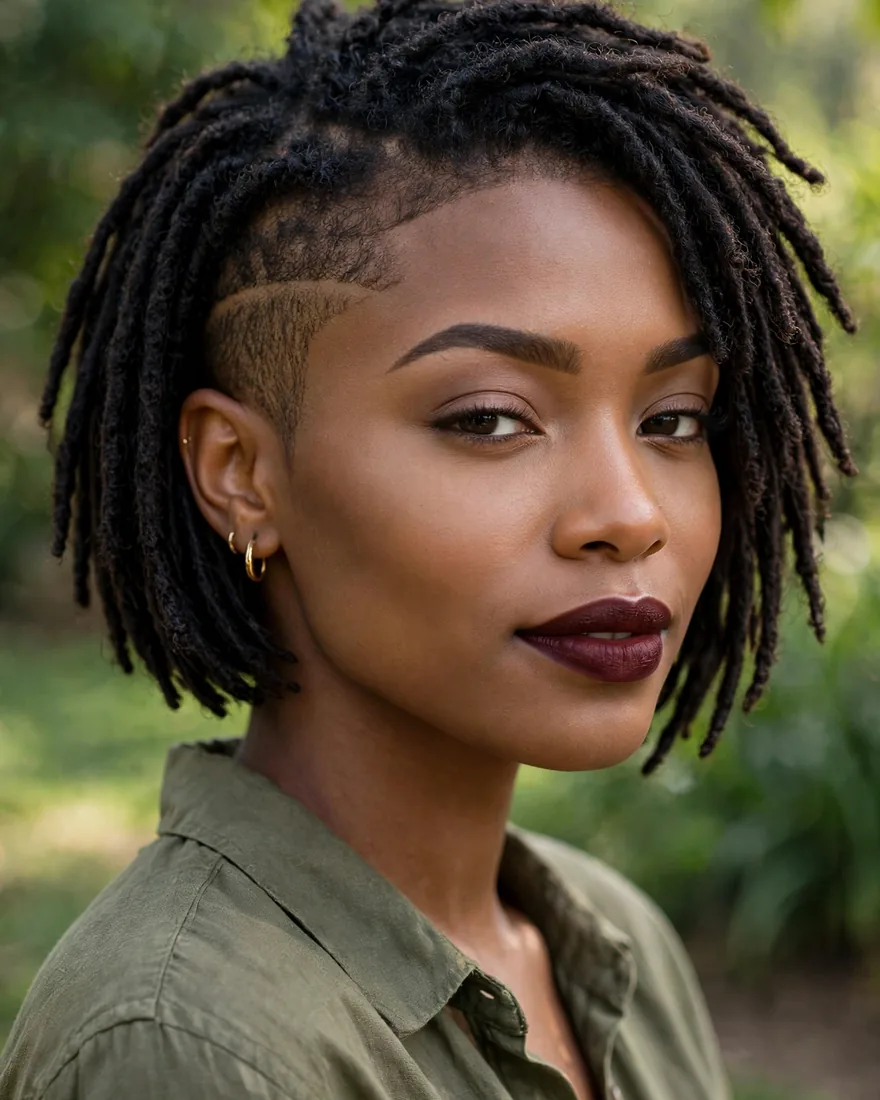
A full bob on top with the underneath and sides shaved close — maximum edge with minimum daily effort. The undercut removes bulk where locs are heaviest at the nape, which genuinely improves comfort, and the contrast between shaved sides and textured top is striking — among loc styles short hair editors feature, this one photographs most dramatically. Think of it as the loc answer to the pixie cut attitude, with the versatility of a bob on top.
Benefits:
- Removes weight and heat at the nape — noticeably cooler in summer
- Bold, fashion-forward silhouette that stands out in any crowd
- The shaved sections need only a quick clipper pass every few weeks
Pro Tip: Grow-out is the real commitment here. Shaved sections take months to catch up to the top, so be sure about the undercut — or keep the fade soft and blended so regrowth looks intentional.
How To Style: Style the top bob as usual; keep the undercut lined up. Add a design line or pattern in the shave if you want extra personality.
Best For: Mature locs; medium to thick loc sizes. Best for thick hair where removing under-bulk genuinely helps. The edgiest cut among loc styles short hair rebels choose.
11. Short Loc Pompadour

Locs swept up and back into a voluminous pompadour — height, drama, and vintage swagger. Short locs are actually ideal for this because they hold lift without the weight that drags longer locs down. It works for formal events and makes a strong style statement day to day.
Benefits:
- Serious height that elongates round faces and adds presence
- Short locs hold the shape better than long, heavy locs
- Reads formal and intentional — great for events and photos
Pro Tip: Build the pompadour on second- or third-day hair, not wash day — slightly lived-in locs grip better and hold the shape longer. A light holding foam at the roots helps without stiffness. Grip matters more than hold for the loc styles short hair pompadours need.
How To Style: Gather locs upward from the front, push back for volume, and pin or tuck at the crown. Smooth the sides down for contrast with the lifted front.
Best For: Semi-mature to mature locs; medium loc sizes. Round and square faces gain the most from the added height. The most dramatic height among loc styles short hair statement-makers wear.
12. Curly End Locs
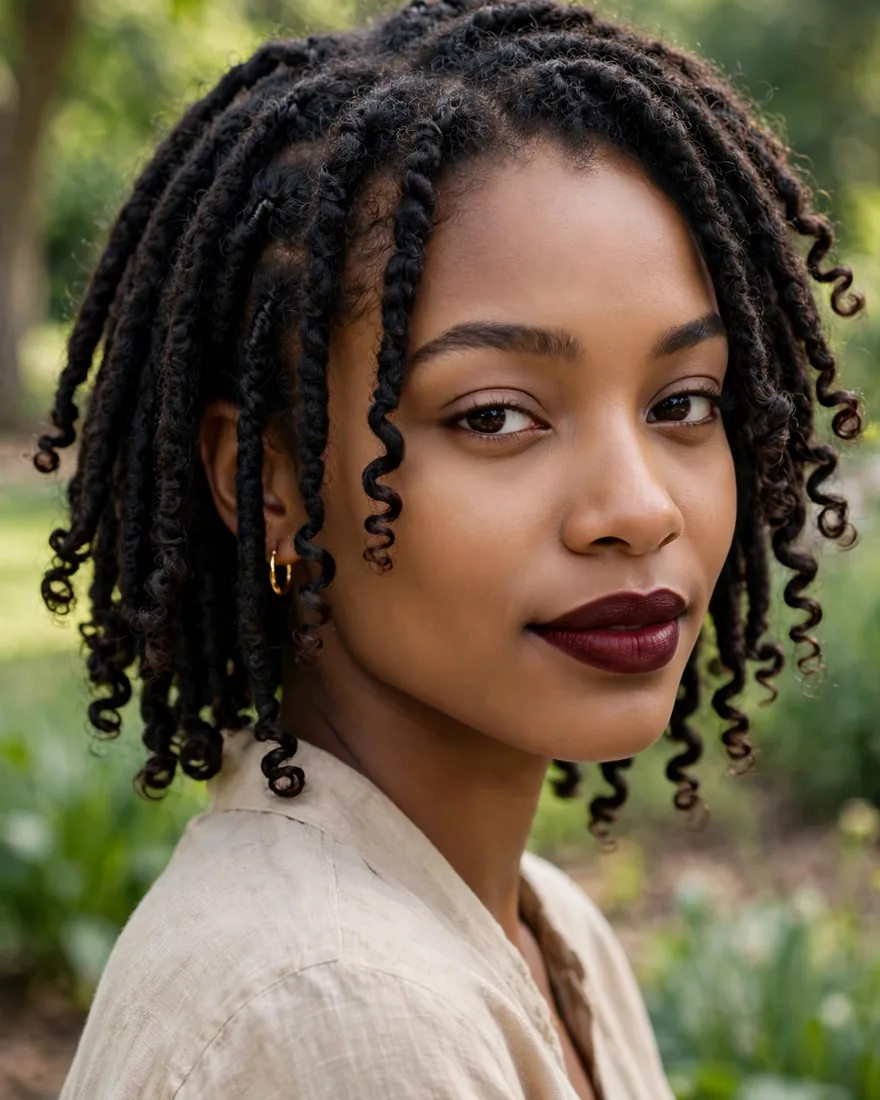
Locs with the roots kept neat and the ends left loose and curly — the best of both worlds. This style suits newer locs whose ends have not fully locked yet, turning the unfinished stage into a feature. The curly ends soften the whole look and add movement that fully locked locs do not have, echoing the texture play in curly hairstyles.
Benefits:
- Makes the in-between locking stage look intentional and pretty
- Curly ends add softness around the face and shoulders
- Less manipulation than full retwists — the ends stay free
Pro Tip: Protect those curly ends — they are the most fragile part. A dab of leave-in on the ends after washing and sleeping with them tucked into a bonnet prevents the tangling that turns curls into knots.
How To Style: Retwist or maintain roots as usual, then coil or rod-set just the loose ends. Refresh the ends with water and leave-in between wash days.
Best For: Starter to semi-mature stage; all loc sizes. Ideal if your ends are taking longer to lock than your roots. The softest transitional look among loc styles short hair growers love.
13. Soft Brown and Copper Locs
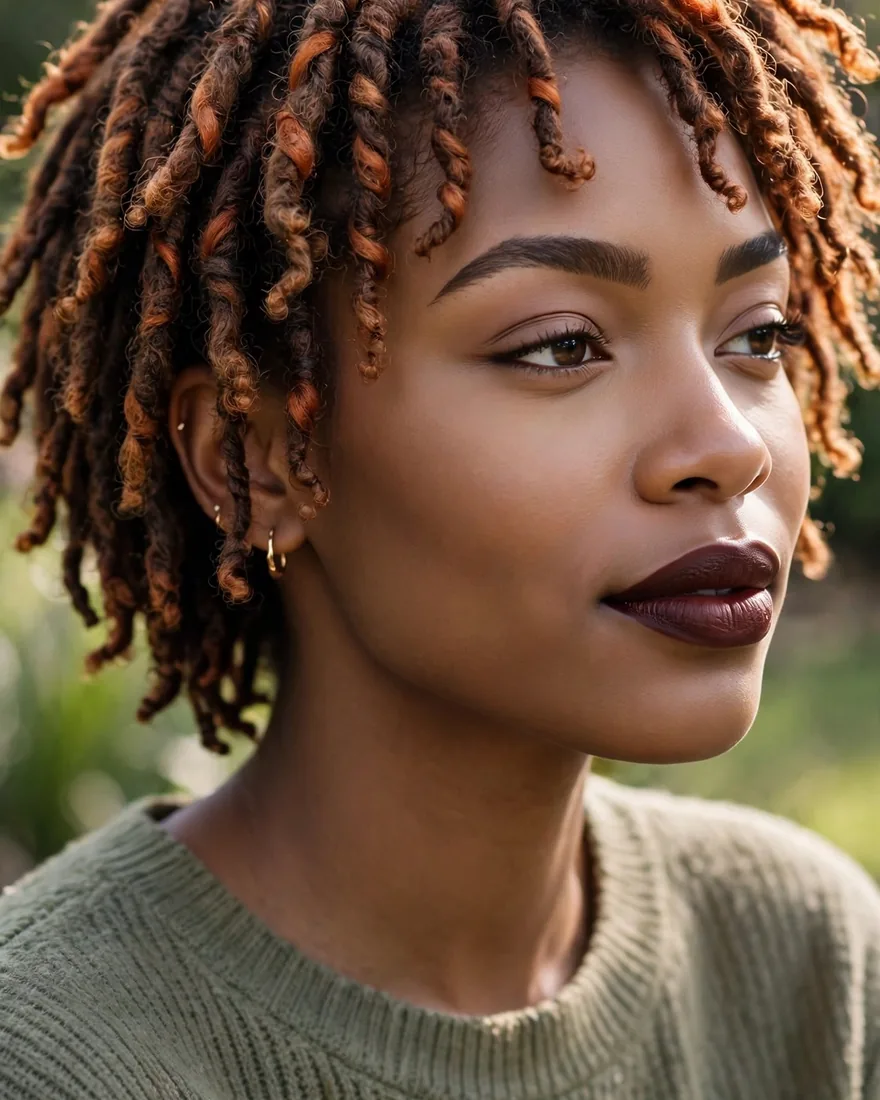
A warm, dimensional blend of soft brown with copper pieces woven through — sunset tones without the shock factor of full red. Copper highlights on brown locs catch light with every movement and flatter warm skin tones beautifully. It is the most wearable of the color looks here: noticeable, but never loud.
Benefits:
- Copper pieces add dimension that makes locs look thicker
- Warm tones flatter golden, olive, and deep skin tones
- Softer grow-out than blonde — the brown base camouflages fading
Pro Tip: Ask for the copper to be painted on the outer locs and around the face rather than all over — partial placement gives the glow with half the chemical exposure and half the upkeep.
How To Style: Wear the bob or shoulder-grazing length loose; the color does the styling work. A shine-enhancing oil makes copper tones glow. Shine is the whole game with loc styles short hair color fans maintain.
Best For: Mature locs; all loc sizes. The easiest fashion color to live with long-term. The most wearable color among loc styles short hair traditionalists try.
How the 13 loc styles short hair fans compare at a glance:
| Style | Loc Stage & Size | Upkeep Level |
|---|---|---|
| Mini Starter Locs | Starter; all sizes | Very low — leave them be |
| Freeform Short Locs | Formed+; thick/medium | Very low — wash and separate only |
| Short Coils with Tapered Sides | Starter+; small/medium | Low — taper touch-ups |
| Neat and Tapered Loc Bob | Mature; medium | Medium — retwist every 4–6 weeks |
| Classic Brown Loc Bob with Layers | Mature; medium/thick | Low — natural color, easy grow-out |
| Blonde Loc Bob | Mature, healthy; medium | High — tone upkeep + deep conditioning |
| Side-Parted Burgundy Locs | Mature; all sizes | Medium — color refresh, cool washes |
| Spiral Curl Locs with Highlights | Mature; medium | High per wear — occasion styling |
| Burgundy Locs with Side Bangs | Mature; small/medium | Medium — fringe needs refreshing |
| Undercut Loc Bob | Mature; medium/thick | Medium — clipper upkeep on shave |
| Short Loc Pompadour | Semi-mature+; medium | Medium — restyle every few days |
| Curly End Locs | Starter+; all sizes | Low — ends need moisture, not retwists |
| Soft Brown and Copper Locs | Mature; all sizes | Low to medium — gentle color fade |
How to Choose the Right Short Loc Style for Your Loc Stage and Size
Your loc stage decides more than any photo you bring to the salon — match the style to the stage first and you have the whole secret behind loc styles short hair experts recommend. In the starter phase (roughly the first six months), locs are still meshing — styles that pull, pin tightly, or demand sleek roots will either fall apart or, worse, cause breakage. Stick to low-manipulation looks: headband tucks, loose half-up styles, small space buns, and coils that do not fight the texture. The wrong stage match is why most loc styles short hair beginners attempt fall apart by evening. Semi-mature locs (six months to a year) hold retwists and simple updos. Fully mature locs (a year and beyond) handle color, rod sets, pompadours, and structured bobs.
Loc size matters just as much. Microlocs — the smallest size — behave almost like loose natural hair: they are versatile, take styles well, and need gentler tension because each loc is thin. Medium locs are the most forgiving all-rounders and suit nearly every style on this list. Thick locs make fewer, chunkier statements; they look incredible in bobs and freeform styles but resist fine detail work like intricate pinning. When browsing short hair inspiration generally, remember that loc density and weight change how any cut behaves — and the stage honesty in natural hair styles guides applies double to locs, since you cannot simply restyle tomorrow if a look fails.
What to Ask Your Loctician: Parts, Retwist Schedule, and Tension
A good loctician consultation covers three things before any styling begins: parting, retwist schedule, and tension. Ask what parting pattern suits your head shape and desired fullness — diamond parts create volume, square parts look neat and uniform, and triangle or freeform parting gives an organic feel. Ask how often they recommend retwisting for your hair: the honest answer for most loc wearers is every four to six weeks, and anyone pushing two-week retwists is selling you traction alopecia. Ask directly about tension — retwists should never hurt, throb, or leave bumps along the hairline.
Bring photos, but also bring honesty about your routine. The loc styles short hair locticians see most often are the ones they can execute best, so ask what they recommend for your stage. If you will not sit for maintenance more than once a month, say so — your loctician can steer you toward freeform-friendly or low-manipulation styles instead of looks that demand constant upkeep. Ask which styles they would avoid for your loc stage; a trustworthy loctician will talk you out of bleach on six-month-old locs or a tight pompadour on fragile edges. The consultation habits that protect braided styles apply here too — the tension warnings in cornrows natural hair care are the same warnings loc wearers need to hear.
Short Loc Care Routine: Moisture, Washing, and Night Protection
Short locs need a simpler routine than long ones, but the fundamentals are non-negotiable. Wash every one to two weeks with a residue-free or clarifying shampoo — product buildup is the enemy of healthy locs, and short locs show buildup faster because there is less hair to hide it. In the first few months, avoid heavy conditioners that cause unraveling; a light leave-in on the ends is enough. An apple cider vinegar rinse every month or two dissolves buildup that shampoo misses. Always dry locs completely before tying them up — damp locs tied back develop mildew, and the smell is unmistakable.
Moisture is a light, frequent habit, not a heavy weekly event. Consistency beats intensity — the loc styles short hair veterans keep for years all share simple routines. A daily or every-other-day mist of water followed by a light oil (jojoba and coconut are the classics) keeps locs supple without buildup. At night, a satin bonnet or silk scarf is mandatory — cotton pillowcases wick moisture out and create lint that embeds in locs. Stop fidgeting with your locs during the day; constant twisting and pulling weakens the same roots you are trying to strengthen. Deep condition sparingly once locs are mature, and keep heat styling occasional — short locs dry out faster than long ones because every loc is mostly exposed ends.
FAQs
How long does it take for starter locs to lock?
Most hair types take six to eighteen months to fully lock, with tighter curl patterns often locking faster and straighter textures taking longer. You will see budding — small firm knots forming inside the twists — around months two to four, which is the first real sign of locking. Patience matters more than products here; no oil or gel meaningfully speeds up the timeline. Focus on the starter-friendly loc styles short hair newcomers can maintain instead.
How often should I retwist my short locs?
Every four to six weeks is the standard for most loc wearers. Retwisting more often — especially every two weeks — creates constant tension at the roots that leads to thinning edges and traction alopecia over time. Short locs do not need more frequent retwists than long ones; the schedule is about root health, not length.
Can I color my locs blonde or burgundy without damage?
Burgundy and copper are lower-risk because they usually need less lift, while blonde requires bleach and is the riskiest color move on locs. Locs absorb bleach unevenly due to their density, which creates weak spots — so color should only be done by a colorist experienced with locs, on mature healthy locs, with a strand test first. Expect colored locs to need deeper, more frequent conditioning.
What is the difference between microlocs and regular locs?
Microlocs are simply much smaller locs — sometimes several hundred on one head — installed with interlocking or tiny twists rather than palm-rolling. They behave more like loose natural hair: more styling versatility, lighter feel, and a fuller look. The trade-off is installation time, higher cost, and the need for gentler tension since each loc is thin and fragile.
How do I keep short locs moisturized?
Mist with water daily or every other day, then seal with a light oil like jojoba — water first, oil second, because oil alone does not moisturize. Avoid heavy butters and waxes that cause buildup inside the loc. Short locs dry out faster than long ones since nearly every loc is exposed ends, so consistency beats heavy weekly treatments. Simple routines keep the loc styles short hair wearers maintain looking fresh.
Can I wear locs to a professional workplace?
Yes — neat, shaped styles like the tapered loc bob read as polished in any professional setting. Keep parts clean, roots maintained on a sensible retwist schedule, and the silhouette intentional rather than overgrown. Where bias exists it is about grooming standards, not the locs themselves, so a well-kept style answers it.
Do I need to retwist if I want freeform locs?
No — freeform locs form without any retwisting by design. You still wash, moisturize, and separate roots that try to merge into one large loc, but you skip palm-rolling and retwists entirely. The one maintenance rule is root separation at every wash, which keeps individual locs distinct.
How do I protect short locs at night?
Wear a satin bonnet or wrap with a silk scarf every night — cotton pillowcases pull moisture out of locs and shed lint that embeds in them. Make sure locs are fully dry before covering them, since damp locs under a bonnet can develop mildew. In the morning, a quick water mist and light oil refreshes them without a full restyle.
Short locs reward honesty: honest about your stage, honest about your retwist schedule, and honest about what color your hair can handle. Pick the style that matches where your locs are right now — not where you wish they were — and the grow-out takes care of itself. These 13 loc styles short hair lovers have made classics prove that short locs are not a waiting room for length; they are a style destination of their own.