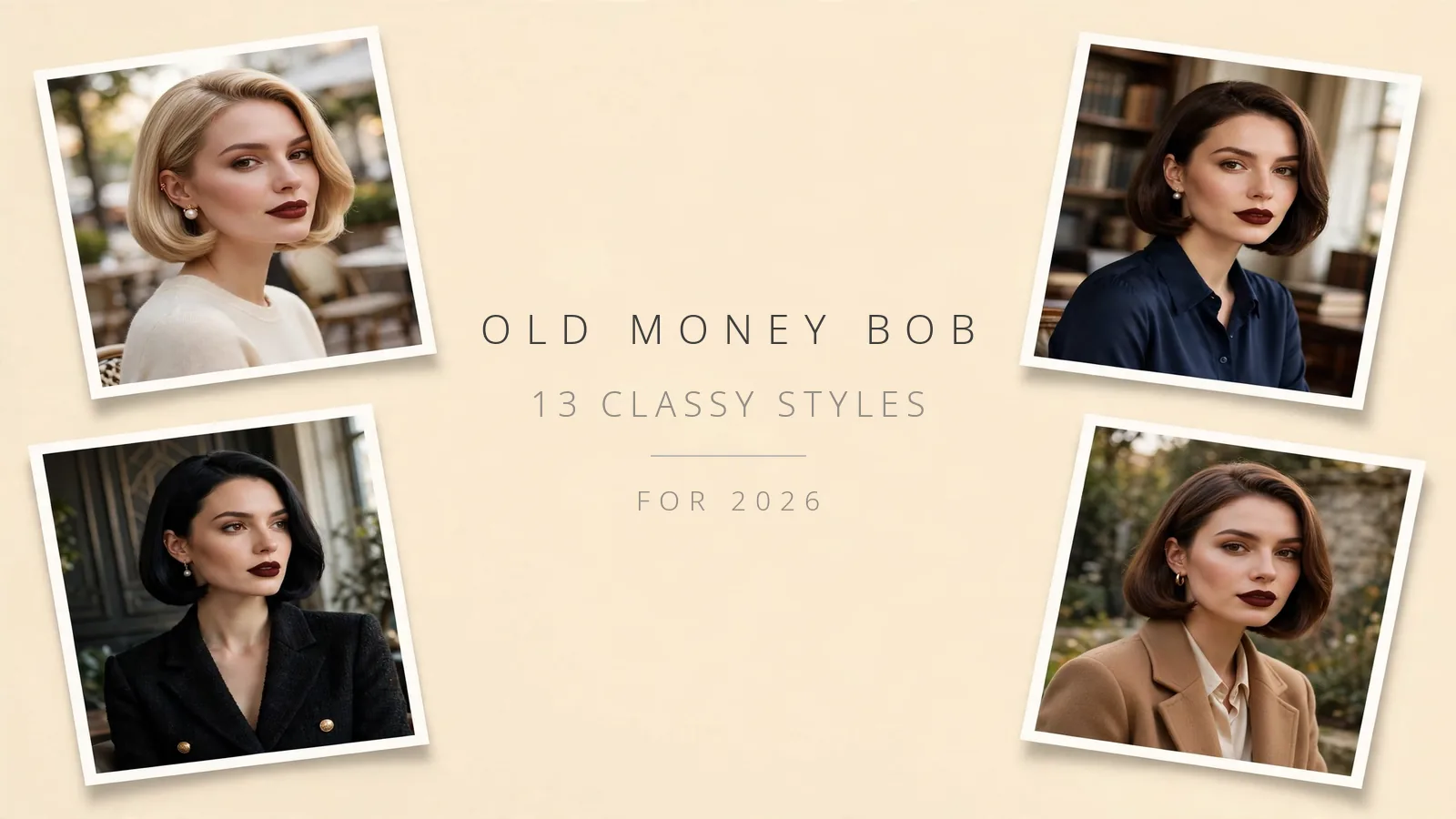
Old Money Bob – 13 Classy Styles for 2026
Most bobs fail not because the cut is wrong but because the finish is — limp ends, a fuzzy perimeter, and color that looks tired instead of expensive. The old money bob trend exists precisely to solve that: it is less about a radical new shape and more about a disciplined, glossy, blunt cut that looks deliberate from every angle.
The good news is that the formula is learnable, and it adapts to more hair types than the glossy photos suggest. Below are 13 styles worth copying, each with honest styling notes, followed by the decision guides no gallery covers: how to pick the right version for your face and hair type, how it differs from the Italian and baroque bobs, and the at-home bouncy blowout routine that makes the whole thing work.
Table of Contents
- 13 Old Money Bob Styles Worth Copying
- Classic Chin-Length Old Money Bob
- Polished Blonde Old Money Bob
- Glossy Brunette Old Money Bob
- Old Money Bob with Curtain Bangs
- Deep Side-Parted Old Money Bob
- Sleek Center-Parted Old Money Bob
- Rounded Old Money Bob
- Softly Layered Old Money Bob
- Chin-Length Bob with Subtle Waves
- Jet Black Old Money Bob
- Curly Old Money Bob
- Old Money Lob at Collarbone Length
- Low-Maintenance Old Money Bob
- How to Choose the Right Old Money Bob for Your Face Shape and Hair Type
- Old Money Bob vs Italian Bob vs Baroque Bob: Which One Is Right for You
- How to Style the Bouncy Old Money Blowout at Home
- Old Money Bob FAQs
- What is the old money bob, exactly?
- How is the old money bob different from the Italian bob?
- Does the old money bob work on thin hair?
- Can I get an old money bob with curly or coily hair?
- How often do I need a trim to keep the clean perimeter?
- How do I do the bouncy blowout at home without a stylist?
- Is the old money bob a good choice for women over 50?
- Will the old money bob suit a round face?
13 Old Money Bob Styles Worth Copying
1. Classic Chin-Length Old Money Bob

This is the reference point every other version is measured against: a one-length bob that ends right at the chin with a crisp, clean perimeter and barely any layering. The blunt baseline is what gives it that expensive, deliberate finish instead of a grown-out feel. Because there is no layering to hide behind, the cut forces you to keep the hair healthy — regular trims and a weekly mask are part of the look, not optional extras.
Benefits:
- Instantly reads as polished, even with minimal styling
- The blunt perimeter makes fine hair look noticeably thicker
- Grows out evenly, so trims can be spaced without looking ragged
- Works for formal settings without any extra effort
Pro Tip: Ask your stylist to cut it dry or nearly dry so the true resting length sits exactly at the chin — wet cutting tends to spring up shorter than expected.
How To Style: Blow-dry with a medium round brush, rolling the ends under slightly for that tucked, bouncy finish. A pea-sized drop of smoothing serum on the mid-lengths keeps the blunt line looking glassy.
Best For: Best for: straight to slightly wavy hair and oval or heart-shaped faces that want the archetypal quiet-luxury silhouette.
2. Polished Blonde Old Money Bob
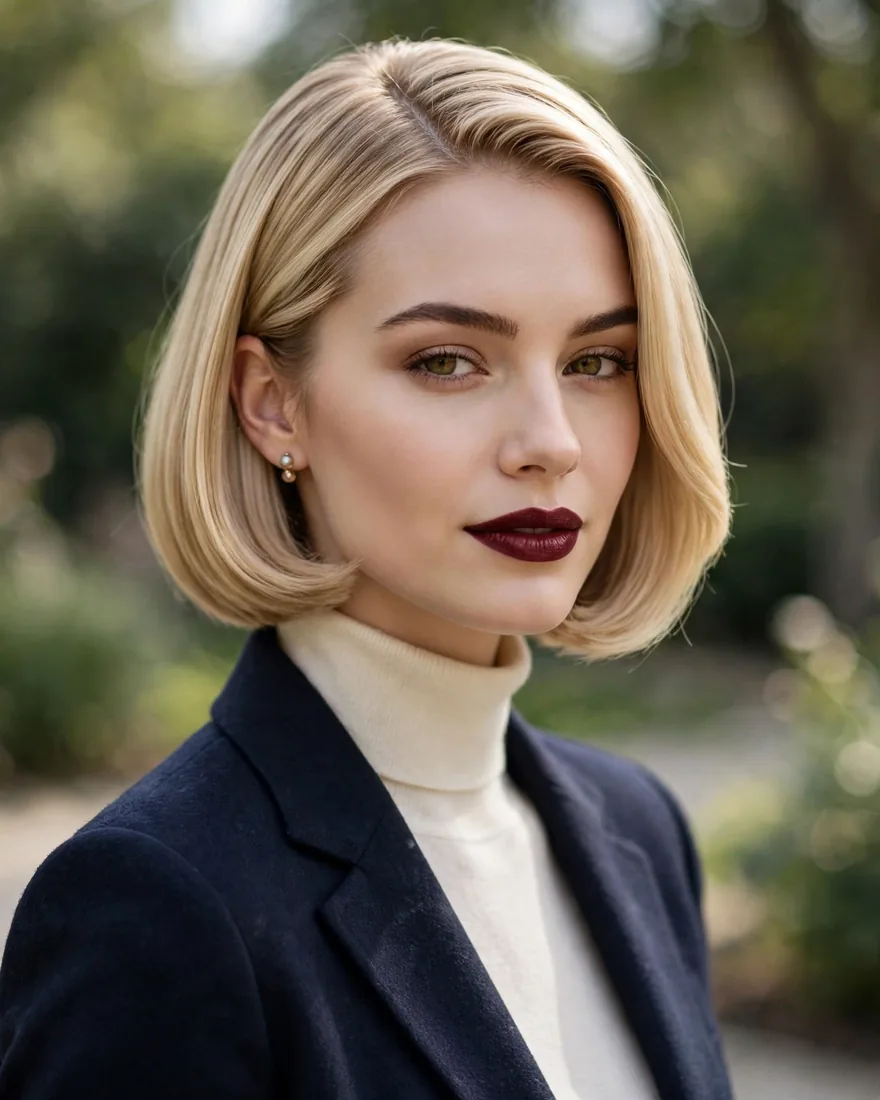
A champagne or golden blonde base with soft, barely-there dimension keeps this version luminous without ever looking streaky. The color does the heavy lifting here — the cut stays simple and one-length so the shine reads as healthy rather than processed. Ask for the tone to be kept slightly warm; icy platinum can look striking but it reads more editorial than old money, which leans golden and soft.
Benefits:
- Blonde reflects light, which flatters mature skin and brightens the face
- The simple cut lets expensive-looking color stay the star
- Photographs beautifully in natural light
- Pairs well with the signature bouncy blowout
Pro Tip: Request a single-process or subtle balayage tone rather than heavy foils; the old money look is about evenness, not contrast.
How To Style: Use a purple shampoo once a week to keep the blonde creamy instead of brassy, and finish every blowout with a cool shot to seal the cuticle. For related inspiration, see these honey blonde inspiration.
Best For: Best for: natural blondes or light brunettes who can lift without damage, and anyone who wants maximum polish.
3. Glossy Brunette Old Money Bob
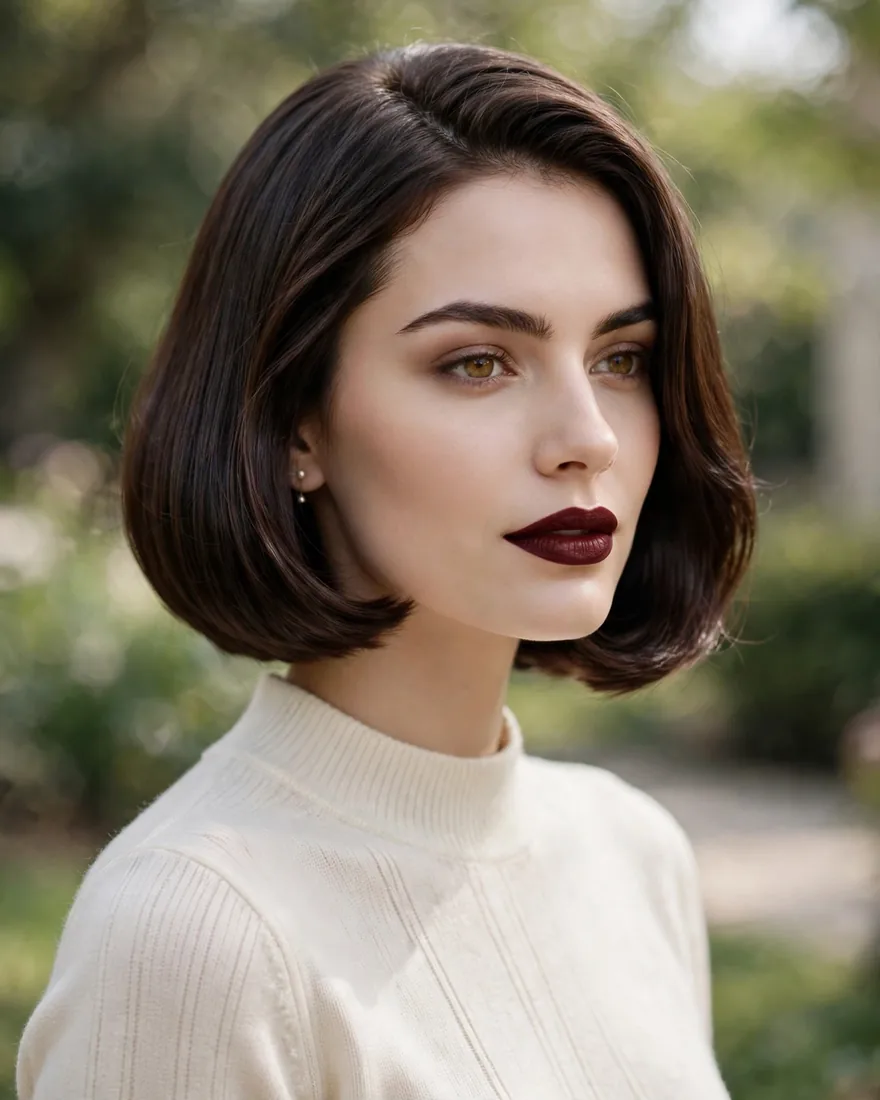
Espresso, chocolate or deep mocha tones give this bob its depth, and a gloss treatment on top makes the color look lit from within. Dark hair shows the blunt perimeter at its sharpest, which is exactly why this version photographs so crisply. If your natural color is medium brown, a single-process espresso dye plus gloss gets you there in one appointment; going darker than two levels from your base needs a fill first so it does not fade greenish.
Benefits:
- Dark color makes the blunt line look razor-sharp and intentional
- Gloss treatments add shine without changing your base color
- Lower upkeep than blonde — roots blend more forgivingly
- Universally flattering across skin tones
Pro Tip: Book a clear or espresso gloss every 6 to 8 weeks; it fades gradually and keeps the color looking freshly done.
How To Style: Blow-dry smooth with a paddle brush first, then round-brush the ends under. A shine spray on dry hair completes the glassy effect. For related inspiration, see these brunette takes on the old money look.
Best For: Best for: natural brunettes who want richness without frequent salon visits.
4. Old Money Bob with Curtain Bangs
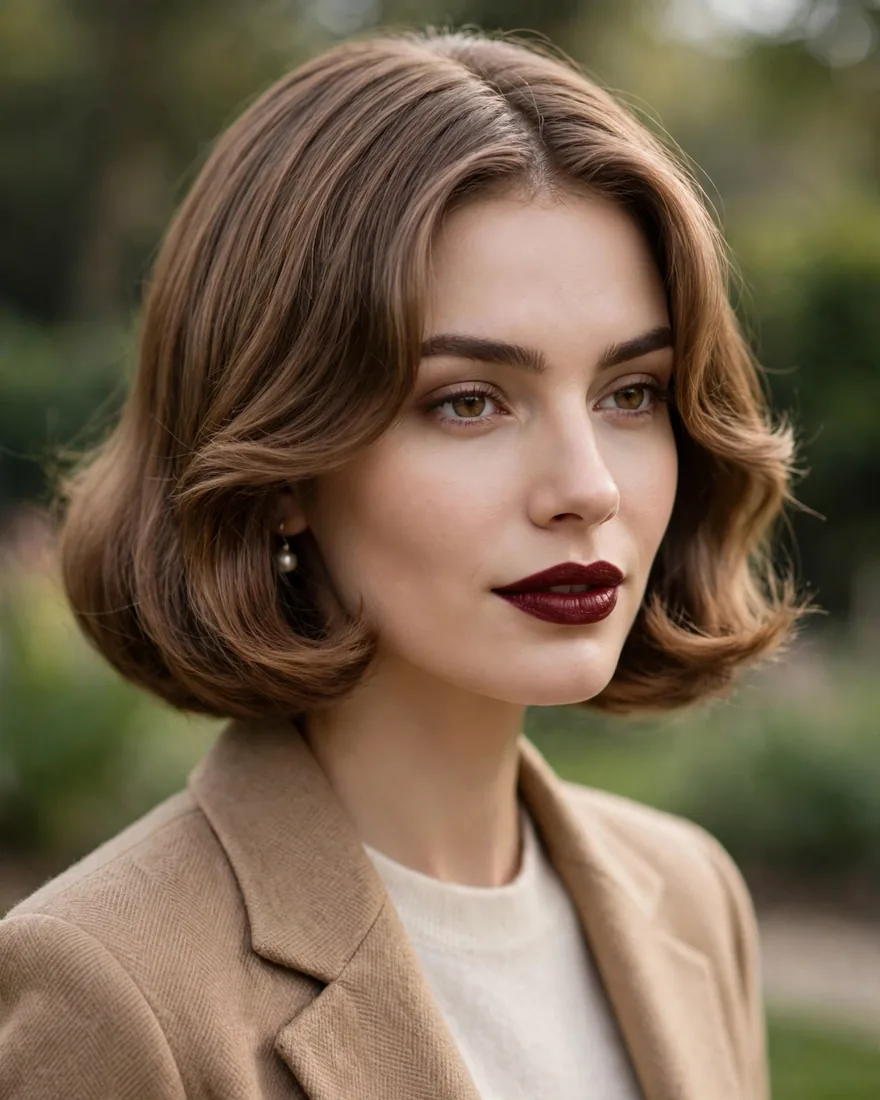
Soft curtain bangs parted down the middle melt into the chin-length bob and frame the cheekbones without cutting across the forehead. They add just enough movement around the face to soften the blunt line while keeping everything refined. The trick is the length — curtain bangs for this look should start at the cheekbone and blend into the bob, never sit above the brow.
Benefits:
- Curtain bangs soften strong jawlines and wide foreheads
- Grow out gracefully — no awkward in-between stage
- Add face-framing movement without losing the clean silhouette
- Can be pinned back on days you want the classic look
Pro Tip: Keep the bangs long enough to tuck behind the ears; too-short curtain bangs read more French-girl than old money.
How To Style: Blow-dry the bangs forward and away from the face with a small round brush, then part them in the middle once cool so they fall softly. For related inspiration, see these bang styles.
Best For: Best for: oval, long and heart-shaped faces that benefit from width at the cheekbones.
5. Deep Side-Parted Old Money Bob
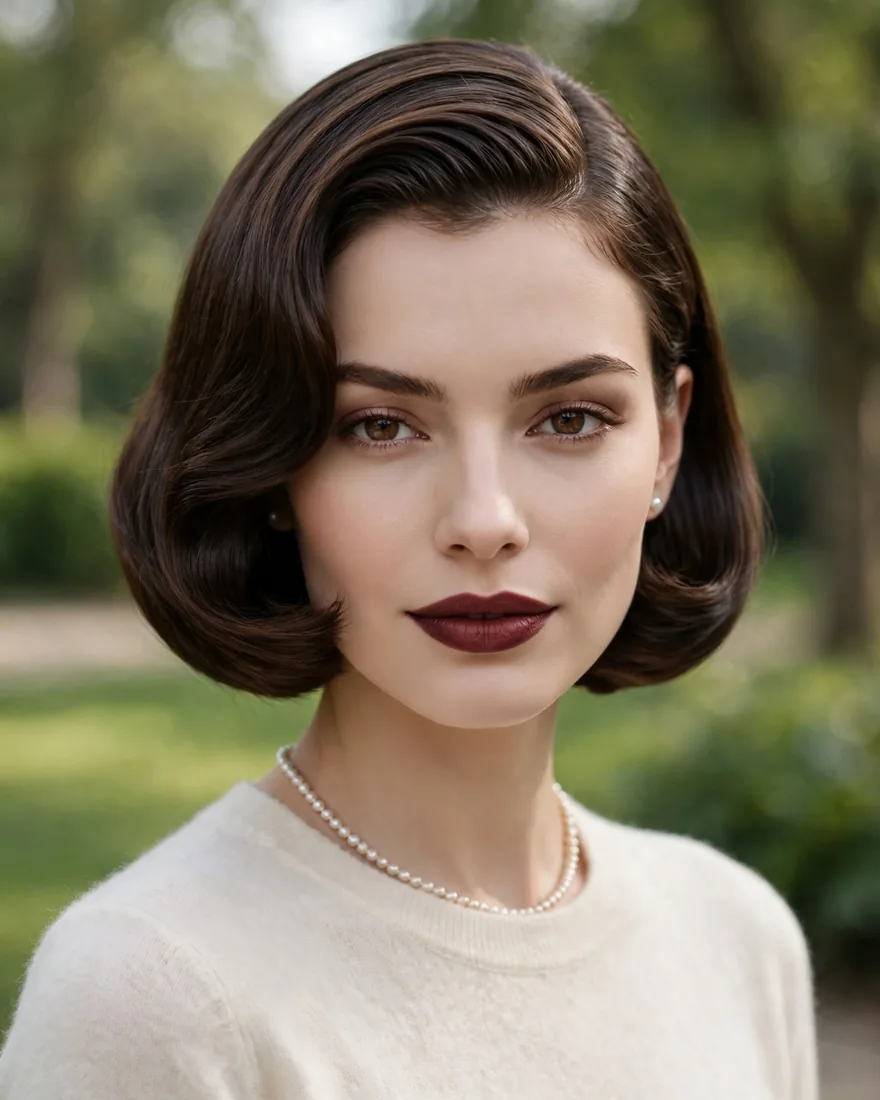
Moving the part deep to one side gives the bob instant volume at the crown and a dramatic sweep across the forehead. It is the same cut as the classic, but the parting changes the whole attitude — more editorial, still completely polished. Train the part for a week by blow-drying it into place daily; hair has memory, and a deep side part fought every morning will never sit right.
Benefits:
- Creates the illusion of volume on the heavier side
- Adds asymmetry that flatters round and square faces
- Takes ten seconds and needs no new cut
- Looks especially striking with glossy, dark hair
Pro Tip: Flip your part while hair is still damp and blow-dry in the new direction so it holds without fighting you all day.
How To Style: Use a tail comb to set a clean, deep part, then round-brush the longer side under for a smooth sweep.
Best For: Best for: anyone with a center part rut who wants a fresh look without committing to bangs.
6. Sleek Center-Parted Old Money Bob
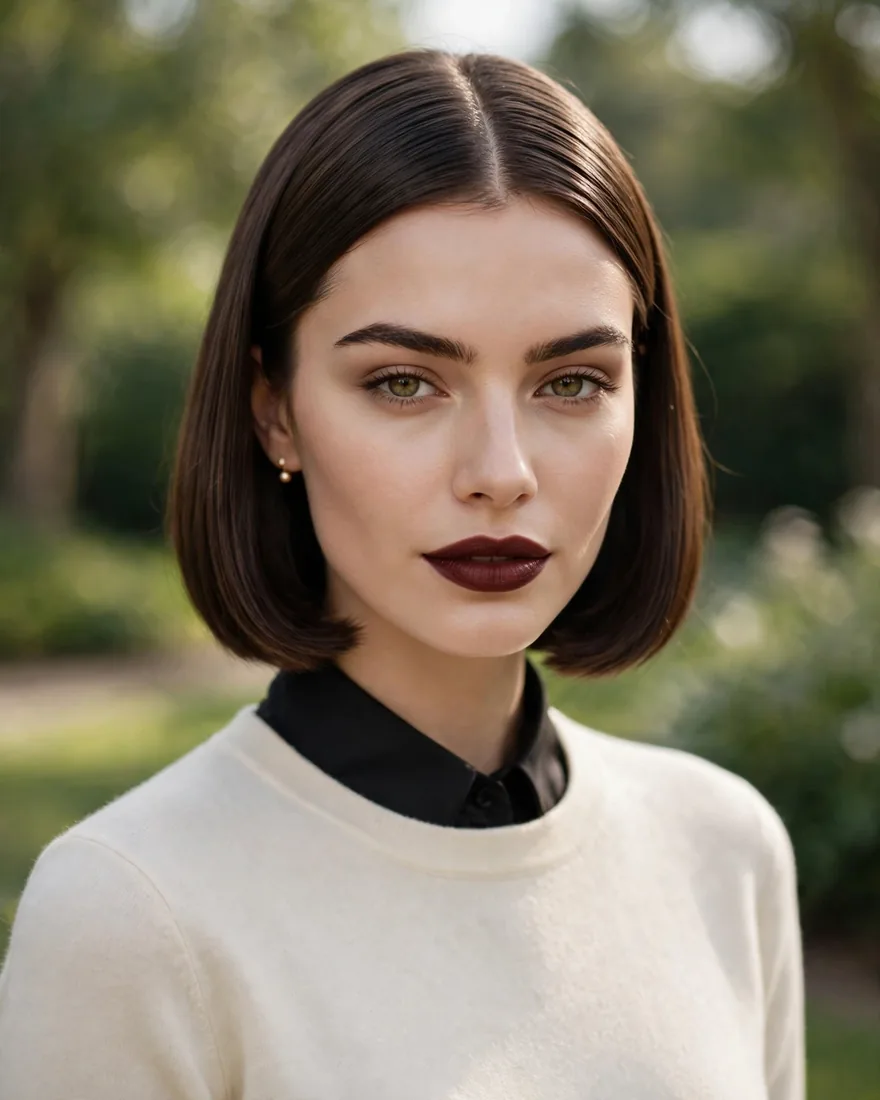
Dead-center part, glassy straight lengths, ends tucked precisely under — this is the most minimal and most demanding version. There is nowhere to hide, so the cut has to be exact and the finish immaculate. This is the version to choose when your hair is naturally straight and obedient — on wavy or cowlick-prone hair it becomes a daily battle that a softer parting would win.
Benefits:
- Maximum symmetry, which reads as deliberate and expensive
- Shows off a precise blunt cut better than any other parting
- Timeless — this styling never dates in photos
- Pairs perfectly with statement earrings since the face is fully open
Pro Tip: A center part only works if your hair is truly smooth; invest in a good flat iron and heat protectant before committing.
How To Style: Straighten in thin sections, then run a flat iron curved under at the very ends to create that tucked-under line.
Best For: Best for: straight hair with an even hairline and balanced features.
7. Rounded Old Money Bob
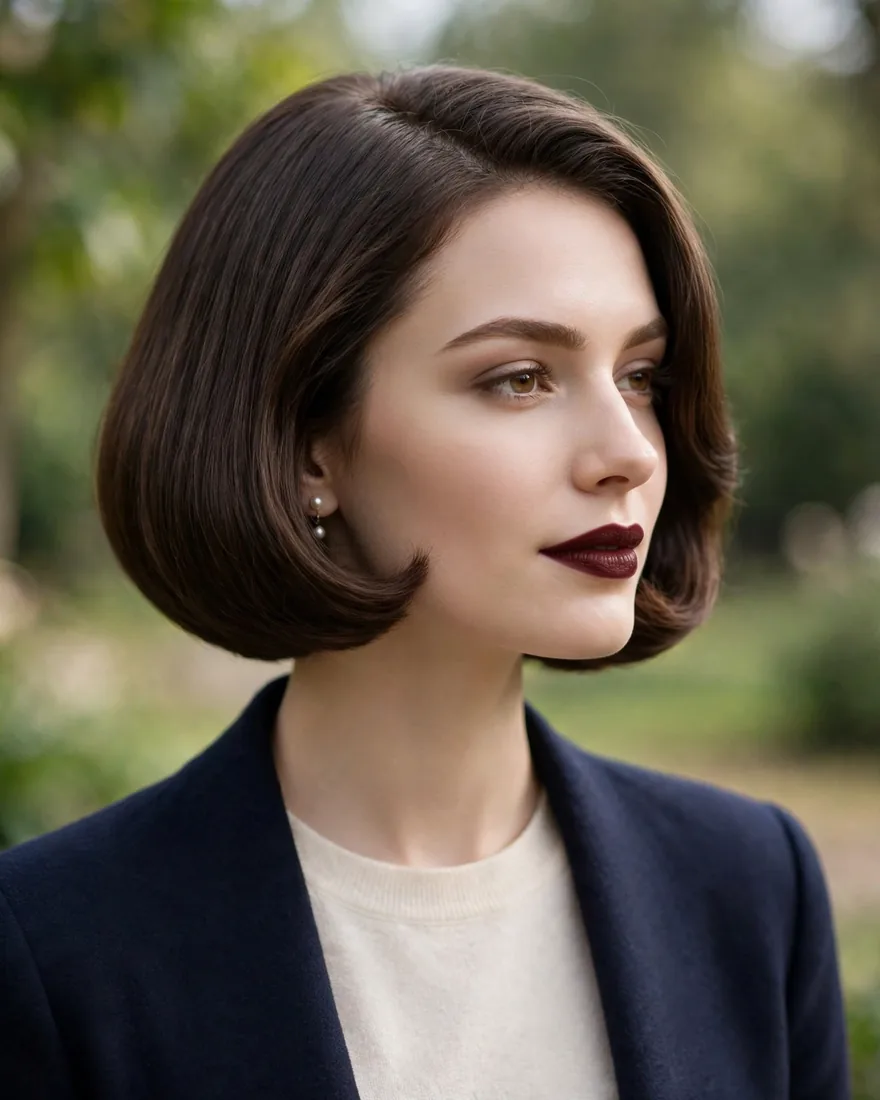
The perimeter curves gently inward all the way around, creating a soft, almost helmet-like roundness that hugs the jawline. It is the most vintage-leaning of the styles here, echoing the old Hollywood bobs that started the trend. The curve should be subtle, not a full 1960s flip — think tucked-under ends with extra roundness through the mid-lengths rather than a dramatic curl.
Benefits:
- The rounded shape adds width that flatters long, narrow faces
- Looks intentionally styled even when air-dried
- The curved ends bounce beautifully with movement
- Softens angular features without any layers
Pro Tip: The roundness comes from the cut, not the styling — ask for a curved perimeter rather than trying to force it with a round brush.
How To Style: Blow-dry with a large round brush, rolling everything under in one continuous motion for a uniform curve.
Best For: Best for: long or oblong face shapes that want the illusion of width.
8. Softly Layered Old Money Bob
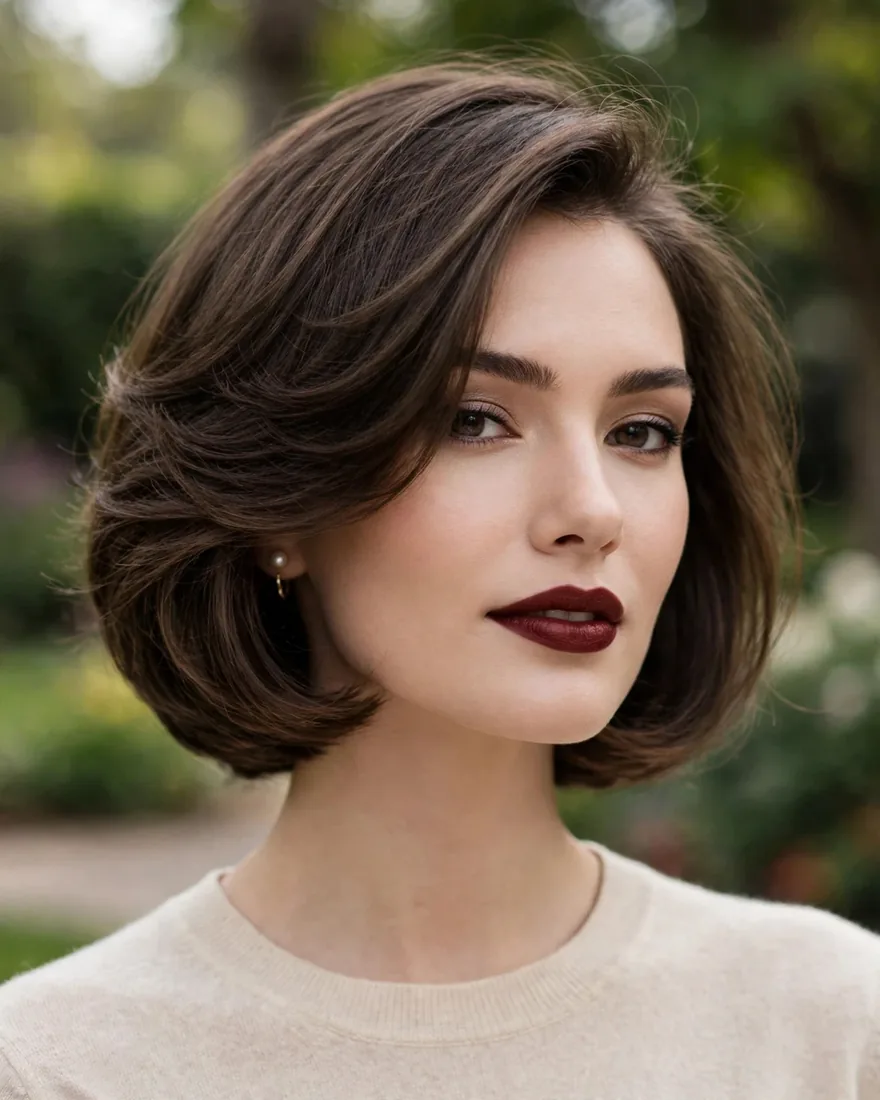
A few barely-there internal layers remove bulk without breaking the clean perimeter. From the outside it still reads as one length, but it moves more and sits flatter on thick hair that would otherwise triangle out. This is the version stylists reach for most often in real life, because true one-length cuts only behave on fine to medium hair.
Benefits:
- Removes weight on thick hair without visible layering
- Adds natural movement while keeping the blunt outline
- Makes the bob easier to style on wavy textures
- The safest entry point if a true one-length cut intimidates you
Pro Tip: Specify internal layers only — ask your stylist to keep the perimeter completely blunt and untouched.
How To Style: Style as usual with a round brush; the hidden layers will create soft movement on their own. For related inspiration, see these choppier layered bobs.
Best For: Best for: thick or wavy hair that needs weight removed to sit properly.
9. Chin-Length Bob with Subtle Waves

Loose, brushed-out waves give the structured bob a softer, more lived-in feel while the chin-length perimeter keeps it tidy. It is the relaxed weekend version of the classic — polished but not stiff. Keep the waves loose and low, concentrated through the mid-lengths and ends; volume at the crown plus chin-length waves can widen the face in a way the sleek versions never do.
Benefits:
- Waves add texture and volume without extra length
- The most forgiving version if your blowout is not perfect
- Bridges the gap between polished and casual
- Hides minor unevenness in the perimeter as it grows
Pro Tip: Brush the waves out after curling — defined curls read boho, brushed-out waves read old money.
How To Style: Curl 1-inch sections away from the face with a flat iron or curling iron, let cool, then brush through gently with a paddle brush.
Best For: Best for: special occasions and anyone who finds the super-sleek versions too severe.
10. Jet Black Old Money Bob
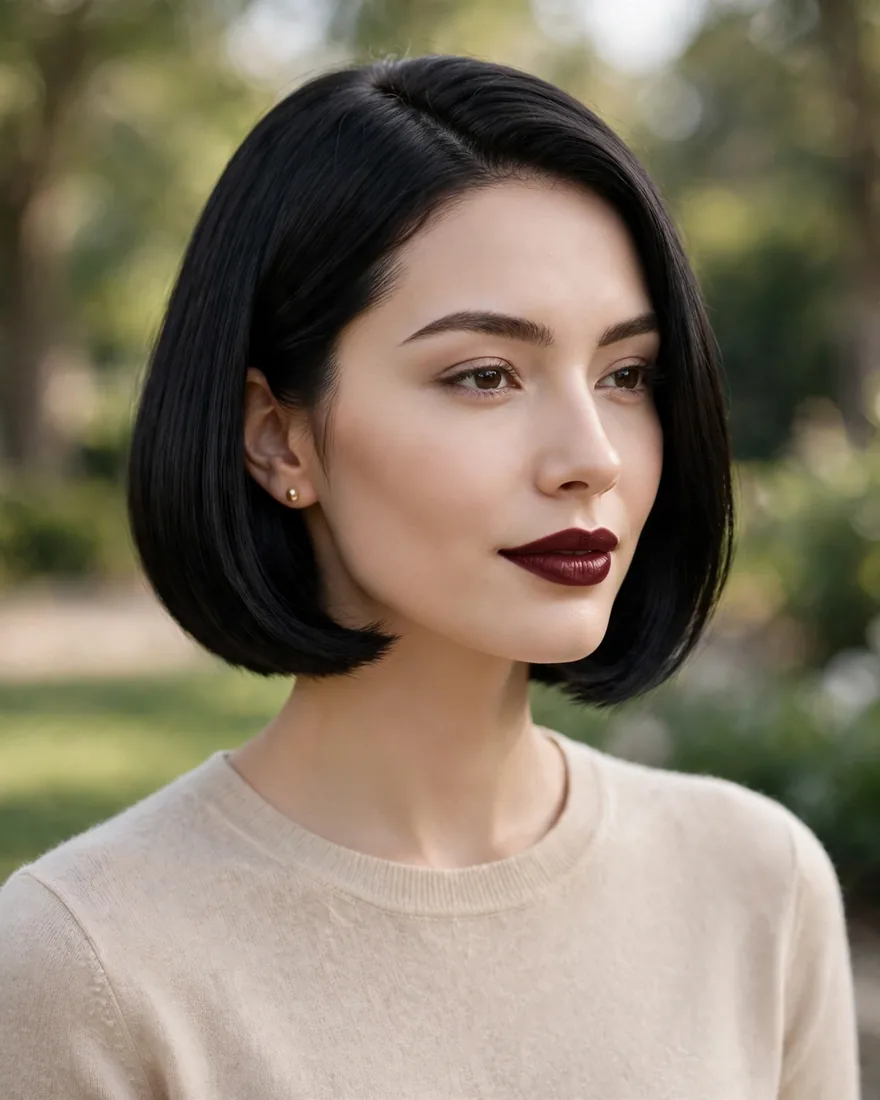
The darkest possible black turns the bob into a statement — the blunt line looks almost graphic against the skin. It demands confidence and maintenance, but nothing else on this list looks this striking. Fair skin with cool undertones carries it best, and a bold lip turns the whole look intentional rather than severe.
Benefits:
- Maximum contrast makes the blunt perimeter look razor-sharp
- Jet black reads as intentional and fashion-forward
- Makes eyes and bone structure stand out dramatically
- The glossiest possible finish when healthy
Pro Tip: Jet black fades fastest on previously colored hair; a color-depositing conditioner between appointments keeps it deep.
How To Style: Keep it immaculately smooth — any frizz is twice as visible on black hair. Weekly deep conditioning is non-negotiable. For related inspiration, see these razor-sharp bob lines.
Best For: Best for: cool undertones and anyone ready for a bold, high-contrast look.
11. Curly Old Money Bob
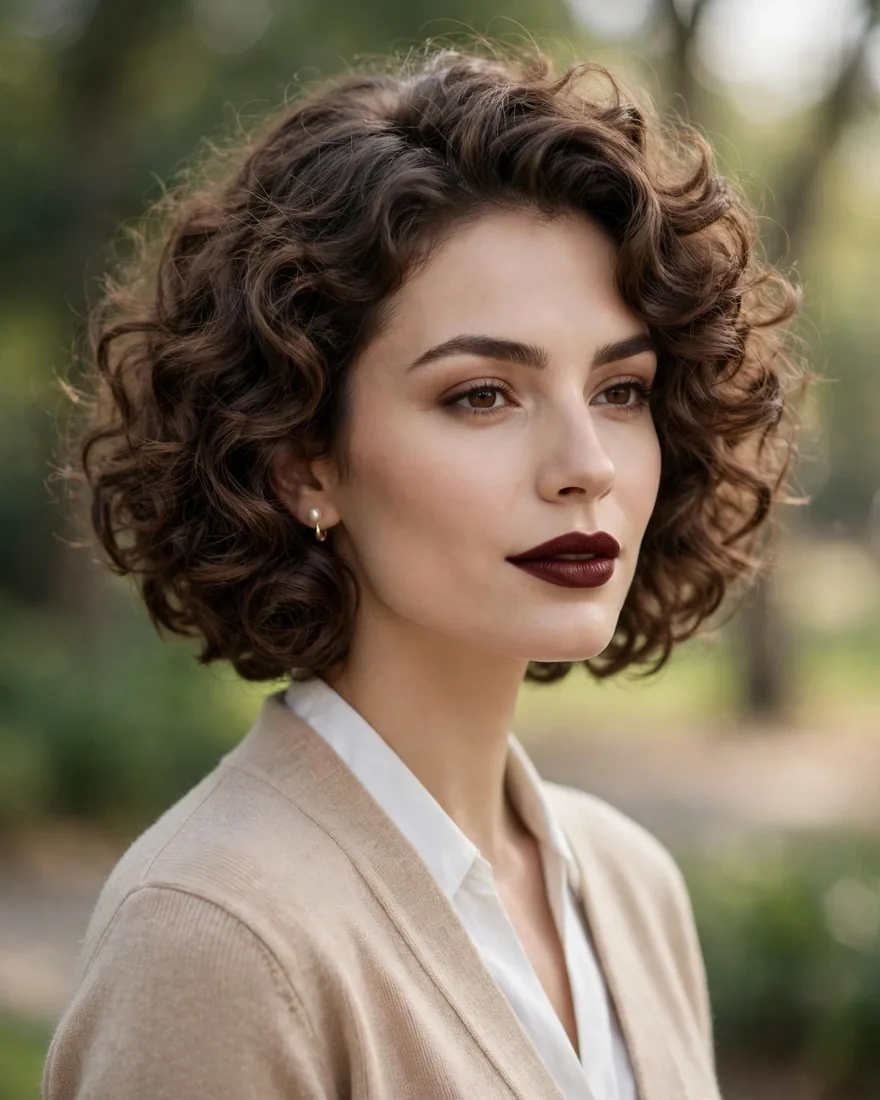
Defined curls cut into a rounded chin-length shape prove the old money aesthetic is not reserved for straight hair. The key is cutting the curls dry so the shape is intentional, then defining them so the finish looks deliberate rather than accidental. Expect the dry cut to take longer and cost more — curl specialists charge for the expertise, and it is worth every penny compared to a wet cut that springs up unevenly.
Benefits:
- Shows the quiet-luxury look works on natural texture
- The rounded shape gives curls a beautiful, even silhouette
- Volume at the right places flatters most face shapes
- Shrinkage means the cut stays neat as curls spring up
Pro Tip: Always cut curly hair dry and in its natural state — a wet cut that looks chin-length can spring to ear-length.
How To Style: Apply curl cream to soaking wet hair, diffuse or air-dry, then fluff at the roots only to keep the defined shape. For related inspiration, see these short curly hairstyles.
Best For: Best for: 2C to 3C curl patterns worn in their natural texture.
12. Old Money Lob at Collarbone Length

All the same rules — blunt perimeter, minimal layering, glossy finish — stretched to collarbone length for anyone not ready to go full chin-length. It keeps the expensive feel with more styling versatility. The lob is also the smartest grow-out vehicle on this list: if you are growing from chin-length, the collarbone stage is where most people give up, and this version makes it look like a choice.
Benefits:
- The safest commitment if chin-length feels too short
- Long enough for low ponytails and half-up styles
- The extra length is forgiving during grow-out
- Suits the widest range of face shapes
Pro Tip: The lob only reads old money if the ends stay blunt — resist the urge to add face-framing layers that thin the perimeter.
How To Style: Style exactly like the classic bob with a round brush; the longer length just needs slightly larger sections. For related inspiration, see these long bob cuts.
Best For: Best for: first-time bob wearers and round faces that benefit from extra length.
13. Low-Maintenance Old Money Bob
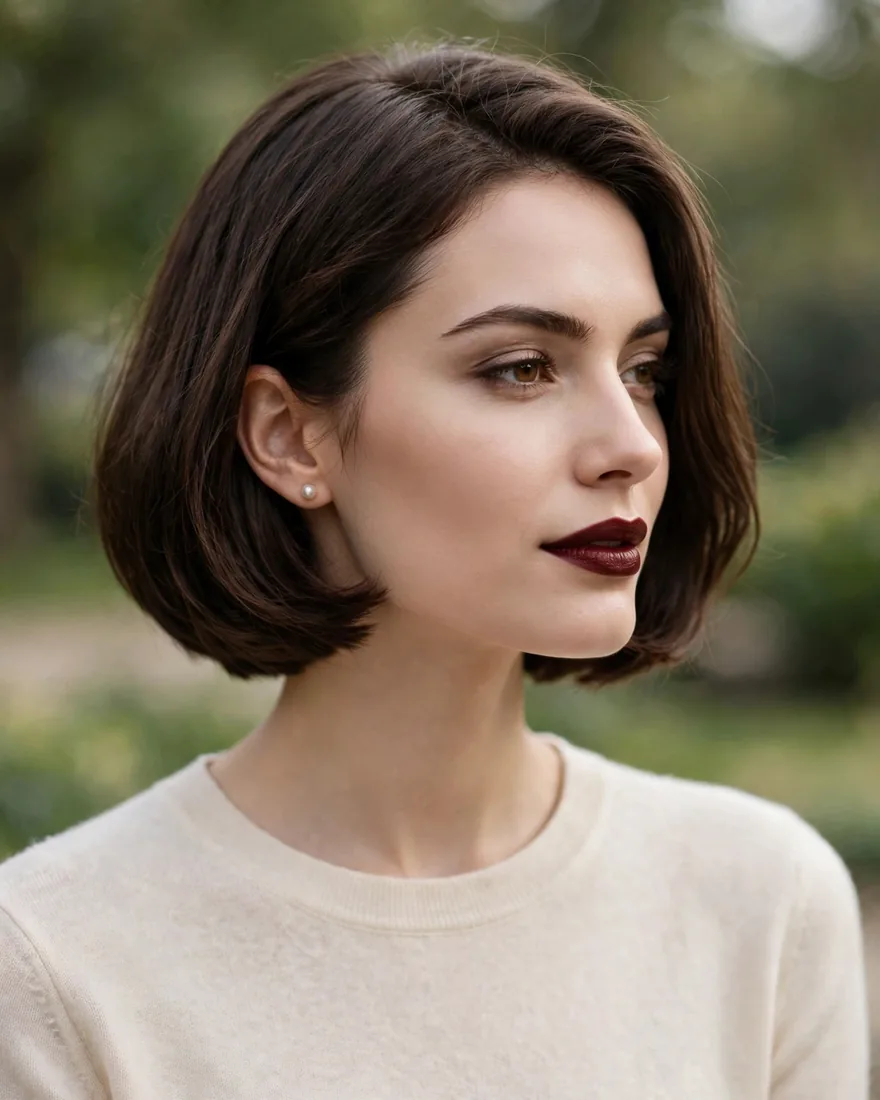
A slightly longer, softer take on the classic with the perimeter just below the chin and enough internal texture to air-dry decently. It will not look as razor-sharp as the classic, but it looks good on day three with almost no effort. Dry shampoo at the roots on day two and a quick smoothing of the ends is genuinely all it needs — this is the honest answer for anyone who loves the aesthetic but not the routine.
Benefits:
- The most realistic option for busy schedules
- Air-dries into a soft, believable shape
- Trims can stretch to 10–12 weeks without looking messy
- Still reads polished in professional settings
Pro Tip: Low maintenance does not mean no maintenance — a gloss treatment twice a year keeps it from looking dull.
How To Style: Rough-dry with your fingers, then smooth just the ends with a round brush for a quick polished finish.
Best For: Best for: new parents, busy professionals, and anyone who washes their hair twice a week or less.
How the 13 styles compare at a glance:
| Style | Signature Detail | Upkeep Level |
|---|---|---|
| Classic Chin-Length | Blunt one-length perimeter | Medium — trim every 6–8 weeks |
| Polished Blonde | Champagne/golden tone, even color | Higher — tone upkeep |
| Glossy Brunette | Espresso/mocha + gloss | Lower — roots blend well |
| Curtain Bangs | Soft middle-parted bangs | Medium — bang trims |
| Deep Side Part | Dramatic crown volume | Low — styling only |
| Sleek Center Part | Glass-straight, tucked ends | Medium — needs smoothness |
| Rounded | Curved inward perimeter | Medium — shape trims |
| Softly Layered | Hidden internal layers | Low — grows out well |
| Subtle Waves | Brushed-out loose waves | Low — forgiving |
| Jet Black | Graphic dark contrast | Higher — color upkeep |
| Curly | Dry-cut rounded shape | Medium — curl routine |
| Old Money Lob | Collarbone blunt length | Low — versatile |
| Low-Maintenance | Softer, longer perimeter | Lowest — 10–12 week trims |
How to Choose the Right Old Money Bob for Your Face Shape and Hair Type
This is not one cut — it is a family of cuts, and picking the right member matters more than picking the right photo. Start with your face shape: round faces do best with the lob or a deep side part that adds length, while long or oblong faces suit the rounded or chin-length classic that adds width. Square faces benefit from the softness of curtain bangs or subtle waves, and heart-shaped faces look best with volume at the jawline rather than the crown.
Then be honest about your hair type, because this is where most attempts at this cut fail. Fine hair needs the true one-length classic with zero layering — any thinning of the perimeter makes it look stringy. Thick hair needs the opposite: internal layers to remove the triangle effect while keeping the blunt outline. Wavy hair sits beautifully in the softly layered or subtle-wave versions, and curly hair needs a dry cut into the rounded shape. Match the cut to the hair you actually have, not the hair in the reference photo, and the style practically maintains itself. One more filter: your lifestyle. If you swim regularly, the chlorine will punish blonde versions; if you run daily, the lob stays put in a ponytail while the chin-length classic will not. The right choice is the one you will actually maintain.
Old Money Bob vs Italian Bob vs Baroque Bob: Which One Is Right for You
These three get confused constantly, and choosing wrong is the most common regret I see. This one is the strictest: chin to collarbone length, blunt one-length perimeter, minimal layering, glossy bouncy finish — the whole point is restraint. The Italian bob is its chunkier cousin: similar length but with more texture and chunky ends, worn messier and more undone, with a distinctly 1960s feel. The baroque bob is the most dramatic: big, rounded, voluminous with lots of body and a vintage old-Hollywood curve.
Choose it if your style is minimal and you want polish with the least daily effort. And do not let a stylist talk you into a hybrid — a textured take on this look is just an Italian bob with a fancier name, and you will have paid for a label instead of a decision. Choose the Italian if you like texture and do not mind a bit of mess. Choose the baroque if you love volume and are willing to spend time with rollers. If you are deciding between them, blonde takes on the old money aesthetic can also help you see how color changes the same idea — but for the cut itself, restraint is the old money signature.
How to Style the Bouncy Old Money Blowout at Home
The bouncy blowout is the entire illusion — the cut is simple, the finish is everything. Start with damp hair and a volumizing mousse worked through the roots only. Rough-dry until about 80 percent dry, then work in sections with a medium round brush: lift at the root, roll the brush under through the mid-lengths, and curve the ends under as you pull through. The classic mistake is drying the ends first; always finish at the ends so they set smooth.
For extra bounce, the jumbo roller method works better than any brush trick. While each section is still warm from the blow-dryer, roll it up onto a large velcro roller, clip, and leave everything to cool completely — at least 15 minutes. Remove the rollers, flip your head upside down once, and brush through gently with a paddle brush. Finish with a light shine spray, never a heavy oil, which drags the bounce down. The whole routine takes about 20 minutes once you have done it twice, and it is what separates this cut from just a short haircut. If rollers feel like too much, a large round brush plus a cool-shot finish gets you 80 percent of the way there — the non-negotiable part is setting the shape while the hair cools, whichever tool you use.
Old Money Bob FAQs
What is the old money bob, exactly?
The old money bob is a chin-to-collarbone length bob with a blunt, one-length perimeter, minimal layering and a glossy, bouncy blowout finish. The name comes from the quiet-luxury aesthetic — it looks expensive because of the precision of the cut and the health of the hair, not because of dramatic color or texture.
How is the old money bob different from the Italian bob?
This cut is stricter and more polished: blunt one-length ends, minimal layers, sleek bouncy finish. The Italian bob has chunkier, more textured ends and is worn messier and more undone. If you want restraint and polish, go old money; if you want texture and insouciance, go Italian.
Does the old money bob work on thin hair?
Yes — it is actually one of the best cuts for thin hair, because the blunt one-length perimeter makes ends look thicker. The key is zero layering and no thinning of the perimeter. Ask your stylist to keep every bit of weight at the ends, and the cut will do the volumizing work for you.
Can I get an old money bob with curly or coily hair?
You can, but it needs a curl-specialist cut — dry-cut into a rounded shape so shrinkage is accounted for. The finish will be defined curls rather than a bouncy blowout, which is a beautiful interpretation of the look. Avoid stylists who want to straighten it first and cut wet.
How often do I need a trim to keep the clean perimeter?
Every 6 to 8 weeks for the classic chin-length version, since the blunt line is the whole point and even half an inch of growth softens it. The lob and low-maintenance versions can stretch to 10 to 12 weeks. Book the next trim before you leave the salon so you never let it slide.
How do I do the bouncy blowout at home without a stylist?
Blow-dry in sections with a medium round brush, rolling ends under, then set each warm section on a jumbo velcro roller and let everything cool completely before removing. Brush through gently and finish with shine spray. It takes about 20 minutes with practice and makes more difference than any product.
Is the old money bob a good choice for women over 50?
It is an excellent choice — the chin-length line lifts the face visually and the polished finish reads as intentional rather than severe. Blonde or glossy brunette versions are especially flattering. Just keep the cut slightly softer around the face if harsh lines bother you.
Will the old money bob suit a round face?
The classic chin-length version can widen a round face, so choose the lob length, a deep side part, or curtain bangs instead — all three add the illusion of length. Keep volume at the crown rather than the sides, and avoid the rounded version, which adds width where a round face least needs it.
This cut rewards discipline over drama: a precise perimeter, healthy shine, and a blowout with actual bounce. Pick the version that matches your real hair type and the face shape you have, keep the trim schedule, and learn the roller routine once — after that, the cut largely takes care of itself. Quiet luxury, it turns out, is mostly just consistency.