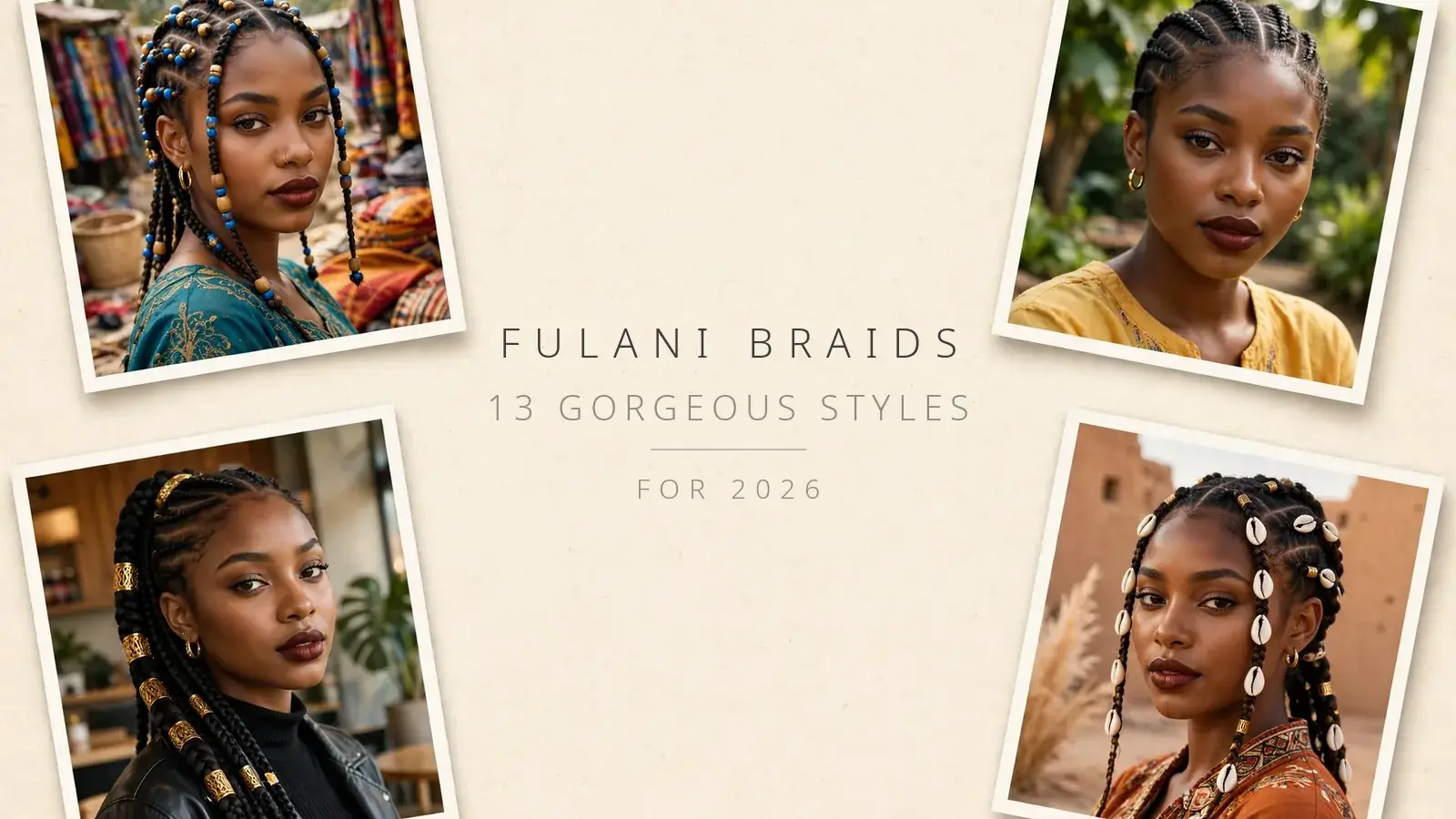
Fulani Braids – 13 Gorgeous Styles for 2026
Fulani braids are one of the most striking protective styles you can wear — but they are also one of the easiest to get wrong. Between the long hours in the chair, the real cost of a skilled braider, and the edge damage that comes from braids installed too tight or weighed down with heavy beads, plenty of people walk into the salon excited and walk out with regrets. If you have ever wondered whether the style is worth the commitment, you are asking the right question.
This guide gives you the honest version: 13 beautiful fulani braids styles, what each one actually demands in time and money, which braid sizes suit your hair density and face shape, and a week-by-week care plan that keeps your edges safe. No hype and no copied captions — just practical advice so you can pick the right style with confidence.
Table of Contents
- 13 Fulani Braid Styles Worth Trying
- 1. Classic Beaded Fulani Braids
- 2. Center-Part Stitch Cornrows
- 3. Long Flowing Knotless Back
- 4. Cowrie Shell Accents
- 5. Golden Thread Wraps
- 6. Jumbo Statement Braids
- 7. Half-Up Fulani Style
- 8. Low Braided Bun
- 9. Ombre-Tipped Braids
- 10. Curly-End Hybrid
- 11. Braided Crown
- 12. Zigzag Part Design
- 13. Mixed-Size Feed-In Braids
- How to Choose the Right Fulani Braids for Your Hair
- Cost, Install Time, and Questions to Ask Your Braider
- Edge-Safe Care: A Week-by-Week Maintenance Plan
- Fulani Braids FAQs
- How long does this style last?
- How much does this style cost?
- Will this style damage my edges?
- How long does the install take?
- Can I wash my hair while wearing them?
- What is the difference between fulani braids and regular cornrows?
- How do I keep braids looking fresh for weeks?
- Is it okay for anyone to wear fulani braids?
13 Fulani Braid Styles Worth Trying
1. Classic Beaded Fulani Braids

The signature look that started it all: neat cornrows across the crown, individual braids flowing down the back, and wooden or metallic beads threaded onto the ends. It is the most recognizable version of the style and still the most requested. The beads add movement and a soft clicking sound that makes the style feel alive.
Benefits:
- Timeless look that photographs beautifully from every angle
- Beads are fully customizable — wood, metal, glass, or cowrie
- Braided ends stay protected, which helps length retention
Pro Tip: Ask for medium-size braids rather than micro ones — they last just as long but put far less tension on your hairline.
How To Style: After install, mist the braids lightly with water, smooth a pea-sized amount of lightweight mousse down each braid, and add a drop of oil to the beads’ thread so the ends slide freely.
Best For: First-timers and medium-density hair; a safe choice if you have never worn braids before.
2. Center-Part Stitch Cornrows

Feed-in stitch braids laid in razor-clean rows with a sharp middle part, giving the front of this fulani braids style a sleek, almost sculpted finish. The stitch technique keeps each cornrow flat against the scalp so the part lines stay crisp for weeks. It is the neatest, most polished take on the classic.
Benefits:
- Flat, lightweight install that sits comfortably under hats and scarves
- Crisp part lines that stay defined far longer than regular cornrows
- Grows out gracefully — the feed-in technique hides new growth
Pro Tip: Bring your own edge control to the appointment and ask the braider to finish the part lines with it — clean parts are what make this style.
How To Style: At night, tie the front down with a silk scarf for the first week to lock the parts in place, then switch to a satin bonnet once everything has set.
Best For: Oval and round face shapes, and fine-to-medium hair that needs a lightweight install. See also our guide to cornrows natural hair.
3. Long Flowing Knotless Back

Cornrows frame the front while the back transitions into long, flowing knotless box braids that move like natural hair. Because knotless braids start with your own hair and feed extensions in gradually, there is no tight knot pulling at the roots. This hybrid construction is one of the most comfortable ways to wear fulani braids long.
Benefits:
- No painful root knots — the gentlest long-length option
- Back braids move and fall naturally instead of sticking out stiffly
- Waist-length drama without the scalp soreness of traditional box braids
Pro Tip: Seal the ends with a quick hot-water dip at the salon — it stops unraveling and gives the braids a softer finish.
How To Style: Gather the back braids into a loose high ponytail for day two and beyond; the knotless roots handle updos without pulling.
Best For: Sensitive hairlines and anyone who wants serious length without the headache.
4. Cowrie Shell Accents
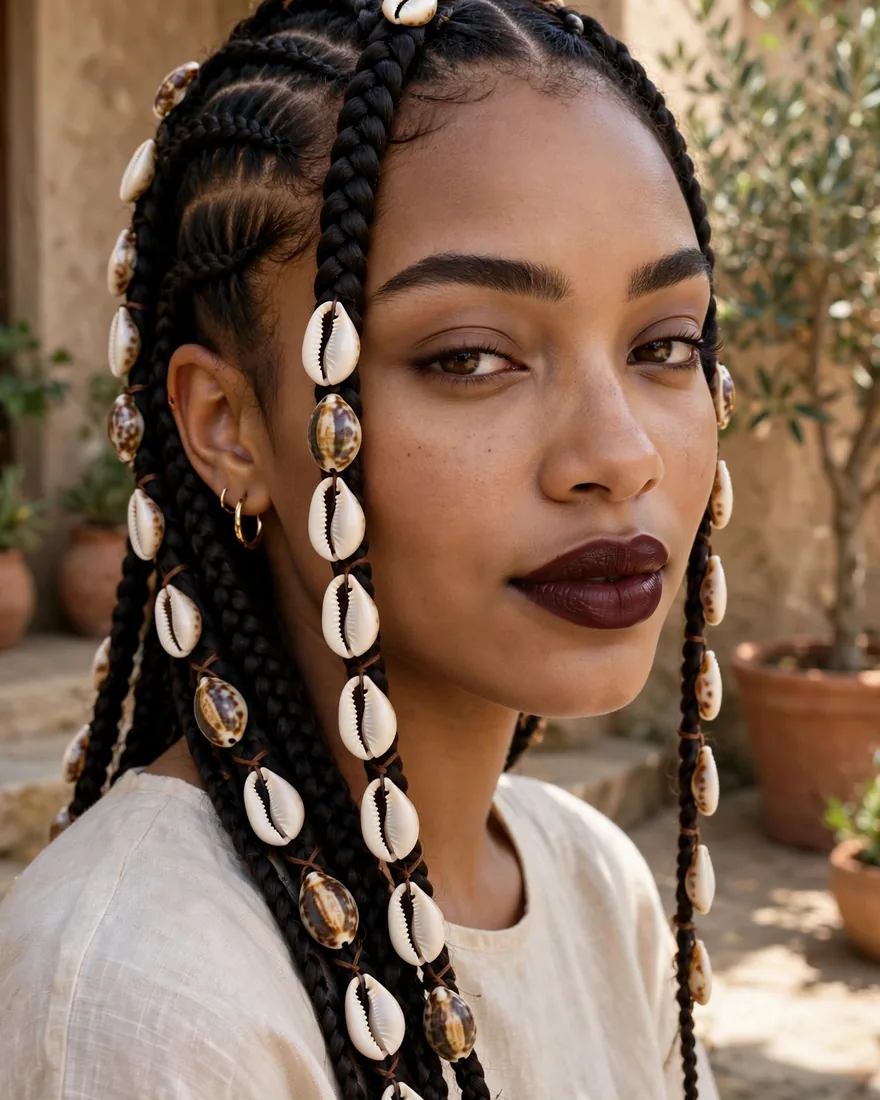
Small cowrie shells woven or clipped into select braids, nodding to the West African heritage behind fulani braids. A few shells at the crown or scattered along one side turn a simple install into a statement. They catch the light beautifully and instantly elevate the whole look.
Benefits:
- Deep cultural resonance — shells carry centuries of meaning
- Instant statement accessory with zero extra styling effort
- Shells are reusable, so you can move them between installs
Pro Tip: Keep shells to a handful and choose the lightest ones you can find — a heavy beaded install is one of the fastest routes to edge breakage.
How To Style: Have the braider thread shells onto braids near the crown while the hair is still damp; finish with a light oil mist so the shells sit without snagging.
Best For: Festivals, photoshoots, and anyone who wants their braids to carry meaning as well as style. See also our guide to beautiful hairstyles with baby braids.
5. Golden Thread Wraps
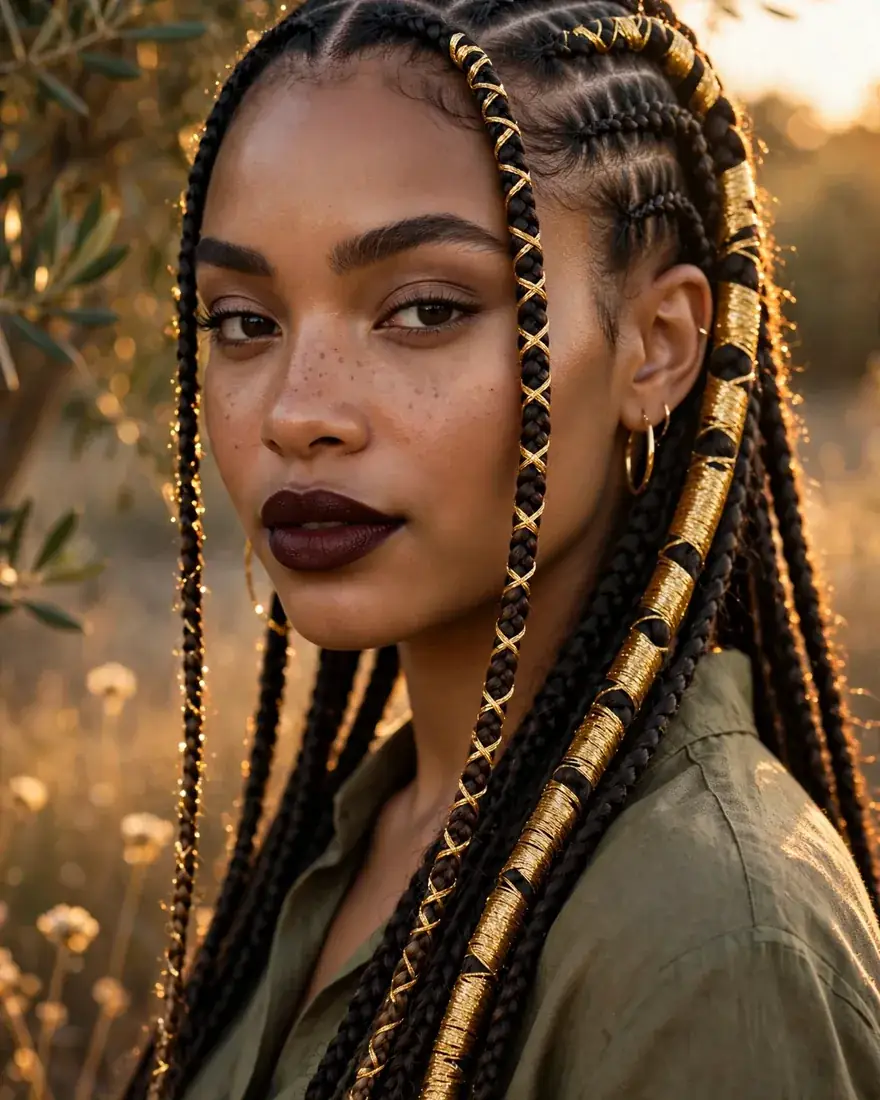
Metallic gold thread wrapped around a few accent braids gives this fulani braids variation a luxe, jewelry-like finish without any heat or chemicals. The thread catches light with every head turn and works beautifully against dark braiding hair. It is glamour you can add, remove, and redo at home.
Benefits:
- High-impact glamour for the cost of a spool of thread
- No heat, no dye, no commitment — unwrap it whenever you want
- Easy to refresh yourself between salon visits
Pro Tip: Wrap the thread around the mid-shaft of the braid, never tight at the root — root wrapping traps moisture and causes itching.
How To Style: Pair thread-wrapped braids with simple gold cuffs on neighboring braids for a coordinated, intentional look.
Best For: Evening events and low-commitment glam; perfect if you love changing your look often.
6. Jumbo Statement Braids
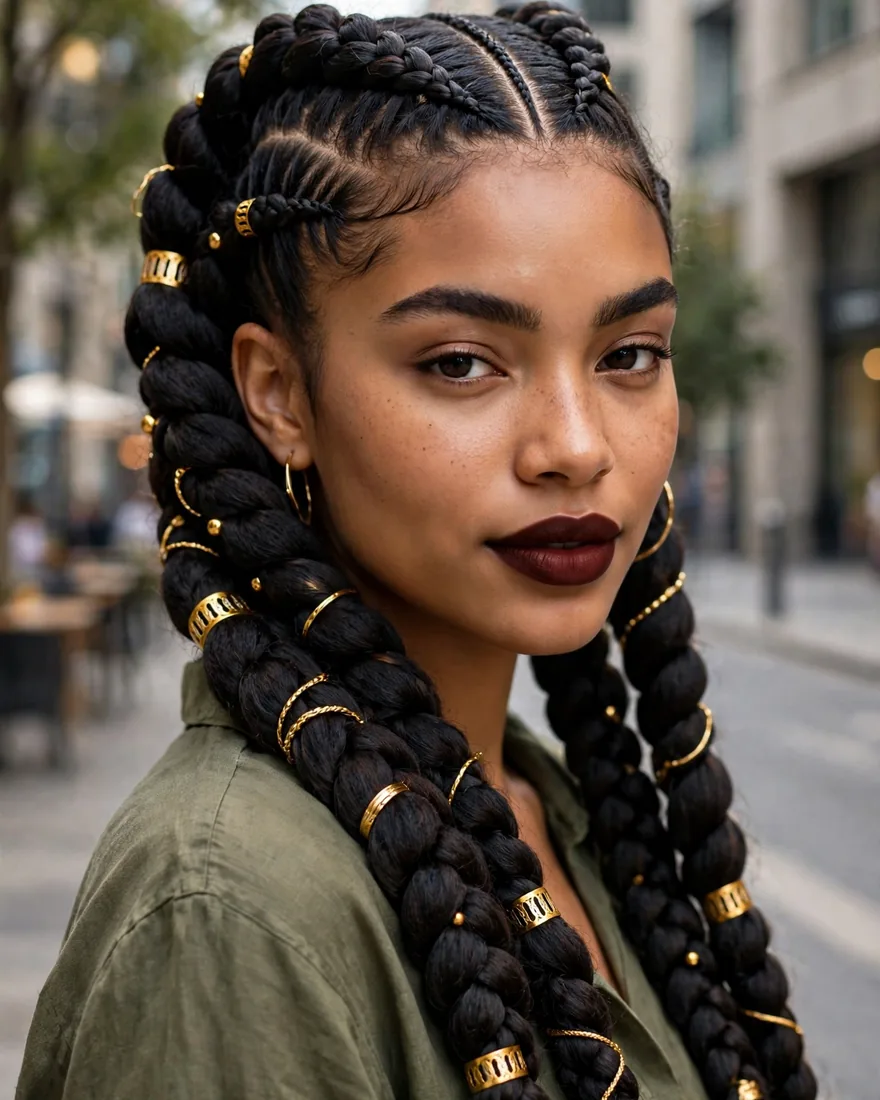
Thick, chunky braids that make a bold graphic statement and — the real selling point — take the least time in the chair. A jumbo install can be done in a fraction of the time of a small-braid version. The chunky texture reads modern and confident, and fewer braids means less weight on your scalp overall.
Benefits:
- Fastest install of any fulani braids style — often half the chair time
- Fewer, thicker braids mean less overall manipulation of your hair
- Bold, fashion-forward look that stands out in a crowd
Pro Tip: Keep jumbo braids at a medium length — extra-long jumbo braids get heavy fast and pull on the hairline.
How To Style: Style them into a high top bun or let them fall forward over one shoulder; the thickness holds shapes well on its own.
Best For: Thick natural hair, tight timelines, and tighter budgets — jumbo is the most economical install.
7. Half-Up Fulani Style
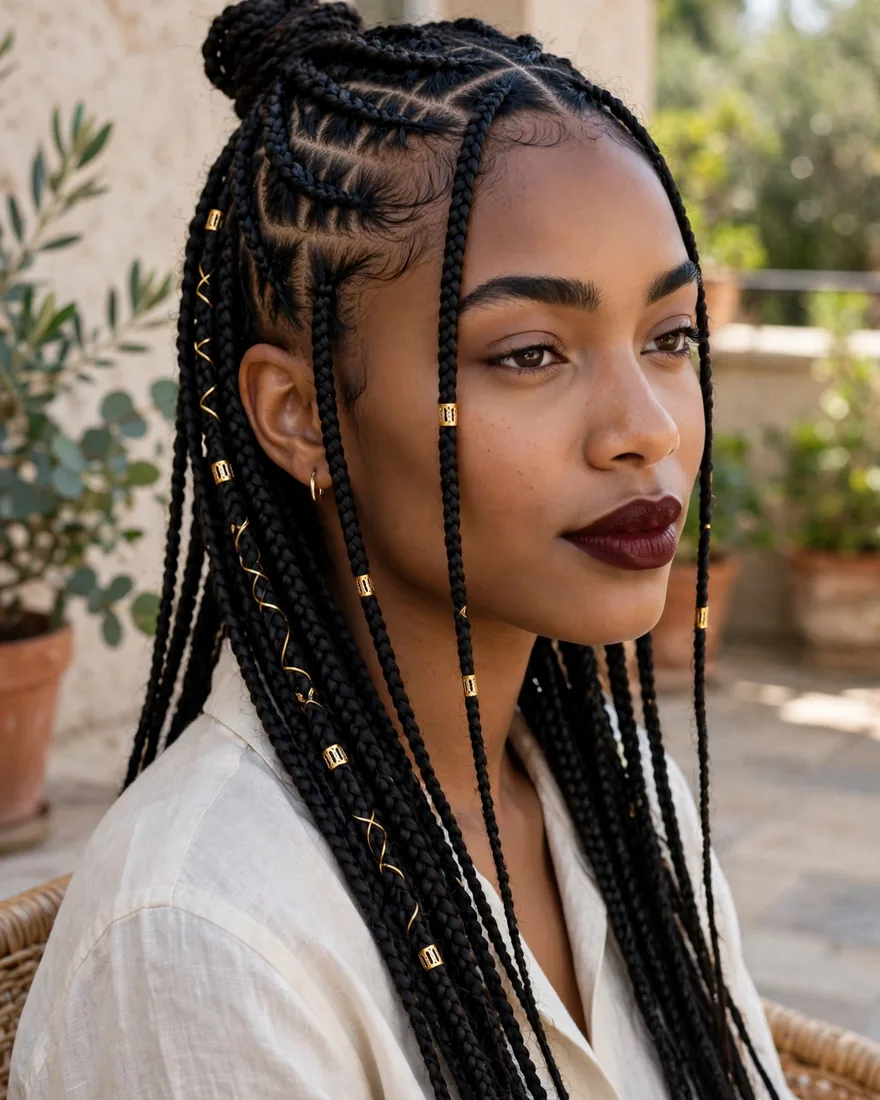
The front cornrows are swept up into a half-up ponytail or mini bun while the back braids fall loose, framing the face beautifully. It is the most versatile way to wear fulani braids because you get the neatness of an updo with the drama of loose length. One install, endless day-to-day variation.
Benefits:
- Two looks in one — wear it half-up or fully down
- Face-framing front that flatters almost every face shape
- Keeps braids off your face while showing off the back length
Pro Tip: Use a snag-free elastic or a braided tie rather than a tight rubber band — rubber bands catch and fray braided hair.
How To Style: Sleek the top section with edge control, secure the half-up ponytail, then wrap one thin braid around the base to hide the elastic.
Best For: Anyone who wants styling flexibility without reinstalling; great for showing off length. See also our guide to ponytail hairstyles.
8. Low Braided Bun
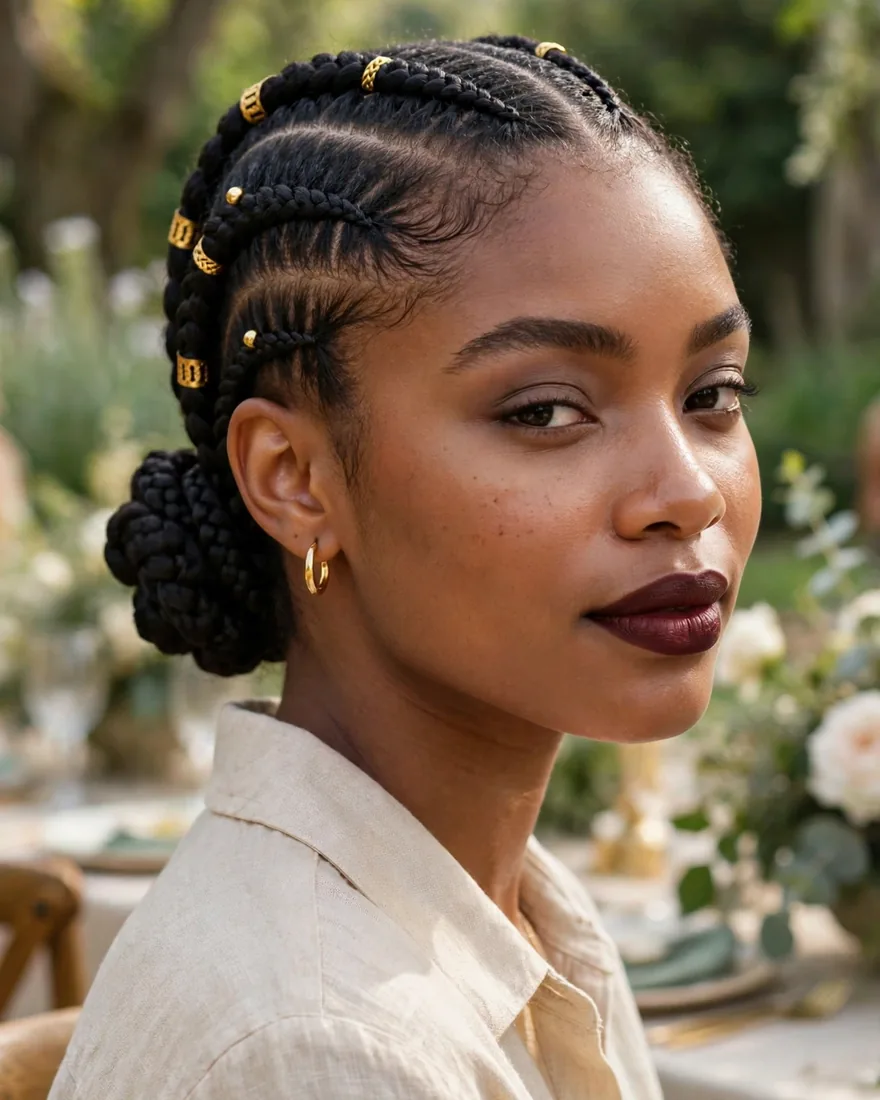
All the braids gathered into a low bun at the nape — clean, professional, and quietly elegant. This is the style that carries a fulani braids install through weeks three and four, when the roots start to frizz and loose styles look tired. A low bun hides new growth completely and puts zero daily stress on your edges.
Benefits:
- Hides week 3–4 frizz and new growth completely
- Office-appropriate and formal-event ready
- Lowest-manipulation daily option for braided hair
Pro Tip: Wrap one braid around the bun’s base and tuck the end underneath — it hides the elastic and looks professionally finished.
How To Style: Create a deep side part before gathering for a softer, more flattering finish, and smooth flyaways with a light mousse.
Best For: Work environments, weddings, and the late weeks of any install when you need a polish refresh.
9. Ombre-Tipped Braids

Braiding hair with a gradual ombre fade at the ends gives you dimensional color without touching dye to your own hair. The color transition draws the eye downward, making fulani braids look longer and more dynamic. Because the color lives in the extensions, it grows out invisibly.
Benefits:
- Color experiment with zero chemical damage to your hair
- Ombre tips make braids appear longer and more dimensional
- Grows out invisibly — no harsh regrowth line
Pro Tip: Choose an ombre that starts close to your natural hair color at the roots — the blend looks expensive instead of costume-y.
How To Style: Curl just the ombre ends with flexi rods overnight for extra dimension that shows off the color fade.
Best For: First-time color experimenters and anyone who wants dimension without commitment.
10. Curly-End Hybrid
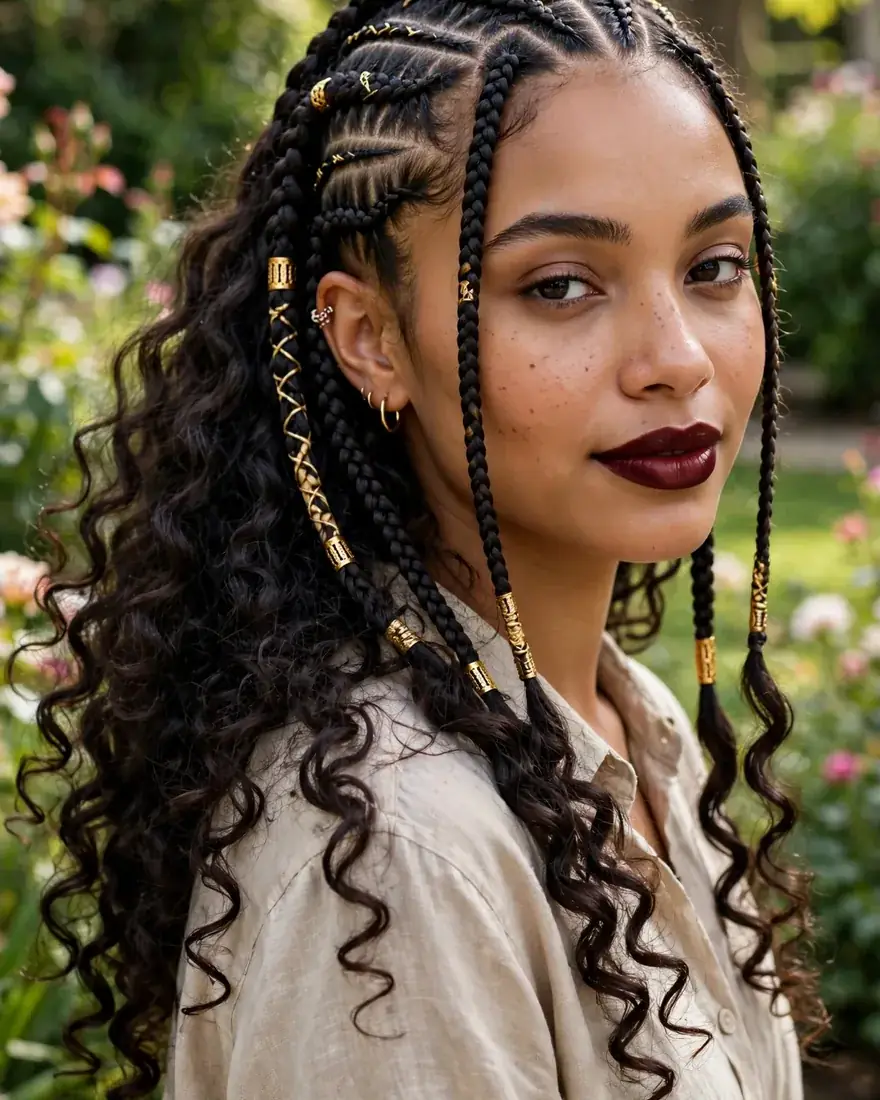
The defining 2026 hybrid: crisp cornrows in front melting into loose, flowing curls at the back instead of braided ends. The curly ends soften the whole look and move beautifully. It is the freshest evolution of the style — part protective braids, part flowing curls.
Benefits:
- Soft, romantic finish that feels current and modern
- Loose curls hide frizzy or thinning ends completely
- Curls add visual fullness, great for finer hair
Pro Tip: Revive the curls with a water and leave-in conditioner spritz every few days — dry curls tangle, moisturized curls bounce.
How To Style: Finger-detangle the curly ends once a week with a little leave-in, and sleep with the curls loosely pineappled on top of your head.
Best For: Romantic looks, fine hair that needs fullness, and anyone chasing the 2026 hybrid trend. See also our guide to curly hairstyles.
11. Braided Crown
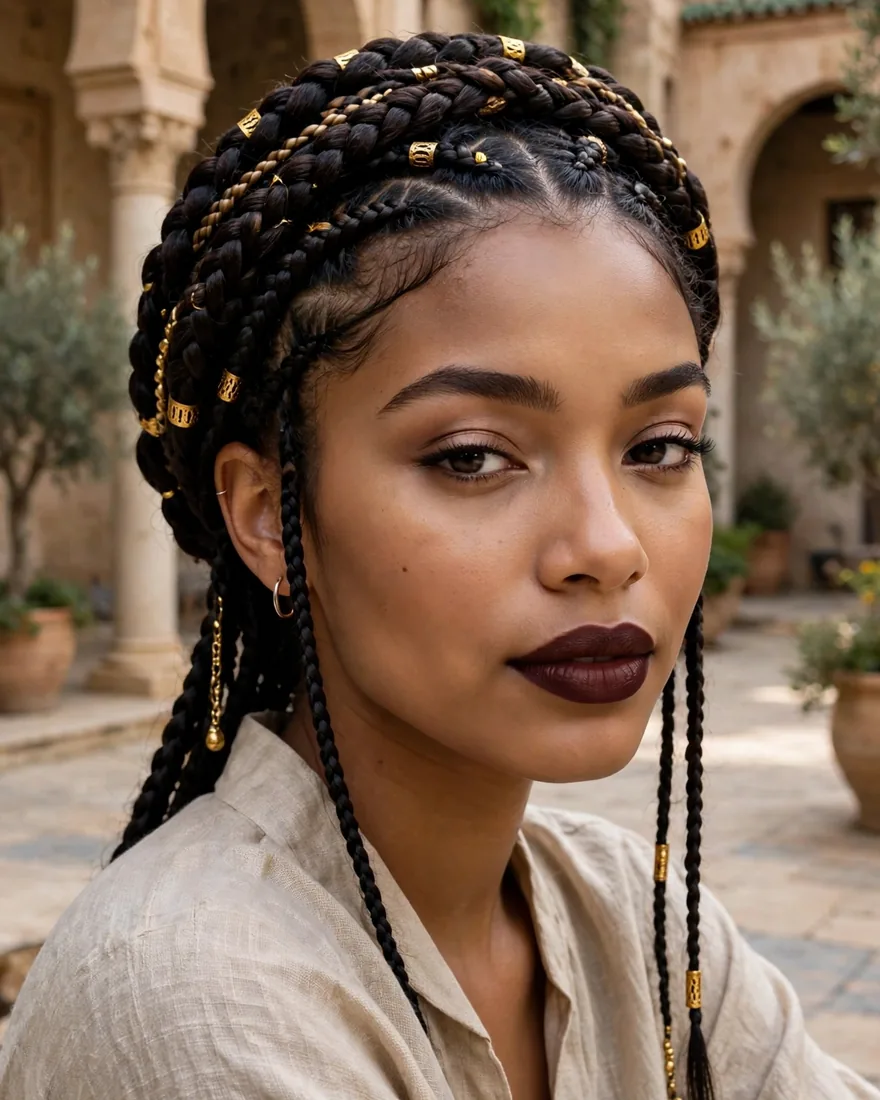
Cornrows curve around the head in a halo or crown formation instead of running straight back, creating a regal, sculpted silhouette. This architectural take keeps every strand off your neck and shoulders. It is pure elegance — the kind of style that turns heads at formal events.
Benefits:
- Keeps hair completely off the neck — ideal for hot weather
- Sculptural, regal look perfect for special occasions
- Even weight distribution means comfortable all-day wear
Pro Tip: Ask your braider to map the curved part lines before starting — symmetry is everything in a crown formation.
How To Style: Add one center braid running front to back over the crown for extra symmetry and a finished, intentional look.
Best For: Weddings, formal events, and summer when you want hair fully up and off your skin.
12. Zigzag Part Design
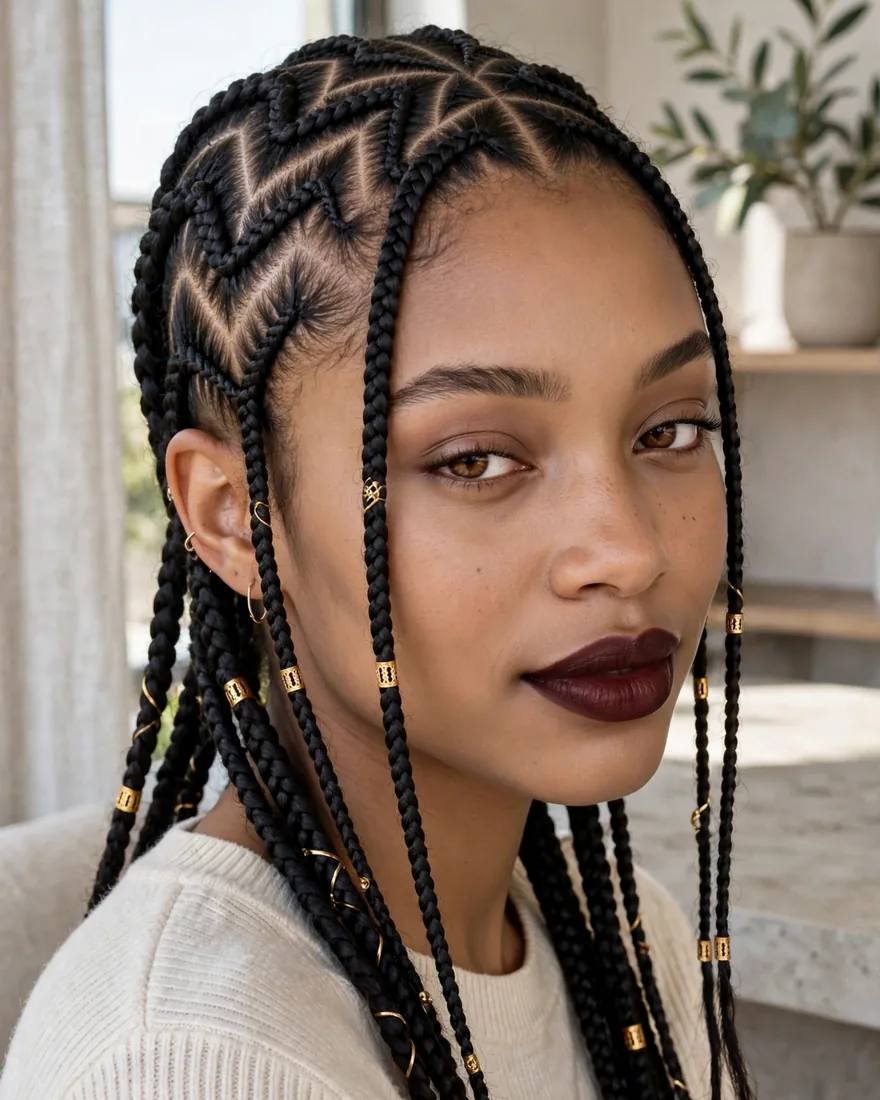
Zigzag, starburst, or geometric partings carved into the front cornrows turn the scalp itself into the design. This is fulani braids as wearable art — the part lines become the star of the show. It takes a skilled braider and a steady hand, but the result is unmistakably custom.
Benefits:
- One-of-a-kind look — no two installs are identical
- Shows off your braider’s artistry and your own boldness
- Photographs incredibly well for social media
Pro Tip: Keep the zigzag parts clean with a touch of edge control during week one — crisp lines are what make this style.
How To Style: Skip heavy accessories here and let the part design speak; a simple oil sheen is all the finishing this style needs.
Best For: Trendsetters and anyone who wants a truly custom, artistic install. See also our guide to swirl cornrows stunning styles.
13. Mixed-Size Feed-In Braids

Alternating thin and thick feed-in braids create a rhythmic, textured pattern across the scalp — visual interest built into the structure itself. The mixed sizing also distributes weight more cleverly than uniform braids. It is a sophisticated, detail-rich protective style that rewards a closer look.
Benefits:
- Built-in texture and pattern with no accessories needed
- Smarter weight distribution than uniform braid sizes
- Unique dimensional look that stands apart from standard installs
Pro Tip: Place the thinner braids near the hairline and thicker ones toward the back — thin front braids mean less tension where it matters most.
How To Style: Finish with a side-swept direction so the size variation cascades visibly across the crown.
Best For: Thick hair that needs smart weight distribution, and detail lovers who appreciate subtle complexity. See also our guide to dutch braid hairstyles.
How the 13 styles compare at a glance:
| Style | Braid Size / Method | Upkeep Level |
|---|---|---|
| Classic Beaded Fulani Braids | Medium cornrows + box braids | Medium |
| Center-Part Stitch Cornrows | Small stitch feed-in | Low |
| Long Flowing Knotless Back | Knotless box braids | Low |
| Cowrie Shell Accents | Medium + accessories | Medium |
| Golden Thread Wraps | Any size + thread | Low |
| Jumbo Statement Braids | Jumbo braids | Low |
| Half-Up Fulani Style | Any size | Medium |
| Low Braided Bun | Any size | Low |
| Ombre-Tipped Braids | Medium + ombre hair | Medium |
| Curly-End Hybrid | Cornrows + loose curls | Medium-High |
| Braided Crown | Curved cornrows | Medium |
| Zigzag Part Design | Small feed-in | Medium |
| Mixed-Size Feed-In Braids | Mixed thin/thick | Medium |
How to Choose the Right Fulani Braids for Your Hair
Braid size is the single most important choice you will make, and it should follow your hair density, not the photo you saved. Fine or low-density hair does best with small-to-medium braids that distribute tension evenly; heavy jumbo braids on fine hair pull at the roots and cause the exact breakage you are trying to avoid. Thick, dense hair can carry jumbo and mixed-size styles comfortably — and honestly looks better in them, since the chunky texture matches the hair’s natural volume.
Face shape matters too, though no shape is ever disqualified. Round faces benefit from height at the crown — think a half-up style or a braided crown — which elongates the silhouette. Long faces look softer with side parts and face-framing front braids rather than a severe center part pulled straight back. The honest rule: the style should work with your features, and a good braider will tell you when a reference photo does not suit your face — if yours will not have that conversation, find one who will. Styles that celebrate natural hair textures tend to photograph best when the install respects your real density.
Cost, Install Time, and Questions to Ask Your Braider
Here is the honest math nobody puts in a caption: a full install typically takes six to eight hours in the chair, with small intricate styles running longest and jumbo installs finishing fastest. Cost follows time — small knotless and detailed stitch work sits at the top of the range, while jumbo braids cost the least to install. Beads, shells, and thread are usually charged as add-ons, so ask for the all-in price before you sit down, not after.
Before you book, ask these questions: How long will my specific style take? What is included in the price — hair, beads, takedown? How do you protect edges during install? A braider who gets defensive about any of these is telling you something. Also budget for maintenance products — a satin bonnet, lightweight mousse, and scalp oil are non-negotiable — and plan your takedown: most installs last three to five weeks, and pushing past that risks matting at the roots.
Edge-Safe Care: A Week-by-Week Maintenance Plan
Week one is about settling in: tie the front down with a silk scarf nightly, avoid heavy oils that clog the parts, and — this is critical — if you feel persistent pain, tingling, or bumps along the hairline, the braids are too tight. Pain is never normal and never ‘just part of the process’; go back and have the perimeter loosened before tension alopecia starts. A good install feels snug for a day, not sore for a week.
Weeks two and three are the sweet spot. Refresh the style with diluted mousse smoothed down each braid, lightly oil the scalp every few days, and keep the back braids or curls detangled — finger-detangle any curly ends weekly with leave-in conditioner so they do not mat. By week four, frizz at the roots is normal: switch to low buns and half-up styles, redo the edges with a soft brush and edge control, and start planning takedown. When frizz reaches the point where braids look fuzzy from arm’s length, it is time — keeping braids in ‘just one more week’ is how matting happens.
Fulani Braids FAQs
How long does this style last?
A well-installed set typically lasts three to five weeks. Small, neat installs on healthy hair reach the longer end of that range, while jumbo braids and styles with heavy accessories tend to look tired sooner. Once root frizz becomes visible from a distance or the scalp itches constantly despite care, it is time for a takedown — pushing past five weeks risks matting and breakage.
How much does this style cost?
Cost varies widely by city, braider experience, and braid size — small intricate installs cost the most because they take the longest, while jumbo braids are the most budget-friendly. Beads, cowrie shells, and specialty thread are usually priced as add-ons. Always ask for the all-in quote, including braiding hair and accessories, before booking so there are no surprises in the chair.
Will this style damage my edges?
They can, but they do not have to. Damage comes from two things: braids installed too tight and installs weighed down with heavy beads or shells. Red flags include pain lasting more than a day, tingling, small bumps along the hairline, or thinning you notice after takedown. Choose medium-size braids, keep accessories light, and never accept 'the pain means it will last longer' — it means it is too tight.
How long does the install take?
Expect six to eight hours for a full detailed install — this is a full-day appointment, so plan accordingly. Jumbo styles can finish noticeably faster, while small stitch work and intricate part designs run longest. Bring snacks, charge your phone, and do not schedule anything important afterward.
Can I wash my hair while wearing them?
Yes, and you should — a clean scalp grows healthier hair. Use diluted shampoo in an applicator bottle, focus on the scalp and part lines, rinse thoroughly, and let the braids air-dry completely (damp braids left bundled cause odor and mildew). Follow with a light scalp oil, and avoid heavy conditioners that leave residue in the braids.
What is the difference between fulani braids and regular cornrows?
Regular cornrows are a single technique: braids laid flat against the scalp. Fulani braids combine techniques — typically cornrows across the front and crown flowing into individual box or knotless braids down the back — plus signature accessories like beads and shells. It is a complete style system rooted in Fulani (Fula) culture, not just a braiding method.
How do I keep braids looking fresh for weeks?
Nightly protection is everything: a satin bonnet or silk scarf every single night. Refresh with diluted mousse smoothed down the braids once or twice a week, lightly oil the scalp, and keep curly or loose ends detangled. In weeks three and four, lean on low buns and half-up styles to hide root frizz and extend the install gracefully.
Is it okay for anyone to wear fulani braids?
Fulani braids originate with the Fulani (Fula) people of West Africa and carry deep cultural significance. Wearing them with appreciation means understanding that history, crediting the style's origins, and choosing a braider experienced with the technique. What crosses the line is treating a culturally rooted style as a disposable trend while dismissing its origins — wear it with respect and knowledge, not as a costume.
Fulani braids reward the people who choose them thoughtfully: the right braid size for your density, a braider who respects your edges, accessories kept light, and a simple week-by-week care routine. Pick your favorite of these 13 styles, ask the hard questions before you book, and protect your hairline like the investment it is — do that, and you will get a full month of a style that turns heads for all the right reasons.