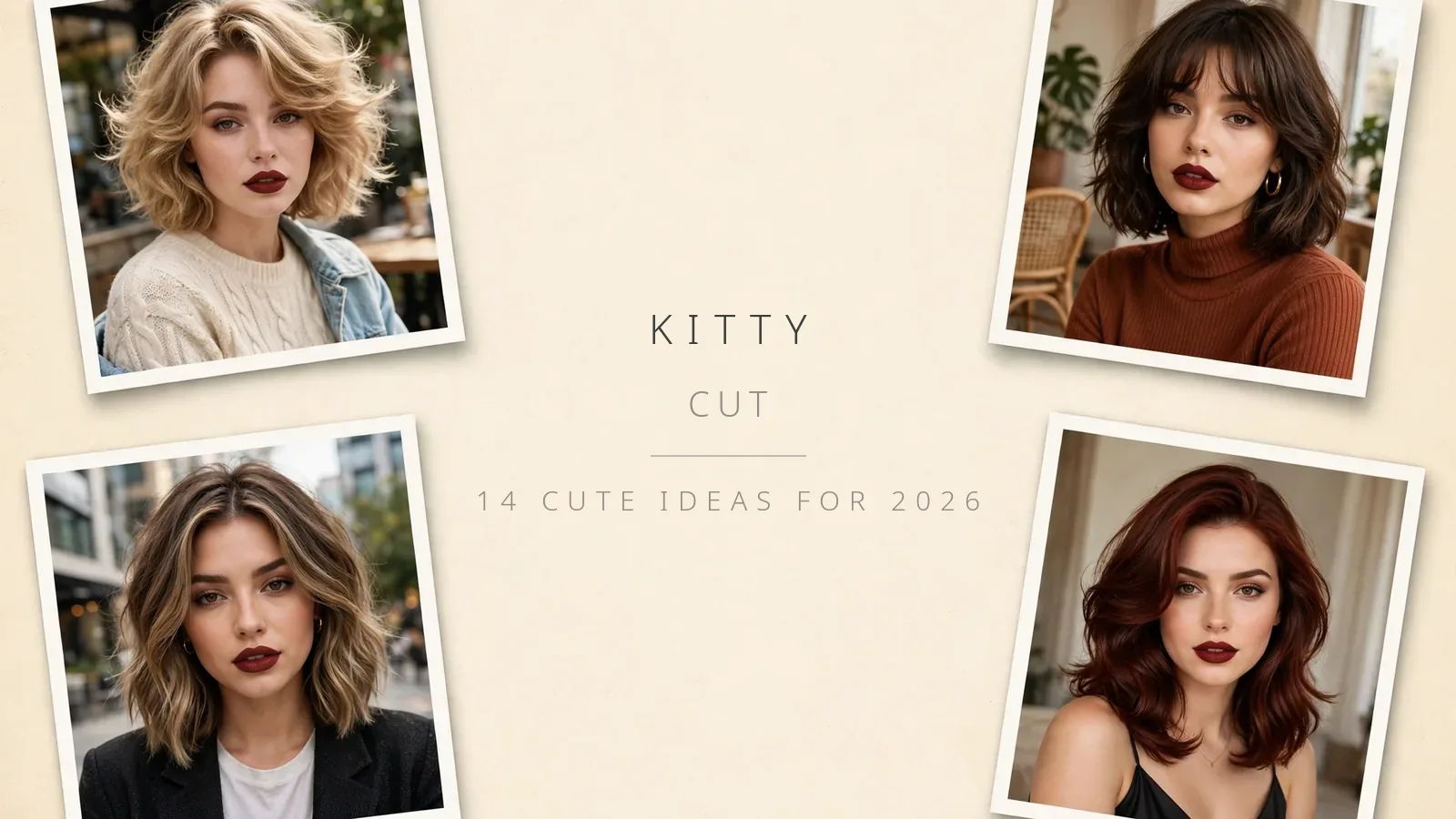
Kitty Cut – 14 Cute Ideas for 2026
Choosing a mid-length haircut feels harder than it should. Bobs can read severe, long layers can fall flat, and the trendy shaggy cuts demand more styling than most of us signed up for. You want movement and softness without committing to high-maintenance texture or an edgy silhouette you will regret at work.
The kitty cut is the answer hiding in plain sight: a soft, feathered mid-length cut that lands between the chin and collarbone, with face-framing layers that move naturally and ends that stay polished instead of choppy. Below are 14 variations worth considering, plus honest guidance on which textures suit it, how it compares to the wolf cut and shag, and exactly what to say at the salon.
Table of Contents
- 14 Kitty Cut Ideas Worth Trying
- Classic Kitty Cut
- Kitty Cut with Curtain Bangs
- Kitty Cut with Wispy Fringe
- Kitty Cut with Bottleneck Bangs
- Kitty Cut for Thick Hair
- Kitty Cut for Fine Hair
- Shoulder-Length Kitty Cut
- Long Layered Kitty Cut
- Collarbone Kitty Cut
- Kitty Cut on Curly Hair
- Kitty Cut with Side-Swept Bangs
- Polished Blowout Kitty Cut
- Kitty Cut with Balayage
- Grow-Out Friendly Kitty Cut
- How to Choose the Right Kitty Cut for Your Hair Type
- Kitty Cut vs Wolf Cut vs Shag: Which One Is Right for You
- What to Ask for at the Salon: Your Kitty Cut Script
- Frequently Asked Questions
- What exactly is a kitty cut?
- Is the kitty cut good for women over 40?
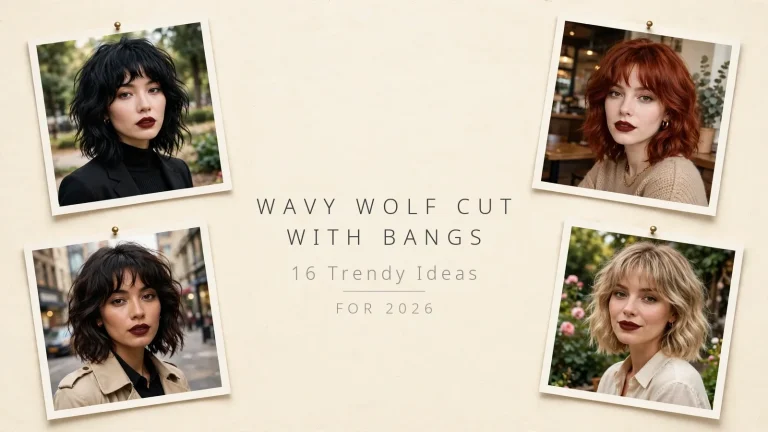
- What is the difference between a kitty cut and a wolf cut?
- Does the kitty cut work on fine hair?
- How often does a kitty cut need trimming?
- Can I get a kitty cut with curly hair?
- How long does it take to style a kitty cut each morning?
- Will a kitty cut work on dead-straight hair?
14 Kitty Cut Ideas Worth Trying
1. Classic Kitty Cut
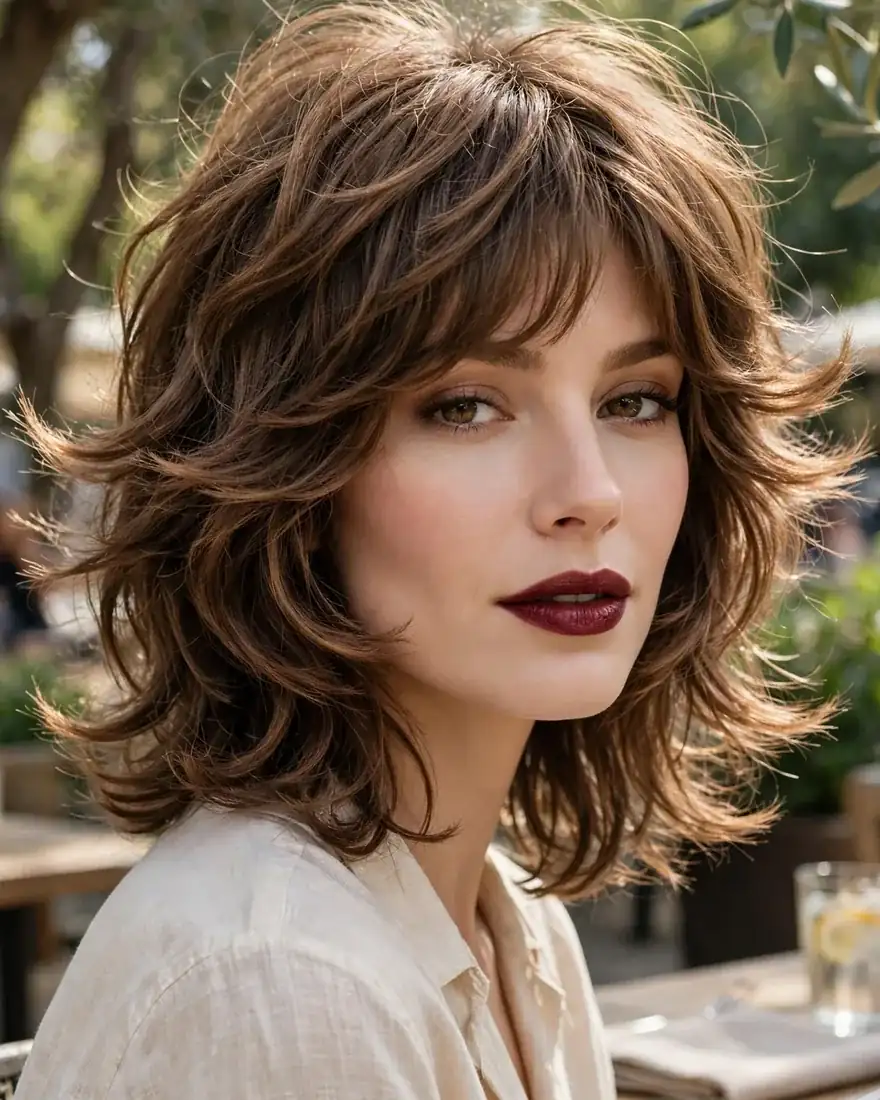
The classic version is the purest expression of the trend: mid-length hair with soft, feathered layers throughout and delicately thinned ends that flick outward with the slightest movement. There are no bangs and no harsh lines, just an even, airy silhouette that falls somewhere between the jawline and the collarbone.
Benefits:
- Universally flattering length that suits most face shapes
- Low-drama grow-out with no awkward phases
- Works with natural texture or a quick blowout
Pro Tip: Ask your stylist to point-cut the ends rather than blunt-cutting them; that feathered finish is what separates this style from a regular layered cut.
How To Style: Blow-dry with a medium round brush, rolling the ends outward for that signature flick. A pea-sized amount of hair oil on the ends adds polish without weight.
Best For: Oval, heart, and long face shapes; straight to wavy hair that holds a bend.
2. Kitty Cut with Curtain Bangs
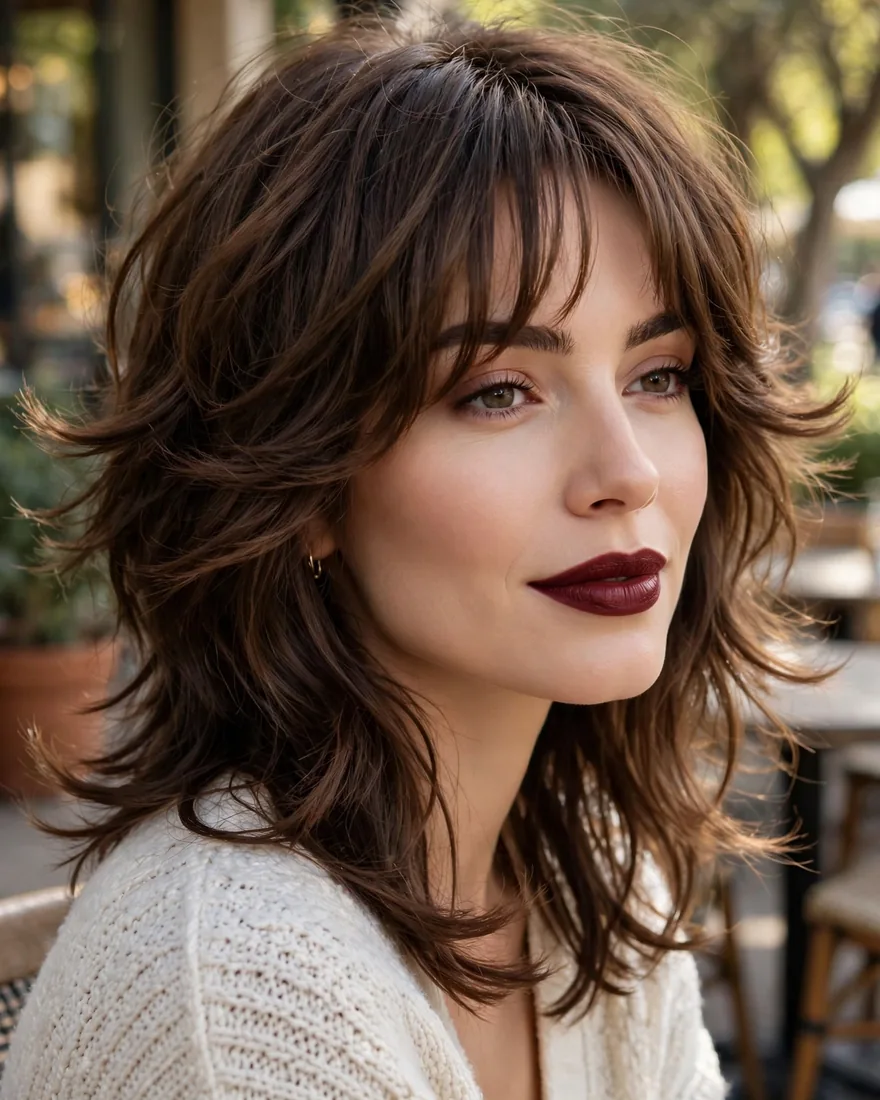
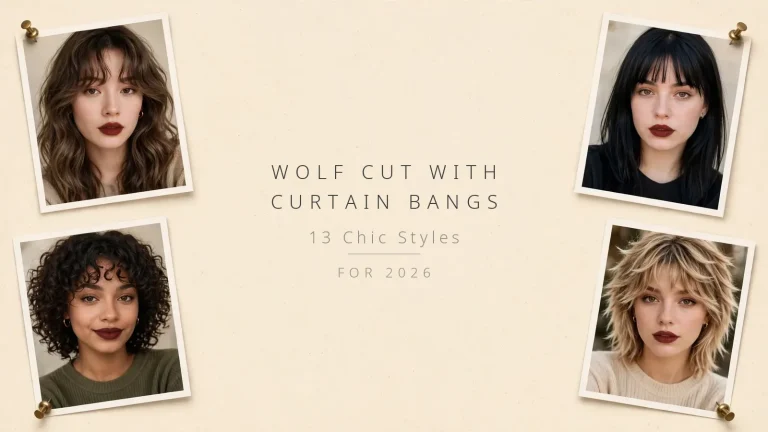
Pairing the cut with curtain bangs is the combination celebrities made famous, and for good reason: the parted fringe melts into the face-framing layers so the whole haircut reads as one continuous, flowing shape. The bangs open at the center and sweep to each side, drawing attention to the cheekbones while softening the forehead.
Benefits:
- Bangs and layers blend seamlessly with no harsh disconnect
- Draws the eye to cheekbones and eyes
- More forgiving grow-out than blunt curtain bangs styles
Pro Tip: Keep curtain bangs slightly longer than you think at first; you can always shorten them, but an over-cut fringe ruins the blend.
How To Style: Blow-dry bangs forward and down first, then part them in the center while still warm. A large round brush gives the sides their sweep.
Best For: Round and square faces that benefit from vertical lines; medium-density hair.
3. Kitty Cut with Wispy Fringe
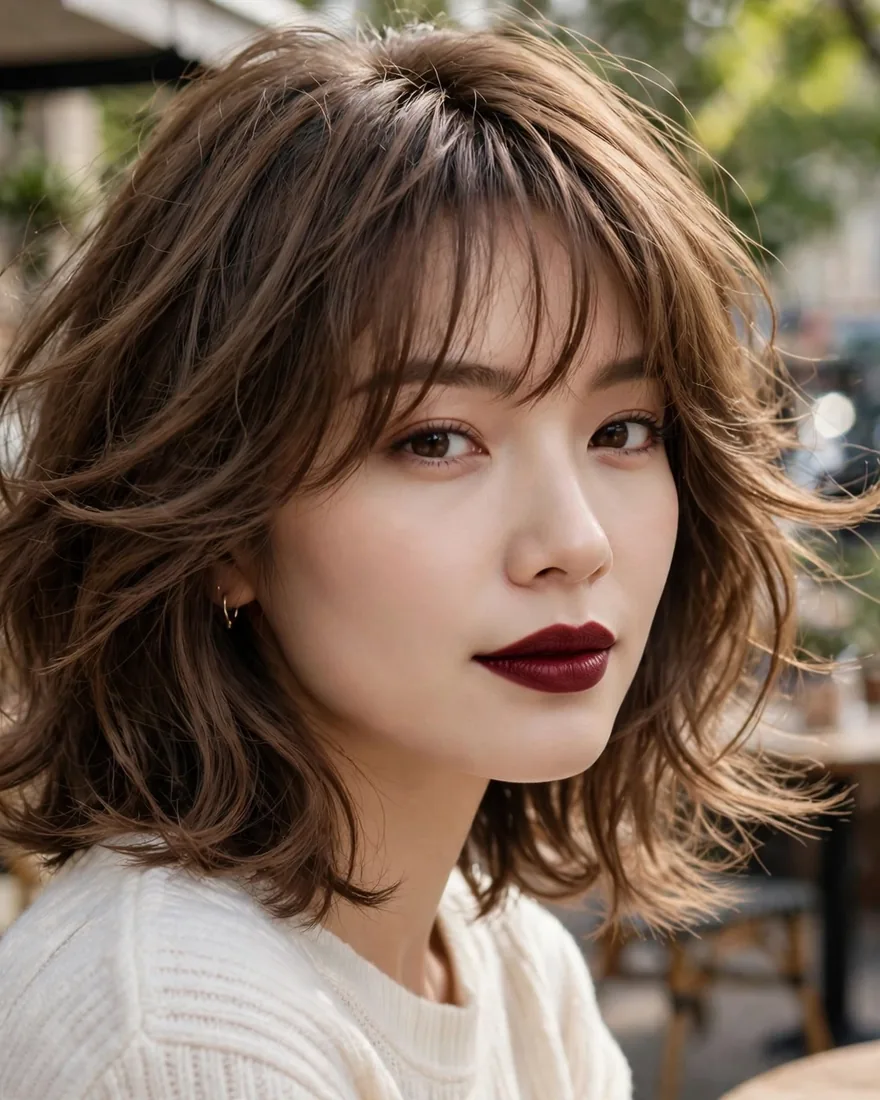
A wispy fringe keeps the forehead partly visible, which makes this the lightest, most low-commitment bang option for this style. The fragmented, see-through texture echoes the feathered ends of the cut itself, so everything feels cohesive and airy rather than heavy.
Benefits:
- Softens the forehead without hiding it
- Grows out gracefully with minimal awkward stages
- Adds a youthful, effortless feel to the cut
Pro Tip: Wispy bangs look best slightly piecey; resist the urge to trim them into a solid line at home.
How To Style: Blow-dry straight down with a small round brush, then pinch small sections with a dab of texturizing cream for separation.
Best For: Long and heart-shaped faces; fine to medium hair that needs lightness around the face.
4. Kitty Cut with Bottleneck Bangs
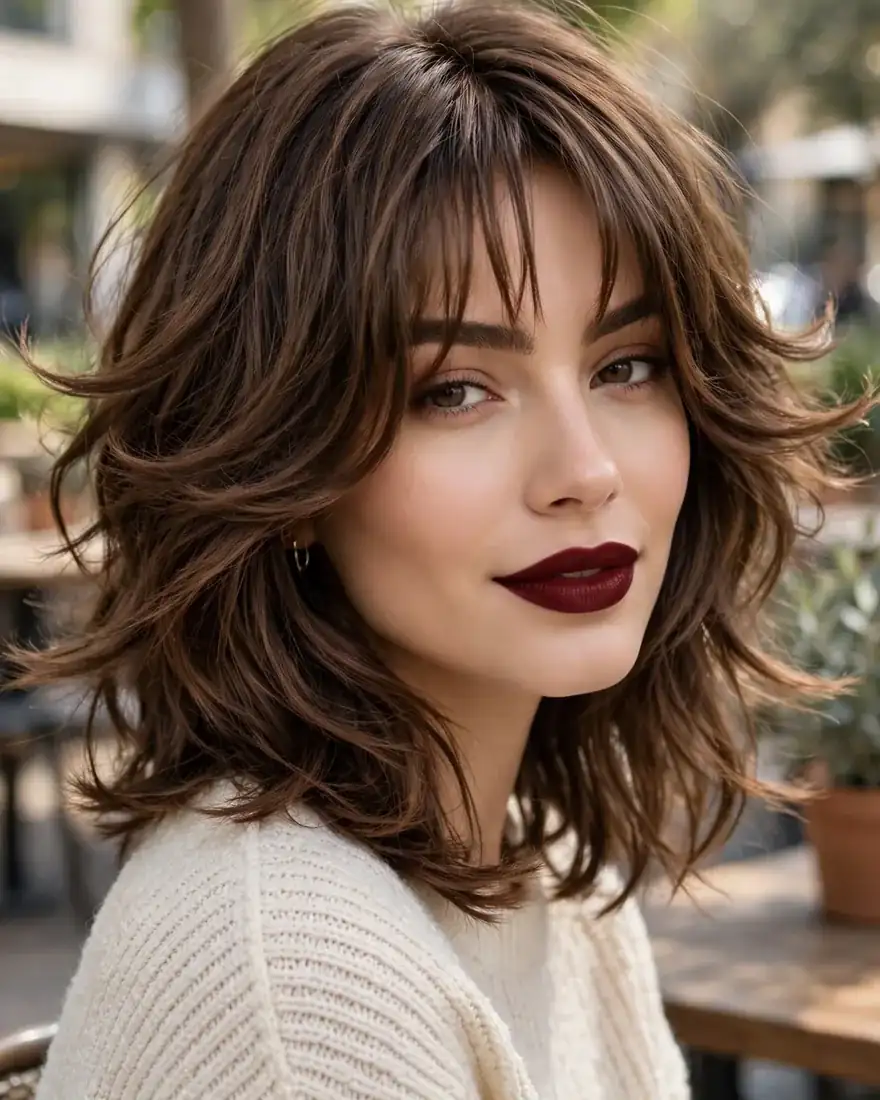
Bottleneck bangs are narrow at the top and widen toward the cheekbones, creating a flattering frame that pairs beautifully with the style’s layered structure. This fringe adds a fashion-forward edge while still feeling softer and more wearable than a full blunt bang.
Benefits:
- Creates the illusion of higher cheekbones
- Blends naturally into face-framing layers
- Distinctive without being extreme
Pro Tip: Bottleneck bangs need their shape maintained; book a fringe trim every three to four weeks or learn to dust the center at home.
How To Style: Style with a round brush, curving the narrow top section forward and the wider ends outward. Finish with light-hold spray.
Best For: Oval and oblong faces; straight or slightly wavy hair that obeys direction.
5. Kitty Cut for Thick Hair
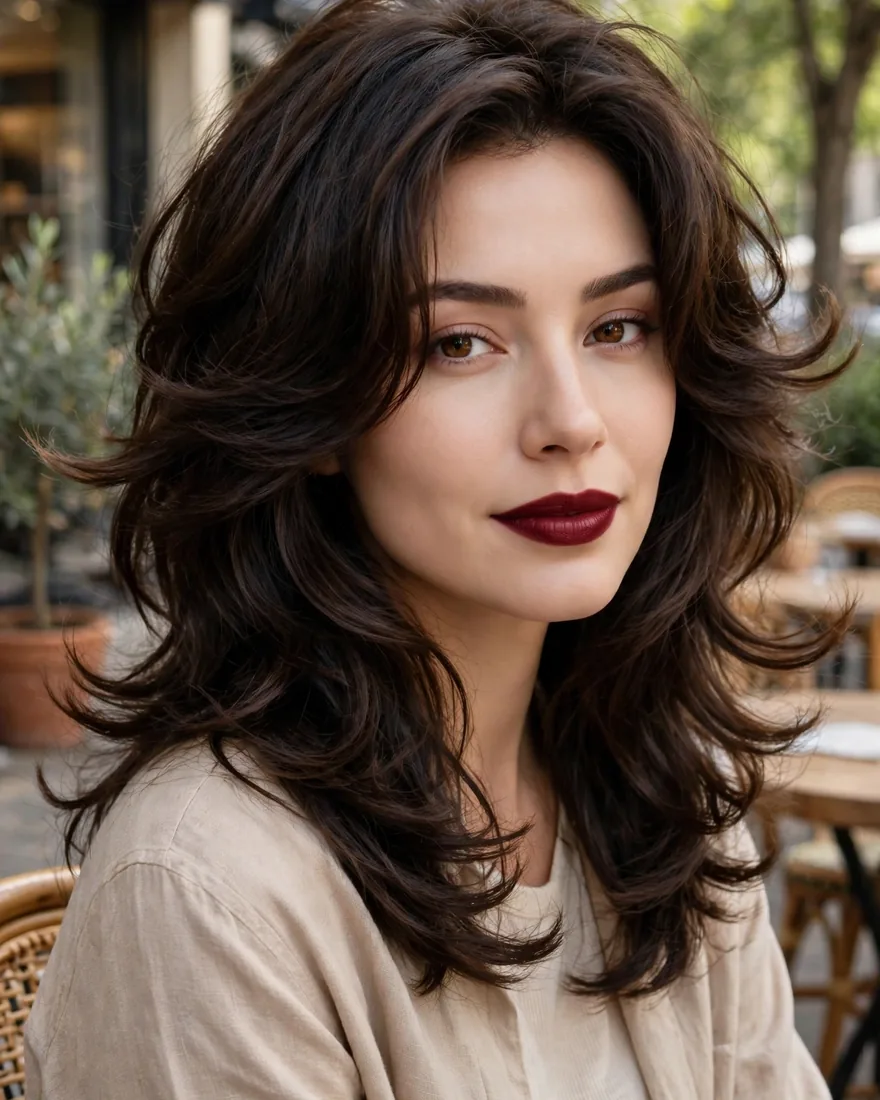
Thick hair and this cut are a natural match, but the secret is internal thinning rather than surface layering. Removing weight from underneath lets the feathered layers move freely instead of stacking into a triangle, giving you the airy silhouette without sacrificing the density that makes thick hair gorgeous.
Benefits:
- Removes bulk while keeping visible thickness
- Layers move freely instead of puffing outward (unlike blunt layered haircuts on dense hair)
- Reduces blow-dry time significantly
Pro Tip: Insist on internal thinning or slide-cutting rather than razoring the surface; surface razor work on thick hair causes frizz.
How To Style: Apply smoothing cream before blow-drying, and use a paddle brush for the lengths with a round brush only at the ends.
Best For: Thick, dense straight or wavy hair that tends toward pyramid shapes.
6. Kitty Cut for Fine Hair
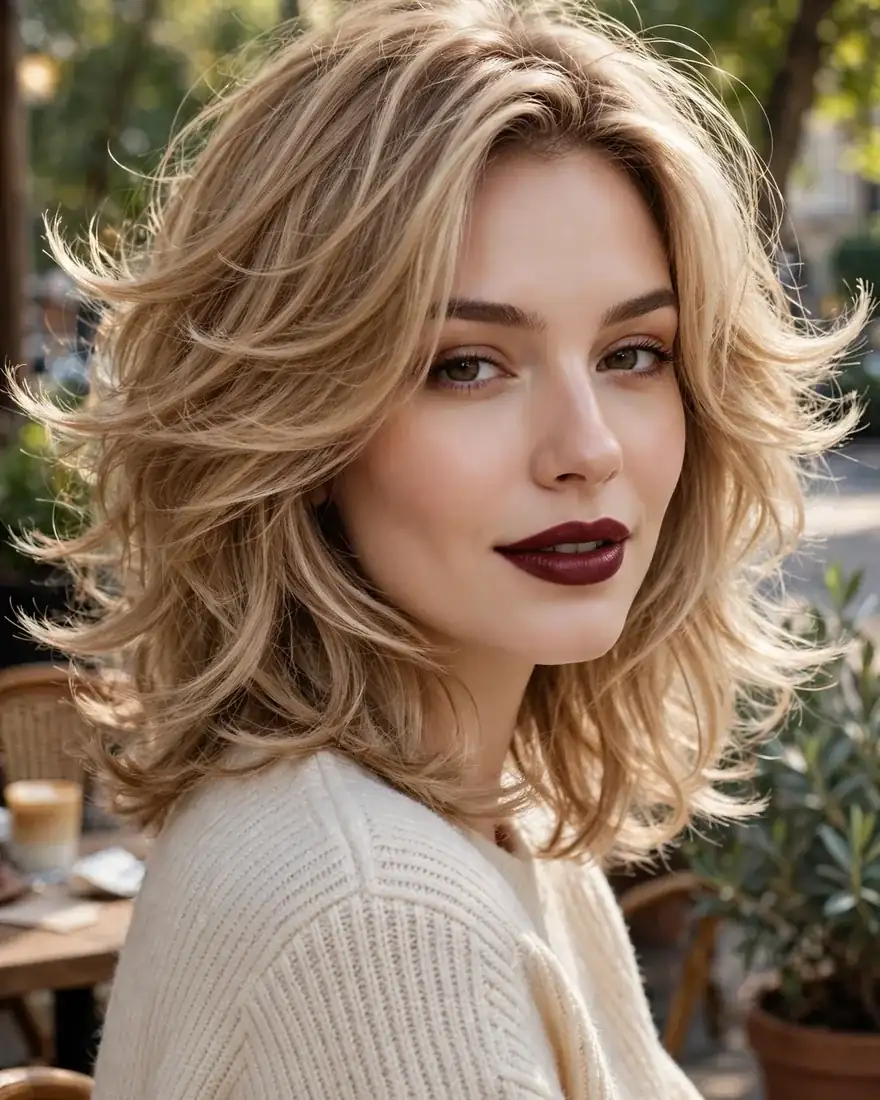
Fine hair can wear this cut, but the approach must be restrained: fewer, longer layers and absolutely no aggressive thinning. The goal is gentle face-framing movement while preserving every bit of density at the ends, because over-layered fine hair looks thinner, not more voluminous.
Benefits:
- Face-framing pieces add interest without sacrificing density
- Shorter styling time suits fine hair’s quick-dry nature
- Collarbone length keeps ends looking full
Pro Tip: Tell your stylist the words ‘density preservation’ outright; it signals you want a conservative hand with the layers.
How To Style: Blow-dry upside down for root lift, then smooth the ends with a round brush. Volumizing mousse at the roots is non-negotiable.
Best For: Fine straight to wavy hair; anyone prioritizing the appearance of thickness.
7. Shoulder-Length Kitty Cut
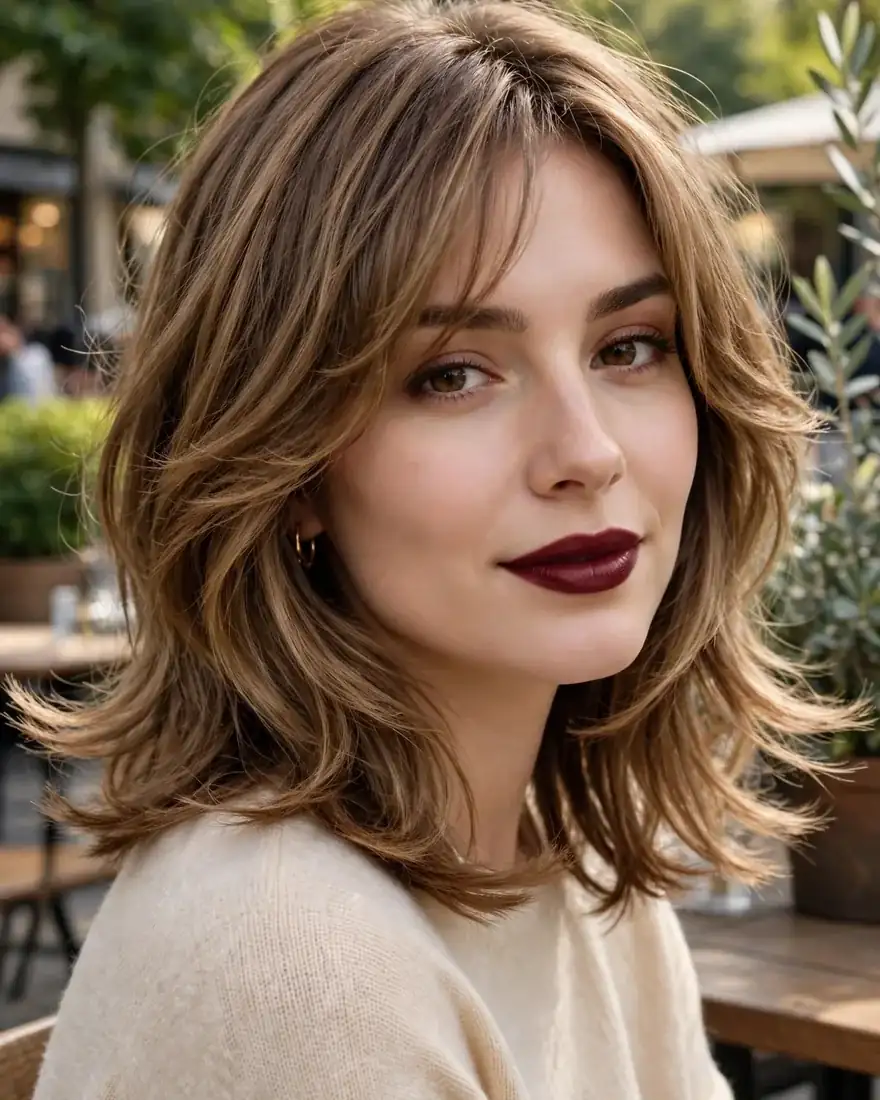
The shoulder-length version is the most versatile entry point: long enough to tie back, short enough to show off the feathered layers. It hits right where the collarbone meets the shoulder, making it the sweet spot for anyone nervous about going shorter.
Benefits:
- Still long enough for ponytails and updos
- Layers are clearly visible at this length
- Flattering on nearly every face shape
Pro Tip: This length shows layering mistakes clearly, so choose a stylist whose portfolio includes mid-length cuts specifically.
How To Style: Air-dry with sea-salt spray for texture, or do a quick round-brush blowout for polish. Both take under 15 minutes.
Best For: First-time wearers; active lifestyles that need tie-back options.
8. Long Layered Kitty Cut
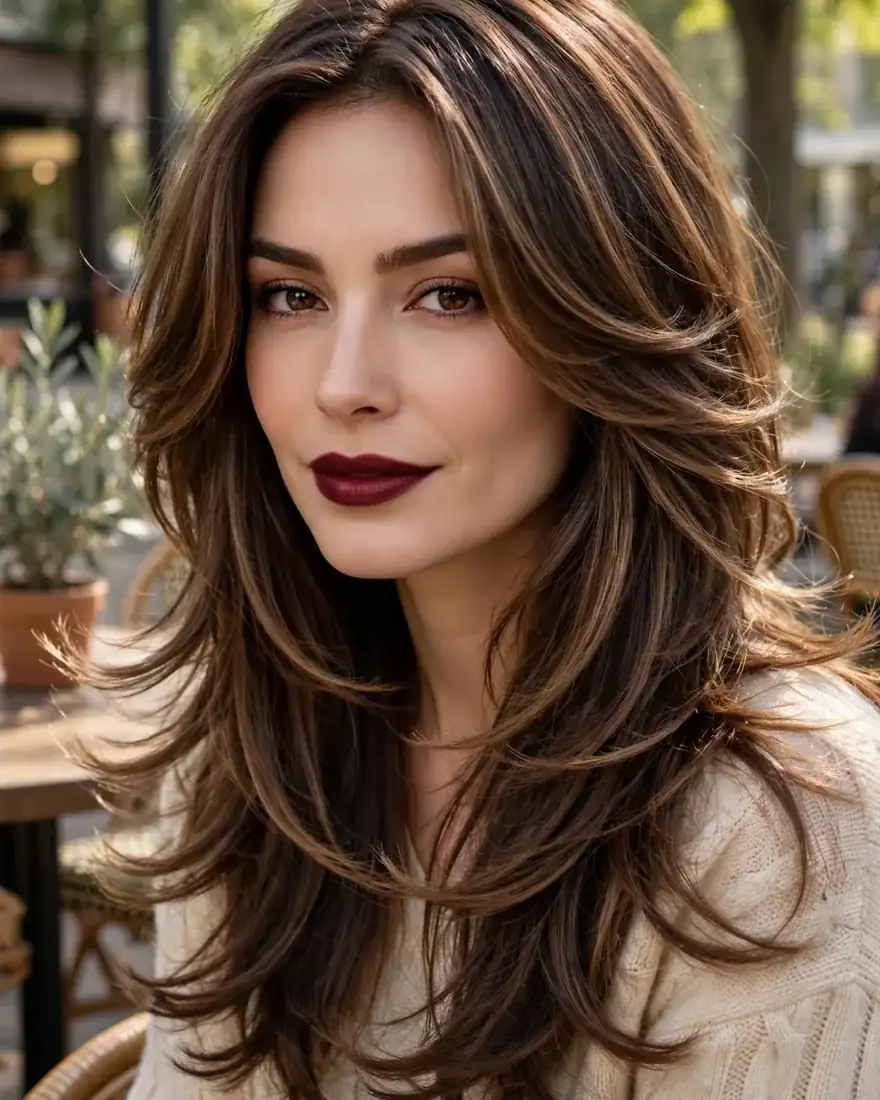
For those who love their length, this long layered version keeps hair past the shoulders while borrowing the feathered, face-framing philosophy. The layers concentrate around the face and through the mid-lengths, so you keep your long-hair identity with added movement.
Benefits:
- Keeps long-hair length with added shape
- Face-framing layers prevent the ‘curtain of hair’ effect
- Easiest grow-out of all the variations
Pro Tip: Long versions need the layers to start no higher than the chin, or the top can look disconnected from the lengths.
How To Style: Blow-dry in sections with a large round brush, focusing on the face-framing pieces. Velcro rollers at the crown add lift.
Best For: Long-hair loyalists wanting change without commitment; thick hair that needs weight removal.
9. Collarbone Kitty Cut
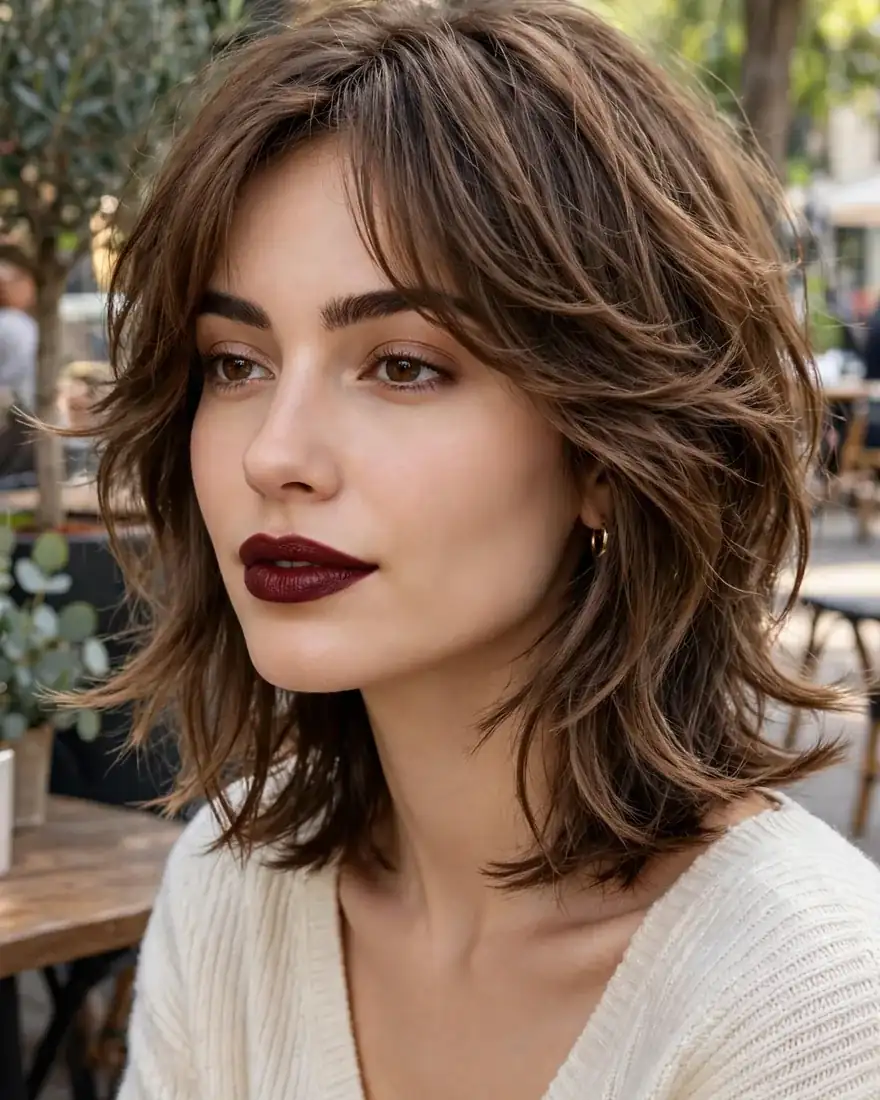
Hitting exactly at the collarbone, this is the most precise version of the style and arguably its most photogenic length. The ends graze the collarbone and flick outward naturally, creating a clean horizontal line that makes the neck look longer and the jawline sharper.
Benefits:
- Creates the illusion of a longer neck
- Ends flick outward with minimal styling
- Sharp yet soft – the best of both worlds
Pro Tip: Collarbone length grows out fast; schedule trims every eight weeks if you want to hold this exact line.
How To Style: Blow-dry the ends outward with a medium round brush for the signature flick. Tuck one side behind the ear for asymmetry.
Best For: Petite frames that can be overwhelmed by longer hair; anyone wanting a defined yet soft silhouette.
10. Kitty Cut on Curly Hair
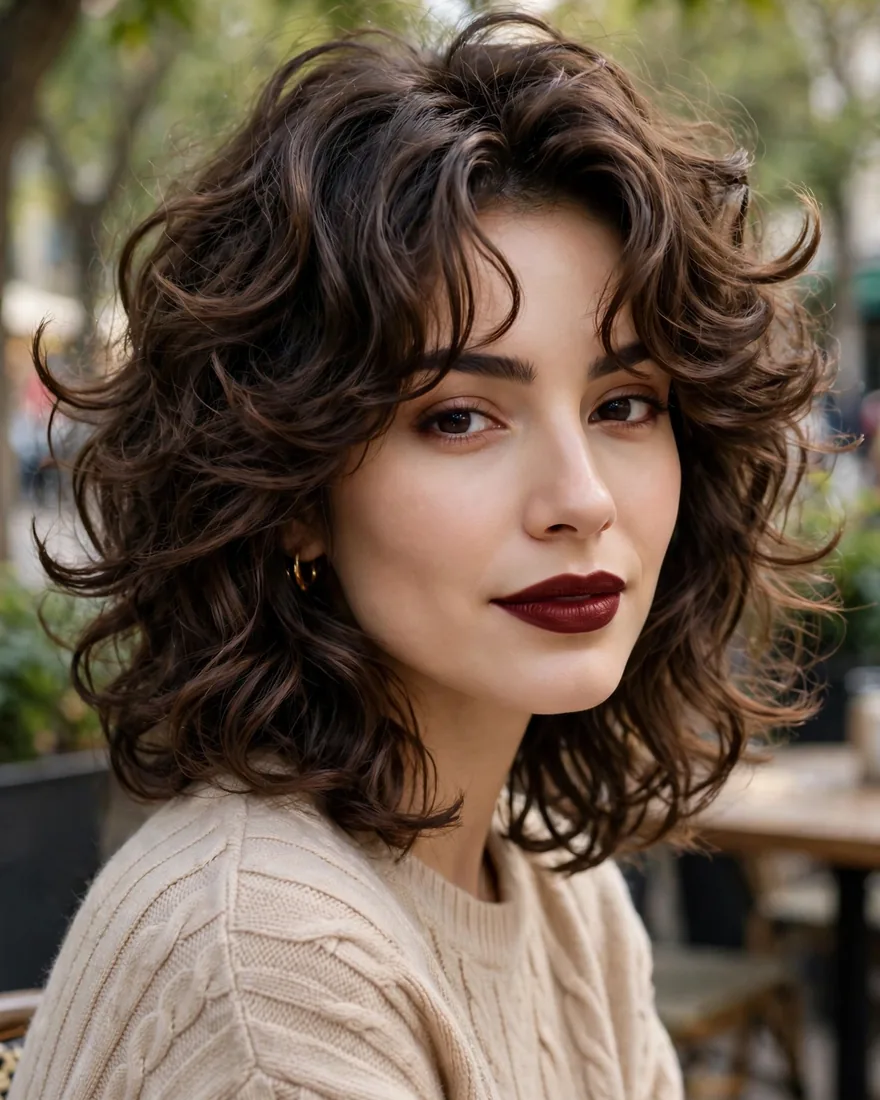
Curls in the 2C to 3C range wear this cut beautifully, because the layered structure enhances natural volume instead of fighting it. The feathered ends become soft, defined curls that frame the face, giving you shape and bounce without the triangle effect of one-length curly cuts.
Benefits:
- Layers enhance curl definition instead of creating bulk (a smarter approach than one-length curly hairstyles)
- Face-framing pieces highlight cheekbones on curly textures
- Wash-and-go friendly with the right products
Pro Tip: Always get this cut dry or curl-by-curl; wet cutting cannot account for shrinkage, and the layers will land shorter than planned.
How To Style: Scrunch in curl cream on soaking-wet hair, diffuse on low heat, and refresh second-day curls with a water-cream mix.
Best For: Wavy to curly hair (2C–3C); anyone wanting shape without sacrificing volume.
11. Kitty Cut with Side-Swept Bangs
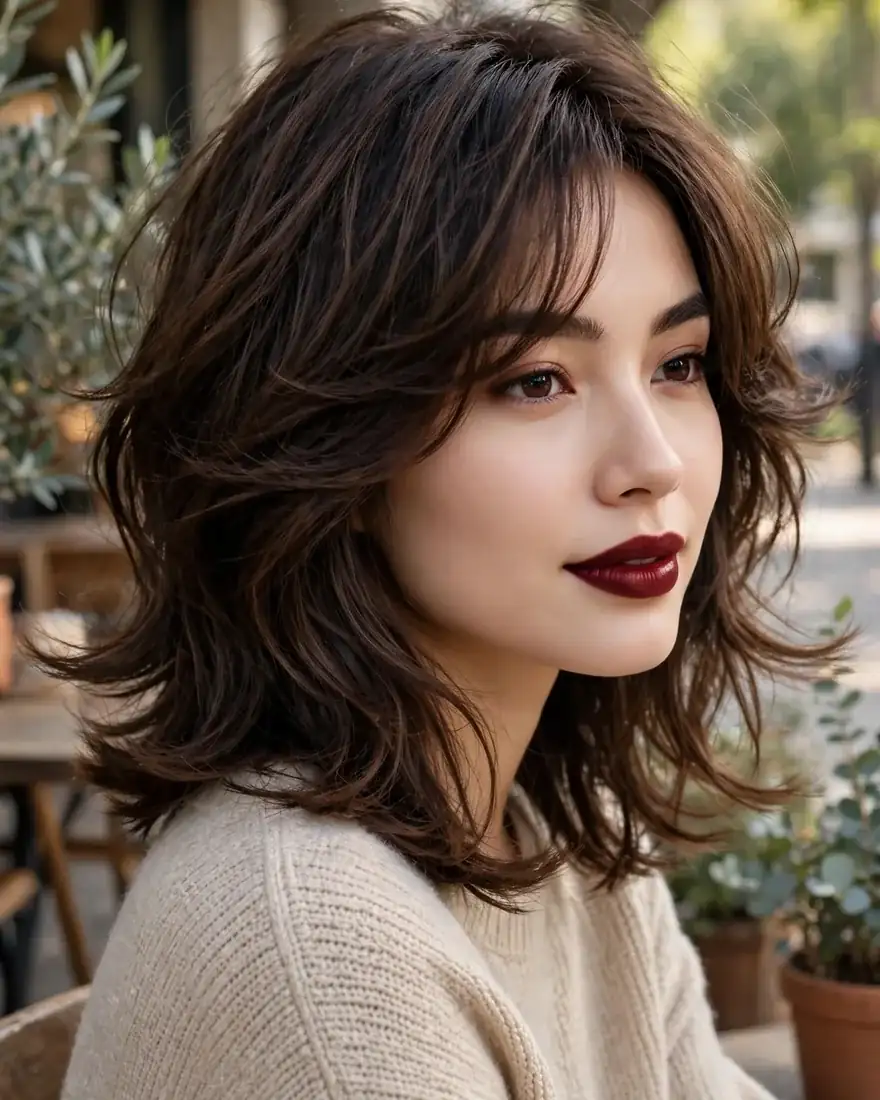
Side-swept bangs bring a classic, slightly retro softness to this style, sweeping diagonally across the forehead into the longer face-framing layers. This is the most office-friendly bang option and the easiest to grow out if you change your mind.
Benefits:
- Most professional-looking bang pairing
- Softens a strong forehead or prominent brow
- Easiest bangs to grow out
Pro Tip: Side-swept bangs should be cut dry and styled to your natural part; cutting them wet leads to surprises when they dry.
How To Style: Blow-dry across the forehead in the direction of the sweep, then set with a cool shot. A deep side part amplifies the effect.
Best For: Square and heart-shaped faces; conservative workplaces; bang beginners.
12. Polished Blowout Kitty Cut
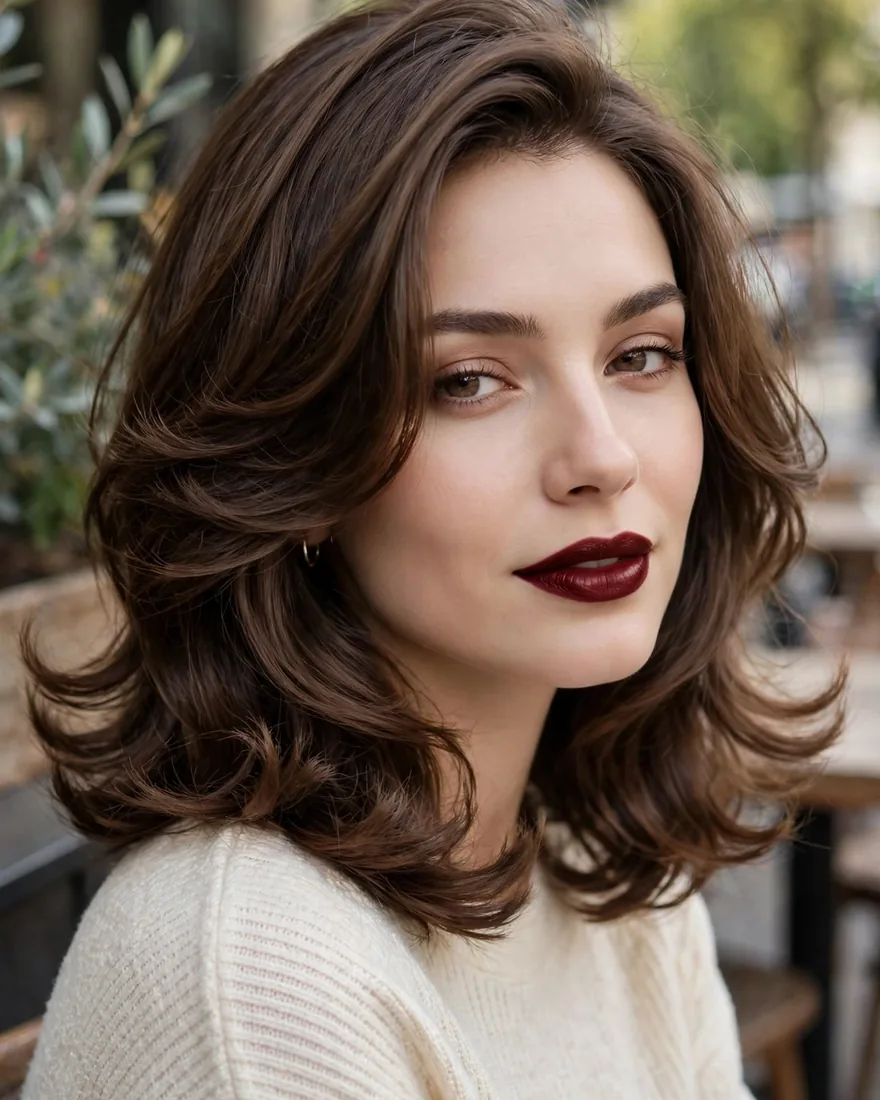
This is the cut at its most glamorous: a full round-brush blowout that maximizes volume, smoothness, and that bouncy flicked-out finish. It is the red-carpet version of the cut, proving that soft layers can look just as striking as sharp ones when styled with intention.
Benefits:
- Maximum volume and bounce from the layered structure
- Looks expensive and intentional
- Photographs beautifully from every angle
Pro Tip: A polished blowout on this cut lasts two to three days with dry shampoo at the roots; do not wash daily or you will never enjoy it.
How To Style: Work in sections with a large round brush and a concentrator nozzle, rolling each section outward. Finish with shine spray, not oil, to keep the bounce.
Best For: Special occasions; thick or medium hair that holds a blowout; anyone who loves styling their hair.
13. Kitty Cut with Balayage
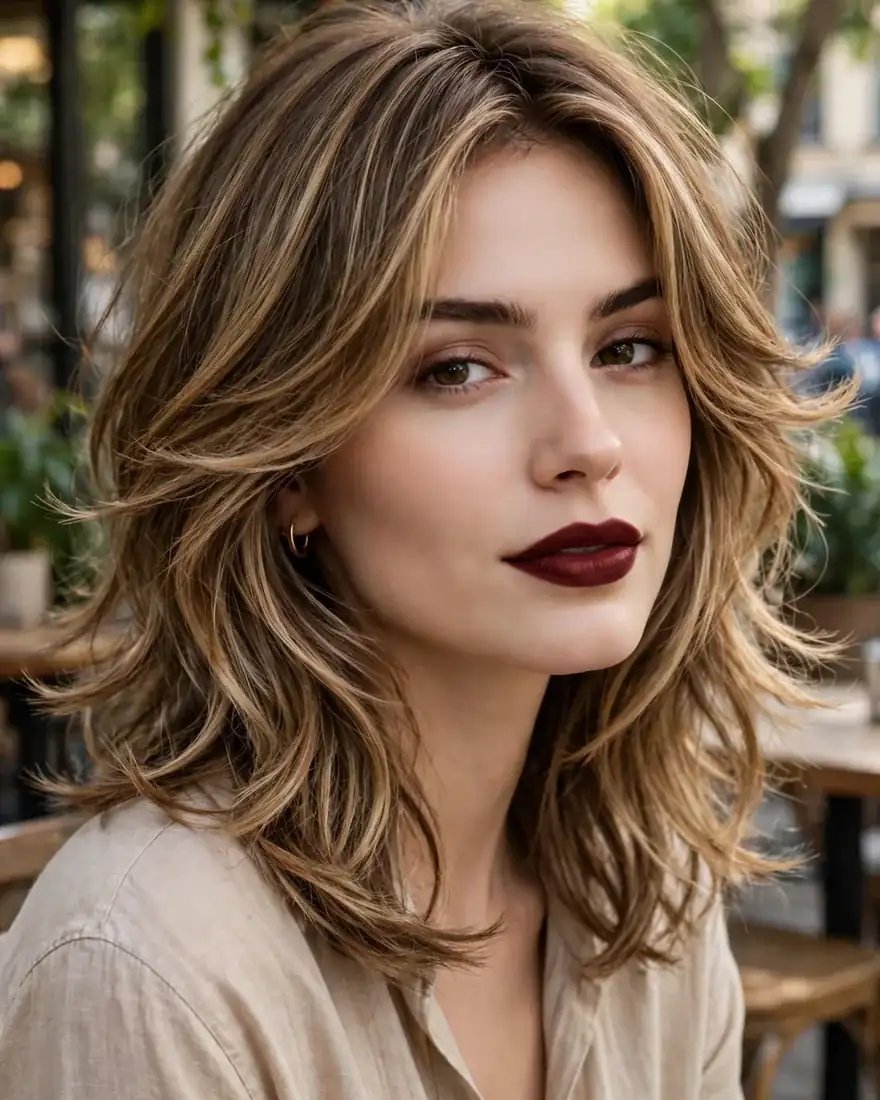
Balayage and this cut were made for each other: the hand-painted dimension catches the light on every feathered layer, making the movement of the cut visible even in flat indoor lighting. Soft, lived-in color keeps the grow-out as low-maintenance as the cut itself.
Benefits:
- Dimension makes every layer visible (balayage enhances texture)
- Lived-in color means fewer salon visits
- Face-framing highlights brighten the complexion
Pro Tip: Keep the balayage soft and blended; harsh contrast fights the gentle nature of the cut.
How To Style: Style as usual; the color does the visual work. A color-safe heat protectant preserves both the tone and the ends.
Best For: Anyone wanting to elevate the cut; those growing out old color gracefully.
14. Grow-Out Friendly Kitty Cut
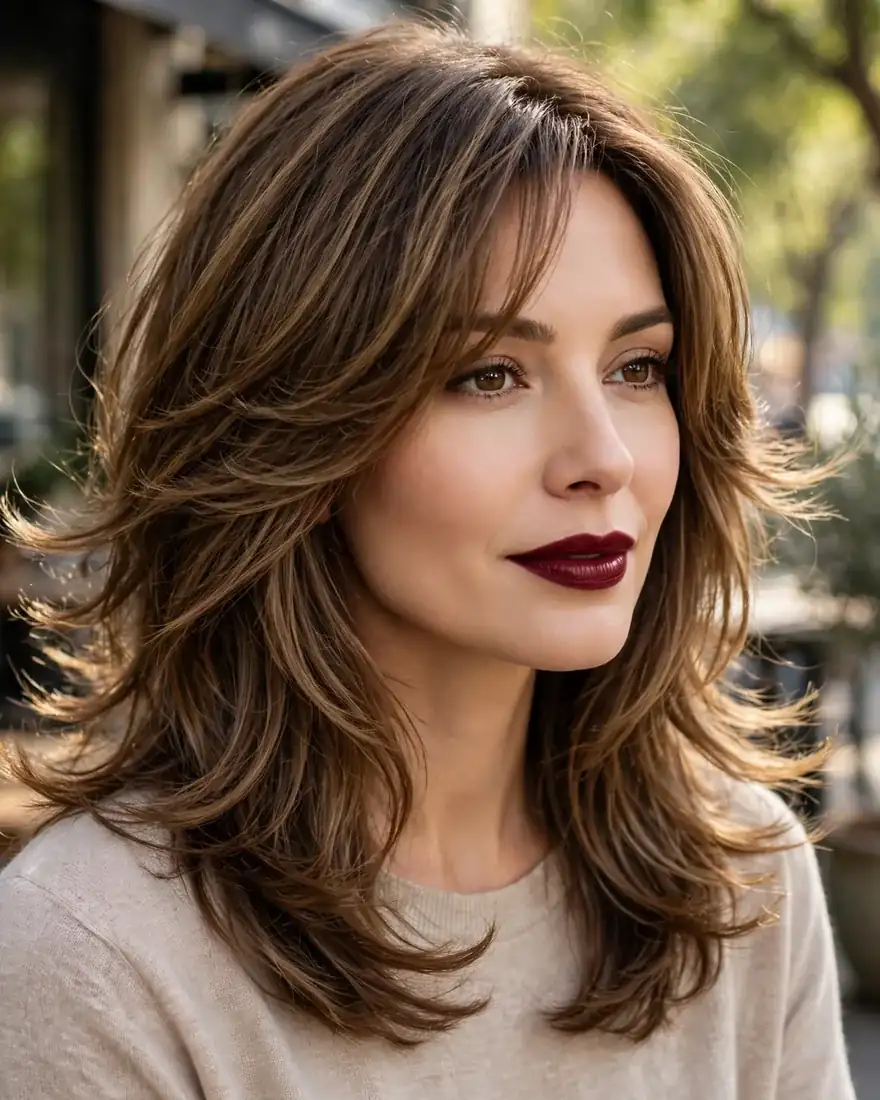
Designed for real life, this grow-out friendly version uses longer layers and a slightly extended length so the shape holds for months between appointments. This is the version for low-maintenance people who still want to look intentional, and it is the reason the trend has staying power.
Benefits:
- Holds its shape for 3–4 months between cuts
- No awkward in-between phases
- Ideal for growing out a bob
Pro Tip: Ask for the layers to start at the chin or below; higher layers grow out into ledges, lower ones just get longer gracefully.
How To Style: This version thrives on benign neglect: air-dry, a little cream on the ends, and go. Trim only when the ends feel thin.
Best For: Low-maintenance routines; bob grow-out transitions; busy schedules.
How the 14 variations compare at a glance:
| Variation | Best Hair Type | Upkeep Level | Signature Trait |
|---|---|---|---|
| Classic | All textures | Low | The timeless, no-bangs baseline |
| Curtain Bangs | Medium density | Medium | Celebrity-favorite face frame |
| Wispy Fringe | Fine–medium | Low | Lightest bang commitment |
| Bottleneck Bangs | Straight–wavy | Medium | Cheekbone-defining fringe |
| For Thick Hair | Thick, dense | Medium | De-bulked with internal thinning |
| For Fine Hair | Fine | Low | Restrained layers, density preserved |
| Shoulder-Length | All textures | Low | Most versatile, tie-back friendly |
| Long Layered | Thick–medium | Medium | Length kept, movement added |
| Collarbone | Straight–wavy | Medium | Precision length, flicked ends |
| On Curly Hair | 2C–3C curls | Low | Dry-cut layers enhance curls |
| Side-Swept Bangs | All textures | Low | Most professional bang option |
| Polished Blowout | Medium–thick | High | Maximum volume, event-ready |
| With Balayage | All textures | Low | Dimension makes layers pop |
| Grow-Out Friendly | All textures | Lowest | Months between appointments |
How to Choose the Right Kitty Cut for Your Hair Type
The right variation depends more on your hair’s texture and density than on your face shape, so start there. Thick, dense hair needs internal thinning and longer layers to avoid the dreaded triangle, while fine hair needs restraint: fewer layers, no aggressive texturizing, and length at or above the collarbone to protect density.
Straight hair shows every layer, which is both a blessing and a curse; the cut will look precise but needs daily styling to keep the feathered movement alive. Wavy hair is the easiest match because the natural bend does half the styling work. Curly hair needs a dry cut and longer layers to account for shrinkage. And if your hair is pin-straight and slippery, be honest with yourself about the styling commitment before you book.
For length, think of it as a spectrum: the collarbone version is the most polished and precise, shoulder-length is the most versatile, and the longer layered version is the safest if you are nervous. Anyone growing out a long bob should ask for the grow-out friendly variation, which is essentially designed for that exact transition.
Kitty Cut vs Wolf Cut vs Shag: Which One Is Right for You
These three cuts get confused constantly, so here is the honest breakdown. The kitty cut is soft, blended, and polished: feathered layers, gentle movement, office-friendly. The wolf cut is its rebellious sibling: choppy, disconnected layers with heavy crown volume and a mullet-like silhouette that reads edgy and undone. The shag sits between them in spirit but with more visible texture and piece-y separation throughout.
Choose this cut if you want texture that still looks professional, if your workplace leans conservative, or if you prefer blowouts to air-dried chaos. Choose the wolf cut if you want maximum edge, love lived-in texture, and do not mind a bolder grow-out. Choose the shag if you want piece-y definition all over rather than this cut’s soft blend. The butterfly cut, for reference, is a different animal entirely: long, bouncy, face-framing layers designed to mimic a short cut while keeping length.
Styling effort differs too. This cut asks for 20 to 25 minutes for a proper blowout or under 10 air-dried. The wolf cut practically demands air-drying with texture products and looks wrong over-styled. The shag needs regular texturizing to keep its piece-y character. Pick the cut whose daily routine you will actually enjoy, not the one that photographs best.
What to Ask for at the Salon: Your Kitty Cut Script
Walk in with clear language and you will walk out with the right cut. Start with the length: name your landing spot precisely, collarbone, shoulder, or chin, because ‘medium length’ means different things to every stylist. Then describe the layers: ask for soft, feathered, face-framing layers with point-cut ends, and specify where the shortest layer should fall.
For the fringe, bring reference photos and name the type: curtain, wispy, bottleneck, or side-swept. For thick hair, request internal thinning or slide-cutting and explicitly rule out surface razoring, which causes frizz on dense hair. For fine hair, say the words ‘density preservation’ so the stylist keeps a conservative hand. If you are comparing it to a medium shag you saw online, say so; it helps the stylist calibrate how much texture you actually want.
Finally, ask about maintenance before the cape comes off: how often to trim, whether the bangs need separate appointments, and what the grow-out will look like at month three. A good stylist will answer all three without hesitation. If they cannot describe the grow-out, consider it a red flag.
Frequently Asked Questions
What exactly is a kitty cut?
This is a soft, mid-length layered haircut that sits between a bob and long hair, usually falling from the chin to the collarbone. Its signature is feathered, face-framing layers and wispy, fragmented ends that create gentle movement without the choppy drama of a wolf cut. Think of it as the polished, wearable middle ground: softer than a sharp bob, calmer than a shag, and easier to grow out than either.
Is the kitty cut good for women over 40?
Yes, this is one of the most flattering mid-length options for women over 40 because the face-framing layers soften the jawline and cheekbones without reading severe. The feathered ends add volume where hair tends to thin, and the cut works beautifully with natural texture or a simple blowout. Ask your stylist to keep the layers long and blended rather than choppy for the most age-versatile result.
What is the difference between a kitty cut and a wolf cut?
The wolf cut is a choppy shag-mullet hybrid with heavy crown volume, disconnected layers, and a deliberately undone finish, while this cut is its softer, more polished cousin with blended feathered layers and gentle movement. A kitty cut reads elegant and office-friendly; a wolf cut reads edgy and rock-inspired. If you want texture without the mullet-like silhouette, the kitty cut is the safer choice.
Does the kitty cut work on fine hair?
It can, but with restraint. Fine hair benefits from fewer, longer layers rather than heavy feathering, which can make ends look sparse. Ask for subtle face-framing pieces and internal texture instead of aggressive thinning, and keep the overall length at or above the collarbone so the ends keep their density. A volumizing mousse at the roots does more for fine hair than extra layers ever will.
How often does a kitty cut need trimming?
Plan on a trim every 8 to 10 weeks to keep the feathered ends fresh and the shape intact. If you wear bangs with this style, the fringe needs attention every 3 to 4 weeks, though curtain and wispy styles grow out more gracefully than blunt ones. The good news is that this style is genuinely grow-out friendly, so a missed appointment never turns into a disaster.
Can I get a kitty cut with curly hair?
Absolutely, and curls in the 2C to 3C range wear it beautifully because the layered structure enhances natural volume and shape. Ask for a dry cut or curl-by-curl shaping so the layers land correctly once the hair shrinks, and keep the layers longer than you think you need. Very tight coils can also work, but find a stylist experienced with curly cutting before you commit.
How long does it take to style a kitty cut each morning?
Honestly, about 20 to 25 minutes if you are doing a proper round-brush blowout, and under 10 minutes if you embrace air-dried texture. It is designed to look good with minimal effort, but the feathered layers do need some heat or product to show their movement. If you want a true wash-and-go cut, say so at the consultation so your stylist can adjust the layering.
Will a kitty cut work on dead-straight hair?
This is the one hair type where honesty matters: very straight, slippery hair will not hold the soft movement that defines this style without daily styling help. The layers can fall flat and the feathered ends may look stringy rather than airy. If your hair is pin-straight, commit to a round-brush blowout routine or consider a blunter mid-length cut that works with your texture instead of against it.
This cut earned its trend status by being the rare haircut that flatters almost everyone without demanding a lifestyle change. Pick the variation that matches your texture and your honest styling tolerance, bring clear language to the salon, and enjoy the softest, most wearable mid-length cut of the year. Your grow-out will thank you too.