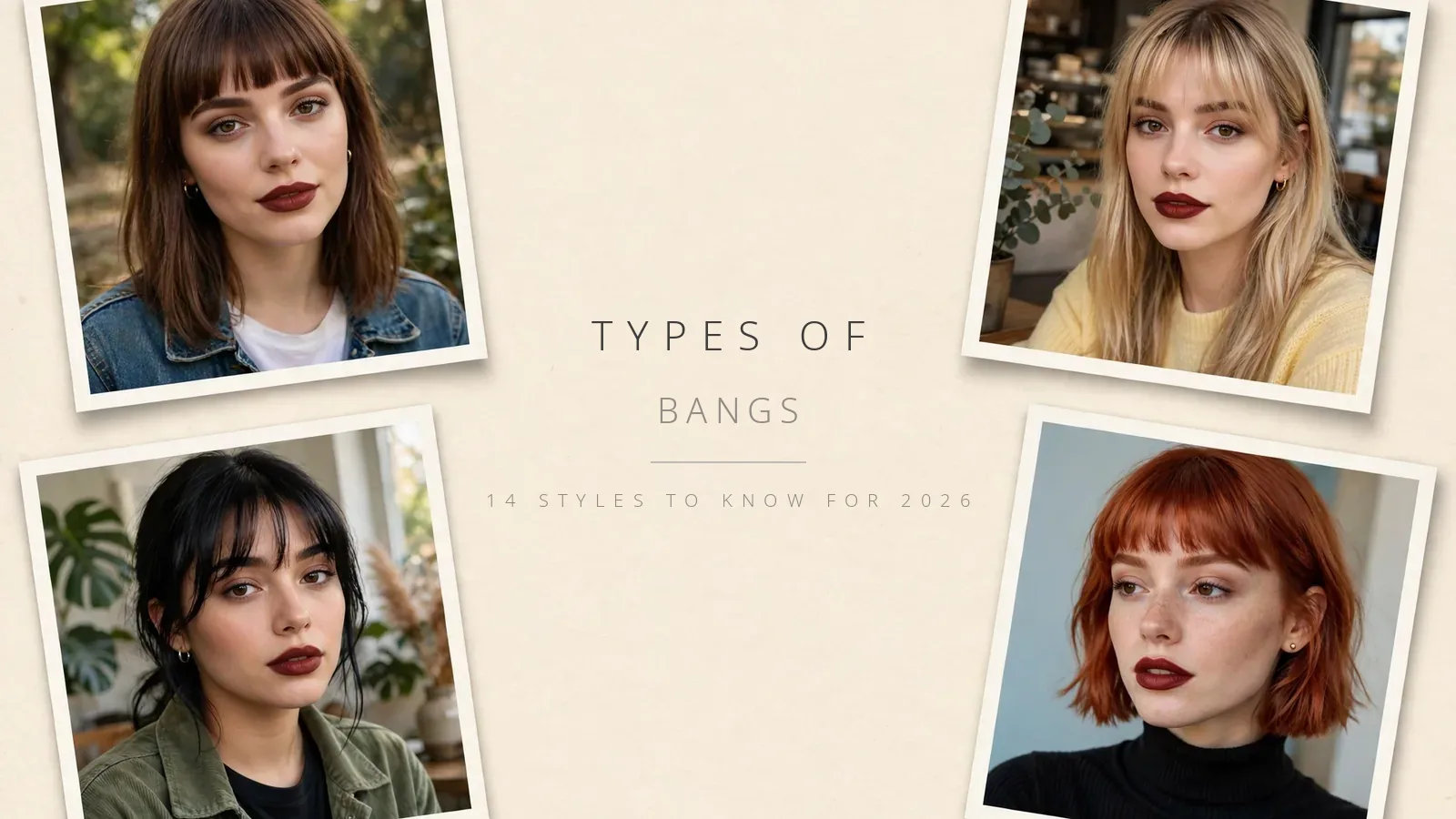
Types of Bangs – 14 Styles to Know for 2026
Choosing between the different types of bangs feels harder than it should, because every photo looks effortless and nobody warns you about the 6 a.m. cowlick standoff. The wrong fringe can mean weeks of bobby pins and regret, while the right one quietly upgrades every haircut you already own.
This guide breaks down 14 types of bangs honestly: what each one actually looks like, who it flatters, how much work it demands, and the exact words to use at the salon. No single fringe suits everyone, but there is a fringe that suits you — let’s find it.
Table of Contents
- 14 Types of Bangs Ideas Worth Trying
- How to Choose the Right Bangs
- Bang Maintenance Reality: Trims, Daily Time and Disaster Recovery
- What to Tell Your Stylist: Exact Salon Phrases
- FAQs
- How do I know if bangs will suit me?
- How often do bangs need trimming?
- Can I get bangs if I have a cowlick?
- What are the lowest maintenance types of bangs?
- How do I style bangs without heat?
- How long does it take to grow out bangs?
- Should bangs be cut wet or dry?
- What should I ask for at the salon to get the bangs I want?
14 Types of Bangs Ideas Worth Trying
Below are the 14 types of bangs worth knowing in 2026 — every fringe style that matters this year — each with honest notes on upkeep, styling and who they actually flatter.
 1. Curtain Bangs
 1. Curtain Bangs
Curtain bangs part softly down the middle and sweep outward like a pair of curtains framing the face, shorter in the center and longer toward the cheekbones. They are the most forgiving of all fringe styles because they blend into layers instead of sitting as a separate block. If you are nervous about bangs, this is where nearly every stylist tells you to start. They pair beautifully with a layered haircut.
Benefits:
- Grow out gracefully with almost no awkward phase
- Work with ponytails, updos and hair worn down
- Soften a wide forehead without heavy coverage
Pro Tip: Ask for the center to hit the bridge of the nose so the sweep opens up as they grow.
How To Style: Blow-dry with a round brush, rolling each side away from the face, then pinch the center part with a flat iron for that signature split.
Best For: Oval, round and heart face shapes; fine to medium hair that holds a bend.
2. Side-Swept Bangs
 2. Side-Swept Bangs
Side-swept bangs angle diagonally across the forehead from a deep side part, longer on one side and tapered on the other. They read polished and grown-up, which is why they keep coming back every few years. They also hide a multitude of sins: cowlicks, uneven hairlines and foreheads you would rather downplay. They pair beautifully with a long bob.
Benefits:
- The most office-friendly fringe — never reads costume-y
- Camouflage for cowlicks and asymmetrical hairlines
- Easy grow-out: they simply become long layers
Pro Tip: Cut them dry whenever possible; wet bangs shrink up and side-swept bangs cut too short will not lay across.
How To Style: Blow-dry across the forehead in the opposite direction of the sweep first for root lift, then sweep into place and set with a light-hold spray.
Best For: Round and square face shapes; thick or coarse hair that needs direction.
3. Blunt Bangs
 3. Blunt Bangs
Blunt bangs are cut straight across at one length, usually at or just below the brows, with zero layering. They are a statement: graphic, bold and impossible to ignore. The trade-off is honesty — they demand the most upkeep of any fringe on this list and they show every cowlick. They pair beautifully with a pixie cut.
Benefits:
- Maximum impact — they transform a haircut instantly
- Make fine hair look thicker at the front
- Pair perfectly with bobs and long straight hair
Pro Tip: Book a trim every 2 to 3 weeks or learn to dust the ends yourself with proper shears — never kitchen scissors.
How To Style: Flat iron in small sections with a slight bend under at the ends, then smooth with a pea-sized amount of smoothing balm to kill flyaways.
Best For: Oval and oblong face shapes; straight, dense hair without strong cowlicks.
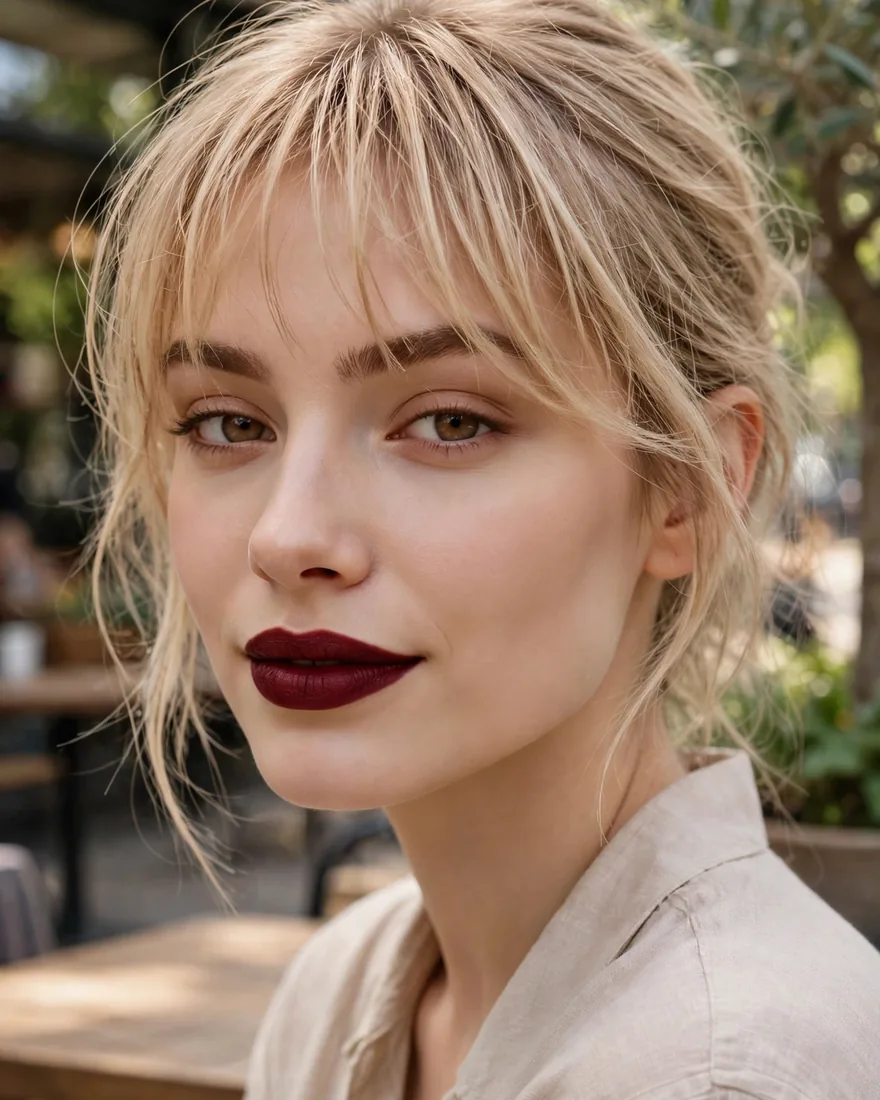
4. Wispy Bangs
 4. Wispy Bangs
Wispy bangs are feathered, piece-y and deliberately imperfect, with visible separation between strands. They give you the softness of bangs with the commitment of almost none. Fine-haired people love them because they do not require much density to look intentional. They pair beautifully with a short shag with bangs.
Benefits:
- The lowest-commitment fringe — mistakes barely show
- Flattering on high foreheads without heavy coverage
- Air-dry friendly for most hair textures
Pro Tip: Less product is more: a heavy cream will clump wispy bangs into stringy pieces.
How To Style: Rough-dry with fingers pointing the nozzle down, then piece out strands with a tiny bit of texturizing spray.
Best For: Fine or thin hair; anyone testing bangs for the first time.
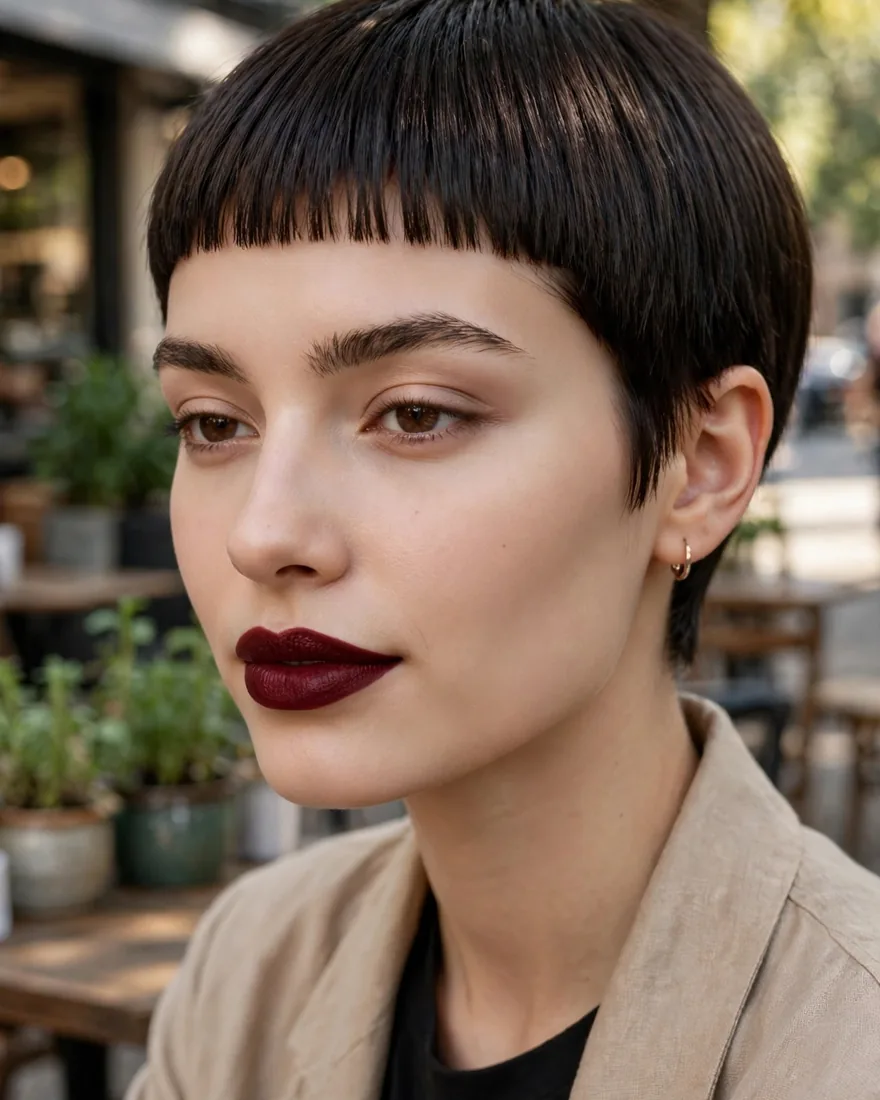
5. Micro Bangs
 5. Micro Bangs
Micro bangs sit well above the eyebrows — sometimes mid-forehead — in a short, bold strip of fringe. They are the cool-girl statement of the bangs world and they photograph incredibly well. Know before you cut: they grow out awkwardly and they expose the entire forehead, so the shape has to be right. They pair beautifully with a short hair.
Benefits:
- Huge style payoff — instantly editorial
- Open up the face and show off strong brows
- Surprisingly good on curly hair when cut dry
Pro Tip: They grow roughly half an inch a month, so you will be pushing them aside within weeks — have a grow-out plan before you commit.
How To Style: Style with a mini flat iron for crispness; on curls, define each coil with curl cream and let them spring up naturally.
Best For: Heart and oval face shapes; confident growers-out and strong brow lines.
6. Bottleneck Bangs
 6. Bottleneck Bangs
Bottleneck bangs are the hybrid everyone is asking for: narrow and short in the center like the neck of a bottle, widening into longer curtain-like pieces at the cheekbones. They give you the face-framing of curtain bangs with more coverage in the middle. Think of them as curtain bangs with a center part that actually stays put.
Benefits:
- The best of both worlds: coverage plus face-framing
- Grow out into curtain bangs with zero drama
- Work on more face shapes than either parent style
Pro Tip: The center should be cut at cheekbone level or above so the U-shape reads clearly.
How To Style: Blow-dry the center forward and down with a round brush, then sweep the longer sides outward away from the face.
Best For: Round, square and heart face shapes; medium-density hair with some wave.
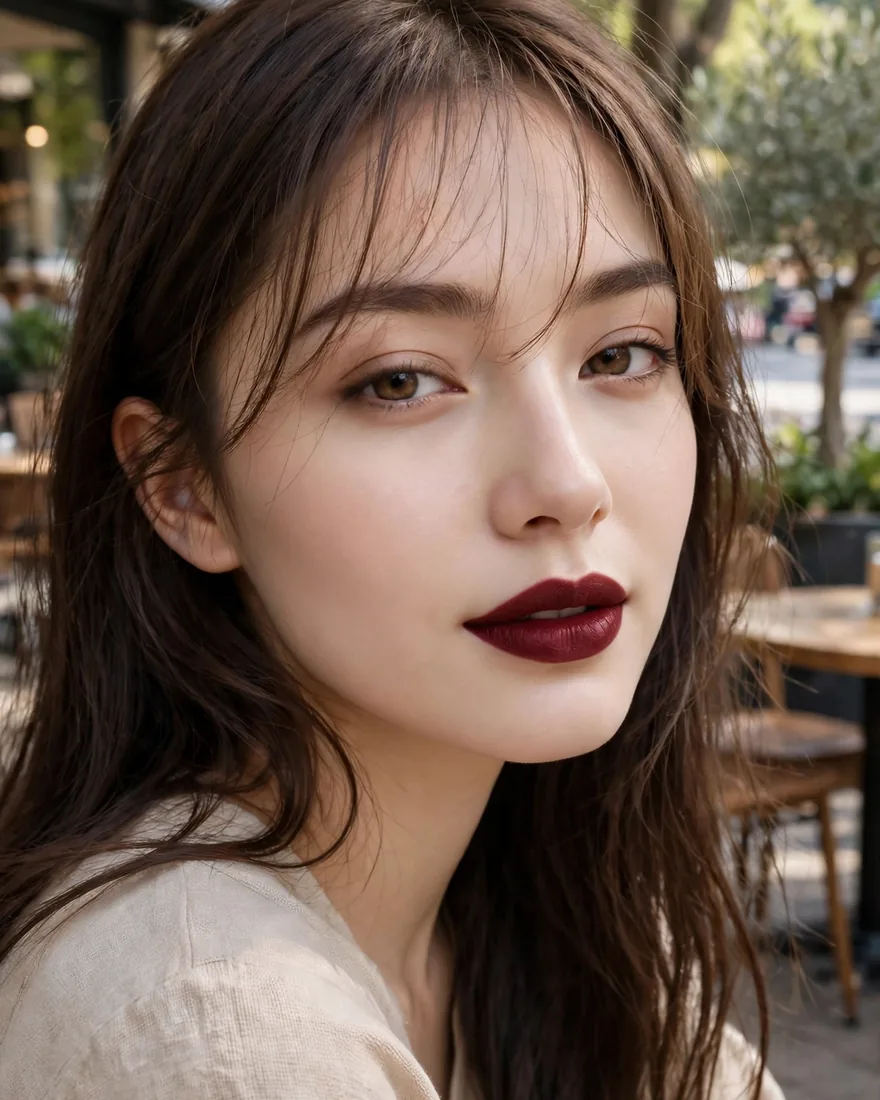
7. See-Through Bangs
 7. See-Through Bangs
See-through bangs are the Korean beauty staple: a sheer, sparse fringe you can literally see the forehead through. They are cut thin and wispy on purpose, which makes them the most forgiving bang to grow out. They soften the face without ever looking heavy.
Benefits:
- The softest possible introduction to bangs
- Nearly invisible grow-out — they just become wisps
- Ideal for fine hair that cannot support dense fringe
Pro Tip: Do not be tempted to cut them thicker later; the sheerness is the entire point of the style.
How To Style: Air-dry or rough-dry, then separate with fingers — a round brush will make them too voluminous and defeat the purpose.
Best For: Fine, straight hair; petite features that heavy bangs would overwhelm.
8. Birkin Bangs
 8. Birkin Bangs
Birkin bangs are named for Jane Birkin: long, brow-skimming fringe with piece-y, lived-in texture that looks like you woke up perfect. They sit right at the eyelashes and blend into the lengths. Effortless is the goal, even though they take some effort.
Benefits:
- Timeless — they have never really gone out of style
- Universally flattering length at the brow line
- Blend seamlessly into long layers
Pro Tip: They look best slightly grown out, so schedule trims at 4 to 5 weeks instead of 3.
How To Style: Blow-dry forward with a paddle brush for smoothness, then break up the ends with a dab of texturizing spray.
Best For: Long hair wearers; oval and heart face shapes.
9. Arched Bangs
 9. Arched Bangs
Arched bangs follow the curve of the brow: shorter in the center, dipping longer at the temples. The arch opens up the eyes while the longer corners slim the cheeks. They are precise and tailored, which means they reward regular trims.
Benefits:
- Draw attention straight to the eyes
- The longer corners contour the cheekbones
- Look intentional even slightly grown out
Pro Tip: Bring a photo: ‘arched’ means different things to different stylists, and the curve depth matters.
How To Style: Flat iron following the arch shape, curving the ends slightly under; finish with shine spray for the polished effect.
Best For: Oval and long face shapes; straight to wavy hair that holds a shape.
10. Choppy Bangs
 10. Choppy Bangs
Choppy bangs are cut with point-cutting and texturizing to create jagged, uneven ends full of movement. They are the rock-and-roll answer to blunt bangs — all the impact with half the severity. They hide cowlicks better than any straight-across fringe.
Benefits:
- Edgy texture that hides styling mistakes
- Great camouflage for cowlicks and uneven growth
- Pair well with shags, mullets and layered cuts
Pro Tip: They need texturizing at every trim or they grow into a blunt shelf — ask your stylist to point-cut the ends.
How To Style: Scrunch in texturizing spray on damp hair and let them air-dry for maximum piece-y separation.
Best For: Thick hair that needs weight removed; edgy, layered haircuts.
11. Textured Fringe
 11. Textured Fringe
Textured fringe is the modern, piece-y descendant of the 70s feathered bang: soft, separated and full of air. It is less about a defined shape and more about movement at the front. This is the fringe for people who hate the word ‘bangs’ but want the effect.
Benefits:
- The most natural-looking fringe option
- Forgiving on wavy and air-dried hair
- Blends into any layered haircut
Pro Tip: Ask for it cut dry and textured with a razor or point-cutting — wet blunt cutting kills the airiness.
How To Style: Apply a lightweight volumizer at the roots, rough-dry forward, then piece out with fingers.
Best For: Wavy and fine hair; low-maintenance routines.
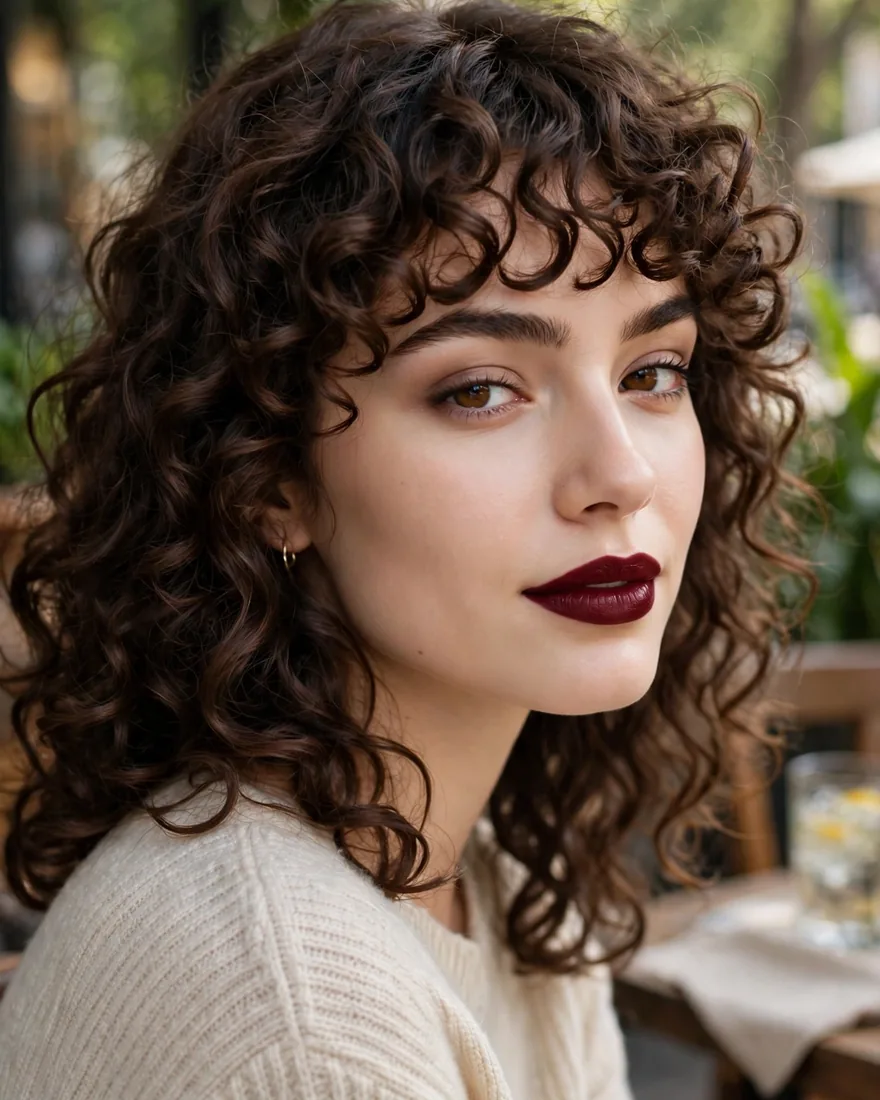
12. Curly Bangs
 12. Curly Bangs
Curly bangs are cut to work with your curl pattern, not against it — which means cut dry, curl by curl, longer than you think — one of the trickiest types of bangs to get right. They frame the face with springy coils instead of fighting them flat. Done right, they are the most joyful fringe on this list. They pair beautifully with a curly hairstyles.
Benefits:
- Celebrate natural texture instead of hiding it
- Cut dry means no shrinkage surprises
- Incredibly flattering with curly bobs and shags
Pro Tip: Never let anyone cut your curly bangs wet and straight — the shrinkage will take them inches shorter than planned.
How To Style: Define each curl with curl cream on soaking-wet hair, then diffuse or air-dry without touching.
Best For: Type 2C to 4A curls; anyone done with straightening their fringe.
13. Baby Bangs
 13. Baby Bangs
Baby bangs are the shortest statement fringe: a tiny strip sitting high on the forehead, often paired with pixies and bold short cuts. They are pure attitude. Like micro bangs they expose everything, but the cropped length makes them read even more deliberate.
Benefits:
- Maximum edge with minimum hair
- Showcase eyes, brows and cheekbones
- Perfect partner for pixie cuts and buzzed styles
Pro Tip: They need trimming every 2 weeks to hold the line — budget for it or learn the dusting technique.
How To Style: Flat iron straight down in one pass; a tiny amount of pomade keeps the edge crisp all day.
Best For: Petite features and strong bone structure; short haircuts.
14. U-Bangs
 14. U-Bangs
U-bangs, sometimes called U-shaped fringe, dip in a deep U: shortest at the center part and sweeping long past the cheekbones. They are essentially an exaggerated curtain bang with more drama. The shape sculpts the face and grows out beautifully into face-framing layers.
Benefits:
- Dramatic face-framing with soft edges
- The grow-out is just long layers — painless
- Add instant shape to one-length hair
Pro Tip: The depth of the U is everything — too shallow and they read as curtain bangs, too deep and they are just layers.
How To Style: Blow-dry with a large round brush, over-directing the center forward and sweeping the sides back.
Best For: Long hair that needs front interest; round and square face shapes.
How all 14 types of bangs compare at a glance:
| Bang Type | Best Hair Texture | Upkeep Level |
|---|---|---|
| Curtain Bangs | Fine to medium, straight to wavy | Low — trims every 4–6 weeks |
| Side-Swept Bangs | Thick, coarse, straight to wavy | Low–Medium |
| Blunt Bangs | Straight, dense | High — trims every 2–3 weeks |
| Wispy Bangs | Fine to medium | Low |
| Micro Bangs | Straight to curly (cut dry) | High — trims every 2–3 weeks |
| Bottleneck Bangs | Medium density, some wave | Low–Medium |
| See-Through Bangs | Fine, straight | Low |
| Birkin Bangs | Medium, straight to wavy | Medium — trims every 4–5 weeks |
| Arched Bangs | Straight to wavy | Medium |
| Choppy Bangs | Thick, wavy | Medium — needs re-texturizing |
| Textured Fringe | Fine to wavy | Low |
| Curly Bangs | Curly 2C–4A (cut dry) | Medium |
| Baby Bangs | Straight, fine to medium | High — trims every 2 weeks |
| U-Bangs | Medium to thick, straight to wavy | Low–Medium |
How to Choose the Right Bangs
Forget everything you have read about matching different types of bangs to face shape first. Stylists increasingly agree that hair texture matters more than face shape when choosing between types of bangs — a fringe that fights your natural texture will never sit right no matter how perfect the face-shape math looks.
Step 1: Start with texture. Fine, straight hair does best with wispy, see-through or Birkin bangs that do not demand density you do not have. Thick or coarse hair needs choppy, curtain or bottleneck bangs with weight removed. Wavy hair loves textured fringe and curtain bangs. Curly hair needs a dry cut and a stylist who specializes in curls — curly bangs cut wet will spring up inches shorter.
Step 2: Check the cowlick situation. Feel along your hairline for strong growth patterns. A dominant cowlick rules out blunt and micro bangs and points you toward choppy, side-swept or textured types of bangs that work with the growth instead of against it. Be honest about this at the consultation — it saves everyone grief.
Step 3: Audit your lifestyle. If you will not blow-dry daily, cross blunt, micro and baby bangs off your list of types of bangs and stay with air-dry-friendly types like wispy, see-through or curly bangs. If you wear your hair up most days, curtain and bottleneck bangs frame the face beautifully with ponytails. Edgier cuts like a wolf cut practically demand a fringe with attitude — choppy or micro.
Step 4: Consider the grow-out. Curtain, bottleneck, wispy and U-bangs melt into layers over 3 to 4 months. Blunt, micro and baby bangs take up to 6 months and an awkward in-between stage. If commitment scares you, start sheer and short is the worst advice — start sheer and long.
Bang Maintenance Reality: Trims, Daily Time and Disaster Recovery
Here is the part most guides to the types of bangs skip: the honest upkeep. Blunt, micro and baby bangs need professional trims every 2 to 3 weeks — budget for that or learn to dust the ends yourself with real shears. Curtain, wispy, see-through, bottleneck and U-bangs stretch comfortably to 4 to 6 weeks, and many salons offer cheap fringe trims between full appointments.
Daily time, honestly: blunt and arched bangs want 5 to 10 minutes with heat every morning. Curtain and bottleneck bangs need about 3 minutes with a round brush. Wispy, see-through and textured fringe can be finger-styled in under a minute. Curly bangs just need their curl cream refresh. Multiply by 365 before you decide which types of bangs fit your mornings.
When it goes wrong — disaster recovery. Hate them on day one? Do not panic-cut. First, try styling them differently for a week — many types of bangs look drastically better once you learn their blow-dry direction. Emergency fixes: sweep everything into a deep side part, pin the fringe back with crossed bobby pins, or braid it into a tiny front braid. A shaggy lob or layered cut gives a bad fringe somewhere graceful to blend into while it grows. And remember the math: at roughly half an inch of growth per month, even the worst of the types of bangs is 3 to 4 months from being layers.
What to Tell Your Stylist: Exact Salon Phrases
When discussing types of bangs at the salon, bring photos from three angles, then use landmark language instead of inches when describing the types of bangs you want — stylists think in facial landmarks. Say “brow-grazing”, “cheekbone-grazing” or “lip-length at the sides” rather than “two inches.” Name the texture out loud: “I want them piece-y, not blunt” or “sheer enough to see skin through.”
Describe your real routine, not your aspirational one: “I air-dry and I will not use a flat iron daily.” That single sentence changes which of the types of bangs your stylist should recommend. Ask “How will this grow out, and when should I come back for a trim?” before the scissors move — the answer tells you the true cost of the style.
Finally, ask the question most people skip: “Can my texture and cowlicks actually do what this photo shows?” A good stylist will adjust the plan honestly — maybe curtain instead of blunt, or a dry cut instead of wet. The consultation is the cheapest part of getting bangs; use all of it when choosing between the types of bangs.
Types of Bangs FAQs
How do I know if bangs will suit me?
Start with your hair texture, not your face shape — stylists increasingly agree texture matters more. Fine, straight hair suits wispy, see-through or Birkin bangs; thick or wavy hair handles curtain, bottleneck and choppy bangs better; curls need a dry cut by someone experienced with curly fringe. Then consider your forehead and how much daily styling you will honestly do. When in doubt, clip-in fringe lets you test-drive the look for a day before committing.
How often do bangs need trimming?
It depends on which of the types of bangs you chose. Blunt, micro and baby bangs need a trim every 2 to 3 weeks to hold their line. Curtain, bottleneck, wispy and U-bangs can stretch to 4 to 6 weeks because they are designed to grow out softly. Many salons offer free or cheap fringe trims between full appointments — ask yours before you start paying full price for bang maintenance.
Can I get bangs if I have a cowlick?
Yes, but choose the right type of bangs and the right cutting method. Choppy, side-swept and textured bangs camouflage cowlicks far better than blunt or micro bangs. Ask your stylist to cut the fringe dry so they can see exactly how the cowlick behaves, and keep some weight at the roots rather than thinning the area aggressively. A little extra length over the cowlick gives it somewhere to go.
What are the lowest maintenance types of bangs?
Curtain bangs, wispy bangs, see-through bangs and U-bangs are the lowest maintenance among all types of bangs. They grow out into face-framing layers instead of an awkward shelf, they tolerate air-drying, and they survive a missed trim. Among all the types of bangs, blunt, micro and baby bangs sit at the opposite end — they demand frequent trims and daily heat styling to look intentional.
How do I style bangs without heat?
Wispy, see-through, curly and choppy bangs all survive without heat. The trick is styling them while damp: comb them into place immediately after washing, then let them set. Creaseless clips at the roots can train the direction while they air-dry. Blunt and micro bangs are the exception — they generally need a flat iron or round brush to look crisp, so skip those types of bangs if you are committed to no-heat styling.
How long does it take to grow out bangs?
Hair grows roughly half an inch per month, so expect 3 to 4 months before most types of bangs blend into layers, and up to 6 months for blunt or micro bangs to fully disappear. Curtain and bottleneck bangs have the easiest grow-out since they are already designed to sweep aside. During the awkward phase, pin them back with bobby pins, sweep them into a deep side part, or use a headband — and resist the urge to trim them yourself.
Should bangs be cut wet or dry?
Dry cutting is better for curly bangs, cowlicks and textured fringe because the stylist can see the true finished length — wet hair stretches and springs up shorter. Blunt bangs are often cut wet for a precise line, then refined dry. If your stylist only offers one method, match it to your type of bangs: precision styles can go wet, everything organic should be cut dry.
What should I ask for at the salon to get the bangs I want?
Bring photos from multiple angles and use the exact language from the section above: name the length in landmarks (‘brow-grazing’, ‘cheekbone-grazing’), describe the texture (‘piece-y’, ‘blunt’, ‘see-through’), and state how you style daily so the cut matches your routine. Ask how the fringe will grow out and when to come back for a trim. The most important question is whether your hair texture and cowlicks can actually do what the photo shows — a good stylist will tell you honestly.
There is no single best fringe among the 14 types of bangs — only the best one for your texture, your cowlicks and the mornings you actually live. Start with an honest audit of all three, pick the fringe that fits your real routine rather than your Pinterest board, and give it two weeks of proper styling before you judge it. The right bangs do not fight you; they just quietly make every haircut better.