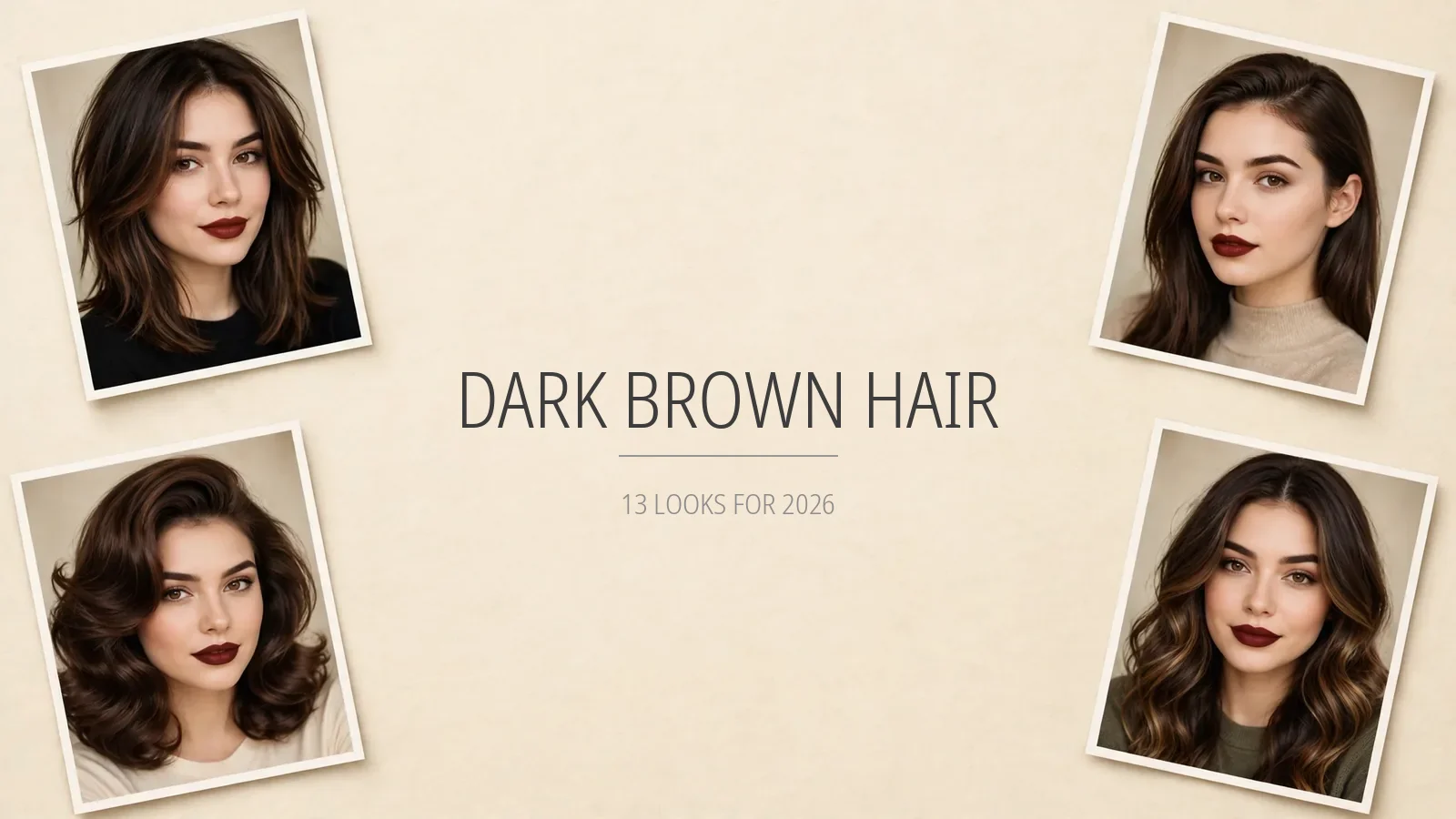
Dark Brown Hair – 13 Looks From Espresso to Chestnut
There is a special kind of disappointment in walking out of the salon with freshly colored dark brown hair that looks rich and glossy under the salon lights, only to catch your reflection a week later and wonder why it suddenly looks flat, dull, and somehow darker than you asked for. The problem is rarely the idea itself — dark brown is one of the most flattering colors in existence — it is the shade choice and the shine routine. Espresso on the wrong undertone can wash you out, chocolate without dimension goes one-note fast, and dark hair shows dullness, frizz, and damage far more honestly than blonde ever will.
The fix is simpler than most people expect: pick the right dark brown family for your skin tone, build in dimension where light can catch it, and treat shine as part of the color itself rather than an afterthought. Below are 13 ideas spanning espresso, chocolate, chestnut, and mahogany — from blunt bobs to tortoiseshell balayage — plus a shade-choosing guide, a shine routine that actually works, and an honest maintenance comparison so you know what each look costs you in upkeep before you commit.
Table of Contents
- Dark Brown Hair Hairstyles Worth Trying
- 1. Soft Layered Cut With Chestnut Highlights
- 2. Sleek Straight Espresso With Deep Side Part
- 3. Loose Waves With Caramel Ends
- 4. Rich Chocolate Blowout
- 5. Blunt Bob With Espresso Shine
- 6. Tortoiseshell Balayage Waves
- 7. Mahogany Face-Framing Pieces
- 8. Ash Brown Lob With Beige Balayage
- 9. Half-Up Top Knot
- 10. Golden Balayage Lob
- 11. Rooted Honey Melt
- 12. Dark Chocolate Shag
- 13. Sleek Low Ponytail on Dark Hair
- How to Choose the Right Dark Brown Shade
- How to Keep Dark Brown Hair Shiny
- Highlights vs All-Over: Maintenance Compared
- FAQs
- What is the best dark brown hair shade for my skin tone?
- Does dark brown hair make you look younger or older?
- How do I keep dark brown hair from looking flat?
- Can I go dark brown from blonde without damage?
- How often should I refresh dark brown hair color?
- Will dark brown hair suit curly or textured hair?
- What is the difference between espresso and chocolate brown?
- Does dark brown hair fade faster than black?
Dark Brown Hair Hairstyles Worth Trying
1. Soft Layered Cut With Chestnut Highlights
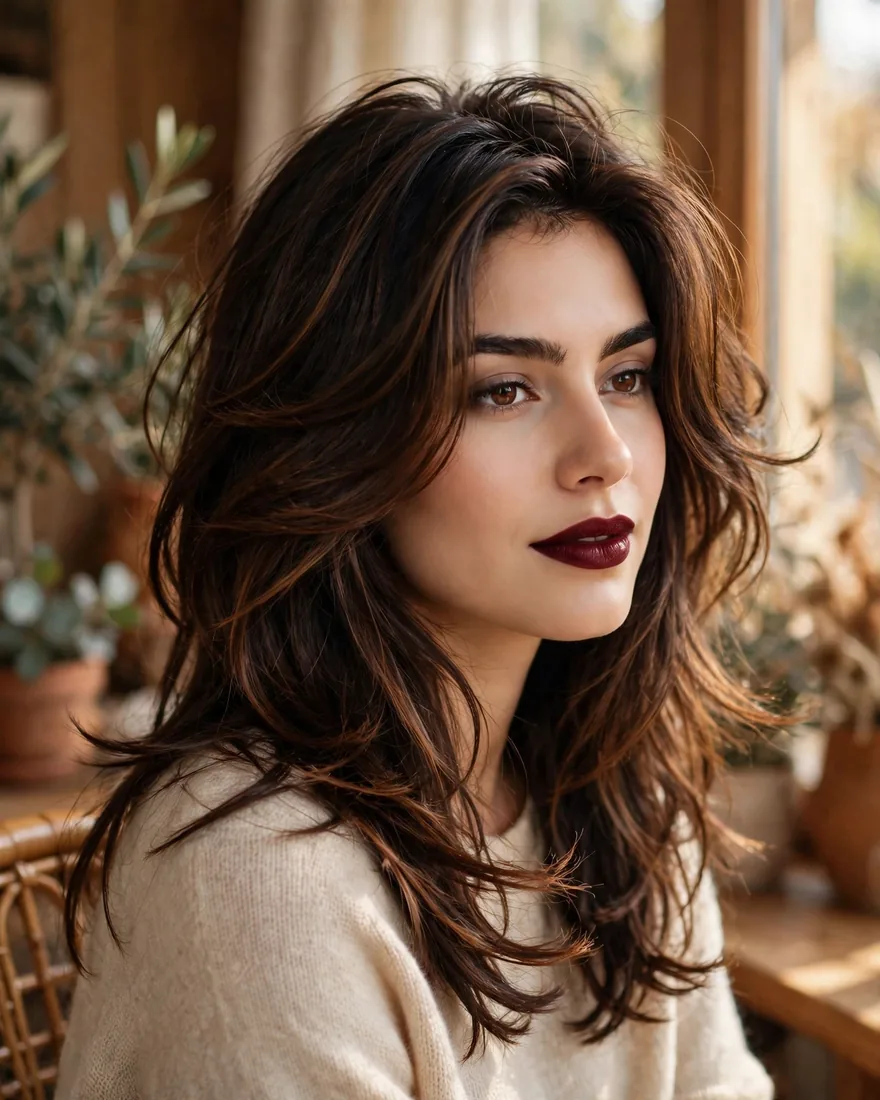
Long, feathered layers in a deep brown base with hand-painted chestnut ribbons running through the mid-lengths — the kind of color that looks almost solid indoors and comes alive in sunlight. The layers are cut long enough to keep the weight, short enough to let the highlights actually show. This is the safest way to wear dark brown hair if you are afraid of it looking flat or severe.
- Benefits:
- Chestnut lights up the face without the maintenance of full highlights
- Long layers add movement to hair that would otherwise hang heavy
- Grows out softly since the lightest pieces sit below the crown
Pro Tip: Ask for the chestnut pieces to be painted at least two fingers’ width away from your part line — highlights that start too close to the roots read as regrowth within three weeks.
How To Style: Blow-dry with a round brush, rolling the ends under, then wrap random two-inch sections around a 1.25-inch curling iron away from the face. Rake through with your fingers and finish with a light shine spray rather than heavy oil, which can darken the chestnut pieces.
Best For: Warm and neutral undertones glow against chestnut; straight to wavy textures show the dimension best. If you want to see how caramel tones behave on a brown base, browse these caramel highlights ideas for reference.
2. Sleek Straight Espresso With Deep Side Part
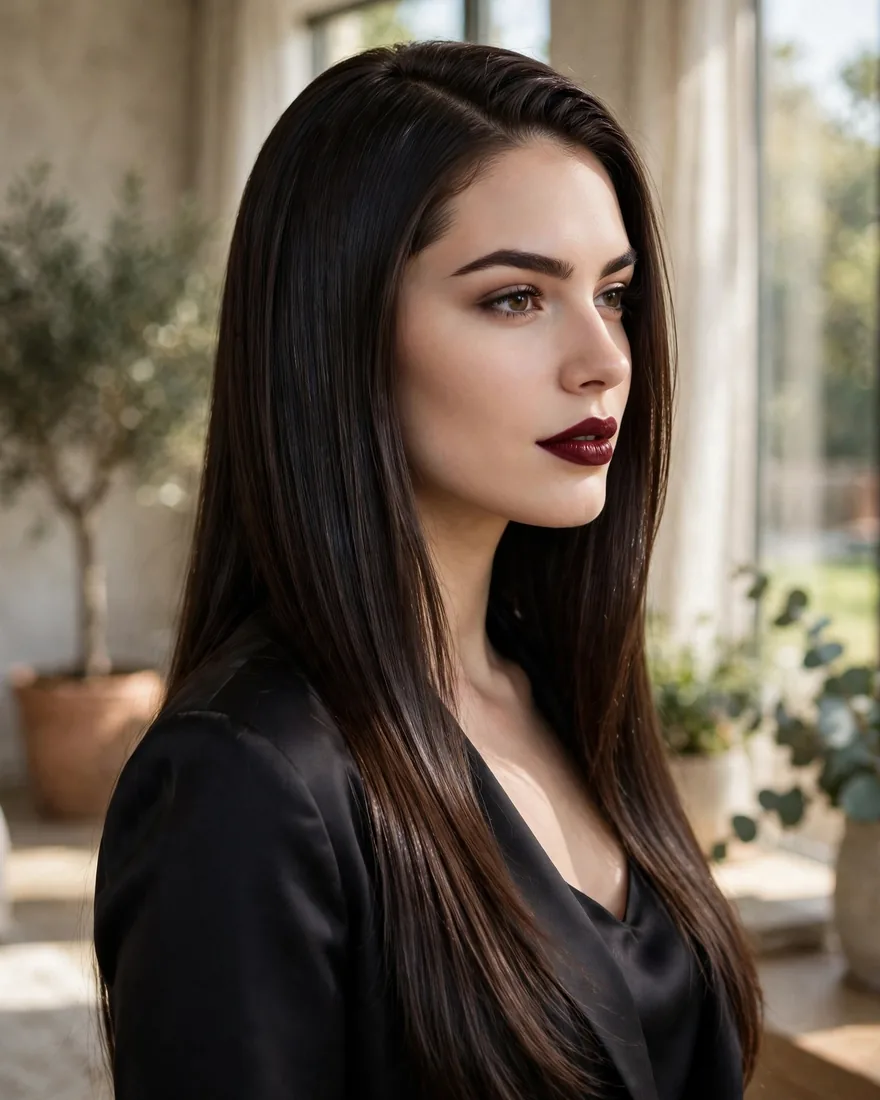
A near-black espresso worn glass-straight with a dramatic deep side part — the darkest of the dark brown hair family, and the most striking. The deep part is doing the real work here: it creates asymmetry and volume at the crown that stops the color from reading as one flat sheet. Without that part, espresso this dark can look like a wig; with it, it looks expensive.
- Benefits:
- Espresso makes eyes look brighter and teeth look whiter by contrast
- Glass-straight styling shows off the color’s mirror shine
- The deep side part flatters wider foreheads and rounder face shapes
Pro Tip: Espresso shows every bit of frizz and split ends, so trim the last inch every eight to ten weeks even if you are growing it out — ragged ends are twice as visible on dark hair.
How To Style: Flat-iron in thin sections with a heat protectant, then press a pea-sized amount of smoothing serum through the mid-lengths only. Set the deep part while the hair is damp so it trains to fall that way, and finish with a cool shot from the dryer to lock the shine.
Best For: Cool and neutral undertones carry espresso beautifully; medium to thick straight hair holds the sleek finish longest. It pairs well with the depth you see across the brown hair spectrum when you want richness without warmth.
3. Loose Waves With Caramel Ends
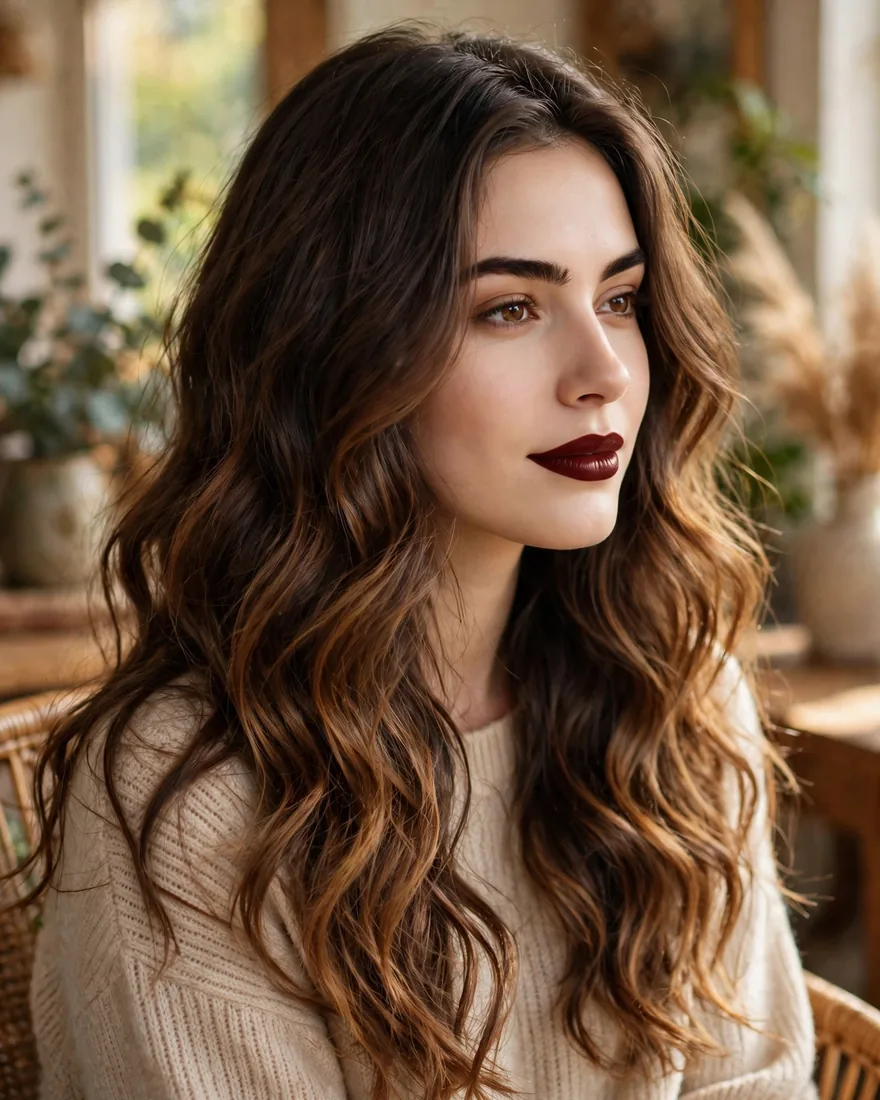
A dark brown base that melts into caramel through the last few inches — an ombré done the modern way, with a soft smudged transition instead of a harsh line. The caramel ends catch every bit of movement, so the whole head looks lighter and more dynamic than it actually is. If your dark brown hair has been feeling heavy or dated, this is the fastest refresh.
- Benefits:
- Lightest at the ends means the grow-out is nearly invisible
- Caramel ends make fine hair look thicker through contrast
- Works as a stepping stone if you are considering going lighter overall
Pro Tip: The transition zone is everything — have your colorist melt the caramel up with a demi-permanent gloss so there is no visible line where brown ends and caramel begins. A hard line is what dates this look.
How To Style: Mist with a heat protectant, then curl the hair from mid-shaft down in alternating directions, leaving the last inch straight. Once cool, shake the waves out with your fingers and scrunch a tiny amount of texturizing cream into the ends to separate them.
Best For: Warm undertones and medium to long hair; wavy and straight textures show the melt cleanly, while curls diffuse it into something softer.
4. Rich Chocolate Blowout
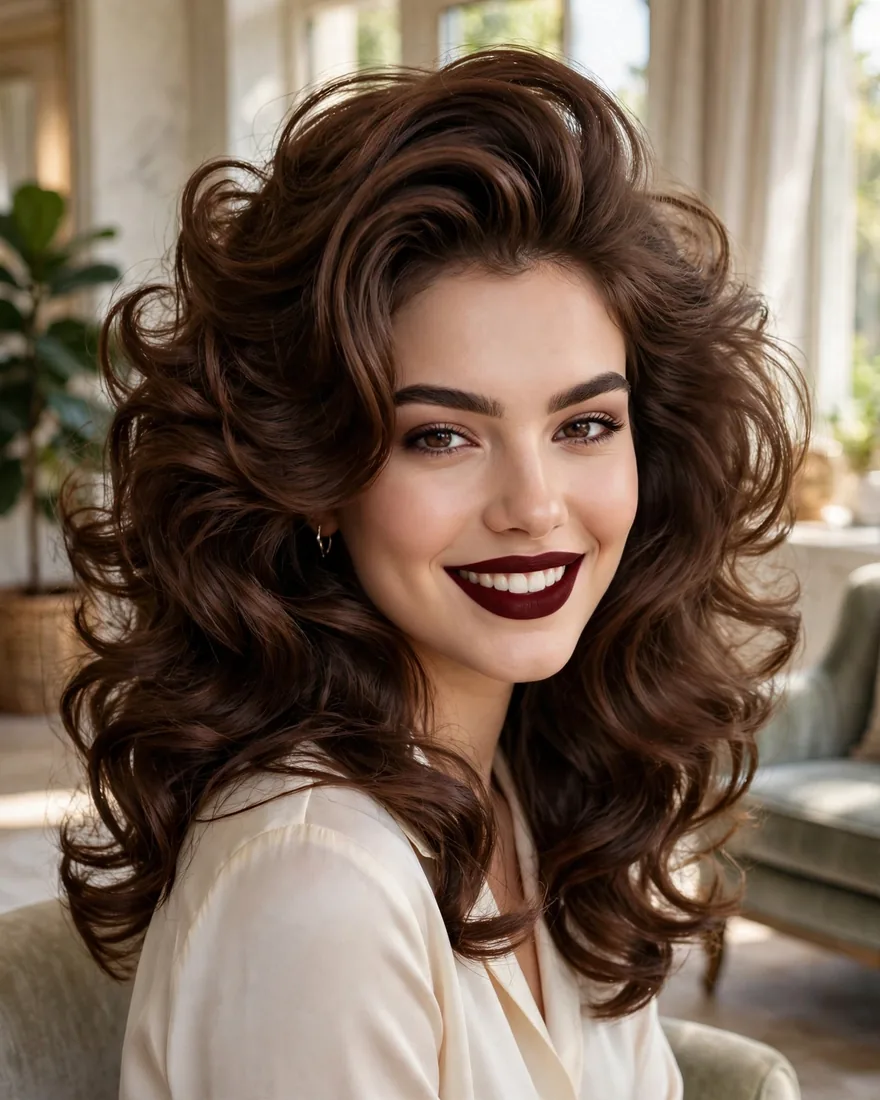
The classic bouncy blowout on a warm chocolate base — full, glossy, and unapologetically polished. Chocolate is the middle child of the dark brown hair family: warmer than espresso, deeper than chestnut, and flattering on the widest range of skin tones. The volume of the blowout keeps all that richness from sitting flat against the head.
- Benefits:
- Chocolate warmth adds a healthy glow to tired or pale complexions
- The blowout’s volume gives fine hair a fuller appearance
- A universally flattering shade that rarely clashes with makeup
Pro Tip: Chocolate fades warm and brassy if you are not careful — a blue or green-tinted shampoo used once a week keeps the tone rich instead of rusty. Skip purple shampoo; that is for blondes.
How To Style: Rough-dry to eighty percent, then smooth with a large round brush, over-directing at the roots for lift. Velcro rollers at the crown while the hair cools will buy you an extra day of volume.
Best For: Warm and neutral undertones; medium-density straight or wavy hair takes the blowout shape best and holds it longest.
5. Blunt Bob With Espresso Shine
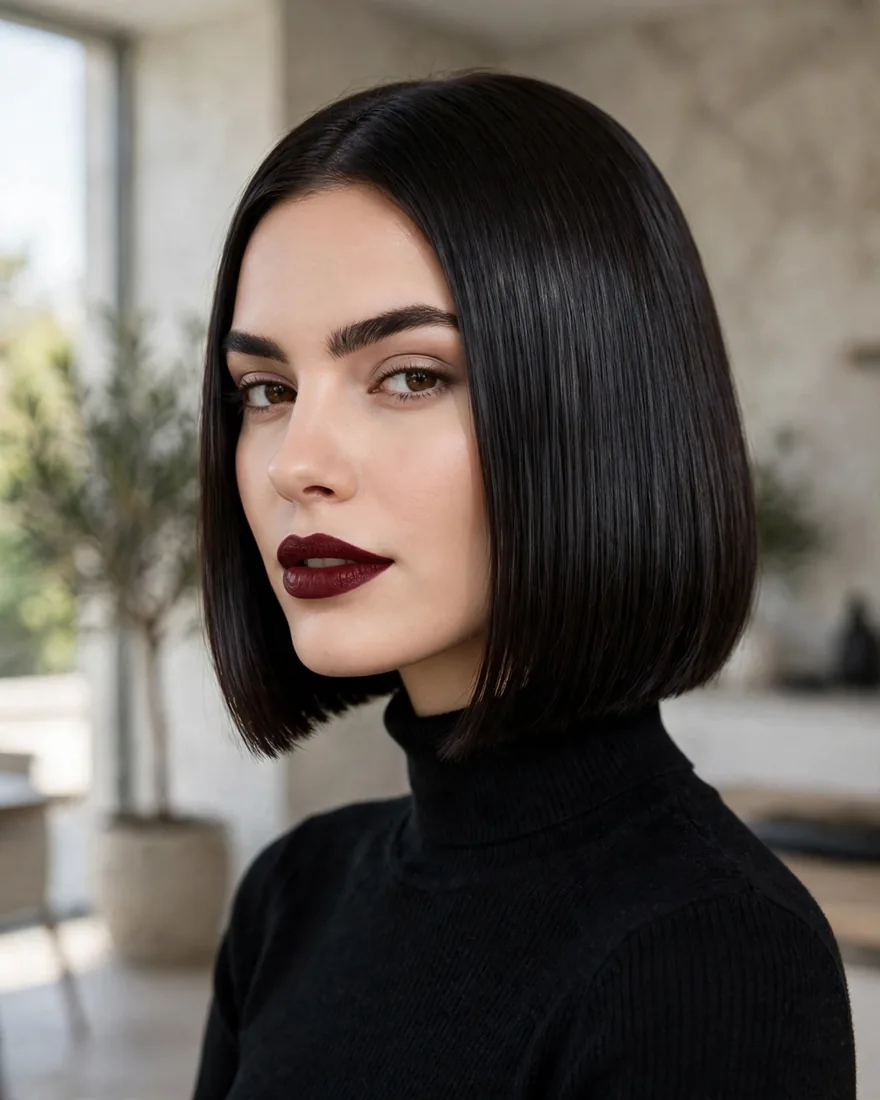
A chin-to-collarbone blunt cut in deep espresso, worn with a mirror finish — the sharpest silhouette in this roundup. The blunt perimeter makes dark hair look denser and more deliberate, which is why this cut photographs so well. On dark brown hair, a blunt bob reads as a statement; the shine is what keeps it from reading as severe.
- Benefits:
- Blunt ends make fine hair look dramatically thicker
- The defined shape frames cheekbones and jawlines beautifully
- Espresso’s depth gives the cut a polished, editorial edge
Pro Tip: This cut lives or dies by the trim schedule — book every six to eight weeks, because even half an inch of uneven growth softens the blunt line that makes the whole look work.
How To Style: Blow-dry smooth with a paddle brush, then flat-iron the ends with a slight inward bevel. A shine mist over the canopy (not the roots) gives the glass effect without weighing the hair down.
Best For: Cool and neutral undertones; straight, fine-to-medium hair shows the blunt line cleanest. For more short-cut inspiration, see these choppy bob hairstyles if you want texture instead of a razor line.
6. Tortoiseshell Balayage Waves
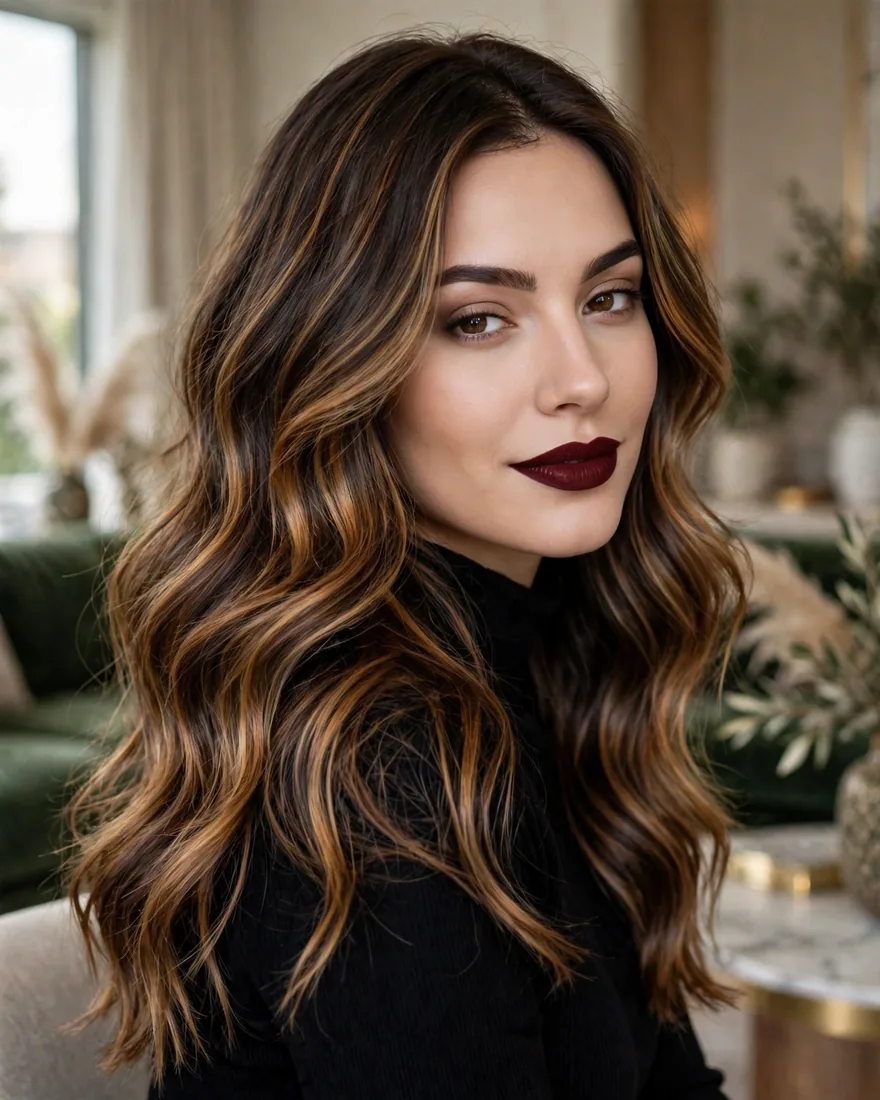
The dimensional brunette technique that layers caramel, honey, and golden ribbons over a dark brown base — named for the mottled tortoiseshell pattern it mimics. It is the most forgiving way to add lightness to dark brown hair because the variation is the point; there is no single regrowth line to betray you. Worn in loose waves, the colors shift and catch light from every angle.
- Benefits:
- Multi-tonal dimension flatters nearly every skin tone
- The lived-in grow-out stretches salon visits to three or four months
- Waves break up the colors so nothing looks striped or harsh
Pro Tip: Tortoiseshell needs at least three distinct tones to earn the name — if your result looks like two colors, ask for a mid-tone gloss woven between them next time.
How To Style: Curl with a 1.5-inch iron in large sections, alternating direction, and let the curls cool completely before touching them. A wide-tooth comb through the cooled waves gives that expensive, lived-in finish.
Best For: All undertones — that is the whole point of the technique; medium to thick wavy hair shows the color play best. It is one of the most requested balayage hairstyles for brunettes for good reason.
7. Mahogany Face-Framing Pieces

A dark brown base with mahogany — that red-brown hybrid — painted through the front sections and around the face. It is a subtle change that reads as a big one: the red tones bring warmth to the complexion and make brown eyes look deeper. If you want your dark brown hair to feel different without committing to all-over red, this is the move.
- Benefits:
- Red tones near the face brighten the complexion instantly
- Lower commitment than an all-over red — it grows out as soft warmth
- Makes brown and hazel eyes look noticeably richer
Pro Tip: Mahogany fades fastest of any dark brown tone, so wash in cool water and skip the daily heat styling on the front pieces — heat is the number-one killer of red pigment.
How To Style: A simple blowout with the front pieces curved softly inward is all this needs; the color does the talking. If you curl the hair, keep the front sections looser so the mahogany stays visible instead of coiling away.
Best For: Warm and neutral undertones; anyone with brown or hazel eyes will get the biggest payoff. Straight to wavy textures keep the face-framing color front and center.
8. Ash Brown Lob With Beige Balayage
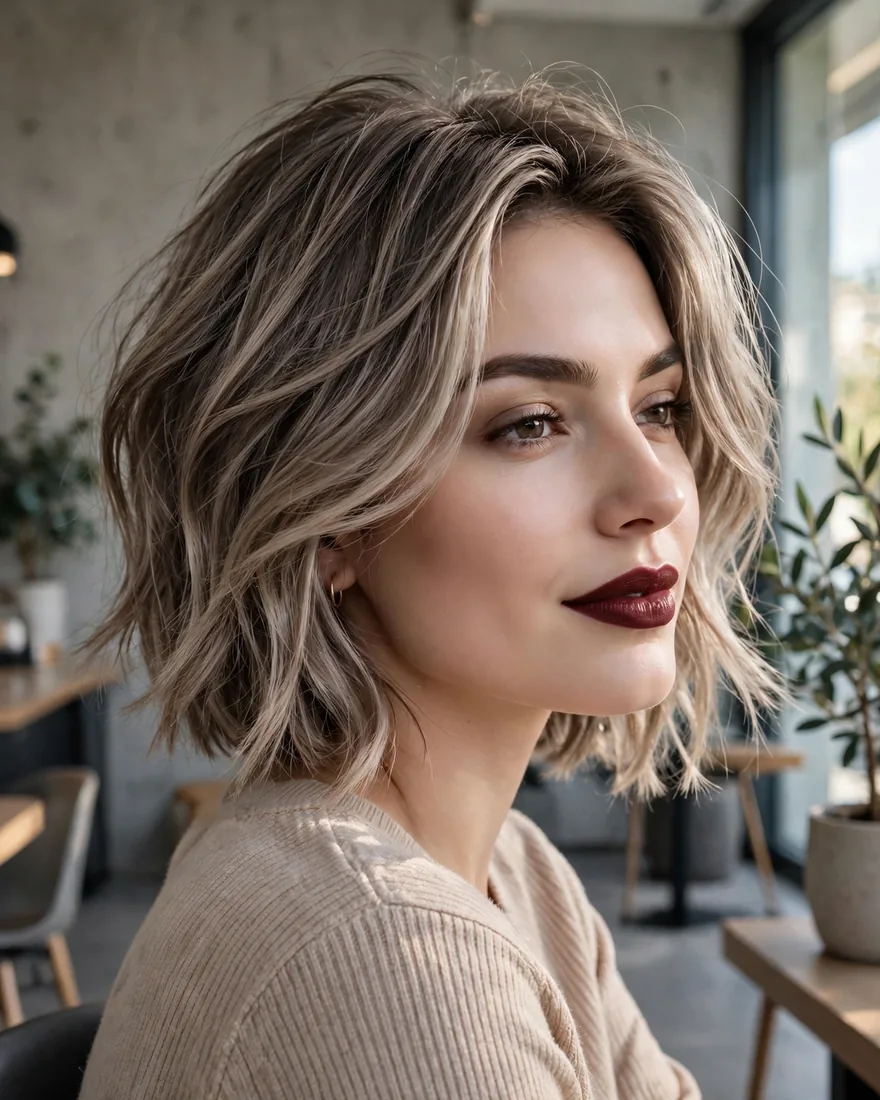
A cool-toned dark brown lob — collarbone length — with beige balayage melting through the ends. Ash brown is the antidote for anyone whose dark brown hair always pulls warm or brassy: the smoky base stays cool, and the beige ribbons keep it from looking flat or muddy. It is the most modern-feeling option in this list.
- Benefits:
- Cool tones neutralize natural warmth that turns brassy
- Beige balayage adds light without fighting the ash base
- The lob length is versatile — wears up, down, tucked, or waved
Pro Tip: Ash tones grab differently on porous ends, so if your ends are damaged from old color, they may go darker or greener than the roots — a protein filler before coloring evens the canvas.
How To Style: Air-dry with a wave cream for an undone texture, or blow out smooth and bend the ends with a flat iron for a polished flip. Either way, keep the part slightly off-center so the beige pieces frame the face.
Best For: Cool and neutral undertones — warm skin can look sallow against too much ash; fine to medium hair in straight or wavy textures.
9. Half-Up Top Knot
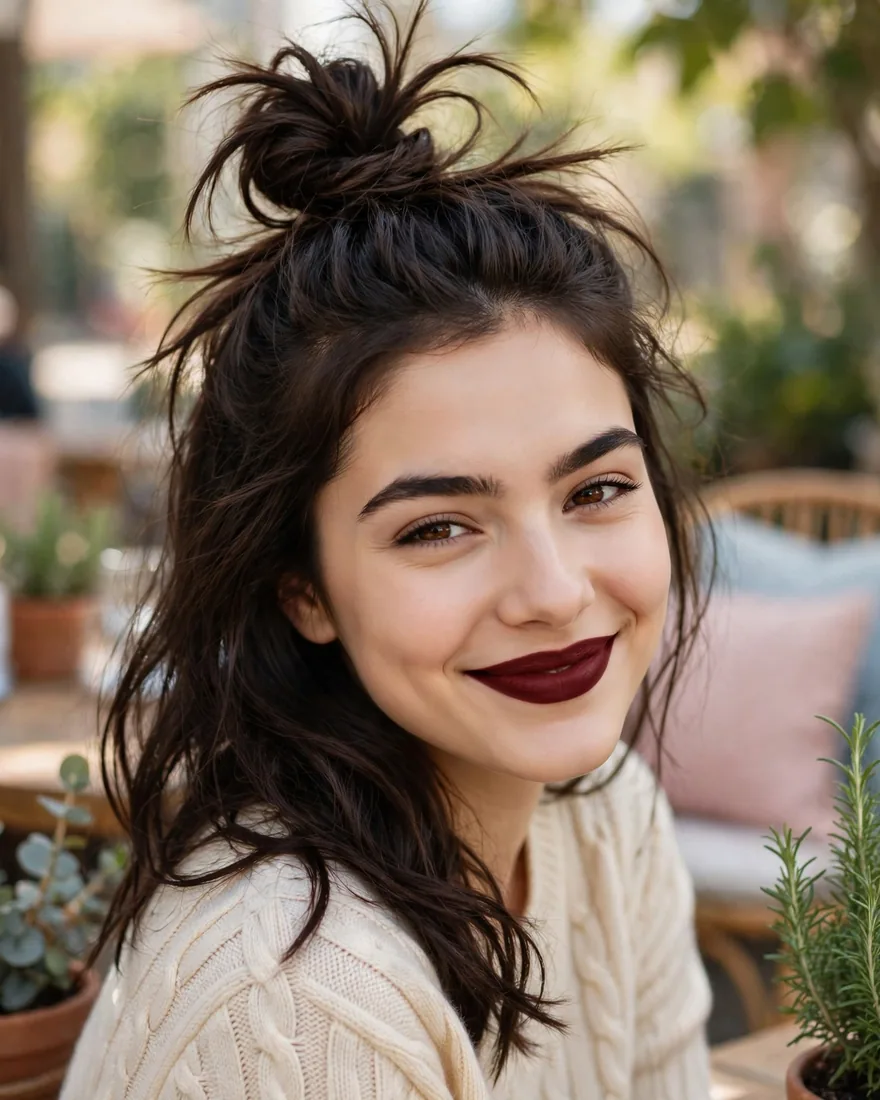
Half the hair swept into a casual top knot while the rest falls loose — the lazy-day style that somehow looks intentional on dark brown hair. The knot pulls the front sections back, which opens up the face and shows off the color’s depth, while the loose back keeps it soft. It also happens to be the best camouflage for second-day roots.
- Benefits:
- Lifts the face and shows off cheekbones without a full updo
- Hides oily roots and grown-out color at the crown
- Takes five minutes and works on almost any hair length past the shoulders
Pro Tip: Place the knot slightly behind the crown rather than right on top — a knot sitting too far forward shortens the forehead visually and looks less relaxed.
How To Style: Gather the top half from temple to temple, twist loosely, and pin into a knot; pull a few face-framing pieces free. Tease the crown lightly before gathering for lift, and mist the knot with texture spray so it holds without looking stiff.
Best For: Every undertone and every texture — this one is about styling, not shade; works best on medium to long hair with enough length to knot.
10. Golden Balayage Lob
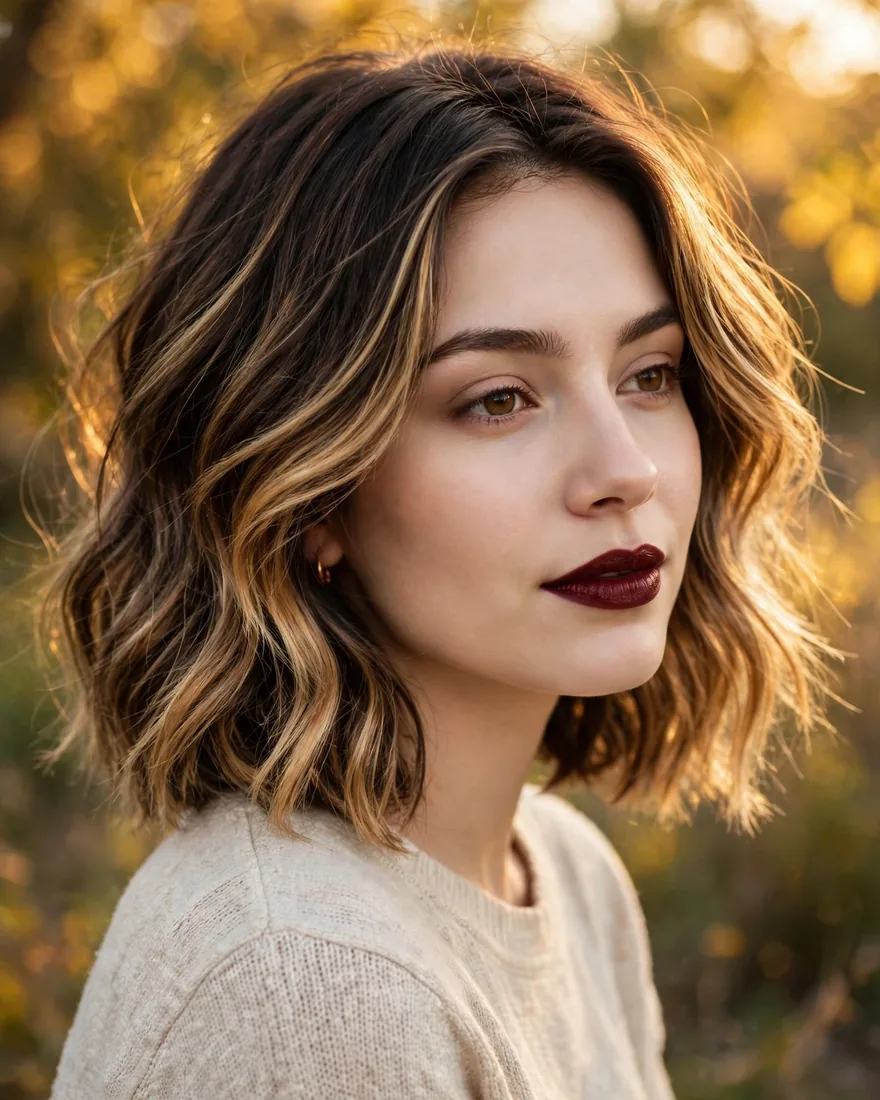
A collarbone-grazing lob with golden balayage swept through a dark brown base — brighter and warmer than the ash version, with a sunlit feel. The gold ribbons sit heaviest around the face and through the ends, which is what gives dark brown hair that lit-from-within quality in photos. It is the friendliest, most approachable of the highlighted looks here.
- Benefits:
- Golden tones add warmth and radiance to the complexion
- Face-framing brightness opens up the features
- The lob length keeps the look modern and low-maintenance
Pro Tip: Gold can tip into brass on naturally warm hair — ask your colorist to tone the balayage to a true golden beige rather than leaving it raw, which keeps it luminous instead of orange.
How To Style: Bend the hair with a flat iron in alternating directions for loose, lived-in waves, then pinch the ends with a tiny bit of pomade for separation. A center or slightly off-center part shows the face-framing gold best.
Best For: Warm undertones get the most natural result; medium-density straight to wavy hair. If you are deciding between highlight placements, these highlights for brown hair break down the options by technique.
11. Rooted Honey Melt
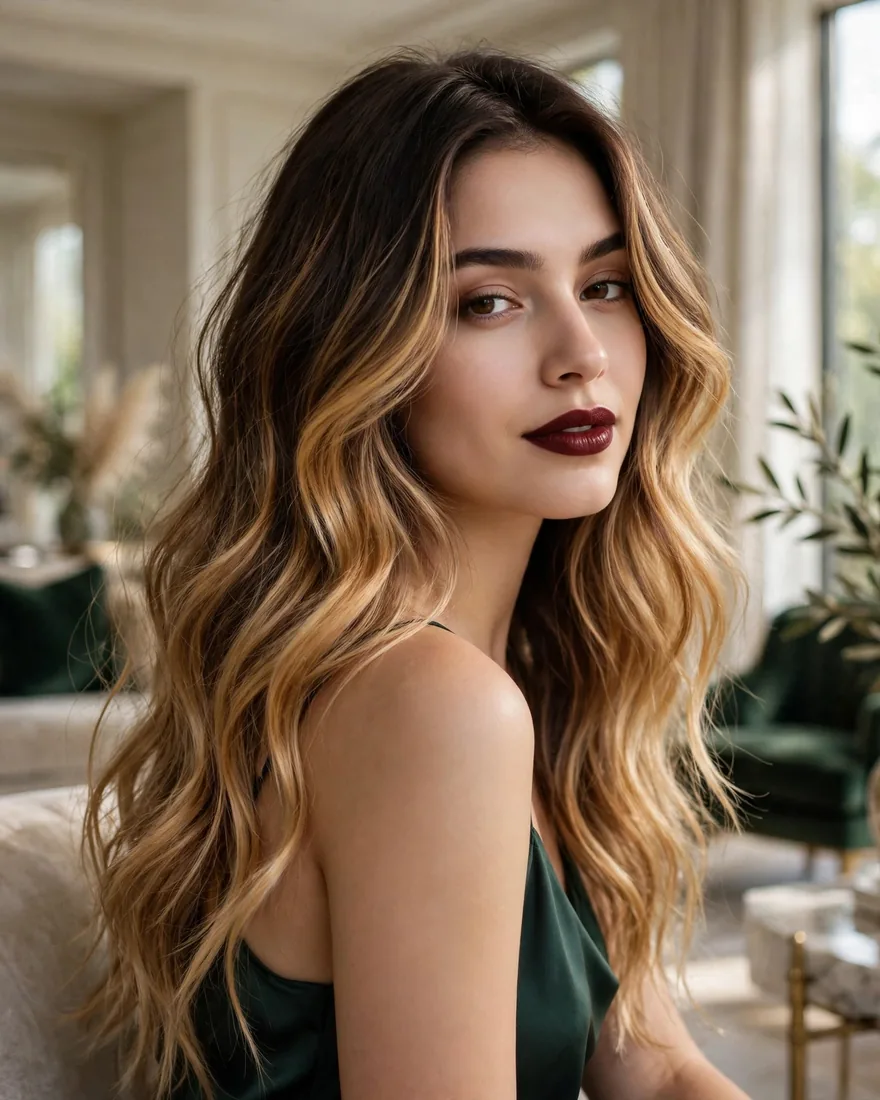
Dark roots that dissolve into honey-toned lengths with zero visible line — the melt technique at its smoothest. Unlike balayage, which keeps distinct ribbons, a melt is all about the gradient: dark brown hair at the crown flowing seamlessly into warm honey. It looks like your hair just naturally gets lighter toward the ends, which is the entire illusion.
- Benefits:
- The seamless gradient means the most forgiving grow-out of any lightened look
- Honey warmth is flattering on warm and neutral skin alike
- Looks equally good straight, wavy, or air-dried
Pro Tip: A true melt should have no visible demarcation when the hair is pulled straight — check it in natural daylight before you leave the salon, because overhead salon lighting hides lines.
How To Style: This color looks best with minimal fuss: a smooth blowout or loose waves both show the gradient beautifully. Avoid tight curls, which chop the melt into segments and ruin the seamless effect.
Best For: Warm and neutral undertones; medium to long hair gives the gradient room to develop — on short hair the melt can run out of real estate.
12. Dark Chocolate Shag

A layered shag — curtain bangs, choppy ends, lived-in texture — in a rich chocolate brown. The shag’s shattered layers catch light at every level, which is exactly what chocolate needs to avoid looking one-dimensional. On dark brown hair, the shag reads edgy rather than messy, especially with the curtain fringe framing the eyes.
- Benefits:
- The layered texture creates natural volume and movement
- Curtain bangs flatter most face shapes by softening the hairline
- Chocolate’s warmth keeps the edgy cut feeling wearable
Pro Tip: The shag needs texture to work — if your hair is very fine and straight, ask for internal layers rather than surface choppiness, or the cut can look thin instead of piecey.
How To Style: Work a volumizing mousse through damp hair, then rough-dry with your head flipped for lift. Define the curtain bangs with a round brush, and finish the ends with a light texturizing spray — never a heavy wax, which kills shag movement.
Best For: Warm and neutral undertones; wavy and curly hairstyles wear the shag with the least daily effort, though straight hair can be scrunched into it.
13. Sleek Low Ponytail on Dark Hair
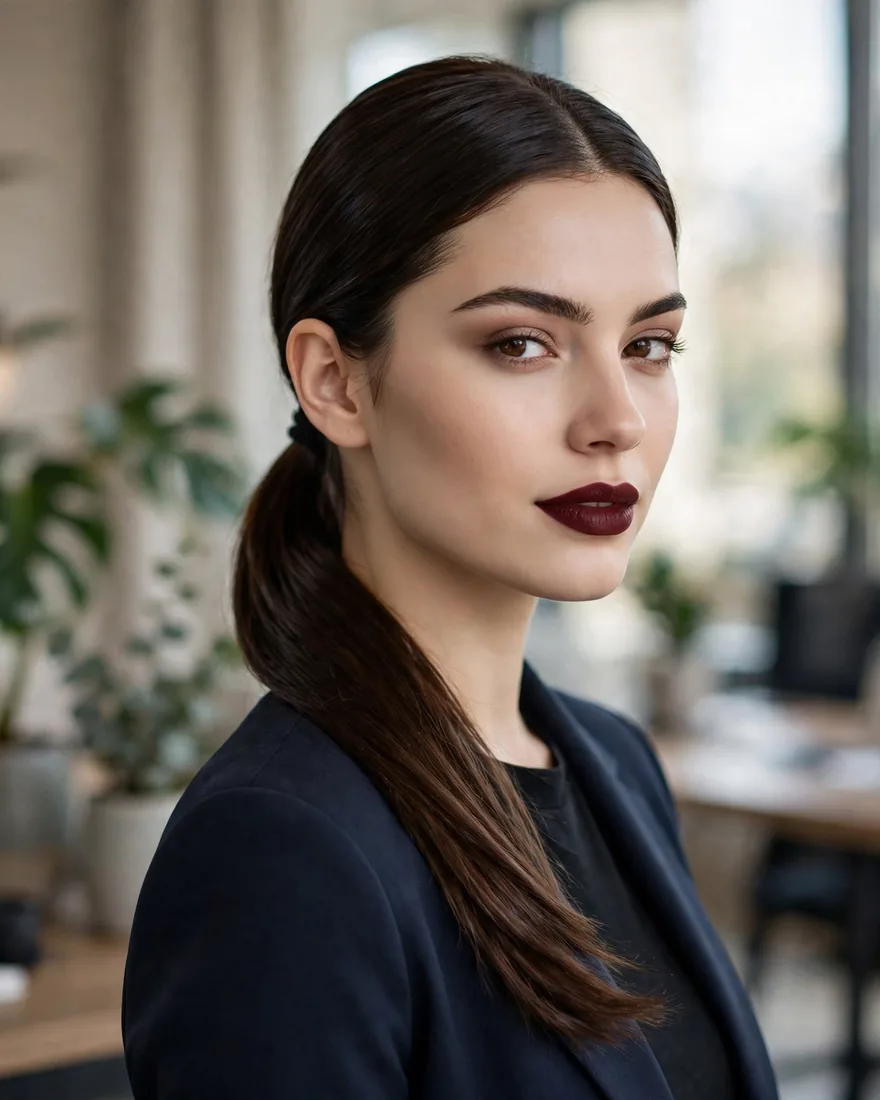
A polished low ponytail at the nape, smoothed to a high shine — proof that dark brown hair does not need elaborate styling to look striking. The low placement keeps it elegant rather than sporty, and the sleek finish turns the color itself into the feature: deep, glossy, reflective. It is the five-minute style that looks like forty.
- Benefits:
- Instantly polished — works for offices, weddings, and everything between
- The sleek finish showcases dark hair’s natural shine
- Keeps hair off the face while still looking styled, not gym-bound
Pro Tip: Wrap a thin section of hair around the elastic and pin it underneath — it hides the band and is the single detail that separates a sleek pony from a rushed one.
How To Style: Smooth damp hair with a paddle brush and a heat protectant, then flat-iron the lengths. Gather at the nape, secure firmly, and run a shine serum over the canopy to tame flyaways. A deep side part before gathering adds softness around the face.
Best For: All undertones and textures — the style is universal; medium to long hair gives the most elegant drape.
How the 13 looks compare at a glance:
| Look | Best Skin Undertone | Upkeep Level |
|---|---|---|
| Soft Layered Cut With Chestnut Highlights | Warm, neutral | Low–medium: gloss refresh every 8–10 weeks |
| Sleek Straight Espresso With Deep Side Part | Cool, neutral | Low: trims every 8–10 weeks, shine routine at home |
| Loose Waves With Caramel Ends | Warm | Low: toner refresh every 10–12 weeks |
| Rich Chocolate Blowout | Warm, neutral | Medium: tone-correcting wash weekly, styling effort |
| Blunt Bob With Espresso Shine | Cool, neutral | Medium: trims every 6–8 weeks to hold the line |
| Tortoiseshell Balayage Waves | All undertones | Low: re-lighten every 3–4 months |
| Mahogany Face-Framing Pieces | Warm, neutral | Medium: red fades fast, gloss every 6–8 weeks |
| Ash Brown Lob With Beige Balayage | Cool, neutral | Medium: toning to fight warmth, refresh every 8–10 weeks |
| Half-Up Top Knot | All undertones | None: pure styling, works on any dark brown base |
| Golden Balayage Lob | Warm | Low–medium: toner refresh every 8–10 weeks |
| Rooted Honey Melt | Warm, neutral | Low: the gradient hides regrowth for months |
| Dark Chocolate Shag | Warm, neutral | Medium: layer trims every 8 weeks, texture styling |
| Sleek Low Ponytail on Dark Hair | All undertones | None: pure styling, five minutes |
How to Choose the Right Dark Brown Shade
The dark brown family is wider than it looks on a shade chart, and picking the wrong temperature is the most common reason dark brown hair disappoints. Check your undertone first: blue or purple wrist veins and silver jewelry flattering you means cool — reach for espresso and ash brown. Green veins and gold jewelry means warm — chocolate, chestnut, and mahogany will add glow. Neutral undertones get the full menu; when in doubt, stay close to your natural color and go one level deeper rather than jumping families.
Texture changes the equation. On curly and coily hair, dark brown absorbs light instead of reflecting it, so the same shade looks richer on straight hair and moodier on curls — a porosity issue, not a color failure. If curls take color unevenly, a clear gloss evens the light reflection without changing the shade. And if you are going back to dark from blonde, do not skip the fill: bleached hair has no underlying pigment, so coloring straight over it often goes green or flat. Depositing warm pigment first, then the dark brown over it, is the difference between rich chocolate and murky disappointment. One more honest note: very dark shades show regrowth faster on lighter natural hair and demand more shine maintenance — if you want easier grow-out, the lived-in dimension of a california brunette or the softer lift of light brown hair may suit your routine better than all-over espresso.
How to Keep Dark Brown Hair Shiny
Dark brown hair shows dullness faster than any other color — blonde hides damage in its lightness, but dark hair has nowhere to hide, so every dry patch and lifted cuticle reads as matte. The shine routine is not optional styling; it is part of wearing the color well.
Wash with lukewarm water and finish with a cool rinse — heat lifts the cuticle, cool water lays it flat, and flat cuticles reflect light. A clear or tinted gloss every four to six weeks seals the cuticle and restores that fresh-from-the-salon reflectivity for a fraction of a color appointment; between glosses, a weekly mask keeps ends supple, since dry ends scatter light instead of reflecting it. Use heat protectant every single time you heat-style, keep irons at the lowest effective temperature, and finish with a lightweight serum or shine mist — never heavy oils at the roots, which darken the color. Hard water mineral buildup dulls dark color fast, so clarify once a month (followed immediately by a mask), and sleep on silk or satin to cut overnight friction.
Highlights vs All-Over: Maintenance Compared
All-over dark brown hair color is cheapest per appointment — a single process, in and out — but it shows regrowth fastest, especially on lighter or gray natural hair. Expect root touch-ups every four to six weeks to keep it seamless, plus a gloss between visits if you want the shine to hold.
Highlights and balayage cost more upfront but the grow-out is far more forgiving: tortoiseshell, melts, and lived-in balayage go three to four months between lightening because the variation hides regrowth by design. What they need instead is toner refreshes every eight to twelve weeks — quick, inexpensive gloss appointments, not full color sessions. Over a year the total cost is often comparable; the rhythm differs. At home, all-over color asks for color-safe shampoo, cool water, and regular glosses, while highlighted hair adds weekly tone management with a product matched to your highlight shade. If your routine has room for only one salon habit, make it the gloss — the highest-impact appointment for any dark brown, highlighted or not.
FAQs
What is the best dark brown hair shade for my skin tone?
Match the shade temperature to your undertone: cool undertones (blue/purple wrist veins, silver jewelry suits you) look best in espresso and ash brown; warm undertones (green veins, gold jewelry) glow in chocolate, chestnut, and mahogany; neutral undertones can wear the full range. When you are unsure, choose the shade closest to your natural color and go one level deeper — it is almost always flattering.
Does dark brown hair make you look younger or older?
It depends on the shade and the condition. Rich, glossy dark brown with dimension tends to look youthful because shine reads as healthy hair; flat, overly dark, one-dimensional color can look harsh and aging, especially against fair skin. The fix is rarely going lighter overall — it is adding subtle dimension around the face and keeping the shine routine consistent.
How do I keep dark brown hair from looking flat?
Dimension and shine are the two levers. Even two or three levels of tonal variation — face-framing pieces, balayage ribbons, or a gloss in a slightly different tone — stop dark hair from reading as one solid sheet. Then protect the shine: cool rinses, regular glosses, heat protectant every time you style, and lightweight shine products instead of heavy oils that darken the color further.
Can I go dark brown from blonde without damage?
Going darker is far less damaging than going lighter, but there is one critical step: filling the hair first. Bleached hair has no underlying pigment, so applying dark brown directly often turns green, gray, or muddy. A colorist fills the hair with warm pigment before applying the dark shade, which gives you rich, true chocolate instead of a correction appointment three weeks later.
How often should I refresh dark brown hair color?
All-over dark brown needs root touch-ups every four to six weeks if your natural color is lighter or gray; highlighted or balayaged dark brown stretches to three or four months between lightening, with toner glosses every eight to twelve weeks. Everyone wearing dark brown benefits from a clear or tinted gloss every four to six weeks — it is the cheapest way to keep the color looking freshly done.
Will dark brown hair suit curly or textured hair?
Yes, but set expectations around shine: curls and coils scatter light, so dark brown looks moodier and less reflective on textured hair than on straight hair — that is physics, not a color failure. Keep the hair well-moisturized, use a clear gloss to even out light reflection if color takes unevenly, and consider subtle dimension through the curls so the shape of the texture shows. The color itself flatters every texture.
What is the difference between espresso and chocolate brown?
Espresso is the darkest, coolest dark brown — near-black with minimal warmth, best on cool and neutral undertones. Chocolate is a medium-dark warm brown with visible red and golden undertones, flattering on the widest range of skin tones. Espresso makes the strongest contrast statement; chocolate is the more forgiving, everyday-wearable of the two.
Does dark brown hair fade faster than black?
Dark brown and black fade at similar rates from washing and sun, but fading shows more on dark brown because the underlying warmth gets exposed — color can drift brassy or reddish as it fades, while black mostly just loses depth. Cool water, color-safe shampoo, UV protection, and regular glosses slow the process for both. Mahogany and other red-leaning browns fade fastest of all.
Dark brown hair earns its reputation as the most wearable rich color for a reason: it flatters nearly every skin tone, it photographs beautifully, and it never really goes out of style. The difference between dark brown that looks expensive and dark brown that looks flat comes down to three decisions — the right shade temperature for your undertone, dimension placed where light can find it, and a shine routine you actually follow. Get those three right, and any of these 13 looks will carry you through the season looking polished with far less effort than the color suggests.