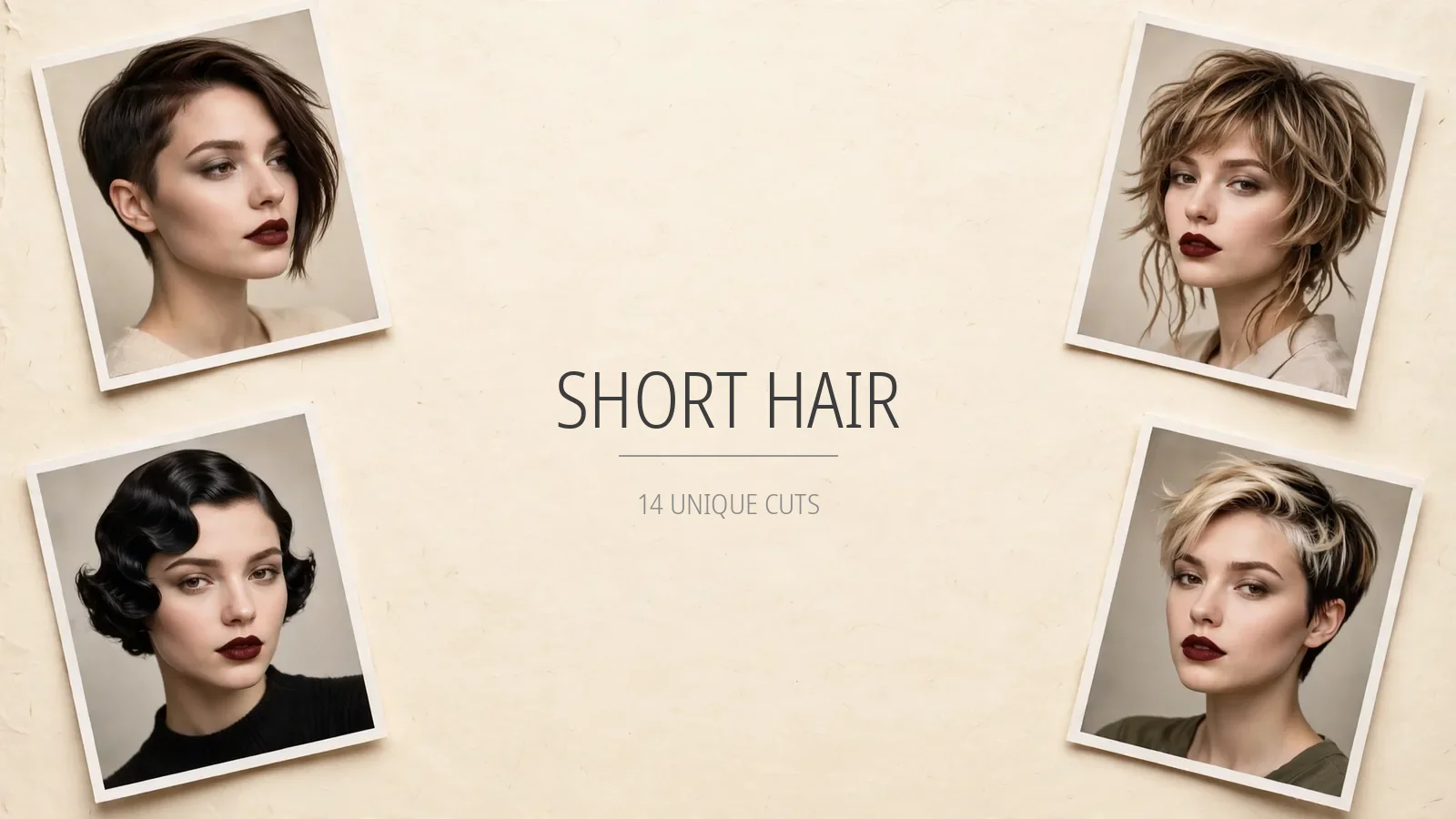
Unique Hairstyles for Short Hair – 14 Actually Unusual Cuts
Search for unique hairstyles for short hair and you will drown in listicles calling a layered bob “unique.” The word has been stretched so thin it barely means anything. If you want something that actually turns heads, you need a sharper filter than a keyword.
That is what this guide does. Below are 14 genuinely unusual cuts — asymmetric lines, jellyfish layers, sculpted waves, two-tone color blocking — each with an honest wearability note, because unusual should not mean unwearable. Every one of these unique hairstyles for short hair earns its place by looking different from the ten cuts you see everywhere, with real styling times so you know what you are signing up for.
Table of Contents
- Unusual Short Hairstyles Worth Trying
- 1. Textured Pixie with Side-Swept Bangs
- 2. Asymmetric Short Cut
- 3. Jellyfish-Inspired Short Layers
- 4. Curled Undercut
- 5. Messy Curls with Crown Volume
- 6. Sleek Bob with Deep Side Part
- 7. Braided Headband Twist
- 8. Feathered Pixie with Micro Fringe
- 9. Choppy Mini Bob
- 10. Short Shag with Curtain Pieces
- 11. Sculpted Finger Waves
- 12. Two-Tone Short Cut
- 13. Tapered Nape Bob
- 14. Layered Cut with Face-Framing Pieces
- Genuinely Unusual vs Mainstream-with-the-Same-Label
- Avant-Garde Wearability: Photographs Well vs Wears Well
- Styling Time for Unusual Cuts
- FAQs
- What makes a short hairstyle genuinely unique?
- Are unusual short haircuts hard to maintain?
- Can I wear an avant-garde short cut to work?
- Which unique short hairstyles suit round faces?
- How do I style an asymmetric cut at home?
- Will a jellyfish cut or undercut grow out badly?
- What should I ask my stylist for a unique short cut?
- Do unusual short cuts work on thin or fine hair?
Unusual Short Hairstyles Worth Trying
1. Textured Pixie with Side-Swept Bangs
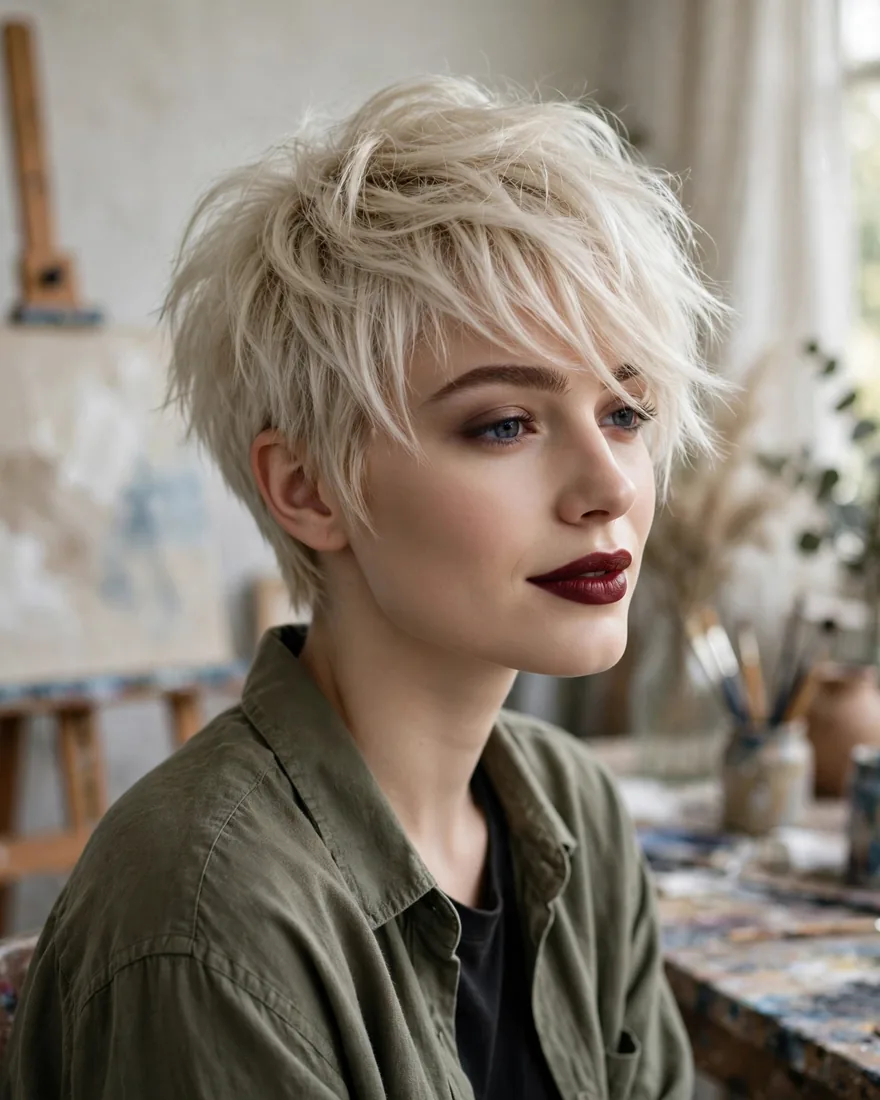
Not the polished pixie from salon posters — this one is point-cut and piece-y, with the top long enough to sweep hard to one side. Choppy ends catch light from every angle, so the cut looks intentionally undone rather than merely short.
Benefits:
- Texture disguises thin spots and makes fine hair look twice as dense — a quiet win among unique hairstyles for short hair
- Deep side sweep slims round faces, softens strong jawlines
- Grows into a shaggy bob, not an awkward in-between
Pro Tip: Ask for dry point-cutting — wet-cut texture shrinks up shorter than planned once dry.
How To Style: Work matte paste through dry hair, pinching ends into points. Sweep the fringe across with a paddle brush and set with a light mist.
Best For: Fine to medium straight or wavy hair; oval, round, and heart faces. Wearability: high — this is one of the most office-friendly unique hairstyles for short hair on the list. For the full pixie spectrum, see our pixie cut guide.
2. Asymmetric Short Cut
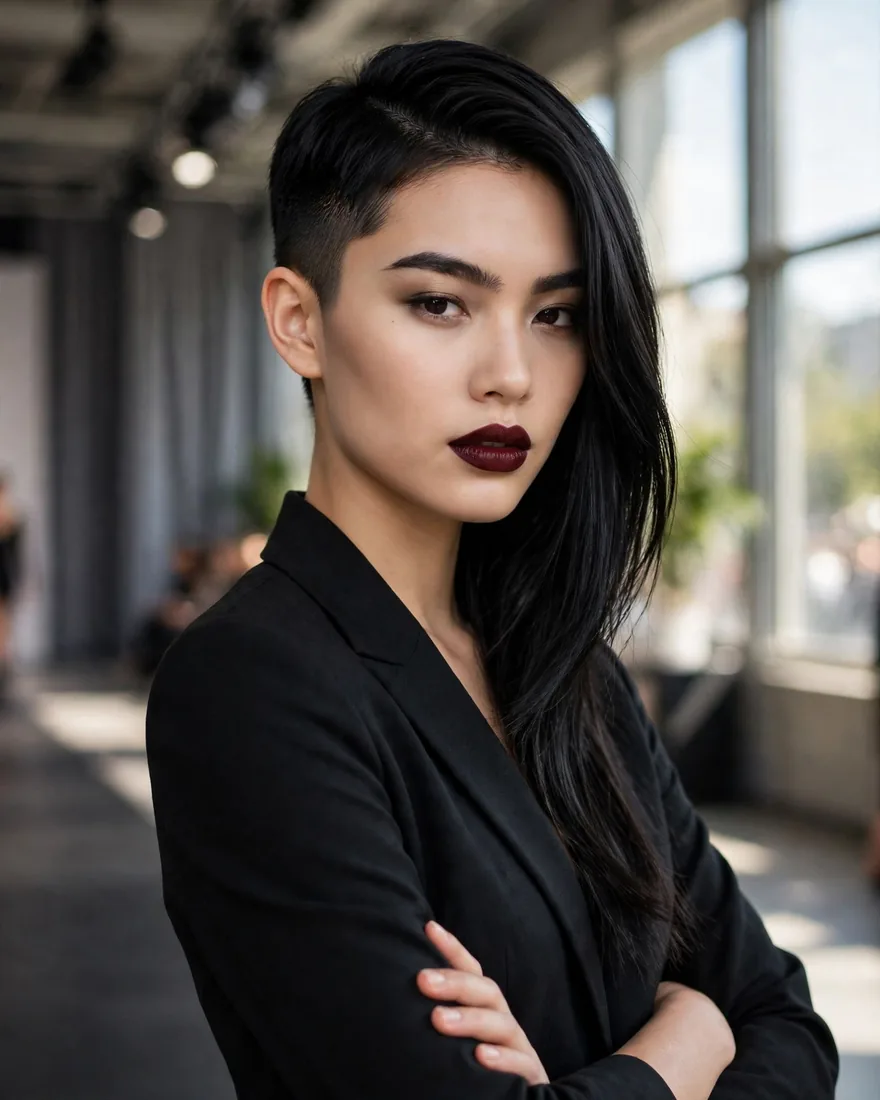
One side cropped close to the head, the other left dramatically longer — sometimes grazing the cheekbone or jaw. The asymmetry does real contouring work: the diagonal line pulls the eye across the face instead of letting it rest on width, which is why this cut photographs so strikingly.
Benefits:
- The diagonal line visually slims wide cheeks and strong jawlines
- The long side tucks, pins, or curls for variety — rare versatility in unique hairstyles for short hair
- Strong statement with almost no daily styling
Pro Tip: The long side needs at least three inches to tuck behind the ear — any shorter and it flips outward and ruins the line.
How To Style: Flat-iron the long side smooth and tuck behind the ear for daytime; add a loose wave for evening. The short side needs nothing.
Best For: Round and square faces; straight to slightly wavy hair. Wearability: high — this diagonal architecture makes it one of the most flattering unique hairstyles for short hair for wider face shapes.
3. Jellyfish-Inspired Short Layers
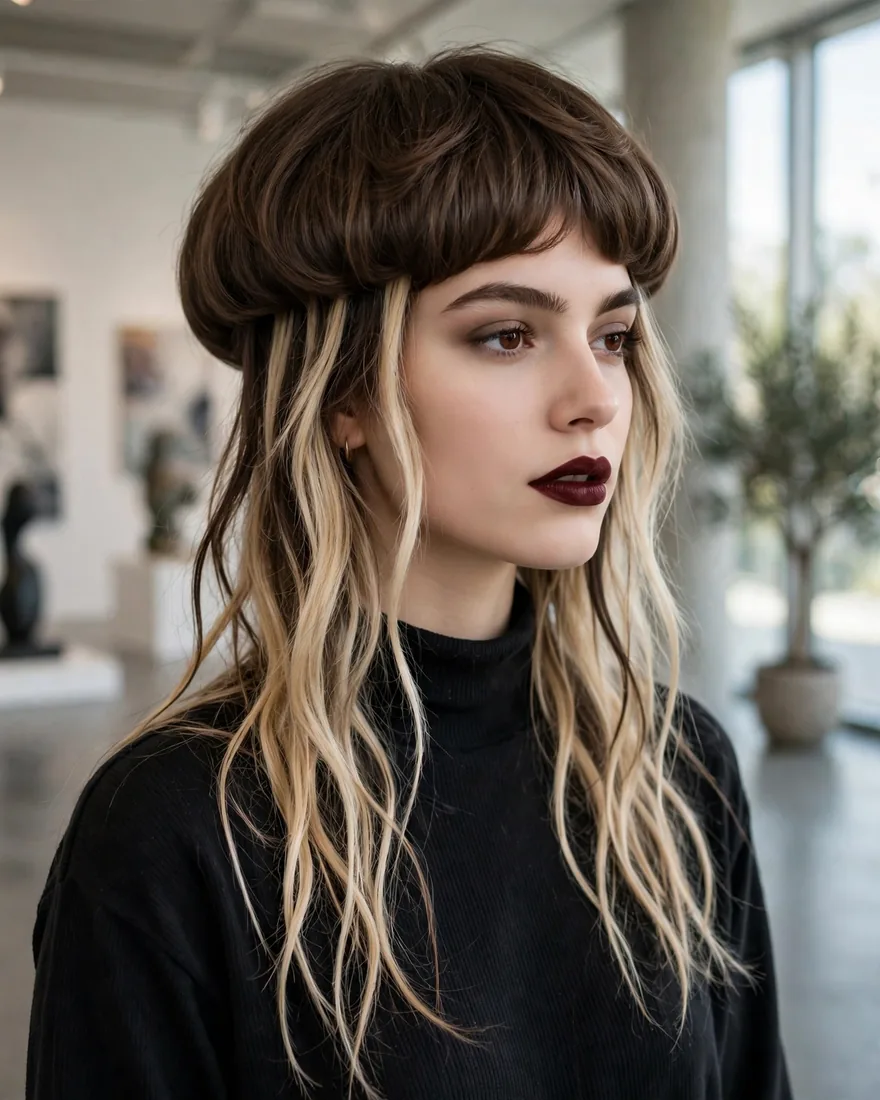
The internet’s favorite oddity: a blunt, rounded bob-like shape on top with longer, disconnected layers hanging beneath it — like a jellyfish bell with tentacles. It is deliberately two haircuts in one, and the contrast is what makes it unforgettable among unique hairstyles for short hair. This is the cut people photograph on the street.
Benefits:
- Maximum visual impact — the most asked-about of these unique hairstyles for short hair
- The top layer can be styled sleek while the bottom stays textured
- Doubles as a grow-out strategy from bob to longer hair
Pro Tip: The disconnect must be deliberate — a sloppy version just looks like a bad haircut. Confirm your stylist has done one before.
How To Style: Flat-iron the top “bell” smooth; add texture spray to the longer under-layers so they separate. Two finishes, one head — and one of the most photographed unique hairstyles for short hair you can wear.
Best For: Straight to wavy medium-density hair; oval and long faces. Wearability: medium — stunning, but expect questions and a bold-dresser reputation.
4. Curled Undercut
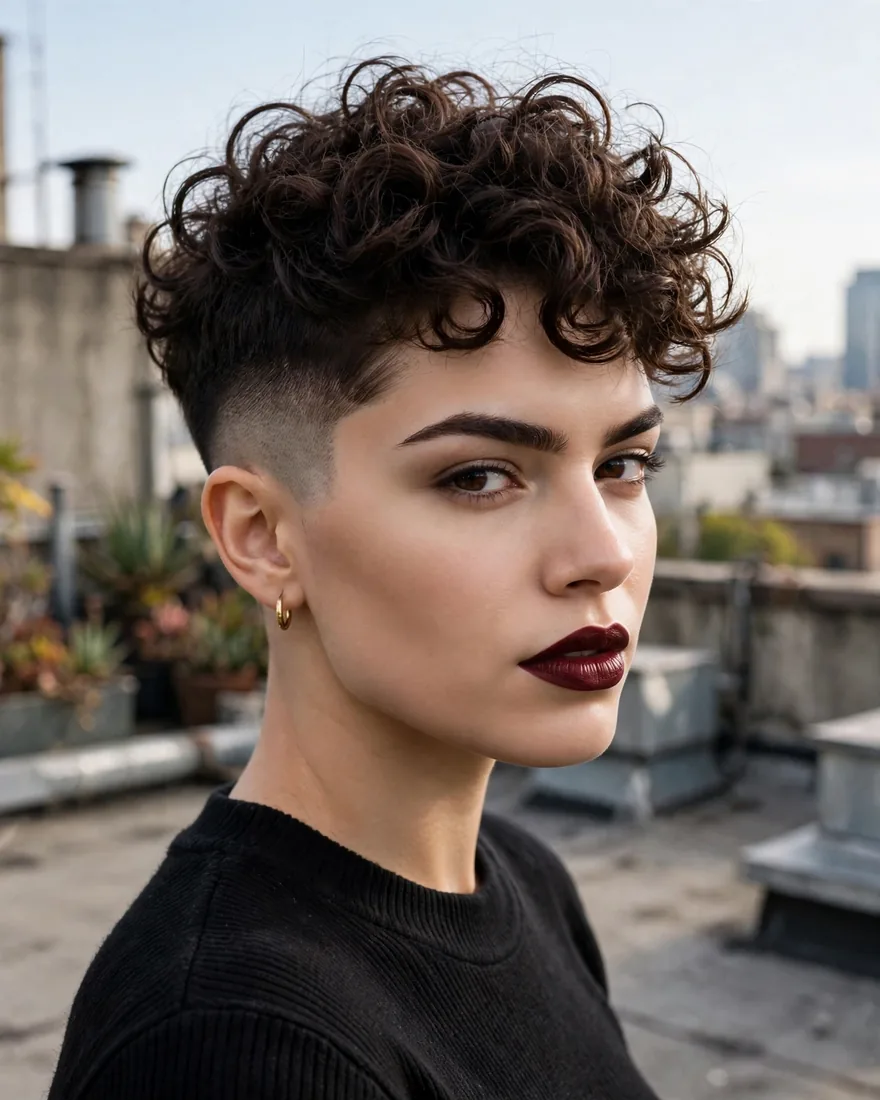
An undercut — sides and nape buzzed or faded — with the top left long enough to curl, wave, or coil. The contrast between the severe sides and the soft top is the entire drama: architecture below, romance above. On curly hair this happens almost naturally; on straight hair the top gets curled with heat.
Benefits:
- Removes up to half the hair’s bulk in one move — a relief for very thick hair
- The curly top keeps it feminine and soft despite the edgy sides
- Stays cooler in summer than any full-coverage cut
Pro Tip: Start nape-only if nervous — it hides under the top layer with zero awkward grow-out.
How To Style: Define top curls with cream and diffuse; keep the undercut crisp with edging every two to three weeks.
Best For: Thick, curly, or coily hair; oval and heart faces. Wearability: medium — the undercut reads bold, though a hidden nape version keeps these unique hairstyles for short hair workplace-safe. Related: buzz cut lengths and very short hairstyles for the close-crop family.
5. Messy Curls with Crown Volume
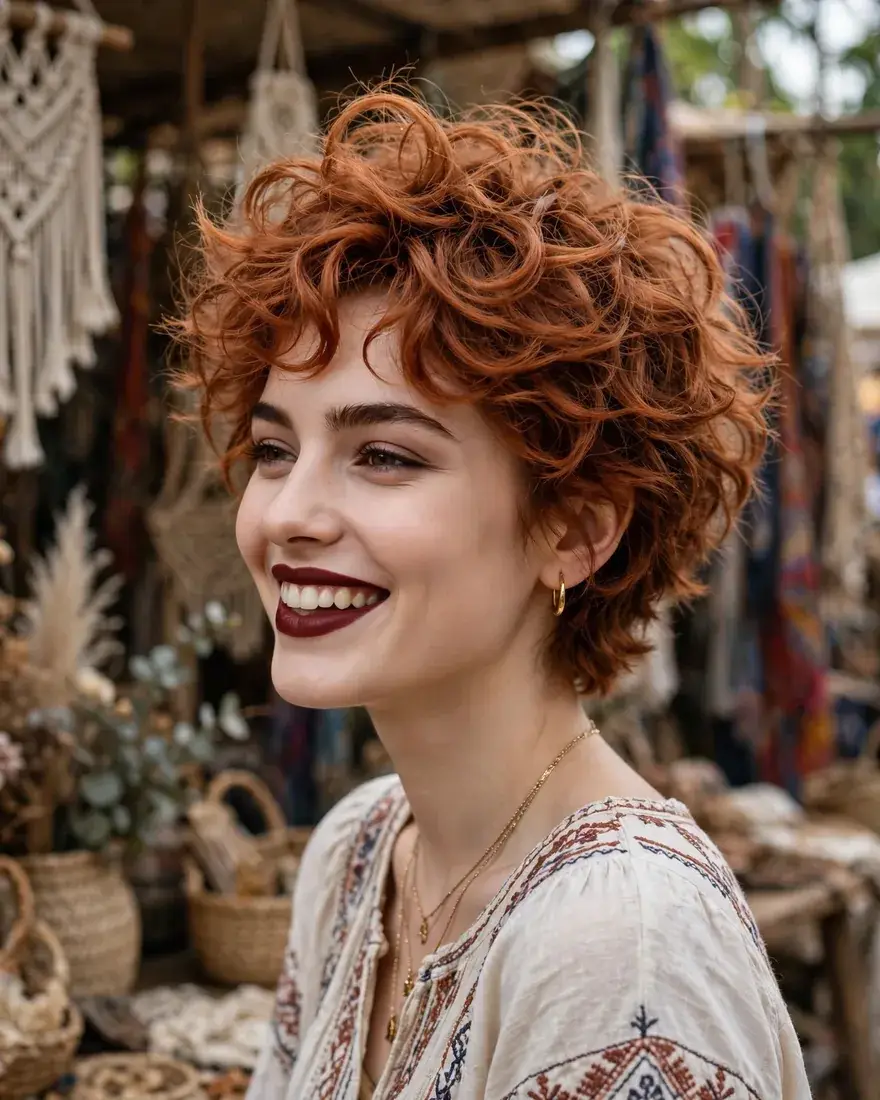
Short curls worn deliberately big at the crown — teased roots, diffused volume, and a “just rolled out of the coolest bed” finish. Unlike the controlled curly bob, this one celebrates chaos: the messier the crown, the better it looks. Among unique hairstyles for short hair, it is the antidote to every over-smoothed curl routine.
Benefits:
- Crown volume elongates round faces, balances cheekbones
- Messy finish hides frizz instead of fighting it
- Genuinely low-effort — over-styling ruins it
Pro Tip: Diffuse upside down for root lift, then do not touch it — finger-combing collapses the volume.
How To Style: Scrunch curl cream into soaking-wet hair and diffuse upside down for root lift. Refresh day two with a water mist, not more product.
Best For: Naturally curly or wavy hair; round and heart faces. Wearability: high — reads artistic, not unkempt, when the volume is intentional. More curl maps in our short curly hairstyles guide.
6. Sleek Bob with Deep Side Part
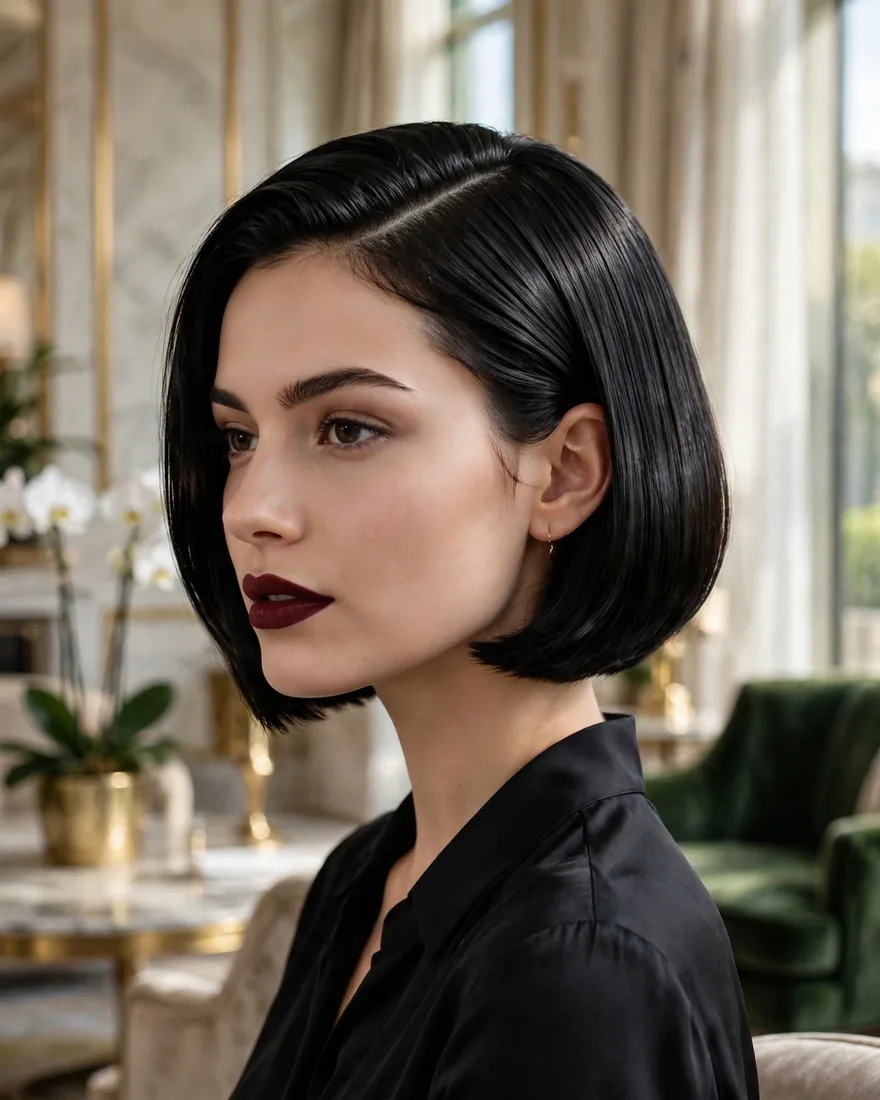
What makes this bob unusual is the extremity of the part: swept almost to the temple, it creates a heavy curtain on one side and a tucked, severe reveal on the other. Worn glass-sleek, the asymmetry turns an ordinary bob editorial. Old-Hollywood drama on a modern cut.
Benefits:
- The deep part creates instant volume at the crown without teasing
- Asymmetry flatters round faces, softens square jawlines
- The sleek finish makes color — especially dark shades — look expensive
Pro Tip: Train the part on damp hair — a dry-set deep part migrates back to center by noon.
How To Style: Blow-dry smooth with a paddle brush, directing everything to the heavy side, then flat-iron in thin sections. Shine serum on the canopy only.
Best For: Straight fine-to-medium hair; round, square, and heart faces. Wearability: very high — this is the most boardroom-ready entry among unique hairstyles for short hair. See also our short hair styling basics.
7. Braided Headband Twist
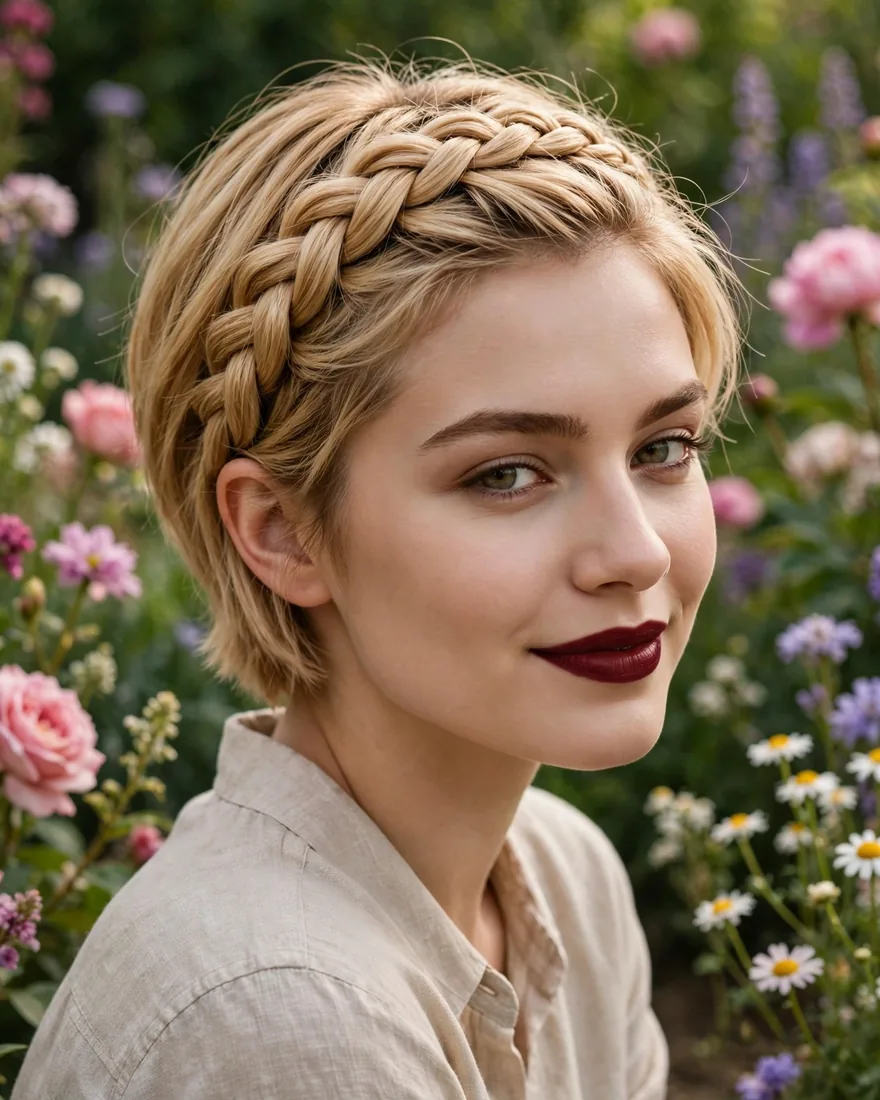
A Dutch or French braid worked across the crown like a headband, the rest left loose. On short hair the braid sits close to the hairline — a structural accessory made from your own hair.
Benefits:
- Instant occasion styling without heat — the lowest-effort of these unique hairstyles for short hair
- Keeps fringe and layers off the face elegantly
- Works on second-day hair — texture helps the braid grip
Pro Tip: Pancake the braid wider once pinned — a flat braid disappears into short hair; a widened one reads as a headband.
How To Style: Part deeply to one side, Dutch-braid across the crown to the opposite ear, and pin the tail behind the ear. Pancake the braid wider so it reads as a headband.
Best For: Pixie to bob lengths with at least three inches on top; all face shapes. Wearability: high — among styling-based unique hairstyles for short hair, this reads romantic and deliberate, never costume.
8. Feathered Pixie with Micro Fringe
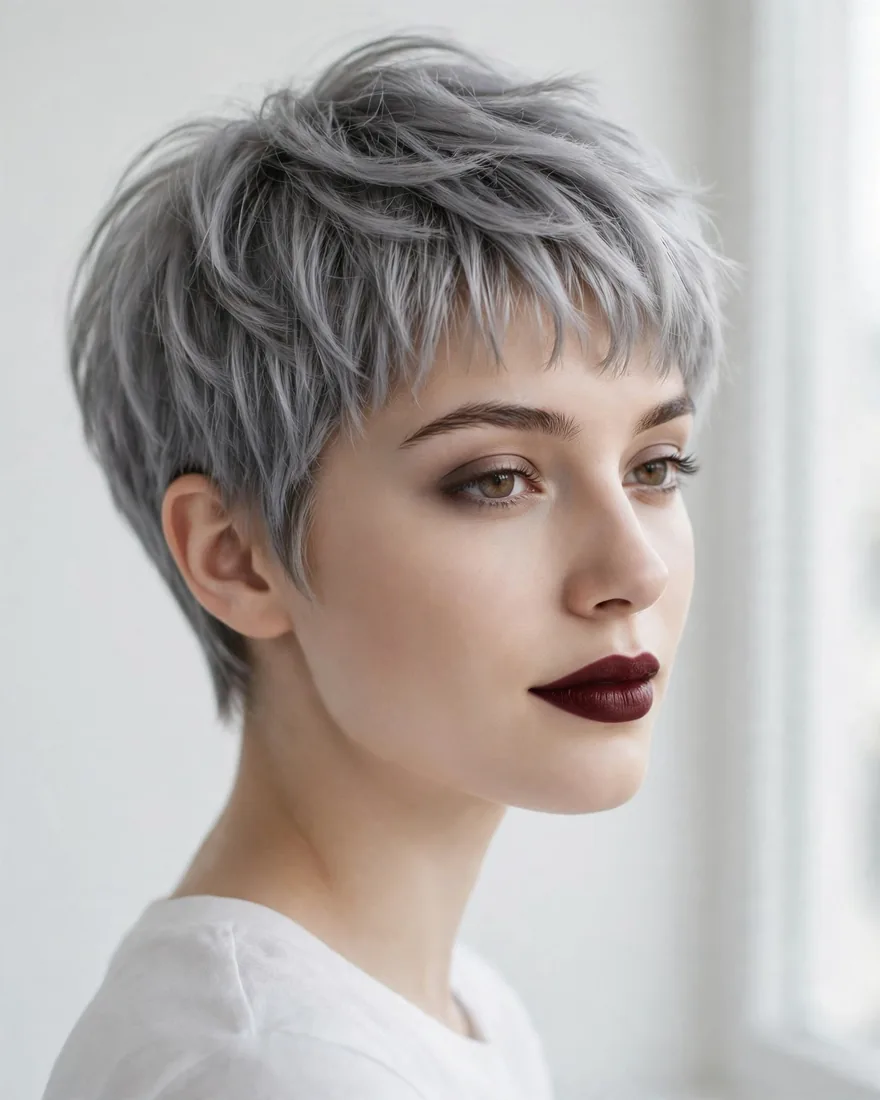
A soft, feather-cut pixie paired with a micro fringe — bangs cut well above the eyebrows, sometimes just an inch long. The micro fringe is the shock element: it exposes the forehead completely and puts all attention on the eyes and cheekbones. Feathering keeps the rest of the cut soft so the fringe reads bold, not harsh — a combination rarely seen in unique hairstyles for short hair roundups.
Benefits:
- The micro fringe makes eyes the undeniable focal point
- Feathered texture keeps the overall effect soft and wearable
- Elongates petite faces by revealing more face
Pro Tip: Micro fringes need trimming every two to three weeks — a quarter inch of growth changes the geometry.
How To Style: Blow-dry the fringe forward with fingers, not a brush, for natural separation. Piece the pixie with a tiny amount of wax.
Best For: Oval and heart faces; fine to medium hair. Wearability: medium-high — striking but clean. Fringe theory in our types of bangs guide.
9. Choppy Mini Bob
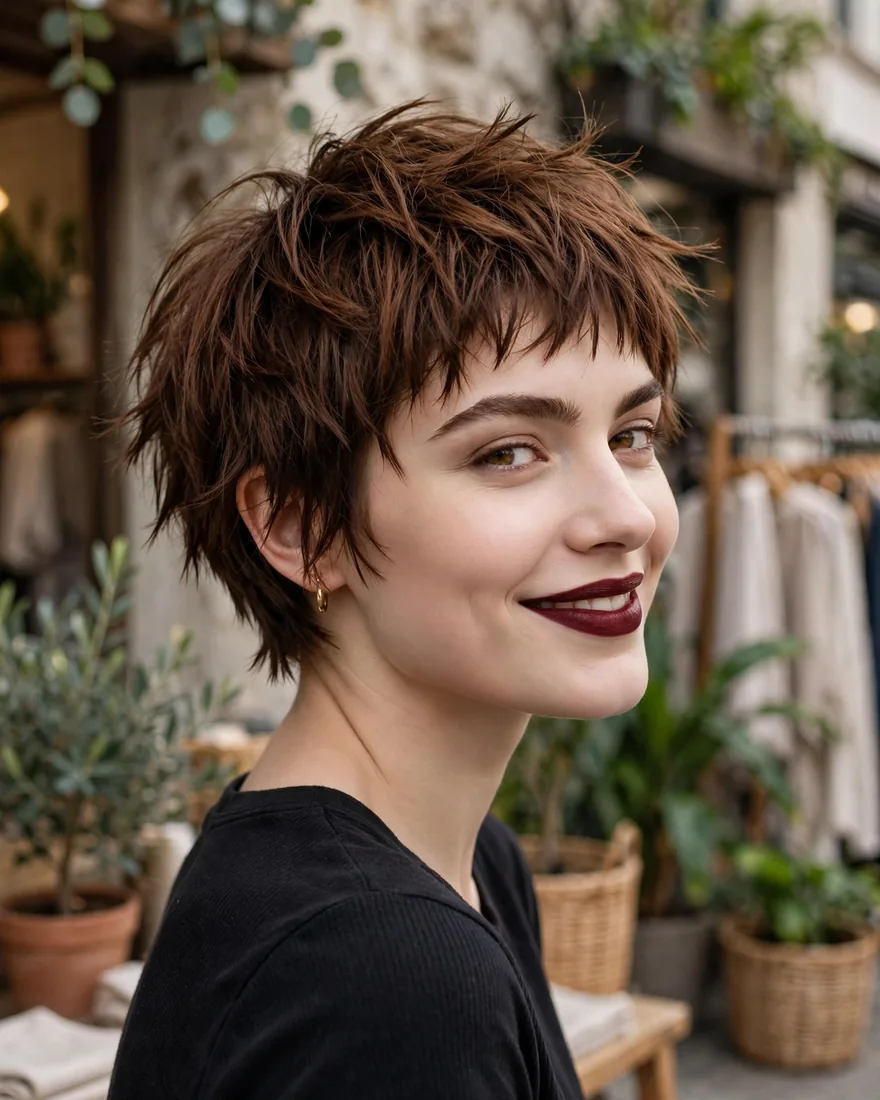
A bob at jaw level or above with aggressively choppy, point-cut ends. The mini length plus shattered texture gives it a mod, almost sixties energy — the bob for people who find regular bobs too safe.
Benefits:
- Short length plus texture makes fine hair look dramatically thicker
- Choppy ends draw attention to cheekbones and jawline
- Air-dries well — texture is the style
Pro Tip: Book trims every six weeks — half an inch of growth softens the mini length into an ordinary bob.
How To Style: Air-dry with sea salt spray scrunched in, then pinch ends with a dab of wax. No brush, no round-brush blowout — smoothness defeats the purpose.
Best For: Fine to medium straight or wavy hair; oval and heart faces. Wearability: high — mod but entirely mainstream-acceptable, which makes it an easy entry point into unique hairstyles for short hair.
10. Short Shag with Curtain Pieces
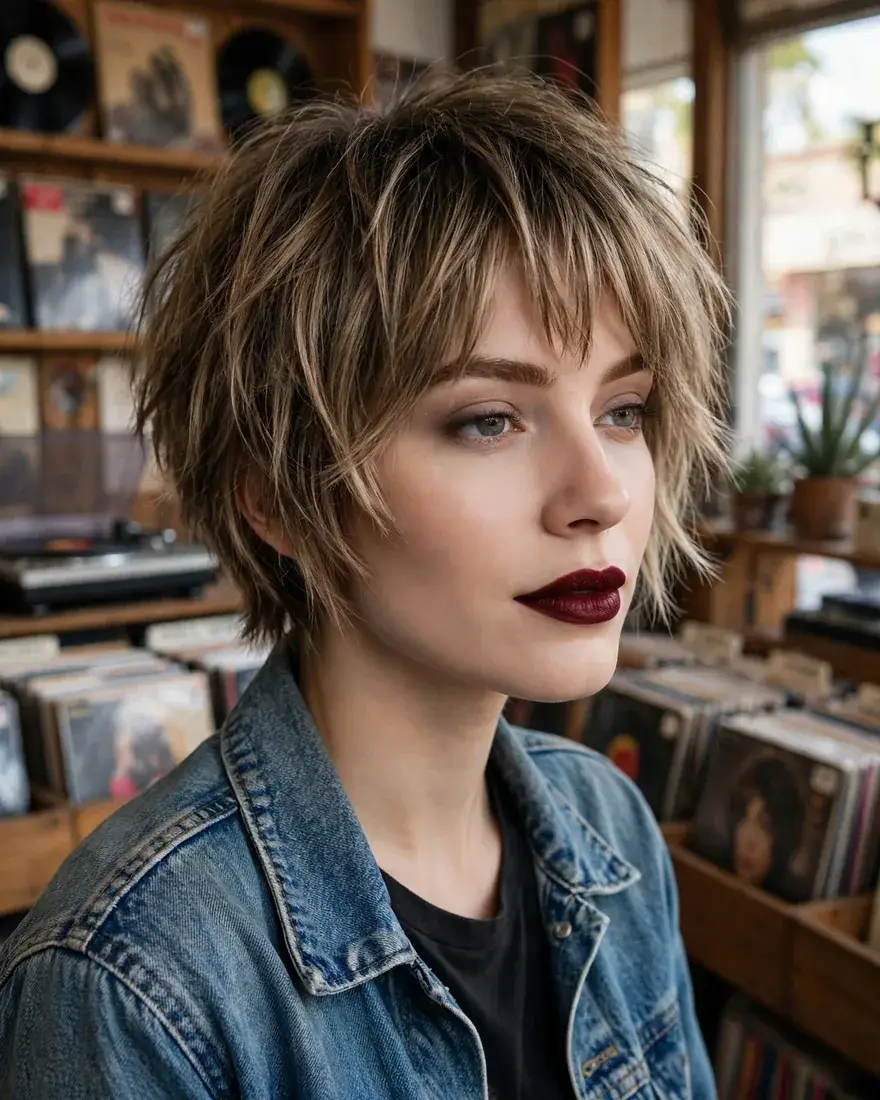
The shag shrunk to chin length: razored layers, wispy ends, curtain bangs parted down the middle. Less rock-star and more French-girl at this length — quietly unusual among unique hairstyles for short hair. The curtain pieces lift it out of the ordinary.
Benefits:
- Curtain pieces flatter nearly every face shape by softening the hairline
- Razored layers remove weight without see-through thinning
- The messier it gets through the day, the better it looks
Pro Tip: Cut curtain bangs to cheekbone length minimum — shorter will not part cleanly.
How To Style: Rough-dry flipped for lift, then define curtain pieces with a round brush curving away from the face. Finish with texture spray.
Best For: Medium-density straight to wavy hair; all face shapes. Wearability: very high — unusual in silhouette, familiar in finish. The longer shag family: short shaggy hair.
11. Sculpted Finger Waves
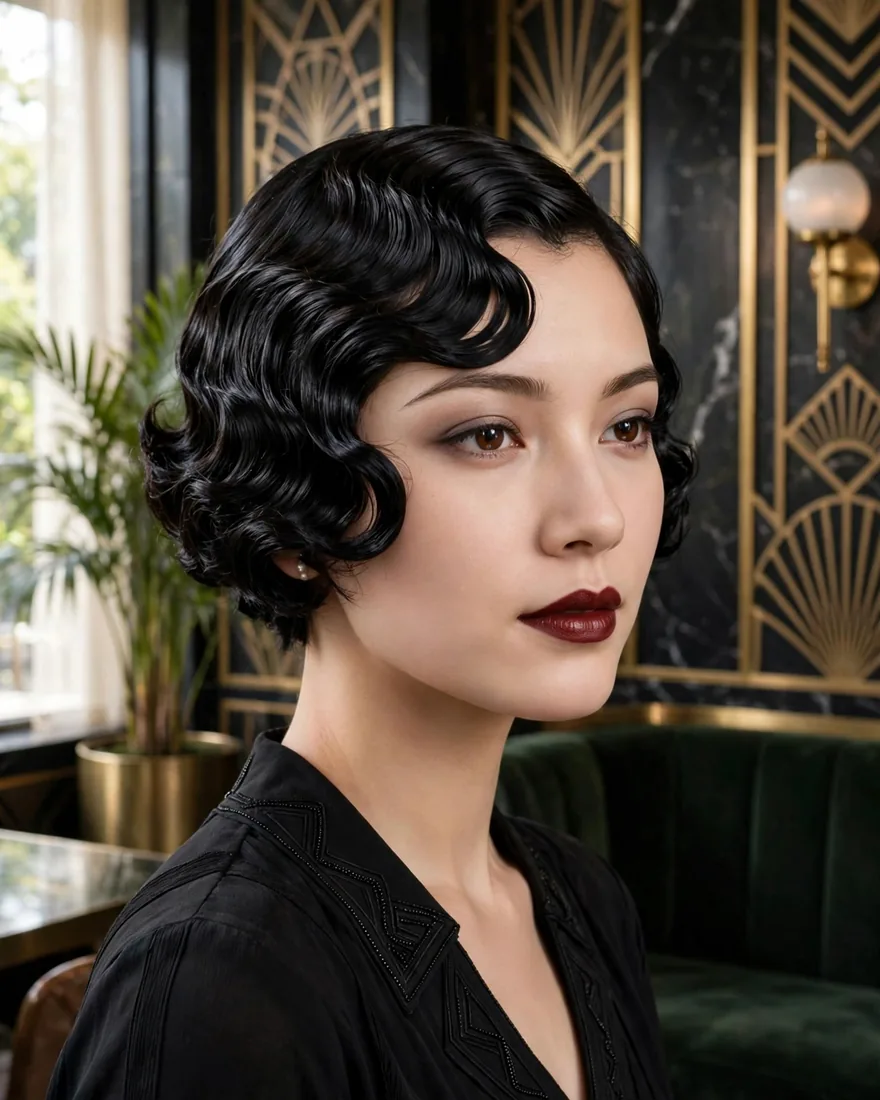
The 1920s technique revived: S-shaped waves sculpted flat against the head with gel, combed into precise ridges. On short hair the waves wrap the whole head in a continuous sculptural pattern — part hairstyle, part art installation.
Benefits:
- Unmatched elegance — the most photogenic of all unique hairstyles for short hair
- Sculpted shape lasts days with minimal refreshing
- Makes a dramatic statement without cutting or coloring
Pro Tip: A first attempt at home rarely looks right — every ridge must flow the same way or the pattern breaks.
How To Style: Apply strong-hold gel to damp hair, comb deep side part, then shape S-waves with a fine-tooth comb, pinching each ridge with clips. Sit under a dryer or air-dry fully before removing clips.
Best For: Straight to wavy short hair; special occasions. Wearability: low-medium — a masterpiece for events, impractical for daily wear, but unforgettable among unique hairstyles for short hair. Curl craft: curly hairstyles.
12. Two-Tone Short Cut
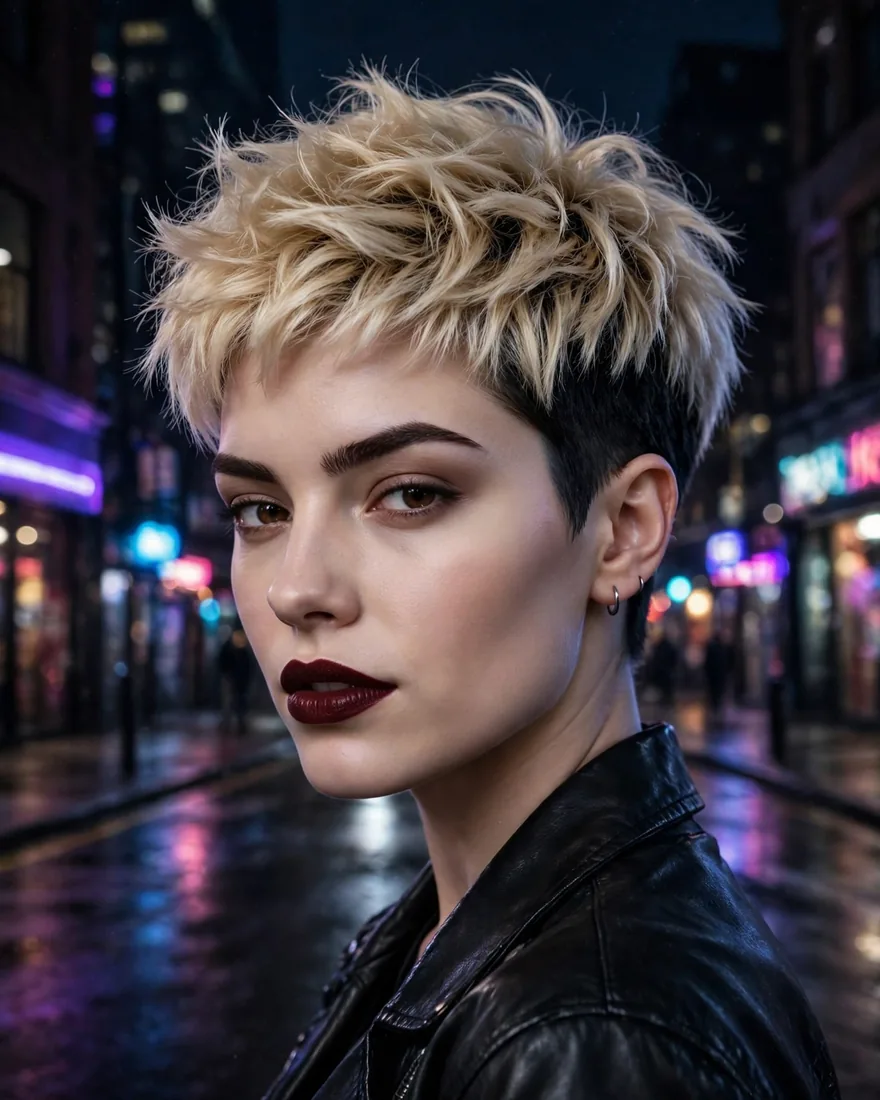
Color blocking on short hair: the top one color, the underlayer a contrasting shade — platinum over black, copper over brunette. Short hair shows placement graphically, earning its spot among the boldest unique hairstyles for short hair. The cut can be simple; the color talks.
Benefits:
- Maximum uniqueness per minute — the color works while you do nothing
- Grow-out can be managed by refreshing only the panel, not the whole head
- Customizable — swap the accent shade seasonally
Pro Tip: Keep tones three levels apart — close tones read as a dye mistake, not a design choice.
How To Style: Style the cut simply — sleek or textured — and let the color be the event. Use color-safe shampoo and cool water to keep both tones true.
Best For: Any short cut with enough top length to show the block; all face shapes. Wearability: medium — bold but increasingly mainstream in creative fields.
13. Tapered Nape Bob
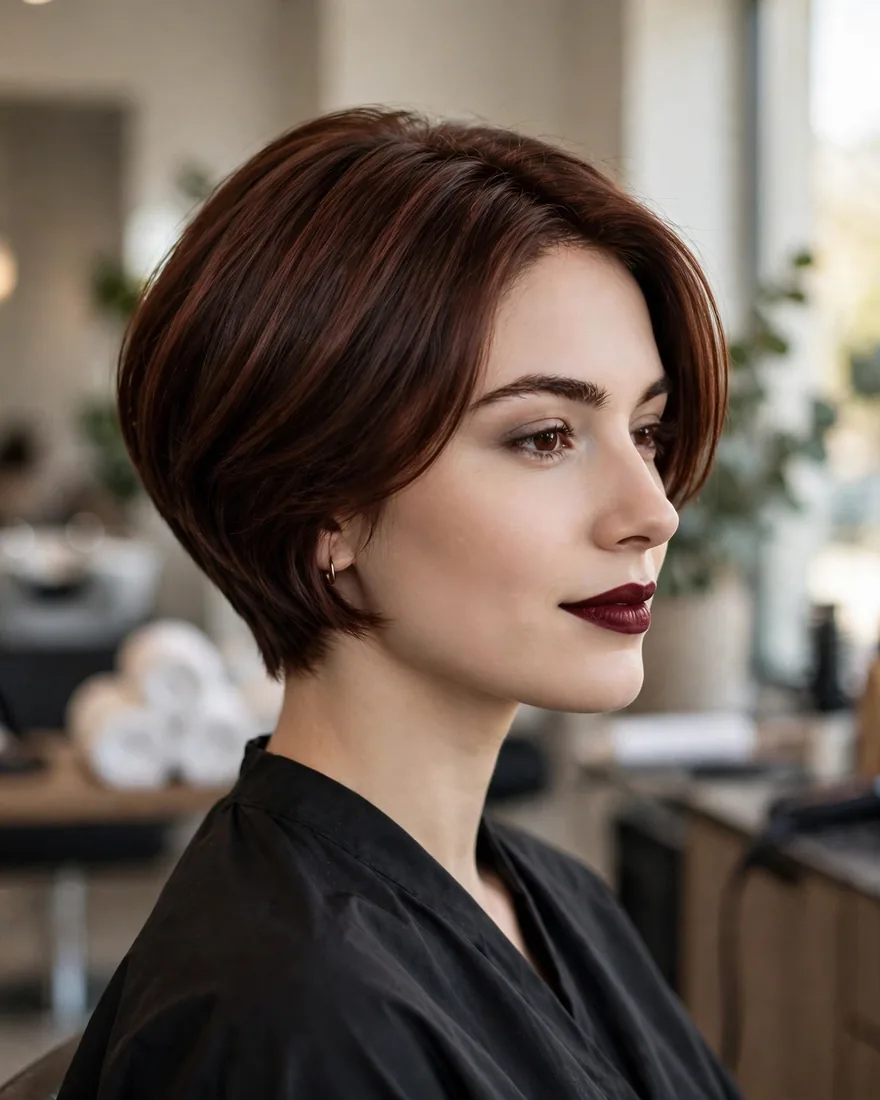
A bob with the nape tapered close — almost faded — while the top and front keep full bob length. From the front it reads as a classic bob; from the back and side, the taper reveals the neckline in a sharp, architectural line. It is a secret-detail haircut: conventional from one angle, surprising from another.
Benefits:
- Taper removes bulk where thick hair misbehaves most — the nape
- Elongates the neck visually, which flatters petite frames
- Cooler and lighter than a full-weight bob
Pro Tip: Edge the taper every three weeks — a grown-out taper reads as an unkempt neckline.
How To Style: Blow out the top smooth for the classic-bob front view; the tapered nape needs nothing. A shine serum on the lengths emphasizes the contrast.
Best For: Thick or coarse hair; petite and oval faces. Wearability: high — the surprise is hidden until you turn around, making this one of the subtlest unique hairstyles for short hair to actually live with.
14. Layered Cut with Face-Framing Pieces
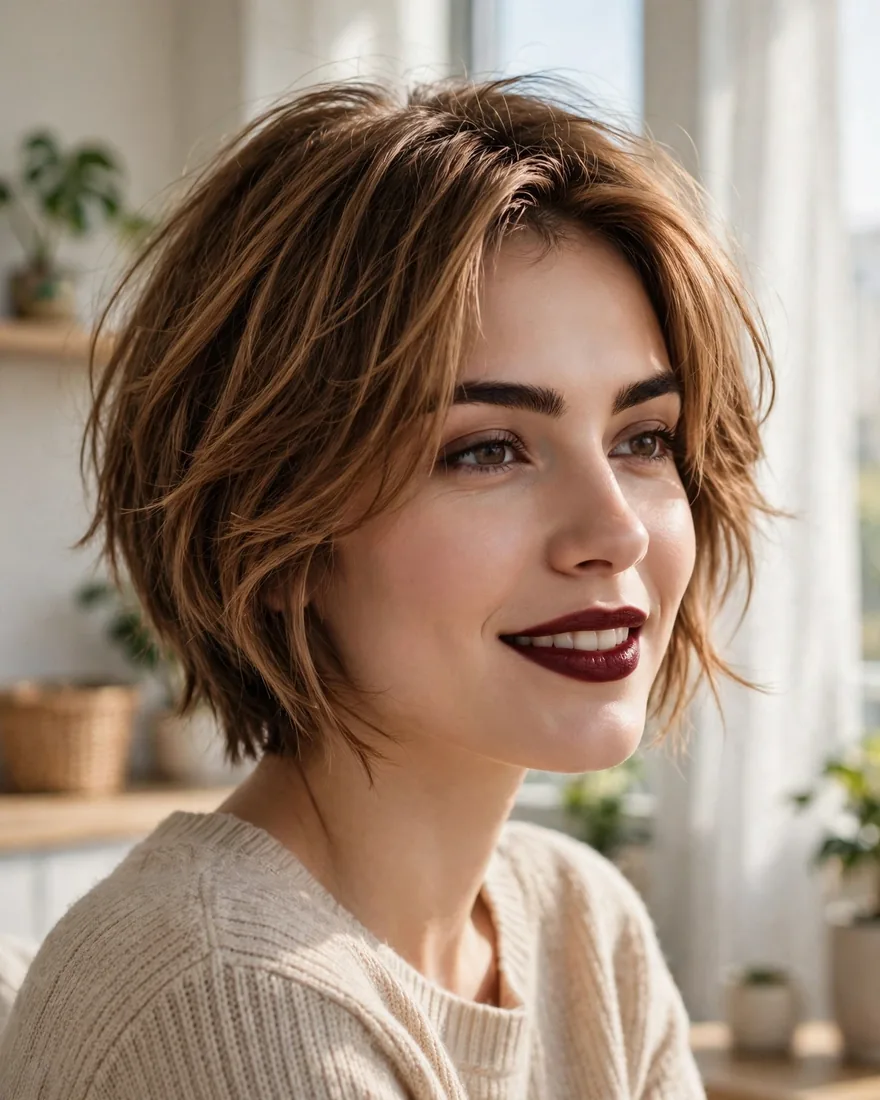
The unusual version of layers: instead of blended, invisible layering, the face-framing pieces are cut as distinct, detached ribbons — longer in front, dramatically shorter at the sides, almost like built-in curtain tendrils with intent. Worn with the rest of the cut sleek, the pieces move independently and catch the eye with every turn of the head.
Benefits:
- The detached pieces create movement even in still air — the cut looks alive
- Face-framing always flatters; the detachment makes it memorable
- Tuck pieces back for a conventional look when needed
Pro Tip: Cut the pieces dry in their natural fall — wet-cut pieces spring up shorter than planned.
How To Style: Flat-iron the pieces with a slight outward flick so they separate from the sleek base. A tiny amount of serum on the pieces keeps them defined.
Best For: Straight to wavy medium-density hair; all face shapes. Wearability: very high — the most quietly unusual of these unique hairstyles for short hair.
How the 14 cuts compare at a glance:
| Cut | Uniqueness Level | Real-Life Wearability |
|---|---|---|
| Textured Pixie with Side-Swept Bangs | Medium — textured but familiar shape | High — office-friendly |
| Asymmetric Short Cut | High — true diagonal architecture | High — fashion-forward, not rebellious |
| Jellyfish-Inspired Short Layers | Very high — two haircuts in one | Medium — expect questions |
| Curled Undercut | High — severe sides, soft top | Medium — bold; nape-only version is safe |
| Messy Curls with Crown Volume | Medium — big, not strange | High — reads artistic |
| Sleek Bob with Deep Side Part | Medium — drama in the part, not the cut | Very high — boardroom-ready |
| Braided Headband Twist | Medium — styling, not cutting | High — romantic and deliberate |
| Feathered Pixie with Micro Fringe | High — the fringe is the shock | Medium-high — striking but clean |
| Choppy Mini Bob | Medium — mod, not alien | High — mainstream-acceptable |
| Short Shag with Curtain Pieces | Medium — unusual silhouette | Very high — familiar finish |
| Sculpted Finger Waves | Very high — sculptural art | Low-medium — events, not daily |
| Two-Tone Short Cut | High — graphic color blocking | Medium — bold, creative-field friendly |
| Tapered Nape Bob | Medium-high — hidden surprise | High — conventional from the front |
| Layered Cut with Face-Framing Pieces | Medium — quietly unusual | Very high — tuck pieces to go conventional |
Genuinely Unusual vs Mainstream-with-the-Same-Label
Here is the honest filter this guide runs on: most “unique hairstyles for short hair” lists grade on a curve where a layered bob counts as daring. A cut is genuinely unusual when a stranger would describe it in a sentence rather than a word: “the one with the long tentacle layers,” not “a cute bob.” By that test, the jellyfish cut, the asymmetric cut, finger waves, and two-tone blocking pass easily; the textured pixie and sleek bob pass on styling drama rather than structural strangeness.
Neither category is better — they serve different goals. If you want compliments from coworkers, pick the medium-uniqueness end. If you want strangers to photograph your hair, go very-high and accept the attention as part of the style. The mistake is picking very-high-uniqueness unique hairstyles for short hair while expecting a medium-uniqueness reaction. Match the cut to the attention you actually want.
Avant-Garde Wearability: Photographs Well vs Wears Well
Some cuts exist for the camera and some for Tuesday. Finger waves photograph like a dream and demand an hour plus a skilled hand — they wear well for about six hours at an event. The jellyfish cut photographs insanely and wears fine daily, but you will answer “what is that haircut called?” weekly. Two-tone photographs graphically and wears effortlessly once the color is in — the maintenance is in the salon chair, not the bathroom mirror.
The sweet spot is the asymmetric cut, the micro fringe pixie, and the tapered nape bob: striking in photos because of strong lines, simple to style in real life. When choosing among unique hairstyles for short hair, ask how long it takes every morning and how it looks at 6pm. A cut that needs 30 minutes and collapses by lunch is a photoshoot cut; one that needs 5 minutes and holds till dinner is a life cut.
Styling Time for Unusual Cuts
Honest numbers. Under five minutes: messy curls (diffuse and shake), choppy mini bob (salt spray and go), tapered nape bob (smooth the top; the nape needs nothing), two-tone (style simply; the color does the work). Five to fifteen: textured pixie, asymmetric cut, sleek bob, short shag, face-framing layers, braided headband.
Fifteen to thirty-plus: jellyfish layers (two finishes on one head), curled undercut (curling the top if not naturally curly), micro fringe pixie (daily fringe precision). One hour and up: finger waves — gel, comb, clips, dryer, patience. The most unusual cut you will actually wear is the one whose styling time fits the life you have. That is the real test every one of these unique hairstyles for short hair has to pass.
FAQs
What makes a short hairstyle genuinely unique?
Structural difference, not styling. A genuinely unique cut has an element you cannot get by styling a mainstream cut differently — asymmetry built into the cut, disconnected layers, a tapered nape, graphic color blocking. If the “uniqueness” washes out with one shampoo, it was styling, not a unique haircut. Every entry in this guide to unique hairstyles for short hair passes that test.
Are unusual short haircuts hard to maintain?
It depends on the cut. Geometric cuts (asymmetric, micro fringe, tapered nape) need trims every 3–6 weeks — the precision is the style. Textured cuts (shag, choppy bob, messy curls) stretch to 8–10 weeks. Two-tone needs salon refreshes but little daily work.
Can I wear an avant-garde short cut to work?
Many, yes. The sleek bob, tapered nape bob, textured pixie, and face-framing layers are office-safe — unusual in detail, conventional in impression. Jellyfish, visible undercuts, and two-tone read bolder; they suit creative fields. When in doubt, pick unique hairstyles for short hair whose unusual element tucks or smooths down for workdays.
Which unique short hairstyles suit round faces?
Look for height and diagonals: the asymmetric cut, crown-volume curls, the deep side part’s lift, the micro fringe pixie. Avoid width at the cheeks — the jellyfish bell and mini bob can widen round faces unless the top has lift.
How do I style an asymmetric cut at home?
Style the two sides differently — that is the whole job. Smooth the long side and tuck it; the short side needs only pomade. Do not make both sides match — symmetry is the enemy here. About five minutes.
Will a jellyfish cut or undercut grow out badly?
The jellyfish grows out gracefully — disconnected layers blend into long layers within months. Undercuts are trickier: the buzzed section goes fuzzy around month two to four. Nape-only hides this under the top layer; full-side does not. Get blending trims rather than waiting it out.
What should I ask my stylist for a unique short cut?
Bring three reference photos of the exact cut from different angles — unusual cuts live or die by specifics a verbal description cannot carry. Ask directly whether they have done this cut before; jellyfish layers, finger waves, and precise asymmetry are technique-dependent. Confirm the maintenance cadence and the grow-out plan before the first snip. For any of these unique hairstyles for short hair, if a stylist hesitates on any of these, find one who specializes in creative cutting.
Do unusual short cuts work on thin or fine hair?
Several do — texture is fine hair’s best friend. The textured pixie, choppy mini bob, and feathered pixie create density illusion through piece-y ends. Avoid the jellyfish on very fine hair (tentacles look sparse) and finger waves without density. Two-tone works on any density — the uniqueness is in the color.
Unique does not have to mean unwearable — the best of these 14 cuts prove that a single bold decision can separate your hair from every bob in the room without separating you from your life. Pick the one whose morning routine you will actually keep, whose grow-out you can live with, and whose level of attention matches your appetite for it. That is the whole secret to wearing unique hairstyles for short hair: unusual on purpose, not by accident.