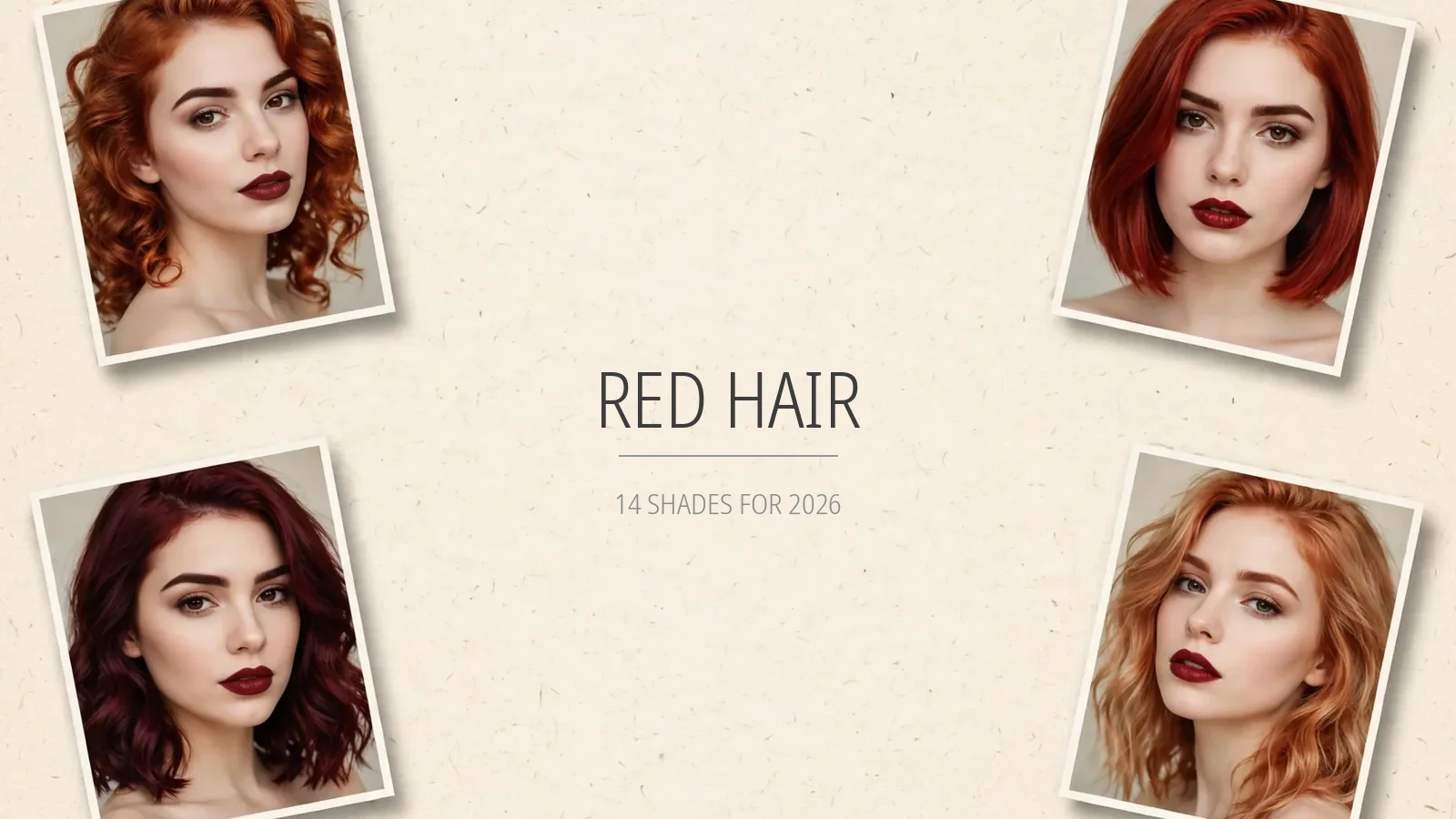
Red Hair – 14 Shades From Copper to Cherry
There is a special kind of heartbreak reserved for red hair. You walk out of the salon with the copper of your dreams, and by week three it has slid into a brassy peach that looks nothing like the reference photo. Worse, choosing the wrong red for your skin tone is an expensive mistake — correcting a cherry that went neon or an auburn that turned muddy costs far more than getting it right the first time. Red hair is the most rewarding color when it works and the most punishing when it does not.
The difference comes down to three honest decisions: matching the shade’s temperature to your undertone, being realistic about your natural base and whether it needs pre-lightening, and knowing exactly what each shade fades into so the grow-out looks intentional instead of accidental. Below are 14 shades from warm copper to fire ombré, each with straight talk on upkeep, fading, and who should book it — and who should skip it.
Table of Contents
- Red Hair Shades Worth Trying
- What Each Red Shade Fades Into
- At-Home Dye vs Salon: Cost and Risk
- Red Hair on Gray Hair and Coarse Texture
- FAQs
- How long does red hair dye last before it fades?
- Will red hair suit my skin tone?
- Can I dye dark brown hair red without bleaching?
- How do I stop red hair from fading so fast?
- Is red hair really high maintenance?
- Can I dye my hair red at home with box dye?
- What color does red hair fade into?
- Does red hair work on gray hair?
Red Hair Shades Worth Trying
1. Warm Copper
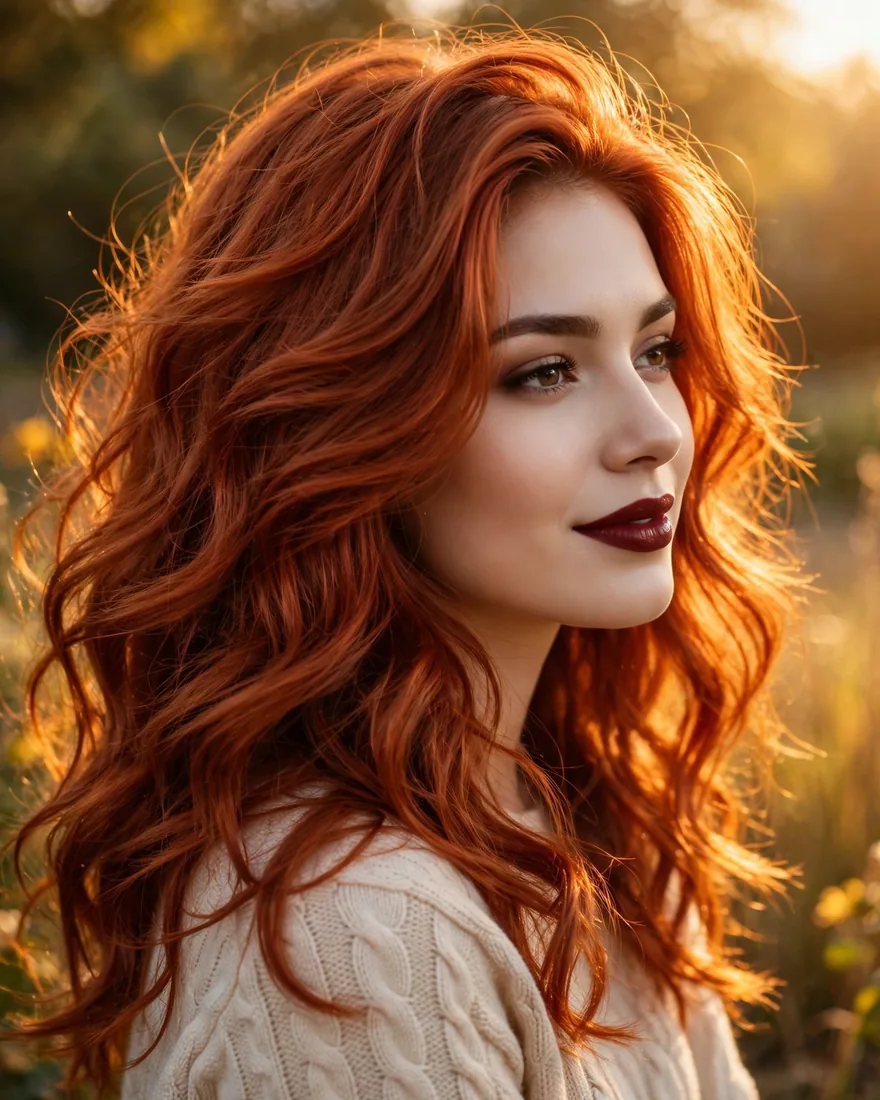
The friendly entry point into red hair — a balanced copper with equal parts orange and gold that glows rather than shouts. It reads natural on fair to medium skin and photographs warm without tipping neon. Think of it as the shade most people picture when they say “copper hair,” done right.
Benefits:
- The most forgiving copper for first-time redheads — suits the widest range of undertones
- Fades gracefully into a soft strawberry-gold instead of going brassy
- Enhances green and hazel eyes by contrast
Pro Tip: Ask for a demi-permanent warm-copper gloss rather than permanent color — it fades on tone for an easier grow-out.
How To Style: Wear it in loose waves; a shine serum over the canopy sells the expensive-copper finish. Skip heavy matte products that dull reflectivity.
Best For: Fair to medium skin with warm or neutral undertones; natural bases from level 6 to 8 lift to copper with minimal damage. If you want to preview how warmth behaves on your base, these caramel highlights show the same golden family. This is the safest choice if you are nervous about going bold.
2. Spicy Copper
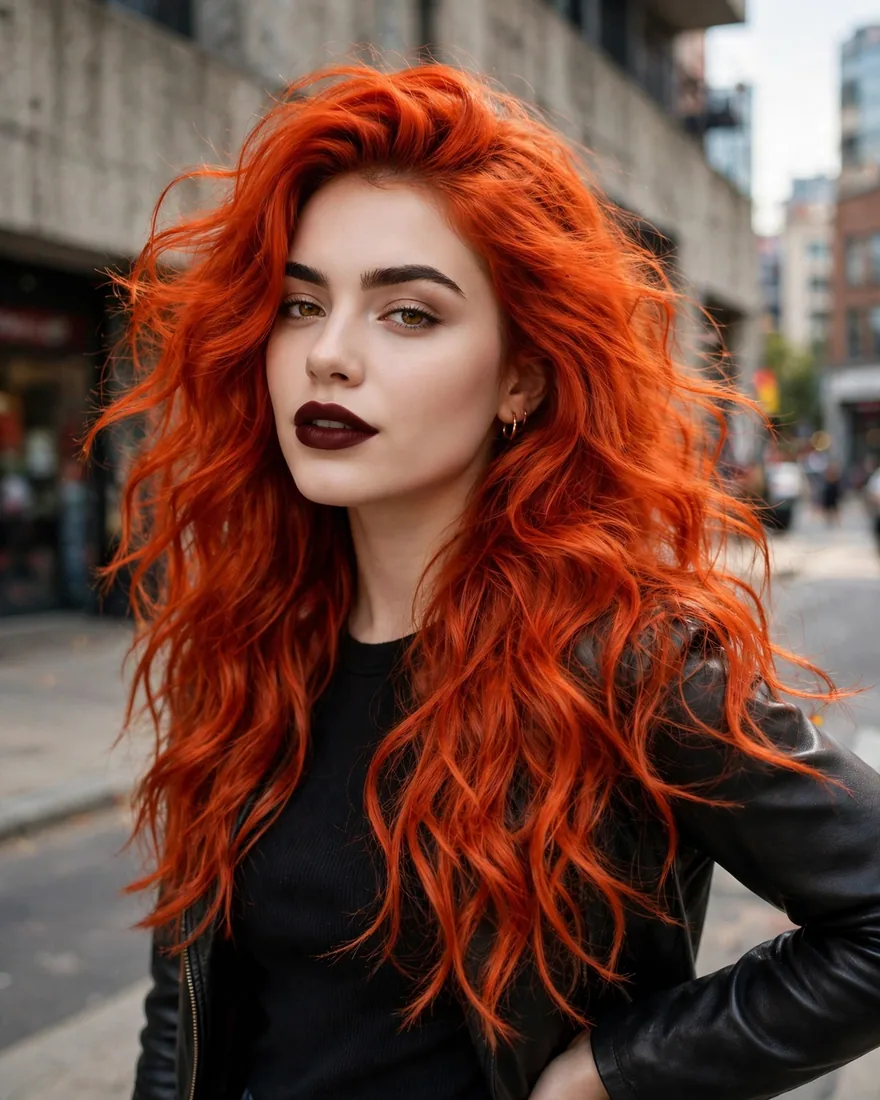
Warm copper turned all the way up — brighter, more saturated, with a chili-pepper intensity that announces itself across the room. This is a statement red, not a whisper: the kind of shade that makes strangers ask for your colorist’s number.
Benefits:
- Maximum impact for the commitment — reads expensive and intentional
- Photographs incredibly well; the saturation survives phone cameras
- Makes pale skin look luminous rather than washed out
Pro Tip: Spicy copper fades fastest of the coppers — book a gloss refresh at week four, not week eight, or it collapses into dull orange.
How To Style: Sleek, straight styling shows off the mirror quality; if you curl it, keep waves loose so the shade reads as one rich sheet.
Best For: Fair skin with cool or neutral undertones, where the contrast is striking; natural bases level 7 and up or pre-lightened hair. Not the shade to choose if you want low maintenance.
3. Soft Auburn
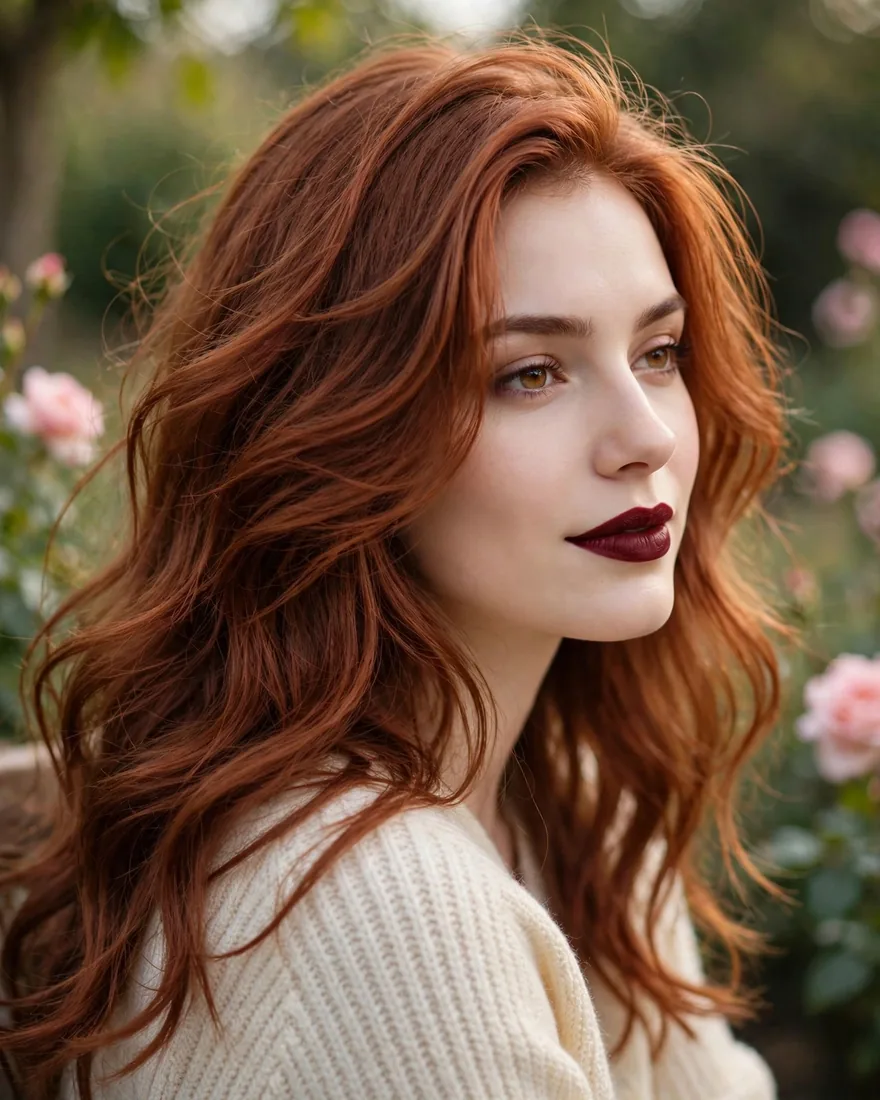
The quiet luxury of the red family — a muted reddish-brown sitting between copper and brunette. It carries all the warmth of the red family with none of the drama — the most wearable shade here for offices and everyday life.
Benefits:
- The lowest-maintenance true red — regrowth blends for weeks
- Adds visible warmth to dull brown hair without a full color commitment
- Flatters mature skin; softness around the face reads youthful
Pro Tip: Auburn goes muddy with too much ash in the formula — insist on warm-based color and skip blue or purple shampoos.
How To Style: A smooth blowout with curved-under ends gives auburn its polished finish; air-dried waves work too.
Best For: Medium skin with warm or neutral undertones; natural brunettes at levels 4 to 6 can reach soft auburn without pre-lightening — the easiest upgrade for dark hair.
4. Dark Auburn
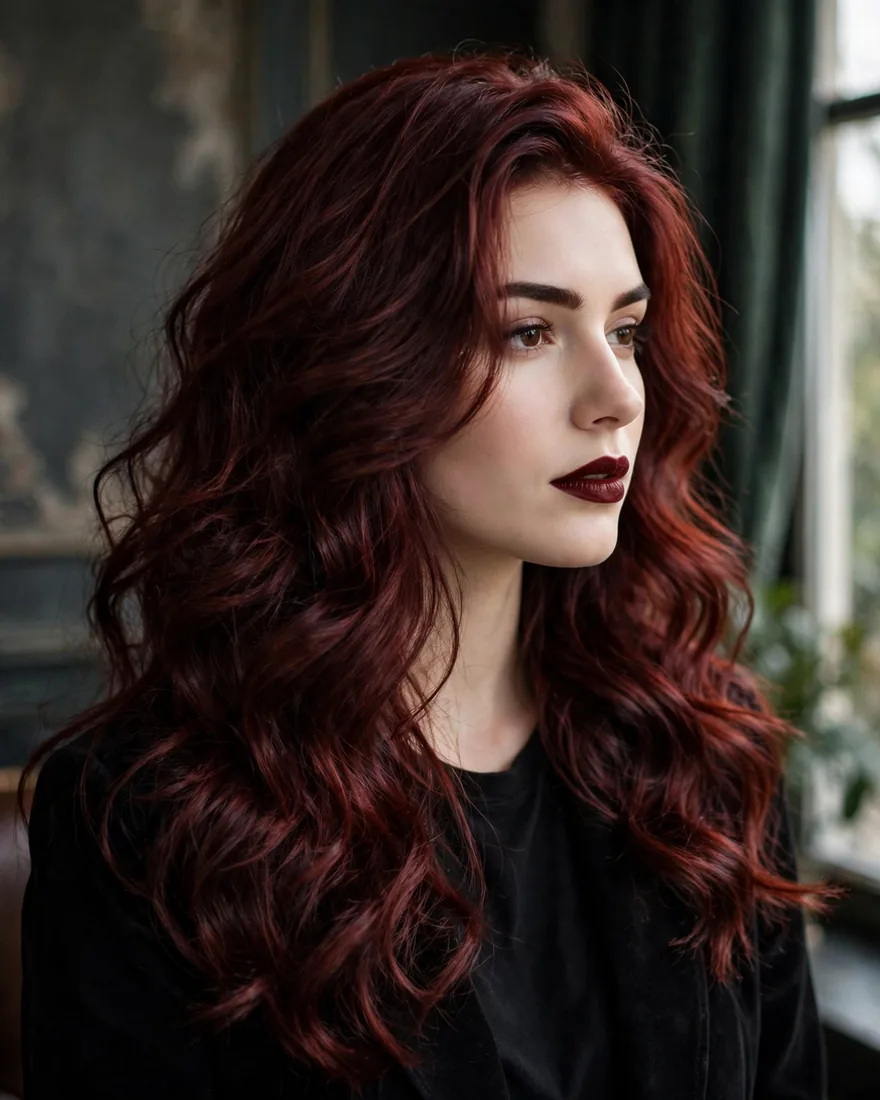
Auburn deepened to its richest register — a dark, wine-tinged brown-red that looks almost brunette indoors and reveals its red soul in sunlight. This is the shade for people who want depth and mystery rather than brightness.
Benefits:
- The most office-friendly dark red — reads professional, not punk
- Dark depth makes fine hair look thicker and denser
- Fades slower than brighter reds; the brown base holds the tone longer
Pro Tip: Dark auburn can pull almost black in low light — ask your colorist to keep red visible through the mid-lengths and ends.
How To Style: Glossy, sleek styling maximizes the wine tones; a deep side part keeps dark shades from looking flat.
Best For: Medium to deep skin tones; natural dark bases at levels 3 to 5 with no pre-lightening needed, which makes this the healthiest option for brunettes. If you are staying in the brunette family, our dark brown hair shades pair beautifully as a grow-out base.
5. Cherry Red
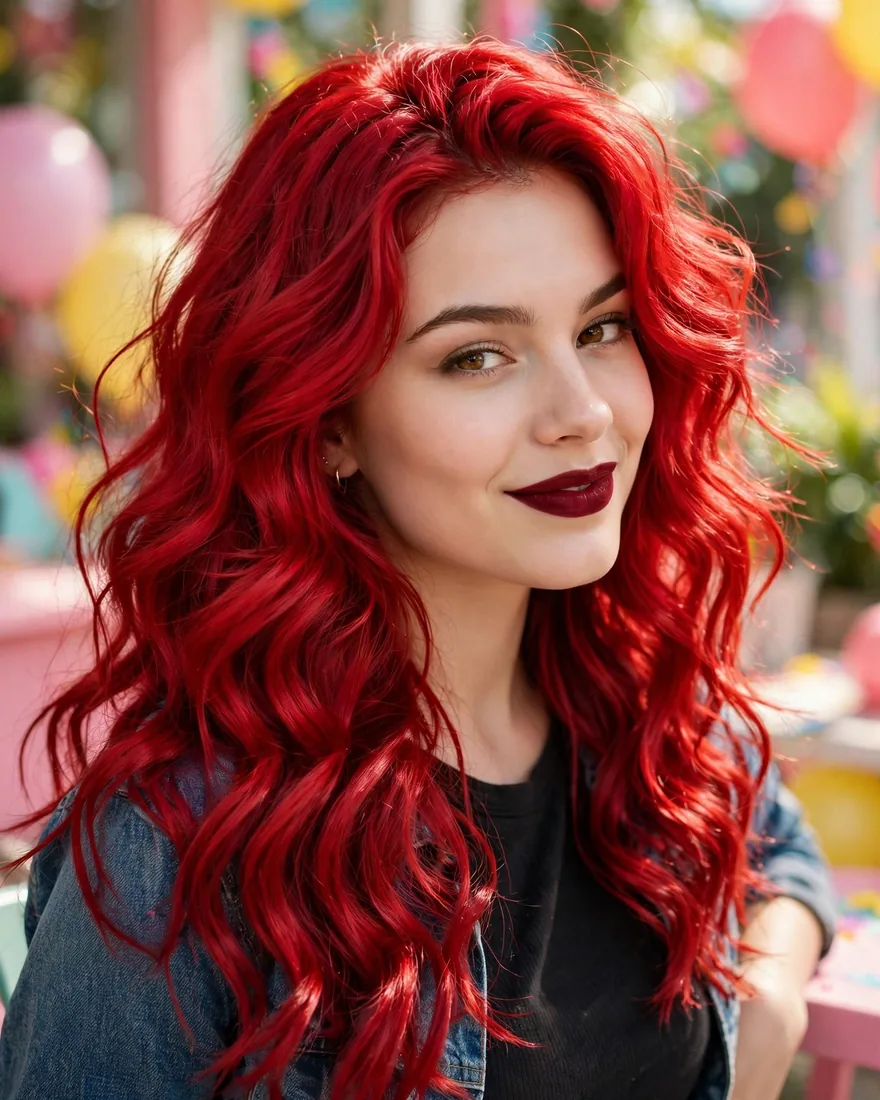
The blue-red that stopped traffic in every decade — vivid, juicy, unapologetic cherry. This is fantasy red hair at full saturation: the shade of vintage pin-ups and modern alt icons alike.
Benefits:
- Unmatched vibrancy — the boldest red on this list
- Blue undertones make teeth look whiter and eyes brighter
- Fades into a pretty pink wash rather than an ugly orange
Pro Tip: True cherry needs a very light base — on unbleached hair it reads as dark auburn-cherry, still beautiful but a different shade.
How To Style: Pin-straight and glossy is cherry’s power look — the sleek finish turns color into lacquer. Touch up roots often; regrowth shows fast.
Best For: Fair to medium skin with cool undertones; pre-lightened or naturally light bases. High-maintenance color — commit to the upkeep or choose a softer shade.
6. Cherry Cola
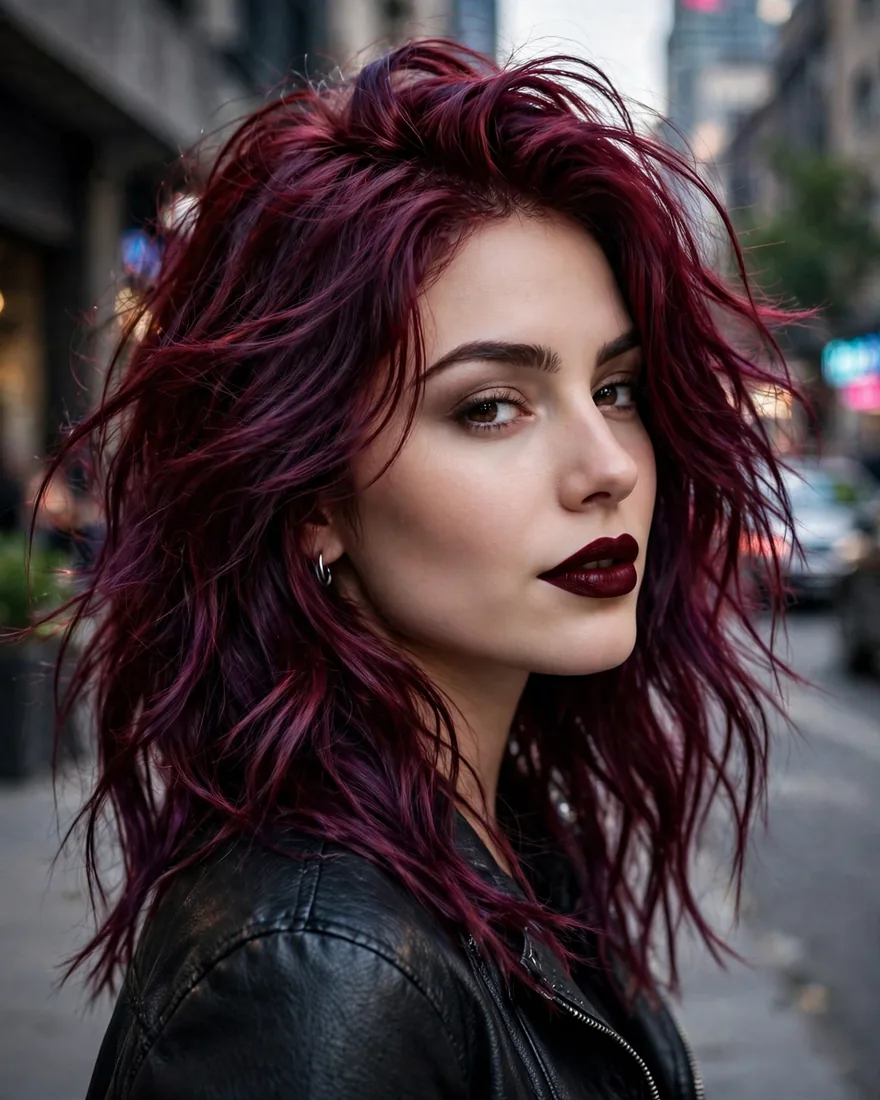
Cherry red poured over dark brunette — a deep, dimensional red-brown with cola-like richness. It delivers the cherry vibe without the bleach damage, since the dark base does half the work for you.
Benefits:
- Cherry impact without pre-lightening on dark hair
- Dimensional and expensive-looking; the dark base adds real depth
- One of the most forgiving grow-outs in the red family
Pro Tip: The cola effect needs red concentrated through the mid-lengths — ask for the brightest pieces around the face and ends so it never looks flat.
How To Style: Loose waves reveal the red dimension; a shine gloss every six weeks keeps cola tones from going muddy.
Best For: Natural brunettes at levels 3 to 5 who want red without bleach; medium to deep skin tones. For more dimensional brunette ideas, browse these highlights for brown hair placements.
7. Burgundy

Red gone moody — a deep wine-purple red that reads sophisticated rather than sweet. Burgundy is the shade for fall evenings and anyone who finds cherry a little too cheerful.
Benefits:
- The most elegant dark red; suits formal settings and professional life
- Purple undertones neutralize brassiness as it fades
- Flatters deep skin tones beautifully
Pro Tip: Burgundy fades to dull plum-brown if neglected — a weekly color-depositing conditioner keeps the wine tones alive between appointments.
How To Style: Sleek bobs and polished blowouts suit burgundy’s refined mood; skip beachy texture and keep it smooth.
Best For: Medium to deep skin with cool or neutral undertones; dark natural bases — no pre-lightening required for this shade.
8. Strawberry Blonde
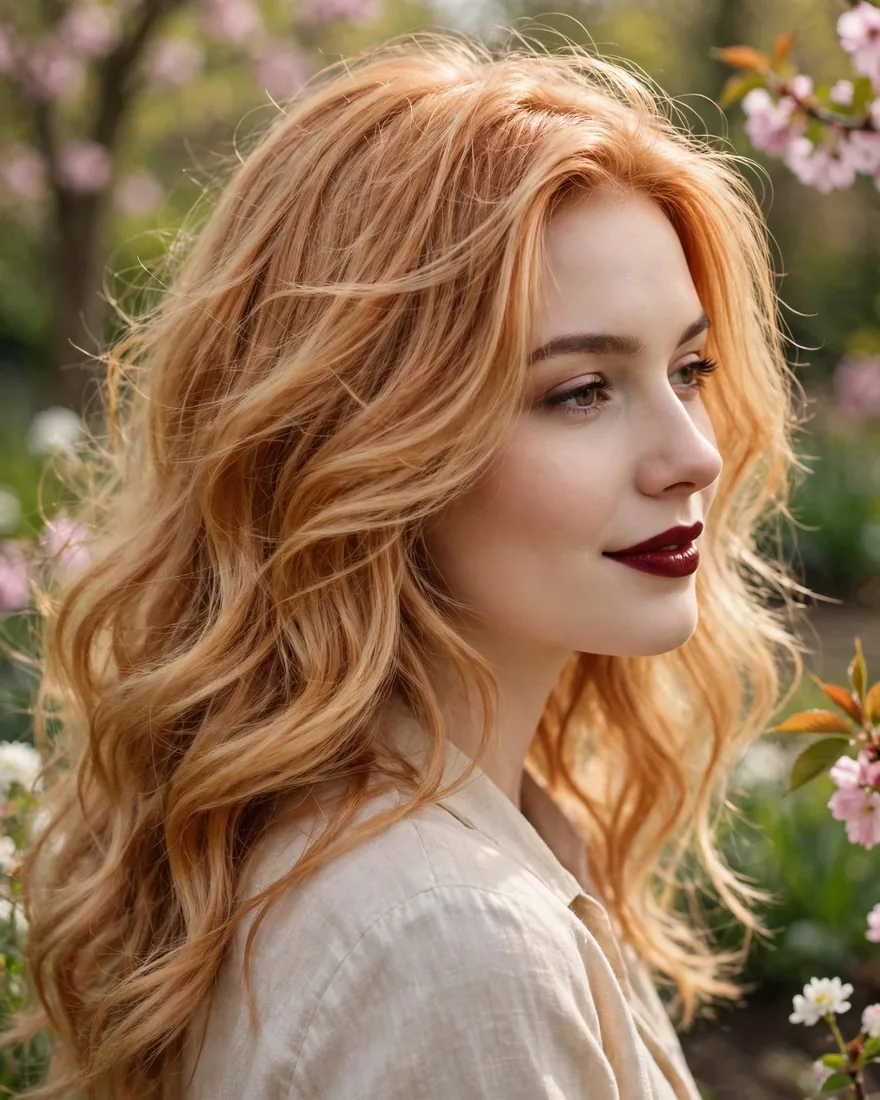
Red hair at its lightest and softest — a golden blonde kissed with pink-red warmth. It is the most natural-looking red on this list and the one strangers assume you were born with.
Benefits:
- The most believable red — grows out with minimal demarcation
- Brightens fair skin and makes blue eyes pop
- Lower maintenance than saturated reds; the lightness hides fade
Pro Tip: Strawberry blonde turns brassy-yellow on porous hair — a weekly gloss or pink-toned conditioner keeps the strawberry, not the straw.
How To Style: Air-dried waves with wave cream give strawberry blonde its effortless finish — a genuine wash-and-go shade.
Best For: Fair skin with warm or neutral undertones; naturally light bases at levels 7 to 9. The gentlest entry point for blondes.
9. Ginger Spice
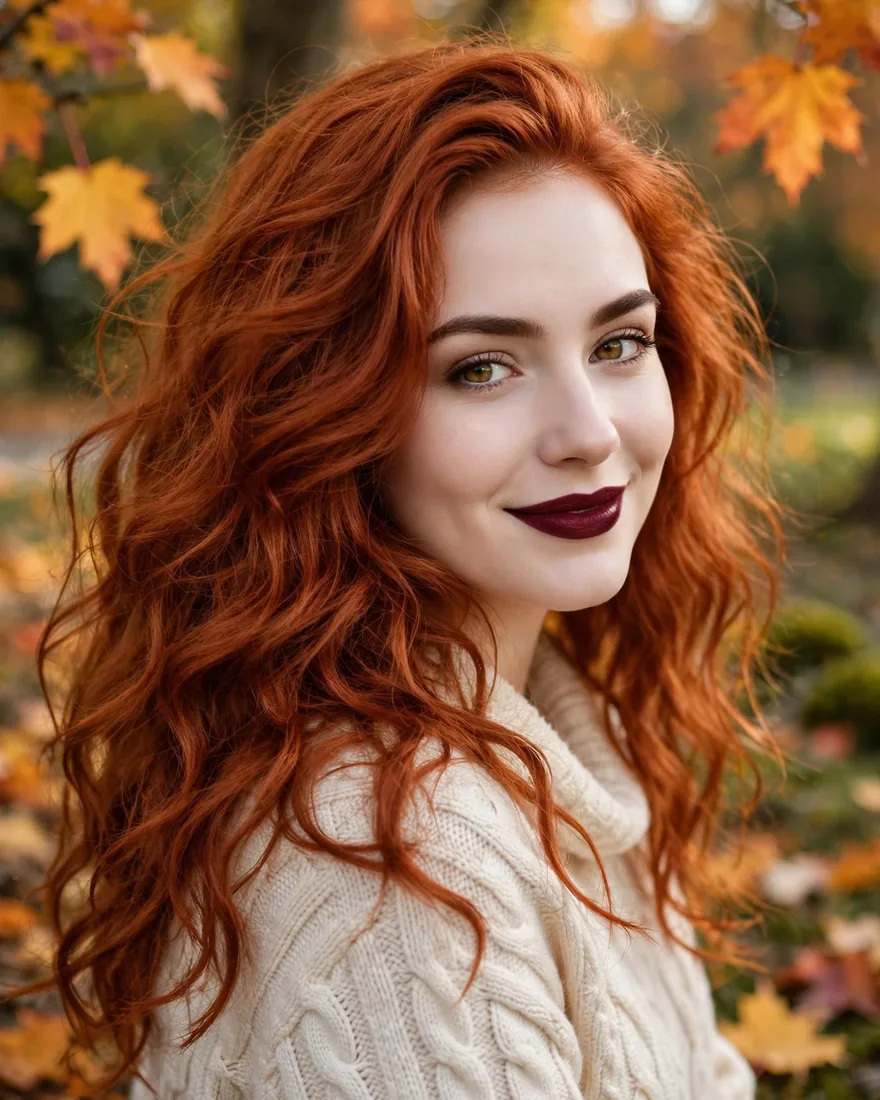
True natural-ginger territory — a bright, spicy orange-red with unmistakable warmth. Ginger spice is the shade that makes people ask whether it is your natural color, and then not believe you when you say it isn’t.
Benefits:
- The most distinctive red — instantly memorable
- Warmth flatters fair, freckled complexions like nothing else
- Fades into a soft peachy-copper rather than going muddy
Pro Tip: Ginger spice oxidizes fast — cool-water washes and UV protection are non-negotiable, or it dulls within two weeks.
How To Style: Tousled texture and piecey layers suit ginger’s playful energy; keep some movement so it never reads severe.
Best For: Fair skin with warm undertones; natural bases level 6 and up. A bold but believable choice.
10. Cinnamon

Ginger’s sophisticated sibling — a warm, spiced brown-red with cozy depth. Cinnamon carries the warmth of copper with the wearability of auburn: the best of both worlds for red lovers who need versatility.
Benefits:
- Warmth without loudness — works in conservative settings
- The spice tones make brown eyes glow
- Fades evenly; the brown base keeps the grow-out graceful
Pro Tip: Cinnamon can fall flat without dimension — ask for a slightly lighter gloss through the mid-lengths to keep light moving.
How To Style: Bouncy blowouts show off cinnamon’s warmth; curtain bangs frame the face in cozy tones.
Best For: Medium skin with warm or neutral undertones; natural bases levels 5 to 7. An easy, flattering middle ground.
11. Mahogany
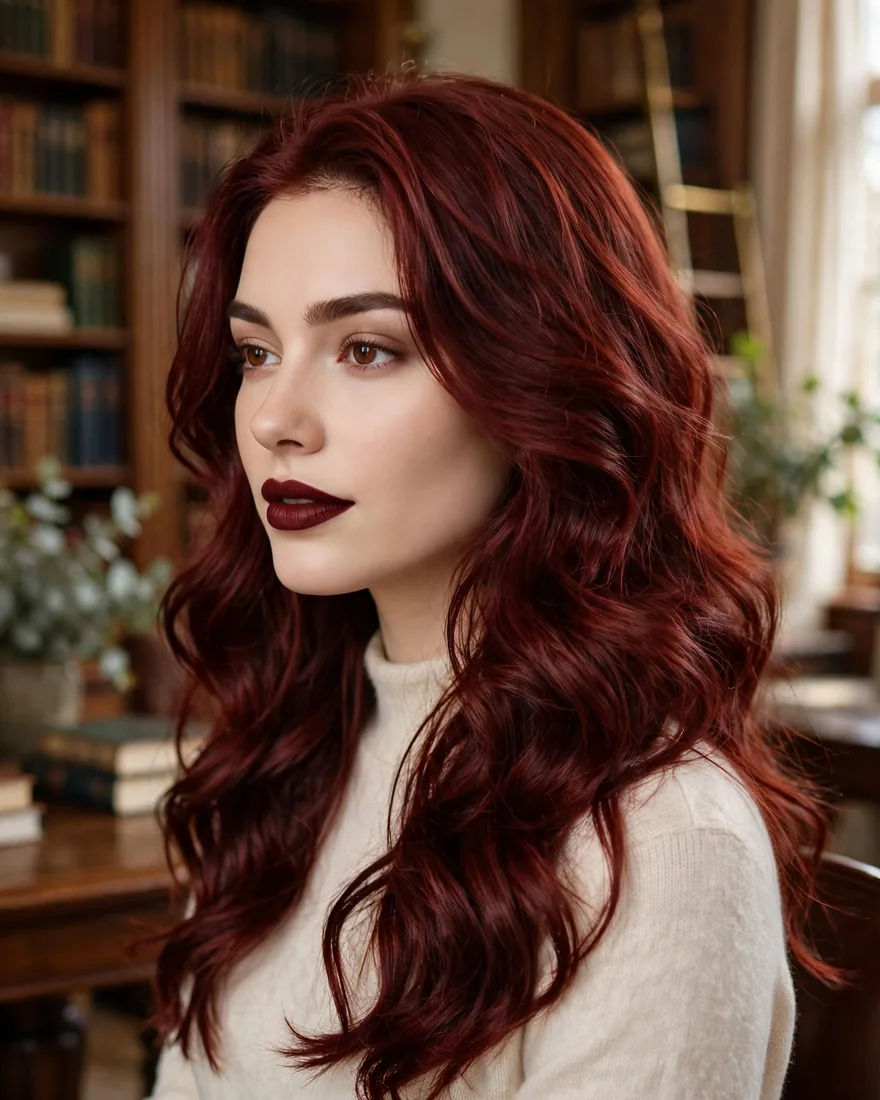
Red-brown at its richest — deep, glossy mahogany with red depth you notice on the second look. It is the red hair shade that whispers luxury instead of shouting color.
Benefits:
- The most understated red — maximum richness, minimum drama
- Dark depth adds the illusion of thickness to fine hair
- One of the slowest-fading reds; the brown base anchors the tone
Pro Tip: Mahogany’s red can vanish on very dark bases — at level 3 or darker, ask for the red lifted one level so it shows.
How To Style: High-shine sleek styling reveals the red hiding inside the brown — gloss is everything here.
Best For: Medium to deep skin tones; dark natural bases. The subtlest way to wear red, and a natural bridge from brown hair when you want warmth without commitment.
12. Ruby Red
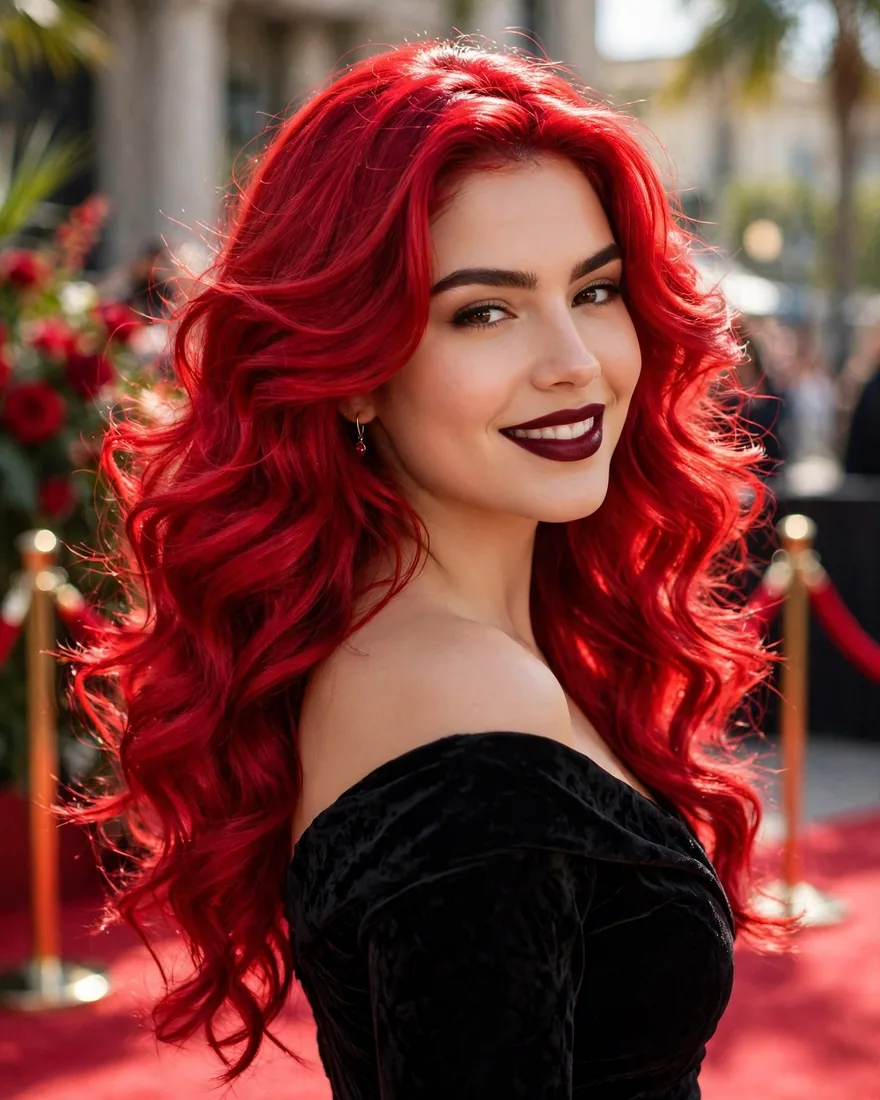
Jewel-toned and electric — a vivid true red with the clarity of a gemstone. Ruby red is cherry’s bolder cousin: less blue, more fire, maximum saturation.
Benefits:
- Show-stopping vibrancy for bold personalities and big moments
- The clarity of the tone photographs like nothing else
- Makes a dramatic, head-turning change from brunette or blonde
Pro Tip: Ruby red stains everything — pillowcases and towels will show it for two weeks. Wash in the coldest water you can stand.
How To Style: Stick-straight and glassy for full jewel impact — sleek is what makes ruby read expensive, not costume.
Best For: Fair to medium skin with neutral undertones; pre-lightened bases for true ruby clarity. The highest-maintenance shade on this list — plan accordingly.
13. Rose Gold Red
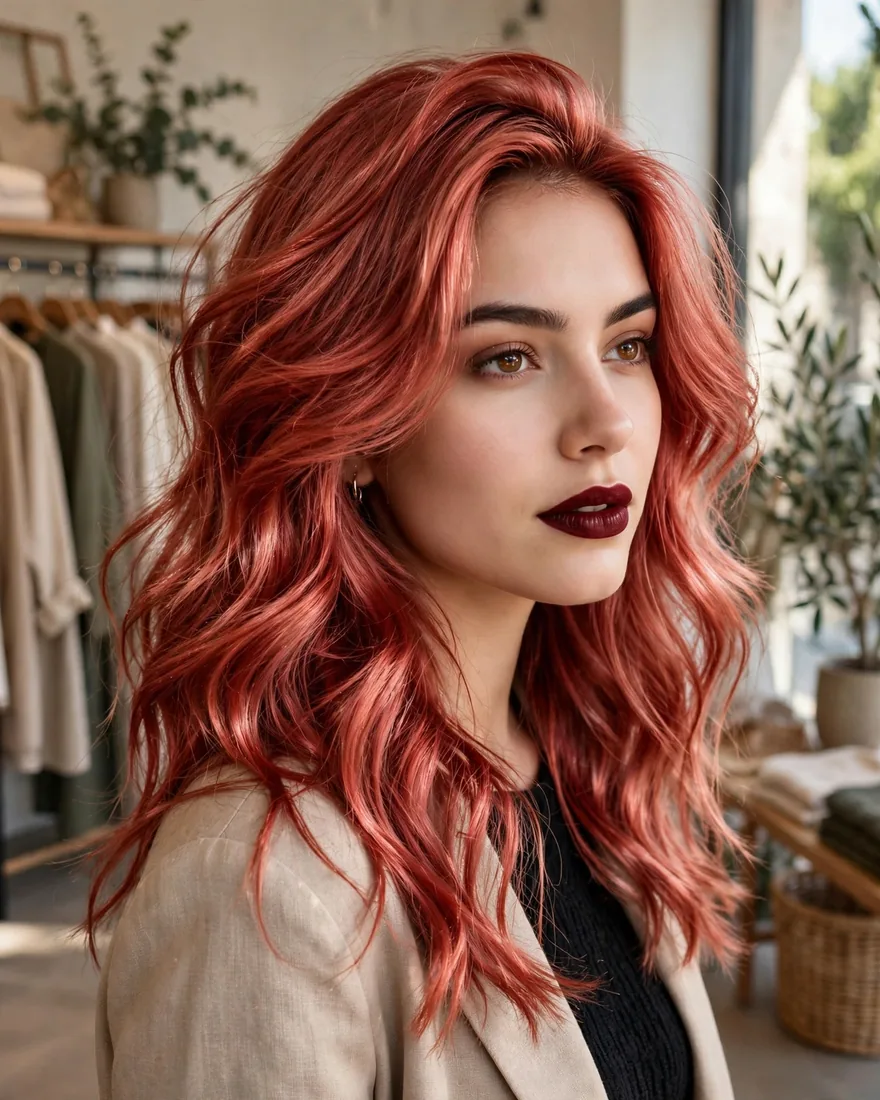
Red softened with pink-gold shimmer — romantic, modern, and endlessly flattering. Rose gold red is the red hair shade for people who want warmth with a fashion edge.
Benefits:
- The most universally flattering fashion red — suits nearly every undertone
- Pink tones brighten the complexion instantly
- Fades into a pretty blush blonde rather than going brassy
Pro Tip: Rose gold needs a level 8+ base, or it muddies into dusty pink-brown — not a shade to attempt on dark hair without pre-lightening.
How To Style: Soft waves and braids show off the pink-gold dimension; texture that catches light is this shade’s best friend.
Best For: Fair to medium skin, all undertones; light natural bases. A trendy but wearable choice — see what’s next in spring hair color trends if you love fashion shades.
14. Fire Ombré
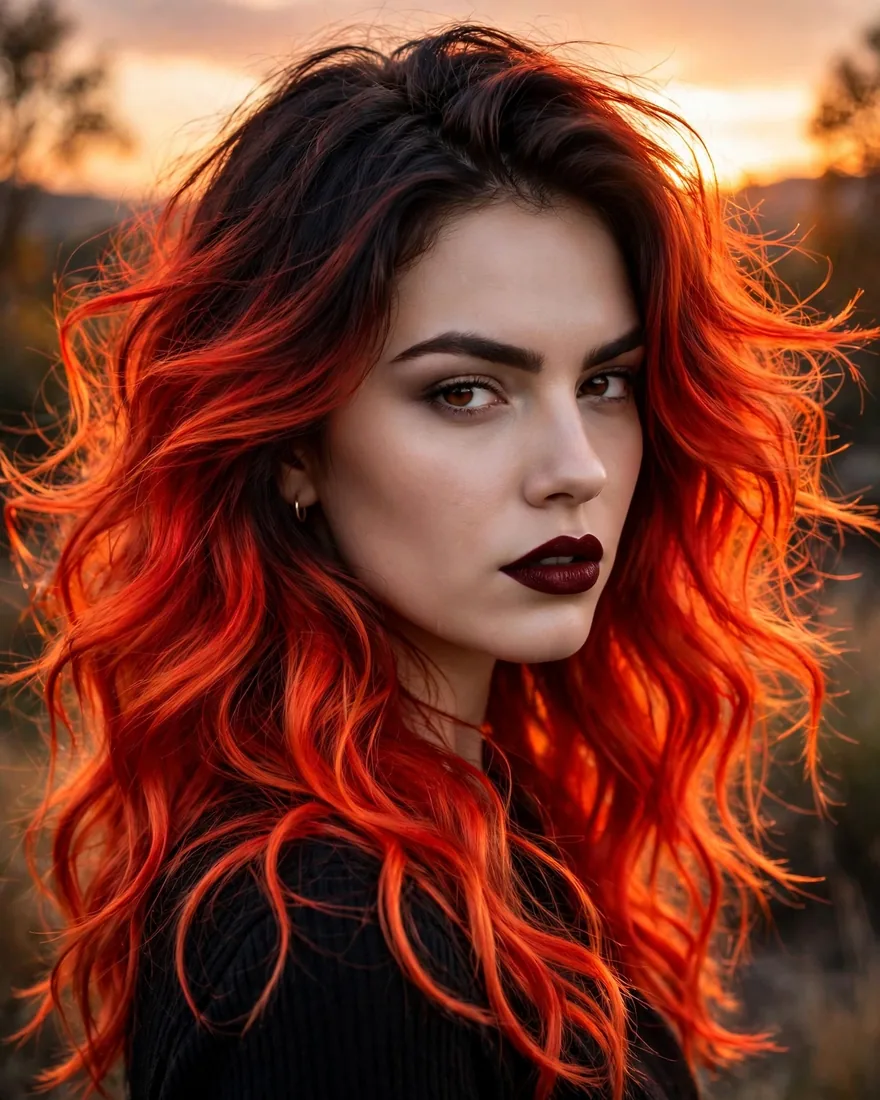
The gradient finale — dark roots melting through copper into blazing orange-red ends. Fire ombré gives you the drama of vivid red hair with the grow-out ease of a rooted color.
Benefits:
- The most forgiving vivid red — dark roots hide regrowth for months
- Maximum dimension; the gradient flatters every face shape
- Lets you test-drive vivid red without full-head commitment
Pro Tip: The transition zone makes or breaks fire ombré — it should melt, not stripe. Ask for hand-painted application, not foils.
How To Style: Loose waves blur the gradient into a seamless flame; straight styling can expose harsh transition lines.
Best For: All undertones, since the dark root suits everyone; medium to long hair gives the gradient room to develop. The smartest vivid red for low-maintenance lovers — and if bold color is your thing, our Y2K skunk hair guide covers the edgiest placements.
How the 14 shades compare at a glance:
| Shade | Fades Into | Upkeep Level |
|---|---|---|
| Warm Copper | Strawberry-gold | Medium — gloss every 6–8 weeks |
| Spicy Copper | Dull orange | High — gloss refresh at week 4 |
| Soft Auburn | Warm brown | Low — regrowth blends for weeks |
| Dark Auburn | Deep warm brown | Low — brown base holds tone |
| Cherry Red | Pink wash | High — vivid needs constant refresh |
| Cherry Cola | Plummy brown | Medium — gloss every 6 weeks |
| Burgundy | Dull plum-brown | Medium — weekly color-depositing conditioner |
| Strawberry Blonde | Golden blonde | Low — lightness hides fade |
| Ginger Spice | Peachy copper | Medium-high — UV protection essential |
| Cinnamon | Warm brown | Low-medium — even fade |
| Mahogany | Rich brown | Low — slowest-fading red here |
| Ruby Red | Pink-red | Highest — stains, fades fast |
| Rose Gold Red | Blush blonde | Medium — needs light base kept toned |
| Fire Ombré | Copper ends | Low-medium — roots hide regrowth |
What Each Red Shade Fades Into
Every red fades — the honest question is what it fades into, because that decides whether week six looks intentional or neglected. Warm copper slides into a strawberry-peach gold that most people find pretty; spicy copper collapses faster, going dull orange by week four if you skip the gloss. The auburns are the graceful agers of the family: soft auburn melts into warm brown, dark auburn into a deep chocolate-brown, cinnamon into a warm brunette — all wearable without panic.
The vivids tell a different story. Cherry washes out to a pink many wearers keep on purpose; ruby follows but holds fire longer. Burgundy drifts toward dull plum-brown without a color-depositing conditioner. Strawberry blonde gets more golden, ginger softens to peachy copper, rose gold blushes to pale pink-blonde. Fire ombré is the clever one — dark roots never need refreshing, so only the copper ends want attention. Knowing your shade’s fade trajectory before you book is what separates red hair veterans from first-timers staring at the mirror in week five — and if you love lived-in dimension, our balayage hairstyles guide shows how hand-painted color grows out gracefully.
At-Home Dye vs Salon: Cost and Risk Per Shade
Some reds are genuinely safe at home and some are not — the dividing line is pre-lightening. Deposit-only shades on compatible bases (soft auburn, dark auburn, mahogany, cherry cola, and cinnamon on level 5+) can be done at home with a quality demi-permanent dye, since you are adding tone rather than lifting. The risk is low and the cost is a fraction of a salon visit. But any shade that needs the hair lifted first — spicy copper on dark hair, true cherry, ruby red, rose gold — belongs in a salon, because uneven pre-lightening is the number one cause of patchy, banded reds that cost more to fix than the original appointment would have.
Brunettes get the best deal: dark auburn, cherry cola, burgundy, and mahogany all skip pre-lightening on natural dark bases — healthier hair, cheaper upkeep. On light bases, strawberry blonde and rose gold are straightforward. The vivids are the expensive ones — cherry, ruby, and spicy copper demand regular gloss appointments. Budget honestly: vivid red costs more per year than any brunette shade, while auburn costs barely more than a normal color routine. For brunettes weighing the leap, our California brunette guide shows how dimension techniques keep dark hair interesting between red phases.
Red Hair on Gray Hair and Coarse or Curly Texture
Gray hair and red dye have a complicated relationship. Gray is wiry and resistant, grabbing red unevenly — vivid on the grays, muted elsewhere. Fix it by processing gray sections first or choosing a demi-permanent for even uptake, and accept a shorter gloss cadence since porous gray fades red fastest. The payoff is real: red is one of the most flattering colors on graying hair.
Coarse and curly textures drink color differently. High porosity absorbs dye fast but releases it faster — reds go on rich and wash out within weeks without a filler underneath. Fill porous hair with a warm protein filler before the red to even absorption and extend the shade’s life. Curls scatter light, so red looks deeper and moodier on curly textures than the same shade on straight hair — gorgeous, but set expectations. Rich reds on curls also demand more product: color-safe leave-ins and regular deep conditioning are not optional.
FAQs
How long does red hair dye last before it fades?
Vivid reds like cherry and ruby start visibly fading within two to three weeks; coppers hold vibrancy four to six weeks with proper care; auburns, mahogany, and brown-based reds can look good eight to ten weeks. Cool water, color-safe shampoo, and regular glosses stretch every timeline.
Will red hair suit my skin tone?
Match temperature to undertone: warm undertones (green veins, gold jewelry) glow in copper, ginger, cinnamon, and warm auburn; cool undertones (blue/purple veins, silver jewelry) suit cherry, burgundy, and blue-based reds; neutral undertones wear the full range. When in doubt, stay close to your natural depth with red warmth added.
Can I dye dark brown hair red without bleaching?
Yes, for the darker reds. Dark auburn, cherry cola, burgundy, and mahogany all show beautifully on natural dark bases with no pre-lightening, since they are built on brunette depth. What you cannot get without lifting is true vibrancy — spicy copper, cherry, ruby, and rose gold need a light base to read as vivid rather than as a dark tint. Be honest about which result you want before skipping the bleach.
How do I stop red hair from fading so fast?
Red molecules are the largest dye molecules and wash out fastest, but you can slow it down. Wash in cool water two to three times a week, use color-safe sulfate-free shampoo, add a weekly color-depositing conditioner, protect from sun and heat, and book a gloss refresh every four to eight weeks. Vivid reds need the full routine; auburns are more forgiving.
Is red hair really high maintenance?
It depends entirely on the shade. Vivid reds (cherry, ruby, spicy copper) are genuinely high maintenance — frequent glosses, careful washing, constant vigilance. But brown-based reds like soft auburn, dark auburn, mahogany, and cinnamon are barely more work than a normal brunette routine, and fire ombré hides regrowth for months. Choose your shade around your real maintenance appetite, not your aspirational one.
Can I dye my hair red at home with box dye?
For deposit-only shades on a compatible base, yes — auburns, mahogany, and cherry cola on dark hair are reasonable at-home projects with a quality demi-permanent dye. But skip the box for anything requiring pre-lightening: uneven lifting is the top cause of patchy, banded reds, and fixing a botched vivid red at the salon costs more than booking it properly in the first place. When in doubt, pay for the consultation.
What color does red hair fade into?
Each shade has its own fade trajectory. Coppers fade to strawberry-peach gold; cherry and ruby wash out to pink; burgundy drifts to plum-brown; auburns and cinnamon settle into warm brown; strawberry blonde gets more golden; ginger softens to peachy copper; rose gold blushes into pale pink-blonde. The brown-based reds fade most gracefully, while the vivids need regular refreshing to avoid the in-between stage.
Does red hair work on gray hair?
Yes, and it can look stunning — red adds warmth that flat gray washes out. But gray hair is wiry and resistant, so it grabs red unevenly and releases it fast. Expect to process gray sections a little longer, choose demi-permanent formulas for even uptake, and shorten your gloss cadence since porous gray fades red quickly. A colorist experienced with gray coverage is worth the appointment for your first red.
Red hair rewards the prepared and punishes the impulsive — but now you are prepared. Pick the shade that matches your undertone and your real maintenance appetite, know what it fades into before you book, and commit to the cool water and the gloss schedule. Do that, and any of these 14 shades will give you the rich, head-turning color that makes red hair worth every bit of its reputation.