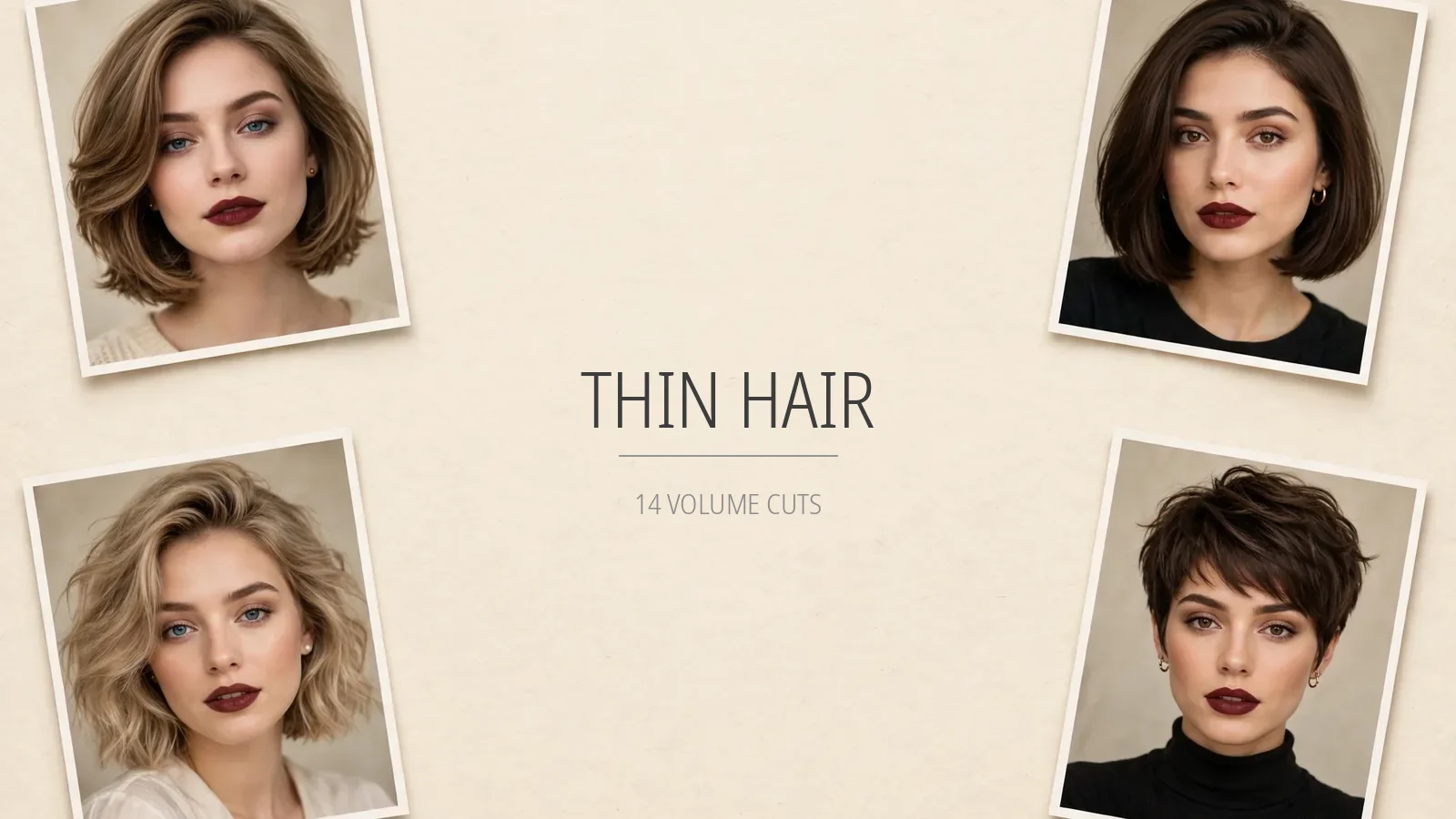
Haircuts for Thin Hair – 14 Cuts That Fake Volume
Thin hair is the most misunderstood hair type in the salon chair. Most advice lumps “fine” and “thin” together, but they are different problems: fine hair is about strand thickness, thin hair is about density — how many strands you actually have. You can have fine hair that is thick (lots of delicate strands) or coarse hair that is thin (few thick strands), and the haircut that fixes one can wreck the other. That is why so many haircuts for thin hair fail — they were designed for fine hair, not thin hair.
This guide is built on the distinction. Below are 14 haircuts for thin hair chosen specifically for low-density hair, each with an honest diagnosis of who it flatters — fine, thin, or both — plus the daily styling minutes it actually costs.
Table of Contents
- Haircuts That Make Thin Hair Look Fuller
- 1. The Classic Layered Bob
- 2. Blunt Bob with Zero Elevation
- 3. Airy Lob with Ghost Layers
- 4. Razor-Cut Pixie
- 5. Textured Crop with Clipped Sides
- 6. Collarbone Lob
- 7. Soft Shag with Crown Layers
- 8. Micro-Bangs Lob
- 9. Feathered Pixie
- 10. Long Layers with Bronde Balayage
- 11. Side-Parted Bob
- 12. Choppy Mini Bob
- 13. Soft Crop with Side Part
- 14. Wispy Lob
- Fine vs Thin vs Both: Diagnose Before You Cut
- When Thin Hair Meets Cowlicks and a Thinning Crown
- Honest Daily Styling Minutes for Each Cut
- FAQs
- What’s the difference between fine hair and thin hair?
- Are layers good for thin hair?
- Should thin hair be cut blunt or layered?
- Can long hair work on thin hair?
- How often should thin hair be trimmed?
- Will a pixie cut make thin hair look thinner?
- What products actually add volume to thin hair?
- Do thinning shears damage thin hair?
Haircuts That Make Thin Hair Look Fuller
1. The Classic Layered Bob
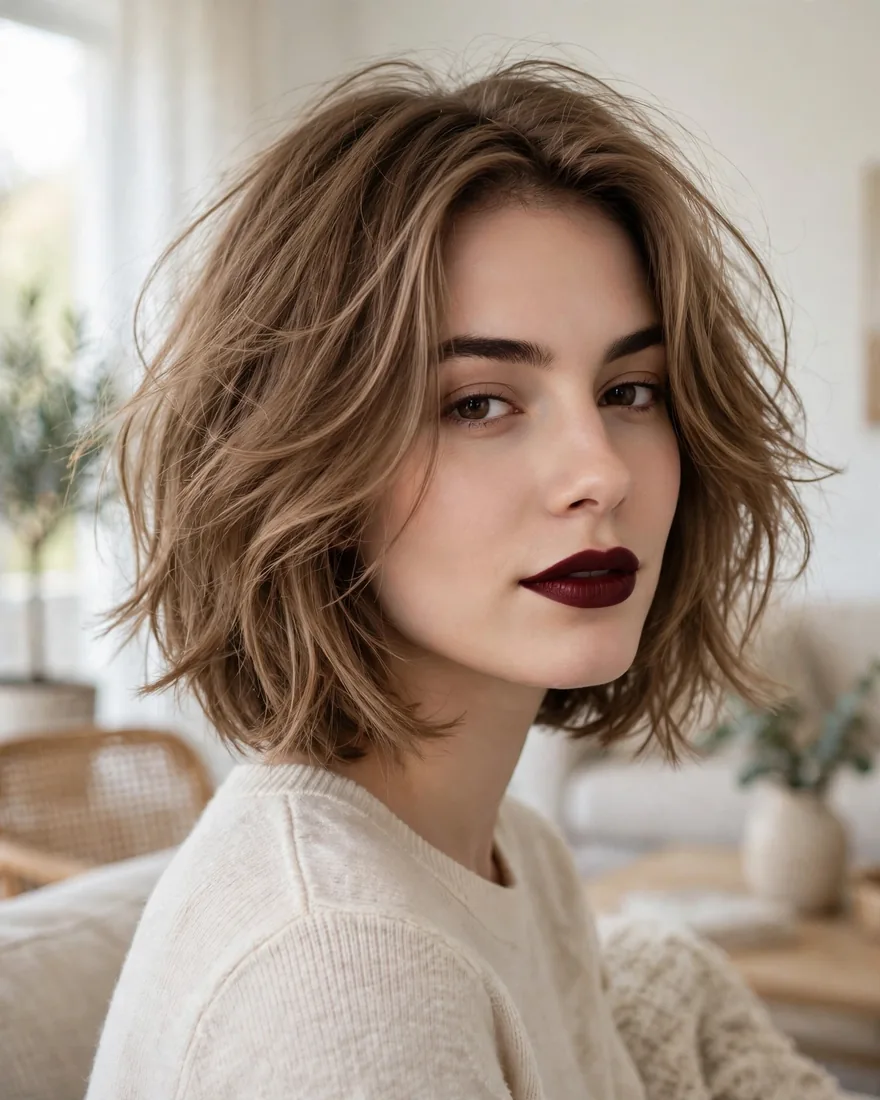
The chin-to-jaw layered bob is the workhorse of haircuts for thin hair for one reason: stacked layers at the back build the crown up while the front stays clean. The layering removes just enough weight for the hair to lift off the scalp instead of lying flat, and the bob length keeps every strand visible — nothing disappears into long, stringy ends.
Benefits:
- Stacked back layers create automatic crown lift without teasing
- Short perimeter makes thin ends look deliberately dense
- Versatile enough for straight, wavy, and air-dried styling
Pro Tip: Ask for the layers to be cut dry or on second-day hair — wet cutting can take off more length than thin hair can afford once it springs up dry.
How To Style: Blow-dry the crown with a small round brush, over-directing forward for lift. A pea-sized amount of volumizing mousse at the roots before drying doubles the effect.
Best For: Thin + fine hair (the classic double problem); straight to wavy textures. Among haircuts for thin hair, this is the most versatile starting point. If your strands are fine rather than sparse, our 90s hairstyles for fine hair roundup has more lift-focused options.
2. Blunt Bob with Zero Elevation

Cut straight across at one length with zero elevation — no layers at all. This is the density-maximizing option among haircuts for thin hair: every hair ends at the same line, so the perimeter reads as thick as your hair can possibly look.
Benefits:
- The blunt line makes thin hair look dramatically denser
- Zero layering means zero wispy, see-through ends
- Sharp and modern — reads intentional, never apologetic
Pro Tip: This cut lives or dies by the trim schedule. Even half an inch of uneven growth softens the blunt line that does all the visual work — book every six to eight weeks.
How To Style: Blow-dry smooth with a paddle brush, then flat-iron the ends with a slight inward bevel. A shine mist over the canopy sells the density.
Best For: Thin + coarse or medium strands; straight hair shows the blunt line cleanest. Avoid if your hair is both thin AND fine — the solid line can look severe without layer support.
3. Airy Lob with Ghost Layers
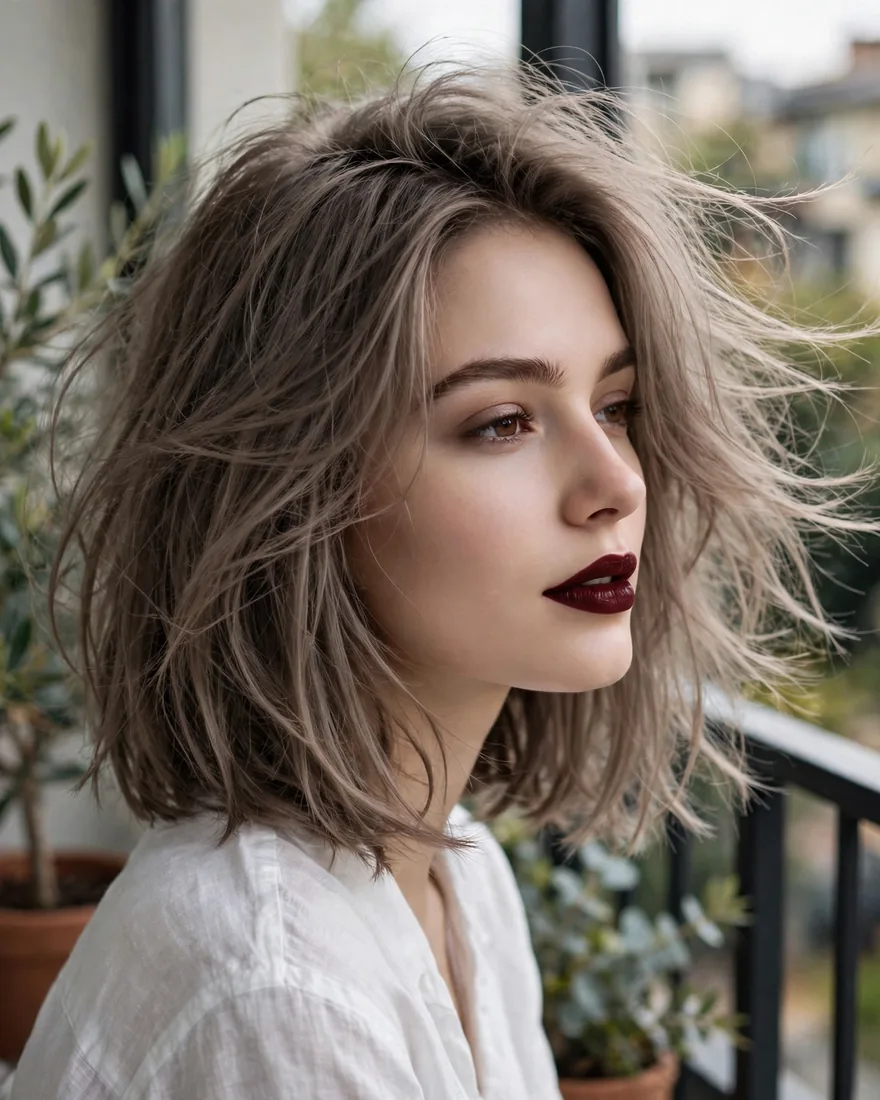
A collarbone-grazing lob with “ghost layers” — internal layers so subtle they are felt, not seen. The surface stays smooth while hidden layers remove weight underneath. It is the layered choice for people who fear layers, and one of the gentlest haircuts for thin hair.
Benefits:
- Hidden layers add movement without visible layering
- Lob length keeps the perimeter weighty and full
- Grows out gracefully — no harsh layer lines appear
Pro Tip: Ghost layers must be cut with the hair dry. Wet-cut internal layers are a gamble on thin hair; dry cutting lets the stylist see exactly how much weight is leaving.
How To Style: Air-dry with a wave cream for undone texture, or blow out smooth and bend the ends. A deep side part adds instant crown volume.
Best For: Thin + fine hair; wavy and straight textures. The safest layered option among all 14 haircuts for thin hair in this guide.
4. Razor-Cut Pixie
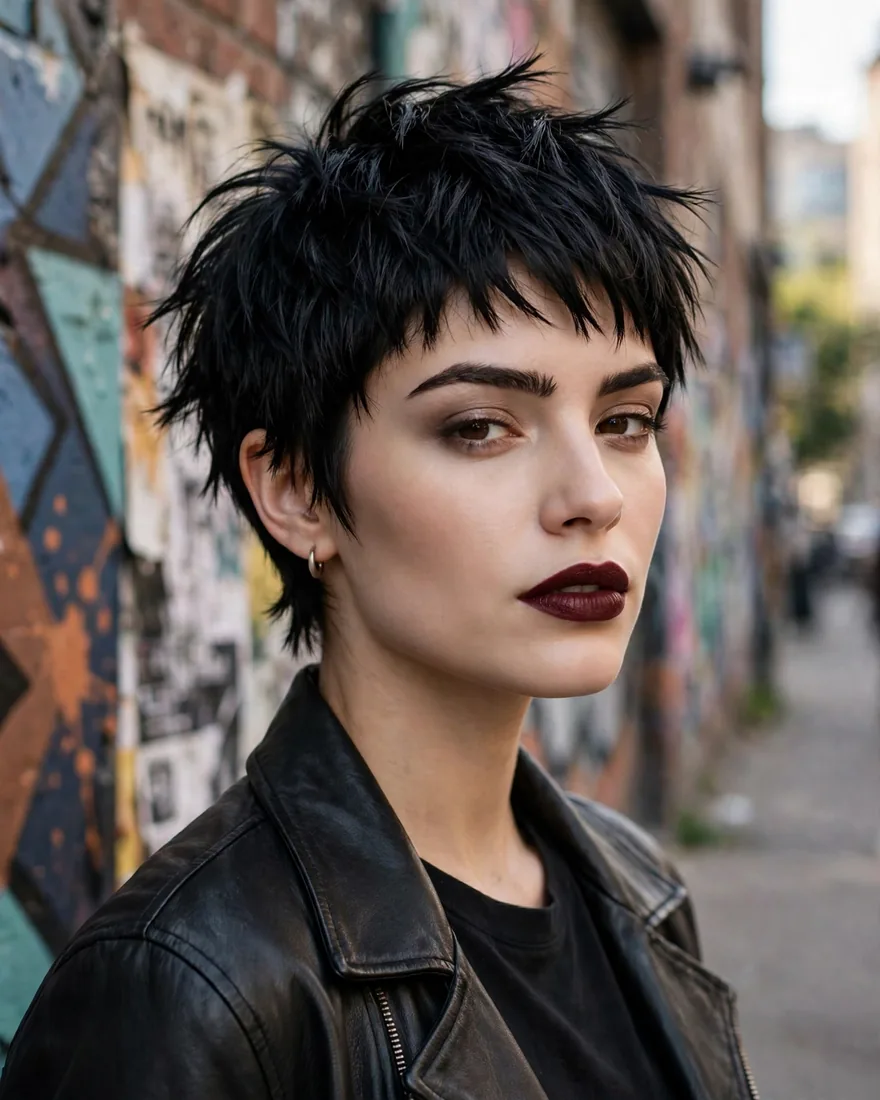
Short through the back and sides with a razor-textured top — the edgiest of the haircuts for thin hair. The razor creates feathered, piece-y ends that make fine hair look like it has twice the texture, and the short length means every strand contributes to the silhouette instead of disappearing. For the full styling breakdown, see our pixie cut guide.
Benefits:
- Razor texture creates the illusion of density through piece-iness
- Short length concentrates all available hair into one shape
- Genuinely wash-and-go with the right product
Pro Tip: Razor cutting on very fine hair needs a light hand — an aggressive razor can shred delicate strands. Ask for point-cutting instead if your hair is baby-fine.
How To Style: Work matte clay through dry hair, pinching ends into points. No brush needed; the mess is the style.
Best For: Fine + thin hair; straight to wavy textures. Not ideal for a thinning crown — the short top can expose the scalp.
5. Textured Crop with Clipped Sides
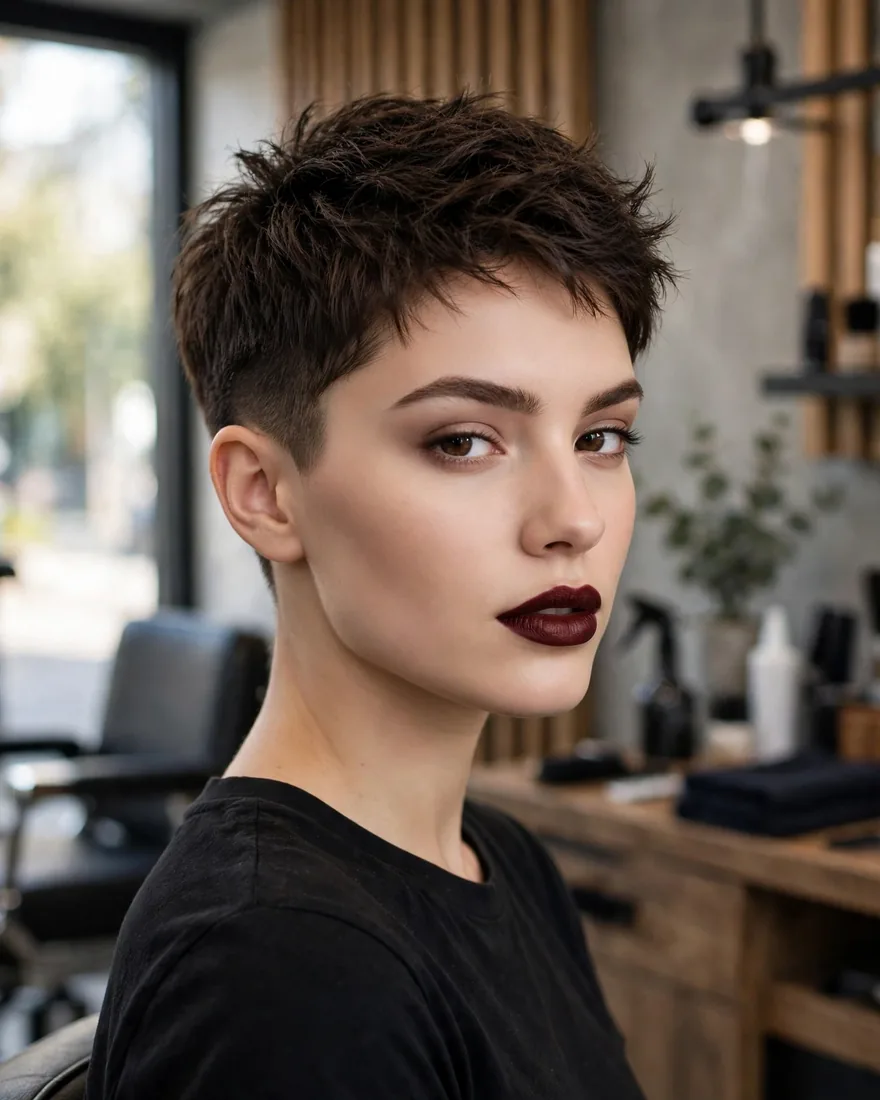
A textured crop on top with the sides and nape clipped short — maximum contrast between a full-looking crown and neat edges. Removing bulk where thin hair misbehaves most pushes all visual weight to the top, where texture does the thickening work. Bold, but effective among haircuts for thin hair.
Benefits:
- Clipped sides eliminate the stringy nape problem entirely
- Textured top reads fuller than any one-length short cut
- Keeps you cooler and cuts daily styling to minutes
Pro Tip: Start with a longer clipper guard than you think — you can always go shorter next visit, but an over-clipped side on thin hair takes months to recover visually.
How To Style: Add volume to the top with root-lifting spray and a quick blow-dry; the clipped sides need nothing.
Best For: Thin + coarse hair; oval and heart faces. Bold choice — not for the commitment-shy.
6. Collarbone Lob
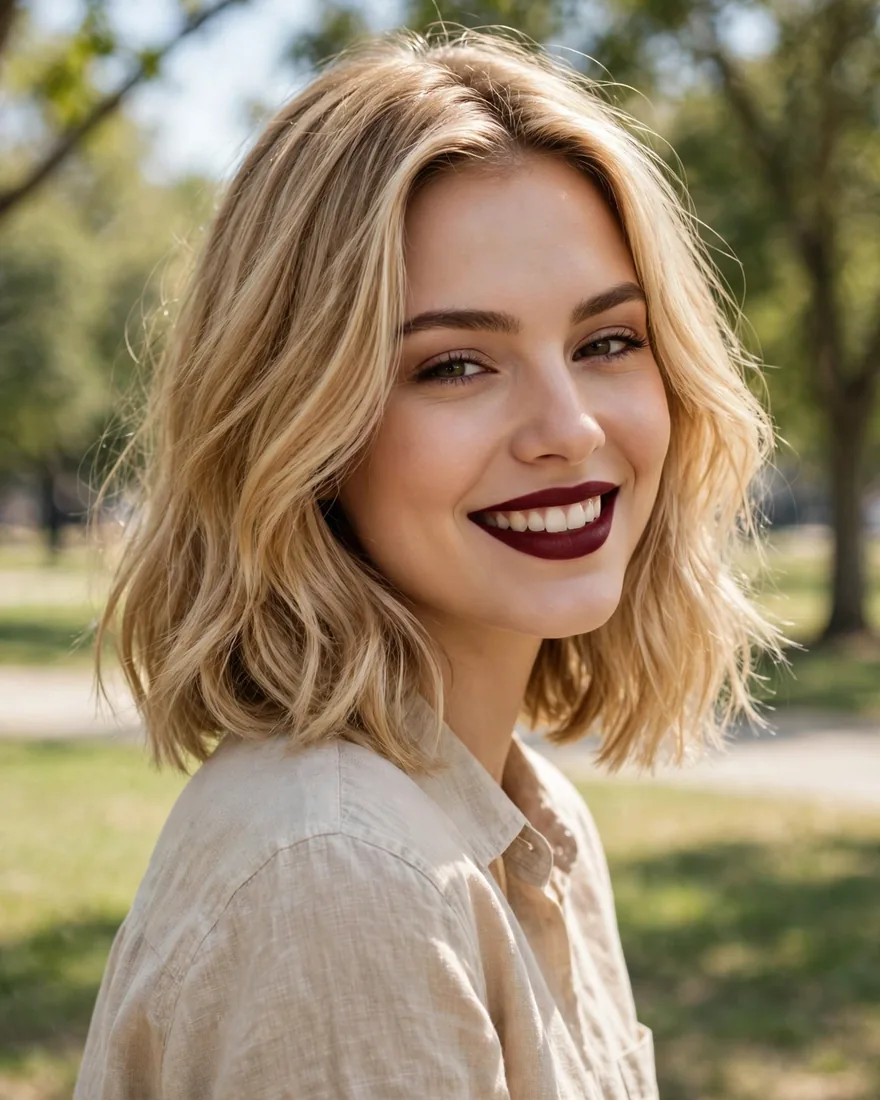
The one-length collarbone lob: no layers, no graduation, just a clean line grazing the collarbone. Like the blunt bob but with more length to play with, it keeps the perimeter as dense as possible while the extra inches give styling versatility — tucks, waves, and half-up styles that shorter cuts cannot do.
Benefits:
- One-length perimeter maximizes visible density
- Long enough for updos and waves, short enough to avoid stringiness
- The most low-maintenance cut on this list
Pro Tip: The collarbone is the sweet spot — longer than this, thin ends start to separate and look wispy; shorter, and you lose the styling options.
How To Style: Blow-dry smooth or add loose bends with a flat iron. A center or deep side part both work; the cut is forgiving.
Best For: Thin hair of any strand thickness; the universal safe choice among haircuts for thin hair.
7. Soft Shag with Crown Layers

A softened shag — curtain bangs, feathered layers concentrated at the crown, lived-in texture through the ends. The crown layers build height exactly where thin hair goes flat, while shaggy ends keep the perimeter from looking severe. See also our short shaggy hair ideas for more texture-forward haircuts for thin hair.
Benefits:
- Crown layers create height where thin hair needs it most
- Curtain bangs add face-framing fullness for free
- The undone finish hides thin spots better than sleek styles
Pro Tip: Keep the layers long through the mid-lengths — over-layering thin hair is the classic mistake that turns “shag” into “stringy.”
How To Style: Air-dry with sea salt spray scrunched in, then piece out the ends with wax. Bedhead is the intended finish.
Best For: Thin + fine hair; wavy textures wear this with the least effort.
8. Micro-Bangs Lob
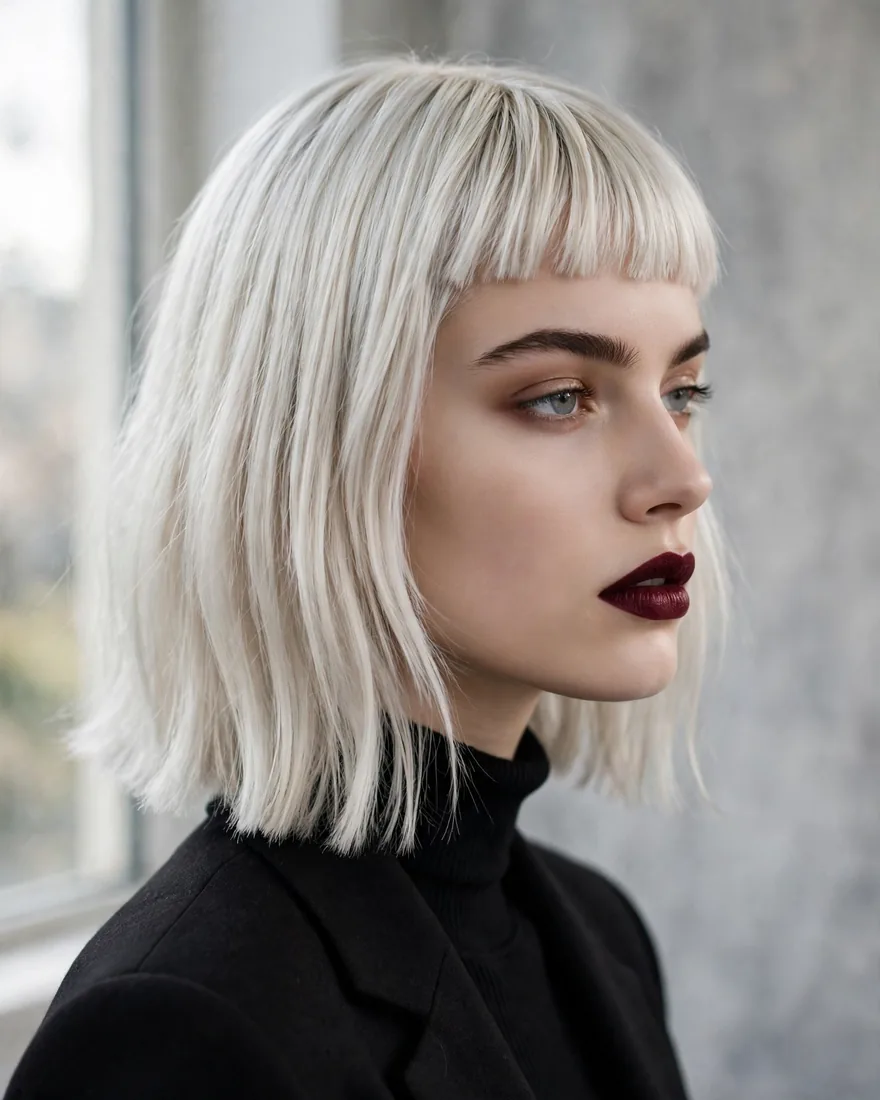
A lob with short, straight-across micro-bangs — the fringe is the volume trick. Bangs pull hair forward from the crown, covering a thinning hairline and creating the impression of more hair up front. The lob length keeps everything else full and swingy, making this one of the smartest haircuts for thin hair when the hairline is the concern.
Benefits:
- Micro-bangs camouflage a thinning hairline or high forehead
- Fringe adds instant visual density around the face
- Striking and editorial — a genuine style statement
Pro Tip: Micro-bangs need trimming every three to four weeks or they grow into regular bangs and lose the effect. Budget for the upkeep.
How To Style: Blow-dry bangs forward with a small round brush; style the lob as usual. A tiny flat iron keeps the fringe crisp.
Best For: Thin hair with a high or thinning hairline; straight textures. Not for strong cowlicks at the front hairline.
9. Feathered Pixie
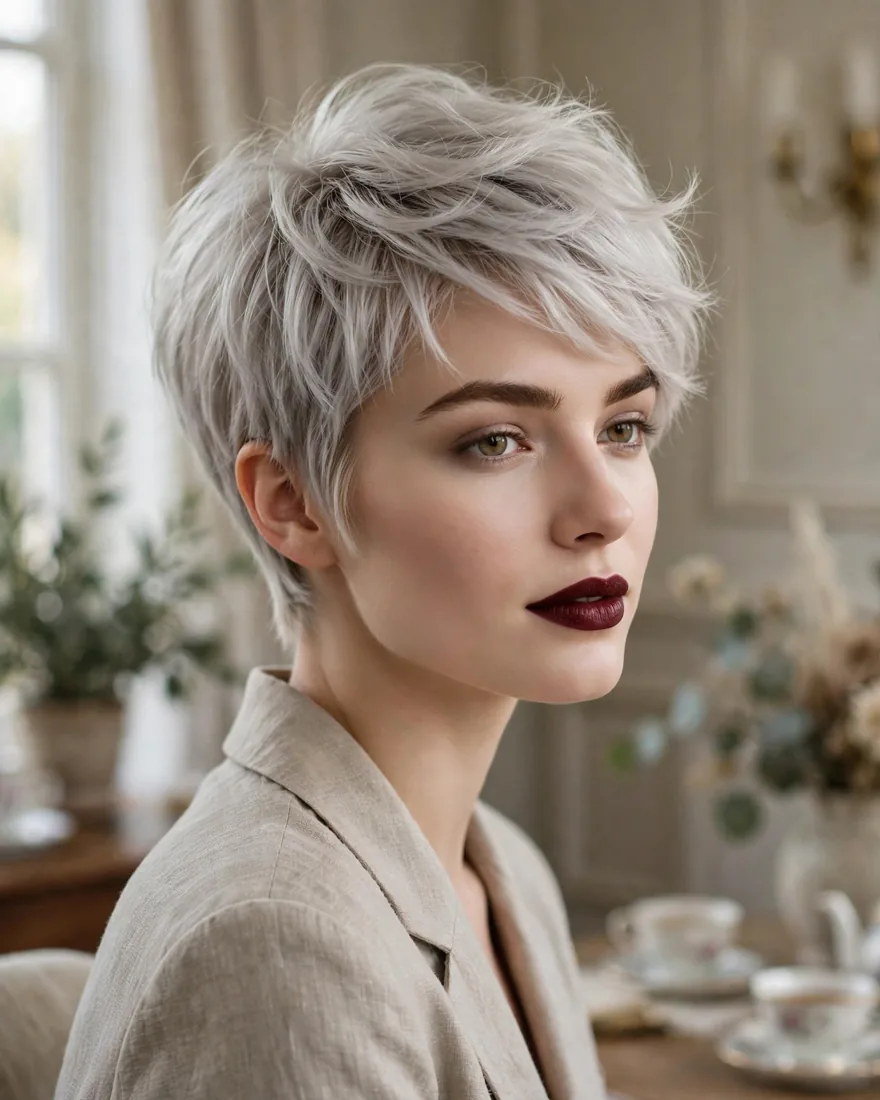
Light, airy, feather-cut layers over a soft pixie base — the 70s feathering technique on a modern crop. Feathered ends move and separate naturally, making fine hair look touchably full instead of plastered flat. The softest, most forgiving pixie among haircuts for thin hair.
Benefits:
- Feathering makes fine hair look naturally voluminous
- Soft texture flatters mature faces and thinning temples
- Air-dries genuinely well — minimal heat needed
Pro Tip: Feathered ends need point-cutting, not thinning shears — shears on already-thin hair can leave ends reading damaged rather than feathered.
How To Style: Blow-dry forward with your fingers, not a brush, for natural separation. A drop of serum tames flyaways. Our short hair styling guide covers tools for every short length.
Best For: Fine + thin hair; mature hair; oval and long faces. One of the kindest haircuts for thin hair for thinning temples. Our short hair styling guide covers tools for every short length.
10. Long Layers with Bronde Balayage
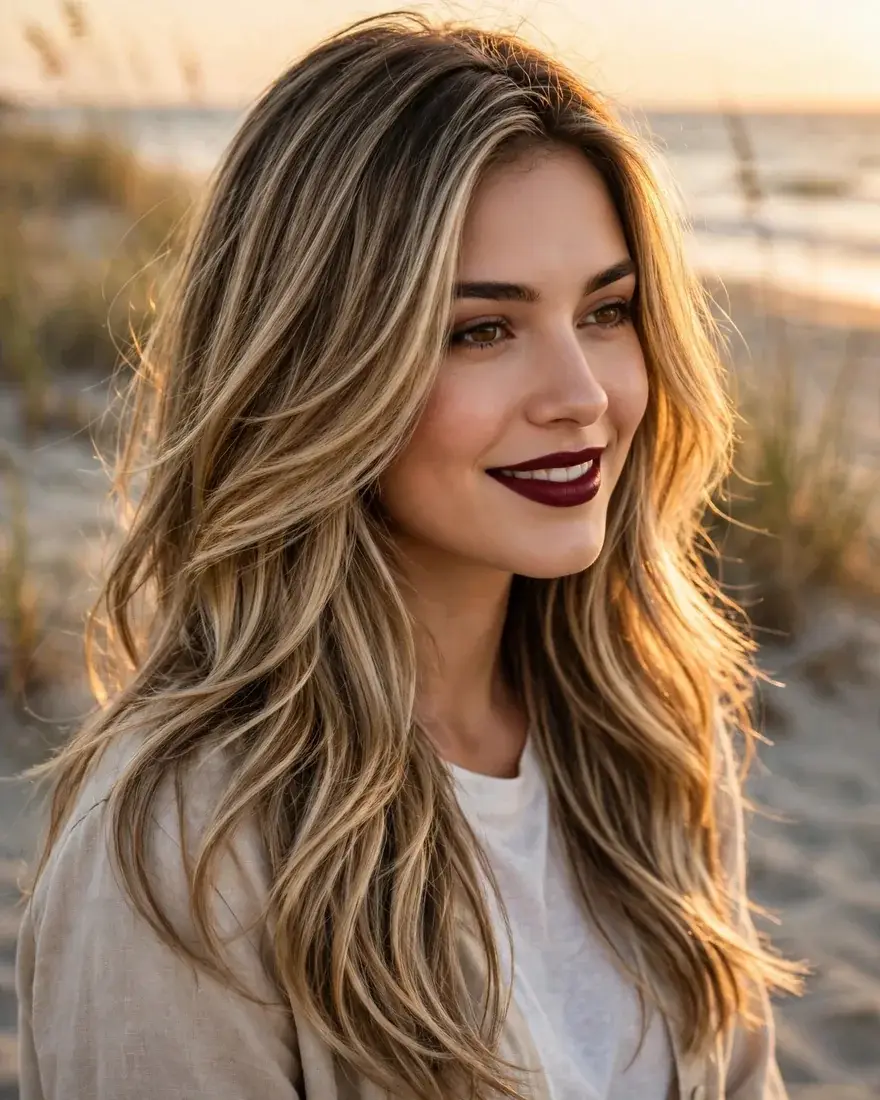
Long hair CAN work on thin hair — with two conditions: long, face-framing layers (never short choppy ones) and dimensional color. The bronde balayage — that brown-blonde hybrid — creates light and shadow through the lengths, and dimension is the oldest density illusion in color. The layers start below the chin so the crown keeps its weight. For more on layer placement, see our layered haircut guide.
Benefits:
- Dimensional color creates the illusion of thickness through contrast
- Long layers preserve length while adding movement
- The only long option among haircuts for thin hair that does not look stringy
Pro Tip: The balayage must stay soft and blended — harsh highlights on thin hair expose the scalp between foils. Ask for a lived-in, low-contrast blend.
How To Style: Loose waves show the dimension best; curl mid-shaft down, leaving ends straight. A texturizing spray adds grip.
Best For: Thin + medium/coarse strands (needs some strand body); not for very fine hair, which goes stringy at this length.
11. Side-Parted Bob
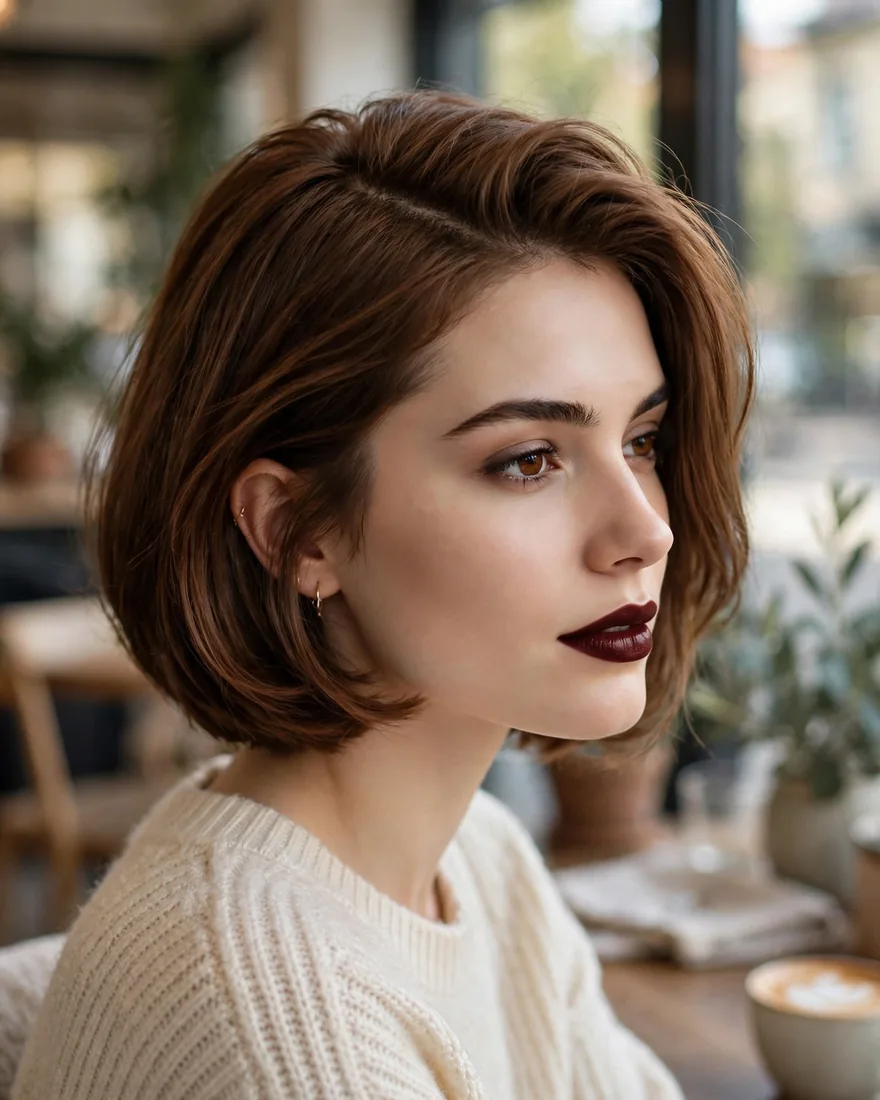
A classic bob with a deep side part — the part is the entire volume strategy. Flipping the part instantly lifts the crown and creates asymmetry the eye reads as fullness. The lowest-effort density trick among haircuts for thin hair: no layers required, no product required, just a part change. Browse more bob haircuts for length variations.
Benefits:
- The deep part creates instant, free crown lift
- Asymmetry slims round faces while adding volume
- Zero extra styling time over a regular bob
Pro Tip: Train the part while hair is damp — short hair has a memory, and a part set on dry hair will migrate back by noon.
How To Style: Blow-dry the crown over-directed to the opposite side, then flip. A root-lifting spray at the part line locks it in.
Best For: All thin hair types; the universal five-minute fix.
12. Choppy Mini Bob

A jaw-length bob with choppy, point-cut ends and piece-y texture throughout. The choppiness breaks up the solid line so light hits unevenly — and uneven reflection reads as thickness. The textured answer to the blunt bob, and one of the most forgiving haircuts for thin hair for hiding sparse areas. More texture ideas in our choppy bob hairstyles roundup.
Benefits:
- Choppy texture disguises thin spots and sparse areas
- Short length concentrates all hair into the silhouette
- Edgy and modern without needing an undercut
Pro Tip: This cut needs product to read as intentional — without wax or paste, choppy ends on thin hair can look unfinished rather than textured.
How To Style: Work matte clay through dry hair, pinching ends into points. Air-dry friendly.
Best For: Fine + thin hair; oval and heart faces.
13. Soft Crop with Side Part
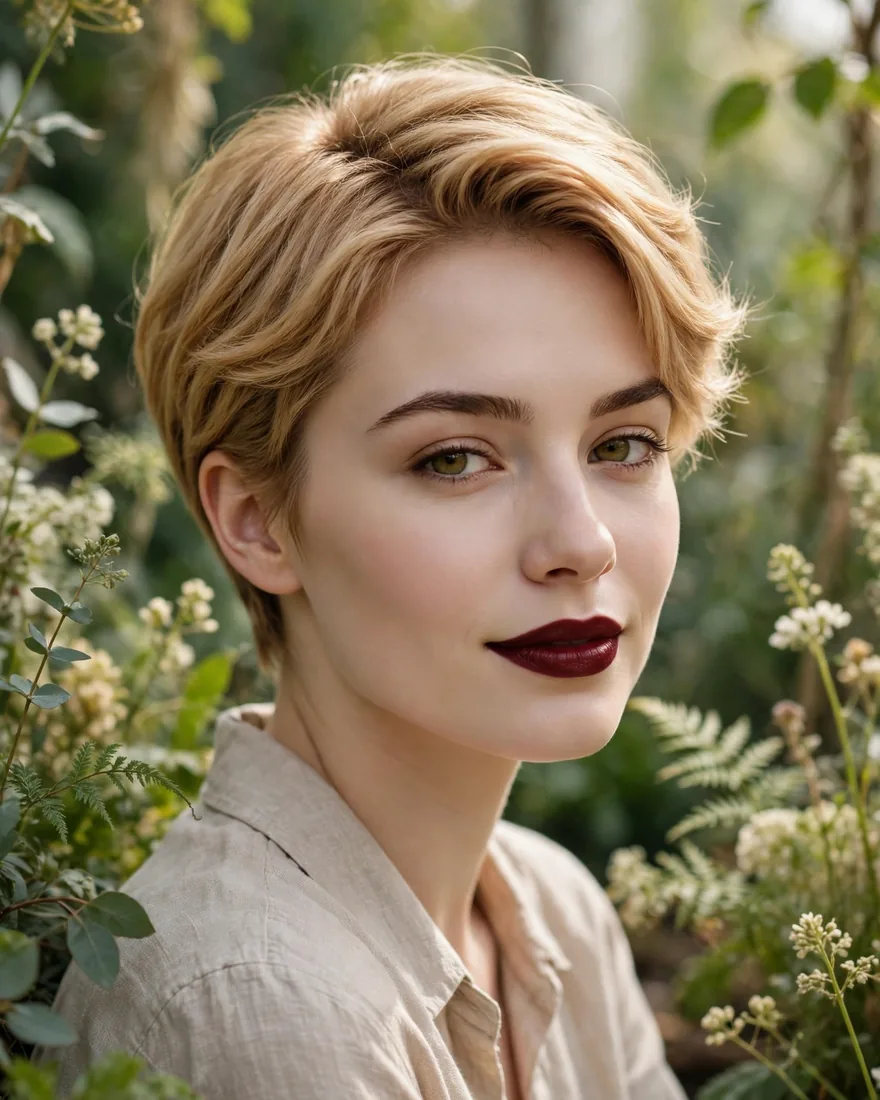
A soft, grown-out-feeling crop with a side part — longer than a pixie, shorter than a bob, with soft tapered edges. The side part builds the crown while the soft perimeter avoids severity. The “I woke up like this” option among haircuts for thin hair. For shaggier interpretations, see medium shag haircuts.
Benefits:
- Side part gives free crown lift with zero effort
- Soft edges flatter more face shapes than hard crops
- Grows out gracefully — the in-between stages look deliberate
Pro Tip: Keep the nape soft and tapered, not buzzed — a hard neckline against thin hair draws attention to exactly the wrong place.
How To Style: Rough-dry with fingers, sweep the part into place, finish with light-hold spray. Five minutes, genuinely.
Best For: Fine + thin hair; anyone growing out a pixie.
14. Wispy Lob

A lob with soft, wispy ends and airy face-framing pieces — the romantic option among haircuts for thin hair. The wispiness is strategic: feathered ends move in a way that suggests fullness, and the face-framing pieces add density exactly where the eye looks first. It proves thin hair does not have to mean severe hair.
Benefits:
- Wispy movement suggests fullness without weight
- Face-framing pieces add front density for free
- Soft and feminine — the least “trying too hard” cut here
Pro Tip: Wispy does not mean razored to nothing — the ends still need enough weight to avoid looking see-through. Ask for “soft,” not “thinned.”
How To Style: Blow out smooth, then bend the face-framing pieces away from the face. A light texturizing spray keeps the wisps airy.
Best For: Thin + fine hair; wavy and straight textures.
How the 14 haircuts for thin hair compare at a glance:
| Cut | Best For | Daily Minutes |
|---|---|---|
| The Classic Layered Bob | Thin + fine, straight to wavy | 10 |
| Blunt Bob with Zero Elevation | Thin + coarse/medium, straight | 10 |
| Airy Lob with Ghost Layers | Thin + fine, all textures | 5–10 |
| Razor-Cut Pixie | Fine + thin, straight to wavy | 5 |
| Textured Crop with Clipped Sides | Thin + coarse, bold | 5 |
| Collarbone Lob | All thin hair types | 5 |
| Soft Shag with Crown Layers | Thin + fine, wavy | 5 (air-dry) |
| Micro-Bangs Lob | Thinning hairline, straight | 10 |
| Feathered Pixie | Fine + thin, mature | 5 |
| Long Layers with Bronde Balayage | Thin + medium/coarse strands | 15 |
| Side-Parted Bob | All thin hair types | 5 |
| Choppy Mini Bob | Fine + thin, oval/heart faces | 5 |
| Soft Crop with Side Part | Fine + thin, growing out pixie | 5 |
| Wispy Lob | Thin + fine, straight/wavy | 10 |
Fine vs Thin vs Both: Diagnose Before You Cut
Before choosing any of these cuts, you need an honest diagnosis — because the wrong cut for your combination actively makes things worse. Fine hair means each strand is thin in diameter; roll a single strand between your fingers, and if you can barely feel it, it is fine. Thin hair means low density; part your hair down the middle and check how much scalp shows. You can be fine but dense (the easiest combination), coarse but thin (needs blunt cuts, never layers), or fine AND thin (the hardest — needs short lengths and texture).
The diagnosis changes everything when choosing haircuts for thin hair. Layers on fine-but-dense hair create beautiful movement; the same layers on fine-and-thin hair remove the little density you have and leave see-through ends. When you sit in the chair, tell your stylist both facts — “my strands are fine AND my density is low” — instead of just saying “my hair is thin.”
When Thin Hair Meets Cowlicks and a Thinning Crown
Thin hair rarely travels alone. The two most common companions are a stubborn cowlick at the front hairline and a thinning crown — and both punish the wrong cut. A cowlick is a growth-pattern whorl, not damage; the fix is working with it through side parts that follow the whorl’s direction, or crops short enough that the cowlick becomes texture. Never ask for blunt micro-bangs over a strong front cowlick — they will split by 10 a.m. regardless of product.
A thinning crown needs the opposite of what instinct suggests. The instinct is to grow surrounding hair long to cover it; the result is flat hair that separates and exposes more scalp. What works is building height around the thinning area — crown layers, a deep side part, or a shorter cut that stands hair up. If crown thinning is significant, tell your stylist before the cut; there are patterns designed to redistribute coverage, and the right haircuts for thin hair use them.
Honest Daily Styling Minutes for Each Cut
Every “low-maintenance” claim deserves a number. The five-minute cuts — razor-cut pixie, textured crop, collarbone lob, soft shag (air-dried), feathered pixie, side-parted bob, choppy mini bob, soft crop — genuinely take five minutes: product in, quick dry or air-dry, done. The ten-minute cuts — classic layered bob, blunt bob, micro-bangs lob, wispy lob — need a round brush or flat iron pass to look sharp.
The fifteen-minute outlier is long layers with bronde balayage: waves take time, and thin long hair shows every shortcut. The honest trade: shorter haircuts for thin hair cost more in salon visits (trims every four to eight weeks) but almost nothing daily; longer cuts cost less at the salon but tax you every morning. Pick around your real life and budget for the trims before you commit.
FAQs
What’s the difference between fine hair and thin hair?
Fine refers to strand diameter — each individual hair is thin. Thin (or low density) refers to how many hairs you have per square inch of scalp. You can have fine hair that is dense, or coarse hair that is thin. The distinction matters because the best haircuts for thin hair target density (blunt perimeters, crown lift), while fine-hair cuts target strand behavior (texture, lightweight products).
Are layers good for thin hair?
It depends on the layer type and your density. Long, subtle layers and internal “ghost” layers add movement without sacrificing density — those are safe choices among haircuts for thin hair. Short, choppy layers throughout remove too much weight and leave thin hair looking stringy. The rule: layers should start at or below the chin on thin hair, never high at the crown, unless the cut is specifically designed around crown layering like the soft shag.
Should thin hair be cut blunt or layered?
Blunt maximizes density — every hair ends at the same line, so the perimeter looks as thick as possible. Layers maximize movement and lift but sacrifice some perimeter density. For thin + coarse hair, blunt almost always wins. For thin + fine hair, a blunt cut with subtle texture, or long soft layers, usually looks fuller than either extreme. Avoid the middle ground of medium choppy layers, which gives you neither density nor lift.
Can long hair work on thin hair?
Yes, with conditions: keep layers long (starting below the chin), add dimensional color like bronde balayage to fake thickness, and accept more daily styling than shorter haircuts for thin hair demand. What does not work is one-length very long thin hair — the ends separate, the scalp shows through, and gravity flattens everything. Collarbone to mid-back is the realistic maximum for most thin hair.
How often should thin hair be trimmed?
Every six to eight weeks for bobs and lobs — thin ends split faster and damage shows quickly on low-density haircuts for thin hair. Pixies and crops need shaping every four to six weeks. Skipping trims costs more in appearance than it saves in money: a quarter-inch dusting every two months beats a big chop twice a year.
Will a pixie cut make thin hair look thinner?
A flat, one-length pixie can — but a textured pixie (razor-cut, feathered, or choppy) usually makes thin hair look thicker, because short textured hair stands up and out instead of lying flat against the scalp. The exception is a thinning crown: very short hair on top can expose the scalp. If your crown is thinning, keep some length and texture on top rather than going ultra-short.
What products actually add volume to thin hair?
Root-lifting spray or volumizing mousse applied to damp roots before blow-drying — this is the single highest-impact step. Dry texturizing spray at the crown on day two revives lift without washing. What to avoid: heavy oils, butters, and silicone-heavy serums, which coat fine strands and drag them flat. Use one lightweight styler, not five; product buildup is the silent killer of volume on thin hair. Clarify once a month.
Do thinning shears damage thin hair?
Thinning shears do not damage hair the way heat does, but they are the wrong tool for already-thin hair in most cases — they remove density you cannot spare and the short cut pieces can poke through the surface looking frizzy. Point-cutting with regular shears gives a softer edge without sacrificing bulk. The one legitimate use on thin hair: carefully debulking a thick nape or heavy bang area, done sparingly by an experienced stylist.
The right cut for thin hair is never about hiding — it is about architecture. Blunt lines where you need density, lift where you need height, texture where you need movement, and an honest accounting of the minutes you will actually spend each morning. Pick from these 14 haircuts for thin hair with a clear diagnosis of your fine-vs-thin combination, and the cut will do half the volumizing work before you ever pick up a dryer.