Short Wolf Cut with Curtain Bangs – 12 Styles
You have been saving wolf cut photos for months, but every one shows long hair. Taking those shaggy layers and curtain bangs up to chin length feels like a dare, because at short lengths there is no safety net: no ponytail for bad fringe days, no extra inches to disguise a grow-out phase, and every mistake sits right on your face. The commitment is the real fear, not the cut itself.
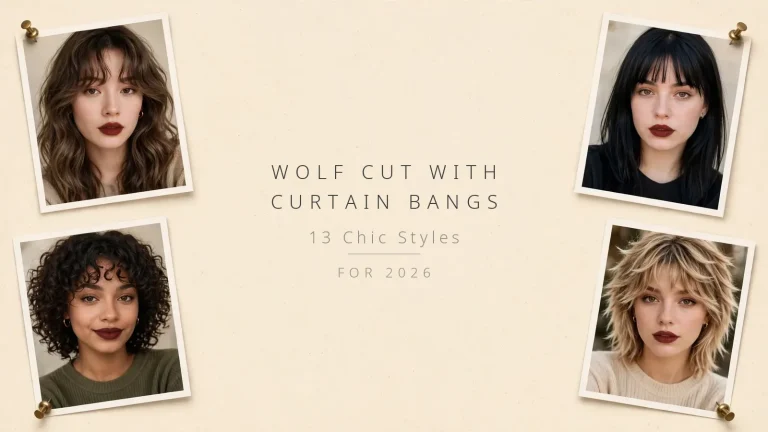
That is why the short wolf cut with curtain bangs deserves its own guide, not a cropped version of the long one. Short lengths change the rules: crown lift matters more, the fringe frames more of your face, and the grow-out timeline is completely different. Below are twelve genuinely distinct short variations, each with honest advice on who it flatters, how much work it takes, and what to tell your stylist.
Table of Contents
- 12 Short Wolf Cut with Curtain Bangs Ideas
- 1. Classic Short Wolf Cut with Curtain Bangs
- 2. Baby Wolf Cut with Curtain Bangs (Above Jaw)
- 3. Textured Crop Wolf Cut with Curtain Bangs
- 4. Wolf Cut Bob with Curtain Bangs
- 5. Sleek Blowout Short Wolf Cut with Curtain Bangs
- 6. Air-Dry Natural Short Wolf Cut with Curtain Bangs
- 7. Micro Curtain Bangs Short Wolf Cut
- 8. Side-Parted Short Wolf Cut with Curtain Bangs
- 9. 70s Shag Short Wolf Cut with Curtain Bangs
- 10. Wavy Short Wolf Cut with Curtain Bangs
- 11. Curly Short Wolf Cut with Curtain Bangs
- 12. Colored Short Wolf Cut with Curtain Bangs
- How to Choose the Right Short Wolf Cut for Your Hair Texture
- Common Mistakes to Avoid with Short Wolf Cuts
- FAQs
- How long does a short wolf cut with curtain bangs take to style each morning?
- Can a short wolf cut with curtain bangs air-dry and still look good?
- Is a short wolf cut with curtain bangs professional enough for work?
- How often does a short wolf cut need a reshape?
- What is the awkward stage when growing out a short wolf cut?
- Will a short wolf cut puff out on thick hair?
- Can fine hair pull off a short wolf cut with curtain bangs?
- How often do curtain bangs need trimming at short lengths?
- Conclusion
12 Short Wolf Cut with Curtain Bangs Ideas
1. Classic Short Wolf Cut with Curtain Bangs
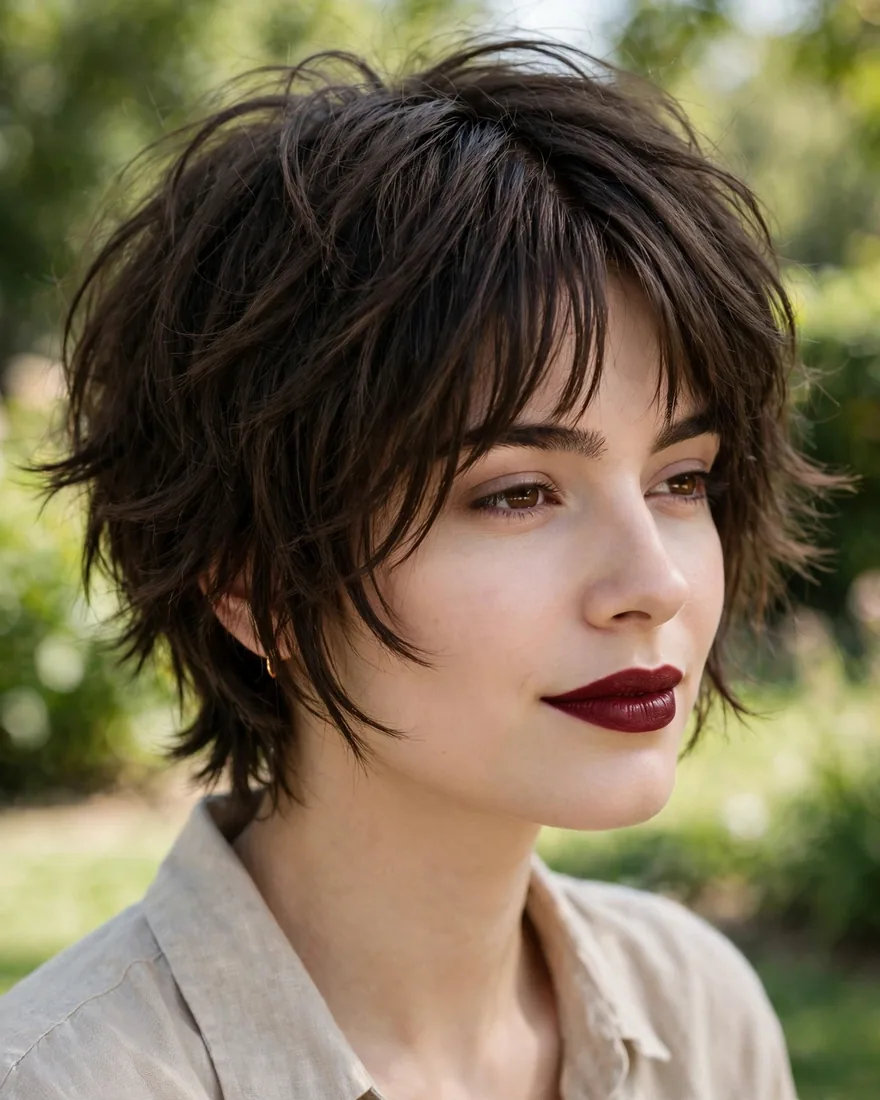
The gateway cut for first-time short lengths. Hair sits at chin to just below the ear, with signature wolf-cut layering — lifted crown layers tapering into longer face-framing pieces — and a true center-parted curtain fringe. It reads as a wolf cut immediately, but the proportions stay safe and balanced.
Benefits:
- Lowest commitment of the short family — the length still covers the jawline
- Crown volume flatters flatter head shapes and adds height to round faces
- The curtain fringe softens the forehead, so the shortness never looks harsh
Pro Tip: Keep the shortest crown layer no higher than the temples — going shorter is why first-timers panic in the chair.
How To Style: Blow-dry the crown upward with a round brush for lift, then let the bangs fall naturally. A pea-sized amount of texturizing cream keeps the ends separated.
Best For: Medium-to-thick straight or slightly wavy hair; first-timers avoiding the pixie-level leap.
2. Baby Wolf Cut with Curtain Bangs (Above Jaw)
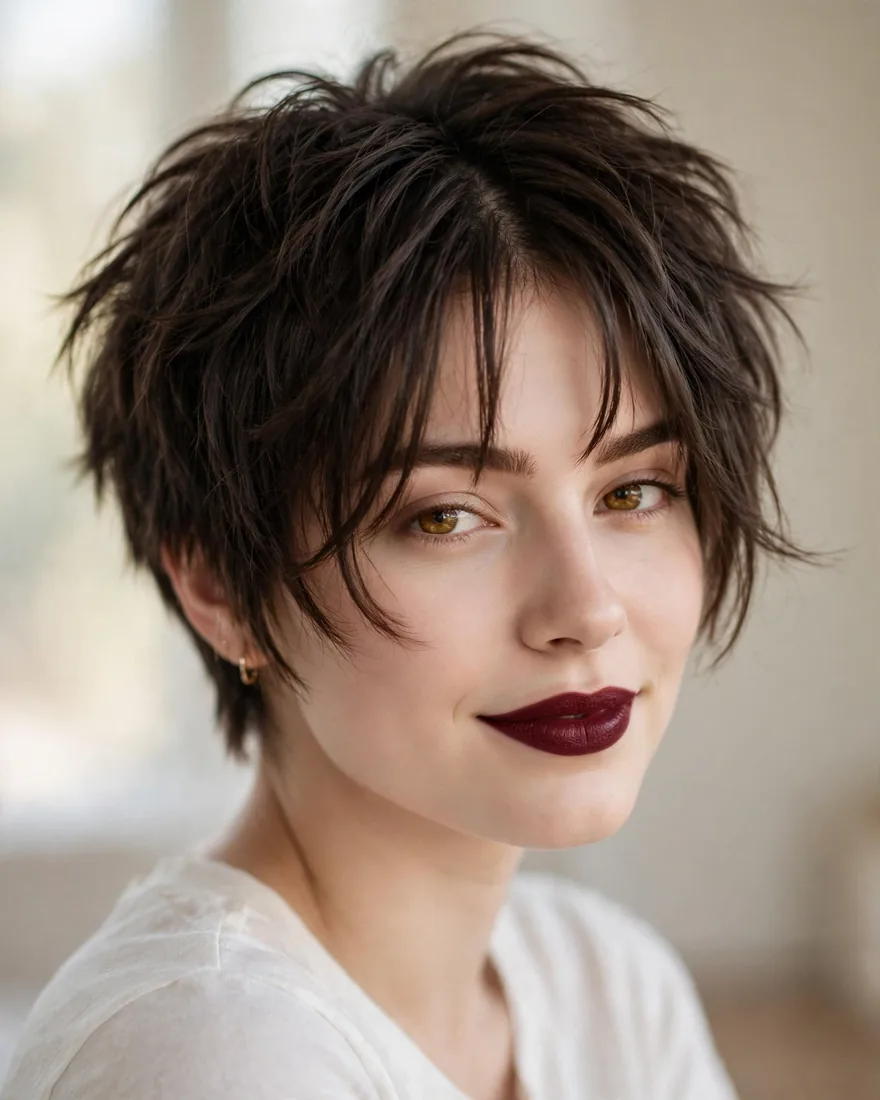
The boldest version here. Everything sits above the jawline — closer to a pixie than a bob — but the wolf-cut DNA is unmistakable: choppy crown layers, wispy length through the back, and a brow-grazing curtain fringe. For people who already know they love short hair and want maximum edge.
Benefits:
- Maximum impact with minimum styling time
- Shows off cheekbones, jawline, and earrings like nothing else
- Grows naturally into idea #1, so the next stage is already planned
Pro Tip: Do not get this cut the week before a big event — the first two weeks are a calibration period while you learn how the layers sit on your head shape.
How To Style: Work matte paste through damp hair, push the crown up and forward, and let the bangs part on their own. Flat-iron just the fringe ends to stop them flipping outward.
Best For: Thick, coarse, or naturally voluminous hair; confident short-hair wearers with defined features.
3. Textured Crop Wolf Cut with Curtain Bangs
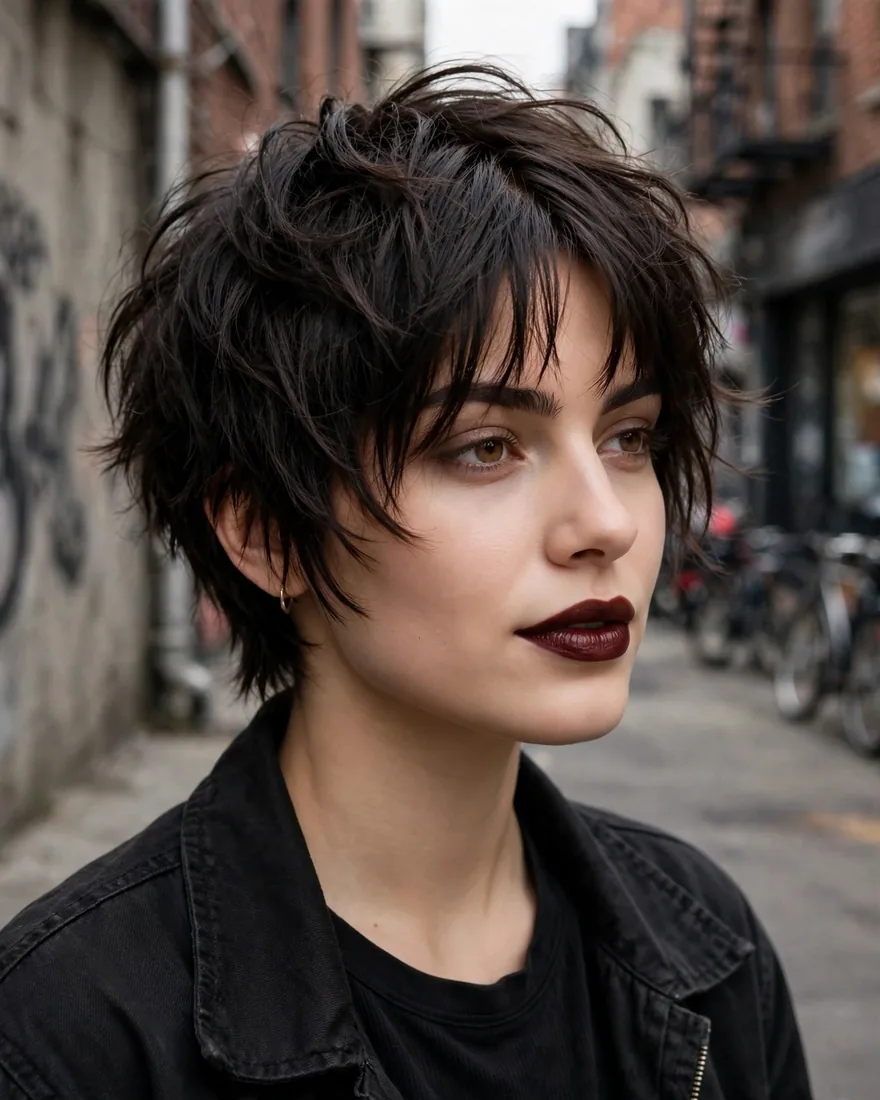
The editorial one. Point-cut layers create a deliberately piecey, undone finish, and the curtain bangs carry the same ragged texture so the whole head reads as one idea — the short-length twin of the wolf cut with curtain bangs.
Benefits:
- Texture hides imperfections, so it looks intentional even between trims
- Works with natural wave and cowlicks instead of fighting them
- The piecey finish photographs with real dimension and movement
Pro Tip: This cut lives or dies on technique, not length. Ask for point cutting and slide cutting through the mids — not thinning shears, which leave ends wispy and weak.
How To Style: Scrunch salt spray into damp hair and air-dry, or diffuse for two minutes. Pinch individual pieces with a touch of wax to define them.
Best For: Wavy to curly hair, or straight hair with a texture spray routine; anyone preferring undone over polished.
4. Wolf Cut Bob with Curtain Bangs
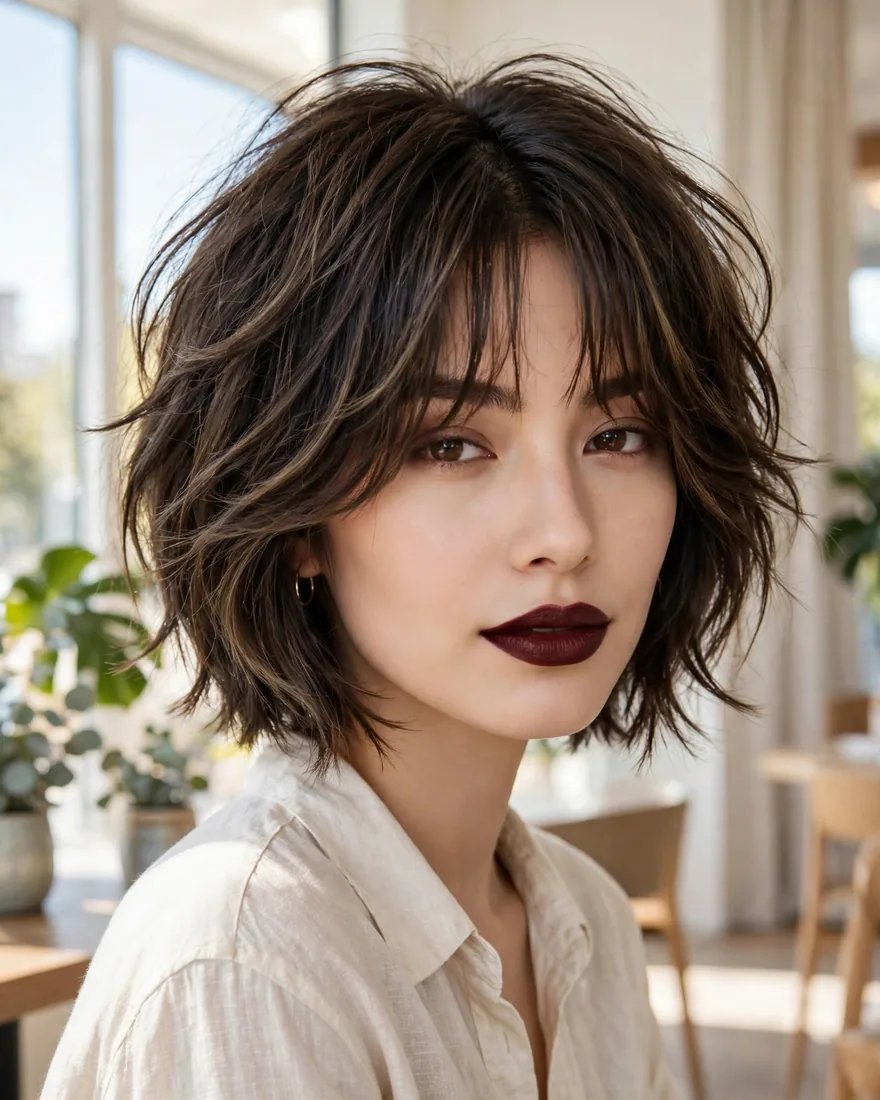
The compromise cut — honestly the one most people should start with. Full wolf-cut layering (short crown, disconnected texture, curtain fringe) at a classic bob length. You get the shaggy energy without giving up the security of hair that still frames the neck.
Benefits:
- The safest entry point — a fashionable bob with personality
- Easy to grow out into a longer wolf cut if you love the shape
- Versatile enough for both polished and messy styling
Pro Tip: The difference from a regular layered bob is the crown. If your stylist starts cutting uniform layers, ask for deliberate disconnection — short on top, longer through the perimeter.
How To Style: Blow-dry smooth for sleek days, or rough-dry upside down with texture spray for the shaggy version. Dry the bangs forward first, then sweep them aside.
Best For: All textures, especially nervous first-timers; ideal for professional settings needing a tamer option.
5. Sleek Blowout Short Wolf Cut with Curtain Bangs
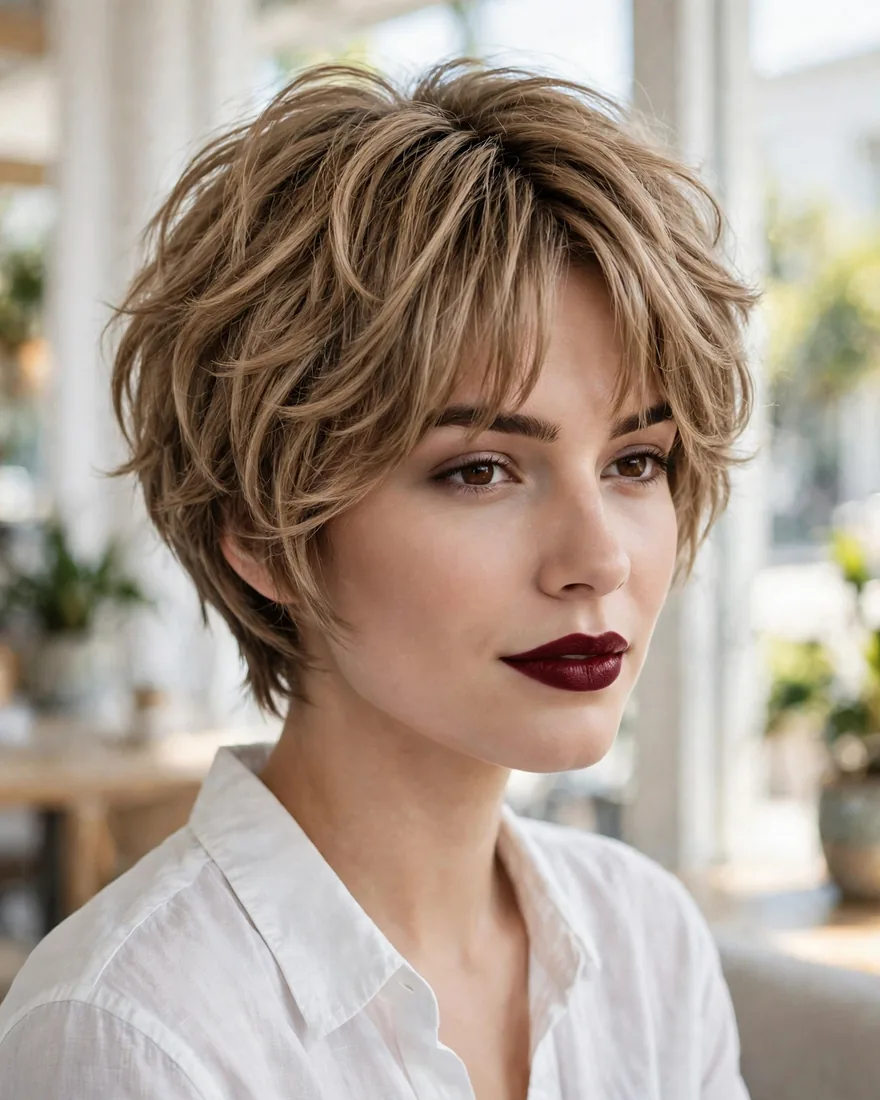
Proof that a short wolf cut can look expensive and polished, not just edgy. Layers are blow-dried smooth, ends curve under or flip out with intention, and the curtain bangs get the full bouncy treatment — the blowout energy of the wavy wolf cut with bangs at a chic short length.
Benefits:
- The most office-friendly, event-ready short wolf cut
- Smooth styling makes layering look deliberate, not messy
- Curtain bangs blend seamlessly when everything is blow-dried in the same direction
Pro Tip: Use a medium round brush — at short lengths a large one over-rounds the layers and kills the wolf-cut shape. Work in small sections.
How To Style: Apply volumizing mousse at the roots and smoothing cream through the ends, then blow-dry with a round brush, lifting at the crown. Finish the bangs with a quick brush pass away from the face.
Best For: Straight to slightly wavy hair that holds a blowout; anyone needing a formal or corporate-safe cut.
6. Air-Dry Natural Short Wolf Cut with Curtain Bangs

The wash-and-go hero. Cut to work with your natural texture, so the morning routine is genuinely minimal — layers placed so air-drying produces crown lift and end movement, with bangs cut long enough to settle on their own.
Benefits:
- The lowest daily effort here — under five minutes
- No heat damage, so hair stays healthier between cuts
- Looks better undone — day-two hair is a feature, not a flaw
Pro Tip: The secret is the cut, not the product. Tell your stylist you air-dry daily — they will place layers differently, with less weight removal at the crown so hair lifts on its own.
How To Style: Scrunch leave-in cream into damp hair, arrange the bangs with your fingers, and leave it alone — resist touching it while it dries.
Best For: Naturally wavy or curly hair with a decent wave pattern; busy mornings and low-maintenance lifestyles.
7. Micro Curtain Bangs Short Wolf Cut
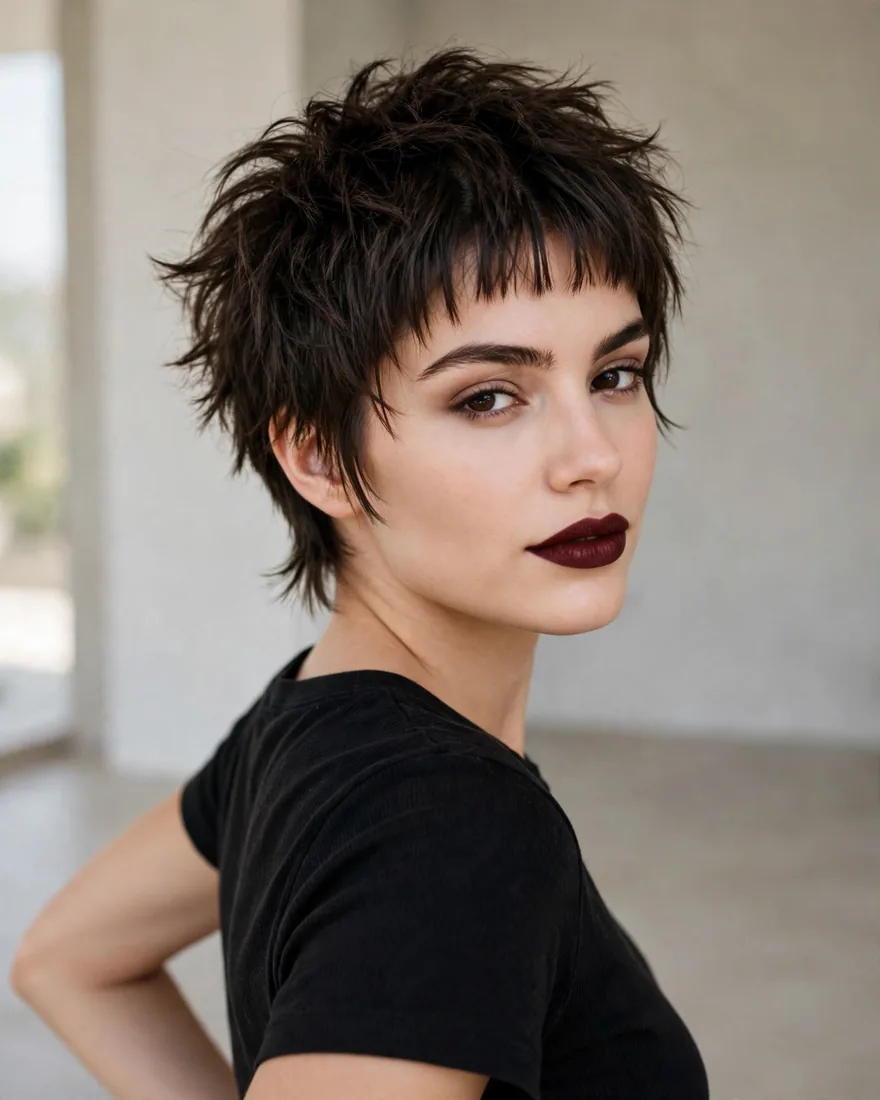
A fringe variation, not a length variation. The fringe is cut noticeably shorter — sitting high on the forehead — while still parting in the middle and sweeping outward, giving the whole cut a fashion-forward, slightly retro feel.
Benefits:
- Makes the eyes and brows the focal point of the face
- Shorter fringe means less daily fringe maintenance and fewer trims
- Instantly distinguishes your cut from standard curtain-bang looks
Pro Tip: Micro bangs expose the forehead completely — be honest about whether you like yours. If you usually hide it, stick with the classic length from idea #1.
How To Style: The fringe needs almost no styling — too short to misbehave. Style the rest as usual and let the micro bangs sit where they fall.
Best For: Oval and heart faces with foreheads you are happy to show; straight hair where short fringe sits cleanly.
8. Side-Parted Short Wolf Cut with Curtain Bangs
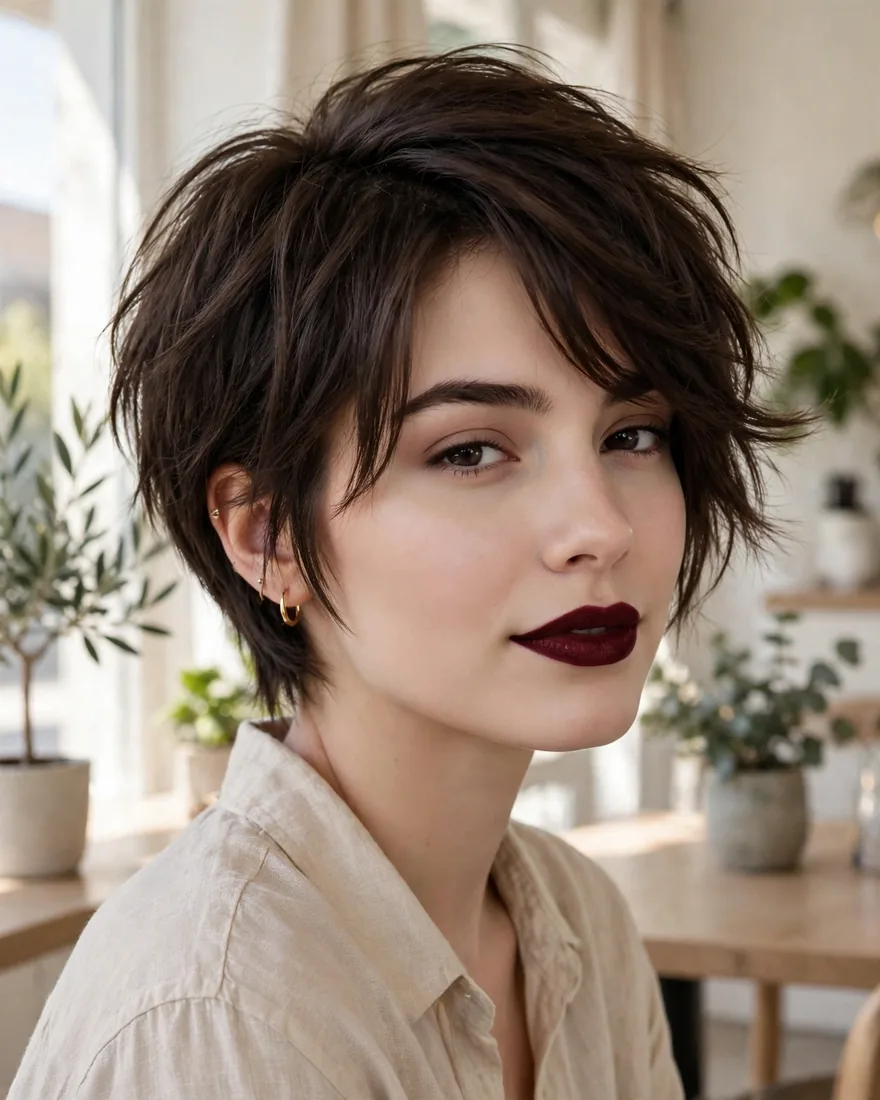
For everyone whose hair refuses to part in the middle. The curtain bangs sweep from a deep side part, creating an asymmetric drape with the same face-framing effect — the mood shifts from symmetrical and soft to directional and bold.
Benefits:
- Works with natural growth patterns instead of fighting a middle part
- Asymmetry adds drama and suits strong features
- The side sweep hides one side of the forehead, which many people prefer
Pro Tip: The part needs to be cut in, not just styled in — ask your stylist to cut the fringe from your natural side part so it falls correctly with zero effort.
How To Style: Blow-dry the fringe to the heavy side with a flat brush, then sweep it across. Light-hold spray keeps it in place without stiffness.
Best For: Hair with a strong natural side part or cowlicks at the hairline; round faces, where the diagonal line adds welcome structure.
9. 70s Shag Short Wolf Cut with Curtain Bangs

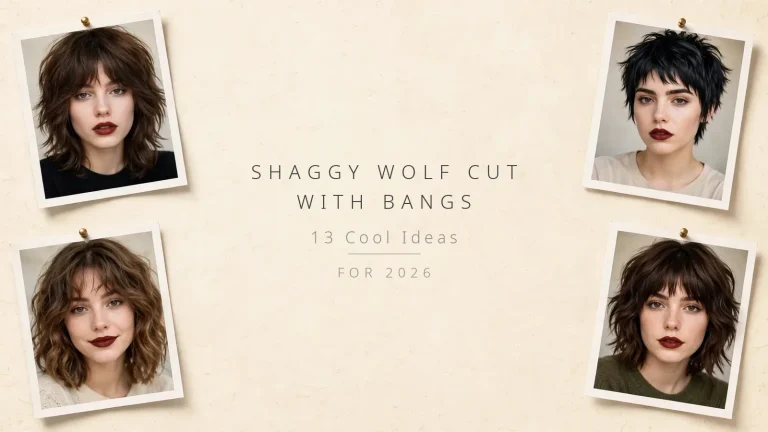
The retro one. Feathered, flicked-out layers channel the classic 70s shag, while the curtain bangs and wolf-cut crown keep it current — the shaggy wolf cut with bangs worn at short lengths.
Benefits:
- Feathered ends create movement even on very straight hair
- Flipped-out styling is forgiving — it looks good slightly imperfect
- A genuinely different silhouette from modern textured versions
Pro Tip: Flicked ends must be cut in with a razor or angled point cutting — blunt ends will not flip outward.
How To Style: Blow-dry with a round brush, flicking ends outward instead of under. Flexible-hold spray keeps the flicks without freezing them.
Best For: Straight to wavy medium-density hair; anyone drawn to vintage and rock-inspired aesthetics.
10. Wavy Short Wolf Cut with Curtain Bangs
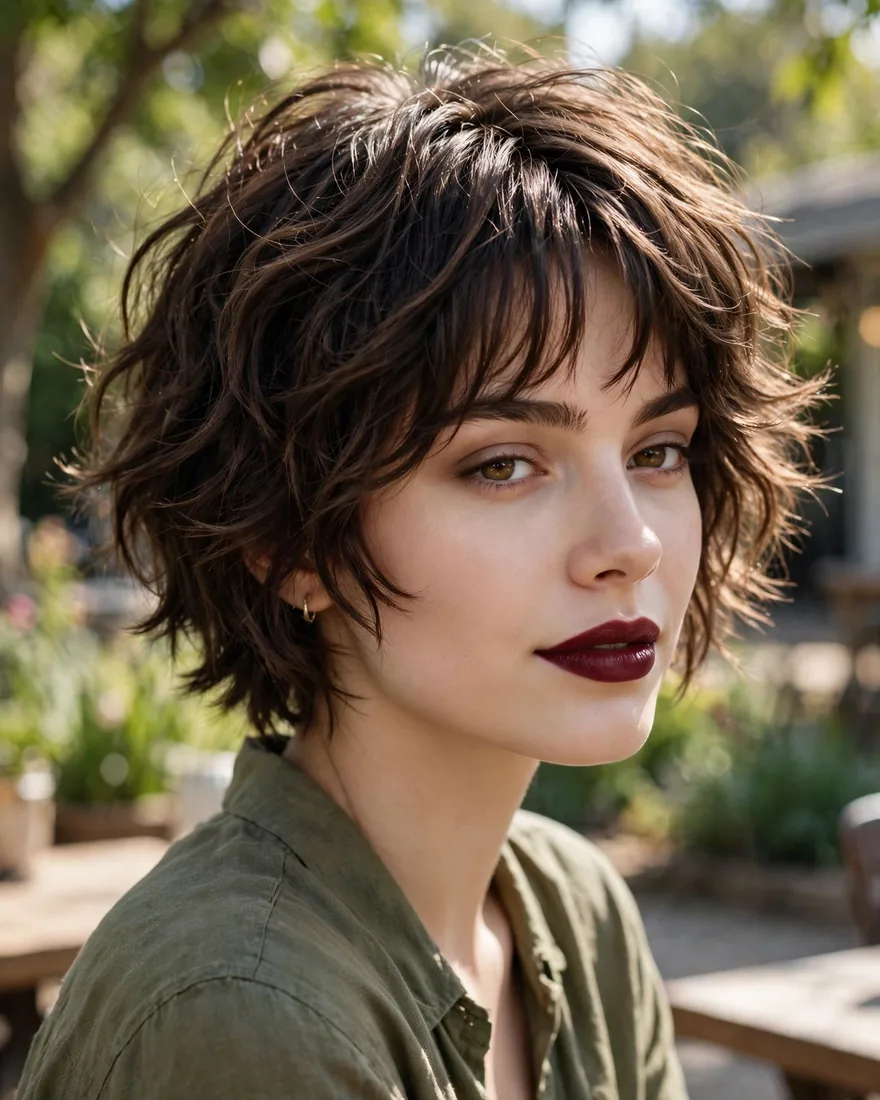
Built around natural wave, not styled texture. Layers let the wave pattern do the work — shorter at the crown for lift, longer through the sides so waves have room to form. Wavy members of the curly wolf cut family will feel at home here.
Benefits:
- Natural waves plus wolf-cut layering equals effortless volume
- Curtain bangs blend into wavy sides seamlessly
- Minimal shrinkage versus curly versions, so length stays predictable
Pro Tip: Get this cut on dry, styled hair if your waves are inconsistent — a good stylist cuts waves where they live, not where they land when wet and stretched.
How To Style: Apply curl cream to damp hair, scrunch, then air-dry or diffuse on low heat. Separate waves with your fingers once fully dry.
Best For: Natural 2A to 2C waves; anyone whose hair has bend but not full curls.
11. Curly Short Wolf Cut with Curtain Bangs
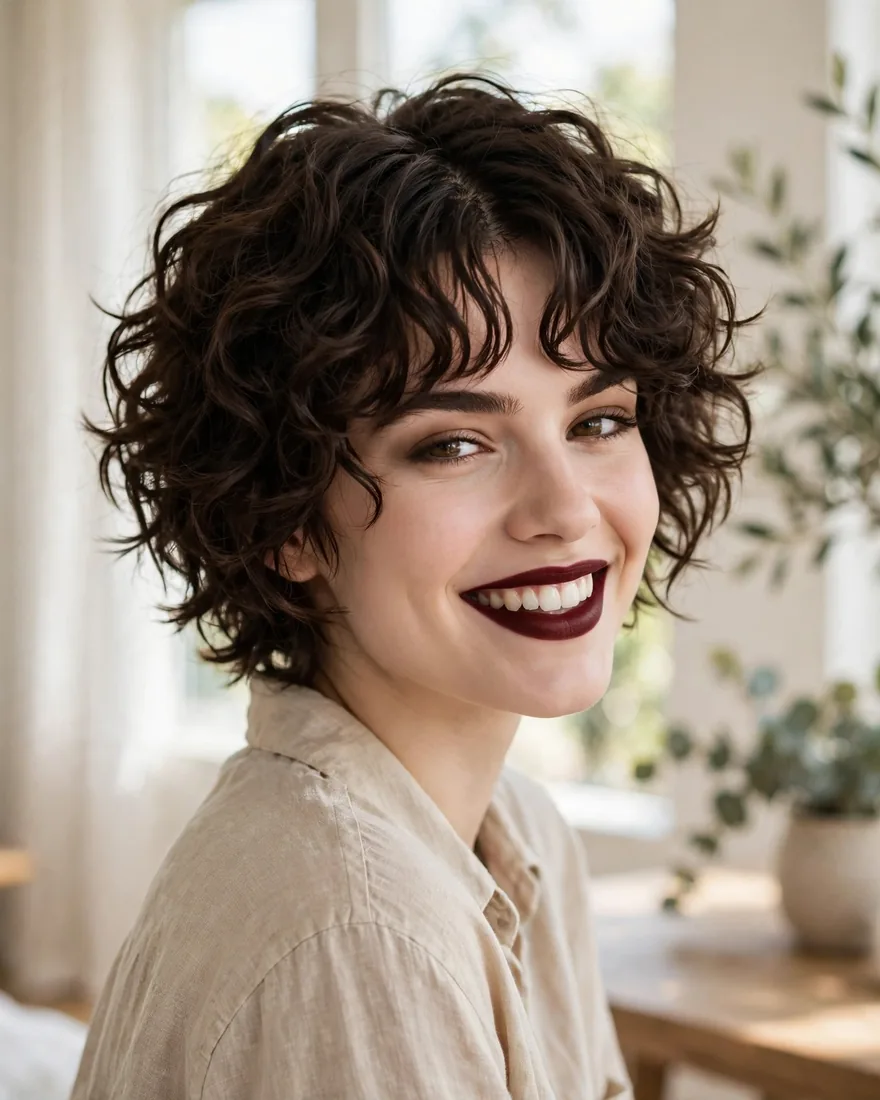
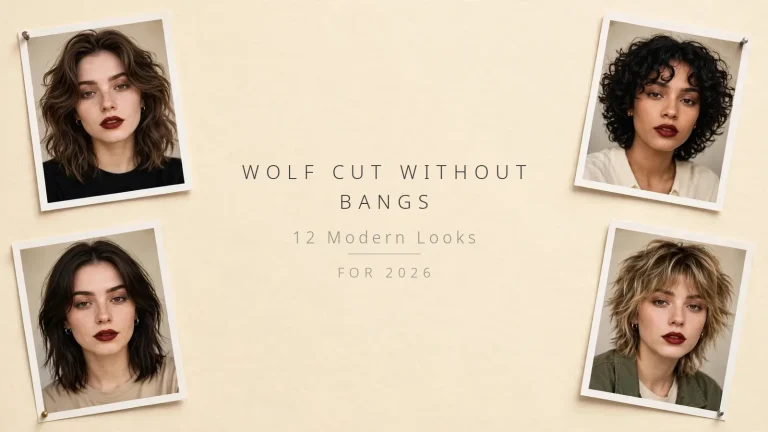
The curly version needs its own entry because the rules genuinely change. Curls spring up dramatically at short lengths — what looks chin-length wet can sit at the ears dry — so the cut must account for shrinkage. The curtain bangs become soft tendrils, and the crown needs careful layering to avoid the triangle shape. Also see the wolf cut without bangs if you are weighing fringe versus no fringe.
Benefits:
- Short curly layers give incredible volume
- The wolf-cut shape prevents the heavy bottom that drags curls down
- Curly curtain bangs are softer and more forgiving than straight fringe
Pro Tip: Always get a curly cut dry, curl by curl — a wet cut at short lengths is a gamble, and the shrinkage math is unforgiving with no extra inches to absorb error.
How To Style: Style soaking wet with curl cream and gel, scrunch, then diffuse or air-dry. Do not touch until completely dry, then fluff the roots.
Best For: 3A–3C curls with enough density to fill the shape; anyone committed to the curly routine.
12. Colored Short Wolf Cut with Curtain Bangs
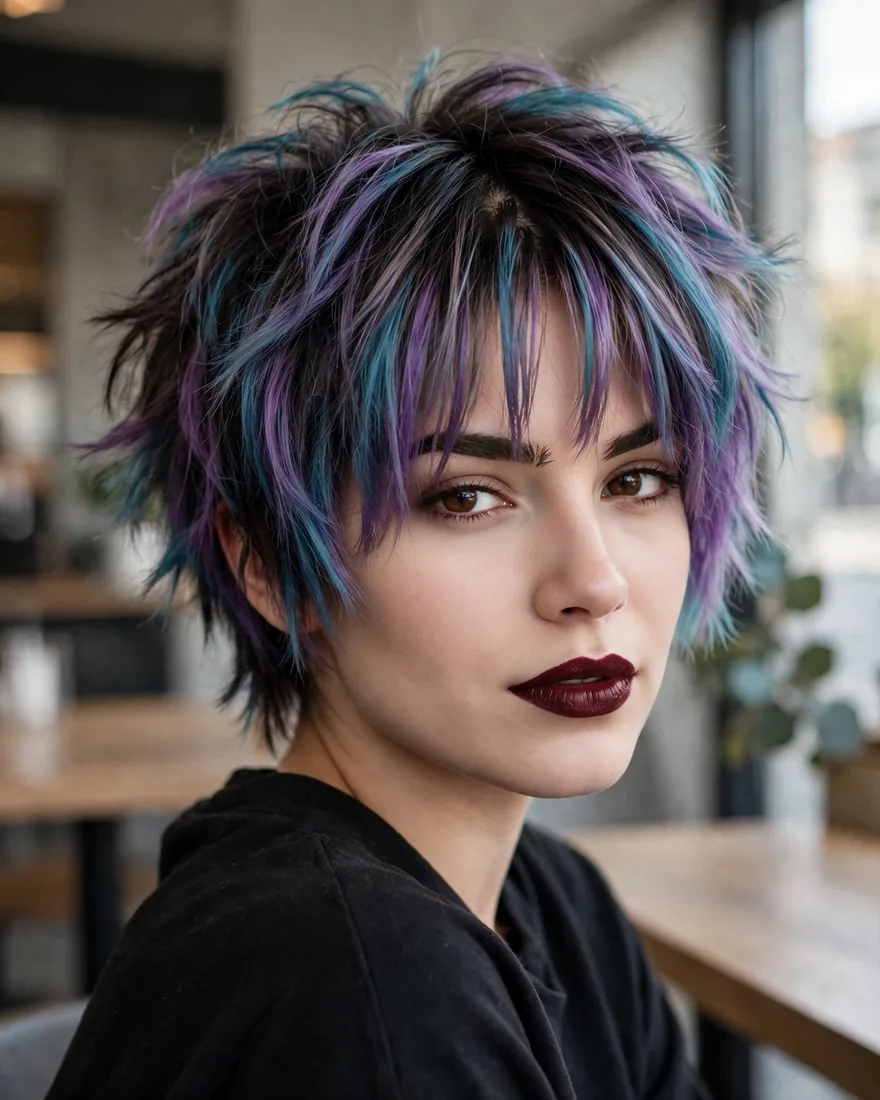
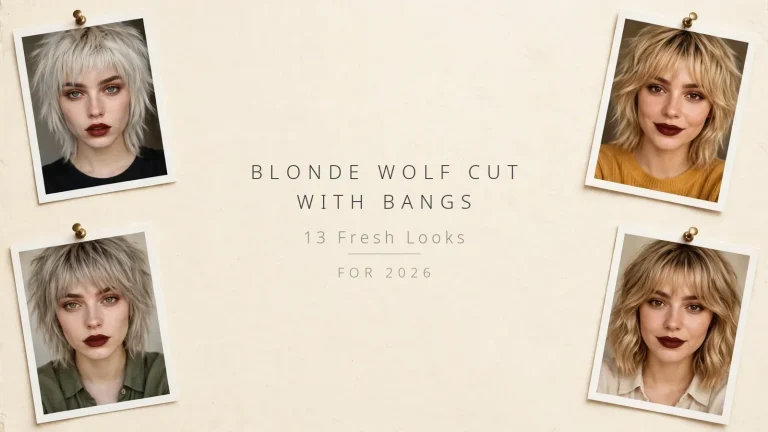
Short hair is the best canvas for bold color — fast grow-out, low commitment. Vivid panels, money pieces through the curtain bangs, or an all-over fashion shade all hit harder at short lengths where every strand shows. Borrow color-placement cues from the blonde wolf cut with bangs playbook.
Benefits:
- Color grows out fast, so experimenting is low-risk
- Less hair means less bleach, less damage, lower bills
- Choppy layers show dimensional color better than one-length cuts
Pro Tip: Put the boldest color through the curtain bangs and face-framing pieces — the eye goes there first, so you get maximum impact with minimum dye.
How To Style: Style as usual for your texture, but finish with a shine serum — vivid color looks dramatically better with light on the layers.
Best For: Anyone ready to experiment; previously colored or bleached hair that needs a fresh start at a manageable length.
How the 12 styles compare at a glance:
| Style | Best Texture | Daily Styling |
|---|---|---|
| Classic Short | Straight–wavy, med–thick | 10–15 min |
| Baby Wolf (Above Jaw) | Thick, coarse | 5–10 min |
| Textured Crop | Wavy–curly | 5–10 min |
| Wolf Cut Bob | All textures | 10 min |
| Sleek Blowout | Straight–wavy | 20+ min |
| Air-Dry Natural | Wavy–curly | 5 min |
| Micro Curtain Bangs | Straight | 10 min |
| Side-Parted | Side part / cowlick | 10 min |
| 70s Shag Short | Straight–wavy, medium | 10–15 min |
| Wavy Short | 2A–2C waves | 5–10 min |
| Curly Short | 3A–3C, dense | 10 min |
| Colored Short | Color-treated | 10–15 min |
How to Choose the Right Short Wolf Cut for Your Hair Texture
At long lengths, almost any texture can fake a wolf cut — at short lengths, your texture makes the decisions. Thick hair wants to expand outward, so the classic short wolf cut needs serious internal weight removal through the crown and sides, or you get width instead of the tapered wolf silhouette. Ask for layers thinned from the inside, and lean toward the textured crop or 70s shag, which manage volume rather than fighting it.
Fine hair has the opposite problem: less hair to fake fullness, so the cut must manufacture volume structurally. The classic short wolf cut and the wolf cut bob work best — stacked crown layers create lift fine hair cannot produce alone. Never over-thin fine hair at short lengths; aggressive texturizing leaves ends see-through. Torn between lengths? The long wolf cuts with curtain bangs guide covers the other end, and the main wolf cut hub compares every length.
Wavy and curly hair sits in the happiest middle ground, with one critical rule: plan around shrinkage. Even mild waves can spring up an inch at short lengths, so tell your stylist exactly how you will wear it daily and let them cut to the dry result. Crown lift changes by texture too — straight hair needs blow-drying or root powder, wavy hair needs root scrunching while damp, curly hair needs crown layers short enough to spring up alone.
Finally, be honest about commitment. A true short wolf cut (ideas 1–3) is a six-to-eight-week relationship with your stylist. The wolf cut bob (idea 4) is the low-commitment trial — it grows out gracefully into anything. The baby wolf cut (idea 2) is the point of no return for at least three months. Choose the version matching your real tolerance for salon visits, not the prettiest photo.
Common Mistakes to Avoid with Short Wolf Cuts
The biggest mistake is underestimating the grow-out. A short wolf cut does not grow out evenly — the crown layers catch up to the perimeter and the shape collapses around month three. The awkward stage hits hardest at the jaw-to-shoulder transition: too long to be short, too short to tie back. Book a reshape before you need it, and keep trimming the shape every eight to ten weeks even while “growing it out.”
The second mistake is stretching the reshape cadence. Long wolf cuts coast for three months; short ones cannot — half an inch of growth changes the silhouette and the bangs merge into the sides. Most short wolf cuts need a reshape every six to eight weeks, fringe touched up between. Skipping it turns a sharp textured crop into an indistinct shaggy bob.
The third mistake is fringe-trim neglect. Curtain bangs at short lengths grow into your eyes faster than you expect, and once they pass the brows they stop being curtain bangs and start being a problem. A quick fringe trim every two to three weeks keeps the shape intact — many salons do fringe trims cheaply or free between full appointments, so ask. Do not attempt to trim them yourself unless you have done it before; short fringe mistakes are immediately visible and take weeks to fix.
The fourth mistake is over-layering fine hair or under-layering thick hair — both from a stylist cutting a generic layered short cut instead of a true wolf cut. Too many layers on fine hair leaves nothing to work with; too few on thick hair leaves a heavy, helmet-like shape. Bring reference photos showing the crown specifically, and confirm your stylist understands the wolf cut’s signature: deliberate disconnection between crown and perimeter.
FAQs
How long does a short wolf cut with curtain bangs take to style each morning?
Most people need ten to fifteen minutes, and the curtain bangs take about half of that. The layers themselves are forgiving — a quick rough-dry or scrunch is usually enough — but the fringe needs deliberate attention every morning to sit correctly. If you choose the air-dry variation, the whole routine drops under five minutes. Budget the most time in the first two weeks while you are learning how your specific layers behave.
Can a short wolf cut with curtain bangs air-dry and still look good?
Yes, but only if it was cut for air-drying. Tell your stylist before the first snip that you plan to air-dry daily — they will place the layers and the fringe length differently than they would for a blowout routine. Wavy and curly textures air-dry best; very straight fine hair may still need a quick blast at the crown for lift. The curtain bangs are the one part that sometimes needs thirty seconds of heat even on air-dry days.
Is a short wolf cut with curtain bangs professional enough for work?
It depends on the variation and your workplace. The sleek blowout and the wolf cut bob read as polished and pass comfortably in corporate settings. The textured crop, baby wolf cut, and colored versions are bolder choices that suit creative fields better. The curtain bangs themselves are rarely the issue — it is the overall edginess of the layering that determines the vibe. When in doubt, start with the bob-length version and go shorter once you see the reaction.
How often does a short wolf cut need a reshape?
Every six to eight weeks for a full reshape. Short lengths show growth faster than long hair — even half an inch changes the silhouette and the crown starts losing its lift. The curtain bangs need separate attention every two to three weeks. This is a higher-maintenance schedule than a long wolf cut, so factor the salon visits into your decision before committing.
What is the awkward stage when growing out a short wolf cut?
The hardest phase is the jaw-to-shoulder transition, usually around months three to five. The crown layers catch up to the perimeter, the shape goes boxy, and the hair is too short to tie back neatly. The way through is counterintuitive: keep trimming the shape every eight to ten weeks while growing it out. Strategic trims maintain the wolf-cut silhouette as it lengthens instead of letting it collapse into an shapeless in-between cut.
Will a short wolf cut puff out on thick hair?
It will if the weight is not managed properly. Thick hair at short lengths expands outward by default, so the cut needs serious internal weight removal through the crown and sides. Be explicit with your stylist: ask for the bulk taken out from the inside, not just shorter layers on top. The textured crop and 70s shag variations handle thick hair best because their styling is designed around volume rather than against it. Avoid blunt perimeters, which trap the volume and create the triangle effect.
Can fine hair pull off a short wolf cut with curtain bangs?
Yes — short wolf cuts can actually be better for fine hair than long ones, because there is less weight dragging the roots flat. The key is keeping enough density: the crown layers create the illusion of fullness, but over-thinning will leave the ends see-through. Ask your stylist to go easy on texturizing and to keep the perimeter relatively solid. A root-lifting product or a quick upside-down blow-dry makes a visible difference on fine hair.
How often do curtain bangs need trimming at short lengths?
Every two to three weeks, which is more frequent than most people expect. At short lengths the fringe sits closer to the eyes to begin with, so even a little growth pushes it past the brows and ruins the curtain effect. Many salons offer quick fringe trims at low cost or free between full appointments — ask about it when you book the cut. Do not stretch it to six weeks; by then the bangs have merged into the face-framing layers and the whole front of the cut loses its definition.
The right short wolf cut with curtain bangs is not the boldest photo you saved — it is the version your texture can actually maintain and your calendar can actually support. Start with the bob-length compromise if you are unsure, be honest about the six-to-eight-week reshape rhythm, and tell your stylist how you will really style it every morning. Short hair forgives nothing, but it also rewards decisiveness: pick the variation that fits your real life, and the cut will do the rest.